Hefei's 20 Years of "Playing the Prophet"
After Changxin Technology went public, Hefei finally reclaimed its status as the provincial capital.
Previously, netizens joked that Nanjing, the capital of the neighboring province, was the de facto capital of Anhui Province. After Changxin Technology landed on the Sci-Tech Innovation Board, based on a neutral scenario with a market value of 2 trillion yuan, Hefei's state-owned capital system holds a total of about 33.1% of the shares, corresponding to a market value of more than 660 billion yuan, which is almost half of Hefei's total GDP in 2025 (1.4 trillion yuan).
After ten years of bold bets, Hefei earned returns equivalent to half of its local economic aggregate, instantly making this once most overlooked central provincial capital take the lead in the city-level competition in the equity era.
Over the past two decades, the wealth engine of Chinese cities was the real estate sector, while this round of growth is driven by equity investment. When other cities were still racking their brains over which tracks to invest in and whether wrong investment decisions would lead to political accountability, Hefei had already built an industrial investment matrix covering "chips, displays, automobiles, and integrated circuits" and reaped considerable returns.
Why can Hefei accurately predict the next needed industry every time? To figure this out, let's review Hefei's 20-year history as a "prophet of industrial trends".
01 Verification: Two Decades, Three Core Bets
Looking back, from display panels, integrated circuits to new energy vehicles, every successful bet has continuously strengthened Hefei's myth of seizing industry trends with precise investments.
The first successful bet took place during the 2008 financial crisis, when BOE faced a severe capital shortage and Hefei entered the market against the economic cycle, making a groundbreaking decision to mobilize the whole city's resources to introduce BOE and build the first 6th generation TFT-LCD production line in mainland China, with a total investment of 17.5 billion yuan. At that time, Hefei's full-caliber fiscal revenue was about 30.1 billion yuan, so this single project almost cost half of the city's total fiscal revenue. To raise funds, Hefei even suspended its subway construction project that year.
This investment was a huge success. Starting from December 2017, Hefei's state-owned capital gradually reduced its holdings in BOE, completed the investment exit, and made a net profit of about 14 billion yuan.
From 2018 to 2019, as overseas advanced chip suppliers imposed strict blockades on China, the strategic value of the integrated circuit industry was further highlighted, and Hefei once again attracted the attention of the industry. As early as 2013, Hefei began to systematically invest resources to cultivate the integrated circuit industry, covering Beijing Junzheng in the IC design field, Nexchip in the wafer manufacturing sector, and Changxin Memory Technologies.
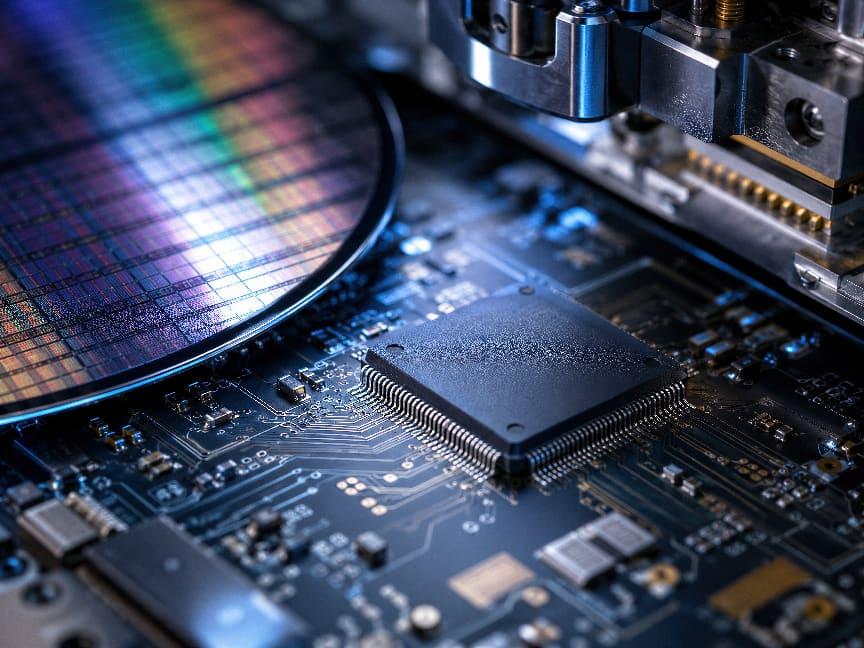
After nearly a decade of cultivation, Hefei has become one of the few semiconductor cities in China that owns the full industrial chain of design, manufacturing, packaging and testing. Among all investments, Changxin Technology is the most risky bet, because memory chips are widely recognized as a capital-consuming black hole. Changxin kept losing money after its establishment, and once recorded a huge loss of about 30 billion yuan in 2022.
Without making profits for ten consecutive years, Hefei still supported the company with tens of billions of yuan of principal all the way, until Changxin Technology landed on the Sci-Tech Innovation Board on July 27, 2026. The return of this investment is also the highest multiple of return in Hefei's investment history so far.
Hefei won another bet in the new energy vehicle industry.
In 2019, NIO posted a huge loss of 11.4 billion yuan, and its cash flow was so severe that it "could only support for three weeks". When many cities were still observing whether electric vehicles were a false demand, Hefei made a swift move. On April 29, 2020, NIO signed an agreement with Hefei state-owned capital and multiple strategic investors.
After that, NIO set up its China headquarters in Hefei, and built an integrated base for R&D, sales and manufacturing. Hefei also took further actions, introducing BYD in 2021 to build a production base; around 2024, Volkswagen Anhui, the first joint venture of Volkswagen in China dedicated to new energy vehicles, officially rolled out its first new car.
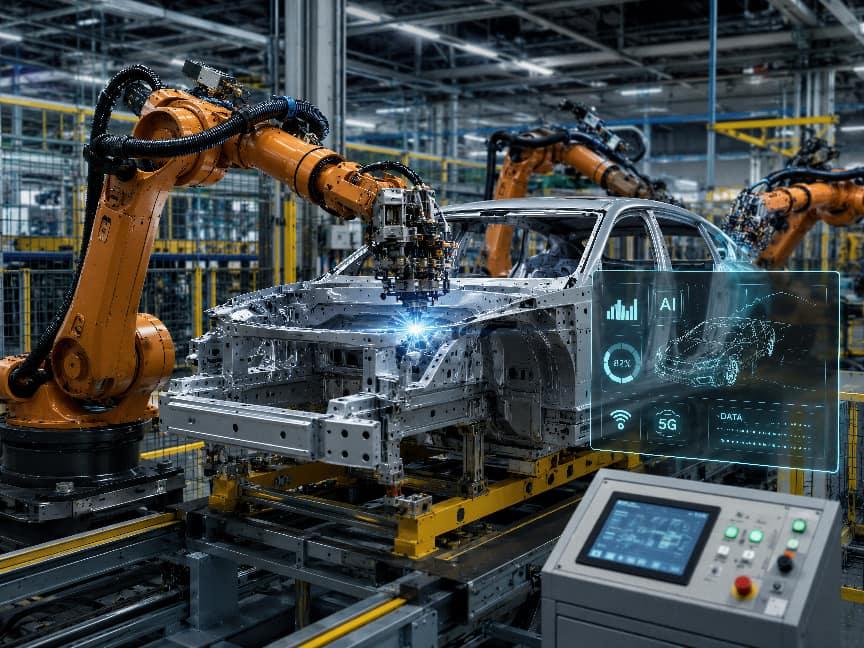
By 2025, Hefei has gathered six complete vehicle enterprises including JAC, NIO, BYD, Volkswagen, Changan and Ankai, as well as a complete industrial chain covering batteries, motors, electronic controls and intelligent cabins.
Hefei's investment in the new energy vehicle industry not only brought solid cash returns, but also "attracted enterprises through investment" to build a 100-billion-level industrial cluster.
Most cities are still in the exploratory stage of the transformation from land finance to equity finance, while Hefei has accumulated nearly 20 years of industrial investment experience. Some people said Hefei was a "gambling city" back then, but Hefei itself did not agree with this view. So how should we distinguish between speculation and investment?
02 Bold Gamble? Hefei Is No Gambling God
Are all Hefei's achievements purely due to luck? Yu Aihua, then Secretary of Hefei Municipal Party Committee, gave a widely quoted answer in the CCTV program Dialogue: "It is not venture capital, but industrial investment; it is not gambling, but hard work."
Spending money is the easiest part of investment, anyone with money can do it. The key is what you do after the money is invested. Back in 2010, there were almost no funds across the country that were willing to invest in integrated circuits and high-tech startups. Government funds dared not invest, because they were worried about being accused of "loss of state-owned assets", so they would rather not invest than make wrong decisions. Private capital had no interest in such projects, and private equity funds at that time, such as those run by coal and oil business owners, preferred to invest in real estate and entertainment industries. Overseas angel investors, although able to bear high risks, were more optimistic about internet projects that could be benchmarked against US stocks, and looked down on these early-stage hard technology projects in China.
This led to a situation where domestic industrial funds basically had no full-process capabilities of "fundraising, investment, management and exit", so Hefei needed to explore a complete set of mechanisms on its own. Sometimes, after the money was invested and the enterprise was acquired, the real difficult part just began. The government had to figure out how to operate the enterprise well, increase its value, and help it grow from small to large, instead of only thinking about reselling the company for a quick profit.
It is very clear whether Hefei is gambling. Let's break down how Hefei implements each step of fundraising, investment, management and exit.
The first step is fundraising. Where did Hefei's investment funds come from? Projects like BOE and Changxin often involve investments of tens or hundreds of billions of yuan, which no city's fiscal revenue can afford alone. Hefei's solution is: turn fiscal allocations into equity investments, and turn scattered funds into operation funds.
In 2015, Hefei integrated 18 billion yuan of government funds at one time, and reorganized to establish three major state-owned platforms: Hefei Construction Investment Holding, Hefei Industrial Investment, and Hefei Xintai State-owned Capital Management. The three platforms have different focuses without chaotic competition: Hefei Construction Investment focuses on introducing leading enterprises, it led the landing of BOE, NIO and Nexchip, with the characteristics of daring to make heavy bets and holding shares for a long time. Hefei Industrial Investment focuses on investing in early-stage, small-sized and technology-oriented enterprises. As the financial backing, Hefei Xintai provides equity, loan, bond, guarantee, insurance, leasing and other financial services for these key projects and upstream and downstream enterprises.
In addition to government investment, Hefei also cooperated with market-oriented institutions such as CITIC and CICC to build a "4+2+N" fund structure covering the full cycle of seed, angel, technology innovation and industrial investment, driving nearly 400 billion yuan of social investment into Hefei's industrial chain, leveraging more capital and social resources to support the development of local industries.
The next question is, where to invest the money?
Hefei looks for the most certain tracks in the uncertain market. During the 2008 global financial crisis, international panel giants shrank their investments, and the window for technology introduction opened briefly for China.
At that time, most cities across the country were still following the development model of land finance plus industrial infrastructure, with almost no experience in high-tech investment. High-generation LCD production lines were capital-consuming monsters with extremely high risks, and almost no cities wanted to get involved. Only Hefei took out 17.5 billion yuan, which was almost equivalent to half of its total fiscal revenue that year, to support BOE to introduce the 6th generation production line.
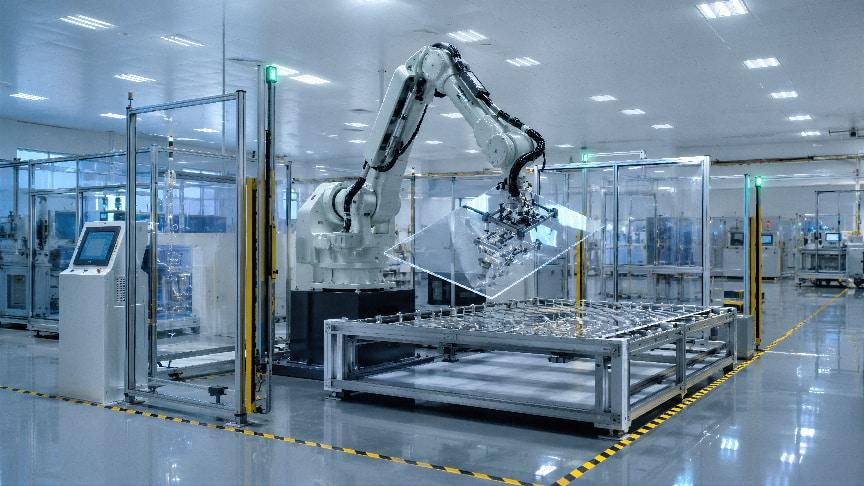
In 2010, the 6th generation production line achieved mass production and produced the first 32-inch LCD screen in mainland China, breaking the foreign monopoly. At that time, the investment was based on the core logic of domestic substitution.
The same logic applies to Changxin eight years later. Although display panels had been domestically produced, the chips that drive the screens still relied heavily on imports. Changxin Technology targeted the chip track, and Hefei made an even bolder bet, with a total investment of 24.8 billion yuan. Even when facing huge losses in 2022, Hefei continued to support the company until 2025, when it grew into the world's fourth largest DRAM manufacturer, and the AI super cycle arrived, making memory a scarce industrial resource.
The third and most easily ignored question is: after the investment, how to manage the invested enterprises and help them grow?
The logic of traditional venture capital is to wait for the invested enterprise to go public after investment, then exit and leave. But industrial investment is different, the real work only starts after the investment. Hefei's efforts to complete and strengthen the industrial chain cannot be ignored.

After BOE settled in Hefei, core upstream and downstream supporting enterprises such as Corning's glass substrate factory and Sumitomo Chemical's polarizer factory also settled in Hefei, bringing more than 100 billion yuan of investment and more than 70 supporting enterprises, forming a complete display industrial cluster. As for the integrated circuit industry, Hefei also supplemented the upstream and downstream links of the industrial chain including semiconductor design, packaging and manufacturing, which increased the overall system benefits.
Exit is the last step of the "fundraising, investment, management and exit" process, and it is also a sensitive step. If the exit pace is not properly controlled, it will affect the operation of the enterprise, or if the funds after exit are not reinvested, it will cause negative effects.
So far, Hefei's exit mechanism is relatively restrained. After BOE achieved stable profitability, Hefei gradually reduced its holdings in batches. After NIO got out of trouble, Hefei cashed out about 10.5 billion yuan in total, while still retaining about 8% of the shares. After Changxin goes public, Hefei will also gradually exit after the lock-up period expires.
It can be said that 20 years of practical experience has tempered Hefei's all-round capabilities in fundraising, investment, management and exit in the industrial investment field. Only doing resale transactions is gambling and speculation. Raising the enterprise and building a complete industrial system is the essence of industrial investment.
03 The Other Side of the "Stock God" Myth
Hefei is called "stock god" instead of "gambling god". After years of practical experience, Hefei has gradually got rid of the title of "gambling city", and Hefei's state-owned capital is known as the "best industrial investor". At present, cities across the country are beginning to transform from land finance to equity finance, so Hefei has become the object that more and more cities are trying to imitate and follow.
However, let's calm down and think: did Hefei successfully bet on every industry trend?
The list of failed investments that are not recorded in the success stories is the other side of the "stock god" myth.
In 2009, there were still disputes over display technology routes. While betting on BOE, Hefei also invested in a plasma display panel (PDP) project and established Xinhao Plasma. However, with the evolution of technology, LCD technology eventually became the mainstream of the market, and plasma technology was eliminated. In three years, Xinhao lost more than 1 billion yuan, the production line was shut down, and the equipment was dismantled and sold. This investment ended in failure.

In 2010, Hefei introduced Suntech LDK, the photovoltaic giant at that time, to invest in the construction of a solar photovoltaic project, which was the world's largest single photovoltaic project at that time. As many people know, after the global photovoltaic overcapacity and the "double anti" investigations from Europe and the United States, Suntech fell into huge difficulties, Hefei's investment suffered setbacks again, and the invested capital was almost lost.
There is also Rongsheng Heavy Industries, which was originally planned to jointly invest in waterway renovation by the provincial and municipal governments. However, when the shipping industry encountered a severe winter in