Why have the Japanese been able to "rule" Peru, a country that has produced two presidents of Japanese descent?
A while ago, Peru, a South American country, elected a new president, who is also the first democratically elected female president in Peru's history:
Keiko Fujimori.
Many people have a question: Why does this name sound like a Japanese name?
In fact, Keiko Fujimori is indeed a descendant of Japanese people.
Moreover, her father, Alberto Fujimori, has already served as the President of Peru for three terms.
But if you dig deeper into the facts, you will find a surprising situation:
Japan and Peru are separated by the Pacific Ocean. At present, among the 34 million people in Peru, there are only more than 20,000 pure Japanese descendants, and the number including mixed-race descendants is only about 200,000, accounting for less than 1% of the total population.
With such a small population, two generations of the same father and daughter have both taken the presidency.
Behind this lies the subtle and ubiquitous influence that Japan has exerted in this South American country.
From a Poor Peasant in Kumamoto to the Presidential Palace in Lima
The surname Fujimori is not rare in Japan, and it is especially common in Kumamoto Prefecture.
But it stands out very noticeably in Peru.
Why did Japanese people appear in South America?
This story dates back to the Meiji Restoration.
In 1853, US naval officer Perry led his fleet to force Japan to open its ports, ending Japan's 220-year-long national seclusion policy, and the valve for Japanese overseas immigration was thus opened.
The subsequent Meiji Restoration was exactly the trigger for Japan's large-scale immigration wave.
After the Meiji Restoration, Japan began to fully promote industrialization. The progress of industrialization was accelerated, but the price was the complete collapse of the rural economy.
Coupled with the encouragement of childbearing, the population exploded, and the contradiction between too many people and too little land was completely intensified. Overseas immigration became the "pressure relief valve" of the Japanese government.
The problem is, where could they go?
At the beginning, the first choice of the Japanese was the United States, a land of gold everywhere, and a large number of Japanese flocked to the west coast of the United States. But soon, the "Yellow Peril" theory prevailed in the United States, and white people believed that Asians such as the Japanese were cultural aliens who came to snatch their jobs. Later, the United States, Canada, and Australia successively tightened their immigration policies.
At this point, they could not go to North America, and it was difficult to enter Southeast Asia, leaving only South America as an option.
It just so happened that at that time, countries in South America successively abolished slavery, and the plantation economy developed at a high speed, with the most urgent shortage of labor force.
The two sides hit it off immediately.
In 1899, the first batch of 790 Japanese laborers arrived in Peru on the ship "Sakura Maru", marking the beginning of early Japanese immigration to South America.
Keiko Fujimori's grandfather, Naichi Fujimori, was one of the members of this immigration wave.
Naichi Fujimori was originally an adopted son of a poor peasant family in the countryside of Kumamoto. He initially wanted to go to California, the United States to make a fortune, but ran into the Asian Exclusion Act of the US, so he had to divert to Peru.
Naichi Fujimori and his fellow villagers first arrived at the port of Callao, and worked as laborers on the cotton and sugarcane plantations in the north at first. Later, after saving enough money, he opened a tailor shop in Lima.
In 1938, his son Alberto Fujimori, the legendary first Japanese-descended president in Peruvian history (often referred to as Old Fujimori by Peruvians) was born.
In 1990, Peru's inflation soared to 7600%. While the economy was on the verge of collapse, the security situation was also very worrying.
At that time, the rebel guerrilla "Shining Path" was active all over Peru, controlling almost one-third of the country's territory, and terrorist activities such as explosions and assassinations emerged in an endless stream.
When the credibility of traditional politics completely collapsed and people were panic-stricken, Alberto Fujimori emerged as a dark horse.
Due to having no political background and tight campaign funds, three weeks before the vote, his approval rating was only a mere 3%. Anyone else would probably have given up long ago.
But Alberto Fujimori took a rather unorthodox approach. In order to let the Peruvian people know him in the shortest time and increase his approval rating, he personally drove a tractor to lobby everywhere, and finally broke into the presidential election as a dark horse and was elected as the first Japanese-descended president of Peru.
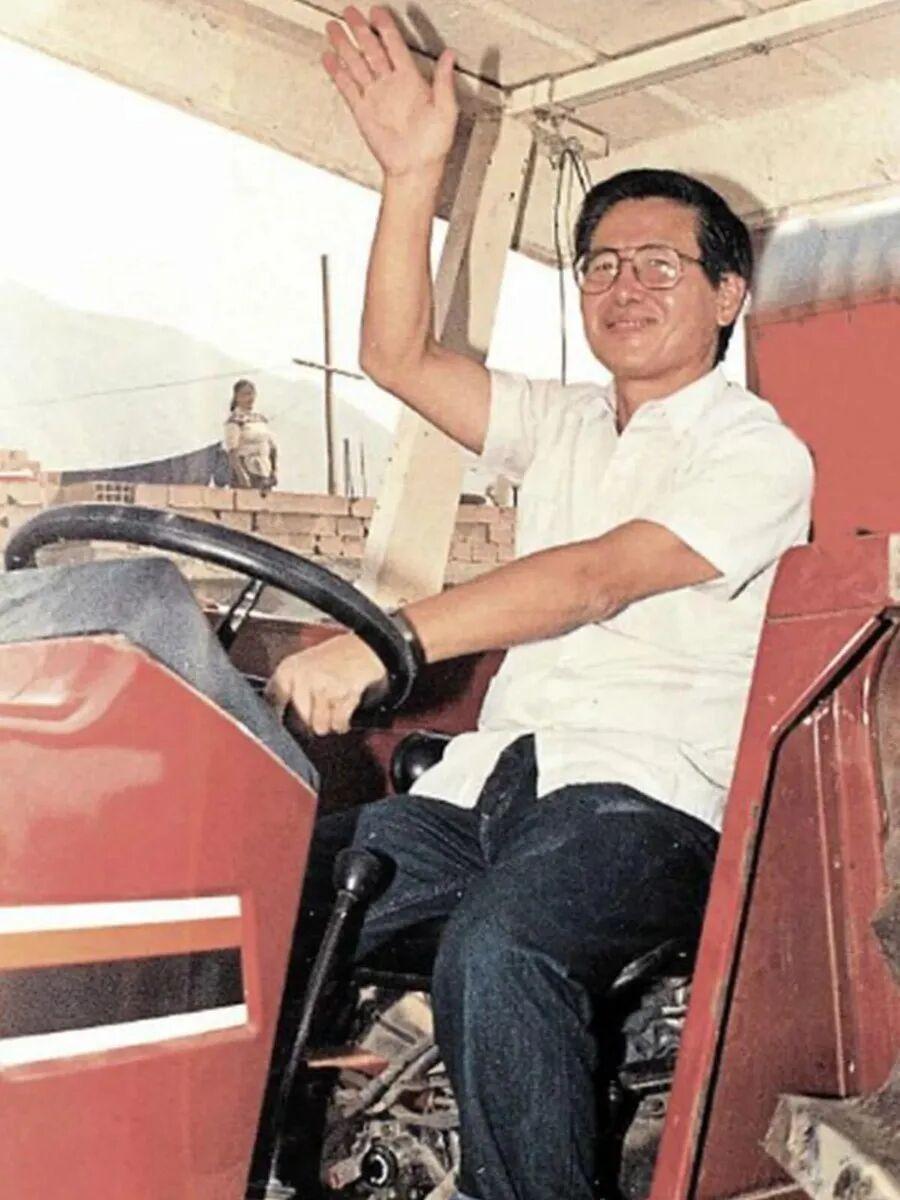
Old Fujimori campaigned by driving a tractor
Put in today's context, Old Fujimori is a real example of an ordinary person rising to success against all odds.
In 2026, his daughter Keiko Fujimori, after four elections, was successfully elected President of Peru, continuing the political life of the Fujimori family.
Two generations of Japanese descendants, father and daughter, successively served as heads of state, which can be called a miracle in the history of world immigration.
Japan's Century-long Operation in Peru
But what allowed the Japanese descendants to reach the peak of power in Peru was not the struggle of the Fujimori family alone, but the century-long operation of hundreds of thousands of Japanese overseas immigrants in South America.
The integration of Japanese immigrants did not go smoothly at the very beginning.
After the first batch of Japanese contract laborers carried by the "Sakura Maru" arrived in Peru, they soon fell into a situation of being exploited.
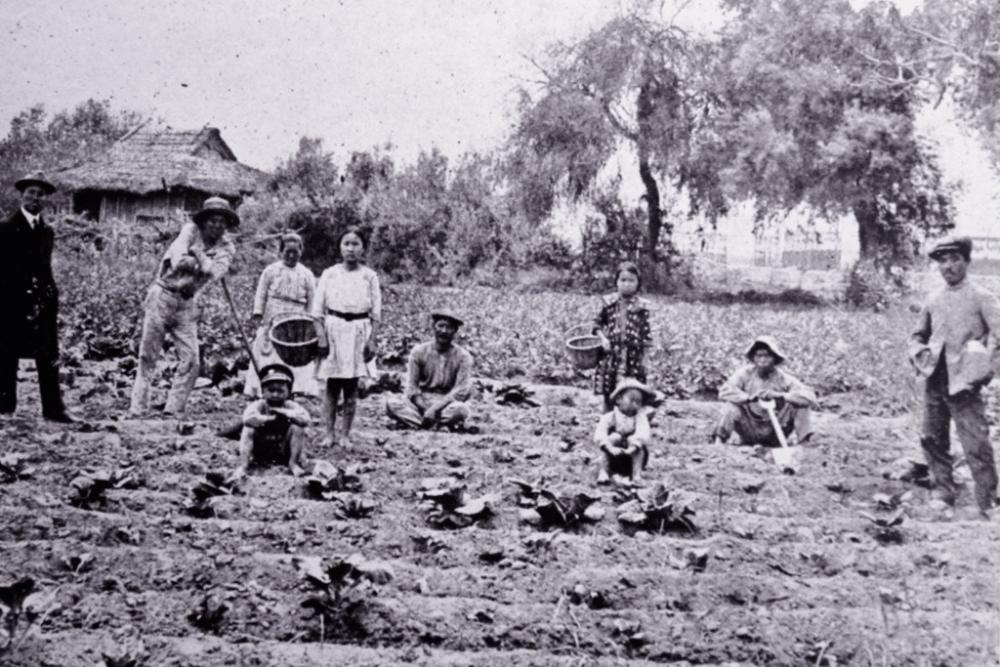
Japanese laborers on plantations in the 20th century
The previously agreed paid treatment was no longer valid. As soon as they landed, they were split up and sent to coastal sugarcane and cotton plantations, where endless hard labor, tropical diseases and restrictions on personal freedom awaited them. Many people died in a foreign land before their contracts expired.
For those lucky ones who survived the contract period or escaped from the plantations, it was extremely difficult to make a living in Peru. With no background, no resources and no language proficiency, they could only start from the most basic small businesses: barbershops, grocery stores, laundries, tailor shops...
Old stores helped new stores, acquaintances brought in new people. With the down-to-earth hard work and mutual assistance of fellow villagers, they accumulated their family property little by little.
They transformed from exploited contract laborers to local small traders and self-employed individuals, and gradually gained a firm foothold. By the 1920s and 1930s, nearly half of the people's livelihood service industry in Lima was operated by Japanese descendants.
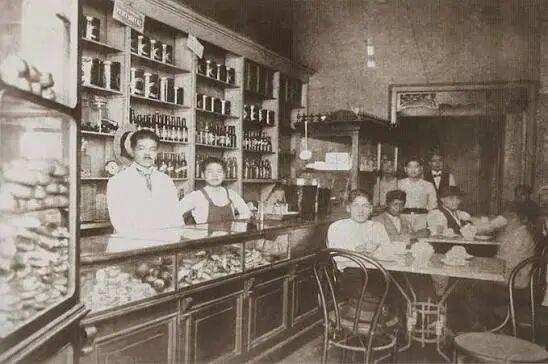
Small shops opened by Japanese people in Peru
However, the economic foothold did not bring smooth social integration to Japanese immigrants. On the contrary, the xenophobic sentiment of local traders grew louder and louder.
The reason is very simple: the small businesses of Japanese descendants became better and better, and the living space for local people became smaller and smaller. Seeing that the anti-Japanese sentiment among the Peruvian people was getting more and more serious, the government also began to launch targeted restrictions. First, it stopped the immigration of Japanese laborers, and then directly tightened the entry policy, no longer accepting new Japanese immigrants.
In 1940, the contradiction broke out completely.
In May of the same year, a large-scale anti-Japanese riot (historically known as "Saqueo") broke out in Lima.
With the acquiescence of the police, the rioters smashed, burned and looted more than 600 Japanese-descended shops and residences, and the savings of a large number of Japanese-descended families accumulated for half their lives in Peru were reduced to ashes.
And even heavier blows followed one after another.
After the outbreak of World War II, under the pressure of the United States, the Peruvian government forcibly deported nearly 1,800 Japanese descendants to concentration camps in the United States, including a large number of second-generation people born locally, the elderly and children. Peru is even the country in Latin America that has transferred and detained the largest number of Japanese descendants.
For the long decades, the path of integration of these Japanese immigrants in Peru has always been accompanied by suffering, struggle, exclusion and violence. It was not until after World War II that they gradually rebuilt their communities from the ruins and penetrated into all levels of Peruvian society with difficulty.
It can be said that behind Japan's glory in Peru and South America lies a century-long history of blood and tears of Japanese immigrants.
Invisible Legacy of Japanese Descendants in Peru Beyond the Surname
But half a century of suffering did not break the Japanese-descended community in Peru. On the contrary, it gave birth to an almost paranoid consciousness of self-proving among them.
More and more Japanese descendants realized that to truly gain a foothold in this society full of prejudice, money alone is not enough. They must master knowledge and enter the core fields of mainstream society.
As a result, the first-generation immigrants spent all their money to support their children to go to school. After receiving a good education, the second and third generations of Japanese descendants began to enter public universities, public offices, medical care and education systems in large numbers.
Alberto Fujimori studied in public schools in Peru since he was a child, and his grades were very excellent. In 1957, he was admitted to the National Agrarian University La Molina in Peru. After graduation, he went to University of Strasbourg in France and University of Wisconsin in the United States for further studies. After returning to China, he returned to his alma mater to teach, and was promoted all the way from lecturer to president, becoming a leading figure in Peruvian academic circles.
His "clean" image different from traditional corrupt elites and his identity as a locally trained scholar became important factors for Alberto Fujimori's successful campaign later.
Old Fujimori's election victory is undoubtedly a peak of the century-long operation of the Japanese-descended community, but it is by no means an isolated case.
Behind him is the huge economic context woven by the entire Japanese-descended community in South America.
During the post-World War II reconstruction period, Japanese-descended businessmen keenly seized the opportunity. They extended the small businesses that originally stayed in small grocery stores to broader fields.
More and more Japanese descendants switched from traditional service industries to tracks such as import and export trade, small and medium-sized manufacturing. Some engaged in the import of auto parts, while others engaged in precision machinery maintenance. They focused on deeply cultivating the local Peruvian market in all directions, and slowly implanted the image of Japanese people being diligent, honest and meticulous in doing things into the folk consciousness.
In the 1960s and 1970s, with the rapid growth of the Japanese economy, the Japanese descendants in Peru welcomed a historic opportunity.
As an island country with scarce resources, Japan has always had a very large demand for mineral resources such as copper, zinc and lead, and coincidentally, Peru is exactly the world's second largest copper producer and the fourth largest zinc producer.
It has no other advantages, but is rich in mineral resources.
As a result, the two sides hit it off, and Japanese capital began to pour into Peru in large quantities, promoting trade and investment cooperation in fields such as looms, mining, automobiles, fisheries, machinery, and steel.
However, these huge investment projects require a "middleman" who is familiar with local rules and understands Japanese culture.
Who is the most suitable? Of course, those Japanese descendants who can speak Japanese and have Peruvian blood.
As a result, batches of Japanese-descended elites set up consulting companies and trading companies, specially building bridges for enterprises of the two countries. The once "second-class citizens" became "strategic intermediaries" connecting the two major economies.
Slowly, Japanese-funded enterprises such as Mitsubishi Corporation Peru, Panasonic Peru, and Toyota Peru have settled in Peru one after another.
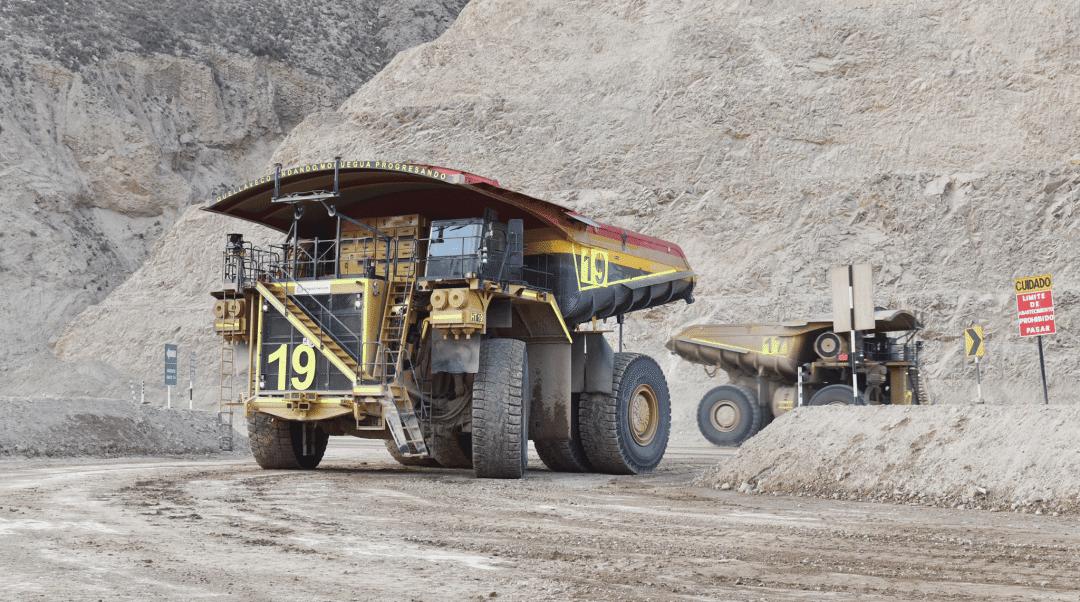
Mitsubishi Corporation produces copper concentrate at the Clavico copper mine in southern Peru
From 1968 to 1975, during the military government era led by Juan Velasco Alvarado, more Japanese-funded enterprises in more business formats such as Ajinomoto, Mitsui Mining & Smelting, as well as trade, logistics and tourism development, also began to enter the Peruvian market.
To this day, Peru has become an important partner of Japan.
In the field of resources, Peru is an important resource supplier of Japan. In 2023, Peru's exports of copper and zinc to Japan accounted for about 18% and 12% of Japan's total copper imports and zinc imports respectively; in the field of investment and technology, Japan is second only to China and the United States, becoming the third largest source of foreign investment in Peru. In 2025, Japan's direct investment in Peru reached as high as 238 million US dollars... Behind every number, the figure of Japanese-descended business people in Peru can be seen everywhere.
Many people would mistakenly think that with so many actual contributions, the number of Japanese descendants in Peru must be very large. But in fact, that is not the case.
All things considered, there are only about 20,000 pure-blood Japanese descendants in Peru, and including mixed-race descendants, the number is barely 200,000.
But with such a small size, Japanese Peruvians have become one of the most influential ethnic groups in Peru by virtue of their uninterrupted community system for a hundred years.
The Peruvian Association of Japanese (APJ), founded in 1917, is the largest and most influential core representative organization in Lima. It operates its own cultural center, Japanese language education programs and elderly activity centers, and has co-built a Japanese-descended hospital with many other communities.
The Peruvian Japanese Chamber of Commerce and Industry (CCIPJ) undertakes the function of economic and trade docking. On the one hand, it absorbs local Japanese-descended merchants and local Peruvian merchants to join the association, and on the other hand, it gathers Japanese-funded enterprises settled in Peru to connect the resources of both sides.
It is through this kind of "united" business network that the Japanese-descended community firmly controls multiple key nodes in Peru's economy, from high-end service industries to basic people's livelihood.
Nowadays, Japanese descendants occupy leading positions in Peruvian industries such as poultry farming, beverage distribution, agricultural technology, retail, and some mining supporting facilities.
In the field of mining and bulk commodity trade, Japanese giants such as Mitsubishi Corporation and Mitsui & Co. have long held shares in copper and zinc mine projects in southern Peru. Mitsubishi Corporation