Unitree's share price skyrocketed 6 times at the opening of its listing, and Wang Xingxing's 10-year long journey has entered its second half.
On August 19, Unitree Robotics officially debuted on the Sci-Tech Innovation Board (STAR Market) of the Shanghai Stock Exchange with the stock code 688836, becoming the "first humanoid robot stock" in the A-share market.
Unitree's issue price was set at 150.80 yuan per share, corresponding to an issued market value of about 60.993 billion yuan. On the first day of listing, the company's share price once surged 629% to 1,100 yuan per share, pushing its total market value to exceed 440 billion yuan in one go.
Just a few days before its listing, Unitree Robotics launched a new humanoid robot product named "Superman", which can jump 2m high in place and reach a top speed of 12.66m/s (with a 0.85m leg length), surpassing the world records of in-place high jump and running speed of all human beings.
For Unitree and Wang Xingxing, the IPO is more like a comma than a full stop. In the first half, Unitree proved that it can manufacture stable, low-cost and high-performance robot bodies; in the second half, it must answer a more difficult question: how can these bodies grow a sufficiently intelligent brain?
The Starting Point of a Founder With Uneven Academic Performance
In the traditional perception of the tech industry, most founders are backed by prestigious university backgrounds or senior management experience at large corporations, but Wang Xingxing is different. He is not a top student in the standard sense, and even has severe uneven academic performance: his English scores have long hovered around the passing line, but he has had strong hands-on ability and high sensitivity to machinery since childhood.
In 2009, Wang Xingxing enrolled in Zhejiang Sci-Tech University to study mechatronics-related majors, and after graduating in 2013, he was admitted to the postgraduate program of the School of Mechanical Engineering and Automation, Shanghai University.
During his postgraduate studies, under the guidance of his supervisor, Wang Xingxing started the R&D of the XDog quadruped robot. He independently completed the whole process from the most basic motor drive board and the whole machine's mechanical structure to the complex whole machine motion control algorithm.
Originally, Wang Xingxing was supposed to graduate in mid-2015. But as the graduation season approached, the XDog robotic dog was only half finished, and the semi-finished product had no value at all, so Wang Xingxing voluntarily applied for a delayed graduation.
When his classmates put on their academic gowns one after another and stepped into the society, Wang Xingxing still stayed in the laboratory, devoting all his efforts to codes and parts. It was a period wrapped in enormous pressure.
A turning point came in August 2015. At that time, Wang Xingxing participated in the Shanghai Robot Design Competition with his XDog. This robotic dog with a total R&D investment of only 10,000 to 20,000 yuan finally won the second prize, earning him a bonus of 80,000 yuan. This event greatly inspired Wang Xingxing, and the money also became the start-up capital for his later entrepreneurship.
Around the competition, Wang Xingxing had the idea of starting a business, and also contacted several investors to try to raise a round of financing. But he did not succeed.
At that time, China was at the end of the mobile Internet boom, with Didi, Meituan and Ele.me raising billions of dollars in financing, while the live-streaming war and shared bicycles were also "burning money to expand scale".
In contrast, the robot track at that time was still in the stage of non-consensus. Public attention was mainly focused on the American "internet-famous" player, Boston Dynamics. In February 2016, before Wang Xingxing graduated, Boston Dynamics released the latest generation of motion video of its bipedal robot Atlas, which could not only carry boxes and walk independently on complex terrains such as snow, but also get up on its own without manual intervention after falling, and was regarded as the "ceiling of robot motion control" at that time.
However, no one expected that shortly after this highlight moment, due to commercialization difficulties and inconsistent development concepts, Google began to arrange the sale of the company, and then Boston Dynamics went through a turbulent period under the ownership of SoftBank and Hyundai Motor.
After graduating in 2016, Wang Xingxing got an offer from DJI with his performance in the robot competition and joined the company smoothly. But this job lasted for less than three months. During this period, a test video of XDog was reposted by overseas media and became popular unexpectedly. After the video went viral, some people contacted him to buy robots, and some investors also took the initiative to extend an olive branch to him.
Subsequently, Wang Xingxing made that fateful decision to resign and embark on the road of entrepreneurship. The timing was not exactly favorable in all aspects, but for him at that time, it was already the best opportunity he could seize.
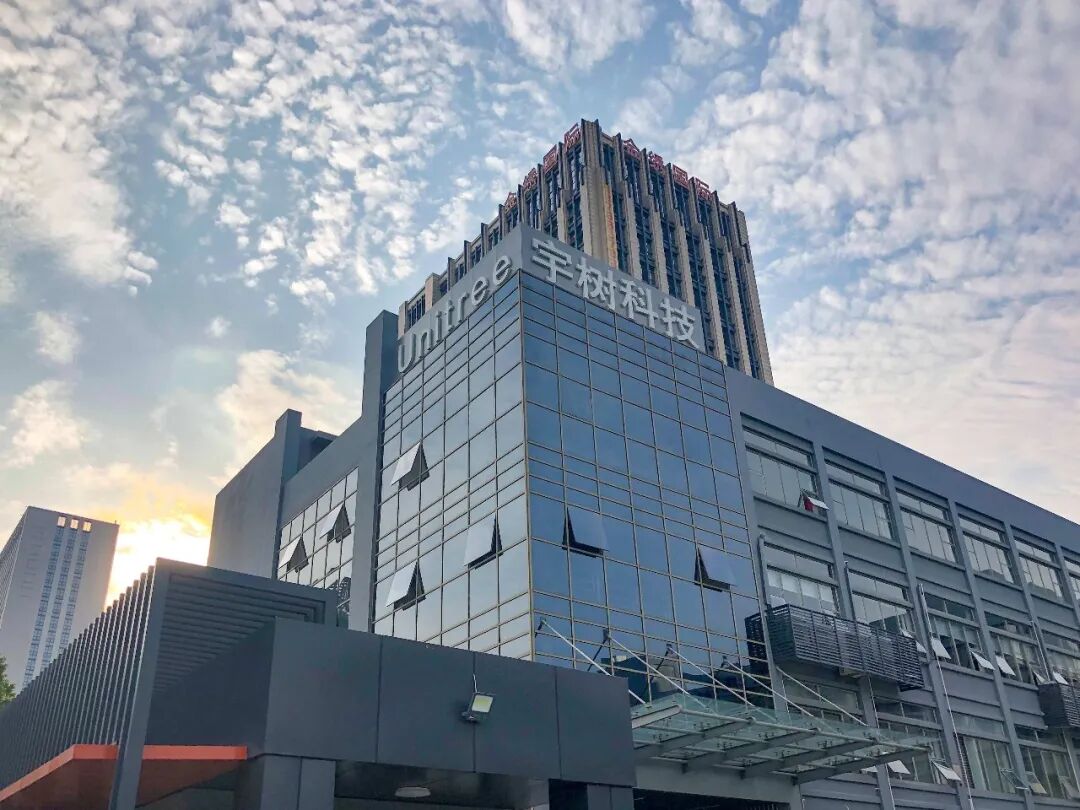
In August 2016, Unitree Robotics was officially established in Hangzhou. In the early stage of entrepreneurship, this was probably one of the most anxious moments for Wang Xingxing. Compared with many embodied intelligence entrepreneurs now, Wang Xingxing had a very low starting point for entrepreneurship back then: no prestigious university background, no experience as a senior executive at a large company, and only 2 million yuan in angel round financing with a valuation of only 10 million yuan.
At the same time, he also had to be on constant guard, worrying that a large company with abundant resources would suddenly emerge one day, plunge into this track, and crush him, this "grassroots player" directly.
Thrilling Moments in 10 Years of Entrepreneurship
For Unitree and Wang Xingxing, they have believed in one thing from the first day of entrepreneurship: to make the robot body solid first. He did not first depict a grand future, but first answered several most simple questions: can the robot be manufactured stably, how will customers use it after buying it, and how many times can it fall and still keep working. All designs related to structure, motor and control system are derived from these questions.
This idea sounds unremarkable, but in the era around 2016 when "Copy From America" was prevalent, it was particularly alternative.
At that time, almost all domestic robot entrepreneurs were imitating the same benchmark, Boston Dynamics. It took the hydraulic route, relying on high-pressure oil to push the joint piston to generate force, trying to simulate the texture of human muscle contraction. It sounded cool and the effect was really amazing, so most domestic teams plunged into it, trying to replicate the same technical path.
But Wang Xingxing did not follow. His judgment was straightforward: the hydraulic route could not work at all on the road to commercialization. The hydraulic rod is an extremely precise mechanical component, and the requirements for machining accuracy are so strict that they are almost abnormal. At that time, the domestic supply chain level still had a clear gap with the foreign precision level. What was more tricky was the cost: the hydraulic solution was inherently expensive, and there were structural defects in control accuracy, making it difficult to perform delicate and precise motion interactions. These problems could not be solved just by pouring money and spending time, but were the ceiling of the route itself.
So Wang Xingxing bet on another path: the motor solution. This choice seemed a little "less cool" at that time, because the motor was indeed inferior to the explosive power of the hydraulic system in terms of absolute power output. But what Wang Xingxing valued was another set of indicators: easy operation, low cost and extremely high precision. These are the combination that can truly support mass production and commercialization. Facts have proved that this path is feasible and can go further.
The correctness of the technical route takes time to verify, but the cruelty of reality often comes in advance.
In the autumn of 2017, Unitree officially released its first quadruped robot named Laikago, and began to accept intent orders. But from the prototype to mass production, there is a huge gap that requires a huge amount of capital to fill. Unfortunately, from the second half of 2017 to 2018, the capital market entered a cold winter, and financing was extremely difficult.
In 2018, Unitree reached the most dangerous crossroads since its establishment. The first 2 million yuan of financing was about to run out, and the company's book had only a mere 100,000 to 200,000 yuan left at its lowest point. In order to keep the team, Wang Xingxing decisively stopped paying his own salary, and even took out his personal savings to pay salaries to employees. This seemingly solemn and stirring experience later became something he was very proud of when recalling his entrepreneurial journey.
The turning point came in early 2018. An investment from Variable Capital, which had just been established not long ago, pulled Unitree back from the edge of the cliff. When Wang Xingxing reviewed this financing later, he said very frankly, "At that time, we couldn't pay the salaries, but in early 2018 we got the investment from Variable Capital and got through the difficult time."
Interestingly, what facilitated this investment was not any exaggerated market story. In that era when the robot track was still in a state of non-consensus, instead of depicting a vague and grand market like most entrepreneurs, Wang Xingxing spent two or three hours analyzing his products and technical details with investors in a very objective and down-to-earth manner. It was precisely this persistent focus that impressed Zhang Peng, the founding partner of Variable Capital. That was exactly the entrepreneurial temperament most needed in the early stage of hard technology entrepreneurship.
At the same time, with the development of smart electric vehicles and assisted driving technology, Zhang Peng and Variable Capital also saw a greater trend: electrification and intelligence are also spreading to more industries including robots. The electric drive solution chosen by Wang Xingxing happened to be on this main channel leading to the future.
In retrospect, this is precisely the most critical choice in his entrepreneurial career: instead of catering to the narrative and needs of the mainstream capital market, he insisted on being himself, and then luckily waited for the emergence of people who shared the same worldview with him.
After this key investment, Unitree's products were quickly recognized in the market. At the end of 2018, the products were shipped smoothly, and the company achieved revenue of millions of yuan in that year. It is extremely rare for a very early-stage company to generate positive cash flow.
From Quadruped Robots to Humanoid Robots
The persistence in quadruped robotic dogs and motor solutions allowed Unitree to continuously break through the industry ceiling and survive. But what really made Unitree break out of the circle and be remembered by the public is the humanoid robot.
There is a thought-provoking reversal in this process: many people thought Wang Xingxing was a "skeptic" of humanoid robots. Wang Xingxing firmly chose quadruped robots in the past, because they could already achieve extremely high flexibility and easily cross stairs and obstacles. In the real world, flat ground is only a minority, and rugged terrain is the norm. The quadruped form is more stable than the biped form and simpler than the multi-legged form, which was the optimal solution that could be quickly implemented and adapt to complex scenarios at that time.
But the truth is not entirely like that. As early as 2009, when Wang Xingxing just entered the university, he used a winter vacation to personally make his first robot product, a small humanoid robot.
But after the excitement passed, Wang Xingxing soon realized that with the technical level at that time, the complexity of humanoid robots far exceeded the scope that humans could master. Even if he forced to make one, there was almost no way for commercialization, and the final destination would only be toys or laboratories.
Therefore, from 2018 to 2021, investors kept asking Wang Xingxing the same question: will you develop humanoid robots? His answer was always no. This is not because he does not want to or does not love it, but out of awe of the technology cycle. When the conditions are not yet mature, entering the market too early or too late is not a wise move.
The historical turning point occurred in 2021. At that time, the global humanoid robot sector was in a downturn. Honda's iconic ASIMO announced the stop of R&D in 2018, and the industry was almost silent. At this juncture, Musk made a high-profile entry with Tesla's humanoid robot Tesla Bot, which suddenly stirred up the views of capital, the government and the scientific community on humanoid robots.
At first, many insiders including Wang Xingxing regarded the Tesla Bot as a show, thinking that Musk was just "talking for fun". But only one year later, in October 2022, Tesla came up with a real prototype, which really shocked Wang Xingxing. He later commented that, everyone should thank Musk for promoting this industry. He is equivalent to setting a direction marker for the entire track, pulling the things that were originally sunk under the water surface out in advance, so that everyone can see where the direction should go earlier.
Shortly afterwards, at the end of 2022, ChatGPT was born out of nowhere. The amazing capabilities demonstrated by large language models instantly ignited the confidence of the entire tech industry in AI. The superposition of these two events made Wang Xingxing keenly capture a signal: the window period for humanoid robots has arrived.
In 2023, Unitree officially entered the humanoid robot track. In less than 6 months, with only 3 employees, Unitree launched its first humanoid robot H1 to the market. It can not only run and perform backflips in place, but also will not fall even if kicked, with its dynamic performance reaching the world's top level, while the selling price is only about 90,000 US dollars. By 2024, the second product G1 further reduced the price to 99,000 yuan, significantly lowering the procurement threshold for developers and institutions.
This almost "abnormal" R&D efficiency is not backed by a miracle, but by the accumulation of water flowing into a channel. The requirements of humanoid robots for joint torque, whole machine integration and AI balance ability are several orders of magnitude higher than those of quadruped robots, but the underlying principles of the two are highly homologous. The joint motors, reducers, sensors, electronic control systems and control algorithms that Unitree has developed in the quadruped field in recent years can almost be directly transplanted to humanoid robots.
If the obsession with the robot body allowed Unitree to gain a firm foothold in the industry, then the stage of CCTV Spring Gala made it break out of the circle and become a national-level technology brand.
Especially on the stage of the 2025 Spring Gala, 16 H1 humanoid robots dressed in floral cotton-padded jackets accurately completed more than 130 complex dance moves such as spinning handkerchiefs and doing Yangko dance in the performance "Yangko BOT", with the coordination of 19 joints all over the body almost perfect. And in 2026, more than 20 units of G1 and H2 even performed hard-core martial arts such as running, flipping over tables, kicking walls and even consecutive backflips in the performance "Wushu BOT", with the fastest running speed reaching an astonishing 4 meters per second.
To some extent, the stage of Spring Gala is a big test for Unitree's motion control, group coordination and engineering reliability. And Unitree also withstood this harsh test, amazing the public.
After Building the Body, It Is Necessary to Create a Smart Brain
Different from many entrepreneurs, Wang Xingxing is not a super optimist who firmly believes in "great force brings great miracle", and will not pour money into following the trend just because a certain concept is hyped. This inherent restraint and rationality have kept Unitree always sober-minded.
Unitree's past achievements are largely derived from its long-term obsession with body engineering. In that early startup era of extreme shortage of capital and resources, Wang Xingxing had to use limited resources in places that could keep the company alive, and created robot bodies that run more stably, cost less and have stronger performance.
Today, Unitree is already the company with the world's top body capability. The figures in the prospectus can well illustrate the problem: the self-developing rate of core components exceeds 90%, and Unitree has almost mastered all key links including high-torque motors, precision reducers, joint modules, whole-body motion control algorithms and sensor fusion.
But Wang Xingxing is not a conservative who only stares at hardware and turns a blind eye to cutting-edge trends. In fact, he has been keeping a high degree of attention to more cutting-edge directions such as large models and world models.
At the 2025 World Robot Conference, Wang Xingxing put forward some "non-consensus" views. He was skeptical of the VLA model, considering it a "relatively fool-style architecture". These remarks caused quite a stir at