Wang Xingxing's 2016
In March 2016, three years after acquiring Boston Dynamics, Google, which saw no promising prospects for the firm, decided to sell it.
Before the news of the sale was finalized, a robotics enthusiast on Zhihu posted his insights under the question "How do you evaluate Google's attempt to sell Boston Dynamics, the robotics company it acquired in 2013?":
"If this news is true, then please think twice before selling the company you founded through hard work, even if the buyer is Google." Right after that, he took the opportunity to promote his own research:
"During my master's degree, I worked on XDog, a quadruped robot driven purely by electric motors. Fortunately, Google's plan to launch a low-cost electric-driven quadruped robot seems to have not been implemented, otherwise my research project would be completely meaningless ^_^".
Someone in the comment section asked him: "What is the respondent's major?" This unknown figure replied: "I studied mechatronics for my bachelor's degree, and accidentally ended up in mechanical engineering for my master's."
Ten years later, everyone knows his name: Wang Xingxing.
Unitree Robotics, the company he founded, was officially listed on the Sci-Tech Innovation Board today. It took only 73 days from filing for IPO to being approved, which is almost a "speed miracle".
Today, Unitree officially rang the bell for its listing on the Sci-Tech Innovation Board, with an opening price of 1100 yuan per share and a market value exceeding 300 billion yuan. At the listing ceremony, Wang Xingxing recalled 2016, when he followed his original aspiration of "using technology to drive the progress of the world" and planted a future-oriented technology tree.
The significance of Unitree's listing is self-evident. It was born during the "non-consensus period" of Chinese robotics, and evolved into an outstanding player over ten years. At the same time, Unitree also represents a typical Chinese path in the field of cutting-edge technologies:
Leverage China's hardware and engineering capabilities, do what you are best at at the right node, and be a technical founder who does not carry too much elite narrative.
But Wang Xingxing is not that "typical".
In the article that made the cover of *Time* magazine, Wang Xingxing was described by overseas media as "not a typical prophet in the era of artificial intelligence", because he does not have the flamboyant confidence and aura that many tech entrepreneurs have.
Looking back on the ten years of Unitree and Wang Xingxing, they are of course the lucky ones selected by the era, but few people face up to a fundamental question:
Why exactly is Unitree?
For a start-up company that has been established for ten years, the most important ability to survive is often not to make empty promises, but how to raise capital, generate revenue, and manage cash flow.
And this is exactly the key point where Unitree is underrated.
Many people describe Unitree's extreme advantages in hardware and engineering as a "partial subject specialist", but ignore that in a track with high uncertainty, Unitree has almost reached the "ceiling" of a start-up company in terms of raising capital, managing cash and generating revenue.
1. Raise Capital in a More Restrained Manner
Let's go back to 2016.
In that year, the world's attention was focused on Boston Dynamics, and all star projects had the word "sharing" in their names.
The fledgling Wang Xingxing did not follow the prevailing trend, but struggled to raise funds in the "non-consensus" robotics track.
In today's embodied intelligence boom where a single round of financing often reaches billions and the valuation hits tens of billions, some young talents in the embodied intelligence field can get early financing just by relying on their papers, academic qualifications and demos. They cannot empathize with the hardships of this "senior fellow".
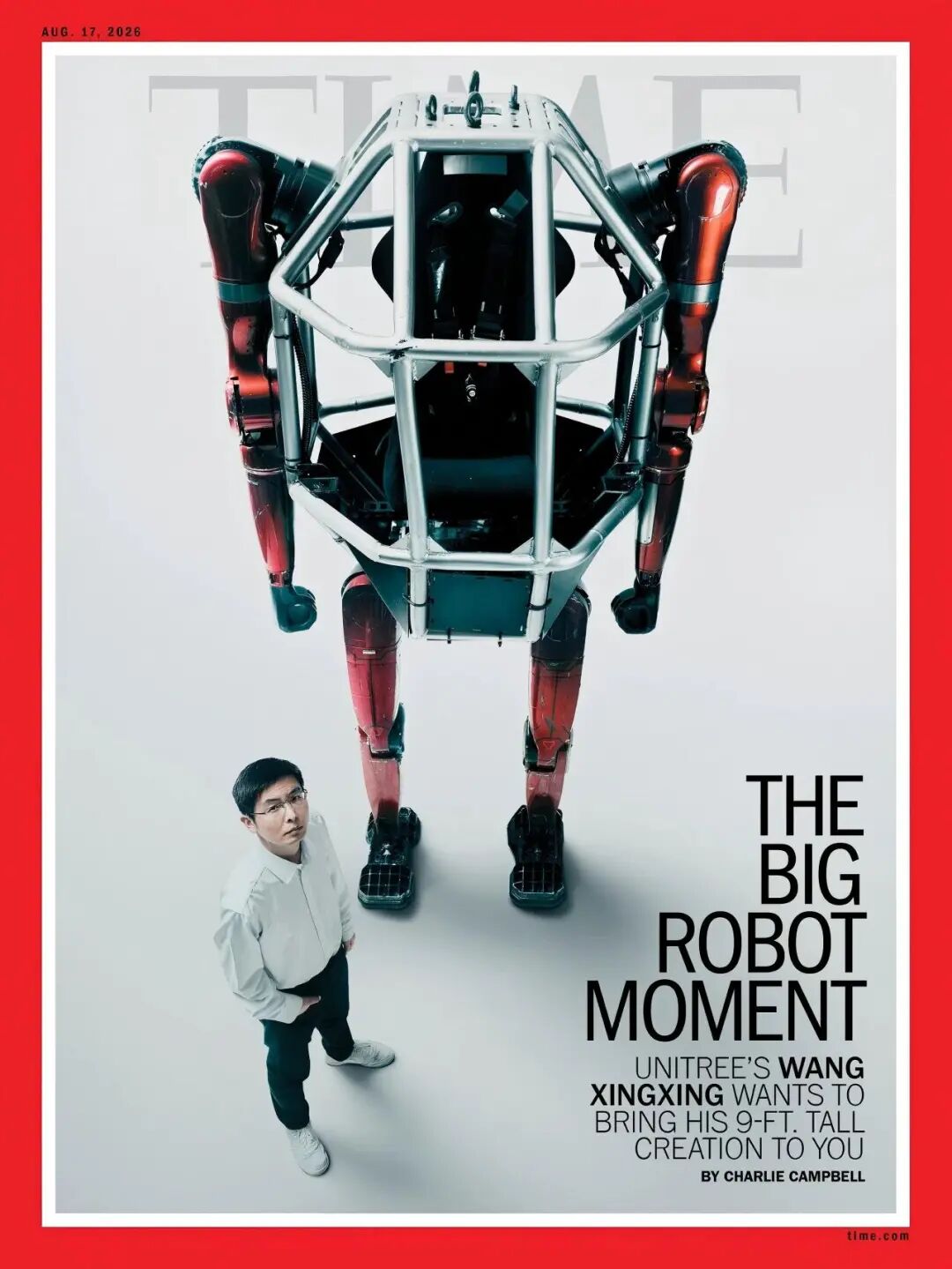
Both Wang Xingxing and Unitree have gone through the cold days and heard investors say "I don't understand your project".
In the early stage of starting a business, he met many people, demonstrated the robotic dog countless times, and talked about his electric-driven robotics technology route many times. But at that time, most domestic robotics companies adopted the hydraulic route of Boston Dynamics, so "not understanding Unitree" was the consensus.
Logically speaking, most early-stage startups are short of money, and Unitree, which had difficulty raising funds, is even more so. However, in the non-consensus era of embodied intelligence, Wang Xingxing always remained restrained in "raising capital".
In fact, throughout Unitree's history, the three most critical sums of money Wang Xingxing raised are all "rational capital" that understands Unitree the most.
The first sum of money, the first fund right after its establishment, was 2 million yuan from angel investor Yin Fangming.
At that time, Wang Xingxing had just graduated and left DJI, and robotics was still an unpopular track. The industry was not optimistic about the quadruped robot he built by hand, but this "disappointment" could probably only be understood by his peer Yin Fangming.
Before investing in Wang Xingxing, Yin Fangming founded his own AI hardware enterprise Roobo in 2014. In 2015, Roobo also invested 4 million US dollars in a South Korean team that developed the pet robotic dog DOMGY.
Yin Fangming later told the media in 2017: "We have invested in more than ten domestic and foreign enterprises that are good at robotic mechanical motion."
Although Unitree is not the "only" bet of this serial entrepreneur, this sum of money from a peer allowed Unitree to build its early team and complete the prototype development of the Laikago robotic dog.
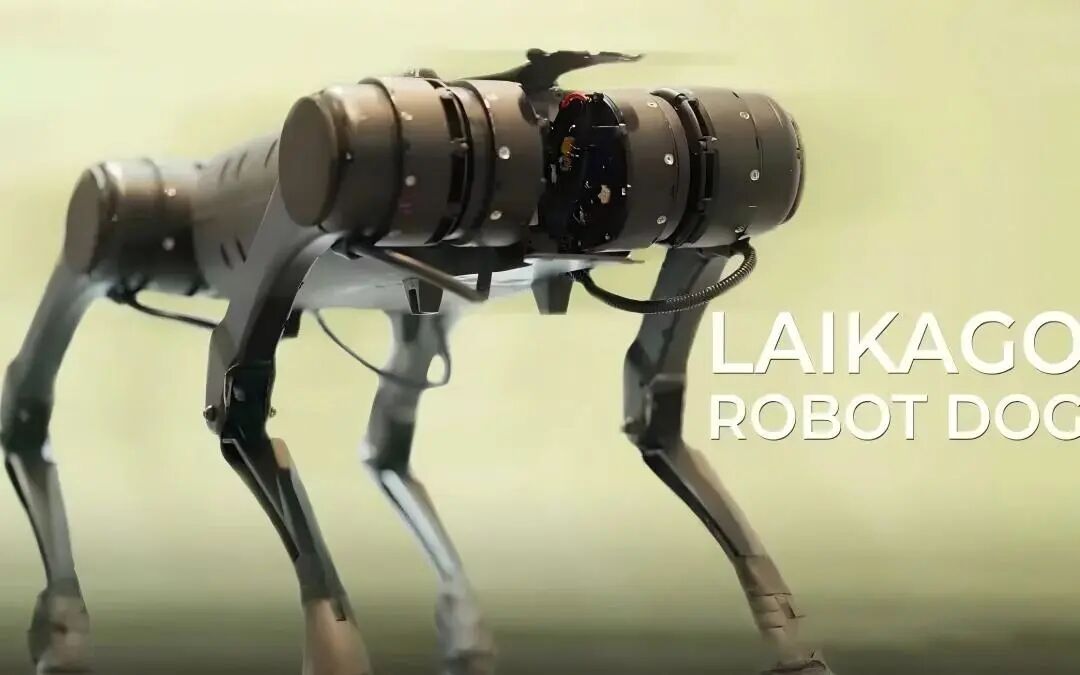
Laikago Quadruped Robot Source: Internet
The second sum of money came from Variable Capital, founded by Zhang Peng, the founder of Geeker Park. He joined hands with Arm's Incubator to participate in Unitree's angel round.
This sum of money was also the "life-saving fund" for Unitree.
In 2017, Zhang Peng came to Wang Xingxing's office in Binjiang, Hangzhou. On the first floor of a building without a house number, surrounded by factories, he met Wang Xingxing. Zhang Peng recalled that the place "felt like a garage, piled with all kinds of parts".
After Wang Xingxing demonstrated the product to him, the two could not even find a place to sit down and chat. But what drove Zhang Peng to invest was Wang Xingxing's pragmatism and calmness, as well as the consensus on the technical route between the two sides.
Zhang Peng later recalled the feeling Wang Xingxing brought to him: Facing such a tech boom, Wang Xingxing was more conservative than himself. He did not talk about grand ideals and application scenarios, and all he talked about were the problems that needed to be solved in technology.
For Wang Xingxing, Zhang Peng did not question Unitree's technical route too much, because this front-line tech observer saw the mechanical cheetah with electric drive solution at MIT in 2015.
The third sum of money that really brought Unitree into the vision of mainstream VCs came from HSG.
Li Yannan, Vice President of Investment at HSG China Seed Fund, started to contact Wang Xingxing in early 2019. At that time, he had just joined HSG to do investment, and it was only one year after the establishment of HSG China Seed Fund.
Recommended by a senior fellow from the university who studied mechanical engineering, Li Yannan got to know this "geek who makes quadruped robots in Hangzhou".
During their first communication, Wang Xingxing told him his vision of "making robots with robots", and showed the load capacity of the second-generation quadruped robot AlienGo.
At the stage of the formal investment review, because high-speed trains do not allow high-energy batteries, Wang Xingxing carried the product and took a car ride for more than ten hours to go to HSG's Beijing office for roadshow. HSG immediately issued a letter of investment intent on the spot.
Early-stage investment certainly values people, and HSG is no exception. But Li Yannan emphasized that he is vigilant against those "arrogant and unaware" reckless entrepreneurs, and Wang Xingxing is obviously not this kind of person.
Not every startup can maintain restraint in raising capital. Investment is an art of mutual understanding. Wang Xingxing realized very early that only rational capital that understands you best can achieve mutual success.
2. Generate Revenue with Clear Boundaries
Let's go back to 2016.
That year was also the year when a large number of Chinese tech enterprises rose.
In that year, Chen Yunji and Chen Tianxi, two brothers from the Chinese Academy of Sciences, were determined to transform their research directions into commercial achievements, and Cambricon, an AI chip enterprise, was born. On the other side, Yu Kai also saw the opportunity of chip entrepreneurship. He left Baidu and founded Horizon the year before.
Unitree and Wang Xingxing obviously do not belong to the above perfect narrative of "scientists starting businesses", but they understand better than scientists how to make money and what is a self-sustaining business model.
Most hard tech projects require patience, because the capital invested cannot generate returns in 3 to 5 years. Although investors require entrepreneurs to answer questions about business models, everyone knows that they are far from real self-sustainability.
The commercialization of many cutting-edge tech enterprises has to go through wobbles without clear boundaries, because it is difficult to give an answer about what to do and what not to do.
Boston Dynamics, which the whole world is paying attention to, has changed owners from Google to SoftBank and then to Hyundai Motor, but no returns have been seen so far.
In contrast, 8 years after its establishment in 2024, Unitree has achieved annual profit. This is not only a small probability event among AI chip and embodied intelligence enterprises, but also makes Unitree an excellent student even when compared across industries with mature new energy vehicle and consumer electronics sectors.
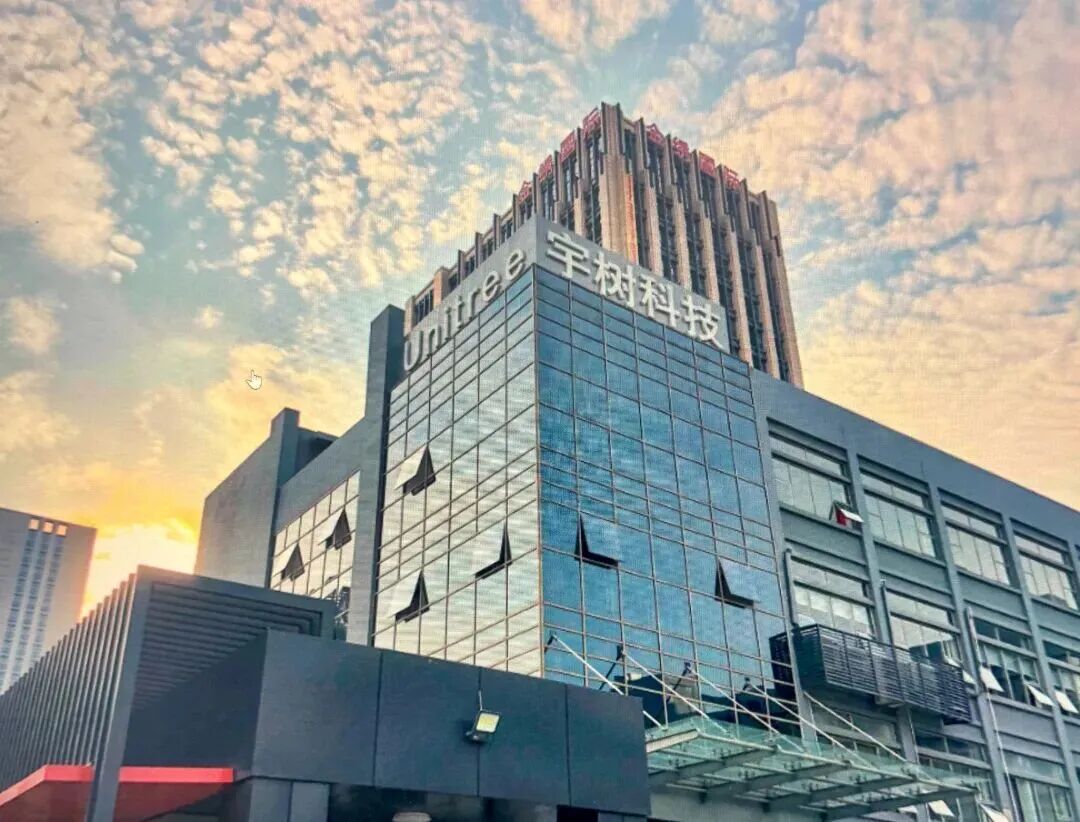
Wang Xingxing clarified the rules for Unitree to generate revenue in the early stage very early.
First, firmly avoid the C-end market, adopt the strategy of "encircling the cities from the rural areas" to find application scenarios that are acceptable to customers outside the giants, such as scientific research.
Compared with the large orders of millions or tens of millions of yuan in the B-end market, although scientific research is not glamorous, it is indeed a scenario that allows Unitree to "live very well".
On the one hand, scientific research institutions do not require Unitree to spend a lot of effort on maintenance and marketing. Unitree only needs to sell standardized hardware, and users can carry out secondary development, which also helps Unitree optimize its ecosystem and iterate its technology and products imperceptibly.
On the other hand, this is also a shortcut to go global. Many of Unitree's later investors saw Unitree's products in overseas scientific research laboratories, which is a scenario that effortlessly verifies its own technical value.
Second, do not develop humanoid robots for the time being, but make the quadruped robotic dog that he was familiar with since his graduate school days to the extreme.
This "extreme" is reflected in two aspects: first, to occupy the market share of a single category, and take the first-mover advantage with scale; second, full-stack self-development. On the robotic dog, Unitree has mastered the full independent production capabilities from motors, reducers, joints, motion control to complete machine design.
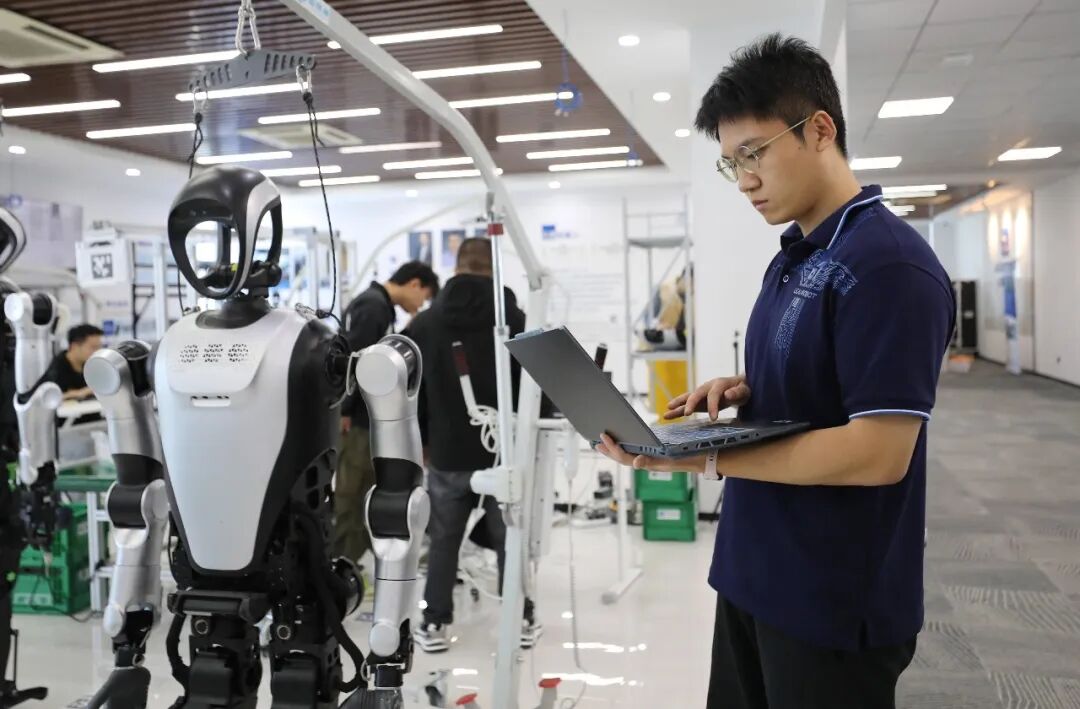
These R&D and assembly capabilities were later proved to be quickly reused in its later humanoid robot project.
How a startup generates revenue, the "infinite game" is certainly worthy of praise. Unitree also sold a fitness pump product in its early years, but knowing its own capability boundaries and choosing "what not to do" is even more admirable.
Because not everyone can see this layer of "boundary".
3. Learn from Predecessors to "Manage Cash Flow"
Let's go back to 2016.
In that year, the shared bicycle war broke out. Many years later, after the bubble of the sharing economy faded, people realized that the Internet traffic playbook cannot completely transform the complex offline business.
Also in that year, a Chinese enterprise named Royole stepped onto the center of the tech stage. In the year when Unitree announced its annual profit, this star company went bankrupt.
For startups, compared with "burning money", the key is to learn how to manage cash flow, which is a discipline that requires planning.
Peter Thiel, the godfather of Silicon Valley venture capital, answered the question "Does the success of a startup depend on luck or skill?" many years ago, he also mentioned that planning precedes opportunity.
"The long-term planning of an enterprise is a kind of design. Every great entrepreneur is first and foremost a designer."
In terms of "how to manage cash flow", Wang Xingxing is also an excellent designer, and he has learned the essence of Chinese predecessors such as BYD and Xiaomi ——
First, learn from BYD to use the vertical integration method to save costs.
As mentioned earlier, different from most robotics companies that purchase core components externally, Unitree's full-stack self-development advantage not only gives it extreme cost control capabilities, but also strengthens the gravity of the supply chain.
In a recent report, SemiAnalysis compared Unitree's rise path to that of BYD.
BYD took control of batteries, the core component of electric vehicles, and then through vertical integration, from motors and battery cells to engines, it finally realized the control of key components, thus forming the "BYD chain" that nurtured the supply chain infrastructure of China's new energy sector.
The same is true for Unitree. According to SemiAnalysis, driven by Unitree, there are now several factories in every province in China that manufacture gearboxes and high-torque motors of adapted specifications. There are about 200 humanoid robot companies in China that are using and feeding back this ecosystem.
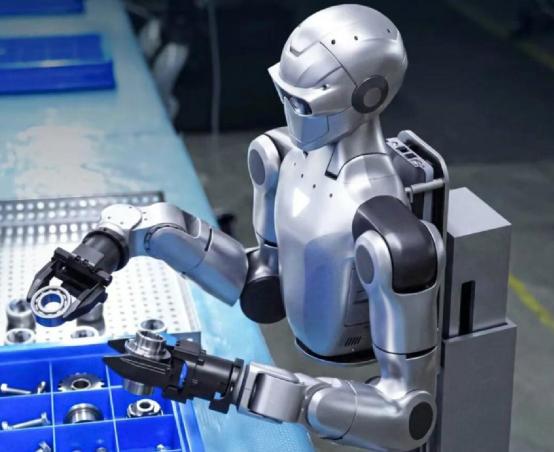
Second, learn from Xiaomi to expand the ecosystem horizontally and increase investment in the "brain" part.
Unitree has no shortage of ontology and "cerebellum" capabilities, and its biggest short board is the "brain".
Wang Xingxing, who used to be restrained in AI, also realized this. Nearly half of the funds raised from IPO are used for intelligent robot model R&D projects.