Japanese and South Korean stock markets plunged sharply
At the opening this morning, the KOSPI opened 5% lower, with losses widening immediately. Only 8 minutes after the opening, the Korea Exchange activated the SIDECAR mechanism to suspend programmatic selling on the KOSPI. As of press time in the early morning session, the South Korean stock market fell 6.71%, Samsung Electronics dropped 7.64%, and SK Hynix slumped 9.51%; the Nikkei 225 opened 0.96% lower before its decline expanded to 3%.
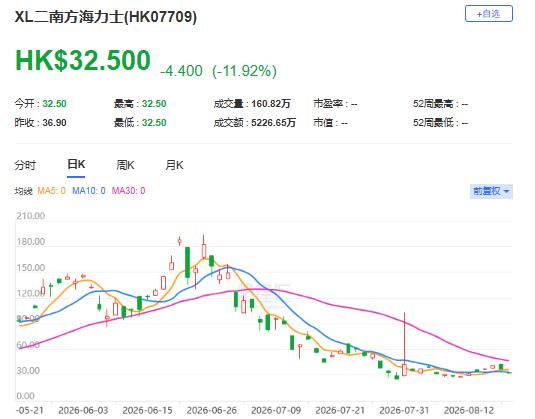
(2x long SK Hynix; Gelonghui)
Overnight, U.S. stocks fell first. On August 18 local time, the Nasdaq closed down 1.33% at 26289.71 points, the S&P 500 fell 0.69%, and the Dow Jones Industrial Average dropped 0.22%, marking the third consecutive trading day of declines for all three major indices.
The Philadelphia Semiconductor Index plummeted 4.98%, with all memory concept stocks tumbling sharply: Kioxia ADR fell more than 13%, SanDisk, SK Hynix ADR, and Seagate Technology dropped over 9%, while Micron Technology and Western Digital slid more than 7%; the optical communication and AI cloud service sectors retreated in tandem, with Coherent and CoreWeave down over 12%.
The last straw that crushed global risk appetite landed in the U.S. Treasury market.
The yield on the 30-year U.S. Treasury note touched above 5.33% during the session, hitting a new high since June 2007; the 10-year yield rose to 4.72%, the highest level since January 2025. Yields on long-dated government bonds across the world are rising collectively, with the yields of UK, French, German and Japanese government bonds all at multi-year highs.
The upward push of this round of long-end interest rates comes from both supply and deficit sides.
The U.S. government's annual fiscal deficit of nearly $2 trillion continues to push up the supply of government bonds, and the AI boom has spawned a wave of corporate bond issuance. In August, the issuance of U.S. investment-grade bonds has reached $1452 billion, exceeding the monthly record of August 2020. The concentrated supply of duration assets has driven long-end yields higher all the way.
What further fermented long-end concerns was the Wall Street Journal's report on off-balance-sheet commitments of tech giants.
Nine companies including Alphabet, Microsoft, Amazon, Meta, Oracle, NVIDIA, Broadcom, AMD, and SpaceX disclosed a total of about $3 trillion in off-balance-sheet commitments in the notes to their latest financial reports, which is 5 times their total capital expenditure in the past year.
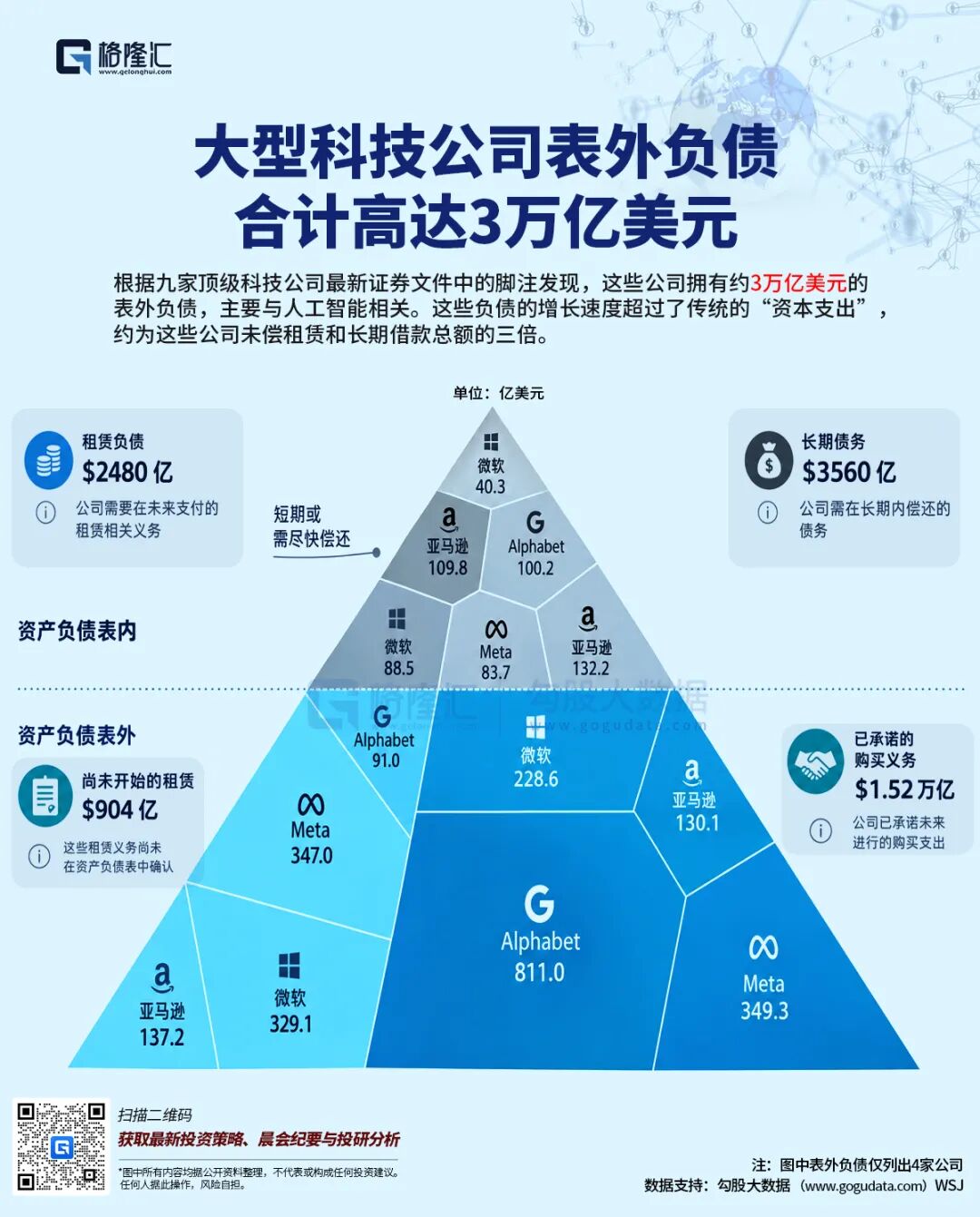
About $1.2 trillion of this amount is unexecuted lease agreements, and $1.9 trillion is procurement commitments for chips and data centers, with the scale increasing by about 50% in two months; Alphabet's procurement commitments alone jumped from $3320 billion three months ago to $8110 billion.
These obligations do not enter the balance sheet before the assets are delivered, but lock in expenditures for the next few years, and the mismatch between supply and demand continues to put pressure on long-end yields. Michael Burry, the prototype of "The Big Short", warned that the triple compression risk of falling AI demand, declining profits and tightening financing is accumulating.
There is another line for the loosening of the AI narrative.
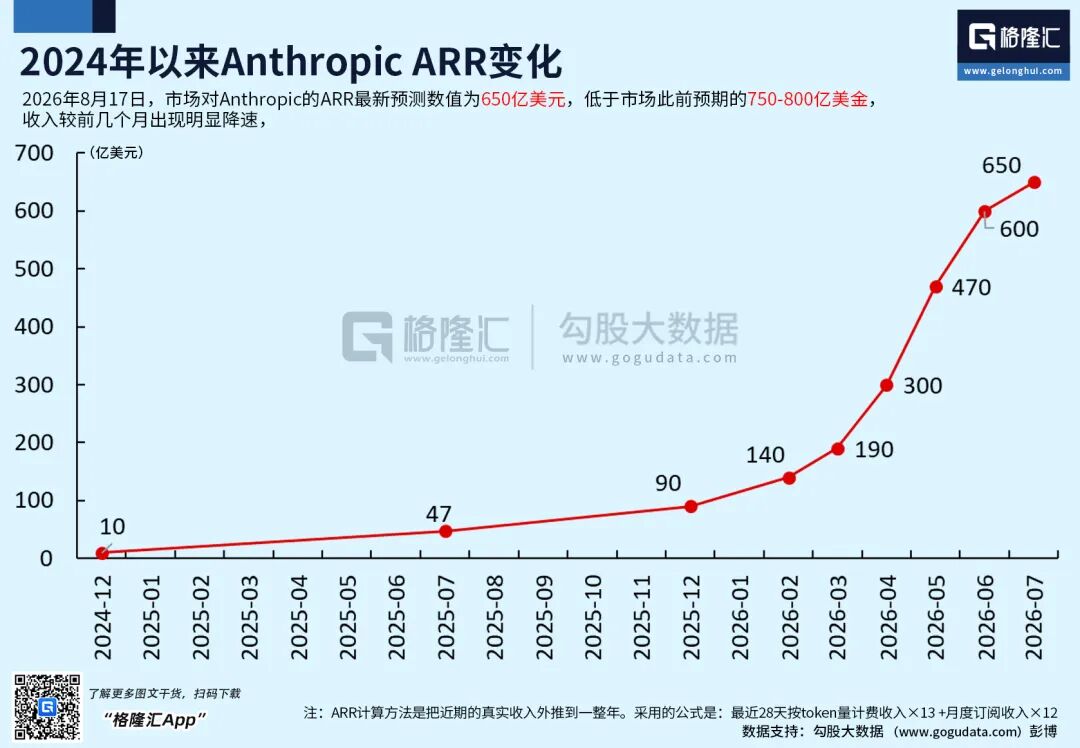
Bloomberg reported that Anthropic's annualized revenue as of the end of July exceeded $650 billion, while previous third-party market estimates were between $743 billion and $800 billion, meaning the actual figure is nearly 20% lower; OpenAI's ARR is about $400 billion, also lower than the third-party expectation of $426 billion.
$650 billion represents an increase of more than 7 times from $90 billion at the end of last year, but the monthly growth rate dropped from 56% in May to 17.6% in July. When Anthropic is preparing for an IPO at a valuation of $2 trillion, the market has chosen to reprice. The price war and low-price competition from Chinese models have made the profit realization timeline more uncertain.
When A-shares opened today, the semiconductor, memory, and optical module sectors are closely linked to overseas markets. Whether the relative resilience of the Shanghai Composite Index, which bottomed out and rebounded to close up 0.19% yesterday, and the 2% gain in the semiconductor sector, can be sustained depends on today's market performance.
The dual pricing of interest rates and valuations is the main line of this round of global adjustments. This round of adjustments occurs at the valuation level, while industrial growth is still ongoing.
Capital expenditure in the AI sector is still increasing, and revenue is being realized quarter by quarter. Although Anthropic's ARR fell short of expectations, the $650 billion figure is more than 7 times higher than at the end of last year, and the realization rhythm has not been interrupted; what has changed is the multiple that the market is willing to give.
This article is from the WeChat Official Account "Gelonghui APP" (ID: hkguruclub), authored by the editorial team of Gelonghui, and published with authorization from 36Kr.