After Unitree, Fourier Intelligence is also poised for a public listing. Who will become the "Alibaba and Tencent" in the embodied intelligence industry?
With a financing scale of over 900 billion yuan in China's intelligent robot industry in the first half of the year, hot money is indeed pouring into the robot track at an accelerated pace.
This also means that the capital narrative of the embodied intelligence industry has completed a key shift in recent years. In the past, the market was only willing to pay valuations for technology stories, but now funds are starting to focus on betting on leading players with large-scale shipments and stable revenue.
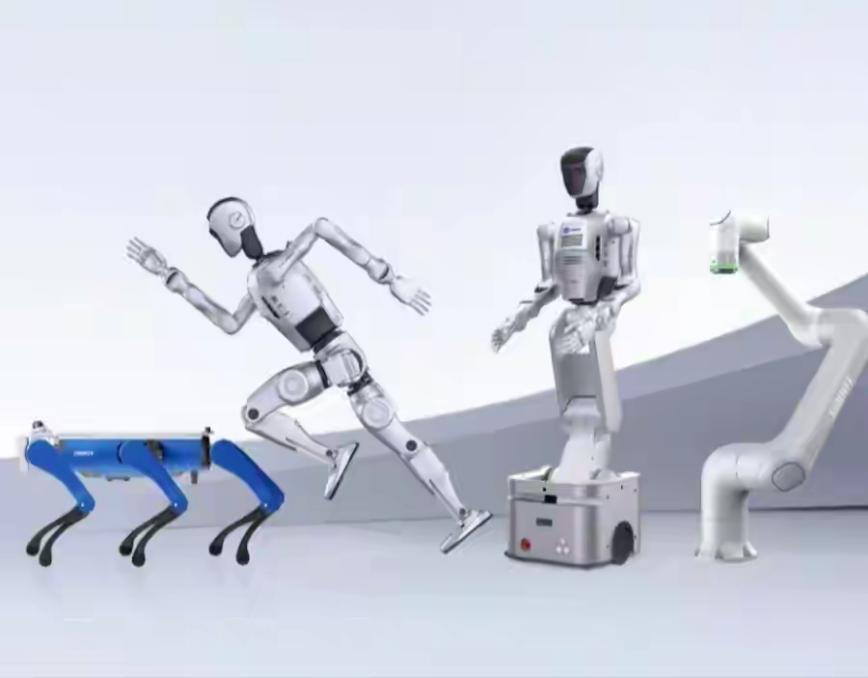
At present, Unitree Technology has finalized a listing on the Sci-Tech Innovation Board with an issuing market value of 609 billion yuan, while Agibot Innovation has launched its Hong Kong IPO. External reports say some investors have given a valuation range of HK$400 billion to HK$500 billion. Together with UBTECH, which was previously listed on the Hong Kong Stock Exchange with a current market value of around HK$45 billion, China's embodied intelligence sector has officially spawned a number of 10-billion-level listed or soon-to-be-listed industry giants.
The concentrated capital flow indicates that investors judge the industry has moved past the concept hype stage and entered a commercial realization cycle.
However, high R&D investment, offline store expansion and scenario cultivation continue to eat up cash flow. While listing and fundraising is theoretically a way to fill the funding gap, the real test for enterprises is how to tap incremental consumption demand from the existing industrial and scientific research markets.
At the same time, the industry is leveraging the advantages of the whole industrial chain to achieve more rapid global expansion than the new energy sector.
Hot Money Has Spawned "Industry Giants" in the Embodied Intelligence Track
According to IT Juzi's statistics, the total financing amount of the embodied intelligence track in the first half of this year exceeded 900 billion yuan, a year-on-year increase of 500%. In the past, the definition of "industry giants" usually focused on internet enterprises. In fact, as the next trillion-level industry, embodied intelligence has also begun to spawn so-called "industry giants", which reflects the finalization of the market competition pattern in the early stage of industrial development.
At present, there are hundreds of players in the embodied intelligence industry, ranging from university-incubated teams, cross-border technology companies to traditional equipment manufacturers. But the massive number of participants has not distracted capital attention, and funds are still quickly converging on leading enterprises.
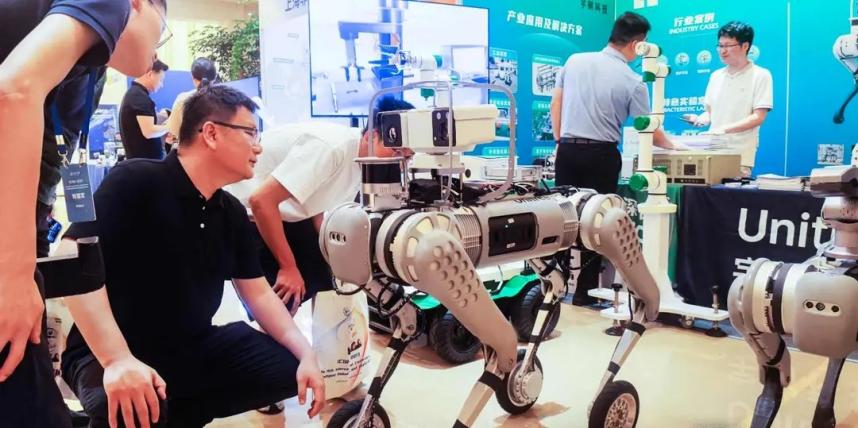
In terms of sales and shipment volume, Agibot overtook Unitree in the first half of 2026 and secured the top spot in global humanoid robot shipments.
Statistics from SAG show that Agibot shipped 8,400 units of robots in the first half of this year, accounting for 44% of the global market share; Unitree shipped 5,900 units in the same period, accounting for 31%. The two together took 70% of the global market share, while the shipment volume of other small and medium-sized manufacturers was less than 1,000 units, and the gap continues to widen.

On the revenue side, at the 2026 Agibot Partner Conference, Deng Taihua, founder and CEO of Agibot, disclosed the revenue performance of Agibot since its establishment: "From 300,000 yuan in the first year of establishment, to more than 60 million yuan in the second year, and then breaking through 10 billion yuan in revenue last year (2025), we have achieved 20-fold growth every year. This year's target will further achieve several times of growth, and we will cross 100 billion yuan in revenue by 2027."
According to investors and insiders from Agibot, Agibot's revenue exceeded 10 billion yuan in the first quarter of 2026, with the growth momentum accelerating significantly. Unitree's revenue in 2025 was 1.699 billion yuan, and it is expected to achieve growth this year as well. So far, the two have formed a duopoly in the industry.
Similarly, the valuation in the capital market further solidifies the echelon of industry giants. In August, Unitree Technology finalized its issue price at 150.8 yuan per share, corresponding to an issuing market value of 609 billion yuan, making it the first A-share humanoid robot stock. Agibot launched the Hong Kong listing process, and cornerstone investors gave a target valuation of HK$400 billion to HK$500 billion, priced against Unitree's valuation system. UBTECH, which was listed on the Hong Kong Stock Exchange earlier, has a total market value of more than HK$45 billion. All three enterprises stand above the 400 billion valuation threshold, and the camp of 100-billion-level giants in the track has officially taken shape.
Two years ago, there were only scattered ten-million-level financings in the industry. Now the three leading enterprises are sprinting to the secondary market at the same time, and the trend of capital concentrating on leading players is very clear.
It should be pointed out that the concentration of capital on leading players is not simply chasing the AI trend, but a clear signal given by the progress of industrial implementation. In the past, humanoid robots stayed in the laboratory prototype stage, and enterprises often had to rely on financing to maintain R&D, with no visible return path for capital investment.
However, from 2025 to 2026, leading manufacturers began to achieve mass production at the 10,000-unit level, and batch procurement and implementation have been realized in industrial production lines, scientific research institutions and commercial exhibition halls, with revenue scale doubling continuously and the commercial closed loop initially running through.
Therefore, we judge that the industry has bid farewell to the pure money-burning concept stage and entered the industrial realization stage with verifiable revenue and measurable growth, so funds naturally tilt towards giants with delivery capacity and shipment scale. The gathering of hot money in leading players is an inevitable stage for the track to develop from scattered entrepreneurship to large-scale industry.
The continuous high investment brings cash flow pressure, forcing leading enterprises to rush to the capital market collectively, but for players in the embodied intelligence industry, their core purpose is still to make efforts on the demand side.
Industry Giants Have to Strive to Unleash Demand
At present, the core motivation for leading enterprises to collectively impact the capital market falls into two layers: on the one hand, the R&D cost of embodied intelligent hardware and algorithms remains high, and the enterprise's own cash flow cannot cover the expenditure for a long time; on the other hand, large amounts of funds are needed to support large-scale product implementation, offline store layout and global market promotion.
But in the final analysis, all these efforts are to tap the demand of the incremental market through capacity building in all aspects.
Taking Unitree Technology's prospectus as an example, it fully discloses the data of three expenses from 2023 to 2025. The total period expenses in the three years are 93.6733 million yuan, 137 million yuan and 687 million yuan respectively, accounting for 58.86%, 34.88% and 40.41% of the revenue in the same period, maintaining a high expense ratio for operation all year round.
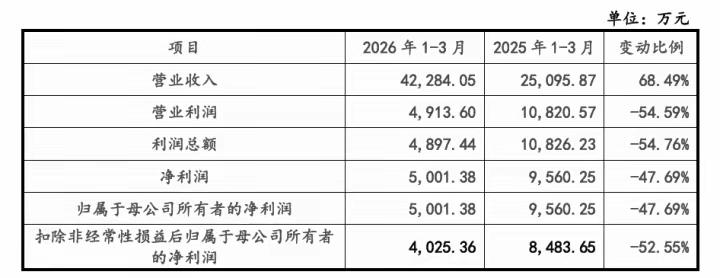
Specifically, the cumulative R&D expenses from 2023 to 2025 amounted to 265 million yuan, with continuous annual investment in motion control and embodied large model development; the cumulative sales expenses reached 238 million yuan, mainly used for offline exhibition hall construction, domestic and overseas exhibitions and brand promotion; the cumulative administrative expenses were 420 million yuan, including equity payment for core teams, operation of production bases and construction costs of overseas branches.
The above data shows that large expenditures continue to erode profits. Even though Unitree is one of the few profitable enterprises in the industry, its own funds cannot support continuous capacity expansion and customer acquisition.
Considering that the current industry demand is highly concentrated in B-end scenarios such as industrial automation, university scientific research and commercial tour guide, the C-end household consumer market is not yet mature, and the production cost of a single robot is very high. Only by expanding the shipment scale can the fixed costs of hardware and algorithm R&D be diluted.
The key move to open the C-end market is to open physical stores. According to incomplete statistics, since the beginning of this year, the entire industry, including Unitree Technology, Agibot Robotics and other players, has opened at least 40 stores. But in order to continuously tap C-end increments in the future, enterprises still need to continuously iterate products, optimize interaction capabilities and reduce terminal prices, all of which are inseparable from financial support.
Therefore, in order to cultivate the follow-up market and reserve resources to leverage potential demand, it is a realistic choice for leading manufacturers to launch large-scale financing. From the perspective of financing types and channels, in addition to domestic capital, overseas capital is also a major force, which is actually good news for promoting domestic robot brands to go global.
Robots Will Achieve More Vigorous Global Expansion Than the New Energy Sector
Taking general humanoid robot company LimX Dynamics as an example, the company recently announced the completion of its Pre-IPO round of financing with an amount of nearly 200 million US dollars, with a post-investment valuation of 15 billion yuan, and the cumulative financing in half a year reached 400 million US dollars. Multiple media reports show that nearly 70% of the financing amount in this round comes from overseas institutions in Europe, the Middle East, North America and other regions, including Stone Venture from the Middle East, HuaShan Capital from Silicon Valley, GGG Group and Redstone VC from Europe.

This means that the barriers for LimX Dynamics' products to access overseas markets will be greatly reduced, accelerating its entry into the global market focusing on Europe, the Middle East and Asia. We have reason to believe that even for Chinese enterprises listed later in China, their capital backers will push them to accelerate their global expansion.
Take Agibot Robotics as an example, 30% of Agibot's revenue this year will come from overseas, and the proportion of overseas revenue will exceed 50% in the near future. This year, it will start building local manufacturing plants in overseas regions such as the United States and Europe. Unitree is also continuously increasing its investment in overseas markets.
Data from the General Administration of Customs shows that in the first 5 months of 2026, China exported a total of 10.377 million robots of various types, with a total export value of 19.99 billion yuan. The products are sold to more than 150 countries and regions around the world, showing a strong industrial growth momentum, and the export categories have formed a diverse pattern with distinct layers. Among them, the humanoid robot track has also achieved key breakthroughs. The annual output of complete machines in 2026 is expected to exceed 100,000 units, and it is expected to become the next 100-billion-level export pillar following new energy vehicles and other categories.
Morgan Stanley's research report judges that the development stage of the humanoid robot industry is equivalent to that of the new energy vehicle industry from 2018 to 2020, and the global shipment volume will increase by 100 times in the next five years, with Chinese manufacturers firmly occupying the leading position in the industrial chain. While new energy vehicles opened up overseas markets relying on the logic of energy substitution, humanoid robots leverage global demand relying on the rigid demand for labor substitution, and have overall advantages in market space, expansion speed and industrial chain discourse power, making the wave of going global more explosive.
Overall, domestic robots have advantages in production capacity, cost, scenarios and other aspects. The global market will become the second curve to support the long-term growth of enterprises, and the funds raised from the secondary market are the core chips to lay out global channels and seize overseas shares.
Whether it is Unitree finalizing an issuing market value of 609 billion yuan, or Agibot launching its Hong Kong listing plan to impact a valuation of 400 to 500 billion yuan, capital is willing to pay for embodied intelligence giants. With a large amount of funds pouring into the track, the industrial competition of embodied intelligence has just kicked off.
Who will be the first to become the "Alibaba, ByteDance and Tencent" in the embodied intelligence era? The market will give the answer.
This article is from the WeChat Official Account "Official Account of Pai Finance" (ID: paicj314), written by Li Tang, and published with authorization from 36Kr.