26 trillion, with innovative ideas themed on the semiconductor sector
Several sets of data released on August 17 present a very interesting contrast.
From January to July, national fixed asset investment (excluding rural households) reached 26.0328 trillion yuan, down 6.7% year on year.
However, over the same period, investment in high-tech industries increased by 5.0%, and investment in intellectual property products even rose by 9.1%.
Between the decline and the rise, the ongoing changes in China's economy can be clearly captured.
In the past, driving economic growth required large amounts of land, factories, equipment and infrastructure; today, more and more increments come from chips, software, algorithms, patents and databases.
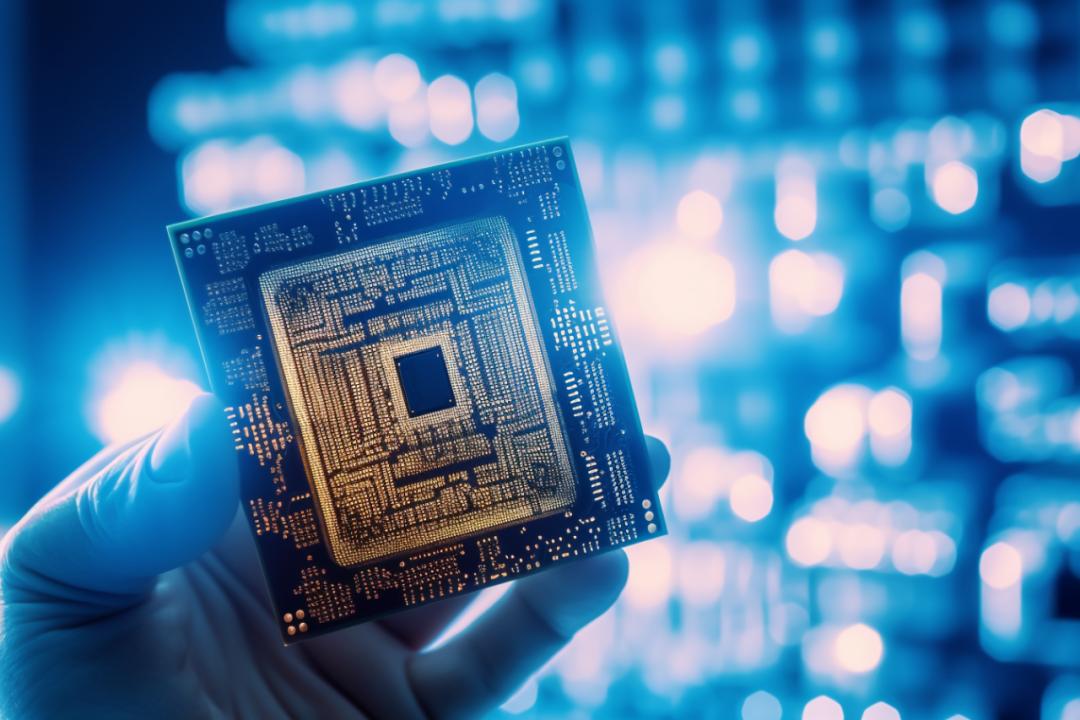
In other words, the proportion of "reinforced concrete" is declining, while the proportion of "chip and code" is on the rise.
To understand this set of data, it is necessary to first clarify the economic attributes of fixed asset investment itself. Different from consumption, fixed asset investment is characterized by large capital volume and long return cycle.
Zhang Bin, Deputy Director and Research Fellow of the Institute of World Economics and Politics of the Chinese Academy of Social Sciences, told China News Finance, "Fixed asset investment is a relatively sensitive and the most volatile variable in the operation of the macro economy."
In addition, China is in a period of structural transformation, so we cannot only focus on the growth rate of this set of data.
Luo Zhiheng, Chief Economist of Yuekai Securities, pointed out in an interview with China News Finance that we should view the investment situation rationally, paying attention not only to the growth rate, but also to the changes in scale, structure and development logic.
From the perspective of the scale support effect, in the first half of this year, total capital formation drove GDP growth by 1.7 percentage points.
This shows that the position of investment as the "ballast stone" of China's economic growth has not changed.
From the structural perspective, under the requirements of high-quality development, optimizing the investment structure and improving investment efficiency have become an inevitable trend.
In Luo Zhiheng's view, a better investment structure is not only conducive to better meeting the people's development-oriented needs, but also helpful to maintaining the resilience and stability of the industrial chain amid the profound changes unseen in a century, so as to better promote scientific and technological innovation.
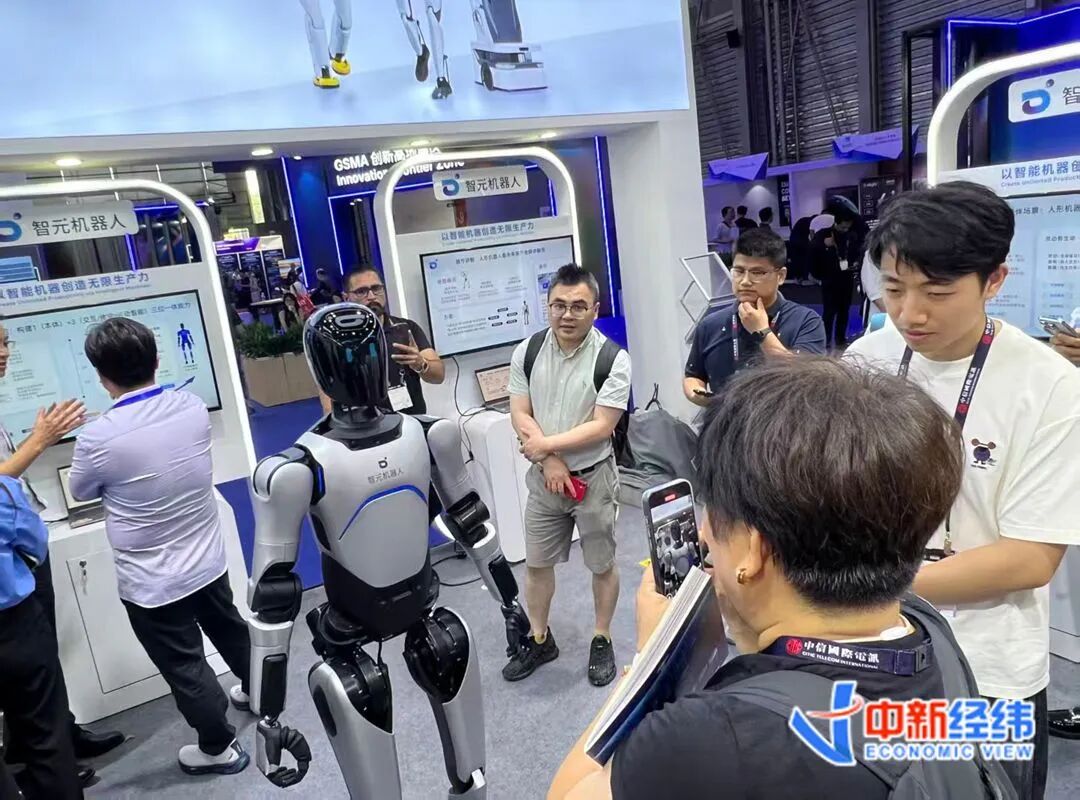
Audience "communicating" with a domestically produced humanoid robot. Photo by China News Finance
There is another easily overlooked but crucial structural factor. When China's industrial structure transforms from traditional heavy-asset industries to technology-intensive industries, it will objectively lead to a relative decline in the total investment required per unit of output.
Liu Qing, Executive Dean of the National Academy of Development and Strategy of Renmin University of China, explained to China News Finance that traditional heavy-asset industries, such as real estate and steel, feature large investment scale, long construction cycle and high capital intensity, and their investment has a significant pulling effect on the total volume. In contrast, technology-intensive industries such as software development and artificial intelligence rely more on human capital and knowledge capital input, with relatively small scale of fixed asset investment.
"As the economic structure shifts from 'reinforced concrete' to 'chip and code', the fixed asset investment required for the same GDP increment will naturally decrease." Liu Qing believes that this change in "investment intensity" is an inevitable result of economic structure upgrading, and also an objective law in the stage of high-quality development.
This can also be confirmed by economic data. From January to July, China's investment in intellectual property products increased by 9.1% year on year.
In Liu Qing's view, this exactly confirms the trend that investment is shifting from "tangible assets" to "intangible assets".

It is worth emphasizing that even if the position of investment as a "ballast stone" remains unchanged, its connotation of "stabilizing the situation" is changing.
Liu Qing pointed out that in the past, the "stabilizing effect" of investment relied on large-scale expansion of real estate and infrastructure; today, manufacturing investment has replaced real estate as the new "ballast stone".
Data from the National Bureau of Statistics shows that in the first half of the year, the added value of the three industries accounted for 4.5%, 36.0% and 59.5% of GDP respectively.
More importantly, the logic of investment development has also undergone profound changes.
Luo Zhiheng pointed out that at present, China's investment pays more attention to innovation, showing three major trends.
The first is shifting from attaching importance to traditional infrastructure to giving more weight to new infrastructure, with the accelerated layout of computing power networks and new-generation communication networks;
The second is shifting from investing in materials to investing in people, better combining investment in materials and investment in people, so as to better meet people's needs and implement the people-centered development philosophy;
The third is shifting from focusing on physical objects to paying more attention to intangible assets such as software, and continuously increasing investment in fields including patents, software and databases.
In addition, although China's fixed asset investment is experiencing short-term fluctuations, experts believe that in the long run, there is still huge room for development.
Liu Qing believes that when observing China's economy, we should not only see the "form" of short-term fluctuations, but also grasp the "trend" of long-term positive growth.
"At present, China's investment is at a critical stage of 'stabilizing growth rate, optimizing structure and transforming driving forces'. In the short term, it is supported by the gradual stabilization and bottoming out of the real estate sector and the accelerated implementation of major projects; in the long term, it has lasting impetus from the cultivation of new quality productive forces." Liu Qing said.
Zhang Bin also said that some traditional industries are facing investment pressure for various reasons: some are due to excessive investment in the early stage, some are due to bottlenecks in their industry growth prospects; some are cyclical, while others are long-term structural problems.
However, he believes that whether to support industrial upgrading or consumption upgrading, China's fixed asset investment still has great potential.
Zhang Bin said that there are still a large number of gaps in China in areas such as digital and intelligent transformation, green environmental protection, security guarantee, renovation of old residential buildings, and urban public infrastructure, which require new investment. Projects in the 15th Five-Year Plan and the "six networks" will also be the growth points of fixed asset investment in the future.
This article is from the WeChat Official Account "China News Finance" (ID: jwview), written by Song Yafen, edited by Lin Wansi, proofread by Yuan Yuan and Jia Yifu, and published with authorization from 36Kr.