ASEAN is not a single unified market, and there are distinct operational strategies for overseas expansion into its six countries.
When many Chinese enterprises enter ASEAN (the full name is "Association of Southeast Asian Nations"), the first mistake they make is treating ASEAN as a single market.
Admittedly, ASEAN is a regional cooperation organization, but for enterprises, it has never been a replicable and pasteable business environment. A short geographical distance does not mean a short business distance. In this article, Daniel Chng, Professor of Strategy and Entrepreneurship at China Europe International Business School (CEIBS), analyzes six ASEAN countries: Indonesia, Thailand, Malaysia, Vietnam, the Philippines, and Singapore, and explores six different overseas expansion strategies and business governance capabilities that enterprises are tested with respectively.
This article focuses on the business and management challenges faced by enterprises competing in Southeast Asia. However, Chinese enterprises should still carefully assess the existing geopolitical tensions and emerging geopolitical developments, as these factors will significantly affect market opportunities, investment decisions and business risks.
Why ASEAN?
An increasing number of Chinese enterprises have included Southeast Asia in their global business layout: new energy vehicle enterprises build factories in Thailand, battery and mining enterprises deploy operations in Indonesia, consumer brands enter Vietnam and the Philippines, and technology companies take Singapore as their regional headquarters.
The primary reason why ASEAN has become an important destination is that it integrates resources, customers, manufacturing platforms and supply chain resilience at the same time.
For example, Indonesia's nickel ore and related industrial foundations make it an important node in the battery and new energy vehicle industrial chain, attracting Chinese giants such as CATL and Huayou Cobalt to make heavy investments in Indonesia. Malaysia has accumulated strengths in semiconductors, electronic manufacturing and data centers. Vietnam has a relatively complete supporting system for manufacturing and export. Thailand has long been deeply engaged in the automotive industrial chain.
For Chinese enterprises that are adjusting their global production capacity layout, these markets are not a simple substitute for the domestic market, but can form a new division of labor with the Chinese supply chain.

The total population of the ASEAN region has exceeded 700 million, making it one of the largest consumer markets in the world. Indonesia has a population of over 280 million, the Philippines over 118 million, and Vietnam has exceeded the 100 million mark. All three countries have a large and relatively young population, with continuous advancement of urbanization and digitalization. There is new demand in sectors such as automobiles, consumer electronics, healthcare, education, logistics, digital services and renewable energy, and Chinese enterprises have obvious advantages in product iteration, supply chain organization and rapid delivery.
In addition, as the geopolitical situation becomes increasingly complex and tariff barriers rise, many Chinese enterprises have actively practiced the "China + N" strategy, selectively extending their manufacturing chains to neighboring countries. As a result, ASEAN has become a strategic hub for supply chain diversification and geopolitical risk mitigation.
More importantly, ASEAN has not only resource-based economies, manufacturing platforms and young consumer markets, but also financial, legal and professional service centers like Singapore, which can serve as the first stop for Chinese enterprises to learn transnational operation.
Why can't we treat ASEAN as a single market?
Many managers, when they first look at ASEAN, think that it has short voyage distances, deep economic and trade ties, and large Chinese communities, so the entry threshold will not be too high. After actual implementation, they find that the short distance is only a fact on the map, and the operational threshold comes from the differences in culture, systems, stakeholders and consumer habits.
When analyzing these differences, the "CAGE Model" proposed by the well-known scholar Pankaj Ghemawat is of great reference value. This model measures the "distance" between countries from four dimensions:
C (Cultural) Cultural Distance:
Language, religious beliefs, values, social customs, consumption preferences, etc.
A (Administrative) Institutional/Administrative Distance:
Political system, laws and regulations, regulatory mechanism, and degree of government intervention, etc.
G (Geographic) Geographical Distance:
Spatial span, logistics complexity and transportation cost.
E (Economic) Economic Distance:
Resident income level, cost of production factors, perfection of infrastructure, and market maturity, etc.
Even among countries with a majority Muslim population, Indonesia emphasizes the coordination among the central government, local governments and communities, while Malaysia requires understanding of the federal structure, indigenous policies and halal system.
Even for manufacturing investment undertakers, the core barrier in Thailand is the channels and trust accumulated by Japanese brands for many years, while the risks in Vietnam lie in rules of origin, supply chain compliance, and vigilance against foreign capital dependence.
Opportunities in the Philippines come more from young consumers and digital services, while the value of Singapore is mainly reflected in regional headquarters, capital, compliance and governance.
Therefore, when entering ASEAN, Chinese enterprises need to complete two courses at the same time: one is how to be accepted by the local market, and the other is how to transform from an exporter to a real transnational corporation.
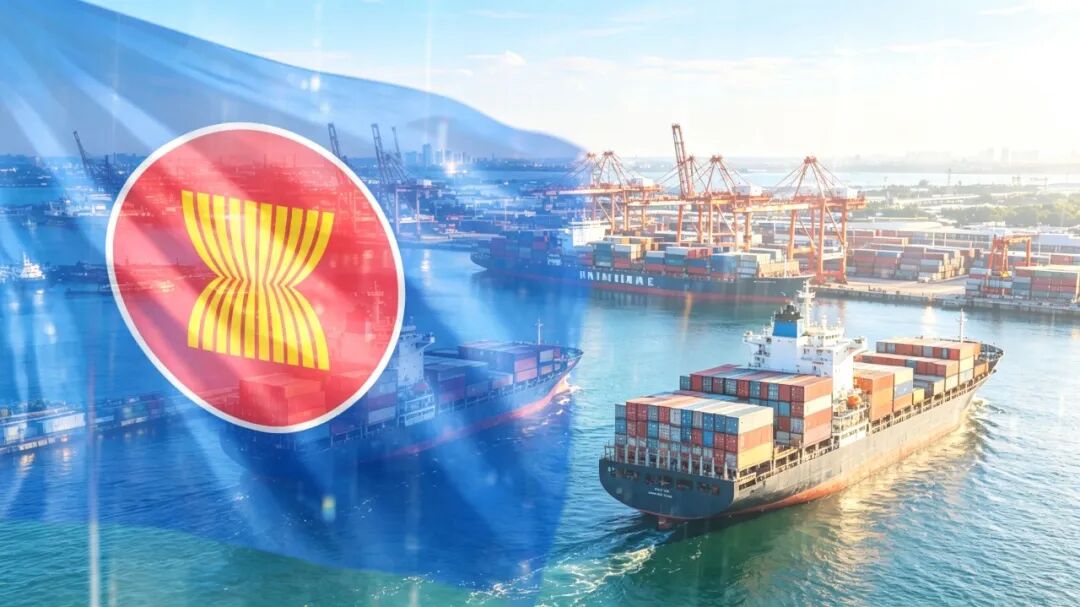
Although ASEAN consists of 11 member states, this article focuses on six major economies: Indonesia, Vietnam, the Philippines, Thailand, Malaysia and Singapore. Together, they account for about 85% of ASEAN's nominal GDP, and these six countries represent the main economic activities of ASEAN, providing the most relevant strategic reference for Chinese enterprises to expand the Southeast Asian market.
The map of the six countries is six completely different examination papers.
Indonesia: large market, abundant resources, but the first priority is to obtain social license;
Thailand: it is not difficult to get products into the market, but the challenge is to shake the trust accumulated by Japanese brands for decades;
Malaysia: it is not a low-cost factory, but a high value-added and halal economic platform;
Vietnam: it looks the most familiar, but it is the easiest to fall into the "familiarity trap" and make misjudgments;
The Philippines: its core assets are young consumers, not just manufacturing costs;
Singapore: it is not a sales market, but a testing ground for regional headquarters and global governance capabilities.
It can be seen that each core single market in ASEAN accurately and ruthlessly reflects the capability shortcomings that overseas enterprises still need to make up for.
Six markets, six capabilities to break through
Indonesia: Capital is not enough, you also need to obtain social license
Why is it worth entering?
Indonesia is one of the largest economies and consumer markets in Southeast Asia, with a large population, rich nickel ore resources, and an important node in the battery and electric vehicle industrial chain.
Chinese enterprises have entered fields such as mining, smelting, battery materials, new energy vehicles, infrastructure, logistics, telecommunications and digital services. For enterprises that want to obtain resources, manufacturing capabilities and consumption growth, Indonesia has irreplaceable attractiveness.
The most common mistake?
Many enterprises understand Indonesia as "resources plus population", believing that investment amount, technical capabilities and project promotion speed are sufficient to determine the results. But locally, a project is often affected by the central government, local governments, communities, trade unions, religious organizations, environmental groups and local partners at the same time.
Public opinion is not only concerned about whether the project can be put into operation, but also questions whether enterprises create jobs, protect the environment, cultivate local supply chains, and bring long-term value to the community. If enterprises only focus on approval rather than relationship management, only focus on production capacity rather than responding to social concerns, the project may lose the social license required for continuous promotion.
The real breakthrough capability?
First, appoint a local management team with real decision-making power as early as possible.
Second, manage the relationships with the central government, local governments and the community where the project is located at the same time, instead of only relying on a single level.
Third, turn local procurement, job creation, talent cultivation and ESG investment into a long-term mechanism. Enterprises need to let the local side see that they are not here to obtain resources in the short term, but are willing to participate in the long-term development of Indonesia's industry and society.

Thailand: The real competitor is not Japanese technology, but Japanese trust
Why is it worth entering?
Thailand has a relatively complete automotive industrial chain, mature manufacturing foundation and good export conditions, making it an important market for Chinese new energy vehicle enterprises to enter Southeast Asia. In addition to automobiles, there are also opportunities in consumer electronics, healthcare, tourism services, digital business and smart home appliances.
For Chinese enterprises, Thailand is both a sales market and a manufacturing and regional export platform.
The most common mistake?
Some enterprises believe that as long as they have higher intelligent configuration and more competitive prices, they can quickly rewrite the market pattern. Take Japanese automakers such as Toyota, Honda, Isuzu and Mitsubishi as examples. The advantages accumulated by these brands in Thailand are not only technology and products, but also the supplier, dealer, auto finance and after-sales network formed over decades. For consumers, the brand means durability, convenient maintenance, stable spare parts and used car value preservation.
Selling a car can rely on promotion, but building ten years of trust cannot be completed with a single press conference. If you only look at the first purchase price, not the long-term use cost and service certainty, the sales growth may also lack a solid foundation.
The real breakthrough capability?
Enterprises need to implement the "full life cycle experience" into four things: channels, finance, after-sales, and value preservation.
Channels should cover major cities and gradually sink. Financial plans should lower the purchase threshold for consumers. After-sales and spare parts supply should be stable and predictable. The residual value of used cars and long-term service commitments determine whether the brand can form repurchases and word-of-mouth. Technology and price can open up the market, but only long-term delivery of services can change the existing trust structure.

Malaysia: Never treat a high-end manufacturing platform as a low-cost factory
Why is it worth entering?
Malaysia's advantages do not lie in cheap labor, but in high-quality engineering R&D talents, perfect infrastructure, advanced manufacturing ecosystem and deep integration with the world's top supply chains.
Fields such as semiconductor packaging and testing, electronic manufacturing, electric vehicle parts, renewable energy, data centers, healthcare, education and professional services are all suitable for enterprises that want to move up the value chain. At the same time, the halal certification and halal industrial system can also help products enter a broader Muslim market.
The most common mistake?
A common misjudgment is that "there are many Chinese people, so it is easy to do business". The visibility of the Chinese community easily creates a sense of cultural familiarity, but it cannot replace the understanding of the Malay-dominated society, federal system, state government authority, Muslim culture and indigenous policies.
Another mistake is to still evaluate Malaysia from the perspective of low-cost manufacturing, ignoring that the local real competitiveness lies in high value-added industries and professional services. If enterprises only compare wages and land prices, they may miss more suitable opportunities for technology, R&D, regional services and industrial collaboration.
The real breakthrough capability?
First, position the project in high value-added links such as semiconductors, electronic manufacturing, and data centers, instead of simply replicating low-end production capacity.
Second, systematically handle the relationship between the federal and state governments, and earnestly implement the requirements for indigenous participation, local talents and supply chains.
Third, regard halal certification as part of the product and operation system, rather than a one-time procedure before listing. The value of Malaysia lies in helping enterprises enhance their position in the value chain and connect to a larger Muslim consumer market.
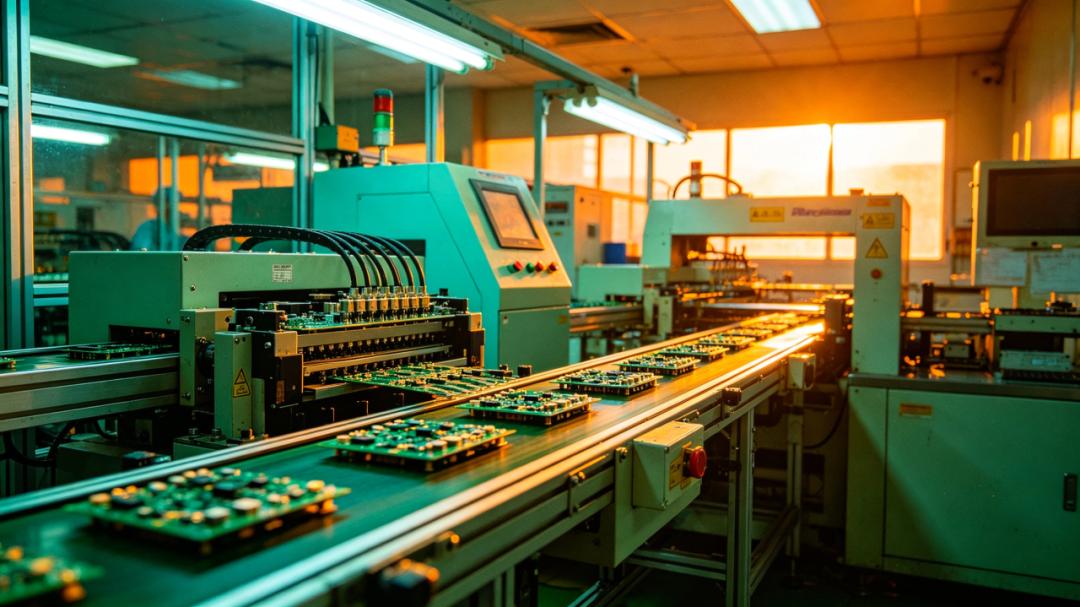
Vietnam: The most dangerous thing is not strangeness, but self-perceived familiarity
Why is it worth entering?
The similar geographical proximity, close supply chain and partial institutional similarities make Vietnam often regarded by Chinese enterprises as the most understandable ASEAN market. Vietnam has a manufacturing foundation, export conditions and expanding consumer demand, with opportunities in fields such as electronic manufacturing, logistics parks, renewable energy and mass consumer goods, so it is also a priority destination for many enterprises in their "China + N" layout.
The most common mistake?
The problem comes precisely from this sense of familiarity. Some managers easily directly transfer Chinese experience to Vietnam, believing that similar culture and connected supply chains mean similar policy logic, organization methods and market acceptance.
In fact, Vietnamese society has a strong national identity and maintains high vigilance against external capital and supply chain dependence. Consumers, regulatory authorities and local enterprises will not naturally accept Chinese brands just because of geographical proximity. If enterprises ignore rules of origin review, foreign capital structure and supply chain transparency, or only regard Vietnam as a low-end production capacity undertaker, the risks will be quickly amplified.
The real breakthrough capability?
First, put the rules of origin and supply chain compliance in the front position to ensure that procurement, processing and export arrangements can withstand review.
Second, establish an authorized local management team, instead of long-term remote control by the Chinese headquarters.
Third, do not treat Vietnam as a simple undertaker of low-end production capacity, but invest in local talents, suppliers and higher value-added links. Respecting Vietnam's laws, history and society is more important than taking similarity as a convenient condition.

The Philippines: The biggest asset is not low cost, but young consumers
Why is it worth entering?
The most prominent resource of the Philippines is the young, large-scale and English-proficient consumer group. The Internet and social media are actively used, and there is growth space in fields such as consumer goods, inclusive finance