The more a car resembles European vehicles, the harder it is to outperform European competitors.
Being overly familiar with the European market does not necessarily guarantee success.
On the evening of August 11, Leapmotor placed the A05 next to the A10.
The differences between the two models are even fewer than their names. They share the exact same 2605mm wheelbase, as well as the same battery, motor, cockpit and a large number of components. One is a hatchback sedan, the other an SUV, essentially two different body styles built on the exact same technical foundation.
One key reason why Leapmotor is developing these two small cars simultaneously lies in the European market.
The A05 was designed as a global model from the very start of the project. Leapmotor executives noted that the European small car market is large in scale, and its demand is more segmented than that of China. SUVs and hatchbacks have long coexisted in the region, and a single platform can support both body forms to capture sufficient user groups respectively.
This gives the A05 a task more interesting than just domestic sales performance.
Over the past few years, Chinese automakers have gone to great lengths to prepare for entry into the European market, from the ORA Good Cat and Lynk & Co 02 to NIO's Firefly, their design, chassis and even overall vehicle definition have been gradually aligned with European preferences.
Yet the results are somewhat counterintuitive. Building cars strictly in accordance with European standards has not led to better sales. Instead, models such as BYD Dolphin Surf that retain more of the original product logic for the Chinese market have achieved initial success first.
The A05 happens to stand at the intersection of these two development paths.
Now that China has become one of the most fiercely competitive automotive markets in the world, do Chinese vehicles still need to be completely reworked into "European-style cars" before they can enter the European market?
Chinese cars with strong European styling do not necessarily sell well
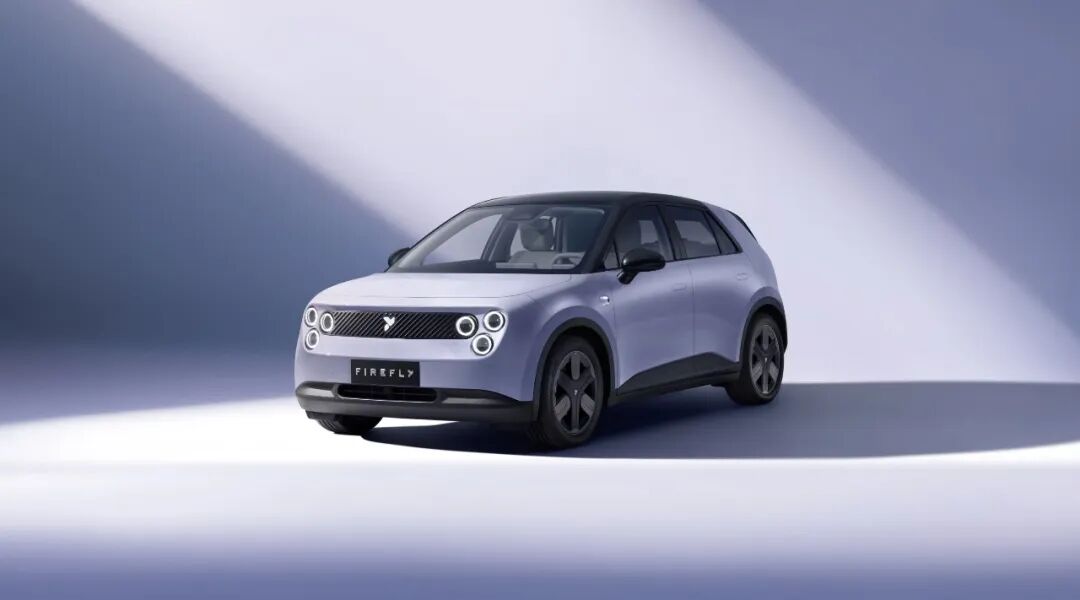
To enter the European market, NIO has prepared a complete "European resume" for the Firefly.
Its design center is located in Munich, its European Intelligent Driving and Innovation Center is in Berlin, and it also has a vehicle engineering team in Oxford, UK. The Firefly is just over 4 meters long, with rear-wheel drive, five-link suspension, a very small turning radius, a 92L front trunk and a rear trunk with a capacity of more than 400L.
For a small urban car, these parameters correspond to exactly the demands European consumers are familiar with: compact exterior dimensions for easy maneuvering in old city streets, and a spacious interior to carry daily family cargo.
Europe was originally the core target market for Firefly. When the brand was launched at the end of 2024, NIO positioned Mini and Smart as its main competitors. Back then, the European small car market had an annual scale of about 4 million units.
This market remains important to this day. In the first half of 2026, the Dacia Sandero still ranked first in the European passenger car sales list, while the Renault 5 took the top spot in the B-segment (corresponding to China's A0-segment) pure electric vehicle sales; during the same period, pure electric vehicles accounted for 20.7% of new car registrations in the European Union.
For Chinese automakers preparing to enter Europe, small cars represent one of the stable and mainstream local markets where consumers place high value on price. China's supply chain and cost advantages can thus be more easily translated into purchasing incentives, making this segment the first main battlefield for overseas expansion.
High hopes were placed on Firefly, as NIO intended to use it to reverse its situation of only selling a few hundred units per year in Europe.
The official delivery of this model did not start until August 2025, with the first batch of deliveries taking place in Norway and the Netherlands, where the penetration rate of electric vehicles is relatively high. By that time, the EU had already begun to impose additional tariffs on pure electric vehicles manufactured in China, pushing the final selling price in the Netherlands to 29,900 euros.
The price close to 30,000 euros put Firefly in direct competition with the Renault 5, Mini, and a number of products that European consumers have known for decades. It achieved product quality close to its rivals, but lacked the decades of brand recognition that its competitors have built up.
Sales did not reach the expected high levels. In the early stage after launch, the number of initial registrations in the two countries was only in single digits; by July 2026, only 96 Firefly units were registered on roads in the Netherlands. Meanwhile, Firefly's monthly sales in China have remained stable at over 5,000 units.
The product competitiveness did not suddenly decline in Europe. What changed was the price and the competitive environment.
Later, Firefly began to prioritize markets such as the UK, Australia, New Zealand and Southeast Asia, where no additional EU tariffs apply. But CEO Jin Ge also emphasized that Firefly will not be reduced to a brand that relies on low-price competition.
It has painstakingly replicated a choice that is already very mature in the European market, but failed to give consumers a reason to abandon their existing familiar options.
The Lynk & Co 02 is another case in point.
While Firefly still needs to learn about the European market from scratch, Lynk & Co has been deeply rooted in the European automotive system almost since its inception. The brand's headquarters is located in Gothenburg, with close ties to Volvo. The 02 was first released in Europe before entering the Chinese market under the name Z20. To develop this model, Lynk & Co incorporated thousands of pieces of feedback from European users.
It can hardly be criticized for "not understanding Europe".
Yet the 02 still follows a typical European product logic: compact dimensions, rear-wheel drive, distinctive design, refined driving texture, plus a few new energy-related configurations. Its starting price in Europe is 35,000 euros, aligned with the pricing of similar local products.
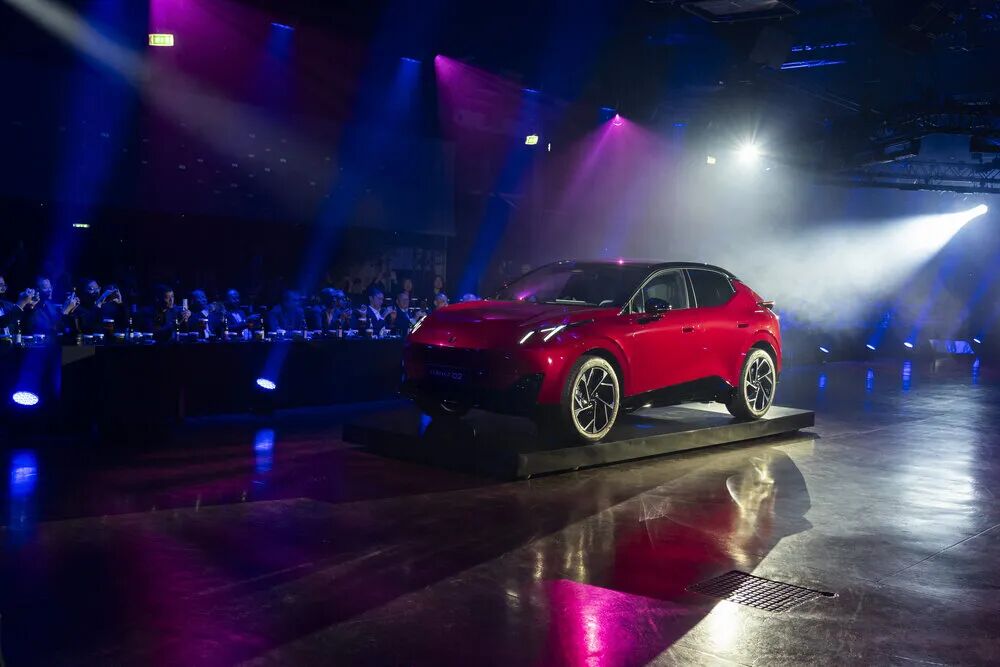
In China, the same Z20 is priced as low as just over 100,000 RMB, roughly 40% of its starting price in Europe. This huge price gap not only comes from tariffs and channel costs, but also reflects fundamental differences in product development ideas.
Sales failed to take off. In 2025, the total number of registrations for the 02 in Germany for the whole year was only 49 units. Lynk & Co then rapidly expanded its traditional retail and maintenance outlets, and this year it plans to directly integrate into Volvo's sales and service system in Europe.
From Firefly to the Lynk & Co 02, both companies have invested huge amounts of energy in the same approach: understanding the European market, then building cars as much as possible according to the existing local standards.
The result is that they proved they can compete as qualified local players, but did not attempt to offer a choice that European consumers had never had before.
These two cases represent a typical phenomenon of "failing to adapt to local conditions". Over the past few years, Chinese models including the ORA Good Cat and ZEEKR X have entered the European market one after another, but none of them have broken into the mainstream market. The sales performance of Chinese cars in Europe does not show a linear relationship with how "European" the vehicles are.
The market that Firefly and the 02 entered is not a blank space waiting for Chinese automakers to catch up on missed lessons. Long before their arrival, the European automotive industry had spent nearly 70 years repeatedly defining what a small car should be.
Europe has been building good small cars for 70 years
The earliest small cars in Europe were developed to solve the problem of post-war poverty.
In the 1950s, post-war Europe had just re-entered the era of private cars, urban roads were not prepared for the large-scale popularization of automobiles, household incomes were limited, and oil supply was not stable.
The 1957 Fiat 500 was just over 3 meters long. Its launch price was 490,000 Italian lira, which a factory worker could afford with one year's salary, making it one of the cheapest new cars on the Italian market at the time. More than 3.8 million units were produced in total, becoming a symbol of the popularization of automobiles in post-war Italy.
Two years later, the British launched a solution that had a far more lasting impact.
The Suez Crisis led to fuel shortages, and the president of the British Motor Corporation (BMC) ordered design chief Alec Issigonis to halt all ongoing engineering projects and develop a truly compact small car as soon as possible.
The requirements were extremely strict: the car had to be smaller than all previous models of the company, yet it had to be able to carry four adults plus luggage, and use existing engines.
Issigonis finally made the car 3.05 meters long. To push the mechanical components out of the passenger cabin as much as possible, he placed the engine transversely at the front of the car, adopted front-wheel drive, tucked the gearbox under the engine, and pushed the four 10-inch small wheels as far as possible to the four corners of the vehicle body.
Eventually, 80% of the car's footprint was reserved for passengers and luggage.
This is the Mini that was born in 1959.
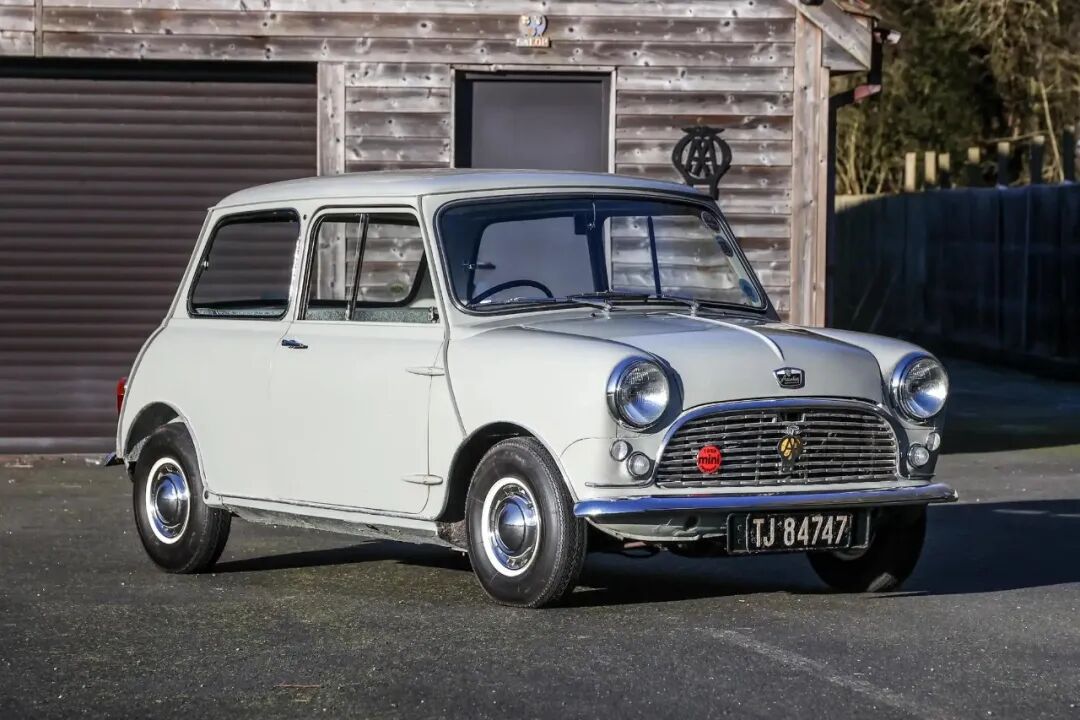
1959 Austin Mini 850
From today's perspective, these designs have been widely adopted. Transverse engine layout, front-wheel drive, and four wheels positioned close to the corners of the vehicle later almost became the standard design for modern small front-wheel drive cars. But at that time, this was a set of designs that redefined automobile structure. BMW later directly called the layout of the first-generation Mini the "blueprint" for modern small cars.
Something even more unexpected happened a few years later. Racing engineer John Cooper found that the extremely short wheelbase, four wheels positioned at the corners, and front-wheel drive layout made this Mini exceptionally agile.
The Mini Cooper was subsequently launched. In 1964, it defeated a number of more powerful cars to win the overall championship of the Monte Carlo Rally, and won again in 1965 and 1967.
A small car born to save fuel and space thus gained an additional identity: outstanding driving pleasure.
From 1959 to 2000, more than 5.3 million classic Mini units were produced. Its legacy goes far beyond sales figures. The paradigm for later European small cars — how to maximize interior space within minimal exterior dimensions, how to make affordable cars not feel boring, and even how to give a small car a unique personality — was almost fully established by the Mini.
Later European automakers continued to add to this established paradigm. The 1972 Renault 5 used bright body colors, plastic bumpers and anthropomorphic designs to inject youthfulness and trendiness into small cars; the Volkswagen Polo insisted that while dimensions could be reduced, the build quality, chassis performance and overall refinement of Volkswagen models should not be compromised, and its six generations have accumulated total sales of more than 20 million units; the Peugeot 205 GTi then made driving pleasure a long-lasting signature feature of French small cars.
As Europe became increasingly affluent, small cars did not disappear. They gradually evolved from a cheap means of transportation into a wide range of differentiated consumer products.
The definition of small cars by European automakers has been carried over to the new energy era. When Peugeot launched the all-electric E-208 GTi, it still brought 30 units of the classic 205 GTi to the Le Mans circuit to accompany its first dynamic debut, as the brand's declaration on small cars.
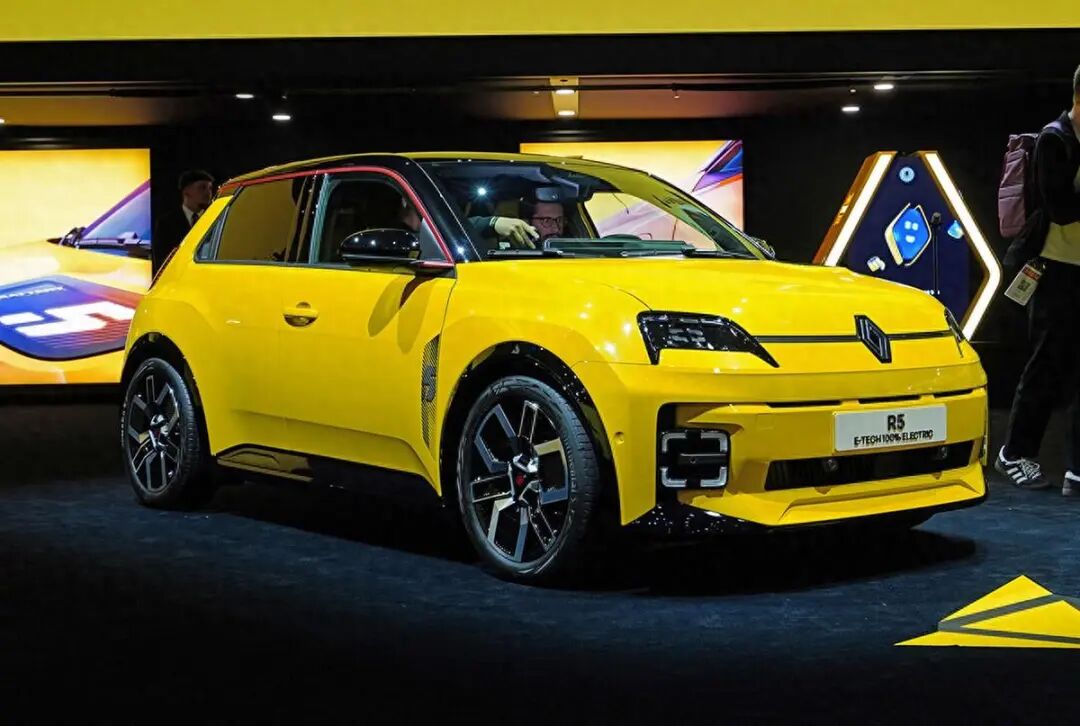
Renault revived the R5, bringing back the youthful, bright and urban product character from the 1972 model; Mini continues to emphasize agile and immediate driving feel; the Polo has evolved into the ID.Polo, still focusing on space, quality and completeness within compact dimensions; the Fiat Grande Panda highlights simplicity, practicality and affordability.
The unique roles that different small cars play have not disappeared. European consumers can still find relatively mature corresponding products that match their preferences in terms of affordability, versatility, design, driving pleasure, personality and brand prestige.
Such a market environment puts a new car that "meets all standards in every aspect" in an awkward position.
What Europe has the most of, precisely, is well-made small cars.
Bring the proven solutions from the Chinese market to Europe
The MG4 was an early model that successfully avoided this predicament.
It has the hatchback body style familiar to European consumers, and its chassis and driving performance are carefully tuned, but what really helped it gain market traction was its price. Since 2023, the MG4 has become the fourth most registered pure electric model in Europe.
The Dolphin Surf that entered Europe last year is a more typical example. It is the European version of the Chinese BYD Seagull. BYD has met local regulatory, charging and safety requirements, but did not change the original product logic of the vehicle.
It is nearly 4 meters long, with dimensions close to B-segment small cars like the Renault 5. But according to BYD's official classification, the Dolphin Surf is positioned in the local A-segment, which corresponds to China's A00-segment.
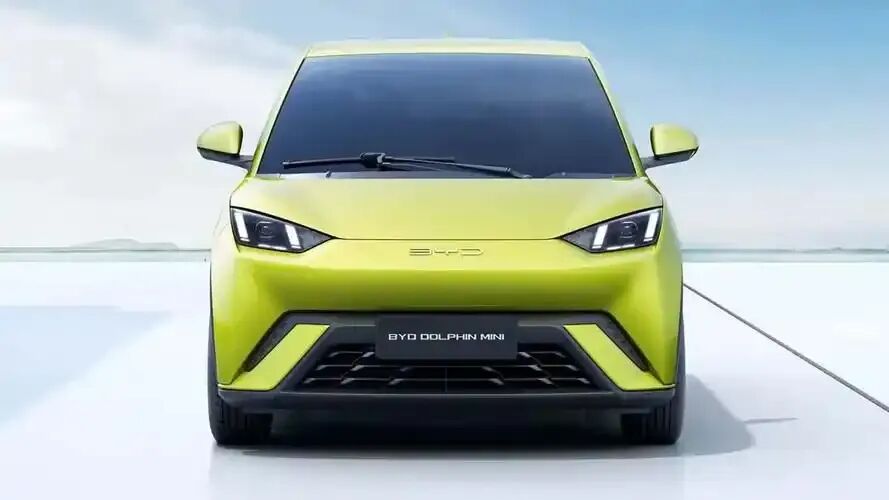
What it brought to Europe is a competitive strategy very familiar to Chinese automakers: differentiated positioning across segments.
Compared with other A-segment rivals, it is not cheap, but it is significantly larger in size; compared with higher-segment rivals, it has similar dimensions but a much lower price. Its official starting price in Europe is 22,990 euros, about 5,000 euros lower than the entry-level Renault 5; during the launch phase, the price was once as low as 19,990 euros, a gap of nearly 30%.
It did not rely on improving other hard parameters to create competitive advantages. Its 322km WLTP range and 85kW fast charging are not outstanding, while the Renault 5 can achieve a range of 410km. The European version has a stiffer suspension, but its driving performance is still not a standout feature.
Its positioning and price convinced the market. By early 2026, the Dolphin Surf had taken the first place in A-segment pure electric vehicle sales in Germany, and even ranked among the top 10 best-selling pure electric models across the whole market in February.
Leapmotor's T03 takes this competitive strategy to a more extreme level. It has smaller dimensions and simpler configurations, without any complicated "premium European small car" narrative.