Are instant noodles starting to grab share from the takeout market? These strategies are the biggest threats to those top-selling instant noodles.
Recently, two leading instant noodle enterprises released their first-half performance reports. Master Kong's instant noodle segment saw a 2% year-on-year growth, while Uni-President's food business (dominated by instant noodle products) posted a 4.7% year-on-year increase. Moreover, over the past few years, South Korean and Japanese brands including Samyang's Buldak Ramen, Nongshim's Shin Ramyun, and Nissin Foods have all achieved growth to varying degrees, making people wonder: Are instant noodles selling well again?
Is the opportunity for high-end instant noodles coming?
As we all know, whenever a product's sales rise or fall, there will always be some concluding opinions. Taking the instant noodle market as an example, after the 2025 performance disclosure, Master Kong and Uni-President had already maintained growth. What reasons did the outside world give at that time? The saying goes "Baixiang falls, Kang and Uni get full", which means that Baixiang's performance decline led to the growth of Master Kong and Uni-President.
Admittedly, Baixiang saw no growth in performance in 2025, but the decline was not significant enough to drive the growth of both Master Kong and Uni-President. Similarly, the entire instant noodle market is growing this year, so it is unreasonable to still claim that Baixiang's decline has led to the growth of the entire instant noodle market. This argument cannot support the huge market, so new voices have emerged, claiming that "food delivery is getting more and more expensive, so instant noodles are starting to grab market share from the food delivery industry".
To support this claim, many people have shared their personal experiences: "A food delivery order now costs 20 to 30 yuan, which is unaffordable for me, forcing me to choose instant noodles"; "The packaging fee and delivery fee for a food delivery order are almost equal to the price of a bag of instant noodles, so I will definitely choose instant noodles"; Some even raised this point to the macro level, claiming that "the economy is going down, so people are no longer ordering food delivery and are choosing instant noodles instead".
These remarks, just like the saying "Baixiang falls, Kang and Uni get full", are rather irresponsible, and completely negate the hard work of the teams of Master Kong and Uni-President. It is true that the prices and delivery fees of food delivery services are getting higher, but the number of practitioners in the food delivery market is increasing, and the scale of capital burning on various platforms is also expanding. When a market is not doing well, no capital is willing to increase investment in it. If delivery riders cannot make money, the number of practitioners will only decrease rather than increase. As for the high price, there are also low-cost products such as group-buying meal deals on food delivery platforms.
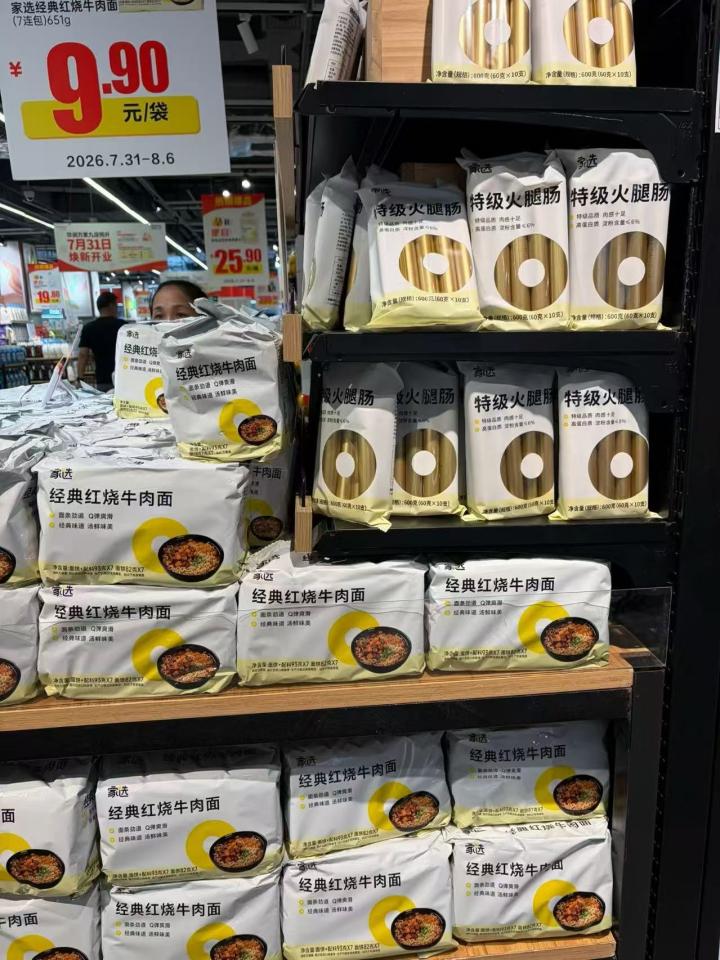
As for the claim that people choose instant noodles because of the economic downturn, in fact, if the economy really slumps, the product that sells better should be dried noodles, which is the real cheap and filling food.
In fact, the market is complex, and the reasons for good or bad performance are not mutually exclusive. Back when food delivery services were being promoted, they needed a rival like instant noodles, so some people asked "How long has it been since you last ate instant noodles?" Then the topic became that instant noodles were not selling well and their market share was snatched by food delivery services. But this only created temporary difficulties for the rapid development of the instant noodle industry, making its performance return to the mean. Facing these pressures, instant noodle enterprises focused more on product optimization and channel expansion, pushing their business teams and distributors to penetrate deeper into the market.
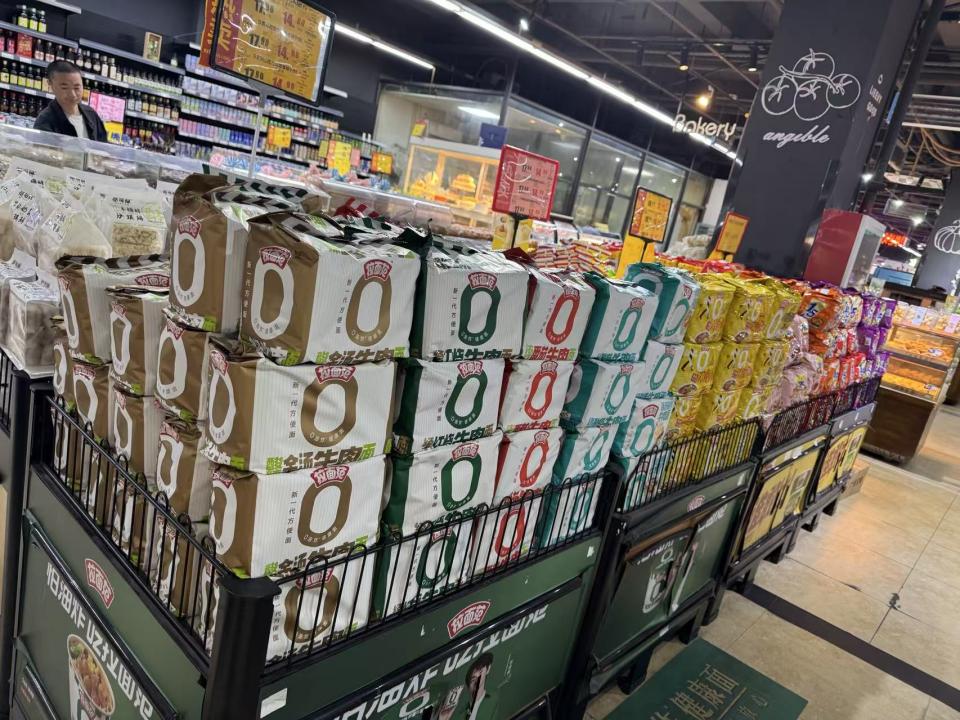
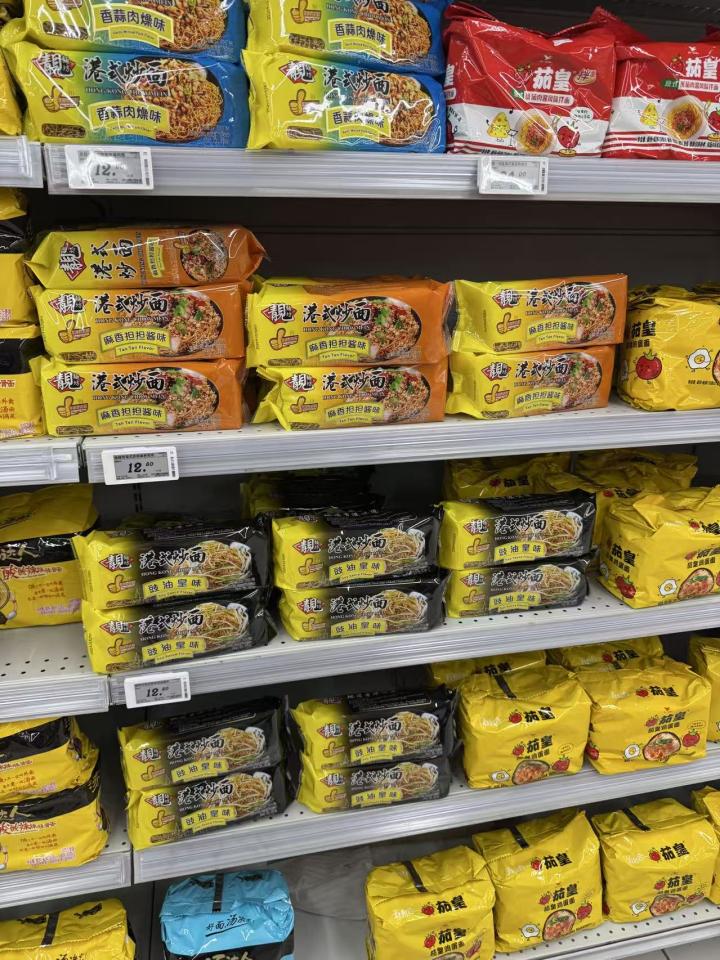
In 2026, the instant noodle industry has ushered in all-round "growth". First of all, the overall market environment is not favorable. The unfavorable factor is the "rectification" trend that started from the second half of 2025, the so-called tricky trademark incident. This required products of companies including Baixiang and Jinmailang to be repackaged and redistributed to all sales channels. Secondly, each enterprise has given full play to its own strengths. For example, Master Kong has strong channel advantages, its high-priced and mid-priced bagged instant noodles have achieved more than 2% growth this year, and it has further expanded its presence in the sinking market. Uni-President's Qiahuang instant noodles and Samyang's Buldak Ramen have advantages in product development, and Yangzhanggui has further expanded its sales advantage in campus channels with its popular "noodle, vermicelli, egg and vegetable" products favored by students. Finally, instant noodle brands have maintained their overall advantages across all channels. Whether it is the emerging instant retail, O2O platforms, snack stores, or traditional hypermarkets, mom-and-pop shops, and chain convenience stores, instant noodle brands have achieved full coverage, and no channel is left unattended.
The reason why we have spent a lot of space refuting the popular online remarks about instant noodles "snatching market share from food delivery services" and repeatedly emphasizing that each enterprise has maximized its product and channel advantages is that the spread of such remarks will lead to arbitrary decision-making by senior executives.
For example, influenced by such remarks, some senior executives may think that food delivery is now too expensive for most people to afford, and consumers will return to instant noodles, so we can launch more high-end instant noodles priced at 10 to 15 yuan to upgrade the entire instant noodle category. In the past, some enterprises have tried to launch instant noodles at this price range, but most people regarded it as a trial and error attempt, and the real mature consumption timing for such products has not yet arrived.
In addition, under the overwhelming public opinion, those entrepreneurs with hundreds of millions of net worth and millions or tens of millions of annual income may also think that the time has come for instant noodles to be sold at high prices, so they will spare no effort to promote instant noodles priced above 10 to 15 yuan, and even consider launching 100-yuan instant noodles to meet the needs of high-end consumer groups.
This is similar to the logic of "don't let employees who earn 3000 yuan a month write overbearing president novels". You have no idea how those decision-makers who have long been separated from the instant noodle sales market view the consumer market, nor what those senior executives are thinking. There was once an instant noodle entrepreneur who cut off a single product with annual sales of 200 to 300 million yuan due to insufficient profit margin, and then asked his team to find ways to make up for the lost sales volume.
You will never know how much trouble a single remark from an "industry outsider expert" can cause to front-line business staff.
Every type of product has its own market
Of course, the scenario that "the price increase of food delivery leads to the growth of instant noodle sales" does exist, and accounts for a considerable proportion.
For example, in the past two to three years, the sales volume of 1L beverages has increased significantly, and enterprises have fully promoted large-packaged beverages. It is easy to draw the conclusion that consumers need cheap and large-volume beverages. However, some enterprises have taken a different path by launching small-packaged beverages of 300ml or 330ml, and the sales of these small-packaged products are also growing. The consumer demand behind this is to reduce sugar intake, which is in line with the current mainstream trend that consumers are averse to excessive sugar.
But can you say that 1L beverages have replaced 330ml beverages, or the coexistence of large and small packaged beverages has made 500ml beverages lose their market? Neither statement is correct. The market has its own hierarchy, and consumers have different demands. The demand for 1L beverages is huge, and small-packaged beverages also have their own stable market.
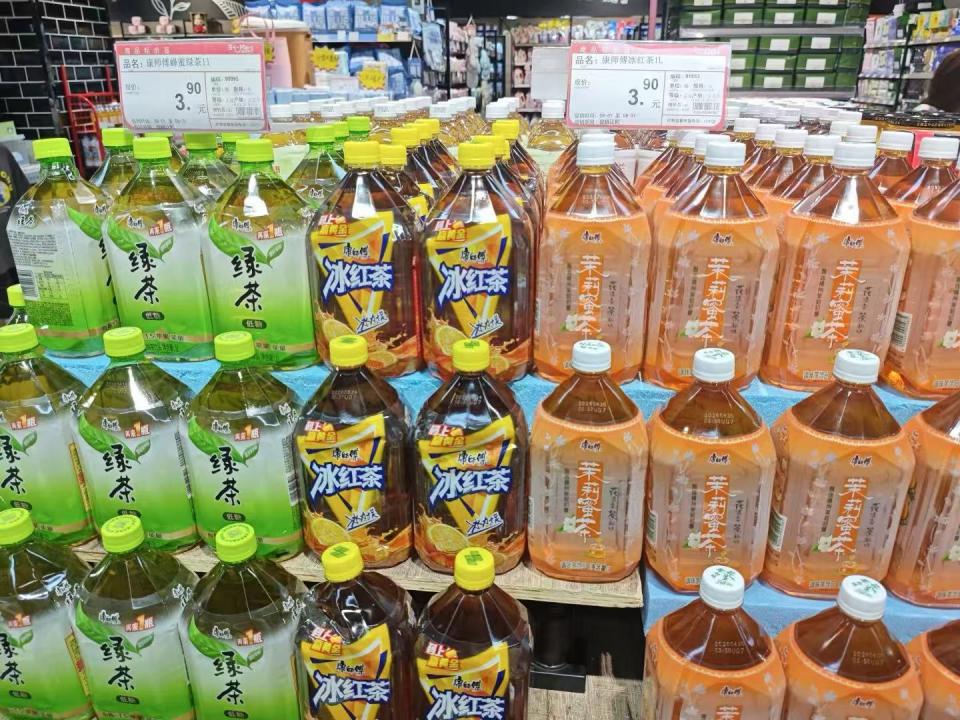
Back to instant noodles, every consumer demand for instant noodles has its corresponding market, and the only difference lies in the potential of the market to be tapped. The mainstream demands for instant noodles are convenience, low price, and good taste.
In terms of convenience, the mainstream sales come from cup and bowl instant noodles. Low price is easy to understand: when the economy is sluggish or the delivery fee is high, consumers will choose instant noodles. As for taste, it is a point that people are aware of but tend to ignore. This "taste" includes both the flavor of different instant noodle products and the unique characteristics of instant noodles themselves.
The so-called flavor is easy to understand. Master Kong's Braised Beef Noodles is the leading product in the industry, and no other product can threaten its position. Baixiang once launched coriander-flavored instant noodles, which sparked heated discussions on the Internet and became a viral hit, but its offline channel performance was relatively poor. This product of Baixiang is targeted at consumers who are extremely fond of coriander (there was also coriander-flavored beverage that year). Similarly, Uni-President launched Qiahuang instant noodles targeted at fans of the more common tomato and egg noodles and tomato beef noodles. In many markets, the sales volume of Qiahuang instant noodles has been close to that of Braised Beef Noodles.
There is another "taste" that most people ignore, which is that instant noodles have a certain degree of "addictiveness". Once you have eaten instant noodles, you will find it an unforgettable food, and you will crave for it if you don't eat it for a while. For this group of people, the demands for health and fat loss do not work, and they are different from the group that says "I'm already eating instant noodles, why are you talking to me about health". This consumer group is represented by buyers of Master Kong's Three Delicacies Beef Noodles and Uni-President's Scallop Silver Noodles sold in Sam's Club.
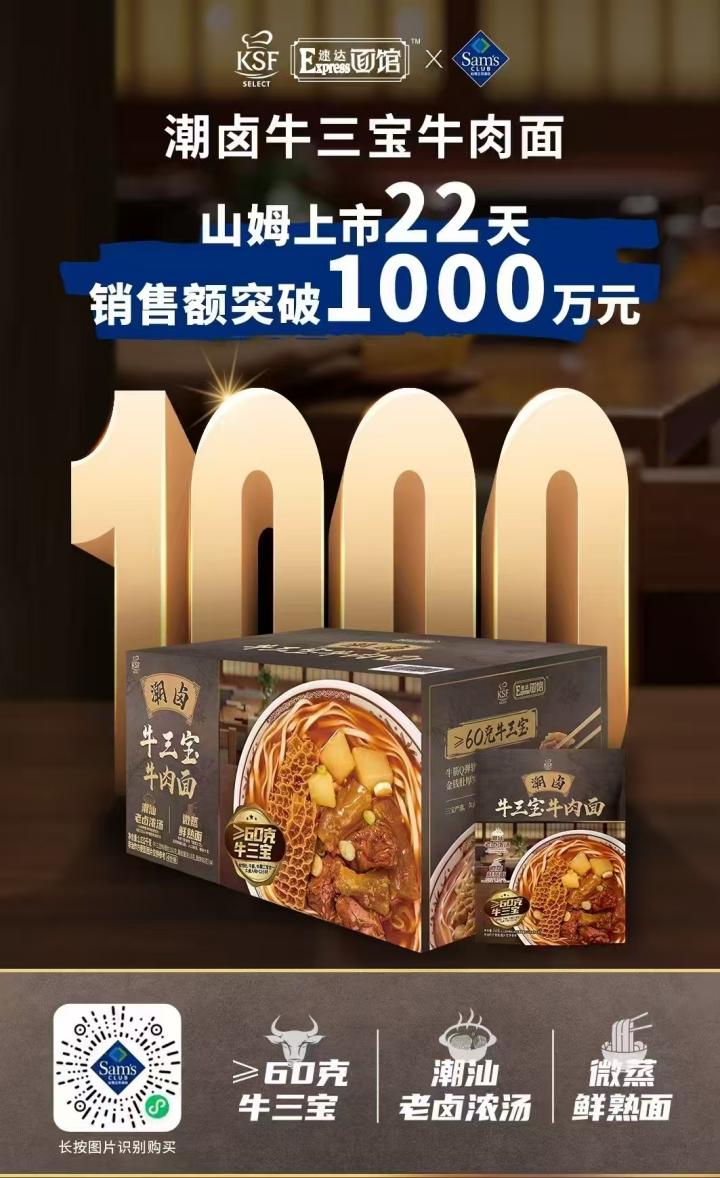
Every type of product has its own consumer group. The market is not black and white. It is unreasonable to claim that the rising sales of instant noodles are snatching the market share of food delivery services, and that instant noodles will grab more share from the food delivery market in the future. Such arbitrary decisions are not unprecedented: when fried rice with egg sold well in the past, Sanquan and Synear all launched pre-made fried rice with egg products, but this category never thrived even after more than a decade.
For middle and senior executives of enterprises, they need to help their bosses distinguish between "real work" and "homework". The so-called "real work" refers to the actual market demand that requires continuous and consistent investment. The so-called "homework" refers to those arbitrary ideas proposed by the bosses, which you have to deal with, but you need to know that the bosses may forget the "homework" they assigned and never check it. If you take the "homework" as an absolute order to arrange and execute, the market will eventually collapse.
Spend a small part of your energy dealing with the bosses' arbitrary ideas, and spend the rest of your time investigating the market from the front line and operating the market in a down-to-earth manner. This is the correct approach for the instant noodle industry to embrace the current recovery trend.
This article is from the WeChat official account "Food Internal Reference", the author is Dagengren, and it is authorized to be published by 36Kr.