Face-swapping in short dramas, talent show debuts, AI has started to "mass-produce stars".
In early August, artist Qi Wei officially announced her digital doppelgänger "Han Qingxia" and the simultaneous launch of her first AI manhua drama *Doomsday Midsummer*, bringing the conflicts between AI and content production back into the spotlight of public opinion. A year ago, the topic people were discussing was whether AI would replace real human actors.
Apart from AI works authorized by real people, the growth speed of AI-native characters has far exceeded industry expectations. Fang Taozi, the heroine of *The Laid-Off Girl*, gained nearly 500,000 followers within two months of her "debut". Duan Yan, the top male lead of AI short dramas, secured an official partnership with Tmall for the Qixi Festival. AI talent shows such as *12 Star Training Contest* and *Starlight 108* have even leveraged virtual personas to drive fan voting and public discussion heat.
As virtual characters gain independent commercial value, the star-making logic and professional boundaries of the cultural and entertainment industry are being quietly reconstructed in this wave of technology.
AI "Face Swap", Industry "Total Transformation"
The "invasion" of the content industry by AI has long been obvious to all.
According to statistics from DataEye, in the first half of 2026, the number of newly launched AI short dramas across the network exceeded 221,900. The user scale of AI dramas and manhua dramas is estimated to have exceeded 600 million, doubling from the previous market estimate of 280 million. The number of relevant practitioners and individual creators in the track has also exceeded 500,000.
Swept by the wave of technology, no practitioner can truly stay out of it. But in the face of AI, artists no longer adopt a one-size-fits-all attitude of vigilance and resistance, and have evolved into rational thinking based on their own professional positioning.
Take Qi Wei as an example. According to public information, Qi Wei participated in the whole process of character tuning, script creation and original voice dubbing this time in the identity of lead actor + producer, and adopted a limited non-buyout model to keep the portrait rights in her own hands. From the perspective of commercial logic, Qi Wei has built her digital doppelgänger into a long-term reusable digital asset, with application scenarios covering multiple fields such as AI manhua dramas, interactive content, and brand cooperation, taking a leading position in the industry's technological transformation. In other words, AI has not changed the core value of such stars itself, but expanded new imagination space for their commercial monetization.
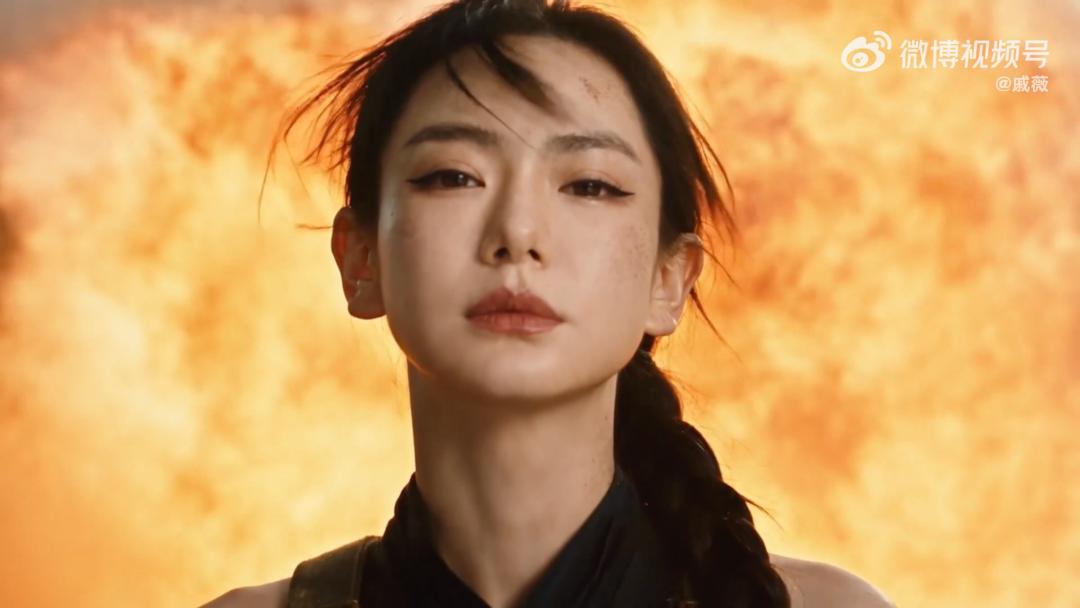
* Source: Screenshot of Qi Wei's Weibo video
In an interview with The Beijing News, Qi Wei also said, "After active authorization, the logic of our rights protection has completely changed. In the past, we defended rights after the fact, which was very difficult. Now we have clear contractual agreements, and my digital image has become an asset protected by law with clear commercial terms. If someone uses it without authorization again, the nature changes. They are misappropriating our clearly authorized digital assets with specific boundaries, and our legal position will be much more proactive and favorable in handling it. What I want to do is not passive defense, but an active, dignified embrace."
However, this seemingly stable commercialization path has also encountered public opinion tests when the actual content is launched.
Jingzhe Research Institute observed that at first, the industry's discussion focused mostly on technical feasibility, such as whether AI can produce pictures and plots with complete narratives, and whether it can effectively reduce production costs. But after the promotional video of *Doomsday Midsummer* was launched on August 7, public opinion quickly diverged. At the beginning of the video, a low-angle upward shot advancing from the bottom up was taken from under the skirt of the AI doppelgänger, and even paused at the skirt hem. The controversial camera language quickly ignited public opinion, and discussions such as "Han Qingxia doesn't need to show abs while wearing a skirt" and "just dress properly in a dangerous environment" surged in volume.
In response to the controversy caused by the promotional video, Qi Wei's team responded that they would optimize the relevant generation prompts and adjust the camera presentation effect later. However, thanks to the clear compliant authorization framework, the whole controversy has always revolved around the content creation level, and the overall public opinion has always been under control.
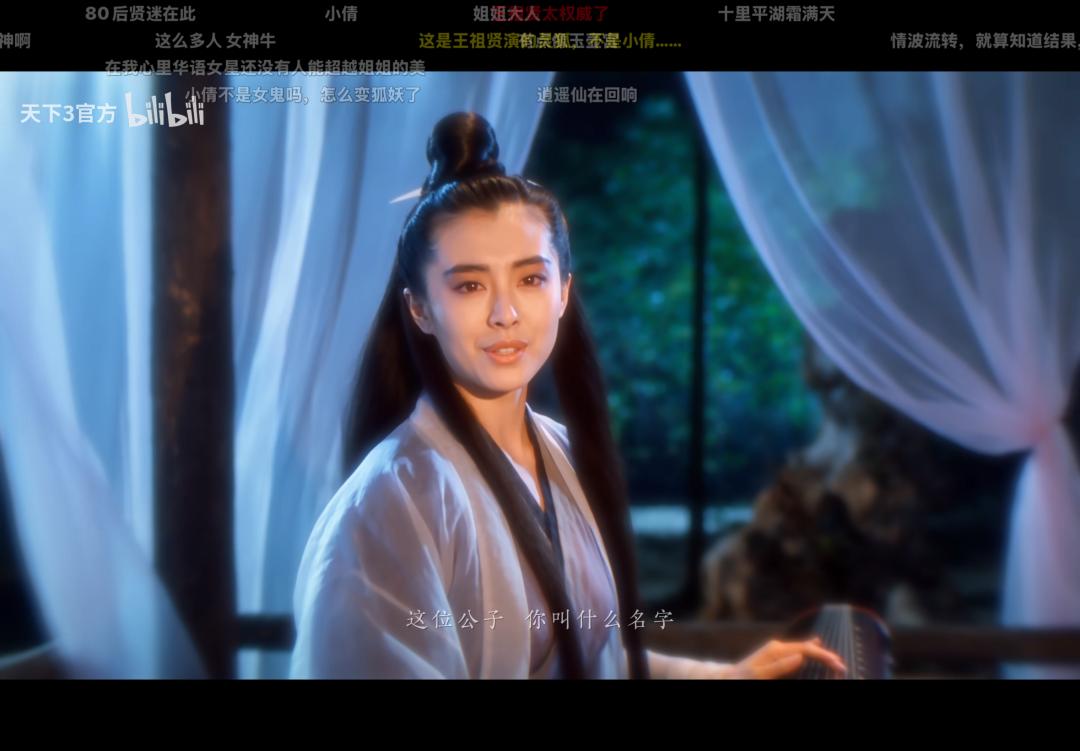
* Source: Screenshot from Bilibili
While top artists are exploring the boundaries of AI commercialization amid controversies, a group of veteran artists with classic screen images have embarked on another path of AI monetization. Joey Wong, who has been out of the public eye for 22 years, authorized the use of her portrait in her peak period to NetEase's game *Tianxia*, using AI to reproduce classic screen images such as Nie Xiaoqian. The official announcement short film has nearly 3 million views on Bilibili, and the cooperation scope is strictly limited to the game IP, covering short films, digital NPCs and exclusive costumes, with the note "Actor: Joey Wong (AI)" clearly marked at the end. You Benchang, 93 years old, authorized the creation of the AI digital persona of Ji Gong, controlling the content direction throughout the process, only doing positive IP derivatives, and retaining the right to review the script and finished film. Hong Kong actor Ng Kai Wah opened the authorization of his portrait from his youth, and he can get continuous income without joining the film crew to shoot.
Top artists and veteran artists can still rely on their own IP discourse power to take the initiative in the AI wave, but the further down the industry chain extends, the more realistic and cruel the impact brought by AI will be. In the top 10 hit list of the Hongguo Short Drama App, there are only 4 real-person short dramas left. AI content has moved from the early marginal attempts to the mainstream content camp.
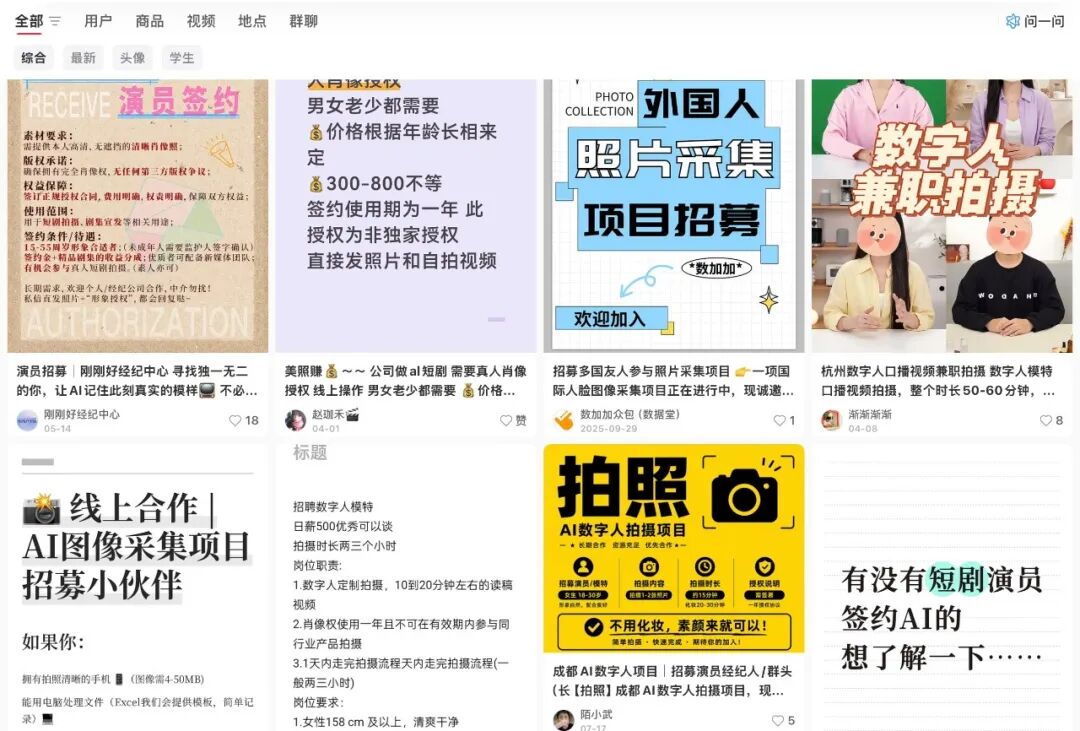
The rapid reshuffling on the content side first hits the bottom actors at the lowest end of the industrial chain, and having no dramas to shoot is becoming a dilemma they have to face. What is more alarming is that a gray business of "buying a face for a thousand yuan" has even emerged downstream of the industrial chain. The portrait authorization of ordinary people is as low as a few hundred yuan, and some producers hide authorization clauses in actor employment contracts, many people have their "faces taken" without knowing it.
Most of these authorizations are one-time buyouts, with no long-term profit-sharing mechanism, let alone creative discourse power. It seems that there is an extra short-term income, but in fact, they are exchanging their professional future for immediate livelihood, which in turn accelerates the process of being replaced. At the end of the day, AI technology has not leveled the industry gap, but has projected the originally existing professional stratification more clearly into the digital world.
Resistance, Alignment and Sprinting Ahead
The controversy over "AI stealing actors' jobs" has never stopped since the budding of the technology. With the acceleration of industrial implementation, the attitudes of the star group have gradually differentiated from the initial collective resistance.
The core source of the "resist AI" sentiment in the early stage of the industry is the infringement chaos during the technology growth stage. From 2025 to early 2026, AI short dramas exploded in growth, and a large number of works used artist portraits for face swapping without authorization. From popular actors such as Yang Mi, Dilraba Dilmurat, Yang Zi, to many well-known veteran actors, they have more or less found that their images were misappropriated by poorly made micro short dramas.
This disorder reached a public opinion high point in April this year. On April 20, the topic related to "iQiyi AI Artist Library" hit the hot search. The news that iQiyi announced the launch of the AI artist library at its World Conference, with hundreds of cooperating artists having signed to settle in, instantly ignited the industry's anxiety. After the incident fermented, many artists intensively issued statements, clearly stating that they had not signed any AI-related authorization.
But the voice of the industry is not only resistance and rejection. In a debate of *Ace vs Ace* in 2025, Tang Guoqiang firmly put forward the view that "AI is very likely to replace human actors". In his view, the essence of creation between AI and human actors is the same — both are simulating reality, conveying emotions, and pursuing the artistic effect of "being so realistic that it is indistinguishable". What the audience really cares about is the quality of the work rather than the form of performance. If real-person film and television blindly rely on identity privileges and ignore the content itself, it will be eliminated by emerging forms sooner or later.
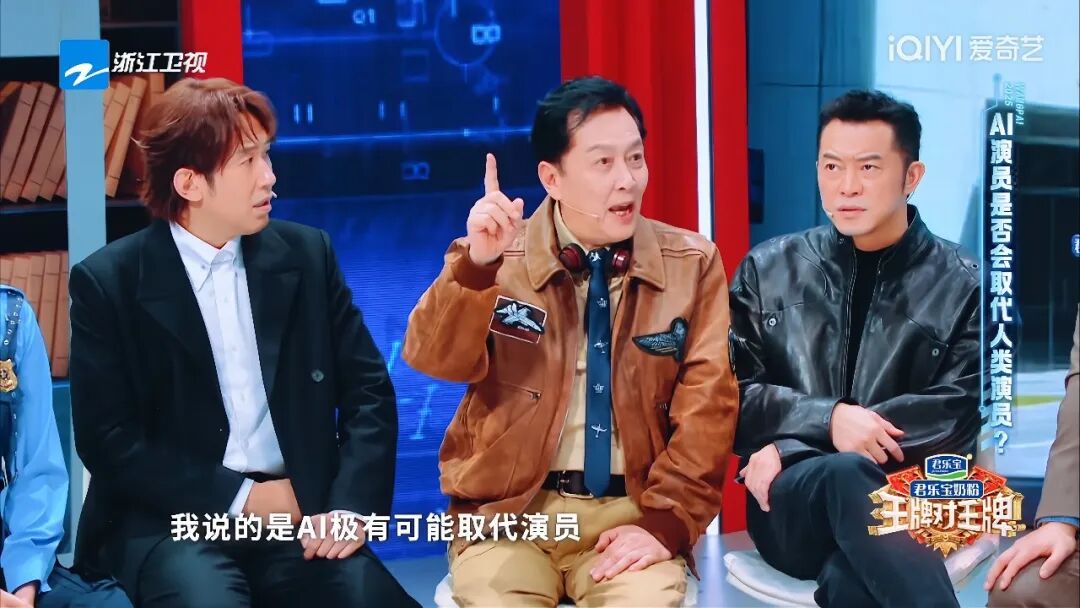
* Source: Screenshot from *Ace vs Ace*
In Hollywood, this tug-of-war between humans and technology is more radical. In 2023, SAG-AFTRA, the American actors' union, launched the longest strike in Hollywood history, and one of their core demands was to resist the invasion of AI. In 2025, British company Particle 6 launched the AI virtual actor Tillie Norwood. In response, SAG-AFTRA issued a statement pointing out that "Tillie Norwood is not an actor, and we firmly oppose the use of synthetic actors to replace human performers."
In June 2026, SAG-AFTRA reached a four-year new agreement with major Hollywood film companies. The agreement includes that the use of AI-generated performers must clearly inform the audience, actors have the right to know and consent to their own digital doppelgängers, and a corresponding compensation mechanism is established. However, this agreement has also caused dissatisfaction. Some actors believe that the protection is still insufficient, and the copyright traceability of AI data has not been fundamentally resolved.
It is thought-provoking that while the trade union is still demarcating boundaries for rights and interests, major studios have begun to calculate costs and efficiency, and launched AI-related layouts internally. Disney's Skywalker Sound is recruiting AI R&D personnel; Netflix has opened an AI video product manager position in Los Angeles. In addition, Barak Regev, former head of artificial intelligence at Cisco and chief artificial intelligence officer of General Motors, stated on his personal LinkedIn account that he will serve as Vice President of Paramount and Head of Consumer AI Business.
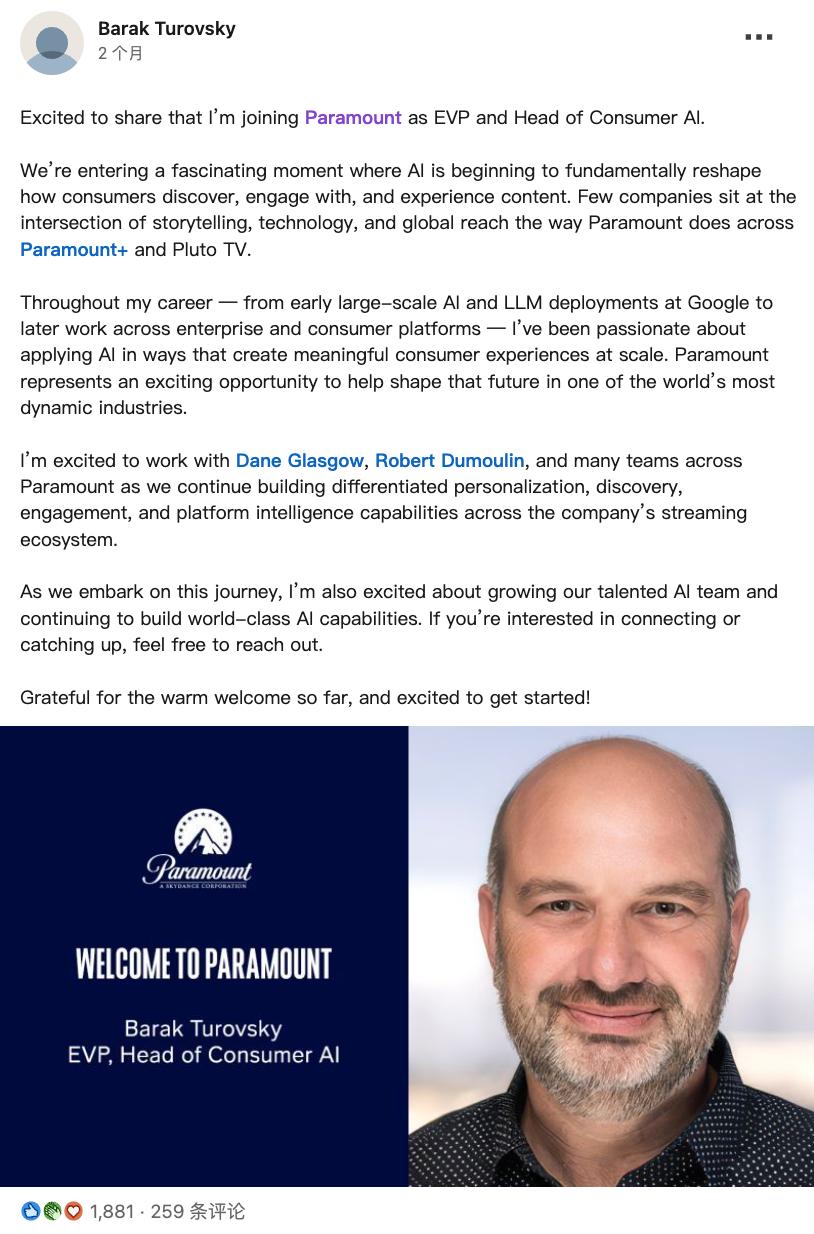
* Source: Barak Regev's LinkedIn account
In the final analysis, whether it is the professional stratification in China or the labor-management game in Hollywood, it is essentially an inevitable adjustment of the old production order in the face of new technologies. For all practitioners, sticking to the old working mode is destined to be swept by the wave, and finding your own irreplaceable value by AI is the most stable way out in this game.
AI Is Popular, But Business Is Hard to Thrive
If the game between real stars and AI is still looking for a balance between "cooperation and replacement", then when AI completely gets rid of real people and becomes a "star" on its own, this discussion about professional value will truly touch the essence.
Recently, Fang Taozi, the heroine of the AI short drama *The Laid-Off Girl*, quickly became popular. Data from the Douyin platform shows that the drama has exceeded 340 million views when it was updated to 20 episodes. Different from the past where the characters in AI dramas only served as the carrier of the plot and their sense of existence was limited to the work, Fang Taozi opened an independent personal social account, continuously updated pan-life content such as sports check-ins, daily life at home, and shooting tidbits, and quickly accumulated fans through persona operation close to real people, gaining nearly 500,000 followers within two months of her debut.
Behind the rapidly growing popularity, a set of commercial monetization models centered on AI-native characters has gradually become clear.
The first type is IP-driven product sales. After Fang Taozi became popular, she quickly received a promotion from a contact lens brand. She shared the wearing experience in the tone of a real-life blogger, claiming that the product "is very comfortable to wear all day" and "the highlight is fixed on the axis, and it does not shift when blinking", trying to replicate the grass-planting logic of real KOLs.
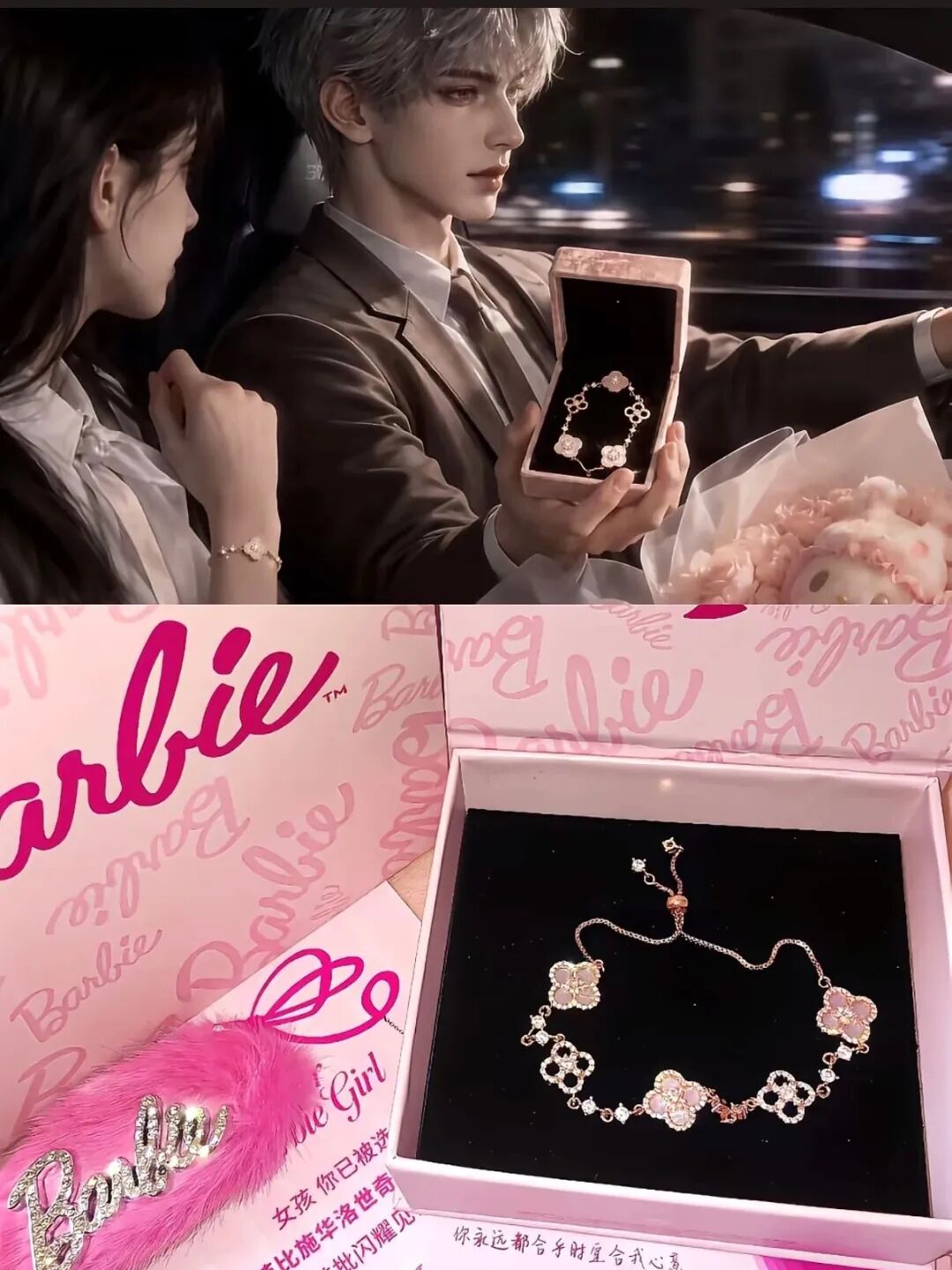
The second type is brand commercial cooperation. Duan Yan, the virtual male lead who became popular from the AI short drama *Deep Affection Invades the Rest of Life*, is considered to be an early starter in this track with the most fruitful results. Earlier, a "Duan Yan same style" lucky four-leaf clover bracelet with Swarovski elements priced at 129 yuan, the sales volume of a single product link on the Douyin platform of Barbie's official flagship store alone exceeded 10,000 units. Recently, he took the lead in securing the Tmall Qixi Festival themed commercial cooperation, realizing the industry breakthrough of AI-native characters breaking into the brand endorsement track.
However, the outstanding performance of top cases does not mean that the entire track has achieved commercial breakthroughs. The seemingly smooth commercialization path itself hides many underlying logical loopholes.
In the view of Xiaonian, an AI short drama creator, "The logic of AI virtual characters directly undertaking commercial endorsements does not hold. Ordinary audiences can hardly accept a virtual subject without real experience endorsing products. AI virtual people have no real physiological perception, and the so-called use experience is essentially a fictional statement." The contact lens promotion content released by Fang Taozi recently caused public opinion controversy due to suspected false propaganda, and was finally removed from the entire network.
The controversy over endorsement ethics is just the tip of the iceberg. The greater risk hanging over all AI-native characters is the copyright compliance issue. Jingzhe Research Institute once proposed in *AI Actors, Reshaping the Entertainment Industry?* that digital people have the potential to create content value, but copyright is still the biggest obstacle for AI actors to fully enter the market.
After Duan Yan, the top male lead of AI short dramas, accepted the Tmall Qixi Festival themed advertisement, he was publicly accused by voice actor Sanshi that "the advertisement used an AI voice line highly similar to his without authorization". This is not the first time Duan Yan has been involved in infringement disputes. His character image has been repeatedly accused of copying the facial features of Qin Che, the male lead of the otome game *Love and Deep Space*.
While the virtual stars in the AI short drama track have not yet run a mature commercialization path, the rise of AI talent shows has taken "AI star-making" a step further. Two shows *12 Star Training Contest* and *Starlight 108* were launched one after another, once setting off a boom in discussions about "cyber chasing stars". Netizens even spontaneously formed data stations, art teams, and anti-cyberbullying teams, and all the gameplay