Nine years on from The Wharf's spin-off: one business segment faces mounting performance pressure, while the other pulls off a counter-trend turnaround.
Split for nine years, sharing the same brand name, yet facing two completely different fates.
During the 2026 interim earnings season, a highly dramatic scene unfolded for The Wharf, a time-honored real estate giant in Hong Kong.
On one side, Wharf Group, with a 140-year history, stands at the eye of the storm of performance pressure, grappling with profit headwinds, asset value revaluation, sluggish share prices, and even discussions about "delisting".
On the other side, Wharf Real Estate Investment Company (Wharf REIC), which was spun off and listed, continues to deliver stable cash flow relying on resilient landmark malls such as Harbour City, and is regarded by the market as a high-quality commercial real estate asset in Hong Kong.
One is mired in deep trouble, while the other defies the downturn to stage a reversal. From assets to operating results, the two entities have been completely "split apart". Wharf Group is increasingly acting like a comprehensive asset company that needs to prove its value again; while Wharf REIC is just like a commercial REIT with high and stable returns.
01.
Wharf Group: The Century-Old Real Estate Empire Is Losing Capital Market Imagination
Founded 140 years ago, Wharf was once the benchmark for Hong Kong-funded enterprises to expand into the mainland's commercial real estate sector. The launch of two city landmarks, Chengdu IFS and Changsha IFS, was once regarded as a model of Hong Kong capital's deep cultivation in the mainland market.
With scarce land value of luxury residences on The Peak in Hong Kong and the Kai Tak waterfront residential projects, plus a diversified business layout covering financial equity investment, hotels and logistics, Wharf Group in its heyday was viewed by the capital market as a comprehensive real estate giant with both growth elasticity and asset safety cushions.
However, looking through its 2026 interim financial report for the first half of the year, the results are full of weakness and fatigue. The former growth narrative has completely collapsed, and the century-old real estate empire has lost its glory, gradually losing the growth premium and imagination space granted by the capital market.
Core Financial Data Weakens Across the Board, Book Profit Nearly Collapses
In the first half of 2026, Wharf Group's overall operating data declined across the board. Excluding the disturbance of property revaluation brought by accounting standards, the underlying net profit representing the real operating level dropped sharply by 17% to HK$1.697 billion, compared with HK$2.045 billion in the same period of 2025. The recurring core business profit has fallen for multiple consecutive cycles, which is the most intuitive signal of sluggish performance.
On the revenue side, the group's total revenue reached HK$5.344 billion, down 6% year on year; operating profit was HK$2.354 billion, down 11% year on year. The double shrinkage of revenue and operating profit means the momentum of business expansion has disappeared.
If the fair value impairment of investment properties, which is common in Hong Kong's real estate accounting, is included, the net asset revaluation impairment during the period reached as high as HK$2.049 billion. Eroded by this large book loss, the net profit attributable to shareholders was only HK$48 million, plummeting by more than 90% compared with HK$535 million in the same period of 2025, and the book profit was nearly wiped out.
In terms of dividend distribution, to commemorate its 140th anniversary, the group launched a combined regular interim dividend plus special dividend of HK$0.4 per share. It seems that the total dividend has risen slightly, but in fact, the underlying strength is seriously insufficient, and it is difficult to impress long-term funds that pursue stable returns.
Focusing on investment properties and development properties, there are almost no bright spots to be found.
■ Development Properties: Mainland China Is the Biggest Drag, Hong Kong Only Offers Slight Hedging
Residential and commercial development is the core main business of Wharf Group after the spin-off, but now it has become the biggest drag on its performance.
In the first half of the year, the demand in the mainland property market was weak, the group's development property revenue fell 8% year on year to HK$679 million, and operating profit plunged 83% to only HK$12 million.
Since 2019, Wharf has suspended land acquisition in the mainland, shrunk its business scope and focused on destocking. At present, the group's available for sale property inventory in the mainland is dominated by office buildings with slow destocking speed.
In contrast, Hong Kong's residential projects provide a slight hedging effect. A single villa at 1 Plantation Road on The Peak was sold for HK$558 million, and 198 units in the Kai Tak Victoria Harbour project were sold in half a year, with total repayment of HK$3.534 billion. The scarcity of land in Hong Kong's high-end luxury residential market shows resilience, but the scale is too small to completely offset the huge profit gap of the mainland development business.
■ Investment Properties: Flagship IFS Projects Face Pressure, The Old Growth Dividend No Longer Exists
In the first half of 2026, Wharf Group's investment property income was HK$2.311 billion, up 1.3% year on year; operating profit of investment properties was HK$1.51 billion, up 1.8% year on year. If calculated in RMB, due to the continued softening of retail and office rents in the mainland, revenue and operating profit also fell by 3%.
Wharf Group's mainland malls are mainly divided into three product lines: IFS, Times Square, and Outlet. Among them, the IFS series is the absolute mainstay, especially Chengdu IFS and Changsha IFS, which have always ranked top 1 in the average daily passenger flow of malls in their respective cities.
To enhance competitiveness, the two core IFS projects carried out a series of brand adjustments in the first half of this year. In addition to luxury brands, many brand flagship stores such as Pop Mart have been introduced.
Chengdu IFS: In the Period of Painful Adjustment
In February, the Lane Crawford store, which operated for nearly 12 years and spanned the L3-L4 floors of Chengdu IFS, was officially closed. This was the second store closed by this boutique department store in mainland China after the in01 store at Beijing Yintai Centre; in April, the double-storey boutique of French luxury brand CELINE withdrew from the mall.
Amid the adjustment pains, Chengdu IFS has accelerated the introduction of new brands. In the first half of the year, Chengdu IFS successively opened the first southwest store of popop, an independent jewelry brand under Pop Mart, the first southwest boutique of high-end watch brand H. Moser & Cie, and the first mainland China flagship store of Ralph Lauren.
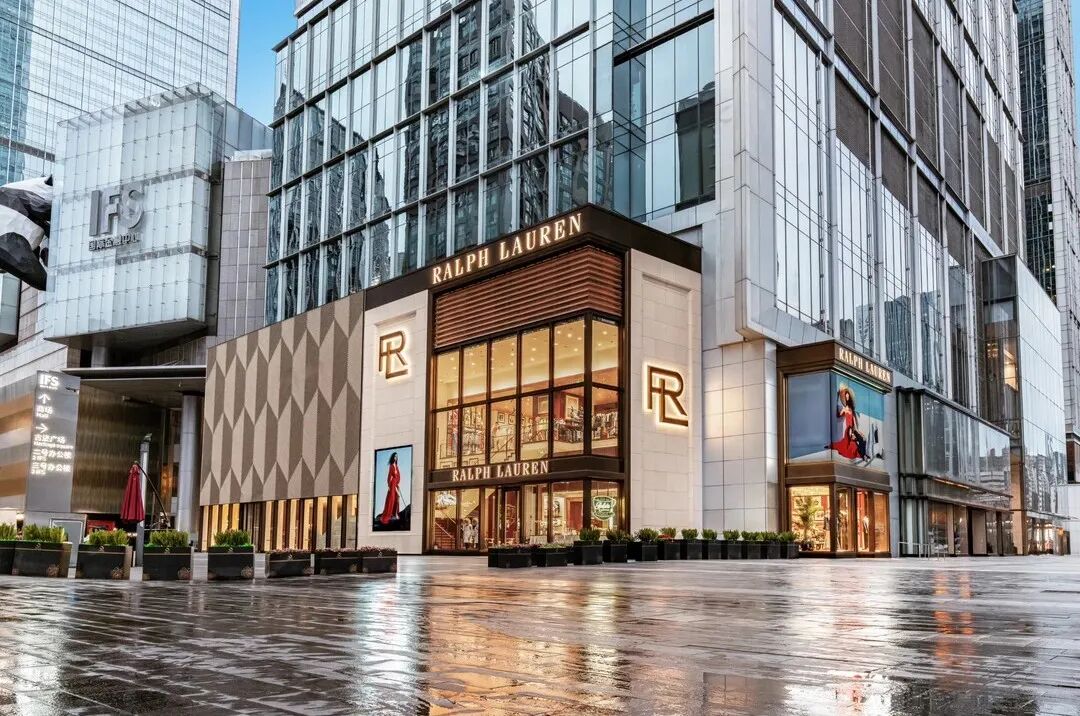
Source: Project Side
In the second half of the year, the first southwest flagship store of Pop Mart officially opened on July 24, located on the first floor of the mall, covering an area of about 700 ㎡. The store design deeply integrates local Chengdu characteristics, with bamboo elements running through the whole space; on August 3, the first southwest store of Chinese designer brand MeetMimiQ officially opened.
The nearly 7600 ㎡ commercial space left by Lane Crawford's withdrawal is the most concerned topic in the market for Chengdu IFS. Wharf mentioned in the financial report that "the area originally occupied by a major tenant is currently under renovation, which is expected to be completed by the end of 2026", but did not mention which brands will be introduced into this area.
Changsha IFS: Luxury Brands Are Busy Expanding
In 2026, several major luxury brands in Changsha IFS are carrying out expansion. HERMÈS expanded its leased area and upgraded to a double-layer flagship store, BRUNELLO CUCINELLI upgraded its store to the largest double-layer flagship store in the country, and LOUIS VUITTON launched another phase of store expansion plan in July 2026.
At the same time, the Starbucks Reserve store originally facing the northwest corner of Huangxing Square withdrew, and the original space was replaced by a double-layer flagship store of Pop Mart. A special Pop Mart CAFÉ space was set up in the store, becoming a double-layer flagship space integrating light food, coffee, baked desserts and retail.
In addition, it has also introduced the first central China store of Maison Mood, the new MICHAEL KORS store in Changsha IFS, the first central China store of Chow Tai Fook LUXURY, the first Hunan store of Klättermusen, the first Hunan store of PopSockets, and the first national "Star" concept store of CONVERSE.
In the second half of the year, the speed of new brand launches in Changsha IFS has accelerated, including Stone Island, Vivienne Westwood (with the first Vivienne Westwood Café in Hunan), French fragrance brand Diptyque, the first central China store of Nike's professional outdoor brand ACG base camp, French high-end jewelry brand CHAUMET, and the first Hunan integrated concept store of DJI | Hasselblad.
Delisting Speculation Rises Again, The Deep Root of Losing Capital Market Imagination
After the results were released, Citi maintained its "sell" rating on Wharf Group with a target price of HK$21.15. What is more noteworthy is that Citi clearly pointed out in its research report a hotly discussed topic in the capital market: the possibility of shareholder structure restructuring and privatization.
Citi's deduction logic is quite clear. The core point is that Wheelock may realize part of its shares in Wharf REIC to raise funds to privatize the minority equity of Wharf Group. Citi clearly pointed out that "the asset value of Wharf REIC is higher than that of Wharf Group" — the former owns rental properties in Hong Kong, while although Wharf Group has businesses such as container terminals and air cargo terminals, its asset attractiveness is significantly inferior.
Behind this, there are three deep-rooted reasons.
■ Deeply Tied to the Mainland Real Estate Cycle, Risks Are Exposed Concentratedly in the Downward Phase
In the past upward cycle, the mainland development business could provide sufficient performance elasticity, and the group's valuation had growth attributes; but now the mainland real estate market has bid farewell to the stage of rapid expansion, residential sales are sluggish, commercial and office stock is excessive, and asset impairment has become normalized. All the downward cycle pressure is borne solely by Wharf Group.
■ Transformation Is in a Dilemma, The New Growth Curve Has Failed to Land for a Long Time
The group has long seen that the space for the mainland development track is narrowing, and stopped land acquisition early to shrink its scale, but the transformation has fallen into an awkward deadlock. The expected future growth that the capital market values continues to fail, the growth valuation is shrinking, and it is gradually labeled as "cyclically weak, lack of highlights".
■ Weak Financial Elasticity, Funding Pressure Undermines Risk Resistance Capacity
Compared with Wharf REIC's outstanding deleveraging results, Wharf Group still needs to continuously advance operating funds for mainland projects, with low asset turnover efficiency; property impairment and inventory provision continue to erode the quality of book assets. The capital market prefers deterministic assets, so the comprehensive real estate platform with high volatility and ambiguous prospects is naturally losing its valuation attractiveness.
In summary, Wharf Group today has long lost its aura as a century-old Hong Kong-funded pioneer. It is difficult to reverse its short-term performance. Only when the supply and demand pattern of the mainland commercial and office market improves and the existing inventory is fully digested can it have a chance to stabilize. By then, the capital market may re-grant it growth premium.
02.
Wharf REIC: The Former "King of Asian Malls" Still Has Strong Charm, Acting as a Cash Flow Manufacturing Machine
Different from Wharf Group's predicament, the core of Wharf REIC's financial report in the first half of 2026 is solid: slight book loss, core profit rising against the trend, debt ratio hitting a record low, and dividend payout rising sharply.
Relying on Harbour City, which once topped the list as the "King of Asian Malls", Wharf REIC has abandoned its expansion ambition, polished stable cash flow, and transformed into a smooth-running real estate cash flow perpetual machine with predictable returns, winning capital favor against the trend in the real estate downward cycle.
Book Loss Is a False Impression, Profit, Cash Flow and Indebtedness All Improve
In the first half of the year, Wharf REIC's total revenue was HK$6.34 billion, a slight decrease of 1% year on year; operating profit was HK$4.604 billion, a slight decrease of 2%. Excluding the interference of property revaluation, the underlying net profit was HK$3.311 billion, up 6% year on year, with underlying earnings per share of HK$1.09, achieving positive growth against the trend in the environment where the real estate industry is generally under pressure. The core driving force comes from the deleveraging dividends that have lasted for many years.
During the period, the fair value impairment of investment properties was provisioned at HK$3.547 billion, and finally a loss attributable to shareholders of HK$176 million was recorded, which has been sharply narrowed by 92.69% compared with the huge loss of HK$2.406 billion in the same period of 2025.
It is worth mentioning that this loss is only a book value adjustment under accounting standards, without any actual cash outflow. Harbour City and Times Square still collect rents on time every month, hotels operate stably, and daily cash flow is not affected by the impairment at all.
In terms of finance, after several years of debt reduction plans, the company's net debt has been reduced to HK$29.2 billion, and the debt ratio has dropped to 15.9%, both hitting record lows. The actual annual borrowing interest rate has dropped from 4.4% to 3.5%, and financial expenditure has decreased by 37% year on year to HK$535 million.
The management expects that after the sale of the Wheelock Place asset in Singapore at the end of 2026, the net debt ratio will further drop to 11%, the financial burden is close to zero, and the profit space will continue to expand.
In addition, the biggest surprise in this interim report is that the company has officially raised the underlying net profit payout ratio from 65% to 90%, in line with the dividend rules of mature overseas REITs.
The interim dividend for the first half of the year is HK$0.94 per share, a 42% significant increase compared with HK$0.66 in the same period last year, with a total dividend payout of HK$2.854 billion. The abundant and stable operating cash flow is sufficient to easily cover the dividend expenditure.
For a long time, the 65% payout ratio was set to retain funds to repay debts; now the deleveraging cycle is basically completed, there is no large capital expenditure pressure, and the vast majority of operating cash flow can be returned to shareholders, completely transforming into a pure income-generating asset target, which precisely fits the preference of Hong Kong stock funds for stable income-generating assets at present.
Regarding the above performance, the management judges that Hong Kong's retail sector will still maintain a stable trend in the second half of the year, and the operating performance of core properties is expected to continue to outperform the overall Hong Kong commercial real estate market.
A number of rating agencies released research reports stating that Wharf REIC, which is often regarded by the market as "prudent for years", has adjusted its view on the operating environment prospects to "optimistic", bringing surprises to the market. This is the first time the company has shown high confidence in many years, believing that the most difficult period has passed.
Top Scarce Business Districts in Hong Kong Build a Cash Flow Moat
The reason why Wharf REIC can go through cycles and generate stable cash flow lies in that it holds the highest quality commercial property portfolio in Hong Kong, and the scarcity of its assets is irreplaceable.
The core assets are two top shopping