Who trapped the "square box" in the city?
Before the 2026 Chengdu Auto Show even kicks off, fierce competition in the boxy-styled vehicle segment has already broken out. Fangchengbao Ti9 released its official photos, Shenxingzhe 8 opened pre-sales, Luxeed G9 is about to hit the market, GAC Trumpchi Yue 7 made its global debut, and iCAR V25 is fully prepared for launch...
From the 100,000 RMB to 500,000 RMB price range, covering fuel vehicles, pure EVs and extended-range EVs, involving both Chinese domestic brands and joint ventures, almost every automaker you can name has launched at least one, or even several boxy-styled models.
Five years ago, boxy-styled vehicles were still niche toys for off-road enthusiasts, with total annual sales of the entire market barely exceeding 100,000 units. Five years later, this segment has grown into a massive track with annual sales of 1.5 million units, where more than 40 models compete fiercely, and every automaker has started to talk about "hardcore off-road performance", "off-roading", and "poetry and distance".
This seems to be an all-round victory for Chinese hardcore off-road vehicles, as more and more consumers are starting to choose boxy-styled models. However, a closer look shows that the selling points, focuses and product highlights of this segment in the current market have become completely different —
The pre-sale price of Luxeed G9 starts at 439,800 RMB. At its launch event, most of the presentation focused on the HarmonyOS Cockpit, Qiankun Intelligent Driving ADS 5, 896-line LiDAR, full-scenario intelligent interaction, air suspension and rear-wheel steering, while off-road parameters were only briefly mentioned.
Fangchengbao Ti9, the flagship large 6-seat boxy-styled SUV from BYD, highlights large space, riding comfort, family-oriented luxury and fast charging technology. In its official promotional materials, 9 out of 10 pictures show the interior and cabin space, and only 1 picture involves off-road scenarios.
In the past, off-road vehicles were more likely to highlight higher ground clearance, stronger four-wheel drive systems, larger approach angles and departure angles; but now, the focus of boxy-styled vehicles has shifted to refrigerators, large screens, comfortable seats, intelligent functions, air suspension, large space, low energy consumption and riding comfort...
Evolving from "off-road tools" to "urban lifestyle carriers", more and more boxy-styled models turn their off-road capability into a kind of "reserve capability"; and the real value of these vehicles is shifting from "where you can go" to "what kind of life you can live" and "what kind of life you want to pursue".
The boxy shape remains the same, but "off-roading" is no longer its only defining feature. However, is the highly popular urban-style positioning definitely the final destination of boxy-styled vehicles?
Tank is caught off guard! Success comes from off-roading, and trouble also comes from off-roading
BYD's Fangchengbao has risen rapidly, Chery's iCAR and Jetour follow up quickly, and even Deepal, GAC Trumpchi and BAIC Off-road are all pouring into this track. "No boxy shape, no SUV" has become a common consensus in the industry, as if any automaker that does not launch a boxy-styled model will be left behind by the times.
However, this widespread market craze has dealt a heavy blow to Great Wall Motors' Tank brand.
When talking about Chinese hardcore off-road vehicles, the Tank brand of Great Wall Motors is impossible to ignore. The single model Tank 300 has become the most iconic sight on the Sichuan-Tibet Highway. However, in the first half of this year, Tank's sales performance was not that impressive. From January to June, Tank's cumulative sales reached about 92,700 units, down 10.6% year on year; among which, sales in June were 15,700 units, down 27.2% year on year.
As the most representative brand in China's domestic hardcore off-road market, the decline in Tank's sales is related to the overall slowdown of the automotive market, but the most direct cause is probably the growing number of similar products on the market and increasingly fierce competition.
What makes Tank even more uncomfortable is that although boxy-styled vehicles are selling more and more in the market, consumers' demand for "pure off-road performance" has not risen synchronously, which greatly weakens Tank's original off-road advantages.
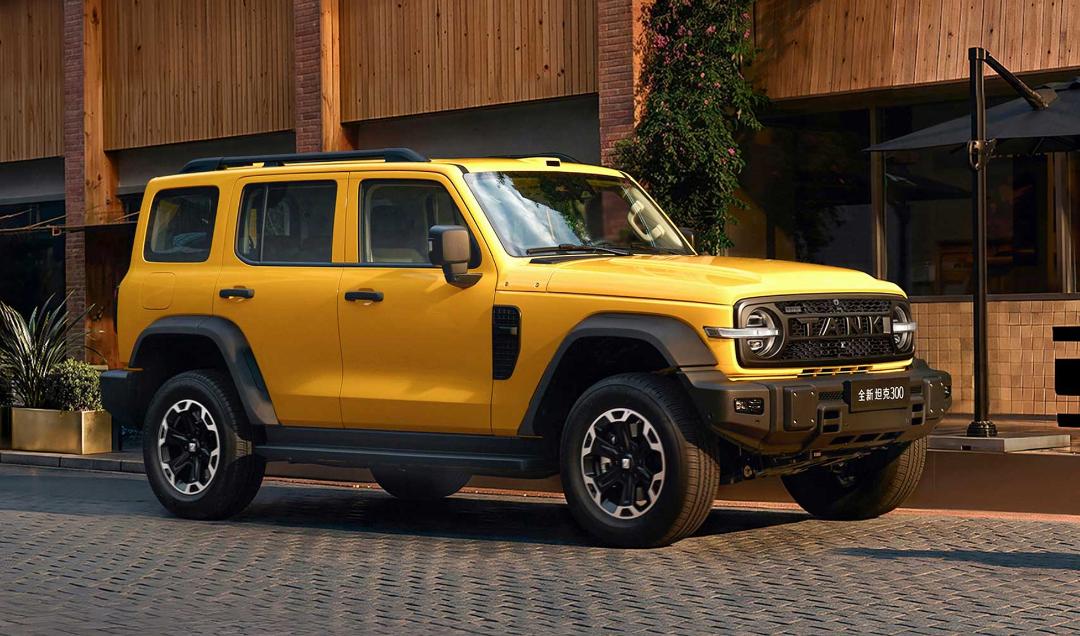
According to statistics, more than half of the top 10 best-selling boxy-styled models in the first half of the year are unibody vehicles. Among real hardcore off-road vehicles with body-on-frame structures, except for the Tank series that is still holding its ground, the sales of other models are not satisfactory. Those "pseudo-hardcore" models such as iCAR V23, Baojun Yep and Haval Raptors sell far better than many "real off-road vehicles".
Take Fangchengbao Ti7 as an example. In the just-passed July, Fangchengbao Ti7 sold 20,320 units, ranking first with a huge lead. You will definitely not think that the off-road capability of Ti7 is stronger than that of Tank 300, but Ti7 looks good, is easy to drive, fuel-efficient, family-friendly, and can handle light rough road conditions, which is more than enough for most consumers.
Consumers vote with their wallets, and automakers cater to their needs with products. If you want the look of a hardcore vehicle, we give you a boxy shape; if you want easy driving in cities, we give you a unibody structure; if you want low fuel consumption, we give you PHEV or extended-range powertrain; if you want comfort, we give you air suspension and seat massage; if you want intelligence, we give you LiDAR and high-level intelligent driving functions.
As the pioneer of the domestic hardcore off-road segment, Tank is now in an awkward situation. The reason is simple: Tank's brand image is too strongly associated with "hardcore off-roading", making it very difficult to transform to an urban family-focused positioning. If it does not transform, the market demand keeps growing while Tank's market share keeps shrinking.
The new Tank 500, which is equipped with a refrigerator, large screen and LiDAR, is exactly its attempt at transformation — but whether it will succeed is still uncertain. More importantly, in this era, no one can stop the evolution of the boxy-styled vehicle market.
Entering the third stage of boxy-styled vehicle evolution
Stop shouting about ladder frames and three differential locks. Consumers have proven with their actual spending that what they want is not pure off-roading, but the feeling of off-roading. Therefore, the evolution of boxy-styled vehicles 3.0 has actually started quietly long ago.
The first stage, from 2020 to 2023, is the "hardcore off-road era".
In this stage, Tank 300 was launched, and almost single-handedly pulled hardcore off-roading out of the niche circle of veteran off-road players. It also for the first time put the brand of Chinese off-road vehicles on the most prominent position in the market.
At this stage, the off-road capability is the core of the product, and the user profile is very clear: veteran off-road players and self-driving travel enthusiasts, who are willing to sacrifice some comfort for better passing performance, and accept higher fuel consumption and poorer urban driving experience.
What Tank 300 solves is the problem of "I want to go off-roading, but there was no personalized and affordable vehicle for that before". After this market gap is opened, the market quickly enters the second stage: from 2024 to 2025, the "new energy boxy-styled vehicle era".
Seeing that Tank made huge profits, brands including Fangchengbao, Jetour and iCAR began to enter the market in large numbers. Boxy-styled vehicles for the first time truly moved from the "off-road circle" to the mass market, and the threshold for off-roading has been greatly lowered by new energy technologies.
The instantaneous torque brought by electric motors, the electronization of four-wheel drive systems, intelligent power distribution, plus PHEV, extended-range and pure electric technologies, have made many capabilities that used to belong exclusively to hardcore off-road vehicles enter the lives of ordinary consumers at much lower usage costs.
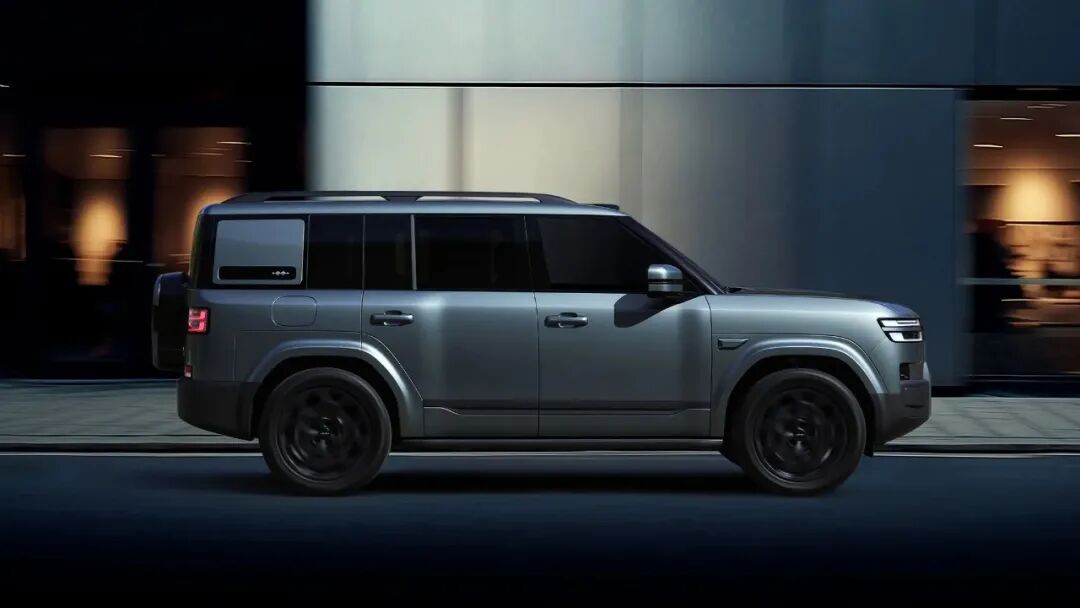
More importantly, automakers finally realized that consumers do not necessarily need a vehicle that can conquer the wilderness, but they really like a vehicle that "looks like it can conquer the wilderness".
Therefore, the "urban + light off-roading" positioning has become the new mainstream solution. Boxy-styled vehicles started to have better urban riding comfort, lower energy consumption, richer intelligent configurations and larger cabin space.
By 2026, the market story has changed again. The third stage is the "boxy-styled vehicle lifestyle era".
As more and more players including Huawei and Xiaomi enter this market, the competition logic has transformed again. Comparing who has a stronger ladder frame, more differential locks, or better climbing performance can hardly justify why a boxy-styled vehicle is priced at hundreds of thousands RMB. The value that consumers really care about lies in the cabin, intelligent driving, infotainment ecosystem, large space, and above all, riding comfort.
Therefore, you can see that more and more boxy-styled vehicles are taking the initiative to go "urban", putting "family", "camping", "travel" and "intelligent life" at the center of their promotional materials. Automakers are also shifting from selling products and configurations to selling concepts, selling beautiful experiences, and selling those desirable lifestyles.
This is not the degeneration of boxy-styled vehicles, nor a betrayal of off-roading, but a re-evolution of this category.
From the era of Tank 300's "I want to conquer the wilderness", to the new energy boxy-styled vehicle era of "urban commuting and weekend light off-roading", and then to the upcoming era of "intelligence, comfort, family and lifestyle", boxy-styled vehicles have always been on the way of evolution.
Demand keeps rising, full-scale competition in the boxy-styled vehicle market is imminent
More and more ordinary families, even young consumers and female users are choosing boxy-styled vehicles. They may not know what the three differential locks are for, but they can see that these vehicles "look cool"; they may not challenge shell pits or extreme off-road terrains, but they like to drive their boxy-styled vehicles for camping on weekends; they may not need extreme passing performance, but they attach great importance to rear space, refrigerators, seats and intelligent cabins.
At the upcoming 2026 Chengdu Auto Show, you will also see a wide variety of boxy-styled models: a batch of vehicles including Fangchengbao Ti9, Jetour Traveler 7, iCAR V25 and GAC Trumpchi Yue 7 will make their concentrated debut, covering different market segments from mainstream family use to high-end new energy vehicles, and from urban light off-roading to hardcore off-roading.
Obviously, the players now at the table of the boxy-styled vehicle market are no longer foreign brands, nor just traditional off-road players such as Tank and Fangchengbao. More and more new energy brands and mainstream domestic independent brands are entering the market with boxy shapes — boxy styling is no longer a niche product category, but has become a "super design language".
This market can be roughly divided into three tiers.
The top tier is the professional off-road market. This market is small but very stable, where models including Tank 700, Yangwang U8 and M-Hero will hold their ground. Unfortunately, the sales volume will not be very large, and selling tens of thousands of units a year is already the ceiling.
The middle tier is the boxy-styled vehicle lifestyle market. This is the largest market cake, and also the most fiercely competitive segment. The vast majority of boxy-styled models, priced from 150,000 RMB to 500,000 RMB, will be concentrated here.
The bottom tier is the market for "only good-looking" products. These vehicles only have a boxy appearance without any real capabilities, and rely on low prices to achieve high sales volume. This market will keep shrinking, as consumers become more and more knowledgeable, and those products that only have appearance but no real strength will be eliminated sooner or later.
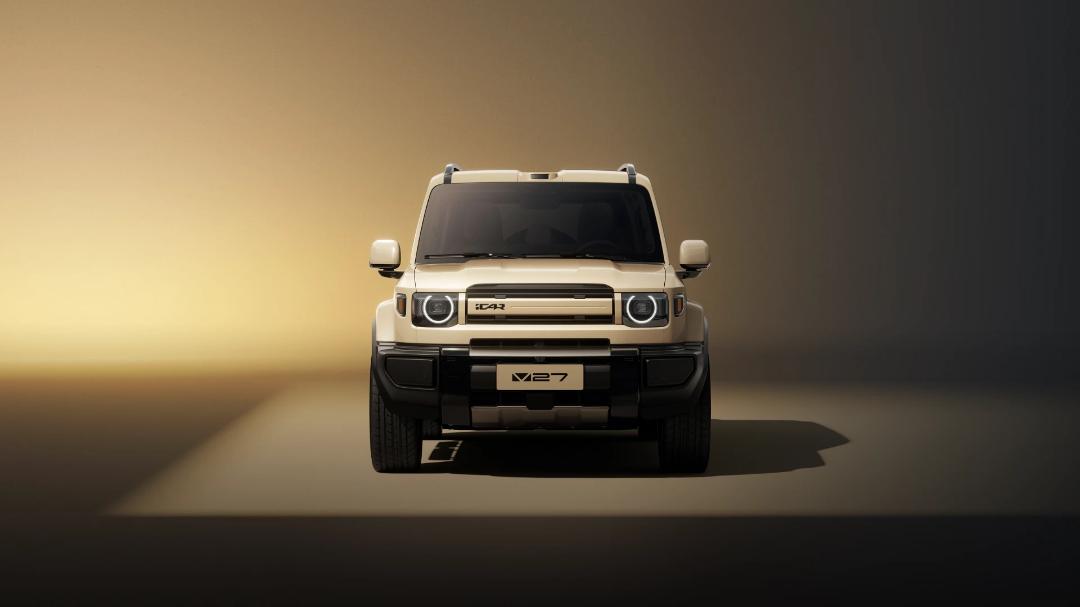
At present, what most automakers are chasing the most is the middle tier, that is, the price range of 100,000 RMB to 500,000 RMB.
Fangchengbao takes the temporary lead here, as it was the first to understand the trend, and the first to shift the positioning of boxy-styled vehicles from "off-roading" to "family use". Its product line covers the full price range from 130,000 RMB to 500,000 RMB with Ti3, Ti7 and Ti9, and none of these models blindly pursue "extreme hardcore performance", but accurately meet the needs of most users.
Jetour and iCAR under the Chery Group take the cost-effective route, and achieve rapid sales growth in the entry-level market of 100,000 RMB to 200,000 RMB relying on lower prices. Their problem is insufficient brand power, making it difficult to move upward in the market, so they can only compete in the low-end segment. Similar players include BAIC Off-road, 212 and Haval.
The most anticipated players are probably Huawei and Xiaomi.
Although they are cross-border entrants, they know best how to play the "lifestyle" card. Huawei has intelligent cabins, intelligent driving capabilities and brand premium; Xiaomi has a complete ecosystem, massive user base and huge traffic. They can easily raise the competition dimensions to the level of "intelligent experience", "life ecosystem" and "fixed user circles".
In fact, the competition in the boxy-styled vehicle market has never been a war of off-roading. From Tank 300 to Fangchengbao Ti7, and then to Luxeed G9, the proportion of off-road performance in product value keeps decreasing, while the proportion of life-related functions keeps increasing. The real evolution of boxy-styled vehicles is that they have transformed from vehicles born for off-roading, to vehicles that can carry more diverse life scenarios.
Therefore, in the end, rather than saying that boxy-styled vehicles are trapped in the urban scenario, it is more accurate to say that they have actively moved towards a broader mass market. The mass market has a low entry threshold but diverse demands, and the new era of the boxy-styled vehicle market has only just begun.
This article is from the WeChat Official Account "Auto Commune" (ID: iAUTO2010), written by Zhang Zhidong, and authorized for release by 36Kr.