From the farm to a $39 billion valuation, he is using AI to reshape the physical and digital worlds.
If you search "Brett Adcock net worth" on Google, Fortune will tell you the figure is 19 billion US dollars.
But when you ask him in person how he feels about it, his answer is: "I don't care at all, I couldn't care less about this matter."
This is not false modesty. In the following conversation, this serial founder who has built Vettery (sold for 110 million US dollars), Archer (publicly listed) and Figure (valued at around 39 billion US dollars) shows an almost paranoid focus: there is only one thing he cares about: how to make the company truly change the world.
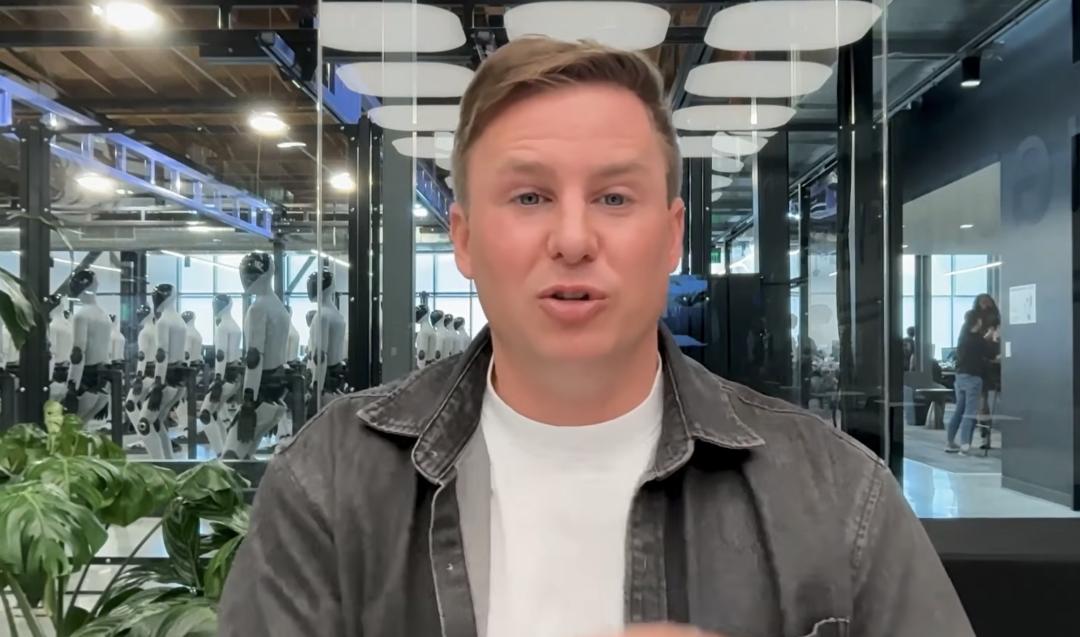
I. Background and Personality: "Doing Difficult Things Is Easier"
Adcock grew up in rural areas of Illinois. After the dot-com bubble burst in 2003, Silicon Valley was in a slump, but he was still full of passion for technology.
"I have made a lot of mistakes," he admitted frankly. At the age of 24, he began to systematically study those most successful people: he created a spreadsheet to track the birth year, apprenticeship year, first success year and breakthrough year of about 50 extremely successful people.
One of his core methodologies is: Doing difficult things is often simpler than doing easy things.
"When you work on difficult things, there is less competition. Difficult things mean a larger potential market size, and if you succeed, the scale of exit will also be larger. Moreover, those top talents who are most eager to exceed targets are often willing to take on difficult challenges."
He gave an example: the comparison between quadruped robotic dogs and humanoid robots. "Humanoid robots may only be 3 to 4 times more difficult to develop than quadruped dogs, but their potential returns may be a million times or even a billion times higher than the latter. Why would you make a quadruped dog? What economic value can that bring?"
"Look at those junk AI products on the market right now — things like OpenClaw, all of them are garbage. None of them will last. You might see some talent acquisition integrations, but those products will eventually disappear."
II. From One Leg to a Full Humanoid: The Evolution of Figure
Four years ago, when the host first visited Adcock's office, Figure only had 5 engineers, and what they could demonstrate was only a movable mechanical leg — a knee with ankle dorsiflexion function.
"That was already the coolest thing at that time."
Today, Figure's robots are already working autonomously at customer sites. Adcock revealed that they have just shipped robots to the third customer, and current customers are mainly in the logistics and manufacturing sectors — BMW is one of their largest commercial customers.
In a recent live broadcast, their robots sorted parcels on the conveyor belt at a speed of 2.9 seconds per parcel — which has reached the speed of human workers.
"Customers came to us and said, 'We are overwhelmed by labor problems, the employee turnover rate is extremely high, exceeding 100% per year in some regions, and we can't find a solution.'" Adcock said, "We already have the ability to deliver tangible return on investment for our customers."
But he emphasized that the company's real goal is not to build "robots that can do somersaults, run the fastest or dance". "We don't care about those things. What we care about is robots that can complete real tasks autonomously for a long time."
When asked who would win a man vs robot battle right now, Adcock smiled and said: "Humans can still win. Humans are the winners for now."
III. Hark: The "Jarvis" in the AI Era
If Figure is the physical embodiment of AI, then Hark is the digital soul of AI.
Adcock became deeply interested in "digital symbiosis between AI and humans" a year ago. "Figure will be the upper ceiling for AGI in the physical world — allowing AI to take actions in the physical world. There will also be a corresponding counterpart in the digital world."
He described such a future: Everyone will have an exclusive AI companion that holds your memories, has access to all your accounts and systems, and can perform tasks for you like a super assistant — "the closest reference is Iron Man's Jarvis".
"It will know everything about your life, you can access it at any time, and it will help you in the background at all times. If you miss a connecting flight on a trip, it will already have a backup plan ready."
To realize this vision, Hark is working on two things: new AI models and new hardware.
On the model side, the key is to enable AI to use computers like humans. "You won't hire an assistant who can't use a computer," he said. "AI needs to be able to use the mouse and keyboard, and complete all the things you can do in the browser — book flights, order food delivery, build financial models."
Adcock pointed out that only one in a thousand websites in the world has APIs. So it is impossible to rely on APIs or MCP, and AI must be allowed to "look at the screen, move the cursor and tap the keyboard" just like humans.
At Hark, they launch a virtual computer for each agent and let them run in a sandbox. The most critical difference lies in reinforcement learning post-training — Adcock said his team's post-training process is probably "something no one else in the world has ever done".
"Last week we just released the first research preview version. There are barely any tasks we tell it to do online that it can't complete now."
On the hardware side, the Hark team is designing "next-generation AI devices" — which may completely replace mobile phones and computers. The hardware lead has participated in the design of past generations of iPhone and MacBook Pro.
"The first version of the hardware we have in our lab right now is the most distinctive thing I have ever seen in my life."
He made it clear that glasses will not be the final answer. "Meta Glasses is one of the worst products I have ever bought. It does not have its own independent network, relies on iPhone, applications need to be opened on the phone, and the pairing process takes a long time... I can't imagine any reason to wear it for 14 hours a day."
"The final form will be brain-computer interface, but before that, we will have at least 10 years of AI voice devices."
IV. Cover: Stopping School Shootings with Technology
Adcock's another company Cover aims to develop a full-scanning system that can detect weapons from 20 feet away, and test it in K-12 schools.
The origin of this project is related to his personal experience. As an Asian American, during the pandemic, he saw violent crimes against elderly Asian people being ignored, and saw school boards preventing Asian children from learning algebra in public middle schools — and he was exactly that child who attended public schools in Fremont. "If you can't learn algebra in middle school, you can't learn calculus in high school, then I wouldn't be able to study engineering at Stanford, and I wouldn't be where I am today."
The Cover team is led by a former chief engineer from NASA Jet Propulsion Laboratory, they developed custom chips that reduced the cost by 90% and made the solution more scalable.
"The chip manufacturing cycle is about a year," he said, "We just got the chips recently, and the test results are great. Now we need to produce more, which will take another 6 months."
V. The War for Talents: Meta's "Mercenary" Strategy
Adcock revealed that the competition for AI talents has reached a crazy level. There may only be 20 to 30 people around California in the world who truly know how to build excellent AI models.
Meta's strategy is to directly "buy" talents. They offer senior AI researchers 36 million US dollars of restricted stock units over four years — while Adcock's offer for the same talent is about 15 to 20 million US dollars of startup stock options over four years.
"The candidate knows very clearly, 'This is guaranteed cash. If I go to Meta, 36 million in four years is a sure thing.'"
As a result, this candidate went to Meta.
Adcock said Meta has been "buying its way through the AI race" in this way for the past year. When asked if he respects this strategy, his answer was unexpected: "I really like this strategy. If I were Mark, I would do the same thing."
But he added: "The problem is that you are hiring 'mercenaries' who are purely there for the money. No one really wants to go to Meta, they go just because they can get guaranteed RSUs without extra effort. And you really don't need 1000 or 500 people to design AI models — a great team of 20 to 30 people can get it done, and these people will care more about the mission."
"The jury is still out on whether they can actually launch a decent product. My concern about Meta is that they have never been very good at creating 'new' things in their history. What they are best at is acquisitions — Instagram, WhatsApp — buying their way into these fields. But if you look at Ray-Ban Meta glasses and everything they have made... that's really not a great piece of work."
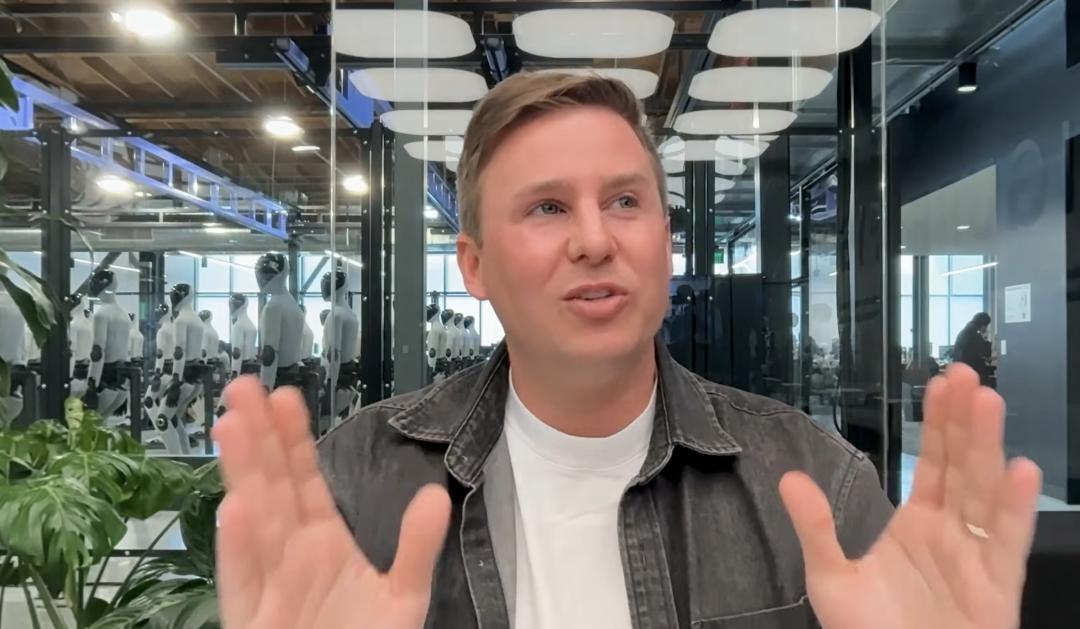
VI. Personal Life: Choose Two Out of Three Pockets
Adcock shared his personal trade-offs candidly.
"I divide my life into three pockets: work (which I care a lot about), family (three young kids) and 'others' — friends visiting, annual golf trips, bachelor parties, weddings in Europe and so on."
"I realized I can't do all three well at the same time. So I basically stopped spending time on the third pocket."
When his college roommate came to the Bay Area for 10 days and wanted to meet up, his reply was: "I really don't have time. Every minute I spend away from these two things is either time away from my family or time away from work."
When asked about his workflow, he showed his phone — it's full of notifications. He doesn't use Slack (Hark is helping him process messages), Hark will send him important content via SMS.
His to-do list used to be on Google Doc, which he updated every Sunday. Now Hark takes full charge of it.
In terms of health, he does quarterly blood tests, full body scans, and heart CT — he has collected a huge amount of health data. "You can spend 100 dollars on a heart CT to basically prevent heart disease; you can do a full-body MRI to detect cancer at an early stage."
But he also admitted: "Unfortunately, I don't have enough time to exercise." He said this with a hint of helplessness — "Trade-offs are inevitable."
VII. Survival Strategies in Low Points
Adcock shared his experience from 2012 to 2017 — during those five years, he was almost always short of money.
In the early days of Vettery, they raised 500 thousand US dollars in convertible notes, he himself took out another 50 to 100 thousand US dollars in loans, didn't pay himself a salary, and ended up in debt in New York.
"The situation was not optimistic at all. But six years later we launched the Vettery marketplace, it took off completely, and one year later we sold the company for 110 million US dollars."
When asked how he coped when he was at the "rock bottom", he said:
"The inner monologue is: 'This is really terrible, extremely painful.' But at that time you can only get through it day by day. Don't look at the whole week, don't look forward to Friday, just focus on today. Make a to-do list, finish tasks day by day. The only way out is to go straight through it."
He shared a story about ultramarathon: someone told him that when you run 49 miles, don't think about the finish line, instead "pick a target half a mile away, tell yourself you can think about giving up only when you get there. After you reach it, pick the next target — maybe only 200 yards away. Tell yourself you can consider quitting once you get there."
"That's how I survived."
VIII. The Most Important Lesson He Has Learned
Adcock said after observing the startup world for 15 years, his biggest insight is:
"95% of people in this game will fail."
When he was in the New York University incubator, there were 50 companies in the same cohort, and five years later — only he and another person made more than 0 dollars.
"You see all those funding news on TechCrunch, all kinds of content on X, but as time goes by, they all disappear."
"It's that cruel."
So he chose to keep moving forward. After selling Vettery, he invested almost all his money in Archer, and even took out a second mortgage on his house to fund Figure.
"The stock price fell like a falling knife — from 10 dollars to 2 dollars. But I had to hold on."
Conclusion
When asked about his opinion on OpenClaw, Adcock did not mince words: "OpenClaw doesn't work well. This wave has already passed."
His final advice to founders: "Pick something you will spend 10 to 15 years on — it will determine your entire trajectory. It is a probability-weighted decision, your judgment of the probability of all possible outcomes."
"You have to think it through before you start doing it."
The teenager who grew up in rural Illinois made his life plan at the age of 24. Now he runs three companies at the same time — Figure lets robots work autonomously in the physical world, Hark builds AI companions in the digital world, and Cover works to stop school shootings in real life.
He is like a perpetual motion machine. When asked about his philosophy that "doing difficult things is easier", his answer is: "When you work on difficult things, there is less competition, the rewards are greater, and you will attract people who truly love what they are doing."
This article is from the WeChat Official Account "Next Gen Evolution Planet", author: Mark, published with authorization from 36Kr.