Artists including Joey Wong, You Benchang, Qi Wei and others have successively authorized their AI images, ushering in the secondary growth of entertainers' commercial value.
In the summer of 2026, the relationship between entertainers and AI has quietly undergone a shift.
Half a year ago, the mainstream voice of the industry was still at the defensive stage of boycotting AI face-swapping and issuing rights protection statements. Just a few months later, Qi Wei officially announced her personal AI digital avatar "Han Qingxia" and launched an AI comic drama. Wang Zuxian, who retired from the screen for more than 20 years, authorized her peak image to enter the game advertisement. Ng Kai Wah authorized his 20-year-old portrait for AI film production, and 93-year-old You Benchang completed the shooting of short dramas and brand advertisements with his digital avatar.

A group of entertainers of different ages and at different career stages have successively entered the AI content production chain through official authorization, transforming the "face theft" risk that once required rights protection into controllable and monetizable digital assets.
The core of this wave is not the technology itself, but the reconstruction of the logic of entertainers' commercial value. In the past, the monetization of entertainers was highly dependent on their physical presence, and schedule, age and physical condition were all hard constraints. Digital portrait authorization breaks the limitations of time and space, allowing the peak image to be preserved permanently, enabling elderly entertainers to continue producing content, and making the IP value of retired entertainers continuously released.
At the same time, the explosive demand for downstream scenarios such as short dramas, games and brand advertisements is also pushing the authorization system to become standardized in reverse. From single-project cooperation to long-term IP operation, from simple portrait authorization to in-depth content co-creation, entertainers of different tiers are embarking on differentiated digital monetization paths, and the material standards, tuning methods and risk control in the implementation process have gradually formed replicable practical experience.
Three types of authorization models: from single-project cooperation to IP-based operation
Digital portrait authorization does not follow a unified model. Due to the differences in entertainers' career stages, public recognition and classic IP attributes, the corresponding cooperation forms and revenue structures are significantly different. At present, a relatively mature authorization model has been formed in the industry, which corresponds to veteran entertainers and active A-list entertainers respectively, and adapts to different downstream scenarios and commercial demands.
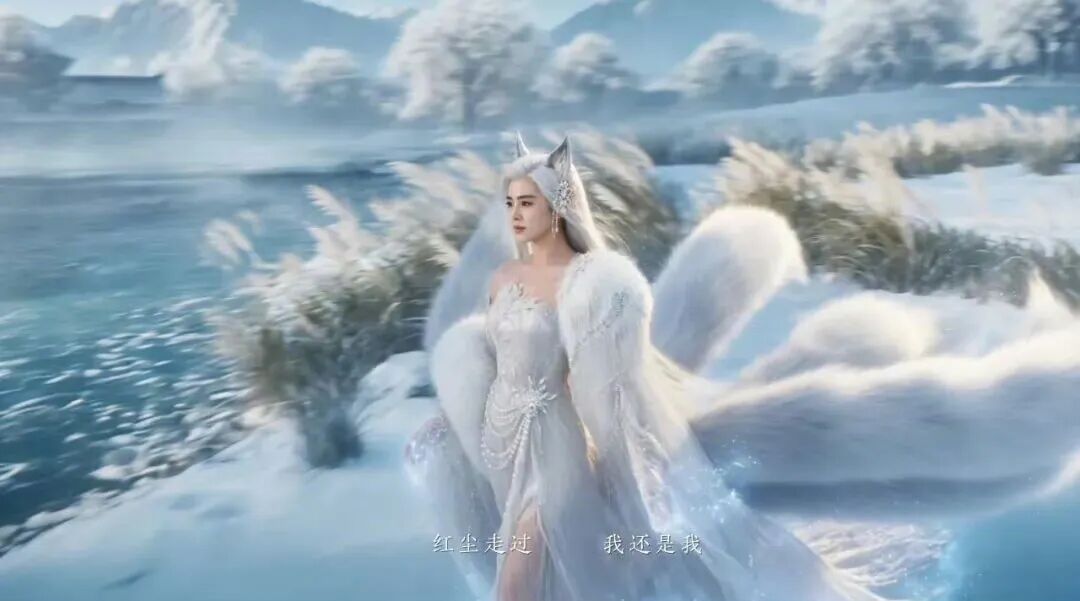
The core advantages of veteran entertainers lie in "emotional memory" and "classic image". Most of these entertainers have faded out of the public eye for many years or are advanced in age, and their willingness and feasibility of live-action shooting are relatively low, but the classic roles they created in the past still have strong market appeal. The cooperation between Wang Zuxian and NetEase's *Tianxia* is a typical sample of this model.
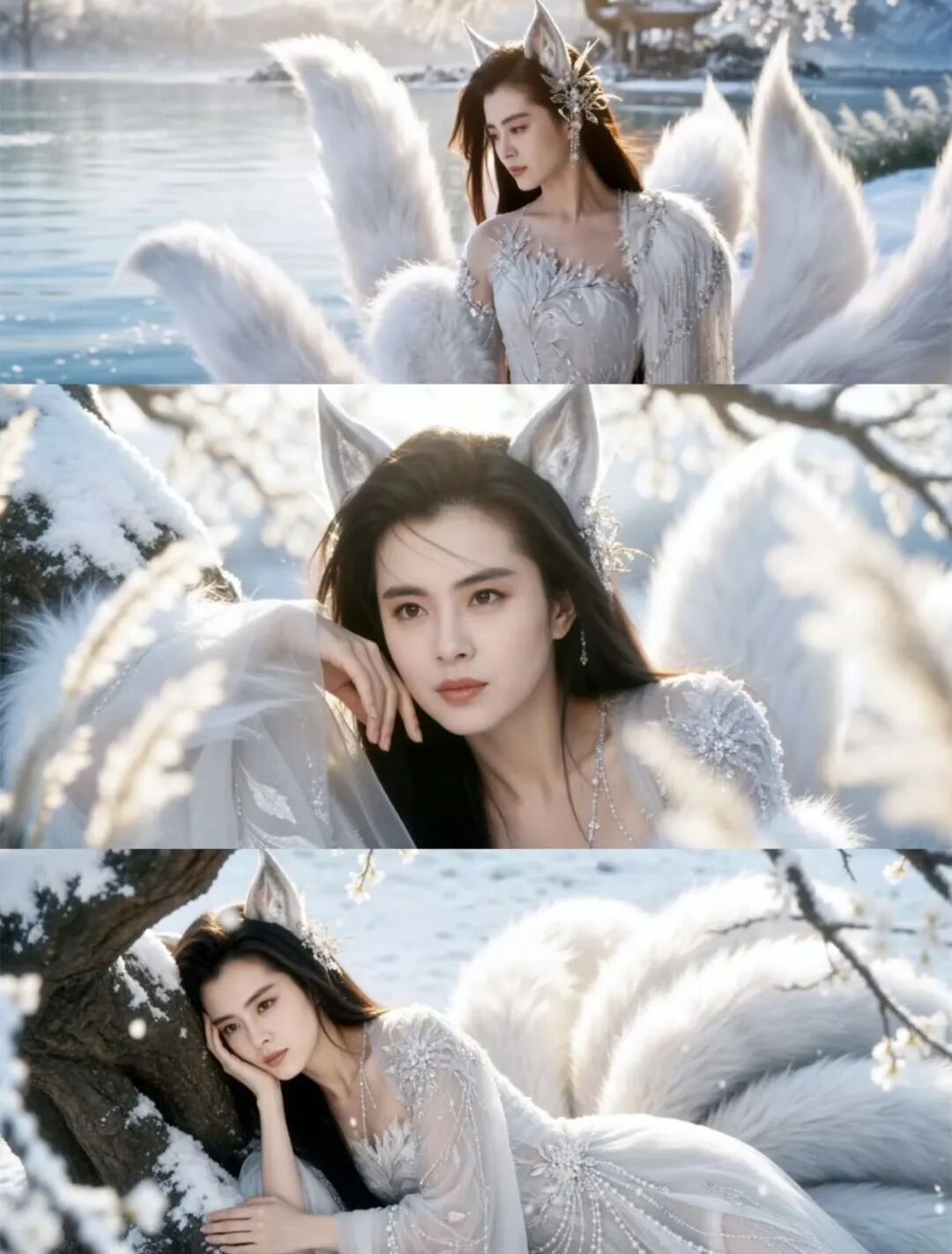
What she authorized is not her current personal image, but the portrait materials of her peak period from 20 to 30 years old. The scope of application is strictly limited to the *Tianxia* IP system, and the implementation forms include the full-AI commercial film *Qianying*, in-game digital NPCs and exclusive costumes. Throughout the cooperation process, Wang Zuxian herself does not need to appear on camera or participate in shooting. This model of "limited scenario + peak image" is essentially the secondary development of dormant film and television IP, which can realize asset monetization with extremely low time cost.
The cooperation of Ng Kai Wah and You Benchang also belongs to this tier, but their implementation scenarios have different focuses. 62-year-old Ng Kai Wah authorized his 20-year-old portrait to an AI film and television company for the leading actor shooting of a single film. According to the lawyer's interpretation, the contract limits the scope of use to this film only, and it is prohibited to be used for other film and television, advertisements or derivative development. Ng Kai Wah admitted that he was very satisfied with the effect of the finished film, which not only allowed him to relive the experience of being a leading actor when he was young, but also brought very considerable pay.
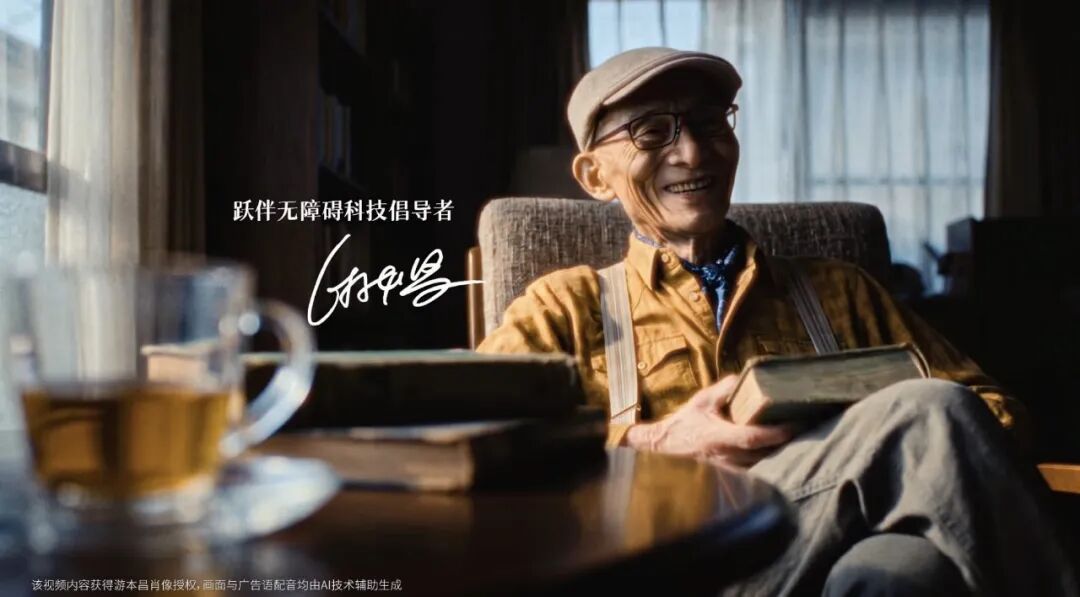
The 93-year-old You Benchang went further. He not only authorized the image of Ji Gong for the micro short drama *Ji Gong: The Fake Dragon Subduing*, but also opened digital portrait authorization to elderly care brands for shooting the AI short advertisement *At the age of 93, I got my first robot in life*. Compared with live-action shooting, the production of AI digital avatars is not limited by the entertainer's physical condition and schedule, and this kind of cooperation is very suitable for elderly entertainers who still have public recognition.
The authorization logic of active A-list entertainers is completely different. Their core demand is more inclined to expand new scenarios that cannot be covered by real people, such as comic adaptation, science fiction, wasteland and other themes that require a large number of special effects. By creating independent virtual IP, they extend their personal influence to new content categories.
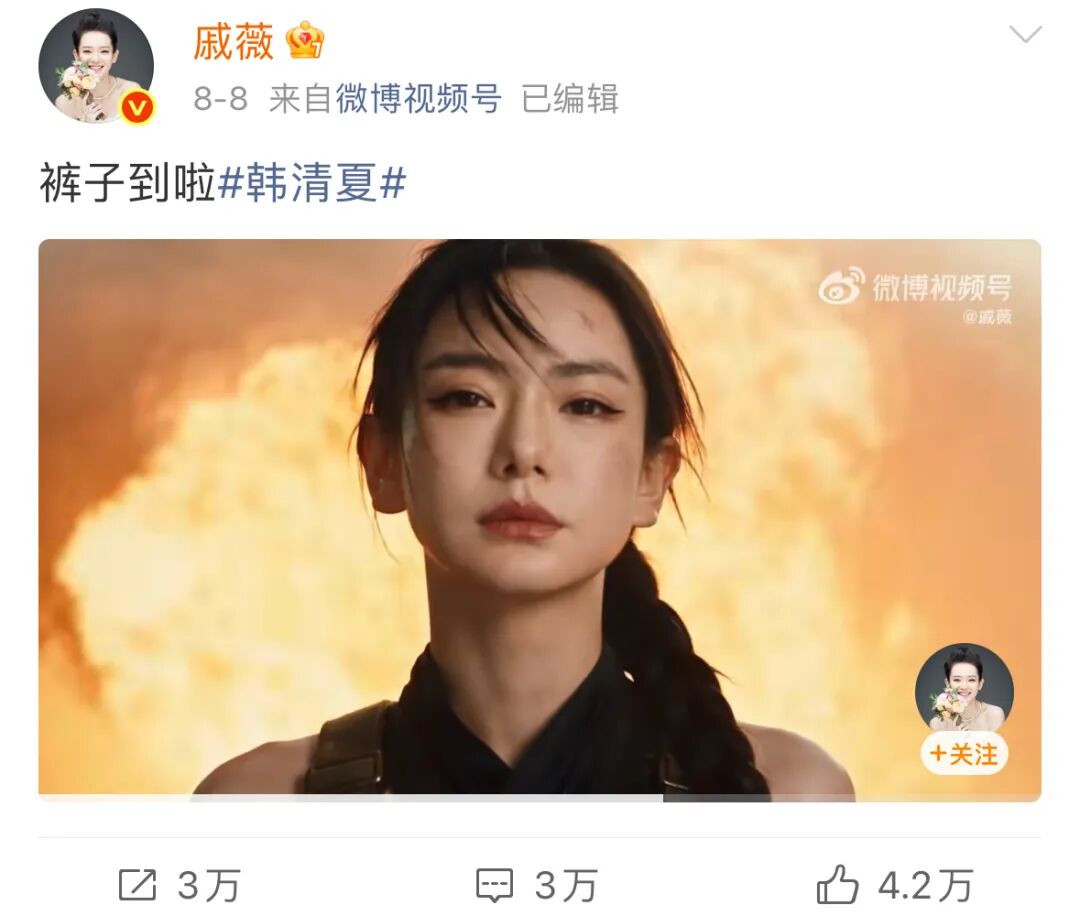
The "Han Qingxia" launched by Qi Wei is the most representative exploration at present. This digital avatar has been separated from Qi Wei herself in terms of identity from the very beginning, with an independent post-apocalyptic wasteland persona, and its official positioning is a virtual character "not Qi Wei". The first implemented project is the AI comic drama *Doomsday Midsummer* on the Hongguo Short Drama Platform, adapted from the Tomato Novel *Doomsday Rebirth: The Big Shot Starts with Stocking Millions of Supplies*.
Qi Wei did not choose to sell out the portrait right, but adopted the model of "limited authorization + in-depth participation". The ownership of the portrait still belongs to her, and all commercial projects must go through her final review. The revenue structure of this model is also more complex. In addition to the basic authorization fee, it most likely includes revenue sharing from multiple scenarios such as short drama revenue sharing, subsequent virtual live broadcasts, and interactive content.
It is worth noting that in this round of AI authorization, whether it is the one-time authorization of Wang Zuxian and Ng Kai Wah, Qi Wei's separation from the AI image and independent signing for each project, or You Benchang's team only opening the positive derivative content authorization related to Ji Gong, all prove that entertainers have a very high degree of sobriety in cooperation. After all, the dilution of the commercial value and personal brand value of actors caused by mass-produced AI content is predictable.
Practical implementation: In-depth participation and emotional transmission become the core
The final presentation effect of digital portrait authorization does not lie in the advancement of the underlying algorithm, but in the quality control standards of the whole process and the depth of entertainer participation.
Among the mature projects that have been implemented in the industry at present, Wang Zuxian's game advertisement supported by NetEase Interactive Entertainment DM Monet Canvas and Volcano Engine, Qi Wei's AI comic drama completed with the cooperation of the Dream Technology team, and the film and television projects of You Benchang and Ng Kai Wah, have each embarked on a reusable practical path, forming specific and implementable execution paradigms from material collection standards, image tuning processes to risk boundary control, rather than staying at the abstract technical concept level.
It can be said that Qi Wei is very forward-looking. Ten years ago, she scanned her virtual image once, and she went earlier and faster in the technical field. This time, as a producer, she participated in the whole process of script control of *Doomsday Midsummer*, as well as the expression tuning and original voice dubbing of Han Qingxia. The character restoration degree is undisputed. The part that caused controversy was the stunning shot of the character "wearing a cropped skirt and being shot from a low angle" in the trailer, and the comment of "what does it mean to look at the bottom of the skirt at the beginning" got tens of thousands of likes.
After the topic hit the hot search, Qi Wei resolved the controversy with "I'll go stock up on a pair of pants tomorrow" and "the feature film will be considered more carefully", and said "I agree with everyone's suggestions, I accept them humbly, we have to optimize the prompt words". This also proves that what star AI authorization needs to consider is not only the most basic restoration degree, which is no longer a difficult task under the current technical conditions, but also the stricter content standards from the outside world under higher attention.
Wang Zuxian's *Qianying* project took another path. The NetEase DM Monet team took her authorized video materials from 20 to 30 years old as the core, and matched with Volcano Engine Seedance 2.0 multi-modal reference system, first unified the light, shadow, skin color and facial feature proportion of different materials, and then generated coherent dynamic pictures, solving the problems of uneven picture quality and inconsistent style of old materials. At the same time, the whole film adopted technologies such as more than 200,000 frames of facial motion capture data training, 15 years of classic image material modeling and emotional semantic alignment algorithm.
The core of the image tuning stage is the in-depth participation of entertainers to solve the common pain point of "looking similar but not alike in spirit". AI can restore facial features, but at this stage it is still slightly insufficient in accurately grasping the entertainer's performance habits and character temperament, which is also the fundamental reason why many digital people look out of place. The mixed reviews of Wang Zuxian's *Qianying* lie in the lack of verve, and the beauty is relatively empty. Especially compared with her vivid performances in films such as *Green Snake* and *A Chinese Ghost Story*, the gap is very obvious.
The reason why You Benchang's digital image of Ji Gong is generally well received is that he himself serves as the art director to control the script and performance texture, and jointly controls the performance details, movement range, line rhythm and other aspects of the AI image with the production team of Hongguo Short Drama, ensuring that the performance logic of the digital avatar conforms to the classic paradigm of the Ji Gong character, rather than generating a similar face but making incongruous movements.
On the other hand, You Benchang recorded videos in person to talk to the public about technology and life, endowing the AI face with the sincerity and emotional temperature brought by real people, which undoubtedly strengthened the public's acceptance of relevant AI content. It can also be seen from the commercial film *At the age of 93, I got my first robot in life* that made netizens tear up that the star's attitude, thought, aesthetics and other aspects will be intuitively reflected in the AI authorized content, which may become the real barrier of AI authorized content in the future.
Value increment: The commercial extension direction of digital assets
At present, the implementation scenarios of entertainers' digital portrait authorization are mainly concentrated in short dramas, films and game advertisements, but this is only the tip of the iceberg of the digital asset value. Referring to the exploration path of overseas markets and combining with the demand characteristics of the domestic content industry, there is still a large amount of untapped commercial space for digital portrait authorization. These scenarios do not necessarily require more advanced technology, but are more about scenario extension and model innovation of existing models.
Games and interactive entertainment are the most direct extension direction. At present, Wang Zuxian's cooperation is still at the stage of guiding traffic for advertising films and game activities, and it can be upgraded to the direction of in-depth interaction and player co-creation in the future. For example, the entertainer's digital image can be made into an interactive game character, players can have plot dialogues with the digital avatar and complete tasks together, or launch customized skins and action packs of the entertainer's image to realize long-term profit sharing through in-game consumption.
Overseas Meta platform has launched AI chatbots with celebrity images, and users can have daily conversations and interactions with the digital avatars of celebrities such as "the originator of socialites" Paris Hilton, Kendall Jenner, Snoop Dogg and other stars. This "virtual companionship" model can be completely migrated to games and social platforms, making entertainers' digital images change from "background boards" to "participants".
The imagination space in the field of brand marketing is also broad. At present, the cooperation of You Benchang and Wang Zuxian is still in the form of a single advertisement, and it can be upgraded to "all-weather material production" and "localized adaptation" in the future.
When traditional brands shoot advertisements, entertainers can only spare a few days to shoot intensively, and the final output of materials is limited, and it is difficult to make differentiated versions for different regions and different platforms. Digital portrait authorization allows brands to generate new advertising materials at any time according to marketing nodes, generate dialect versions for different regions, and generate edited versions of different durations for different platforms, greatly improving the iteration efficiency of marketing materials.
The domestic market can also expand to the live streaming with goods scenario, using entertainers' digital avatars for normal live broadcasts, responsible for basic product introduction and Q&A, and the real anchor only appears during peak hours, which not only uses the entertainer's IP appeal, but also solves the problem of limited live streaming duration of real people. Of course, such applications require strict content review to prevent the digital avatar from making sales statements that do not conform to the entertainer's image.
Voice authorization and heritage operation are more long-term value extensions. Digital portrait is not just a face, it can also be matched with voice and performance style to form a complete digital personality.
Overseas singer Grimes has already opened her personal AI voice model, allowing creators to use her AI voice to make music, and the revenue is shared proportionally, turning her personal voice into an asset that can continuously generate passive income. Domestic entertainers can also refer to this model. In addition to portrait authorization, they can simultaneously open voice authorization for scenarios such as audio books, radio dramas, and AI dubbing to expand the monetization dimension.
For entertainers who have passed away or retired from the industry, digital portrait authorization is an important way for long-term IP operation. Stan Lee Universe, the copyright holder of Marvel creator Stan Lee, has cooperated with AI voice company ElevenLabs to launch his AI voice and image products for scenarios such as audio books and content creation tools, allowing classic IP to continuously generate commercial value. A large number of old artists with classic film and television images in China can also pass through standardized heritage authorization to allow classic roles to participate in new content creation in digital form, meeting the audience's emotional demands.
From the perspective of industry development, it is an inevitable trend for entertainers' digital portrait authorization to become standardized. This trend will not replace real actors. The live performances, emotional expressions and artistic creations of real people are still the core of the content industry. Digital portraits are more of a supplement and extension, responsible for undertaking scenarios that are too costly for real people to achieve or not suitable for real people to appear, ultimately extending the professional life cycle of entertainers and enriching the supply form of the content industry.
This article is from the WeChat official account "Mirror Entertainment", author: Mirror Entertainment, published with authorization from 36Kr.