Car accidents caused by fumbling for touch control buttons will never happen again.
Since the start of this year, China's new energy vehicle market has maintained strong growth momentum, with the industry penetration rate continuing to rise steadily.
According to data from the China Passenger Car Association (CPCA) in July 2026, the retail penetration rate of new energy passenger vehicles reached 65.1%, staying above the 60% mark for four consecutive months, which means that for every three passenger vehicles sold in the domestic market, two are new energy vehicles.
Apparently, after years of rapid expansion, the new energy vehicle industry has long bid farewell to the primary stage of unregulated growth, no matter in terms of scale or quality. When the industry development enters the mature stage, targeted regulation and rectification have become an inevitable trend.
Since 2026, new regulations for China's automotive industry have been intensively rolled out, covering all dimensions of the new energy vehicle development process. From whole-vehicle quality and safety control, power battery safety standard upgrade, to mandatory specifications for the small blue light of intelligent driving, safety optimization of hidden door handles, and compliance rectification of half-width steering wheels, every new regulation directly targets the pain points of industry development and fills the gaps in the market.
Following a series of regulatory policies, the core new regulation on automotive cockpit interaction design has been officially implemented.
The Ministry of Industry and Information Technology of China released the draft for comments on the mandatory national standard Marks of Automotive Controls, Indicators and Signaling Devices, which clarifies that 19 core driving functions including turn signal, hazard warning light, wiper and gear shift must be equipped with exclusive physical controls.
The new standard is scheduled to be fully implemented in July 2027, covering all newly produced vehicles, marking the official rectification of the nearly ten-year trend of "full-touch cockpit".
The Era of Touch Buttons Is Over
The current mainstream full-touch cockpit trend can be traced back to the launch of Tesla Model S in 2012. The vehicle, with its design of replacing all physical buttons in the car with an ultra-large central control screen, reshaped the form of automotive cockpit, and was once regarded as the iconic design of intelligent vehicles.
After that, domestic automakers followed suit one after another, and the industry gradually formed a distorted evaluation criterion: the larger the screen size and the fewer physical buttons, the higher the intelligence level of the vehicle.
For a long time, streamlining physical buttons and popularizing full-touch interaction has become the core selling point of new car iterations. Models without large touch screens and retaining physical buttons have even been labeled as "outdated and unintelligent".
The fact that automakers are rushing to promote full-touch design is essentially the result of multiple interest drivers.
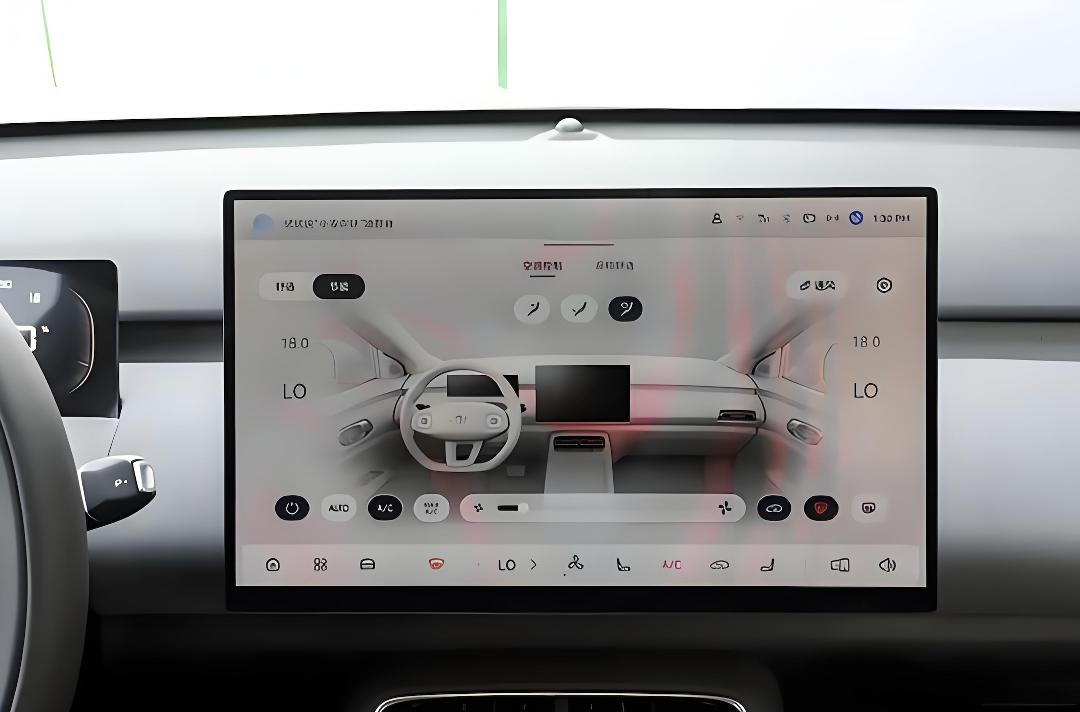
From the design perspective, the integrated central control layout without buttons can reduce body openings, create a minimalist interior style with stronger visual sense of technology, and release more storage and space in the cockpit at the same time.
From the perspective of product iteration, the large touch screen supports OTA remote upgrade, which can adjust the interface layout and update function logic at any time, and can also integrate complex functions such as navigation, audio and video, and in-depth vehicle settings, to realize continuous iterative upgrade of vehicle functions.
In terms of cost dimension, in March this year, Ferrari CEO Benedetto Vigna clearly disclosed in an interview that the manufacturing cost of touch buttons is only about 50% of that of traditional physical buttons, and the processes such as separate mold opening for physical buttons, wiring harness layout and durability test are omitted, which greatly reduces the R&D and assembly costs of automakers.
However, while the industry blindly pursues the sense of technology and cost performance, it deviates from the safety essence of automobiles as transportation tools, and various usage pain points and hidden safety hazards break out intensively.
In daily driving, users need to open the screen menu layer by layer to adjust the air conditioning temperature, defog, and switch driving modes, which requires the line of sight to leave the road surface for a long time.
The European NCAP simulation test shows that in emergency situations at high speed (such as turning on the hazard warning light), the average time taken by physical buttons is 1.2 seconds, while that of the touch screen is 4.7 seconds. The 3.5-second difference can increase the collision risk by 80%; the US NHTSA research points out that the average time the line of sight leaves the road surface during touch operation is 8 seconds, while that of physical buttons is only 0.5 seconds.
Calculated at the conventional driving speed, a short deviation of sight will put the vehicle in a state of out-of-control sliding.
Moreover, the full-touch cockpit has extremely poor environmental adaptability: the screen reflection under strong light makes the interface unrecognizable, the touch fails when hands are wet on rainy days or wearing gloves in winter, and misoperations frequently occur on bumpy roads. According to the actual measured data of the industry, the comprehensive operation error rate of the touch screen is as high as 27%, while that of physical buttons is only 0.8%.
More critically, the full-touch design has a fatal single-point failure risk: life-saving functions such as air conditioning, hazard warning light and wiper are completely bound to the infotainment system. Once the infotainment system goes black, crashes or lags, the core driving functions will be directly paralyzed without any safety redundancy.
At the same time, the touch operation has no physical damping and tactile feedback, so it is impossible to perform blind operation relying on muscle memory. In emergency driving scenarios, operation errors and delayed response are very likely to occur, which greatly increases the probability of lane deviation and driving accidents. These core pain points make the disadvantages of full-touch design completely outweigh the technological dividends, and industry rectification is extremely urgent.
The Industry Enters a New Stage of Rationalized Development
The introduction of the mandatory standard for physical buttons issued by the Ministry of Industry and Information Technology is expected to end the disorderly involution of full-touch design.
As the countdown to the implementation of the new regulation begins, mainstream automakers at home and abroad have taken the lead in launching product iteration and rectification. Luxury brands such as Volkswagen, Audi, Mercedes-Benz and BMW, as well as leading Chinese independent automakers such as BYD, Geely and Changan, have restored physical buttons and physical knobs in their new models, actively abandoning the extreme full-touch design, which has become a weathervane for industry transformation.
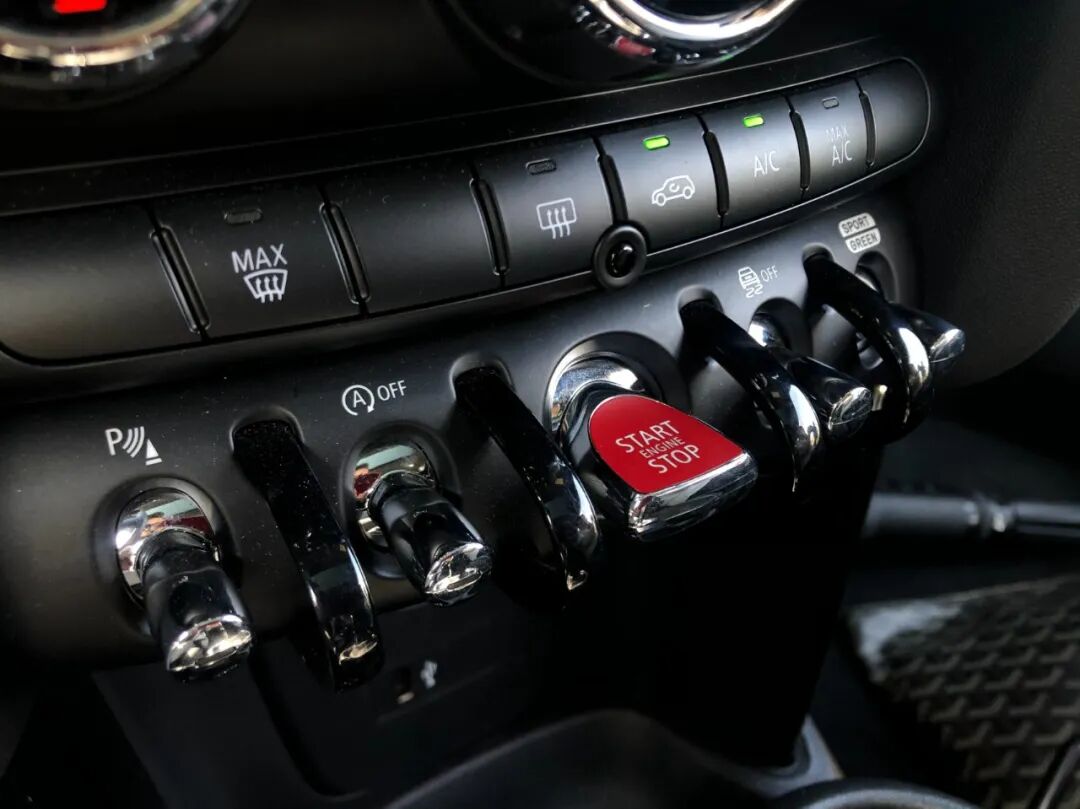
The large-scale return of physical buttons is by no means a regression of the industry, but a rational return to the essence of automobile usage, whose advantages are also obvious.
First, physical buttons support blind operation with muscle memory, no need to look down at the screen, greatly reducing driving distraction; second, the hardware is decoupled from the infotainment system, which independently controls the underlying driving functions, so even if the infotainment system fails, the core safety functions can still work normally; third, it is not affected by light, temperature and road conditions, with accurate and stable operation in all scenarios, adapting to the usage habits of users of all ages.
It is worth mentioning that this rectification of cockpit interaction design is only a microcosm of the standardized development of the new energy industry in 2026.
Since the beginning of this year, a series of targeted policies have been successively introduced, from thermal runaway protection of power batteries, passive safety upgrade of whole vehicles, to intelligent driving identification specifications and high-risk configuration rectification, to accurately rectify the chaos in the industry that used to be "focusing on gimmicks rather than practicality" and "focusing on intelligence rather than safety".
This phenomenon also shows that after years of rapid expansion, the new energy vehicle industry has long completed the accumulation of market popularization. Now, through systematic regulatory rectification, it is gradually getting rid of the development misunderstanding of parameter involution and concept hype. In the future, the automotive cockpit will achieve further balance between technological sense and practicality.
With the continuous implementation of various industry specifications, the new energy vehicle industry will step into a new stage of high-quality development that is safer, more practical, and balances innovation, bringing consumers with better and more reliable vehicle usage experience.
This article is from WeChat Official Account "Auto Community" (ID: iAUTO2010), written by Li Sijia, and published with authorization from 36Kr.