The middle class is frantically scrambling for a pair of "kitsch-style casual shoes", with the sales of this single product surging by 730% and the total online transaction volume exceeding 100 million yuan.
Not long ago, the Shanghai stores of PANE, a Chinese domestic German Army Trainer (GAT) brand, are often crowded with long queues. It is worth noting that more than 50% of the visitors are foreign nationals, many of whom are tourists who even take special flights to shop there.
It turns out that this pair of shoes has sparked massive attention and recommendation on social platforms such as Xiaohongshu, and even set off a "reverse cross-border shopping" trend overseas. Many foreign tourists regard it as a "Shanghai local specialty" and add it to their must-buy lists.
The trend in the footwear track keeps shifting. From the chunky dad shoes that were once all the rage on the streets with exaggerated silhouettes, to the minimalist and versatile white sneakers that gradually led to aesthetic fatigue, consumers' attention is always looking for the next new thrill.
By 2026, the German Army Trainer (GAT), a style originating from the 1970s, has achieved explosive growth. Industry data shows that on Tmall alone, the annual sales volume of GATs exceeds 5 million pairs, the sales of retro thin-soled GATs have increased by 155% year-on-year, and the sales of niche categories such as ballet-style thin-soled shoes have even surged by 730% year-on-year.
From the retro trend led by Adidas SAMBA GATs, to the successive entry of professional sports brands such as PUMA and KELME, and then the rapid follow-up of numerous unbranded products and fast fashion brands, GATs have evolved from an internet-famous footwear item to a piece that allows trendsetters to express their lifestyles.
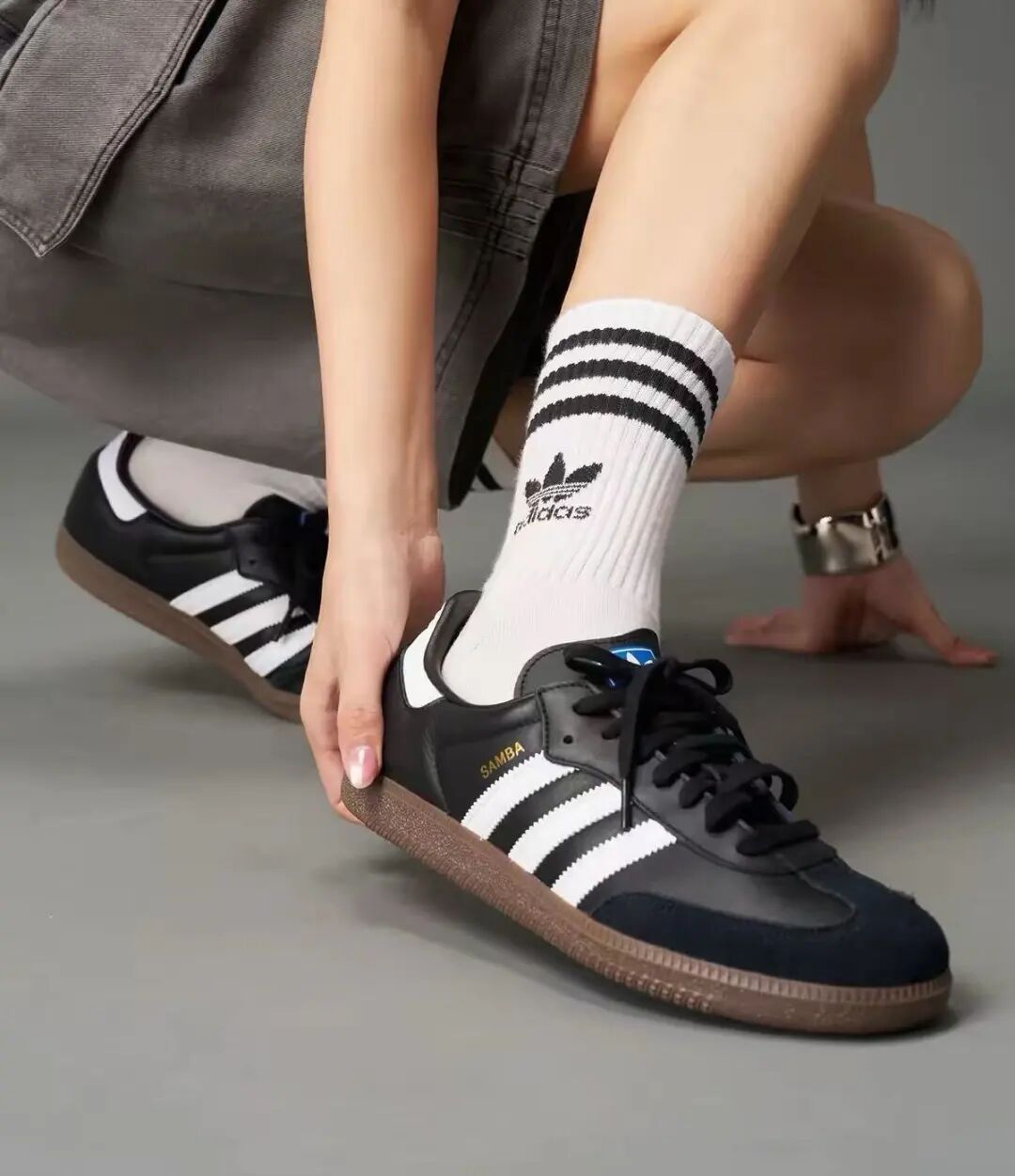
Adidas SAMBA OG German Army Trainer
However, hidden worries lurk behind the craze. Homogeneous plagiarism and low-price internal competition are eroding the reputation of the category. Copycat products that replicate the shoe shape and cut costs once pushed the market into a dilemma where "bad money drives out good". Under this background, how brands can break away from price wars and build product barriers and brand moats in the red ocean tests the comprehensive strength of enterprises.
When consumers no longer pay for logos or hit products, which pair of shoes will be pushed to the forefront of the trend next?
Single brand's online transaction volume exceeds 100 million yuan
The footwear track never lacks hit products, but the GAT is the most notable category in recent years that has grown from an internet-famous item to a national category lasting more than three years. It is reported that during this year's Tmall 618 Shopping Festival, the sales volume of GATs increased by more than 70% year-on-year, making it one of the fastest-growing categories in the footwear sector.
KELME, the international sports equipment brand, integrates its technologies in the football and indoor sports fields into the design of GATs, positioning its products as "GATs that can be used for actual sports". During the 618 Shopping Festival, the conversion rate of new customers for its GATs increased by more than 30% compared with usual days, and the repurchase rate of old customers increased by about 20%, both indicators higher than the same period last year.
Take PANE as another example. This footwear brand founded in 2022 focuses on a minimalist retro style, and its online sales are also growing rapidly. In the first phase of this year's Tmall 618 Shopping Festival, the brand's sales growth rate exceeded 300% year-on-year. Up to now, its online transaction volume has exceeded 100 million yuan, and it has ranked among the TOP 20 of the "Tmall Apparel 618 Full-cycle Sales List for Men's and Women's Footwear".
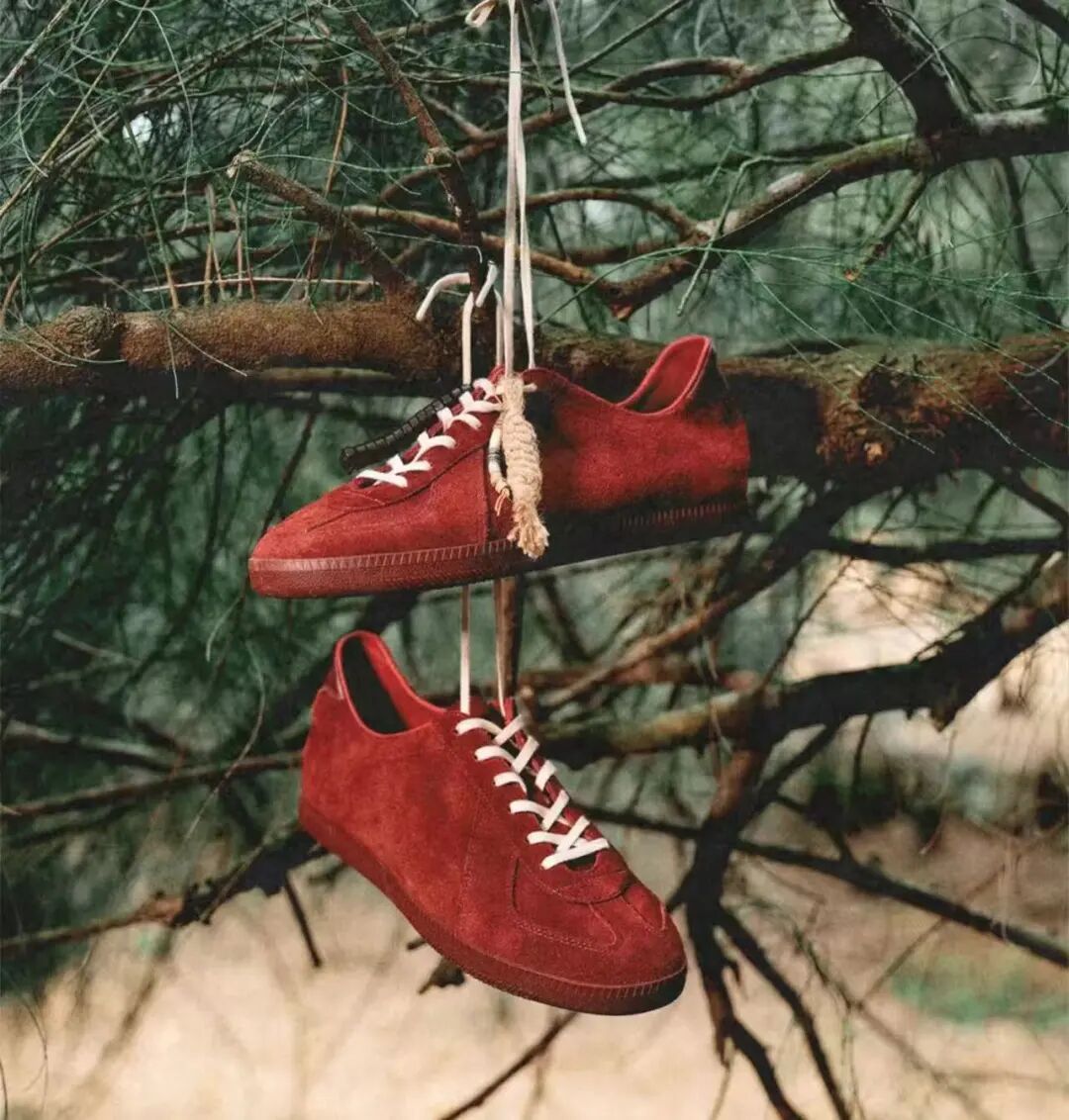
PANE GAT, source from PANE's official Weibo account
The simultaneous growth of international sports brands and domestic brands confirms that the GAT track is still in the stage of incremental expansion and has not yet fallen into stock game. "Although the GAT category has grown rapidly for several years, the growth momentum is continuing, and there is still room for continuous growth in this track," a relevant person in charge of PUMA introduced.
With more players pouring in, the GAT market has formed a clearly divided price tier:
The price range of 100 yuan and below is dominated by unbranded products and fast fashion brands, which quickly follow trends relying on channel capabilities and supply chain efficiency, and achieve mass popularization of the category with high cost performance;
The mid-range price range of 300 to 800 yuan is the core battlefield where sports brands and fashion brands compete most fiercely. Consumers attach equal importance to product quality, design and brand tonality;
The high-end price range above 1000 yuan is dominated by luxury brands and designer brands. The product attributes shift to social symbols and identity labels, and the core value lies in scarcity and uniqueness.
Industry insiders analyze that different price tiers are generally dominated by differentiated competition. Each price tier has its core customer group and value proposition, and the groups they serve and the demands they meet are different. Direct head-to-head confrontation only exists locally at the junction of the 200-300 yuan and 700-800 yuan price ranges.
The formation of price stratification means that GATs have gone through the barbaric growth stage, and the market is becoming mature.
The consumer group of GATs is fully penetrating from the sports circle to the general public. KELME revealed that the core customer group of the brand's GATs covers young and middle-aged people aged 20 to 45, which highly overlaps with the main consumer group of the sports category, and the proportion of middle-class consumers continues to rise.
Firmly seizing this wave of consumption dividends
The commercialization process of GATs has spanned half a century.
In the 1970s, GATs were born as military indoor training shoes, manufactured by manufacturers such as Adidas. During more than ten years of service, they were purely industrial consumables, with typical features of no obvious logo, high wear resistance and anti-slip performance.
In the 1990s, a large number of decommissioned military shoes flowed into the European second-hand market, and were discovered and redesigned by the international designer Martin Margiela, who added fashion elements to them and presented them on the fashion runway. For a while, GATs became a global fashion hit.
After entering the 21st century, the commercial path of GATs split into two: on the one hand, they continued to be led by designers to enter the luxury industry and became high-premium products; on the other hand, original manufacturers such as Adidas and PUMA combined this style with sports like football and skateboarding through models such as Samba, and designed them as sports equipment. After that, GATs often appeared in the professional sports field under names such as "thin-soled shoes" and "indoor football shoes".
Although this pair of shoes has a deep sports gene, why did it break out of the vertical track and enter the mass market in the past two years? Tianxia Wangshang (World Business Network) has summarized four core reasons behind it.
First of all, the in-depth transformation of consumption trends is the primary driving force. After going through the era of "height anxiety" brought by dad shoes and thick-soled shoes, consumers began to return to the real, comfortable and free wearing experience. They no longer sacrifice comfort to look taller or slimmer, but pursue a pair of shoes that can really make them feel comfortable.
Take dad shoes as an example. Their thick-soled design meets the demand for height increase, but also brings problems such as heaviness, bulkiness and stuffiness, which easily cause fatigue after long-time wearing, and may make legs look shorter and the overall look clumsy if not matched properly. The thin-soled design of GATs provides a strong ground-feeling experience, the overall weight is light, the shoe shape is slender, it is not easy to feel tired after long-time wearing, and it will not look bloated when matched with all kinds of pants.
Secondly, the boundaries of modern people's lives are increasingly blurred. From commuting to work to doing sports after work, from city wandering to suburban hiking, consumers need a pair of shoes that can adapt to all scenarios, rather than special shoes that are only worn on specific occasions.
"The core advantage of GATs is their extremely high scenario coverage. One pair of shoes can cover multiple scenarios such as indoor football training, commuting to the office, and daily shopping, breaking the cognitive boundary of the usage scenarios of conventional footwear," Cao Zhen, Brand Director of KELME, emphasized.

KELME German Army Trainer
Thirdly, the shift in aesthetic trends provides a deeper cultural soil. More and more consumers are beginning to reject ostentatious large logo symbols, and turn to pursue restrained and high-quality self-expression. The restrained design, low-saturation color matching and retro texture of GATs just fit this low-key and high-end aesthetic trend.
Multiple GAT merchants all said that the core decision-making point for consumers to buy GATs is that they are easy to match and good-looking, no need to think about collocation, no need to make their feet uncomfortable, and no need to worry about the occasion.
Finally, major brands have consolidated the foundation for the supply side through their own cultural exploration and supply chain upgrading. For example, PUMA is constantly exploring classic styles from its brand archive for reproduction and re-innovation; KELME relies on its decades of accumulation in football culture to transform historical stories into product selling points. The historical heritage and cultural genes of brands are becoming one of the important assets for differentiated competition.
When the demand shift on the consumer side and the reform on the supply side happen at the same time, GATs successfully seize this wave of consumption dividends.
How brands break through amid the dilemma
However, the popularity of GATs has also given rise to a thorny problem: a large number of shoes with similar appearances flood into the market at the same time as the original shoes, making it difficult for consumers to distinguish. Moreover, most copycat products adopt a low-price strategy, and some are even inferior products, which easily trigger a consumer trust crisis and bring considerable challenges to the healthy development of brands and the whole category.
In May this year, a pair of Adidas Samba OG GAT with an official price of 1299 yuan was speculated to nearly 2000 yuan on a second-hand platform, while at the same time, a high-copy GAT was selling hot at a price of 79 yuan in a live streaming room. The price difference between the two is 25 times, and it is difficult for consumers to distinguish the genuine version from the copycat version in appearance.
A relevant person in charge of PUMA also mentioned that as the popularity of the GAT track rises, a large number of products with similar appearances and uneven quality have appeared in the market, and classic PUMA models such as Speedcat, H-Street and Bella have all been copied to varying degrees.
Cao Zhen said bluntly: "When a product becomes a hit, there will be many imitators, and the situation where bad money drives out good money will most likely appear."
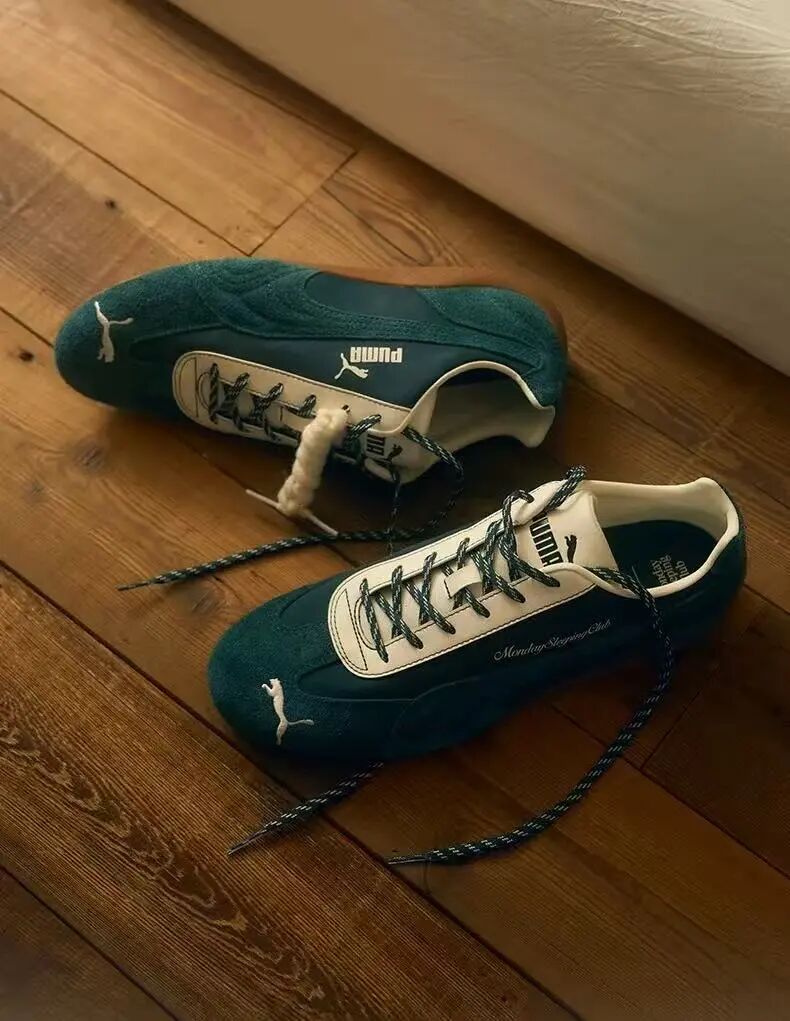
PUMA x MondaySleepingClub Co-branded Speedcat German Army Trainer
Facing this dilemma, different brands have chosen different breakthrough paths.
PUMA's strategy is to build a moat with "gene differentiation + professional differentiation + cultural differentiation". The core competitiveness of the brand lies in the profound historical accumulation in its brand archive. At the professional level, PUMA integrates exclusive outsole technologies into the retro thin-soled appearance, which improves the wearing experience while maintaining the good look; at the cultural level, PUMA connects with sports IPs such as F1 racing and football, and links with global and domestic spokespersons to build a brand cultural ecosystem.
"You can copy a style, but you can't copy the history and culture of the brand," the relevant person in charge of PUMA believes. What consumers buy is not just a pair of shoes, but also the recognition of the "speed, trend, youth" lifestyle represented by PUMA. This connection at the cultural level cannot be obtained through low-price competition.
KELME chooses to deeply cultivate its vertical genes and take a content-based breakthrough path. As a professional brand in the football field, KELME defines GATs as "the core hit product extended from the football culture sector". The brand not only establishes the product positioning of "a pair of GATs that can be used for playing football", but also endows different color schemes with themed packaging relying on its resources of sponsoring the national football teams of Bosnia and Herzegovina and Jordan for the World Cup. During the recently concluded FIFA World Cup in the US, Canada and Mexico, KELME launched a GAT named BRAVO with a "black and gold color scheme", which received favorable market feedback.
"With absolute confidence in product strength, we prefer to rely on our professional endorsement of football culture to consolidate the terminal market share through products, and make the attribute of retro football culture a distinct label that distinguishes us from other brands," Cao Zhen emphasized.
As one of the representative brands of domestic GATs, the secret to the rise of PANE lies in capturing the psychology of current young consumers, simplifying the product design by removing redundant decorations and obvious logos, advocating a "borderless" aesthetic, and making great efforts in both pricing and experience.
In terms of pricing, the brand is positioned in the 700-900 yuan price range, providing the ritual sense of high-end brands at a cost lower than luxury goods. In terms of experience, PANE breaks away from the simple logic of selling goods, creates stylish offline stores and unboxing visual experiences, and converts products into social currency to promote rapid consumer conversion.
After entering the mass market, the GAT category continues to undergo fission, elimination and upgrading.
At present, GATs show two major trends: the first is scenario segmentation, and the general-purpose GATs are extending to niche scenarios such as ballet style, racing style and outdoor style. Data shows that the sales of ballet-style GATs have increased by 730% year-on-year, and the monthly sales of PANE's ballet-style GATs exceed 6000 pairs.
The second is value contentization, which means that besides competing on products, brands also focus on telling good cultural and brand stories, striving to reach emotional resonance with consumers. At this time, the historical accumulation of brands, the endorsement of sports IPs and the emotional value provided will become the core competitiveness that differentiates brands from each other.
The next stop for GATs may not be the iteration of a pair of shoes, but the deepening of a lifestyle. Just as PUMA advocates "sports as life", GATs are only one of the carriers of this concept.
The carrier can change with the times, but what can really help brands go through cycles is always the deep insight into consumer demand. Whoever understands consumers better will master the code to define the next generation of hit products.