From Crowdfunding to Claiming a Top Spot in Europe and the United States: Five Years of VITURE and the XR Industry
Everyone says XR glasses are a peculiar product category.
Specifications are being refreshed every year, and sales are growing year by year. However, on second-hand platforms, resale posts marked "only used twice", "dizziness after wearing for half an hour", "selling after leaving it unused for half a year" seem to gradually become more frequent than those of any other consumer electronics category.
The industry often attributes the problem that the category fails to retain users and their usage time to the immaturity of relevant technologies.
Jiang Gonglue, the founder of VITURE, put forward another explanation based on the "past five years".
"Essentially, all the glasses launched before 2022 are screen mirroring devices, equivalent to an external display. But what users expect and what we are developing is a computer, an all-in-one terminal device that supports computing, interaction and rich content."
The huge difference between "clear" and "clear and smart" points to the core contradiction of the industry. A screen mirroring device can only technically present an extra large screen in front of users, but for the XR glasses category, if there is only one question it needs to answer for users, that question should be: why do I need to wear an extra pair of glasses today.
VITURE spent five years answering this question. Back in 2021 when the business was founded, it was a company with only 10 employees, and it broke the years-long crowdfunding record held by Oculus on Kickstarter. Five years later, it has become the XR glasses brand with the largest shipment volume in Europe and the United States.
On August 6, more than five years later, the exact fifth anniversary of the brand's founding, VITURE globally launched the Pro 2 simultaneously.
One week after its release, the first batch of users shared their real experience feedback: one week after going on sale, VITURE Pro 2 won the first place in the SKU sales of XR glasses on JD.com for that week, and it also became the Best Seller on multiple Amazon sites overseas. This week, three authoritative tech media outlets Gizmodo, Tom's Guide and PCMag almost simultaneously gave consistent reviews, calling it "the best XR glasses experience at its price point".
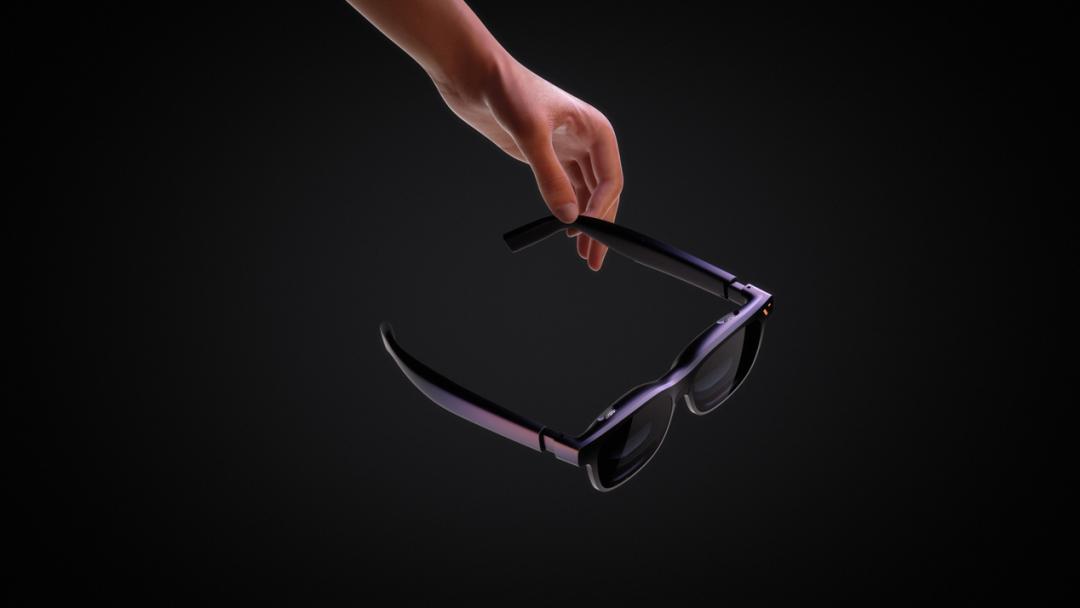
The new generation of products brings three key words to the market: 63 grams, 1999 yuan, and myopia adjustment function. Without fancy narratives, this company still explores new problems starting from the "old issue", focusing on whether users can wear the glasses comfortably for a long time and whether they can afford it.
How exactly can these two supporting points underpin the real demand for XR?
The 1999-yuan "empty box"
In a conversation with 36Kr, Jiang Gonglue said he has recently developed a new habit: when he picks up the glasses case for Pro 2, he always feels it is empty inside, and he has to open it to confirm that the glasses are really placed in it.
A product expert who has been working on XR glasses for more than five years has finally been "tricked" by his own product this time.
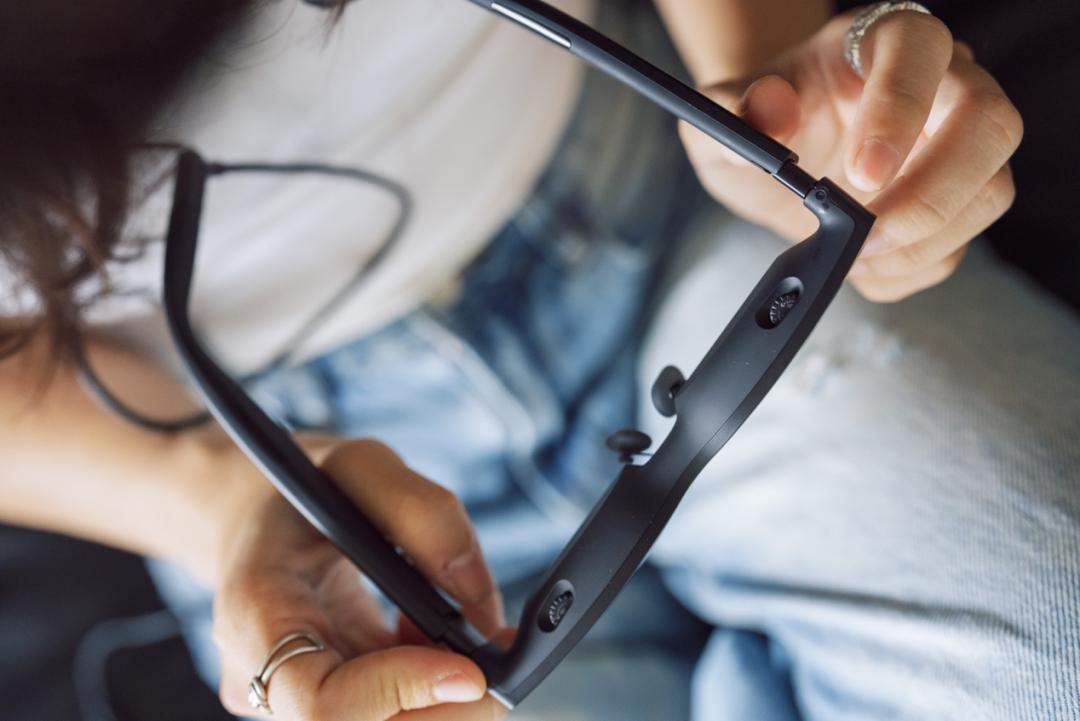
At 63 grams, it is 20% lighter than the previous generation VITURE Pro, and the thickest part of the frame is less than 18mm, which is claimed to be the thinnest in the entire industry at present.
It adopts a brand-new architecture, the optical engine is designed for lightweight, and aviation-grade metal and plastic materials are used for the frame and temples. Jiang Gonglue said that if the myopia adjustment function is removed, the weight can be reduced to less than 60 grams, but they retained this feature without hesitation.
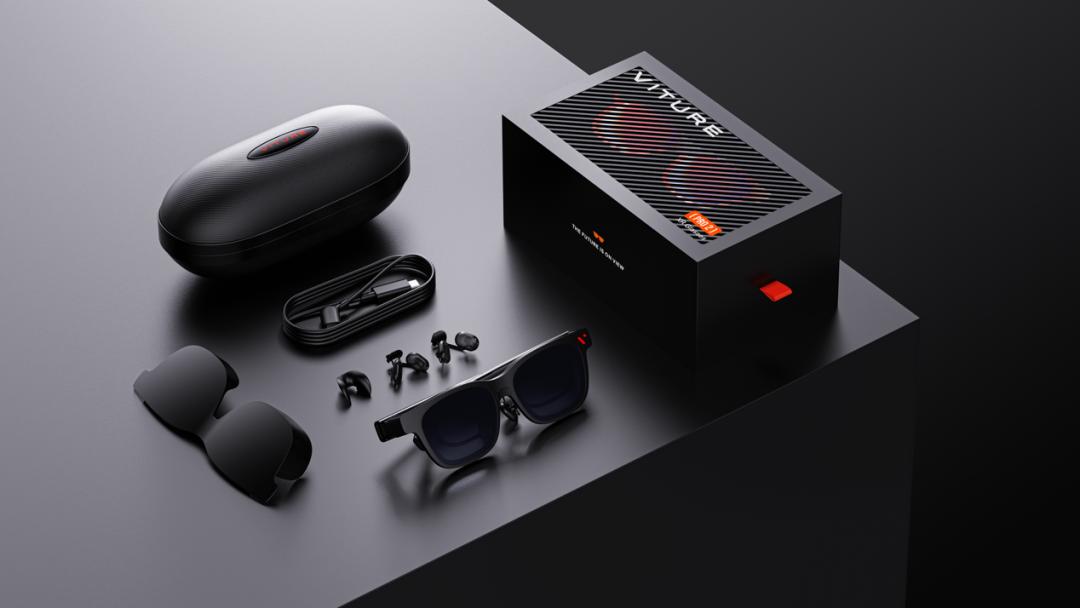
Another important figure behind this trade-off is that China has 600 million people with myopia. Pro 2 supports independent diopter adjustment from 0 to 500 degrees for both eyes, you can adjust the focus by turning the dial, no extra myopia lens insert is needed. For domestic users, the myopia adjustment function is absolutely the admission ticket for XR glasses. Without crossing this threshold, no matter how good the product parameters and scenarios are, the product will not be relevant to the Chinese market.
After the weight is reduced, new niche markets will also emerge naturally.
At present, male users account for more than 80% of the XR glasses industry. One of the key reasons is that the products are too heavy, and female users feel the glasses press on their nose. In the early experience of Pro 2, many female users shared the same feedback: "This is the first pair of glasses that I can wear comfortably."
The crowd that XR products are suitable for is visibly expanding. Jiang Gonglue expects that the proportion of movie-watching users among female users will be significantly higher than that of game players, and a good movie-watching experience will also encourage users to spontaneously spend more time on content consumption and interaction with XR glasses.
Looking at the price, 1999 yuan is the first time VITURE has brought flagship-level experience to the thousand-yuan price range, and it is also the only product in its price segment that uses Sony Micro-OLED screen without any compromise. Sony screens are widely recognized for their excellent color reproduction, brightness and service life, and are generally regarded as the configuration for high-end product lines in the industry. This is achieved thanks to the supply chain bargaining power brought by VITURE's rapid growth that doubles every year.
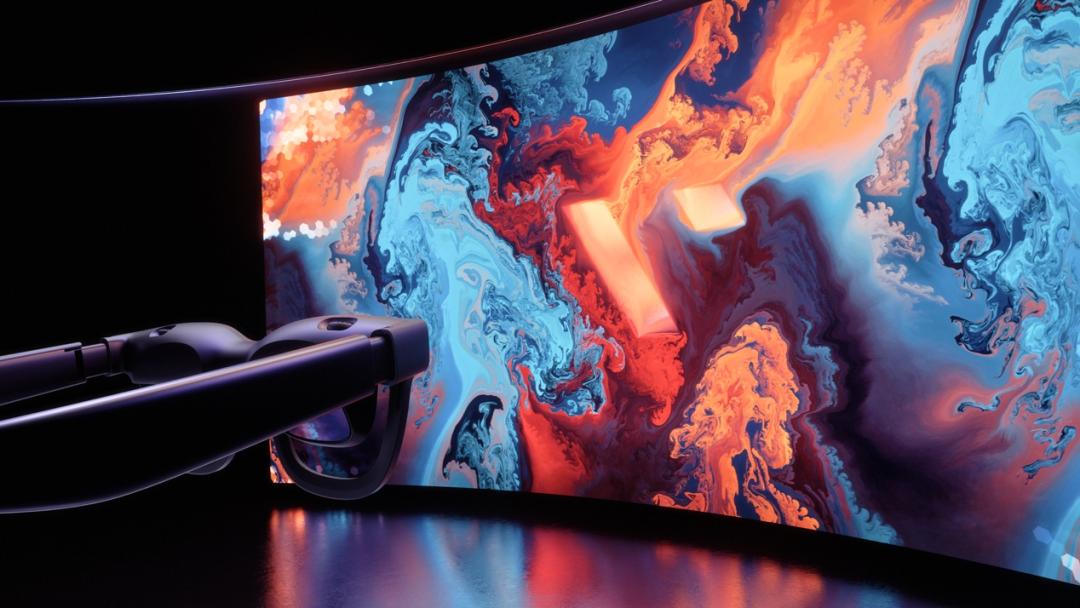
In terms of other performances, Pro 2 can reach a peak brightness of 1600 nits, which is the highest brightness in the industry at present, so that the screen is clearly visible even by the window in broad daylight. The UltraClarity 3.0 full-color ultra-sharp technology pushes the clarity to a new level. In the past, almost all XR glasses could achieve clear center vision, but the edge part would be slightly blurred. However, Pro 2 processes subtitles and dark details perfectly, and the screen will not shake or stretch when the line of sight moves from the center to the edge. In addition, Pro 2 has obtained the SGS A+ Low Visual Fatigue certification, users will not feel obvious fatigue after wearing it for 3 consecutive hours, and it is praised as a pair of glasses that can really be "worn for a long time".
These seem to be several simple key figures, but if you have bought any pair of XR glasses in the past few years, you will know how important they are in actual experience.
Referring to Apple's product line positioning, the reference Jiang Gonglue chose for Pro 2 is MacBook Air.
Several generations ago, MacBook Air was positioned as an entry-level product to expand the user base, with configuration and performance inferior to the older MacBook Pro, but today's Air is much more powerful than the Pro released two or three years ago. The logic of VITURE Pro 2 is exactly the same: it is more affordable in price and more lightweight, but never cheap in hardware, integrating powerful performance and imperceptible comfortable experience into a device worn on the face.
"A product may be expensive, but as long as it creates more value for users, it is a good product; if you can buy it at a lower price, the gain of sense of value will be greater." Jiang Gonglue said that this is the shared product philosophy of MacBook Air and the new product VITURE Pro 2.
This may also be the reason why many people in the tech circle privately call "VITURE the XR company that is most like Apple".
One week after its launch, early user feedback has clearly reflected this point. The three most mentioned words for VITURE Pro 2 on Xiaohongshu are lightweight, clear, and myopia-friendly.
Some users described it as "almost as heavy as ordinary sunglasses, there is almost no sense of pressure on the bridge of the nose and ears after wearing it for a long time, and it is very comfortable to watch dramas lying in bed"; some myopic users call it "a boon for lazy people", because they can adjust the focus by turning the dial, eliminating the trouble of getting extra lenses.
Subways, high-speed trains, and the head of the bed in hotels have become the scenarios where the "100-inch giant screen" appears most frequently.
Of course, users also mentioned the experience they expect the next generation of products to achieve. In the XR category which is still in the early stage of the industry, users are willing to share it, praise it, and even put forward their own "wish list", which is often a sign that a new category starts to be taken seriously and an electronic device is regarded as a daily necessity.
VITURE's five years, three "counter-intuitive" decisions
Jiang Gonglue graduated from Harvard University and once participated in the development of Google Glass and Material Design at Google's Silicon Valley headquarters. He later reviewed that the pioneering nature of Google Glass is beyond doubt, but the problem of the project is that the technical form was determined first, and then the team tried to find applicable usage scenarios. Users' first reaction was always the same: I don't need it.
In this industry, the chicken-or-egg-first problem is not necessarily a tangled causal spiral.
In 2021, Jiang Gonglue and former members of the Google Glass team founded VITURE in Beijing and San Francisco. The company's first product creed sounds like challenging itself: the first principle of developing XR glasses is to admit that users "do not have the demand to wear an extra pair of glasses".
Since users have no natural reason to choose your product, you must find the scenario that they cannot refuse.
Starting from the first day when the company learned to self-verify and self-refute, VITURE chose a path opposite to the mainstream of the industry. Over the past five years, the choices made under the guidance of the first principle have also pushed out three possibly incomprehensible decisions at three critical moments.
"It may not be cost-effective, but we must be honest." Jiang Gonglue said frankly when looking back on the past.
The first decision they made was: to build a "computer", not a screen mirroring device.
In April 2022, VITURE launched its first product VITURE One on Kickstarter. At that time, the company had only 10 employees and almost no marketing budget, so they did not shoot a professional function demonstration video, but made a short film: three students in the dormitory, one carrying a TV, and the other two wearing glasses to travel.
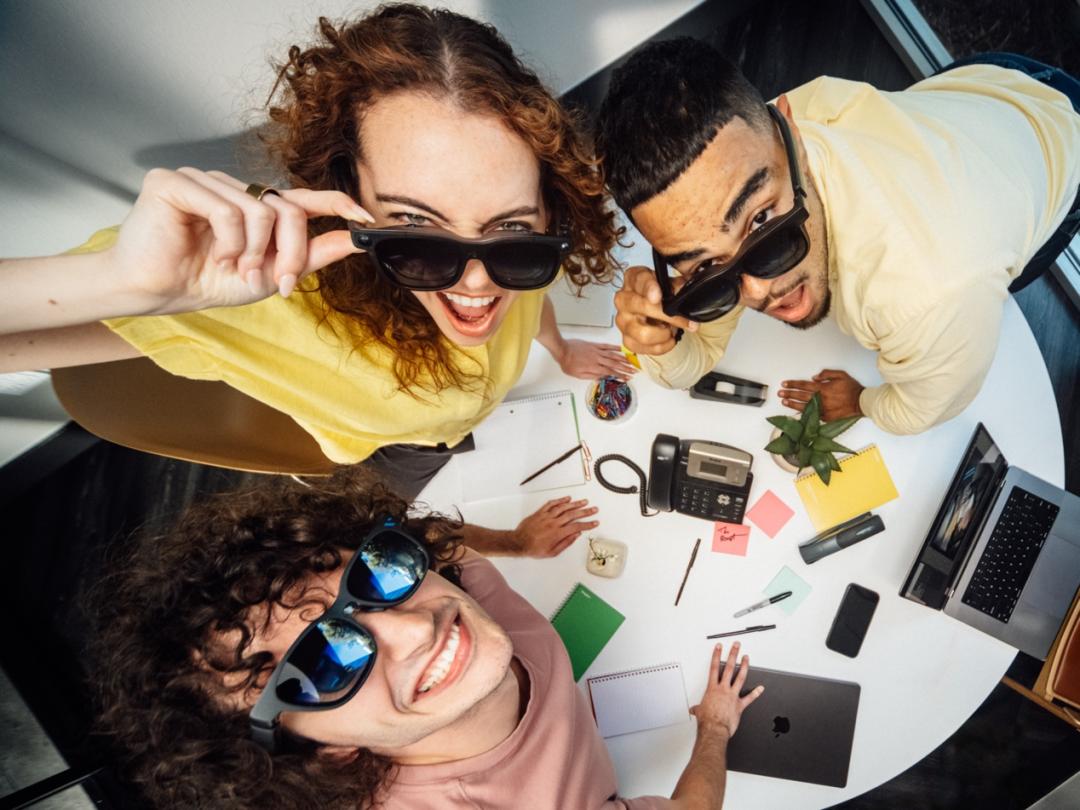
The whole video only talked about one thing: how to play games during the trip.
This video was rated by many overseas users as one of the best crowdfunding videos in Kickstarter's history, because it did not try its best to explain what the glasses can do, but directly presented a picture that users can immediately relate to. As a result, the crowdfunding achieved a result of more than 3 million US dollars, breaking the years-long record of the XR glasses category held by Oculus.
But for a new product, what is more important than the cash brought by users' curiosity is the product form.
What VITURE One launched to the market is not actually a pair of glasses, but a three-piece set: glasses, neckband, and Magic Dock.
The self-developed neckband of this company is the first device that combines the computing unit with the glasses, with built-in YouTube and Netflix, and it can also remotely stream PS and Xbox games; the Magic Dock is specially designed for Switch, making VITURE the first XR brand that supports two-player same-screen games on Switch; the electrochromic technology also entered this industry starting from VITURE One.
"The first company that makes innovations is always facing the greatest difficulties." Jiang Gonglue told 36Kr, it can be said that the neckband, external computing unit and full-device adaptation that are common in the industry today all originated from that crowdfunding.
Looking back from today, the answer for the current node was already buried when the company just started its journey.
The second "refusal" of consensus is to choose to expand to Europe and the United States first, and then return to China.
Most domestic hardware brands are used to polishing products in China first, and then go to the overseas market with mature experience and templates. However, VITURE is a "born global" company: on the first day of its establishment, it set up dual headquarters in Silicon Valley and Beijing, and its first market action was directly launched on Kickstarter, facing the first batch of European and American users who have the highest tolerance for new consumer electronics categories and relatively low price sensitivity.
This choice later proved to be quite wise. It not only helped VITURE avoid the expensive user education cost in the Chinese market, and directly participated in the "hundred glasses war" with a product verified by the market, but also successfully obtained more imaginative capital, market exposure and brand loyalty through crowdfunding in the early stage, then went to the supply chain to make innovations, negotiate prices, and achieve positive cycle growth, making its first-mover advantage increasingly obvious.
But at the same time, it also left a misunderstanding: VITURE entered China too late, and many people in China regarded VITURE as a latecomer.
In fact, in April 2022, the three products of VITURE were already quite complete. At that time, large language models had not yet become popular in the work and life of ordinary people, and 90% of the smart glasses on the market today had no clear technical logic and scenario concepts at all at that time.
At the end of that year, VITURE One won the Time Magazine Best Inventions of the Year award, which was the only AR/VR consumer product on the list that year.
In the next few years, VITURE Pro has long been ranked on the bestseller lists of smart glasses on Amazon in many countries. In November 2024, it became the first XR brand to enter Best Buy, selling in 200 stores across the