Stack Overflow is dying, and the number of new questions is even fewer than that during the internal testing period.
Stack Overflow, known as the "Bible for Programmers", a professional community that has accumulated more than 24 million questions and the world's largest programming Q&A corpus, is dying.
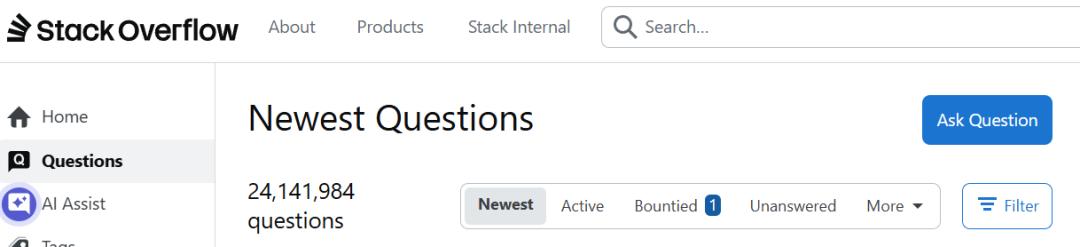
In July 2026, programmers around the world posted a total of 1304 questions on Stack Overflow.
In March 2014, this number was 207,000.
A couple of days ago, developer Daniel Lockyer posted the line chart containing these data on X, and expressed the emotion of "the end of an era".
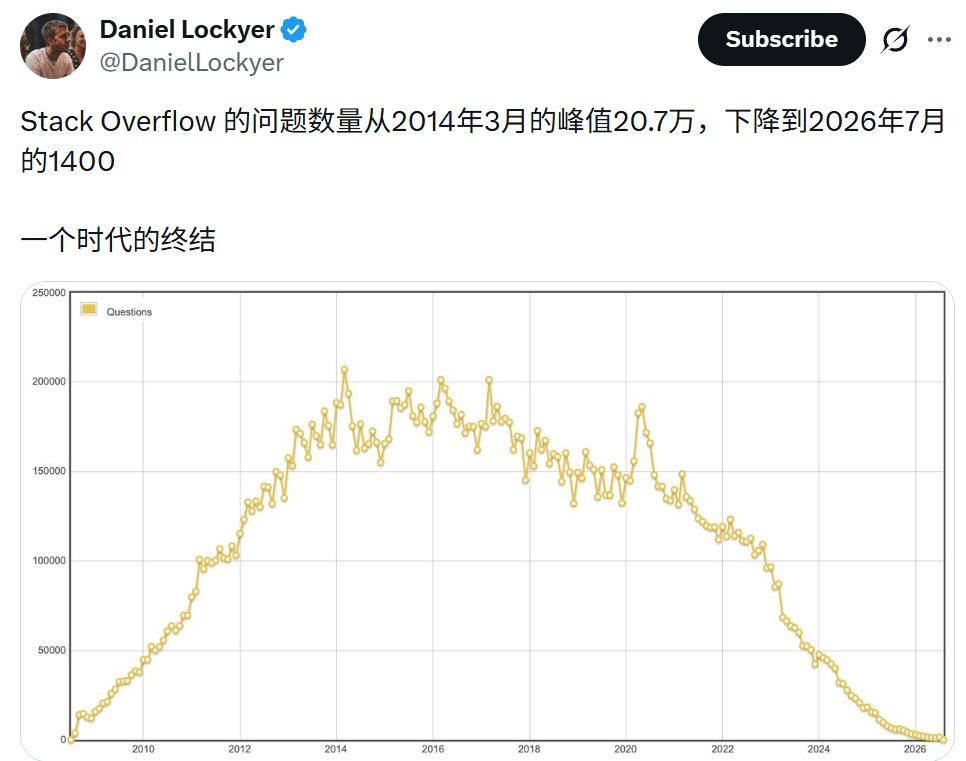
The data is real, from Stack Exchange Data Explorer, the official open SQL query interface of Stack Overflow.
The next day, independent developer Pieter Levels (levelsio) reposted this picture and connected it to another topic: if no one asks questions on Stack Overflow anymore, and Reddit is occupied by promotion bots, how much content written by real people is left on the Internet? Without new content, what will the next generation of models use for training?
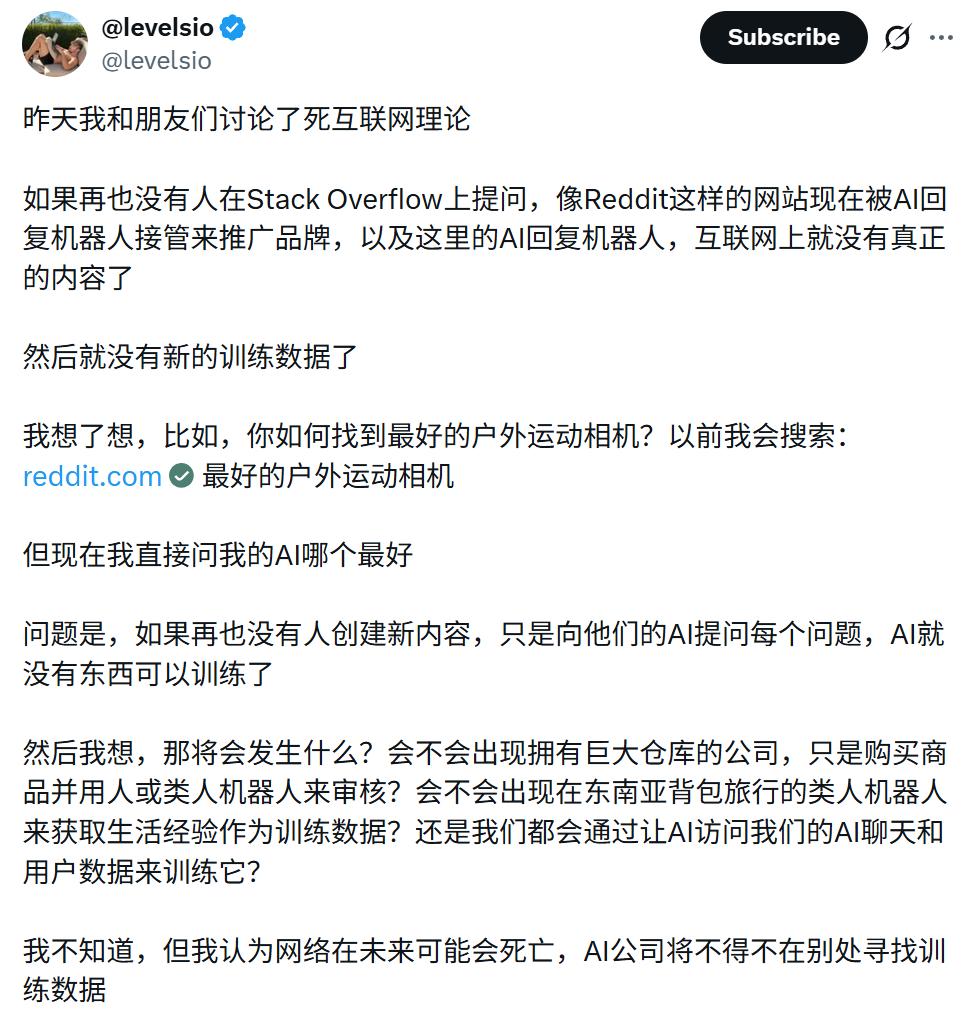
These two tweets sparked widespread discussion. Netizens have different attitudes, some are full of emotion, some are excited, some are sad... and so on.
The Rise and Fall of Stack Overflow
Take a closer look at the monthly question volume curve of Stack Overflow above, which can be clearly divided into three stages.
The first stage is Growth. In the private beta month of July 2008, there were only 4 questions, 3744 in August, and 14024 in the month after the public beta on September 15. In January 2010, the number reached 44923 per month, the annual question volume exceeded 1 million in 2011, and 2 million in 2013. This is a textbook-style hockey stick phenomenon.
The second stage is Plateau. The single-month peak stood at 207,000 in March 2014, followed by 201,000 in March 2017 and March 2016. The three highest months spread over four years, indicating that this is a plateau rather than a sharp peak. The annual total remained stable above 2 million between 2013 and 2017, reaching a peak of 2.18 million in 2016. Then it began to decline but did not collapse: 1.88 million in 2018, 1.75 million in 2019, and rebounded to 1.85 million in 2020, of which there were 180,000 in April 2020 alone.
The third stage is the Recession Period. The total number was 1.34 million in 2022, 790,000 in 2023, 400,000 in 2024, and 110,000 in 2025. The total number of questions in the whole year of 2025 is less than 53% of that in the single month of March 2014.
If you look at the data in more detail, the decline is even more drastic. There were 17935 questions in December 2024, 3312 in December 2025 (down 81.5% year-on-year), 2910 in January 2026, 1903 in March, 1229 in May, and 1072 in June. Except for the private beta launch month of July 2008 which only had 4 questions, the 1072 questions in June is the lowest number for a full month in the site's history. There was a slight rebound in July 2026, but the number was still very small, only 1304.
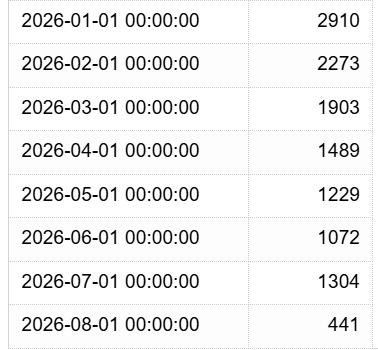
The total number of questions in the first seven months of 2026 is 12,000. Calculated based on the average daily question volume in 2016, this is equivalent to the volume of about two days in that year.
The Recession of Stack Overflow Is Not Entirely Caused by AI
From the chart, the recession of Stack Overflow actually started eight years earlier than ChatGPT.
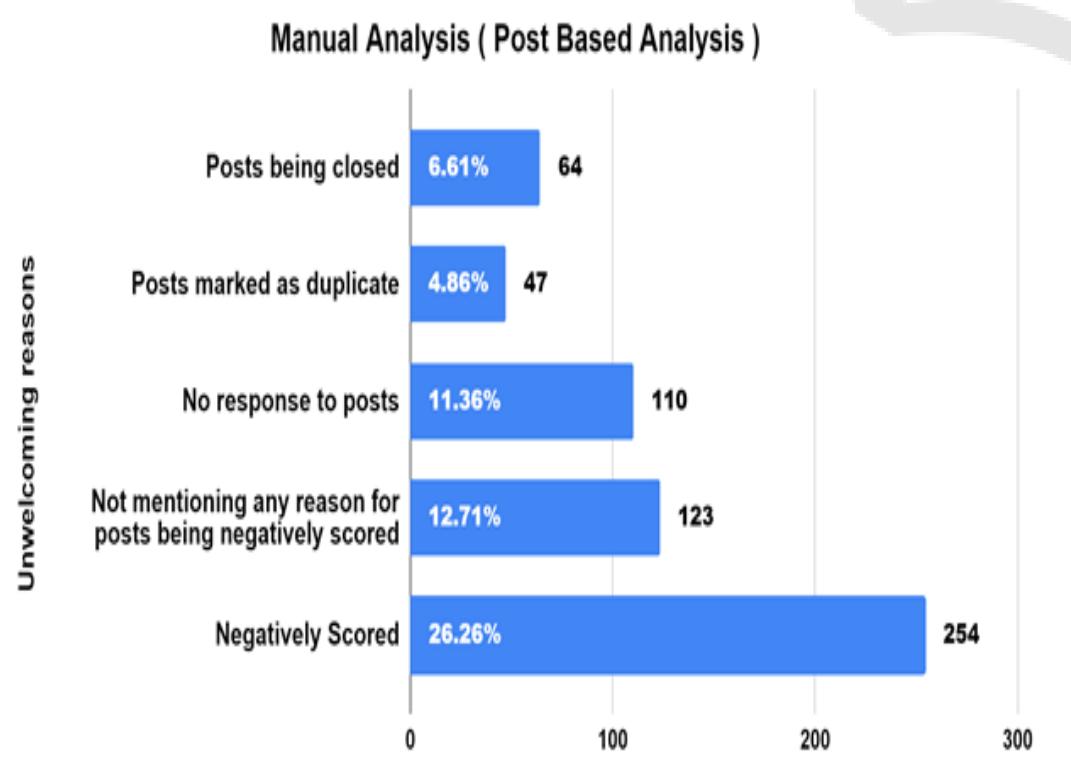
The inflection point appeared in 2014, when Stack Overflow began to systematically improve review efficiency, and more actively close duplicate questions and "non-compliant" posts. The original intention of the platform was to maintain the signal-to-noise ratio, but the cost was to block new users. A 2022 study showed that in a sample of 968 new user posts, 49% encountered at least one of the situations: being closed, receiving no reply, or getting unprovoked negative scores.
https://www.scitepress.org/PublishedPapers/2022/110811/110811.pdf
This culture has been complained about for ten years. When devclass reported the data in January, it quoted a developer's reaction, roughly meaning that AI did accelerate the recession, but the root cause is that the community has long punished people who tried to participate, and people finally have a tool that will not say "your question is stupid".
Under Daniel Lockyer's tweet, we can also see many similar criticisms:




The problem is that the hostile culture alone is not enough to reduce the annual question volume to the 100,000 level. Before 2022, this number always remained above 1.3 million. The real sharp decline is the result of the superposition of two events: ChatGPT reduced the marginal cost of asking questions to zero, and then the AI assistant in the IDE made the act of asking questions itself disappear.
Developers no longer need to leave the editor, no longer need to write the question into a minimum reproducible example that strangers can understand, and no longer need to wait for hours.
The value of Stack Overflow was once built on "turning one person's problem into an asset for everyone". What AI assistants do is the opposite: it turns public questions back into private conversations.
The platform has not taken no action. In October 2023, it laid off 28% of its staff (58 people had already been laid off in May before that), launched OverflowAI, shifted to providing data licensing for companies such as OpenAI, and set up anti-scraping walls to force platform parties back to the negotiation table.
https://stackoverflow.blog/2023/10/16/stack-overflow-company-announcement-october-2023/
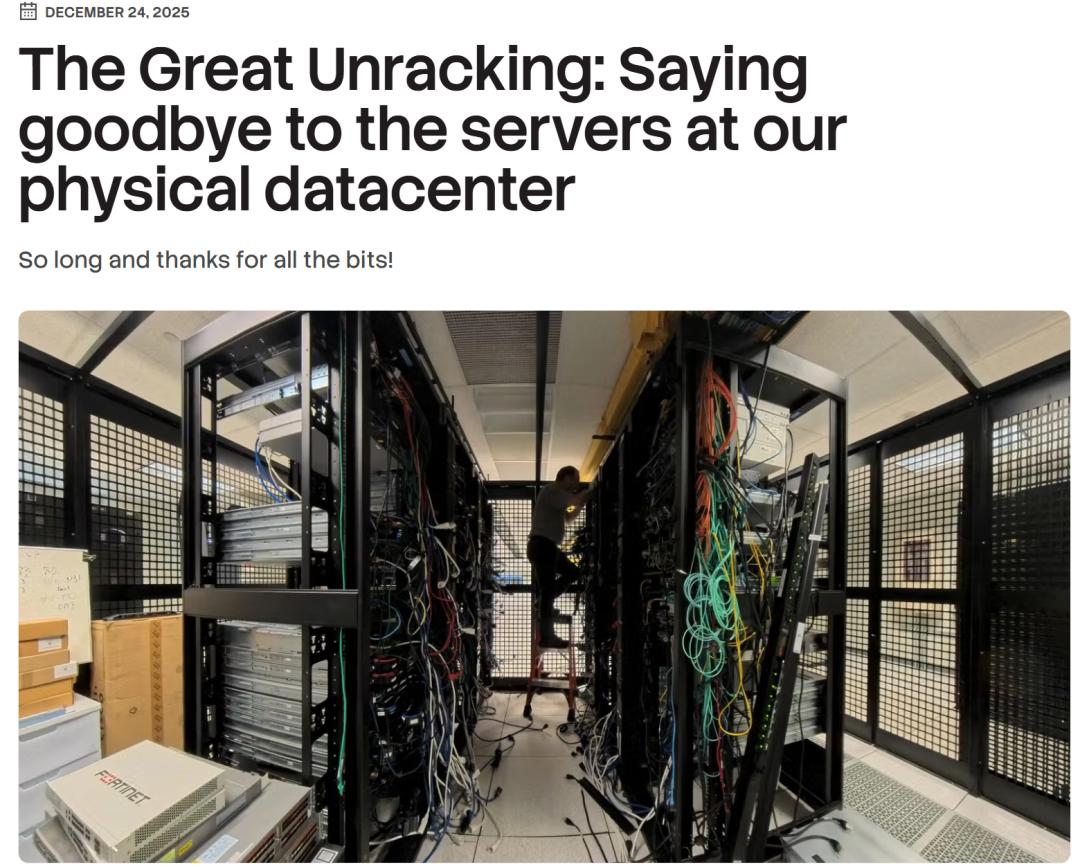
In 2025, it completed full cloud migration, about 50 servers in the New Jersey (mislabeled as New York) data center were all decommissioned, the disaster recovery data center in Colorado was retired in June, and the article "The Great Unracking" at the end of the year gave a subtitle to this 16-year history of physical infrastructure: "Goodbye, and thank you for all the bits."
In February 2026, the site was redesigned with a new logo. CEO Prashanth Chandrasekar has remained in office since 2019, and the company is still owned by Prosus. The $1.8 billion acquisition in June 2021 was completed exactly 18 months before the start of the steepest decline phase.
It's Not Just Stack Overflow
Stack Overflow stands out very clearly because it publicly releases clear statistics on question volume. But in fact, the same curve is appearing in many places with different slopes.
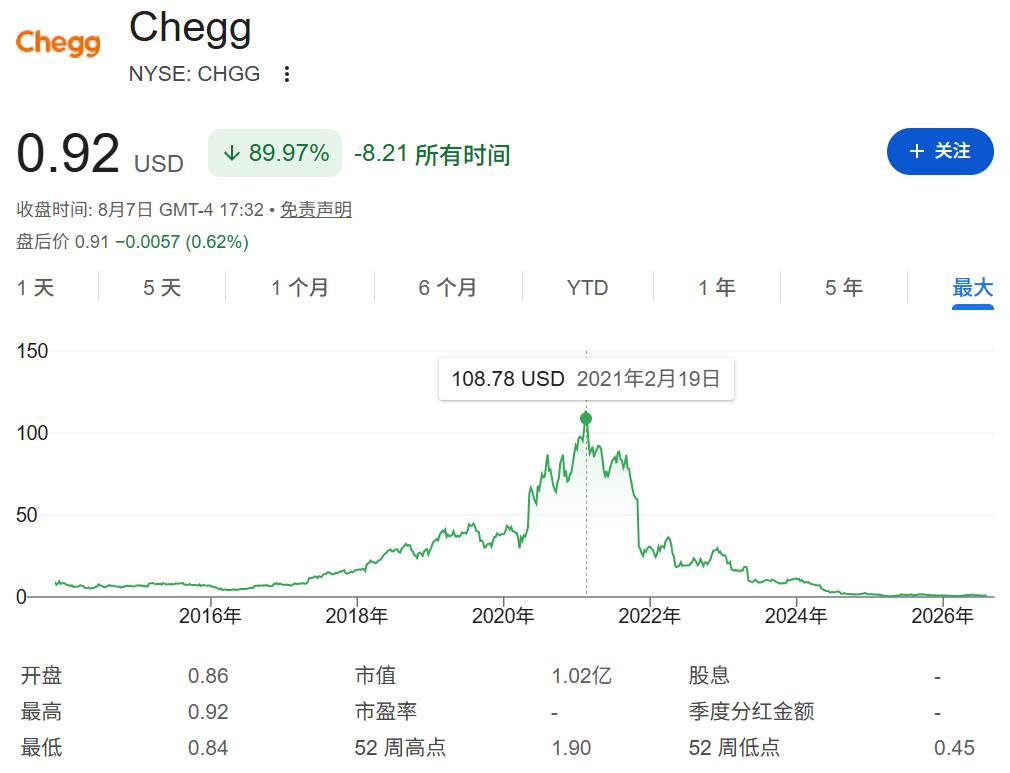
Chegg is recognized as the one that died the fastest. This online education company, founded in 2005 with textbook rental and listed in 2013, relied on the same model: turning homework answers into searchable stock assets, diverting traffic through search engines, and charging monthly fees.
After ChatGPT was launched, students had no reason to pay for this service. A survey by Needham showed that 62% of students planned to use ChatGPT in November 2024, compared with 43% in the spring of 2023; during the same period, the proportion of students using Chegg dropped from 38% to 30%.
In 2023, it took self-rescue measures, using GPT-4 and its own more than 100 million academic contents to build CheggMate, trying to prove that professional AI is worth paying for, but students did not recognize it.
In May 2025, it laid off 248 people (22% of the staff) and closed its offices in the US and Canada, and laid off another 388 people (45% of the remaining employees) in October. At the end of April 2026, its share price was around $1.07, and its market value in May was about $125 million, evaporating about 99% from its peak. It took about 39 months to go from the peak to almost zero.
Freelance platforms are the second sample, and the stratification is very clear. Fiverr released its Q2 2026 financial report on July 29: revenue was $97.8 million, down 10% year-on-year; among which the marketplace revenue from matching transactions fell 15.5% to $63.1 million. The most striking data is the number of buyers: the annual active buyers as of June 30 were 2.7 million, 21.9% less than the 3.4 million a year ago. But during the same period, per capita consumption rose 15.6% to $368, the commission rate rose from 27.6% to 28.0%, and the number of project customers with completed amounts of more than $1000 increased by 13% year-on-year. The management gave the most straightforward explanation on the conference call: according to the TTM caliber, the writing and translation categories had the largest decline, exceeding 24%. The full-year guidance was lowered to $356 million to $372 million, a year-on-year decrease of 14% to 17%, and it said that this transformation may take at least six quarters to take effect.
The same logic is repeated on Upwork and Freel