Rumors that Alibaba Lingxi is to be sold for 1.5 billion US dollars have resurfaced, which may be the exact reality of China's gaming industry.
Is Lingsxi Interactive Entertainment really about to change ownership this time?
According to Bloomberg, Asia-based private equity firm Trustar Capital is close to reaching a deal to acquire the video game business of Alibaba Group Holding Limited. People familiar with the matter said Trustar Capital has emerged as the most likely buyer of Lingsxi Interactive Entertainment, with its bid higher than that of other bidders including video game manufacturers. According to their disclosure, the deal could value the studio at more than 1.5 billion US dollars.
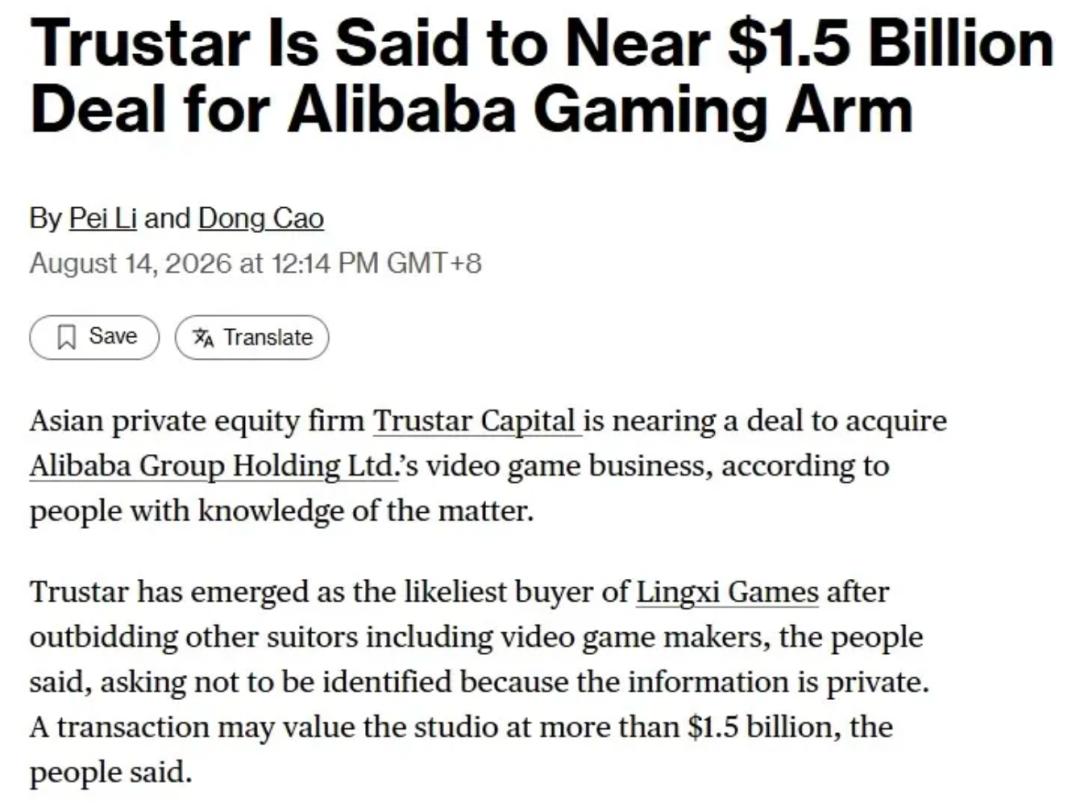
Source: Bloomberg
As of press time, Lingsxi Interactive Entertainment and Trustar Capital have not issued a response.
Back on June 23 not long ago, multiple media reported that Alibaba Group was planning to sell its game business brand Lingsxi Interactive Entertainment, with an overall asking price of 7 billion to 9 billion RMB (approximately 1.038 billion to 1.335 billion US dollars), which is lower than the selling price revealed in this round of news.
From the perspective of market valuation and revenue performance, Lingsxi Interactive Entertainment is not in a stage of explosive growth, but a mature business with stable cash flow and a long-term steady growth curve. As for why it has been frequently exposed to business sales, the reason may be traced back to Lingsxi Interactive Entertainment's products and development path.
01
Lingsxi's most important cash cow product is *Three Kingdoms: Strategic Edition*.
Launched in 2019, *Three Kingdoms: Strategic Edition* has exceeded 100 million registered users worldwide so far. It has long occupied a top spot in the revenue rankings of mobile games in China on lists such as Sensor Tower, and is one of the most commercially stable products in the domestic SLG track.
According to data from major third-party platforms, the monthly revenue of this product in 2025 was roughly maintained in the range of 180 million to 250 million RMB. Considering the inherent feature of the SLG category that revenue is mainly driven by "seasonal card packs + new generals", this level of revenue is a model of long-term operation for a product that has been launched for 7 years.
Of course, Lingsxi's value and vision go far beyond a single hit product.
Lingsxi Interactive Entertainment currently has 5 R&D studios (Pingping Wuqi, Pumpkin, Star, Yuan, Innovation) and 2 operation business lines (Jiuyou, Trading Cat).
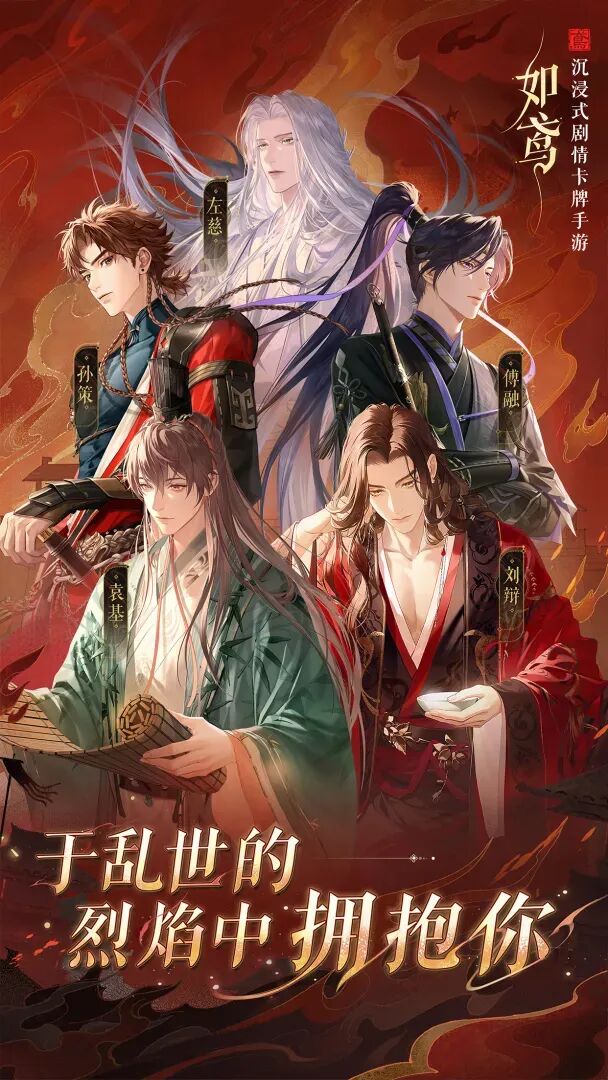
*Ruyuan*
Among them, *Fantasy Land of Three Kingdoms*, *Fantasy Land of Three Kingdoms 2: Song of the Owl* are extensions of the Three Kingdoms IP in the direction of card games and derivative creation; *Ruyuan* is its successful attempt on the female-oriented Three Kingdoms theme; other products such as *Tree of Savior: New World*, *Nobunaga's Ambition: True Battle* are also the exploration achievements of Lingsxi in self-developed or distribution business.
Judging from the product matrix of self-developed and operated products, Lingsxi Interactive Entertainment is trying to build a second growth curve outside the SLG track. Of course, up to now, the scale of these products is not at the same level as *Three Kingdoms: Strategic Edition*.
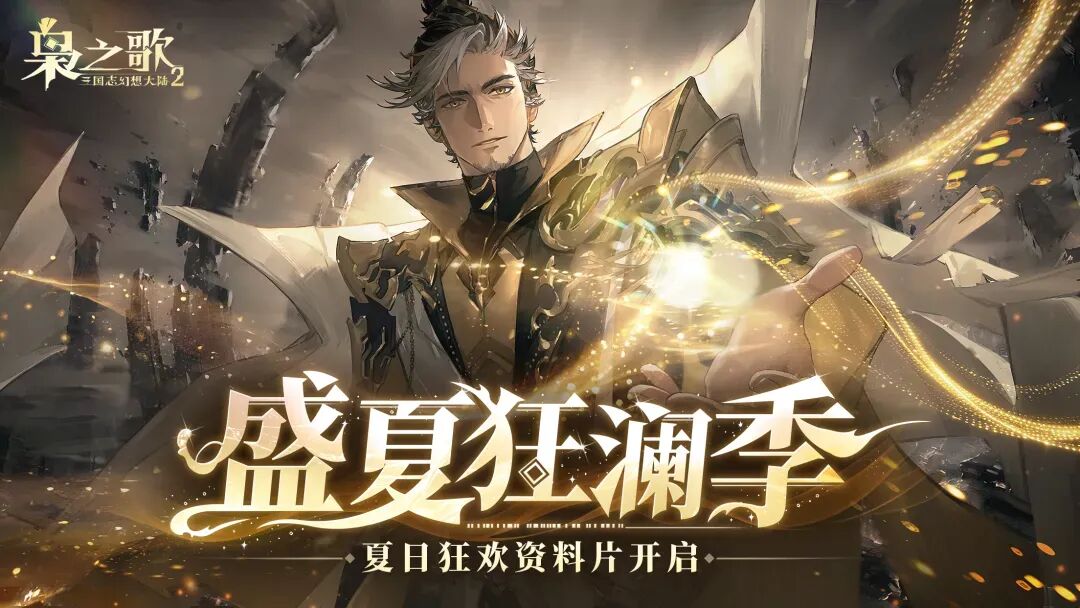
*Fantasy Land of Three Kingdoms 2: Song of the Owl*
Apart from products, changes have also taken place in Lingsxi's internal organization.
In August 2025, the reporting line of Lingsxi Interactive Entertainment within Alibaba was adjusted from Fan Luyuan, Chairman of the Big Entertainment Business Group, to Xu Hong, CFO of Alibaba Group. In large companies, changes in reporting lines are usually not simple organizational behaviors.
A speech Fan Luyuan delivered at an internal event in December 2024 sparked controversy, and many people outside the company therefore believed that the self-developed game business could hardly integrate into the Alibaba system. Fundamentally speaking, this controversy is related to the starting point of Alibaba's game business.
The origin of Lingsxi Interactive Entertainment is Guangzhou Jianyue (founded by Zhan Zhonghui, former COO of NetEase), which Alibaba acquired for about 1 billion RMB in 2017. After being merged into Alibaba Big Entertainment, the brand was upgraded to Lingsxi Interactive Entertainment. Since its birth, Lingsxi Interactive Entertainment has been a game company with NetEase lineage genes, and after being acquired by Alibaba, it may never fully integrate into Alibaba's corporate culture. The line "it does not have the Alibaba blood" in Fan Luyuan's speech also expresses this long-standing identity gap.
The background of Xu Hong taking over is Alibaba's ongoing 1+6+N business reform. From the adjustment of non-core assets such as Intime, RT-Mart, to Freshippo, all directions seem to point to the same thing: Alibaba is shifting its focus to areas such as AI and cloud computing.
In other words, which is more important: "making the game business a top player in the industry" or "how much money this business can be sold for"? The answer to this question may be glimpsed from the frequent acquisition rumors.
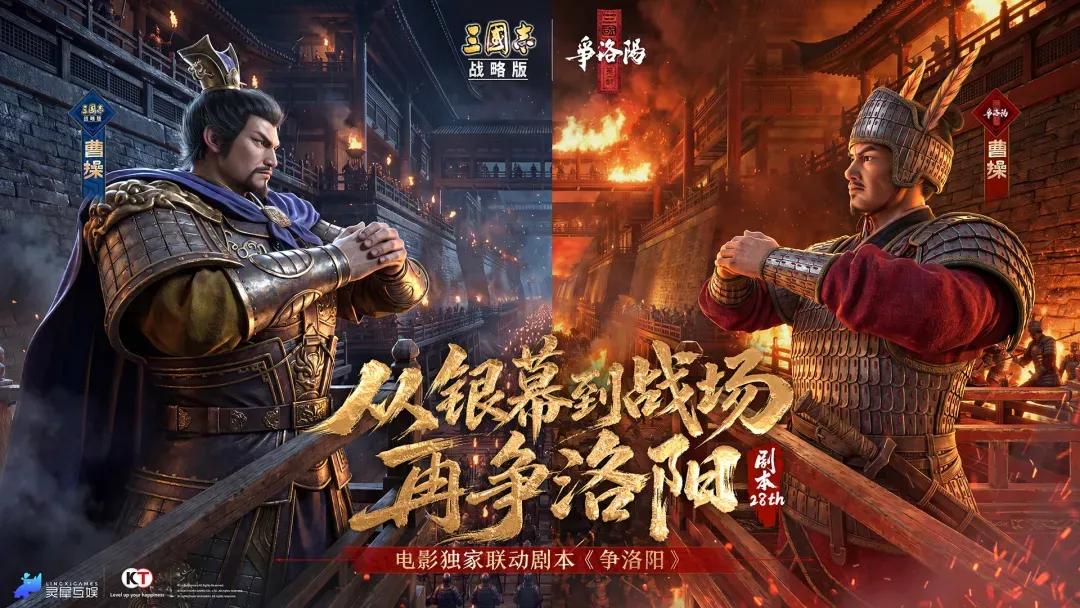
*Three Kingdoms: Strategic Edition*
In June 2026, the news that Lingsxi Interactive Entertainment was going to be sold was exposed. From acquiring Lingsxi to expand the game territory, to giving an answer at the capital and strategic level, the time span between the two is exactly ten years.
02
The ten years since Alibaba acquired Lingsxi Interactive Entertainment is, to some extent, a footnote to the rise and fall of the ecological expansion logic of Chinese Internet companies.
Around 2014, BAT all entered the stage of boundary extension: Tencent extended from social networking to games, Baidu moved from search to content, and Alibaba built a super ecosystem covering consumption, entertainment, finance and services around e-commerce. Almost all fields that can occupy users' time, including film, television, music, sports, literature and games, were incorporated into its territory.
Alibaba's logic for making games is not complicated: since users already shop on Taobao and pay via Alipay, theoretically they can also get entertainment, consume and socialize in Alibaba's ecosystem. From agency, distribution to self-development, from acquisition to investment, almost all paths have been tried.
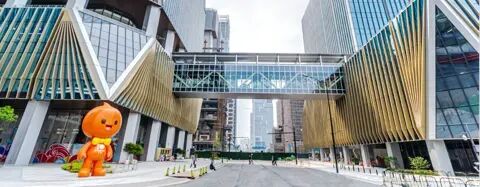
The Alibaba office area in Guangzhou where Lingsxi Interactive Entertainment is located
But the game industry later proved that it is not a business that can succeed only by relying on traffic import.
Tencent and NetEase occupy top positions in the industry not because they have more users, but because they have built a mature R&D system, distribution system and hit product production mechanism. Games are essentially closer to the content industry, which requires creativity, R&D, operation, community building and long-term investment. These capabilities are difficult to replicate quickly through capital or traffic advantages.
From a longer time perspective, the story of Lingsxi Interactive Entertainment can be divided into two parts.
The first part spans from 2017 to 2019. Alibaba acquired Guangzhou Jianyue for about 1 billion RMB, and the team with NetEase lineage genes joined the Alibaba system. Three years later, *Three Kingdoms: Strategic Edition* was launched. This Three Kingdoms-themed SLG, led by the early team of Lingsxi Interactive Entertainment, broke the existing pattern of the domestic SLG market at that time, and has long stayed in the top 10 of the domestic iOS bestseller list. From the product perspective, it is the most iconic hit in the history of Alibaba's game business. From the organizational perspective, it is also the most important report card handed over by the Jianyue team within the Alibaba system.
The second part is from 2019 to the present. The success of *Three Kingdoms: Strategic Edition* has not brought a second phenomenal product of the same level. The entire revenue structure and profit structure of Lingsxi Interactive Entertainment mainly revolve around this single product. When a company's valuation increasingly relies on a single product, its valuation logic will gradually shift from a growth company to a cash flow asset.
And cash flow assets are exactly the type most likely to be put on the shelf for sale.
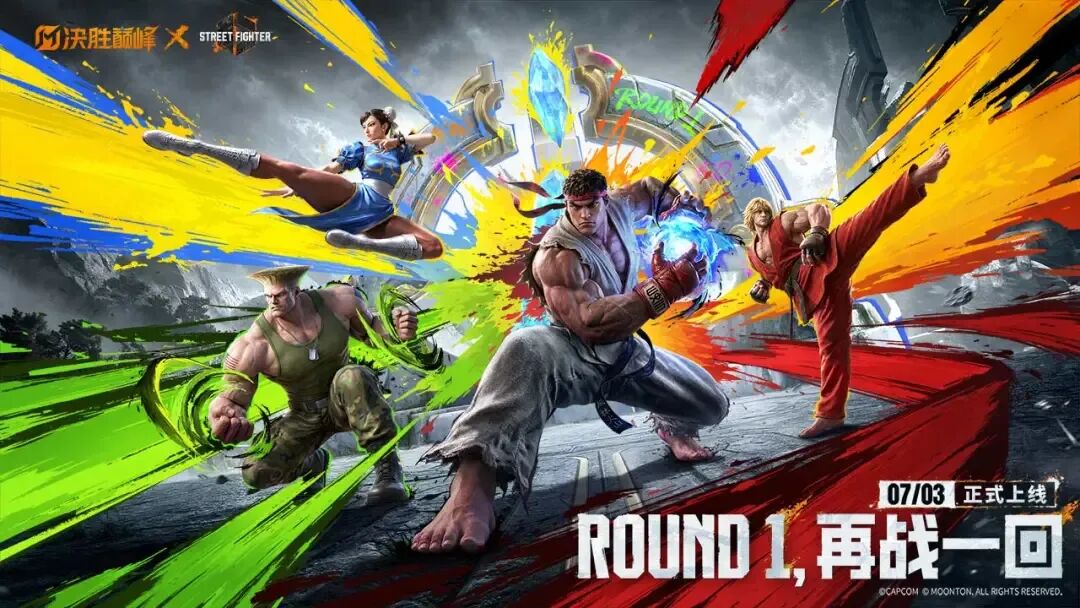
*Top Clash*
The change of ownership of Lingsxi Interactive Entertainment is not an isolated case in the industry.
Take Moonton Technology as an example. The developer of the MOBA mobile game *Mobile Legends: Bang Bang* (Chinese server: *Top Clash*) was acquired by ByteDance in 2021, and then resold to Saudi Arabia's Savvy Games Group in 2026, with the valuation of the two transactions rising from 4 billion US dollars to 7 billion US dollars.
Over the past five years, Moonton's representative work MLBB has always been the top MOBA game in Southeast Asia, and even become a national-level game in many countries, but it still cannot stop the company from changing ownership twice.
For Alibaba, 1.5 billion US dollars may be a relatively reasonable valuation range. For Lingsxi's employees, this is another reality in the Chinese game industry that "the company belongs to others, but the project still belongs to you".
This article was first published on "36Kr Games".