Walmart China's 30 Years: The Down-to-Earth Diligence That Weathers Every Cycle
On August 12, 1996, Walmart opened its first Walmart Supercenter and Sam's Club on the same day in Shenzhen, China. Amid the deafening sound of gongs and drums, Bob Martin, then President of Walmart, said to the camera, "Our primary goal is to come here and start the learning process. We must learn how to serve consumers here and earn their trust."
It was an era when materials were just becoming abundant but choices were still limited. Most families had to shop across counters and visit different stores to gather all their daily necessities. Walmart introduced the concept of "open-shelf sales" — dozens of similar products were lined up for customers to choose freely, which was enough to reshape the consumption perception of an entire generation at that time.
Few people realized that this starting point would become a continuous reference frame for China's retail industry in the following three decades: this global retail giant was not only a participant in many rounds of retail transformation, but also often the ruler for the industry to self-calibrate.
Thirty years later, the scene in supermarkets is completely different from the past. Consumers walk into supermarkets with their mobile phones, turn to the back of the package to check the ingredient list, and casually write down their love or dissatisfaction with a certain product on Xiaohongshu.
From 1996 to 2025, China's total retail sales of consumer goods increased from 2.46 trillion yuan to 50.1 trillion yuan, and per capita GDP increased by nearly 17 times. China has grown into the world's second largest consumer market, and the retail industry has also experienced multiple waves including the rise of hypermarkets, the explosion of e-commerce, omnichannel integration, and the rational return of consumption.
During this period, many enterprises were swept away by the wave or even eliminated. Walmart has consistently found its own position in every wave — it brought "open-shelf self-selection" to China, defining the starting point of modern retail; it took the lead in testing e-commerce, defining the embryonic form of omnichannel; now, through the reshaping of product strength and multi-format collaboration, it is trying to redefine the connotation of "certainty" and "trust" in this more demanding era.
I. Opening Amid the Rapids
The first store Walmart opened in Shenzhen was once a demonstration classroom for China's retail industry. At that time, China's per capita GDP was only 5,569 yuan, and local retail was still in an extensive stage. A large number of enterprises traveled from all over the country to Shenzhen to study every move of this "international giant" starting from the most basic shelf placement, category combination, and customer flow line design.
The first thing Walmart brought to China was not commodities, but a set of modern retail methodologies. It allowed peers to see for the first time that stores could be systematically organized in this way, which objectively calibrated the starting line for the entire industry. Most of the heavyweight retail enterprises that are leading the Chinese market today debuted during this period.
Entering this huge and unfamiliar new market, Walmart embraced some changes, such as expanding the proportion of fresh food and making store scales more flexible.
But in more key aspects, it also demonstrated rare concentration and flexibility at the same time.
The most typical example is pricing. China's retail industry has long relied on promotion-driven operations, setting artificially high marked prices first, then offering discounts, full reductions, and coupons, at the cost of employee consumption and consumer anxiety. Walmart brought the concept of EDLP (Every Day Low Price), and it still adhered to this principle even during the e-commerce boom when promotions repeatedly sparked national consumer sprees.
Its logic is to exchange long-term stable prices for customers' sense of security and trust, reducing decision-making costs. This counter-mainstream approach proved to the industry that low prices do not have to rely on tricks, and certainty itself can become competitiveness.
This flexible rhythm is fully reflected in infrastructure construction. When Walmart tested the waters of e-commerce in 2010, Taobao Mall had just been launched for two years, JD was still building its logistics network, and the domestic e-commerce industry was far from fully exploding. In 2014, when most retailers still relied on self-purchasing for their stores, Walmart built the country's first standardized fresh food distribution network. These two investments hardly attracted any attention at the time, but laid the foundation for its subsequent e-commerce penetration rate of more than 50% and omnichannel matrix.
In the subsequent waves of online transformation and instant retail, industry players gradually realized that the moat of retail often does not lie in the visible shelves at the front desk, but in the invisible warehouse distribution and cold chain. However, Walmart's experience shows that the outcome of competition is sometimes partially determined before the demand even explodes.
Looking back, every node of Walmart's development in China corresponds to an industry transformation. Bringing modern retail to China, testing e-commerce, and building a fresh food distribution network — it may not be the fastest every time, but it almost always makes moves before the industry inflection point, acting not only as a participant but also as an enlightener in a sense.
The rapids never stop. Today, when "being able to buy" is no longer a problem, the focus of competition has shifted from "availability" to "trustworthiness" — a more difficult question has emerged in front of every player: who can truly win the trust of consumers?
II. Retail Restructures Again, Walmart Regains Victory by Leveraging Basic Skills
In recent years, keywords such as instant retail, hard discount, community supermarkets, private labels, and store renovation have appeared in succession. With each wave of heat surging, the industry is discussing: is the traditional supermarket still a viable path?
A large number of players have fallen behind amid anxiety. Those who exited seemed to have worked hard to do the "right" thing at every outlet, chasing new waves, but in these chases, they gradually blurred their core user value and forgot to ask "what do my customers need".
Walmart is also under pressure in this ebbing tide, but its reaction is different from most of its peers. It did not rush to change direction, but returned to the origin of "customer first" and reworked all its basic skills.
Zhu Xiaoyun, President and CEO of Walmart China, once mentioned a detail: "When we inspect stores, our procurement colleagues are used to introducing 'this is my responsible Area 01, that is Area 74', but customers never understand stores in this way."
In her view, it is extremely meaningful to truly stand in the customer's shoes, or regard yourself as an ordinary customer, to examine a store. "We often unconsciously fall into the retailer's mindset, driven by financial statements, product selection strategies, KPIs and processes. Sometimes we think we have done well enough, but in fact we may have deviated from customers' real expectations." This is the epitome of Walmart's latest round of transformation direction.
When the "customer first" concept is reflected at the product level, Walmart's private brand "FreshMark" has become the most explicit carrier.
Since 2025, Walmart has made full efforts to develop private brands, and the product scale of "FreshMark" has rapidly expanded from dozens of SKUs to nearly a thousand items. Its brand proposition is only four words: "Simplicity for Freshness". "Simplicity" means reducing unnecessary ingredients in the ingredient list, and "Freshness" means that raw materials, origin and experience are all convincing.
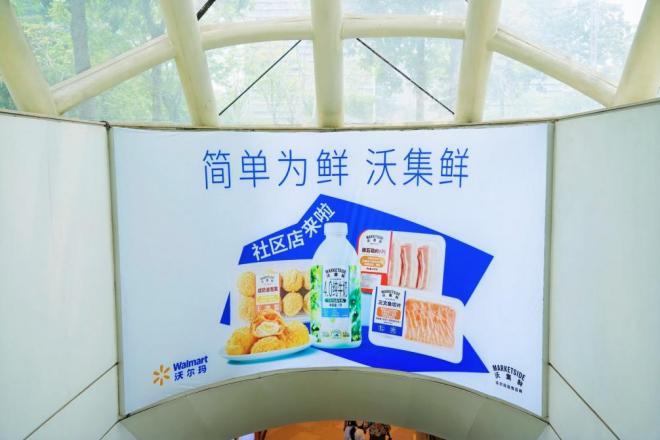
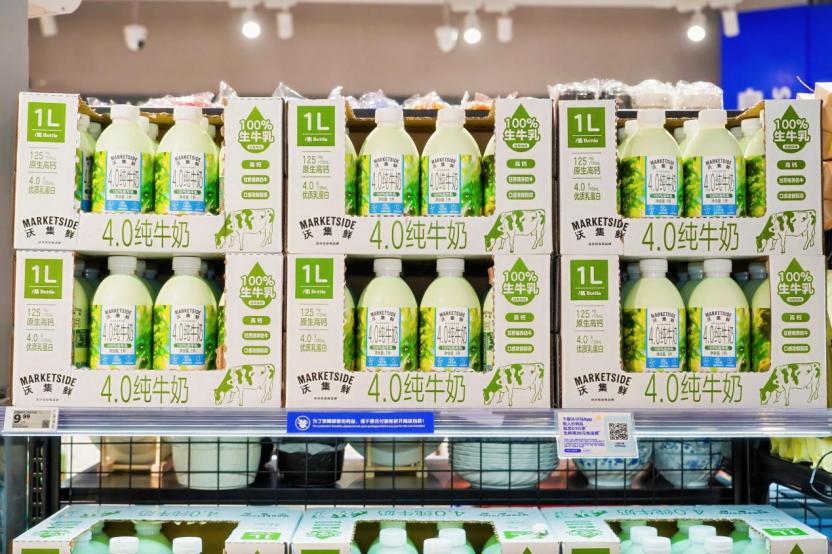
Beyond the slogan, the key to FreshMark's success lies in a complete mechanism from customer feedback to product launch. The earliest viral "little green bottle" is a representative example. Based on user feedback, Walmart launched a 250ml small bottle version on the basis of the 1L package, with the price reduced accordingly. By converting social platform content and user feedback into pre-product insights, a bottle of milk became a hit product.
On the occasion of its 30th anniversary, this logic has been further advanced. In August 2026, Walmart launched the "Listen & Improve" themed product series, behind which are six clear improvement directions: reduced sugar, reduced salt, optimized taste, optimized ingredient list, and small packaging for easier use.
At the specific product level, there are countless examples of being "customer-responsive". The sugar content of mango sago dessert is reduced by 20% in response to the demand of "wanting to eat desserts but not wanting too much sugar burden"; for fresh-cut cherry blossom potato chips, after receiving customer feedback that "there is no sealing strip, making storage inconvenient", the package was immediately added with a sealing design.
Consumers' increasing sensitivity to ingredient lists is also forcing product iteration. The ingredient list of Angus crispy beef sticks has been simplified to the extreme, with 99% beef and 1% edible salt, nothing else added.
"Being customer-responsive" itself is a valuable quality, which means that retailers are willing to have the most direct contact with customers, listen to their feedback in product polishing, and truly have the consciousness of always meeting user needs.
After "being customer-responsive", being able to deliver the improved products requires a complete mechanism from consumer feedback to supply chain response — social media and community comments are systematically collected and converted into product demands; the procurement team takes these demands to suppliers to adjust formulas and processes link by link; after the improved products are launched, the feedback loop starts again.
Zhu Jun, President of Walmart Store Format, positioned FreshMark in this way: "What it aims to do is not just 'Walmart's private brand', but 'differentiated product strength that meets the needs of target customer groups'. The former starts from the channel, while the latter starts from the customer."
When "customer first" becomes the starting point for judging all business decisions, the choices become clear. Instead of following the trend to create a false sense of low price through complex promotions, it adheres to "Every Day Low Price"; instead of blindly imitating a certain adjustment template, it first understands what the customer groups it serves really need; it does not develop private brands just for the sake of having private brands, but targets the blank areas that consumers really need.
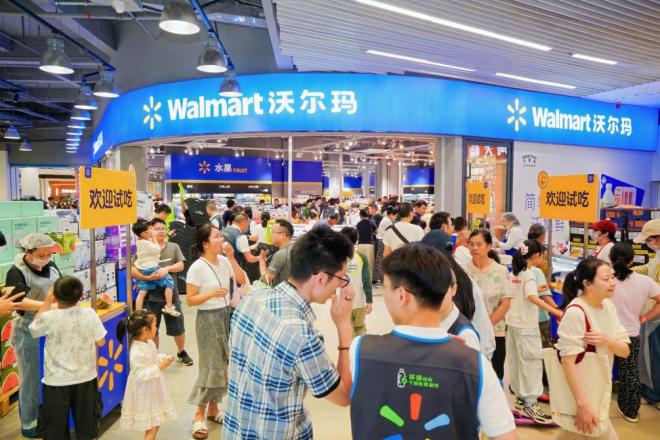
Amid surging concepts, Walmart China has delivered a still leading performance report. In fiscal year 2026, Walmart China achieved net sales of 24.7 billion US dollars, a year-on-year increase of 21.7%, achieving double-digit growth for three consecutive fiscal years. In the first quarter of fiscal year 2027, Walmart China achieved net sales of 8 billion US dollars, a year-on-year increase of 22.3%, with both Walmart Stores and Sam's Club recording double-digit growth. On the list released by the China Chain Store & Franchise Association, Walmart has ranked first in the Top 100 Supermarkets in China for 5 consecutive years.
III. 30 Years of Winning Trust
If Walmart's self-transformation of store formats is a story of short-term setbacks, then regaining its footing and winning again, Sam's Club has told another narrative over these long 30 years — lying low for a long time but always focusing on the essence of retail, striving to achieve remarkable results.
Sam's is undoubtedly an important growth engine for Walmart China in recent years, but a surprising set of figures shows that it took 22 years for it to grow from zero to its first million memberships in the Chinese market, added one million new members in only 6 months in 2021, and had more than 10.7 million paid members by 2025.
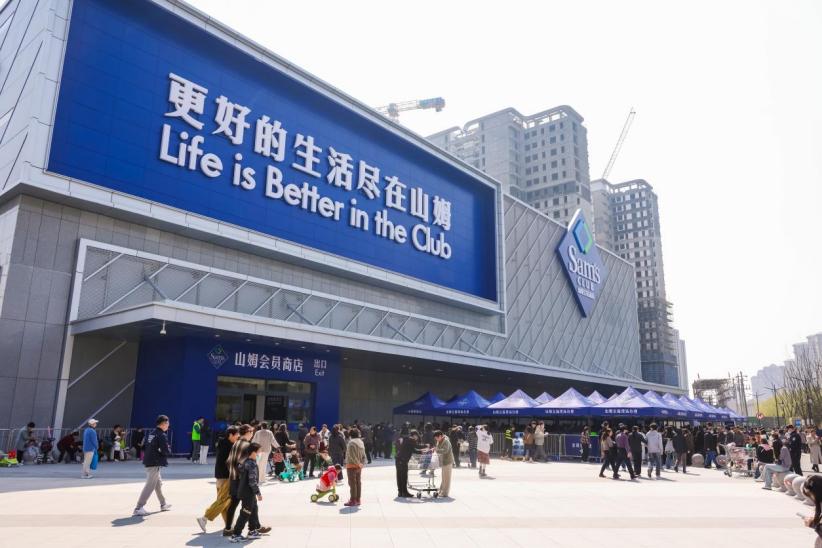
Behind the sharply rising curve, Walmart did not lower its standards due to slow growth in these 22 years, nor did it change its positioning due to short-term performance pressure, but pushed its basic skills to the extreme. When the market is ready, the dividend of trust will be released all at once.
The retail industry is one with high-frequency repeated games. If consumers think it is worth it, they will come back tomorrow; if they think it is not worth it, they may never step into this store again. How to continuously build trust is an eternal proposition that all players have to face.
High quality, differentiation, and member value are Sam's unique core logic, as well as its answer to the trust proposition.
The member value of Sam's is essentially a kind of "trust in advance". Members pay 260 yuan or 680 yuan per year, buying the promise that "everything here is worth buying". Sam's has about 4,000 carefully selected SKUs across the store, and products with sluggish sales, unqualified quality, and low member recognition are continuously removed. The selection process for each category is a process of giving up: giving up the sales growth brought by more SKUs, giving up the cost saved by lowering quality control standards, and giving up the impulse to relax supply chain audit when a certain category is selling well.
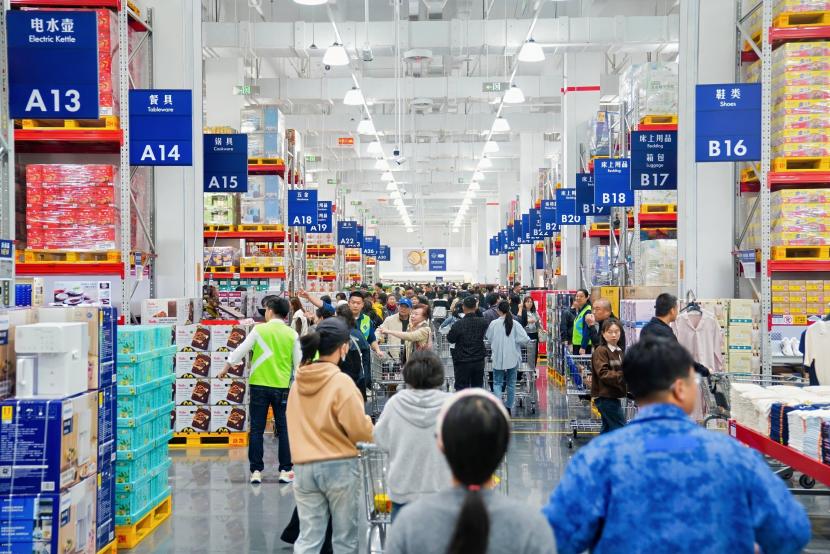
With more than 10 million paid members and a 92% renewal rate for Premier members, these results point to a common conclusion: consumers are willing to pay for "certainty", and once this certainty is established, it will form extremely strong stickiness.
"High quality" is reflected in quantifiable control. Taking imported chilled beef as an example, strict checks are carried out from the breed and age of cattle, post-slaughter indicators to muscle color, the whole cold chain is traceable, and the temperature in the store processing area is controlled between 4℃ and 7℃, which is far stricter than the conventional industry requirements.
Standing in front of the cold cabinet, consumers do not see a slogan of "selected good beef", but a traceable chain that can be followed up. This is the key: when "high quality" changes from marketing rhetoric to a string of verifiable numbers and processes, Sam's has its unique "certainty" that no one else can match.
"Differentiation" comes from in-depth co-creation with suppliers. Most retailers' "differentiation" stops at changing packaging and pasting private brand labels, while Sam's chooses to move upstream — from soil cultivation and seedling raising, formula R&D to process transformation, it writes differentiation into every link of the industrial chain.
The difference of a product is not determined at the last kilometer on the shelf, but defined when it is still a seedling or a formula. This approach is slow, heavy, and hard to replicate, but the return is a repurchase rate of over 90% for its private brands. Consumers are willing to buy the same product over and over again, which precisely shows that real differentiation is not marketing-created freshness, but exclusive value solidified by the supply chain.
In addition, practices including six-level audit, unannounced inspections, and third-party sampling inspections are reflected as costs on financial statements and tediousness in management processes, but they form the internal foundation of trust.
This is Walmart's consistent style since its founding. Sam Walton, who passed away in 1992, never saw a store in China, but the principles he left behind such as "Ten-Foot Attitude", "Sundown Rule", and "We have only one boss — the customer" are still hung on the walls of every store to this day