WeChat is intensively testing new AI features, and its traffic distribution may face three major changes. How to deal with this?
Let's cut to the chase without wasting your time — in the past two months, WeChat has intensively tested a number of AI features on a small scale, and WeChat's built-in agent "Xiaowei" is being rolled out at an accelerated pace. These features are likely to reshape the logic of traffic acquisition in the content and marketing industries, which deserves our full attention.
You must have heard of GEO (Generation Engine Optimization), which used to be a concern only for merchants. Now, content creators and video producers also need to start doing "GEO" for their own content.
This article first summarizes the tests WeChat has conducted, then analyzes their impacts. Users who haven't been included in WeChat's AI gray test can start with the first part.
01
What AI features has WeChat tested quietly?
WeChat has gray-tested at least more than 10 AI features, which can be roughly divided into two categories in summary.
The first category is to help users summarize content and save their time.
When you open the official account subscription list, there is an "AI Summary" at the top of the "Frequently Viewed" entry, in a very prominent position.

After clicking it, it sorts out and summarizes the latest articles from the official accounts you often follow.
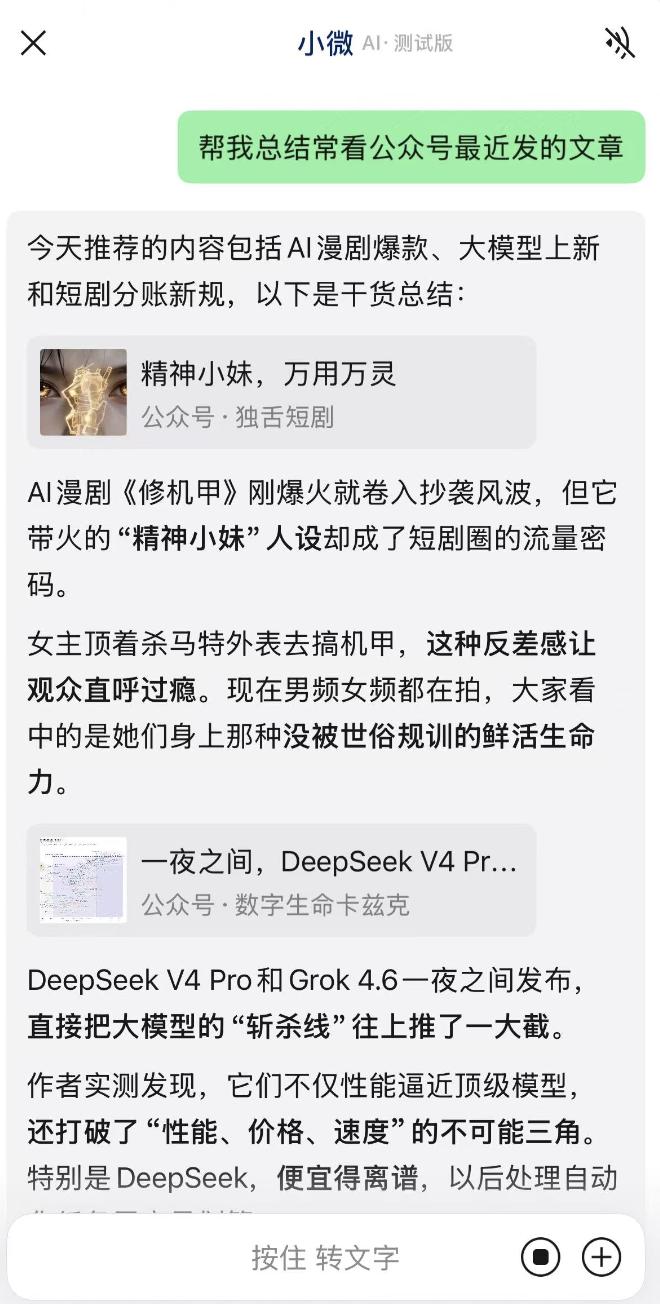
The summary above is quite accurate. For example, in my opinion, the core argument and innovative viewpoints of the article "Digital Life Karsky" are all based on the assertion of the "impossible triangle of large model performance, price and speed". The AI has made a precise summary with its own judgment, instead of randomly copying and pasting text.
The AI Summary has more than one entry. An "AI Abstract" has been added next to the titles of official account articles, which will summarize the main idea of the article after being clicked.
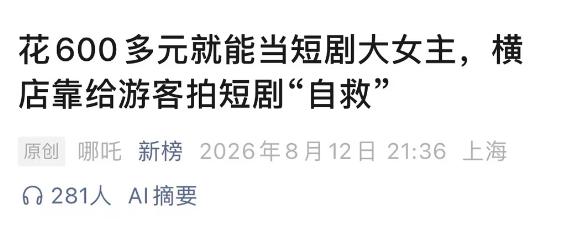
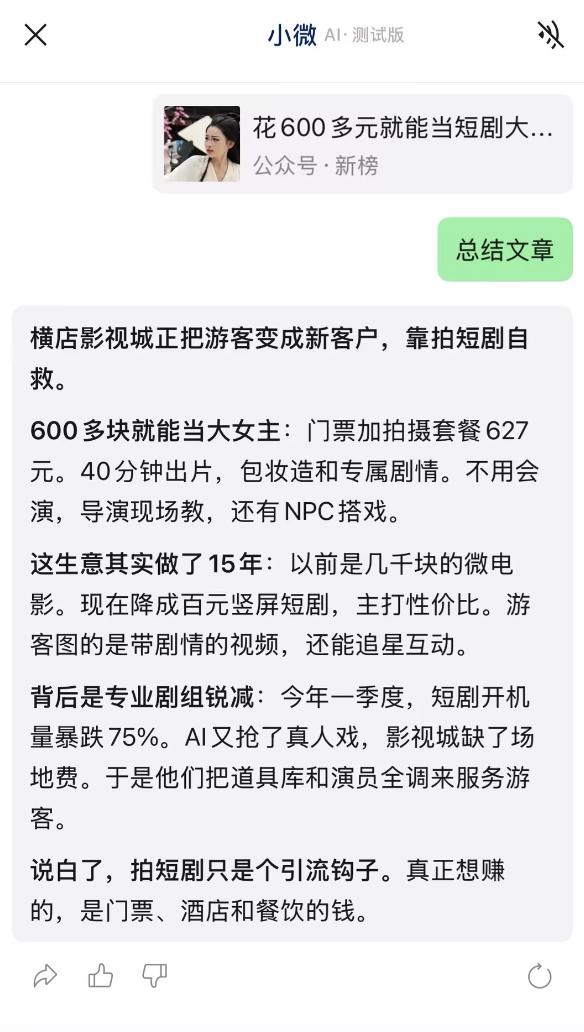
I tested it with the article from "NewRank", and Xiaowei's summary is very accurate, with clear layers and all key points captured, just like restoring the outline of the article.
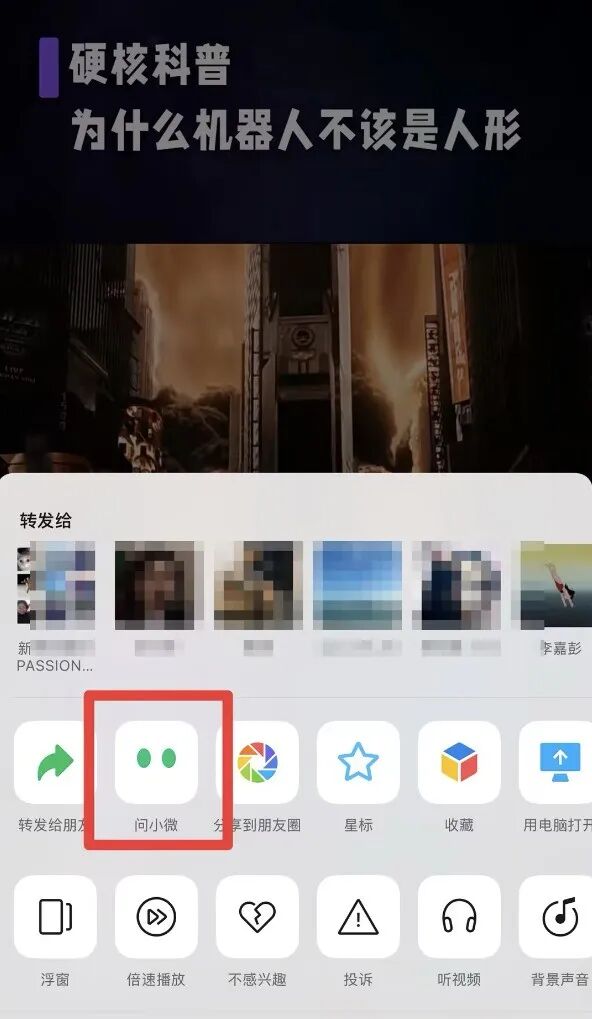
Not only for official accounts, when you click the comment section of a Video Account, the "Ask Xiaowei" option also appears on the comment section interface.
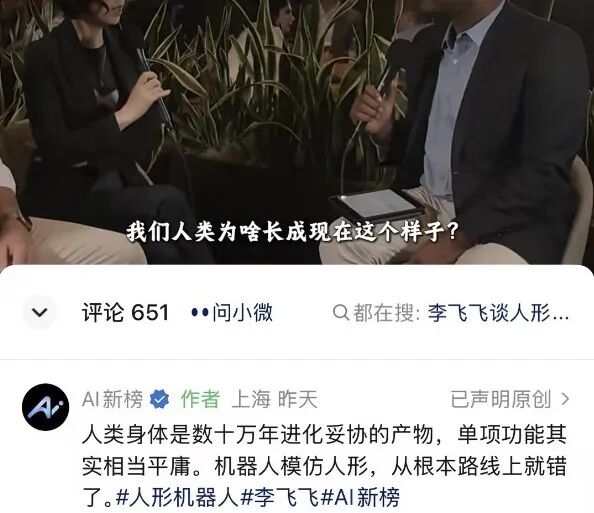
The "Ask Xiaowei" option also appears on the interface when you forward a video, which shows WeChat's high emphasis on this feature.
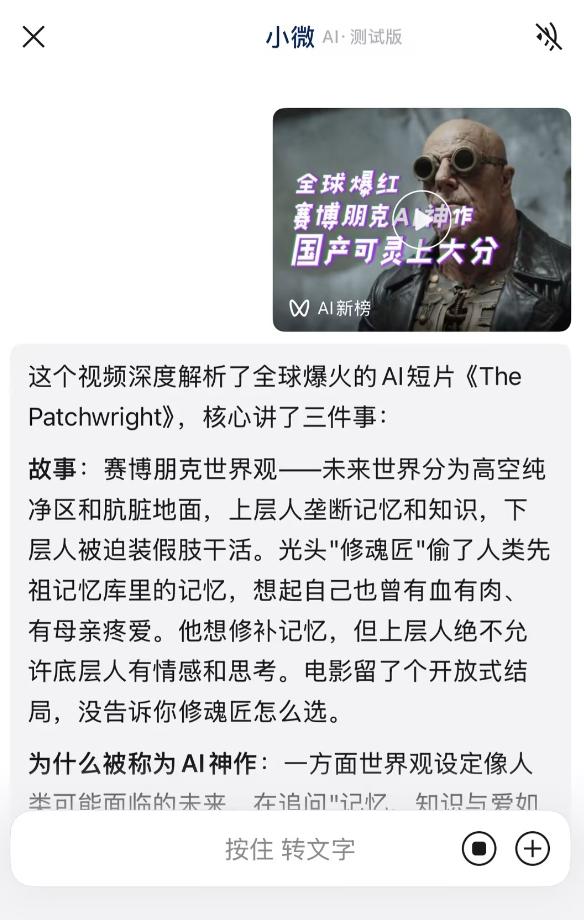
I directly sent the video from "AI NewRank" to Xiaowei without adding any instructions. Sometimes it helps me read the comments, and sometimes it summarizes the video content for me. The summary below is very precise.
In fact, when watching videos, current users often @ the agent in the comment section, asking it to summarize the main idea of the video, verify whether what the author said is true, or find out which movie is mentioned in the video. This has become a regular user operation. The "Ask Xiaowei" option highlights this common behavior through product design.
WeChat has also added an "Ask Xiaowei" option in the function bar below the group chat interface.
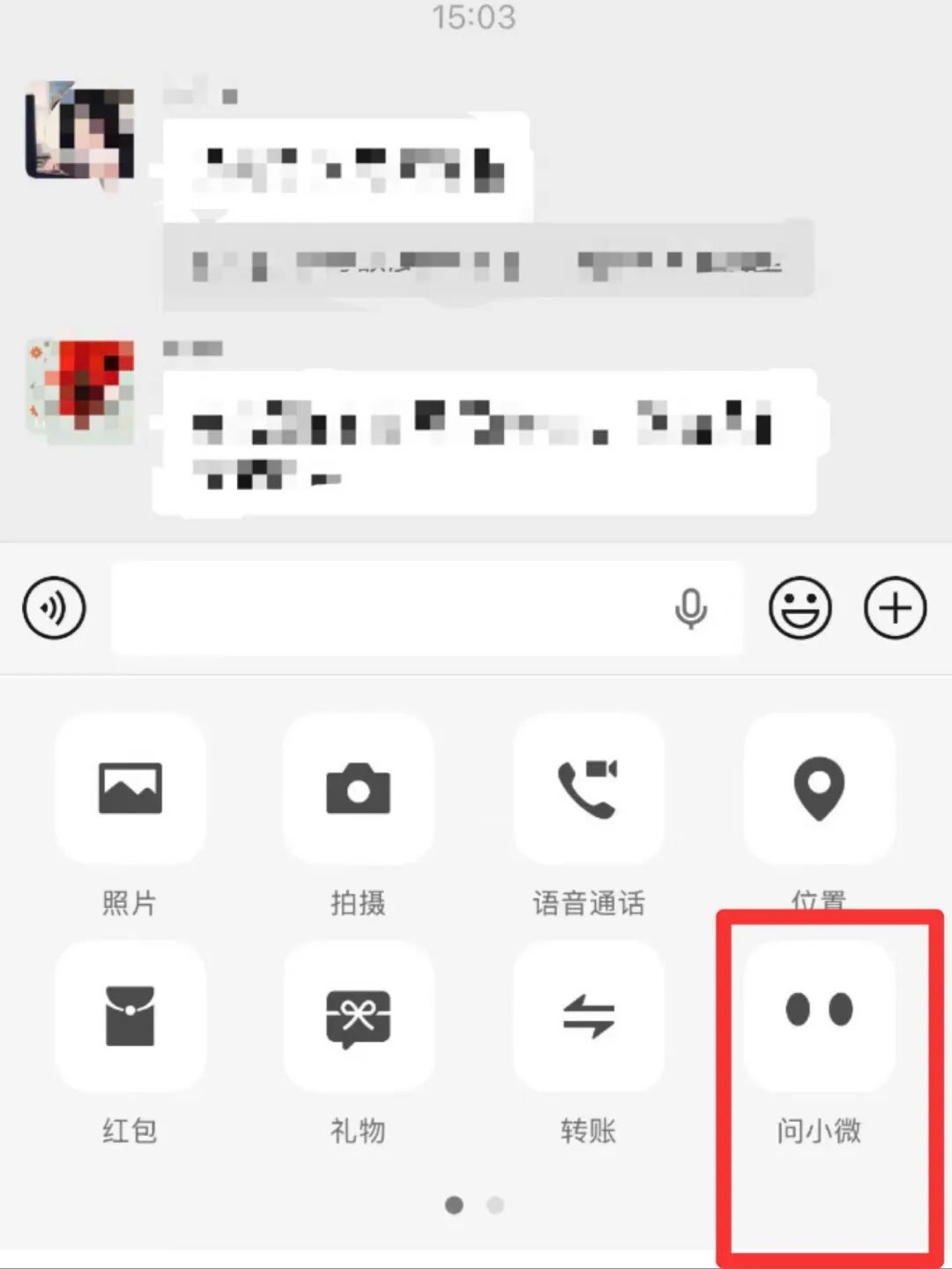
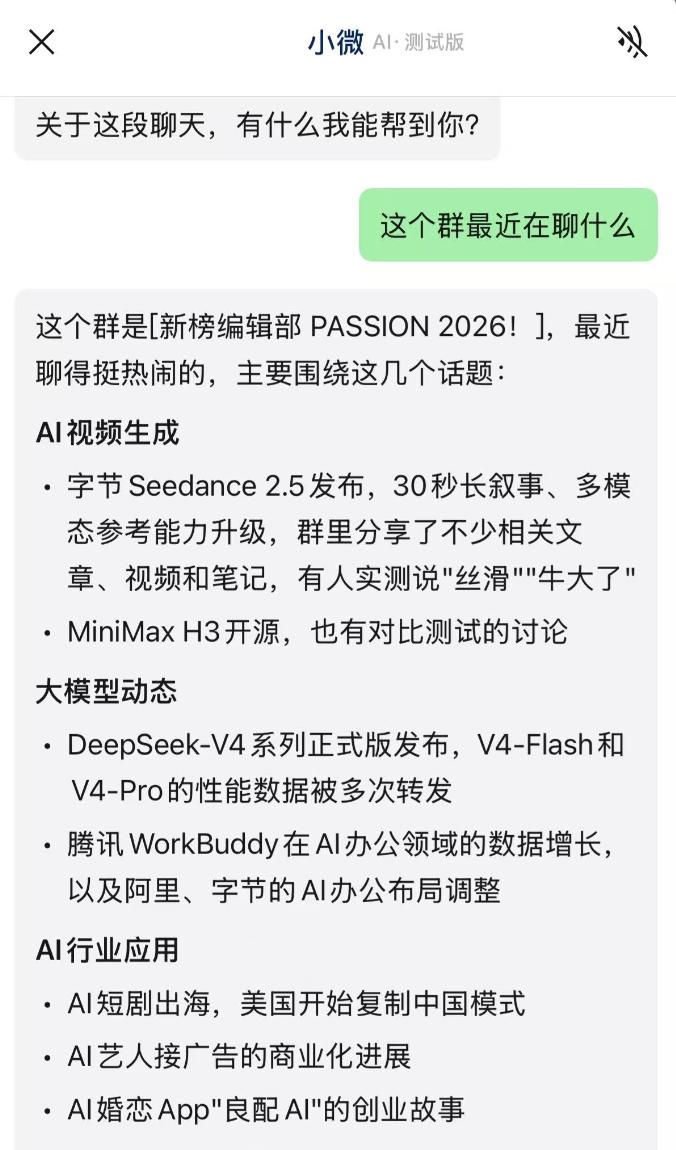
Probably out of the consideration of maintaining the real-person social ecosystem, WeChat did not aggressively add AI tools directly in group chats as rumored, but placed the function further away from the chat input area. Users can also use this function to summarize group messages, which is very suitable for groups with dense information that do not need to be read one by one.
I tested it in practice, and its summary is also very accurate, directly filtering out non-core information such as greetings and small talk.
The second category of gray-tested AI features is to reduce users' expression costs.
The most concerned feature is the AI-assisted writing function for Moments. It appears when users click to post a Moment or share content to Moments, and it looks like this:
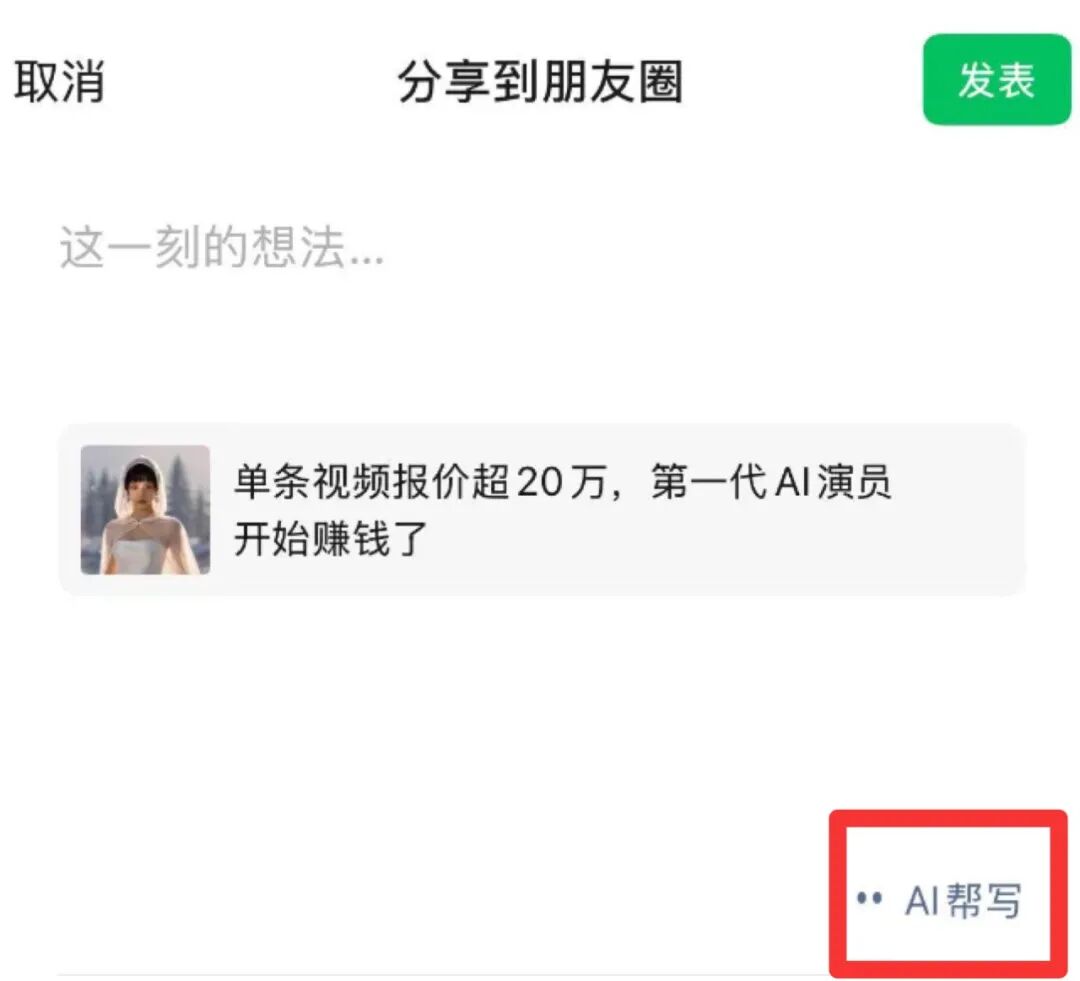
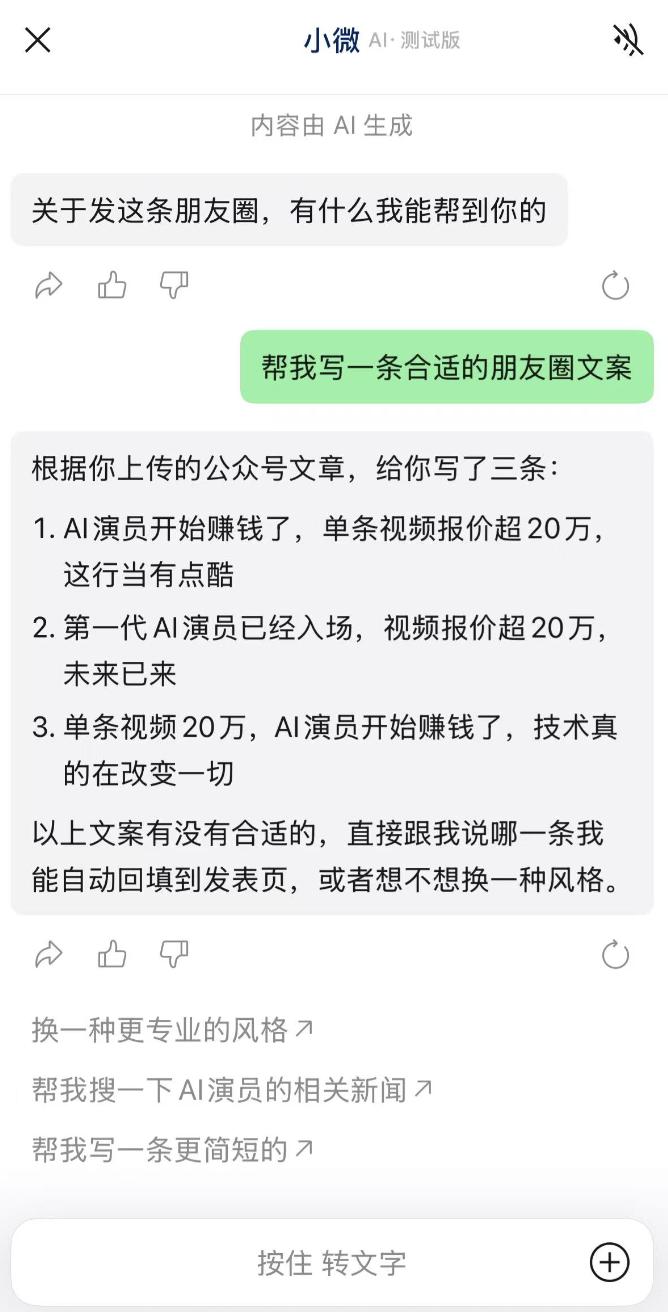
After clicking, the scenario shown in the figure below will appear: it can only help you write the draft and cannot post it on your behalf, and you hold the final decision right.
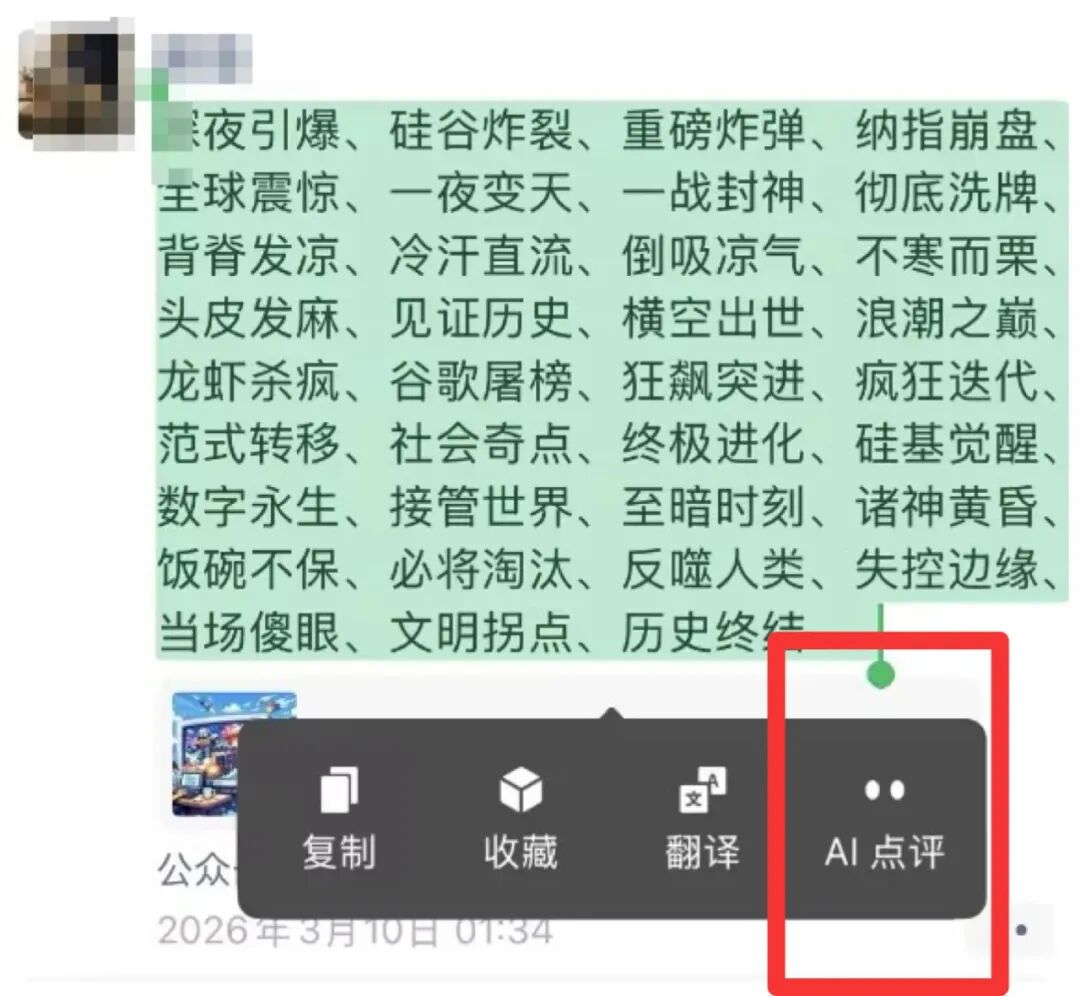
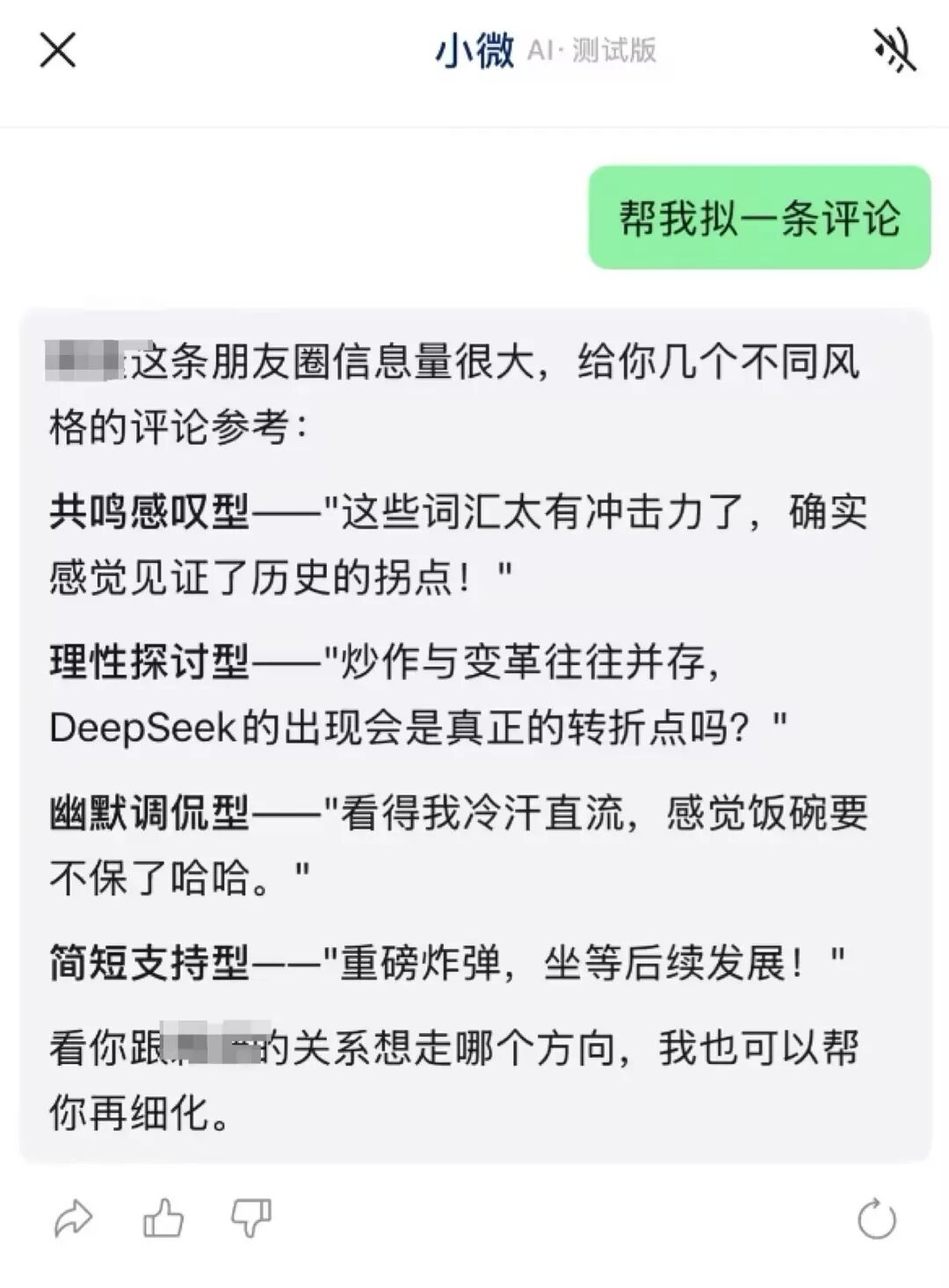
Even when users reply to a Moments post, the "AI Comment" button has appeared.
However, Xiaowei's comment draft for this Moments post is too AI-styled, and it obviously fails to capture the implied irony to the AI circle in the original text.
All the above features have sparked considerable controversy. Opponents argue that AI has already made the "real human presence" on the Internet increasingly scarce, and as WeChat is the national basic social tool, this move will further weaken the expression of real human emotions. But there is another voice that only a small number of users can express their feelings with elegant and precise words. Don't our parents often struggle with what to write for their Moments posts? This feature can lower the expression threshold and reactivate the increasingly deserted Moments ecosystem.
In addition to AI-assisted Moments writing, WeChat has also quietly launched the AI emoji search function, which appears when you look for emojis during chatting.
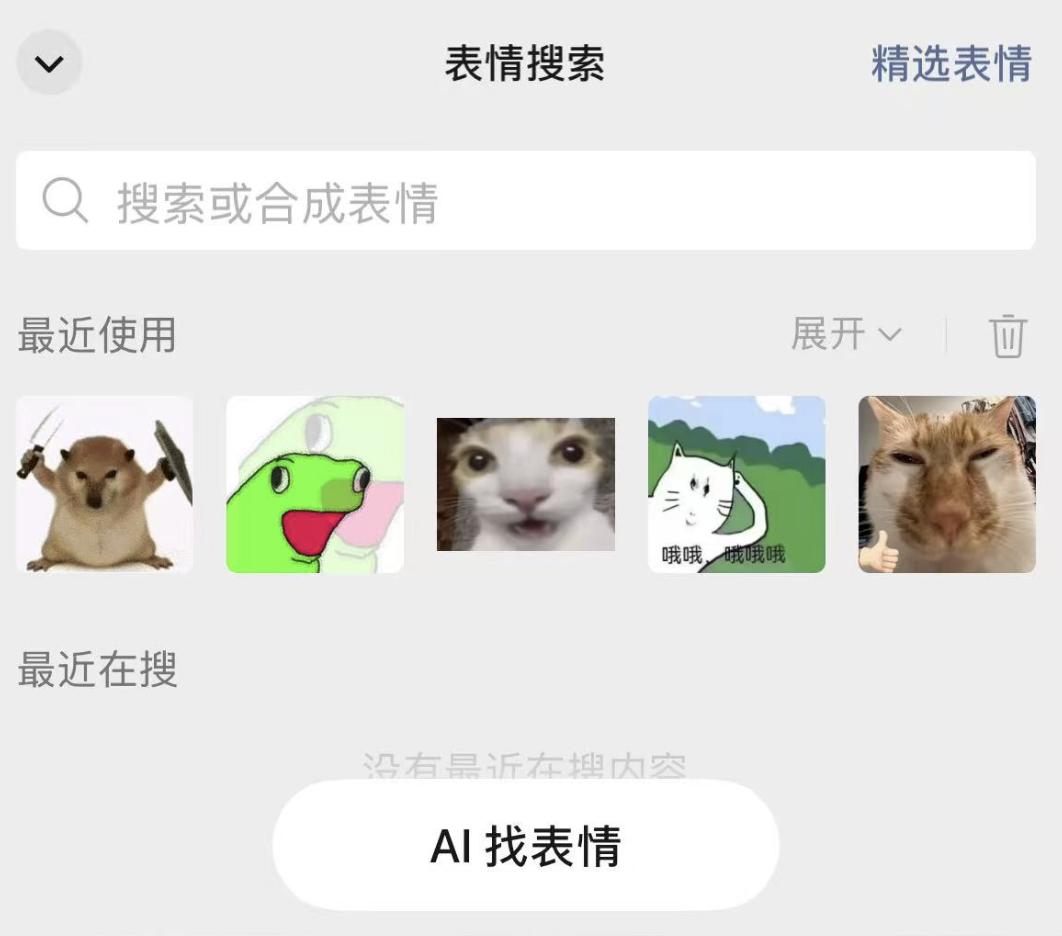
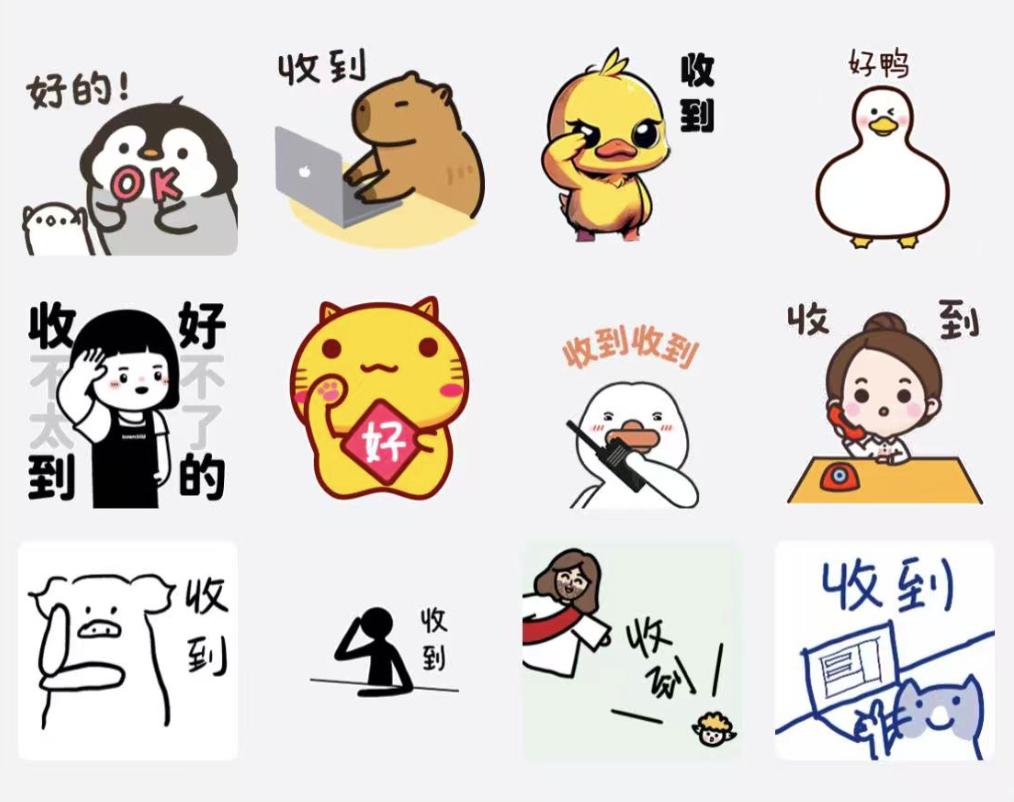
I asked it to find a suitable emoji to reply to the client's speech in the work group, and it recommended these. I have to say the results are very accurate, full of the sense of "overworked office worker", but not trendy enough, not the new popular meme.
In addition, the Xiaowei logo has also appeared on the WeChat Scan page, where you can take a photo to let Xiaowei identify a product, a function that many AI products already have.
In short, the full-scale AI transformation of WeChat is just around the corner.
02
Three major changes in the traffic distribution logic,
What should we do?
WeChat is a national-level application. Although the many AI features it is gray-testing are mainly designed to improve the C-end user experience, they will inevitably have a substantial impact on content, marketing and operation work in the future. The specific features in the gray test may not all be launched in the end, but their product logic has clearly pointed out the direction for content traffic development.
In the final analysis, all these impacts boil down to one point: AI will be deeply involved in traffic distribution, so we must understand AI and make adjustments when creating content.
First, our titles and covers need to be better adapted to the "AI entry".
For example, for official accounts, according to the product adjustments presented in WeChat's gray test, after users enter the official account subscription list in the future, the "AI Summary" function will appear in the first grid on the left of the top banner, which is more prominent than other click entries in the same row. At present, the information displayed by "AI Summary" consists of a small cover image, the first half of the title and more text abstracts.
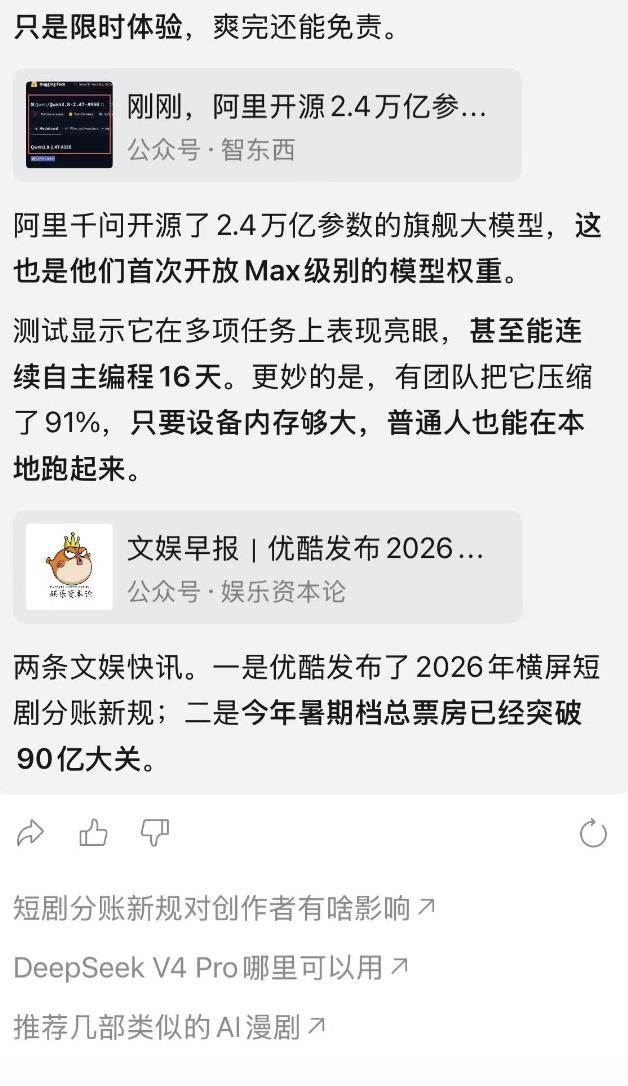
This means that when you write a title later, the core eye-catching information should be placed in a more forward position to avoid being buried in the AI dialog box; your cover image may need to be more concise and direct, so that it can be better displayed as a small thumbnail; the key text information in your main content should be more straightforward and clear; the core viewpoints and selling points that attract clicks should be mentioned and emphasized repeatedly.
Content creation will become increasingly competitive. In the past, we focused on improving the quality of cover images, enhancing the attractiveness of titles, and embedding more popular keywords to get algorithm recommendations. Now, on this basis, you need to further cater to AI's information processing logic.
Even for private domain operations, you need to consider whether certain phrases will be filtered out in the group chat summary.
Second, when creating content in the future, we need to consider users' "scenario demands" so that AI can cite your content when it initiates recommendations.
For example, after I asked Xiaowei to summarize an article about short drama entrepreneurship, a follow-up question option popped up: "Is AI comic drama suitable for ordinary people to get into?" This is a very common follow-up question for ordinary users when browsing content, and it will answer the question after being clicked.
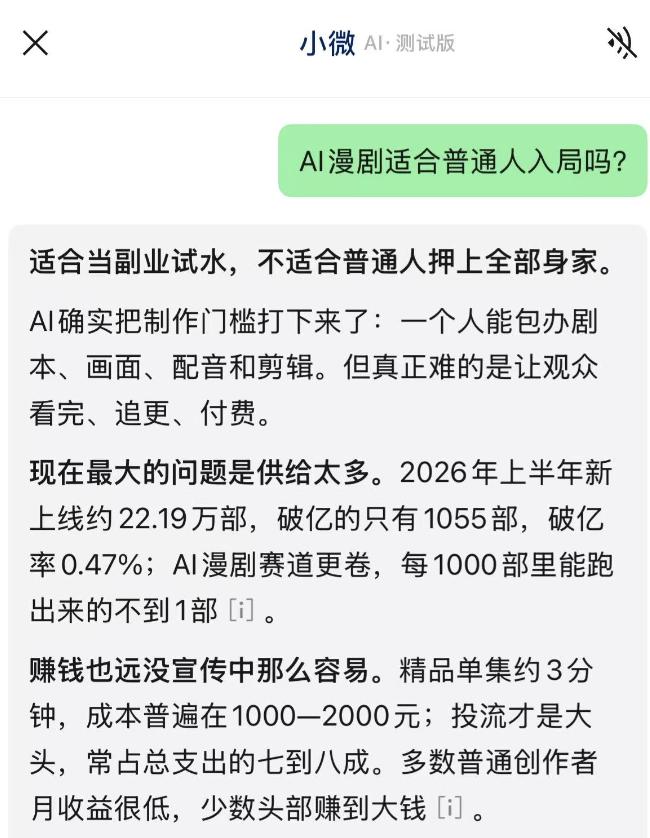
Most importantly, it will recommend relevant articles and videos when answering the question for users to consume further content, which is a brand new traffic entry.
