SK-II has pulled off a stunning comeback, and the middle class has once again played a major part in this success.
Do you usually use SK-II?
Facial Treatment Essence that costs thousands of yuan per bottle and the "Ex-Boyfriend Mask" that sells for hundreds of yuan per piece once made SK-II a byword for luxury skincare products.
Just a few years ago, this top-tier brand also experienced setbacks and stagnant growth, once becoming the most troublesome "burden" dragging down Procter & Gamble's financial performance.
However, in P&G's newly released 2026 fiscal year financial report, this former "pain point" that dragged down the entire beauty division has staged a strong recovery.
What exactly did SK-II go through in the past few years? How did it turn the tide against the odds at a time when the beauty market is already a fiercely competitive red ocean?
SK-II is "Back in Full Force"
Just two or three years ago, SK-II was still stuck in deep trouble and widely predicted to decline by the public.
Externally, it was hit hard by a black swan event. In August 2023, the incident of Japan's nuclear-contaminated wastewater discharge into the sea broke out. The only production site of SK-II's core ingredient PITERA is the Biwa Lake factory in Shiga Prefecture, Japan. Its unique natural water source used to be the brand's golden signature, but it instantly became a fatal weakness of the brand amid the public outcry over nuclear-contaminated wastewater.
Internally, it had exhausted its old advantages. PITERA, the core ingredient of SK-II, has never been upgraded since it was launched in the 1980s. In the same period, the domestic Chinese market has fully entered the "ingredient-focused consumer" era, with emerging domestic brands launching successive marketing campaigns around popular ingredients such as recombinant collagen, Pro-Xylane, and peptides, leaving SK-II with no new stories to tell about its ingredients.
Caught in a dilemma between internal and external troubles, coupled with the shrinking consumption of the middle class, the premium logic of high-end beauty products was challenged. SK-II not only lacked new efficacy support but also was trapped in public opinion controversies, and was crossed out of the option list by many consumers.
From FY2021 to FY2025, the net sales growth rate of P&G's beauty division dropped from 7.9% to -1.7%. For the negative growth in FY2025, P&G stated that it was mainly caused by the decline in sales of its ultra-premium brand SK-II.
However, this brand that had experienced stagnant growth in the past few years achieved a performance surge in FY2026.
In FY2026 (July 1, 2025 to June 30, 2026), P&G's global net sales reached 87.032 billion US dollars, a year-on-year increase of 3.3%, hitting an all-time high.
In this fiscal year known as the "strongest in history", the beauty division where SK-II is located has become the biggest growth highlight among P&G's five major business divisions, with full-year net sales reaching 16.02 billion US dollars, ranking first with a 7.1% year-on-year growth rate, and has recorded year-on-year growth for four consecutive quarters.
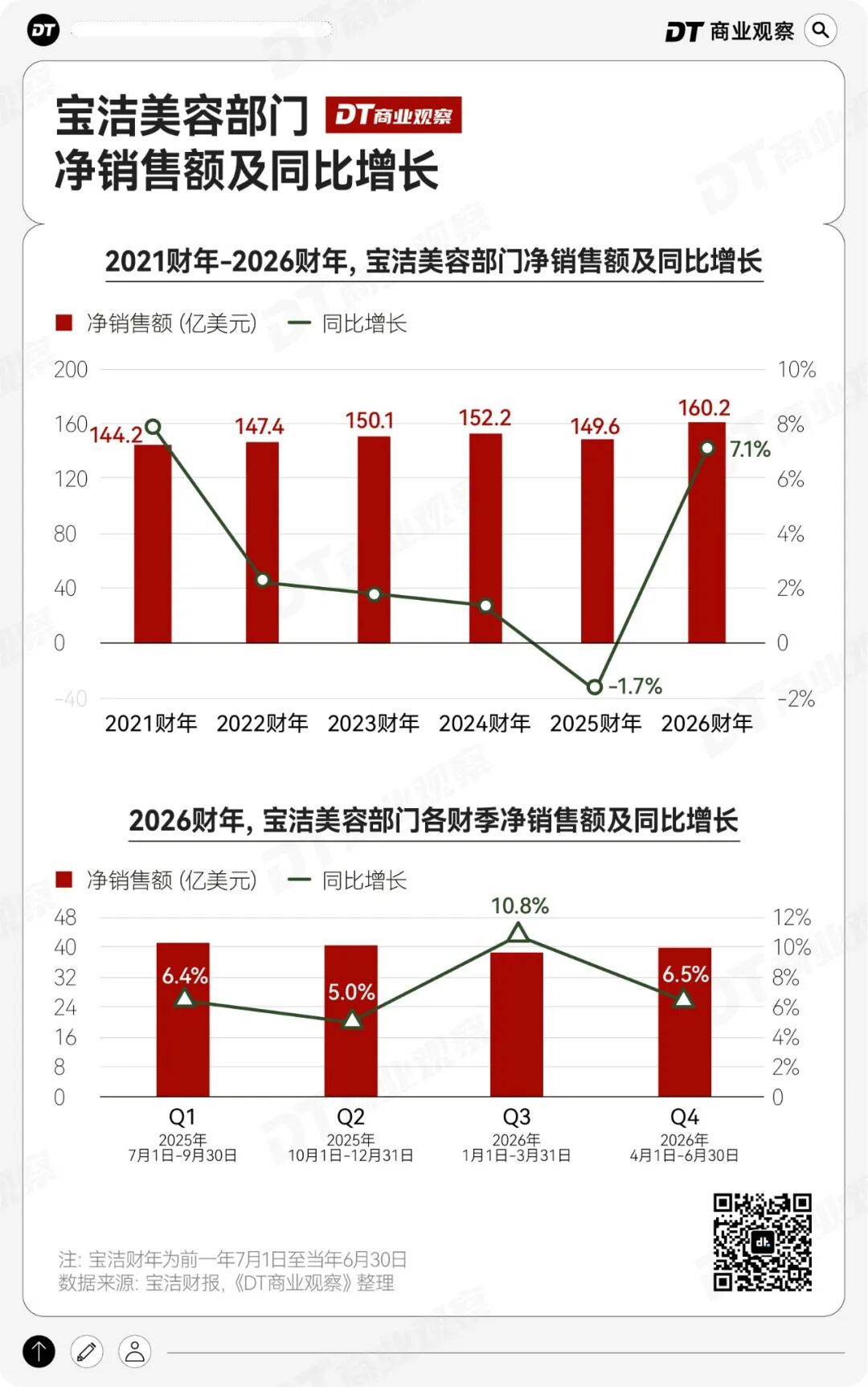
SK-II, which previously dragged down the beauty segment, has become the key to this comeback.
On the FY2026 Q3 earnings call, P&G CFO Andre Schulten stated that SK-II has rebounded, with global sales growing by 18% in the single quarter and 13% in the Chinese market.
At the Q4 earnings call, he used the phrase "continues to shine" to describe SK-II's performance in the Chinese market. Excluding the duty-free channel, SK-II achieved 8% revenue growth in the Chinese market.
How did SK-II make it happen?
When Sales Decline, Make Remaining Customers Spend More
As early as Q2 of FY2026 (October 1 to December 31, 2025), P&G disclosed that the overall sales volume of the skincare category declined, but sales achieved positive growth, and the growth momentum came from "the optimization of high-end product structure and favorable pricing strategy in the Greater China region".
To put it in plain terms: although fewer people are buying, the people who stay spend more money.
At a time when the wallets of the middle class are generally tightening, how to make consumers willingly pay for an expensive essence water? The first trick SK-II uses is "apparent price increase with hidden actual discount" on pricing. It not only makes consumers feel that it is "worth it", but also preserves the brand's "prestige".
First look at the listed prices. In recent years, SK-II has gone through several rounds of price increases. Take the 230ml Facial Treatment Essence as an example. The official selling price was 1,370 yuan in 2018, and now it has climbed all the way to 1,730 yuan.
At the same time, SK-II chooses to use a "gift-with-purchase mechanism" to make products more cost-effective.
In the past, SK-II was often criticized for being "stingy with free samples". On the eve of the Double 11 Shopping Festival in 2022, SK-II appeared on Li Jiaqi's commercial variety show *All Girls' Offers 2*. For a 230ml bottle of Facial Treatment Essence priced at 1,590 yuan, the brand was only willing to give 150ml of free samples, which seemed too "stingy" compared with the crazy concessions of its peers, and it even sparked criticism from netizens at that time.
During this year's 618 Shopping Festival, also in Li Jiaqi's live stream, for a 330ml bottle of Facial Treatment Essence priced at 2,050 yuan, the total volume of free samples also reached 330ml, which is equivalent to "buy one get one free".
Rough calculation shows that the unit price of SK-II Facial Treatment Essence (full-size product plus free samples) during Double 11 2022 was 4.18 yuan/ml, which dropped directly to 3.1 yuan/ml during this year's 618 Shopping Festival, which is indeed much more cost-effective.
Among high-end brands, similar operations are not uncommon. A few years ago, Starbucks never reduced the listed prices on its menu, but consumers could place orders at lower prices through point redemption, coupon purchase and other methods. The core logic is that the discounts brought by various methods give consumers enough cost-effectiveness of "getting a good deal", while the maintenance or even rise of the listed price preserves the brand's tone and high-end perception.
More importantly, this kind of "decency" is strongly linked to SK-II's actual consumption scenarios. Data from Jiong Qian shows that about 20% of SK-II's consumption scenarios on social media are "gifts for festivals and birthdays". In fact, SK-II's main selling products have always been various gift boxes, and in gift-giving scenarios, a high listed price is sometimes an advantage.
However, under the tricky gift-with-purchase mechanism, another kind of sober complaint has also emerged. On social media, some consumers said, "I bought 3 full-size products and got a bunch of free samples as gifts. I hope there can be direct discount prices instead of giving samples."
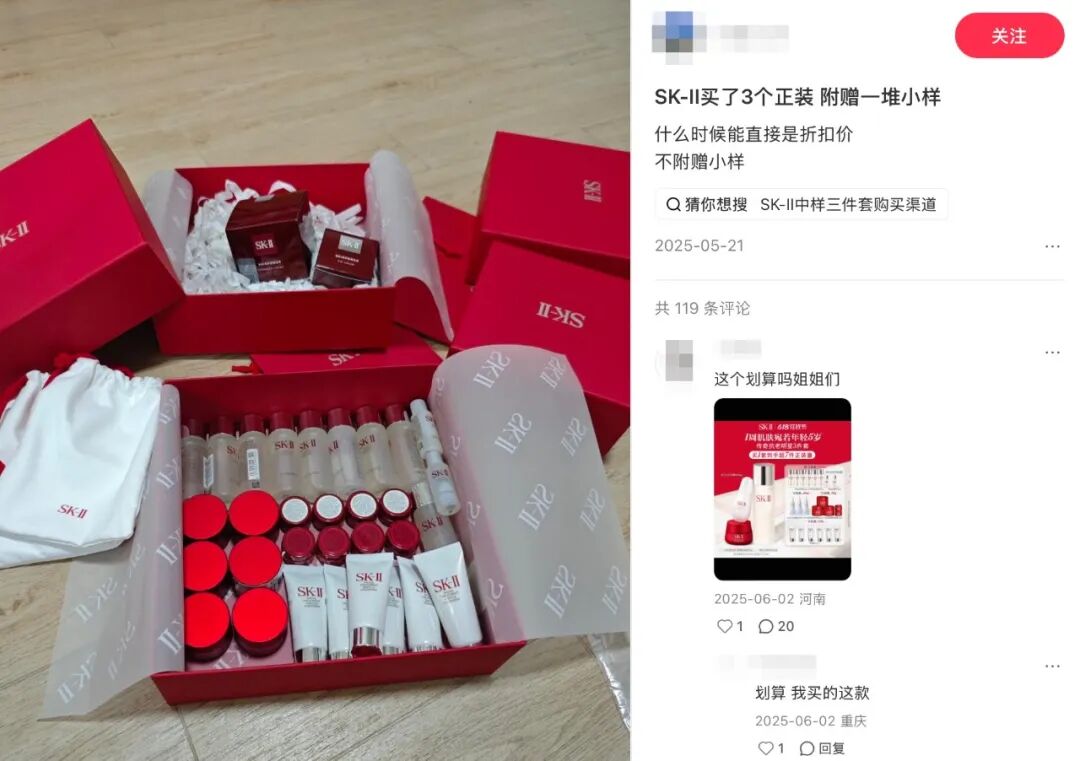
In addition to raising prices, another card SK-II plays to increase customer unit price is to launch an ultra-high-end product line to push up the ceiling of customer unit price.
In September 2024, SK-II launched its ultra-premium product line "LXP Collection", and signed mature artists including Zhu Zhu and Carina Lau to tilt the brand towards a more extreme luxury attribute.
In terms of price, the 150ml LXP Gold Essence is priced at 3,290 yuan, which is equivalent to 21.9 yuan/ml, nearly three times that of the regular Facial Treatment Essence; the 15g LXP Gold Eye Cream is priced at 2,900 yuan, with a unit price per gram as high as 193.3 yuan/g, more than four times that of SK-II's R.N.A. Power Eye Cream; the 50g LXP Gold Cream is priced at 3,990 yuan, which is 10 yuan more expensive than Helena Rubinstein's Black Bandage Cream for the same specification, directly breaking into the territory occupied by a very small number of top luxury brands such as La Prairie.
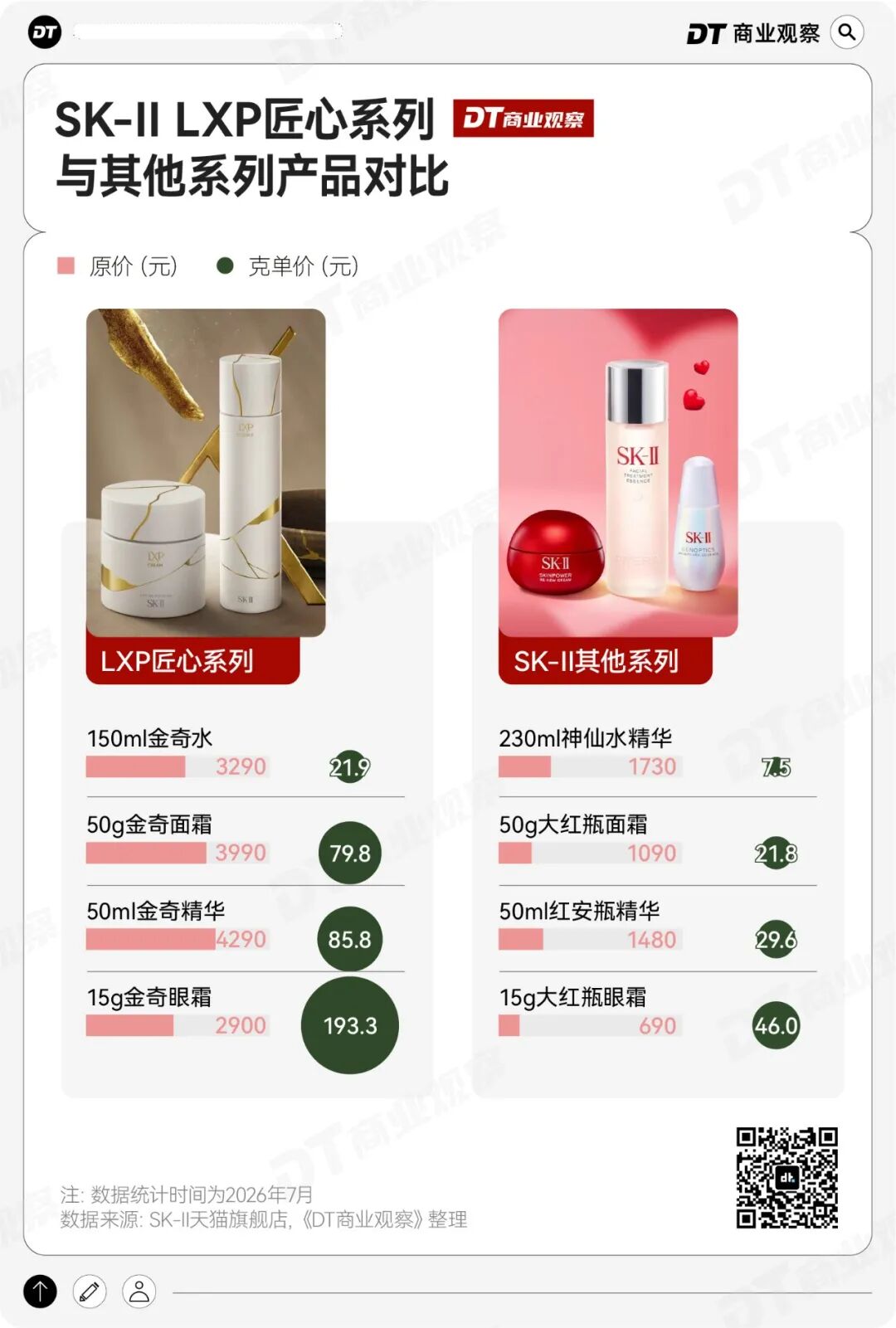
Although the LXP line has no new story to tell in terms of ingredients, it only increases the concentration of PITERA, the core ingredient of the regular Facial Treatment Essence, to 8 times, this set of high-end narratives still successfully helped SK-II filter out a group of higher net-worth customers.
At the Q4 earnings call, Andre Schulten clearly mentioned that the continuous promotion of the LXP line is driving the continuous growth of SK-II's market share in China.
On the one hand, it raises the lower limit of customer unit price through price increases, and on the other hand, it raises the upper limit of customer unit price with the luxury line. With this combination of punches, SK-II achieved positive sales growth even when sales volume declined.
Boosting Public Awareness with Marketing, but Profit Margin is "Eroded"
Increasing customer unit price is only one of the cards SK-II uses to maintain sales.
When there are no new stories to tell about ingredients, to make consumers willingly pay for high premiums, a new set of narratives beyond functions must be created. SK-II has played another card: doing content marketing, focusing on conveying brand values.
The beauty industry has long been driven by marketing, and the average marketing expense of the industry accounts for about 30% to 40% of revenue. Specifically, SK-II's marketing is roughly carried out in two lines:
On the one hand, it is the cross-generational "encirclement" of the star matrix. In the first half of 2026, SK-II launched a dense offensive in artist cooperation, announcing 5 cooperative artists in just half a year. It not only signed Carina Lau, Zhu Zhu and Ouyang Nana as three brand spokespersons, but also extended cooperation with Cyndi Wang as "Crystal Clear Wish Spokesperson" and Jin Jing as "Brand Friend".
The brand bets on mature artists on the one hand, and invites post-2000 artists Ouyang Nana and Zhang Zifeng on the other hand, to create the micro-variety show *My Perfect Match, Born Free*, attracting young fans and completing customer group coverage from the post-1960s generation to the post-2000s generation.
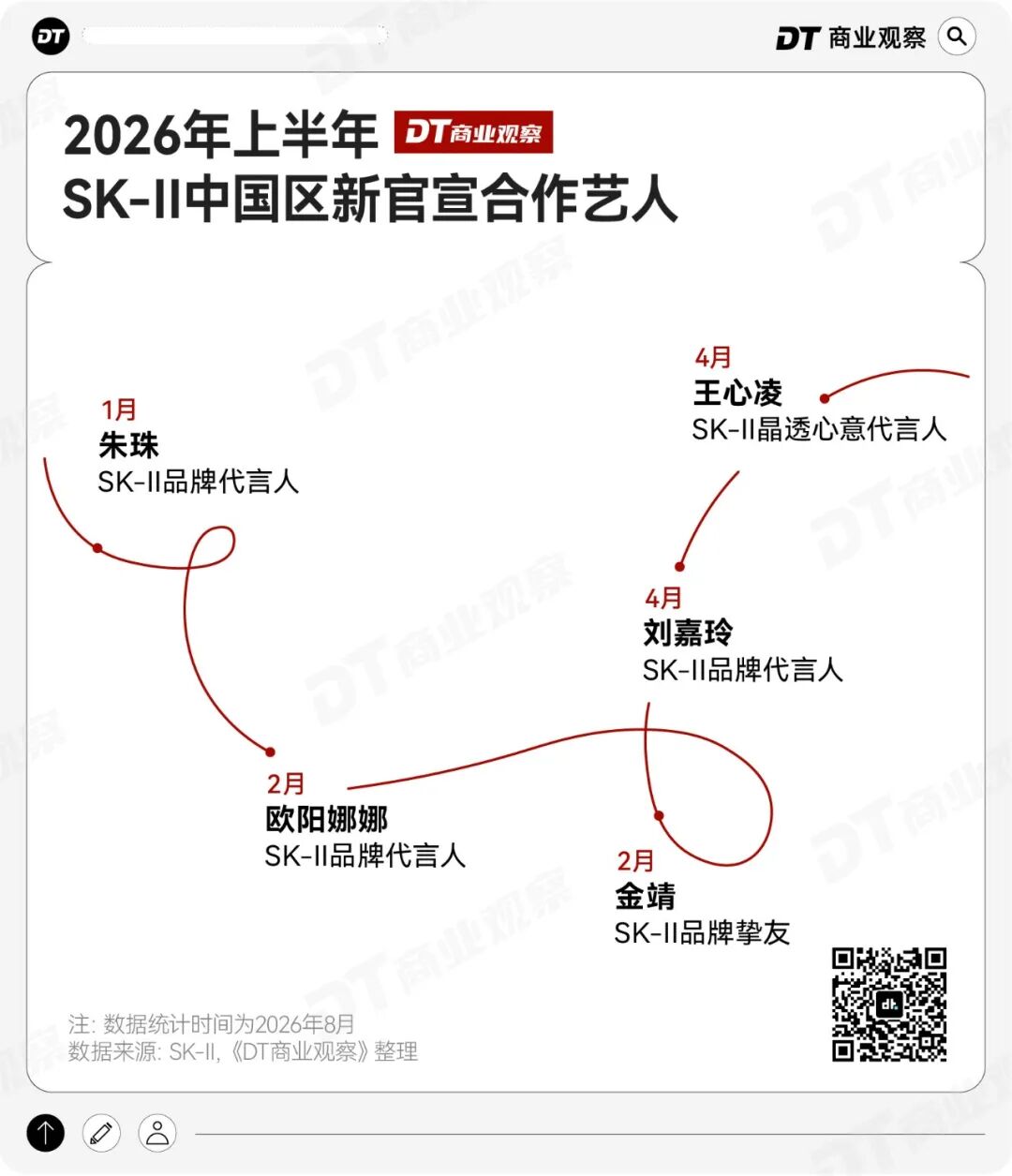
On the other hand, SK-II exerts its brand narrative skills to carry out in-depth emotional marketing.
As early as 2016, SK-II hit the hotly discussed "leftover women" topic at that time with its phenomenal commercial film *Marriage Market Takeover*. The 2019 commercial film *Why Are They Not Going Home for the New Year?* targeted the social pressure that single women face when going home for the Spring Festival.
According to Bloomberg, Markus Strobel, then Global CEO of SK-II, revealed that within 9 months after the release of *Marriage Market Takeover*, SK-II's sales in China increased by 50%. This shows that once the values conveyed by the brand can arouse emotional resonance, it will be transformed into a strong willingness to purchase.
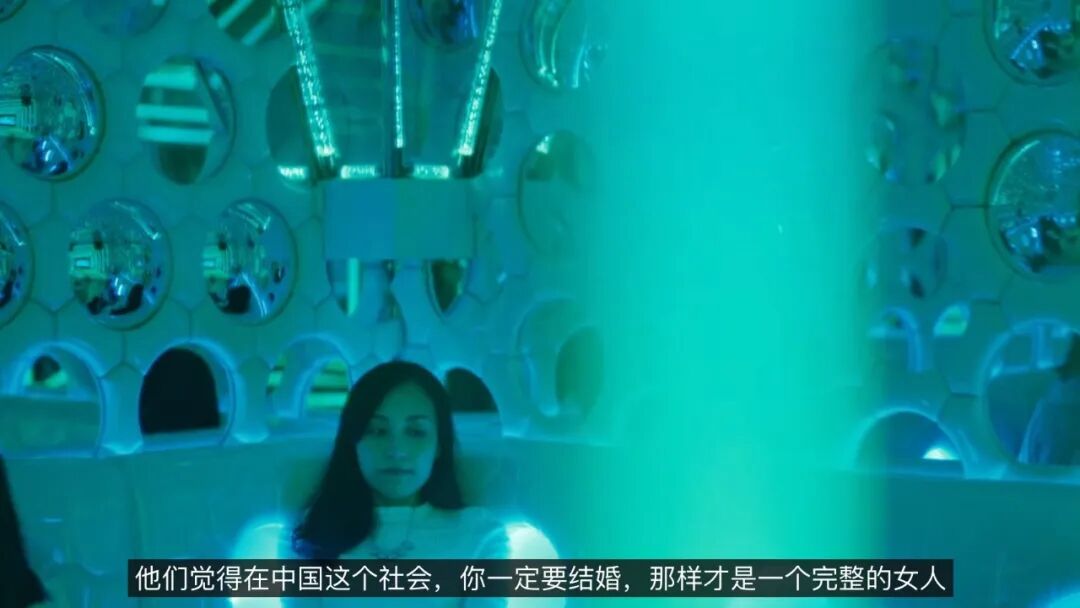
(Image source: SK-II *Marriage Market Takeover*)
Recently, SK-II's value marketing has begun to shift to women's self-awakening and inner exploration.
This year's International Women's Day, SK-II shot the commercial film *Wish You More Than Happiness* for new mom Jin Jing, and arranged a dialogue between Lu Yu and her. The commercial film does not portray women as independent and powerful "super moms", but tears apart the perfect imagination and truly shows the troubles they face after becoming mothers.
This narrative shift from "fighting external pressure" to "accepting inner emotions" reflects the dilemmas and thoughts of women in different eras. By capturing current social emotions, SK-II builds an emotional connection with consumers.
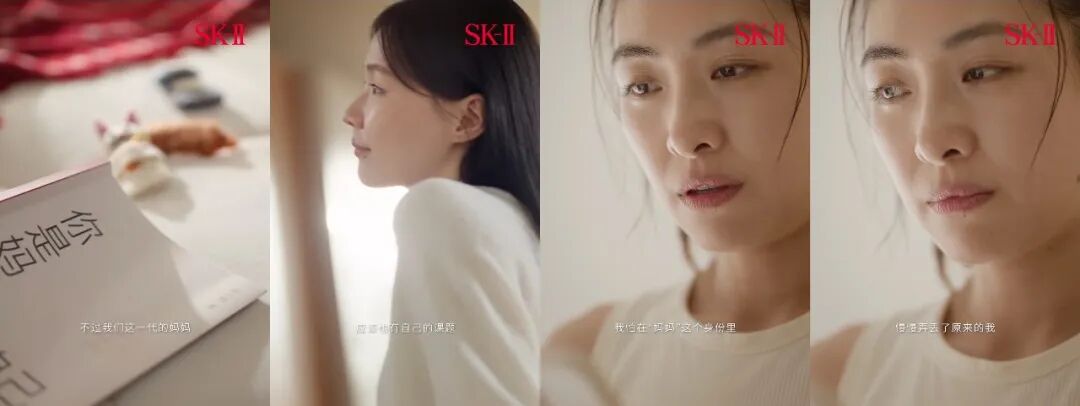
(Image source: SK-II *Wish You More Than Happiness*)
Although celebrity endorsements and emotional marketing can bring revenue growth to SK-II, they themselves require a lot of real money to invest. Coupled with the "apparent price increase with hidden actual discount" in product pricing mentioned earlier, it directly leads to a decline in profit margin.
In the past, the beauty division has always been P&G's "profit cow", with gross profit margin consistently higher than the average level, and net profit margin also outperforming the group's overall level for a long time. But in recent years, this hematopoietic advantage has been continuously eroded.
From FY2022 to FY2026, the net profit margin of the beauty division dropped from 21.4% to 16.7%. In FY2025, the net profit margin of the beauty division was even surpassed by the group's overall level for the first time, changing from the original growth engine of the group to a "burden" that drags down the overall performance.
By FY2026, this blood loss process became more severe. From Q1 to Q4, the net profit margin of the beauty division dropped from 21.2% to 11.3%. P&G directly pointed out in the Q3 financial report that part of the growth of the beauty division is being offset by "increased product operation investment in the Greater China region".
The so-called product operation investment refers to all relevant expenses incurred to improve the visibility, display effect and sales conversion rate of products at retail terminals (including online and offline).