China's physical fitness examination has nurtured a group of "disruptors" in the sports brand industry.
Staying on the right track and moving forward is victory. This saying is gaining even more weight in the current sports consumption market.
In recent years, with the implementation and advancement of physical examination policies for middle school entrance exams, the anxiety of "improving scores in physical tests" has stimulated market demand, and related brands and products have sprung up like mushrooms, giving rise to a booming market.
Data from Douyin E-commerce shows that during the "Run into Spring" campaign last year, the sales of physical test running shoes increased by 976% month-on-month. Volandi, which recorded only 3 million yuan in sales in 2022, saw its sales surge to over 500 million yuan three years later driven by physical test products, and now maintains a 200% growth rate.
According to a report by Economic Observer, Anta's Mahe 4 product family alone once achieved annual sales of 500 million yuan, and the subsequently iterated Mahe 5 and Mahe 6 are also highly sought after by student groups.
However, as the market moves past the initial stage of wild growth, consumers become more rational and competition among similar products grows increasingly fierce, emerging brands that started their business with physical test products have entered the next stage of thinking: besides selling products, how much commercial potential can they tap from this education system with distinct Chinese characteristics?
01 Product as the Pioneer, Building the Influence Pyramid Upward
If sports brands were pushed onto a path of "making easy money" when the middle school entrance exam physical test policy was first implemented a few years ago, now with more and more players entering the track, brands need to provide more convincing reasons for consumers.
At present, brands that have laid out physical test products can be roughly divided into several categories: traditional domestic brands such as Anta and Xtep; established professional track and field brands such as Do-win and Hiles; new brands that rose with the physical test dividend such as Volandi, Sonicat, and Catapultor; international brands started relatively late in this sector but are catching up fast.
Like many other sports, although the vast majority of sales scenarios for physical test products occur in mass consumption, professional endorsement is indispensable. The top of the pyramid consists of sponsorships for top events and extreme challenges, the middle layer covers endorsements from stars and professional athletes, followed by word-of-mouth recommendations from KOLs. Brands build the influence pyramid layer by layer, which ultimately reaches ordinary consumers.
Under fierce competition, what brands need to do has long been far more than just "selling a pair of sports shoes for children to wear during PE classes and exams".
From the scenario perspective, physical test events including sprint, middle-distance running, long jump and others are all track and field sports. Among the sponsorship rights of track and field sports, the top-level sponsorship right of the Chinese National Athletics Team has long been held by Nike, but the landscape of provincial teams below has begun to loosen.
Previously, Nike sponsored many strong provincial teams such as Guangdong and Zhejiang, but in the recent National Athletics Championships, many teams have switched to equipment from brands like Adidas, Li-Ning and other emerging brands.
Looking at traditional sports brands, Adidas has secured the Shandong team, which is not only a major track and field province but also influences a large number of students taking entrance exams — recently, the brand launched the "WindGlide Series" specially built for physical test scenarios, making it one of the few international brands that focus on the physical test track.
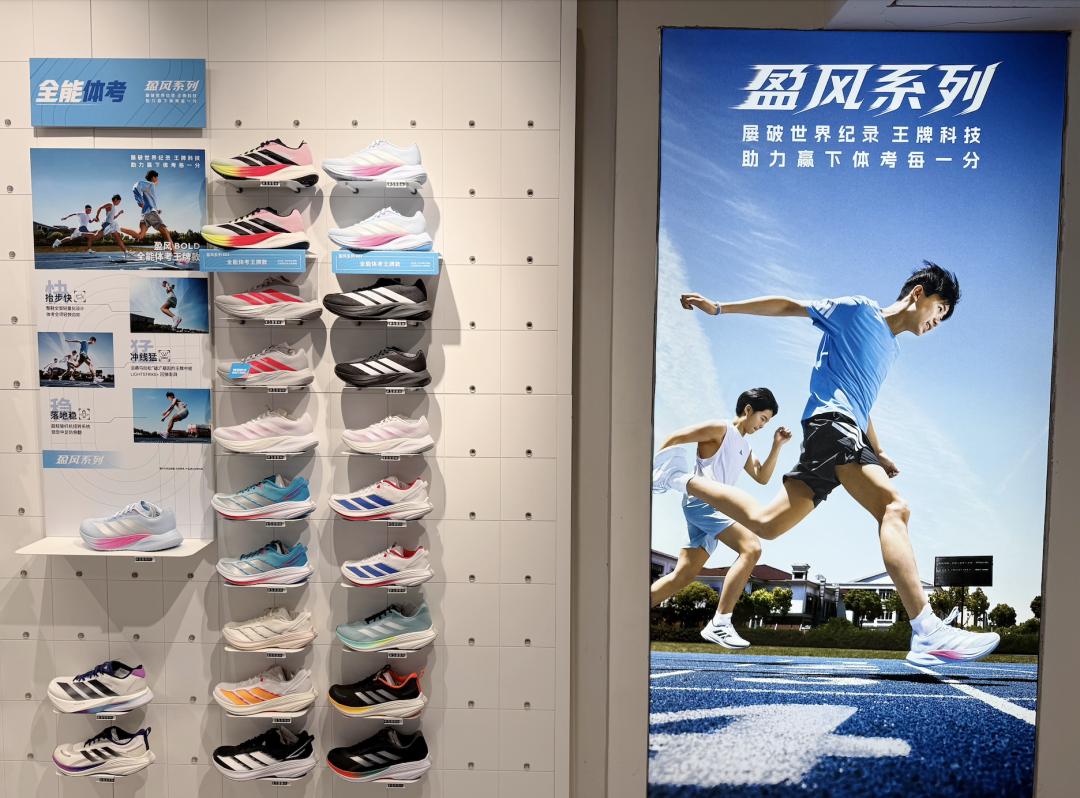
Adidas' "WindGlide Series" is placed in the core position of stores
As for emerging brands, Sonicat, founded in 2022, has partnered with Heilongjiang provincial team; Catapultor, founded in the same year, added Xinjiang to its existing Hubei and Hainan provincial team partnerships; Volandi holds partnerships with Tianjin and Jiangsu, and is about to officially announce its signing with the third provincial team; Pairsoul retains its cooperation with Shaanxi provincial team...... As a result, emerging brands have already obtained resources of multiple provincial teams.
Fundamentally, these brands have a short founding history and are still building their reputation, so compared with traditional brands, they have greater demand for professional endorsement and exposure.
Not only in the cooperation with professional teams, emerging brands are also accelerating their layout in the event sector. Sonicat is the title sponsor of the SJD Track & Field Open, and as the official partner brand of Guangdong Athletics Association, it also sponsors multiple track and field events; Catapultor was the exclusive title sponsor of the 2024 WSE Track & Field Open; Volandi has created its own event IP, the TKS Track & Field Open.
By cooperating with universities, planning folk activities, and launching elite track and field training camps, the chain from professional level to grassroots level is gradually opened up. Labels such as Beijing Sport University Track and Field Certification, Exclusive for Provincial Teams, and World Athletics Certification have appeared on product pages.
More and more "high-end" titles are being associated with the originally affordable and mass-oriented physical test products.
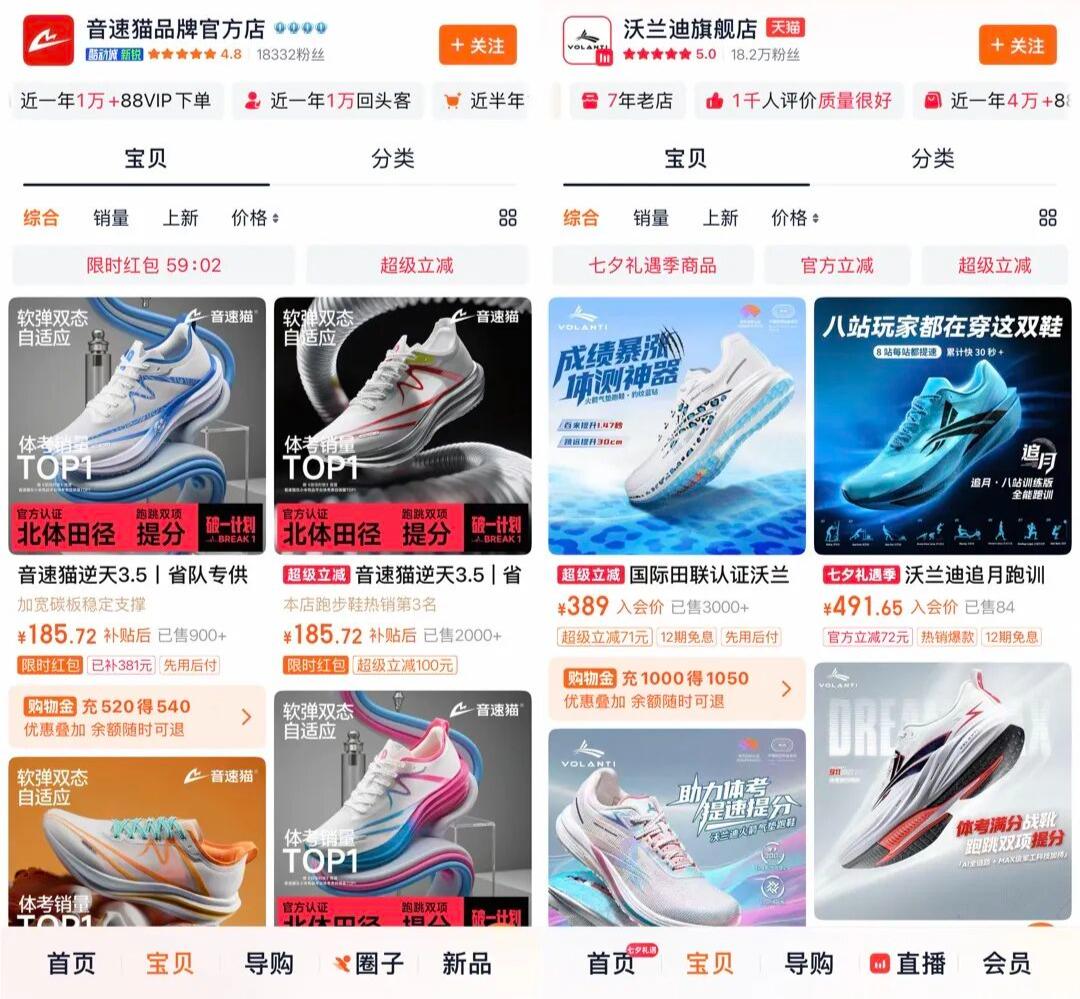
Various "high-end" labels on brand product pages
02 Horizontal Expansion: Physical Test Brands Step Out of Campus
For emerging brands, after entering from the segmented track and building core product competitiveness through professional brand stories, they have begun to set their sights on a broader market.
All along, products specifically targeted at student groups are not the basic business of traditional sports brands. After all, the population base is small and the price sensitivity is high, so doing business for adults is the mainstream for traditional sports brands in business development.
Track and field sports also belong to the category with low commercialization degree. For running events, mass participation and commercial value of road running events such as marathons are much higher.
For traditional comprehensive brands such as Anta and Xtep, even if they keep their physical test products at a small but high-quality scale, it is not a big problem. A running shoe practitioner explained that in the early stage of market development, physical test shoes are styles selected by brands from a large number of shoe models that are suitable for students to wear in daily life and during physical tests. These styles usually have higher cost performance, with TPU support in the midsole. To adapt to the playground with many turns, the outsole is close to a spike design, the left and right parts of the outsole are separated for easier turning, and the last is slightly narrower.
"Compared with other running shoes, physical test shoes do have certain differentiation features, but the supply chain technology reserve is sufficient. It only depends on whether the brand's design demand requires procurement, so the technical threshold is not high."
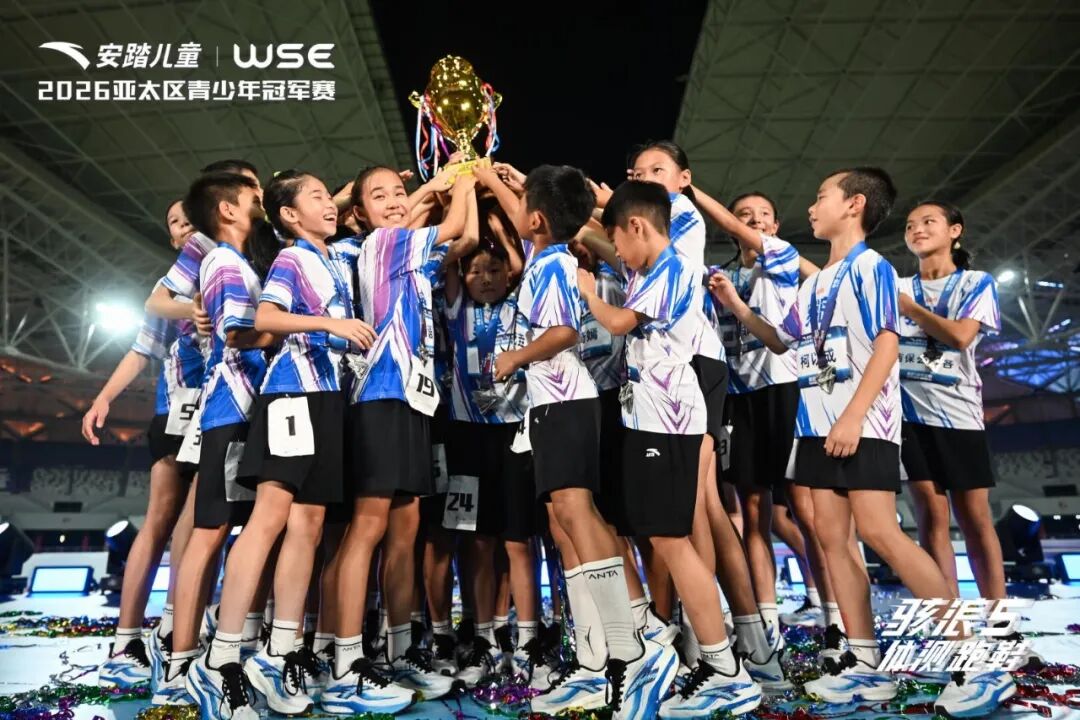
Driven by market demand, traditional sports brands are also making efforts in the physical test track. Anta Kids has reached a strategic cooperation with the WSE Track & Field Open and launched its latest physical test running shoe, Hailang 5, during the event period
However, for emerging brands such as Volandi, Sonicat and Catapultor, most of their revenue comes from physical test shoes. Expanding product categories and serving more mass consumers has become their common ambition at present.
Take Volandi as an example. In addition to physical test products, the brand has dabbled in marathon running shoes and basketball shoes in recent years, and recently entered the fitness circle to launch a pair of HYROX shoes. Zhou Jian, founder of Volandi, introduced that 80% of Volandi's revenue comes from physical test products, and other categories perform well with almost no unsalable products. Football shoes and badminton shoes are also under synchronous testing.
Among them, the basketball shoes launched at the end of last year were originally only designed to meet students' sports needs outside physical tests, but unexpectedly helped the brand expand its audience group.
"The audience of physical test products is under 18 years old, but we can see from the backend that consumers over 30 years old will also buy our basketball shoes, which has lifted our average audience age to 24 years old," introduced Zhang Qiaoyang, head of Volandi brand. As the off-season for physical test products, winter and summer vacations are perfectly filled by the sales of basketball shoes.
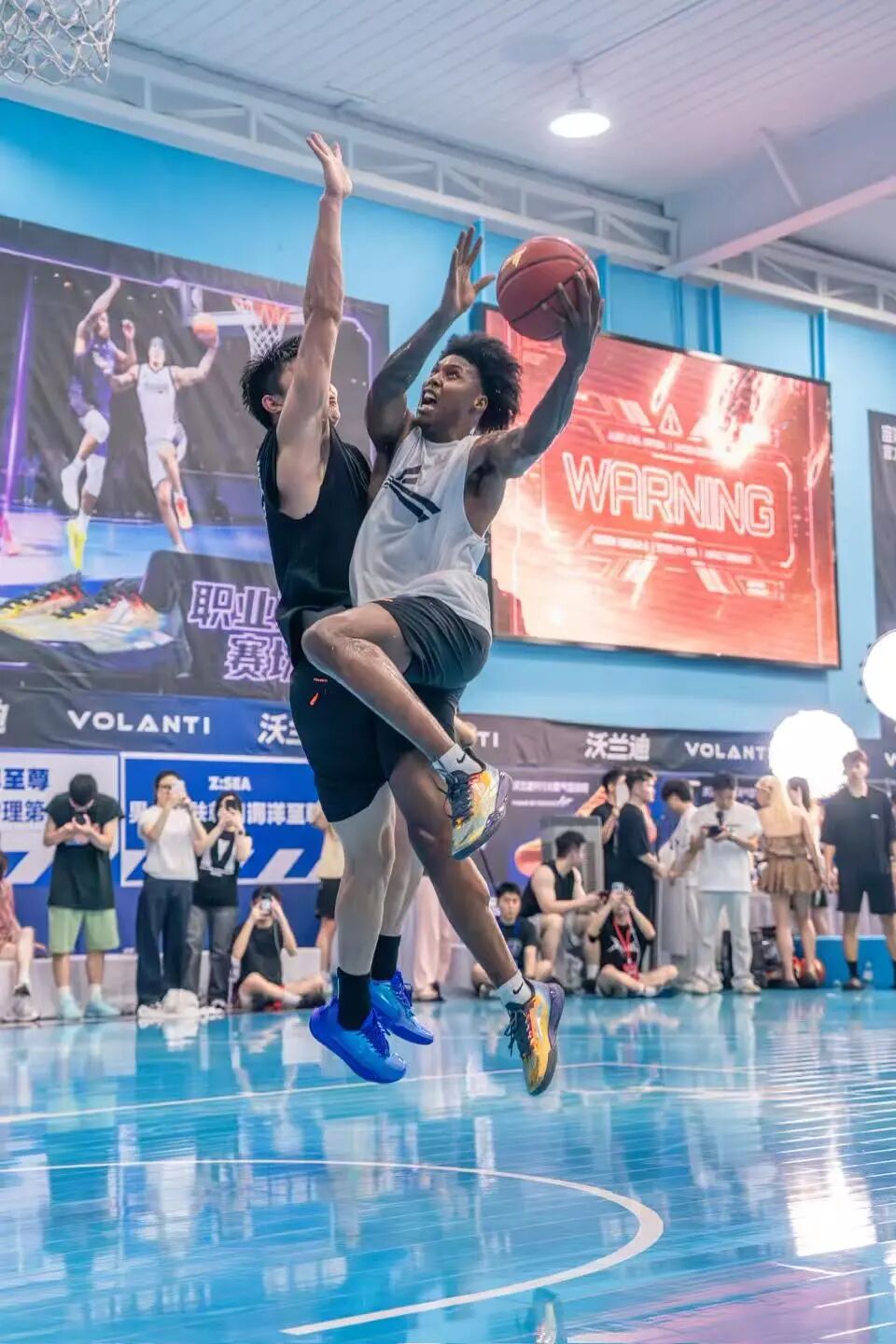
Source: Volandi
Brands such as Sonicat and Catapultor have mainly expanded to marathon running shoes, since they are both running activities, the transition from physical test scenarios to road running is more natural. Catapultor has not only recruited a marathon team, but also recently launched an activity of 100 people testing its new shoes.
Some adult consumers said that as the technological barriers between different brands in the market are broken, there is almost no big difference in experience between Volandi's running shoes (without carbon plates) and running shoes of other brands when worn daily. However, many sports brand practitioners said that these emerging brands are still in a state of polarized reputation in the industry, no matter in terms of product design or marketing methods.
While expanding their business, how to build a good brand is still a required course for these new brands.
03 The Reversed Commercial Path Is Becoming More and More Frequent
In the development of traditional sports brands, the commercialization path is often "from large to small", but with the popularity of vertical brands in recent years, this development path is changing, and may even be reversed.
The so-called "from large to small" means, first, the target consumers extend from adults to children, and second, brands start from mass sports and then develop more segmented businesses.
Especially among domestic brands, the four listed brands entered the market in the early years with travel shoes, trendy casual sports shoes, mass running shoes and other products. As the company with the earliest launch of children's products among them, Anta launched Anta Kids 17 years after the establishment of the brand.
Specifically for brands that started from campus scenarios and track and field events, it is not easy to broaden their boundaries, but the situation seems to be changing.
Tracing back to the past, Do-win and Hiles started with track and field footwear and apparel, and were regarded as "exclusive brands for sports students" by many people. Now they have expanded to more mass running events, but both brands were founded in the 1980s, and it was 30 years later that they marched into the mass running market. However, Volandi's expansion to basketball, road running and fitness has only taken place in just two years.
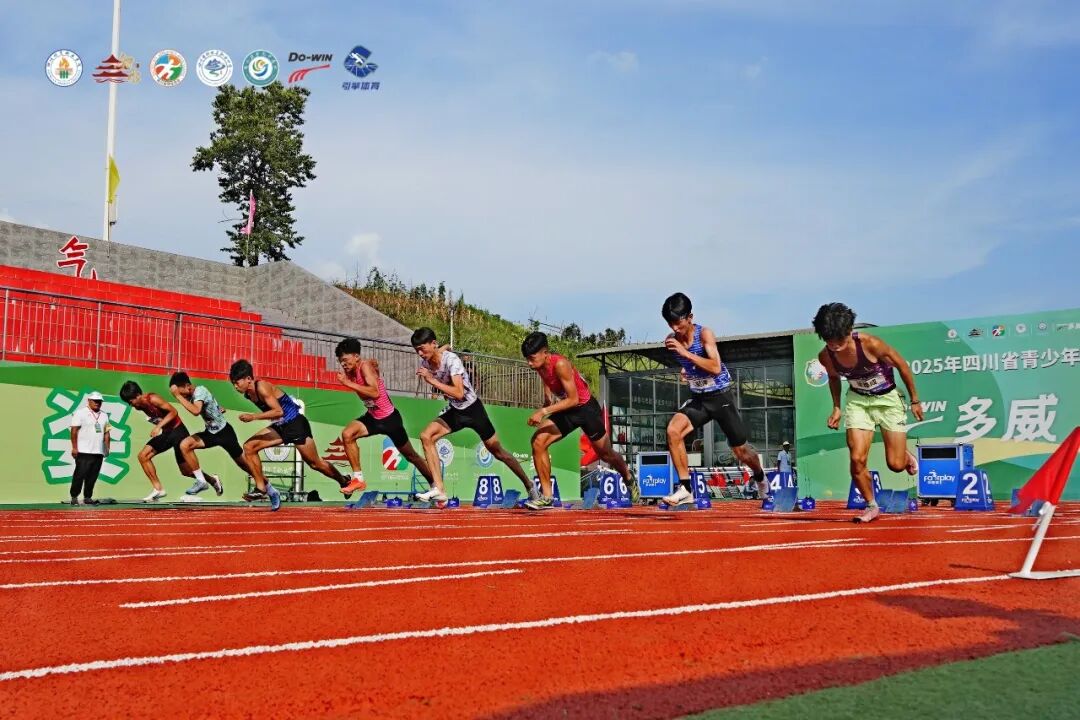
Do-win, the official sponsor of footwear products for the reserve talent base of the Chinese Athletics Association
In another niche field — children's yoga wear, such cases also appear. Moody Tiger has launched adult sizes and parent-child styles, and even created POLO shirts for fathers.
Admittedly, the great popularity of vertical brands in recent years has provided opportunities for this "reverse development". lululemon, which started with yoga, and Descente, which started with skiing, both show a trend of developing into comprehensive brands. But besides that, there are other reasons:
First of all, the influence of the youth group cannot be underestimated. Especially in the long run, they will grow up to be the main audience of brands, so occupying their mindshare when they are teenagers is not too early.
As the former CEO of Anta Brands once asked in an interview with *China Entrepreneur*, "My son is on the school basketball team, a semi-professional player. If he doesn't wear Anta from childhood, will he choose Anta when he grows up?"
Secondly, China's strong supply chain provides the foundation for the transformation and expansion of sports brands. Of course, the premise is that the brand has sufficient capital and sufficient control over supply chain resources.
Before founding its own brand Volandi, Zhou Jian, who was a track and field athlete himself, was once one of the four major distributors for sports brands such as Nike and Adidas in China's track and field sector. This experience has accumulated capital and supply chain resources for Volandi.
"Track and field is the mother of all sports. The genes of track and field venues and student physical tests are our proudest assets. In fact, consumers now hardly care about the origin of the brand, they only care about whether the product is good enough," Zhou Jian said.
With more and more diversified commercial development paths, the world of sports brands has become more exciting.
However, it still takes longer time to witness how large a business they can finally achieve.
This article is from the WeChat official account "Sports Industry Ecosystem", written by ECO KETI, and published by 36Kr with authorization.