Going head-to-head against Xiaomi CarIoT, Fangchengbao has reserved Pin ports and screw threads. Is the in-vehicle ecosystem really going to be unified?
Is Fangchengbao starting to learn from Xiaomi and develop ecological accessories for car interiors?
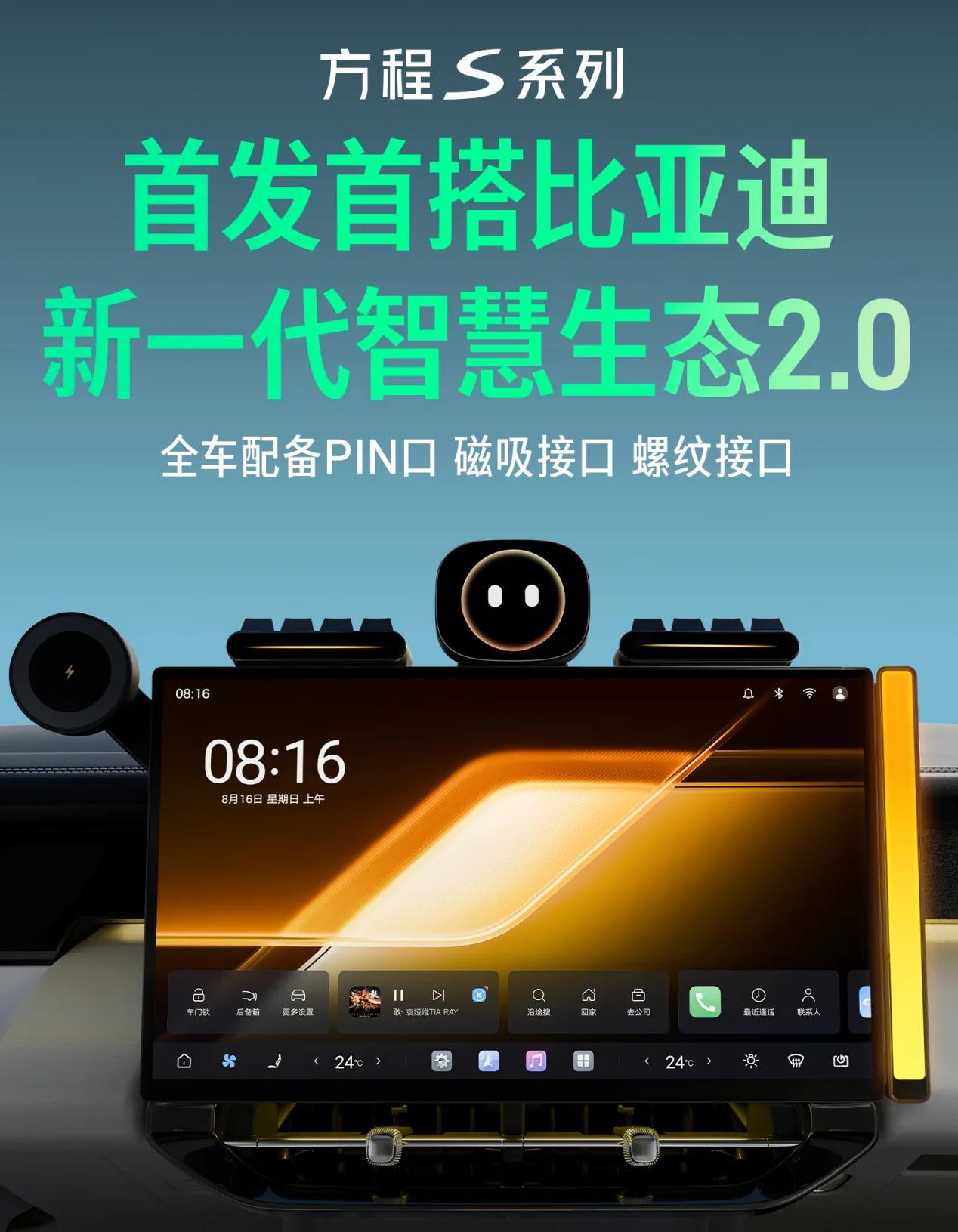
On the evening of August 10, Fangchengbao officially announced via its official Weibo account that its new Fangchengbao S series will be the first to be equipped with BYD Smart Ecosystem 2.0. The attached picture under the post shows that the entire Fangchengbao S series is fitted with PIN ports, magnetic suction interfaces, threaded interfaces and other ports, and also displays ecological accessories such as magnetic wireless chargers, sound-activated ambient lights, and DIVA smart dials.
(Image source: Fangchengbao)
It is not hard to see from the picture that this set of smart ecological accessories on the Fangchengbao S series has certain similarities with the expansion ecosystem on the Xiaomi SU7.
This change of the new model shows that car manufacturers' follow-up of in-vehicle ecosystems is no longer limited to installing several 1/4-inch screw ports in the car, but has begun to try more diverse combinations.
As a leading brand among domestic car manufacturers in China, what signal does BYD send out by taking the lead in following up this type of ecosystem?
Following Xiaomi's CarIoT ecosystem! BYD Smart Ecosystem 2.0 is installed on vehicles
As a personalized brand under BYD, Fangchengbao has actually been exploring in the direction of personalization and youthfulness since its establishment, and some relatively personalized configurations were first launched on Fangchengbao models.
For example, the Lingyuan intelligent drone system jointly developed by BYD and DJI last year was first mass-produced and installed on the Fangchengbao Bao 8. There are also the rotating shaft bracket interface on the back of the front seats that debuted on the Fangchengbao Titanium 7, and the official trendy modification plan launched on the Fangchengbao Titanium 3, and so on.
It can be said that many of BYD's innovative ideas are first tested on Fangchengbao models.
The BYD Smart Ecosystem 2.0 equipped on Fangchengbao this time may follow the same strategy: it will be piloted on Fangchengbao first, and then gradually promoted to all brands after achieving good results.
In addition to the Fangchengbao S series, the recently pre-sold Denza Z9S is also equipped with similar ecological configurations, but compared with the Fangchengbao S series, it supports fewer add-on accessories, only the smart ecological screen above the central control screen, the sound-activated ambient lights on both sides of the screen, and the 1/4-inch screw port that is widely used by most brands.
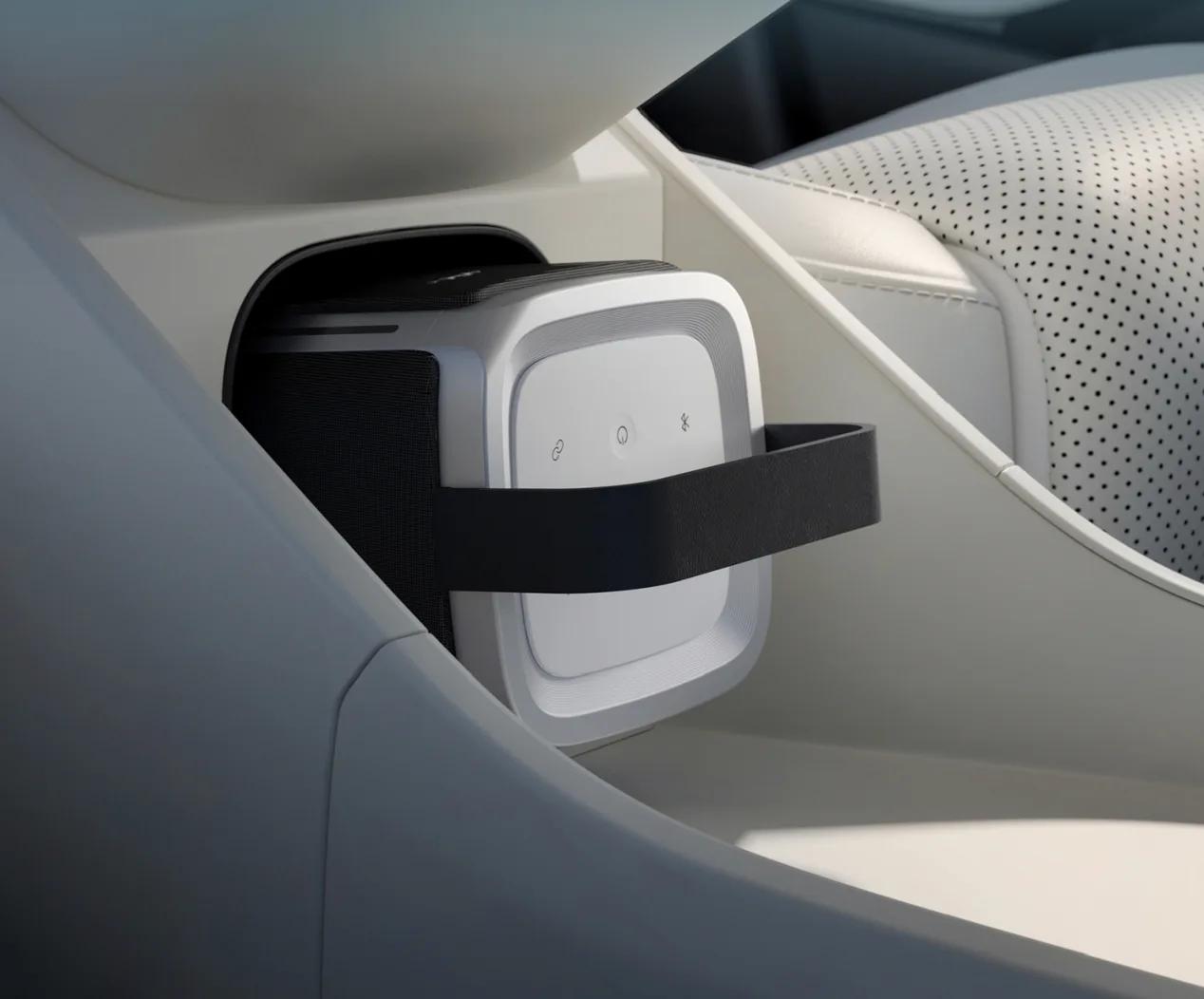
The Fangchengbao S series has almost learned all kinds of ecological interfaces equipped on the Xiaomi SU7, such as wireless chargers connected to the screen contacts, smart dials, sound-activated ambient lights, physical buttons, portable speakers in the armrest box area, magnetic glasses cases, magnetic tissue boxes and so on, which is a further step compared with the Denza Z9S.
(Image source: Fangchengbao)
For Fangchengbao, equipping these new ecological accessories on the Fangchengbao S series can not only expand its personalized and playful attributes, but also help models of the same brand and the entire BYD group to test them first, so that this ecosystem can be better popularized.
Seeing this, some people may ask, why didn't BYD choose to develop a completely new ecosystem solution from scratch, but chose a solution that has already been implemented by other players in the industry?
The reason is simple: adopting a solution that has been verified in the industry can reduce the uncertainty in the exploration process for BYD. Compared with building a complete ecosystem from scratch, drawing on mature ideas can find functions that users really need faster, avoiding the situation of "innovating for the sake of innovation" in the direction exploration stage.
In fact, as early as the 2024 Beijing Auto Show, Lei Jun and Wang Chuanfu had exchanged views on the unification of in-vehicle ecological interfaces. Lei Jun said that ecological accessories allow users to customize the cockpit just like decorating a house, and he hopes the industry can unify in-vehicle ecological standards to realize cross-brand accessory compatibility.
Unexpectedly, more than two years later, BYD has also equipped its Fangchengbao brand with similar ecological configurations. Perhaps such freely combinable ecological configurations will gradually be accepted by more brands and installed on more vehicles in the future, just like 1/4-inch screw ports?
From 1/4-inch screw ports to diverse ecosystems, is the in-vehicle ecosystem really going to be unified?
When talking about the personalized in-vehicle ecosystem, the 1/4-inch screw port is an unavoidable topic.
The history of 1/4-inch screw ports can be traced back to the 1940s, but it has only become popular in the automotive industry for less than two and a half years. Before that, 1/4-inch screw ports were mostly used as general interfaces on devices such as cameras and tripods.
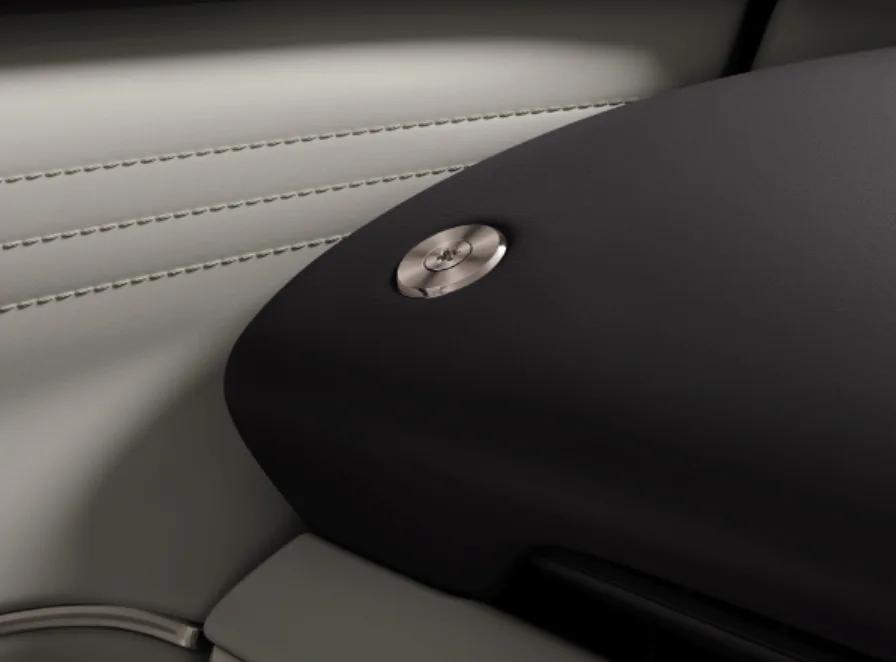
However, the launch of the Xiaomi SU7 changed all that. Since the SU7 made 1/4-inch screw ports standard in the automotive industry, the automotive industry has followed up this configuration one after another, and new models of brands such as Voyah, Hongmeng Smart Mobility, Toyota, BYD, and MG are all equipped with it.
(Image source: Xiaomi)
Dianchetong (ID: dianchetong233) also put forward a view in previous articles that the 1/4-inch screw port is very likely to become the USB-C interface of the automotive industry in the future.
Now that 1/4-inch screw ports have been continuously popularized in the automotive industry, how far is it before the popularization of in-vehicle external ecosystems?
Judging from the phenomenon that similar ecological configurations are installed on the Fangchengbao S series, the industry may have begun to explore and follow up Xiaomi's similar diverse custom accessories, and many models may use this as a selling point for promotion in the future.
But different from 1/4-inch screw ports, the in-vehicle external custom accessories are not mature standard interfaces placed in the car, but are originally created by Xiaomi from scratch.
This means that even if more car manufacturers choose to follow up such configurations in the future, they will basically be in a state of "each doing their own thing": accessories of each brand can only be used within the same brand, cannot be used across brands, and may even not be used across different models of the same brand. The compatibility of accessories is greatly reduced, and the playability is also reduced.
Therefore, if the automotive industry can unify interfaces and protocols like the mobile phone industry in the future, eliminate physical and software barriers, and realize high interconnection between vehicle systems and accessories of different brands, the playability of vehicle interiors in the future may be much more interesting than it is now.
At the 2024 Beijing Auto Show, when Lei Jun exchanged views with executives of other car manufacturers, he also put forward an initiative for the whole industry to unify in-vehicle ecological interfaces to avoid redundant work.
However, for more than two years, car manufacturers have not followed up a large number of custom accessory interfaces on the front row, and most of them only stay at 1/4-inch screw ports and magnetic suction points. On the contrary, for positions such as rear row tablets and trunk slide rail kits, brands including BYD, GAC Toyota, Great Wall, and Zhengzhou Nissan have chosen to adopt Xiaomi's CarIoT ecosystem.
This can not help but remind people of the interaction reform in the mobile phone industry in the full-screen era.
In the non-full-screen era, Android mobile phones generally relied on the "three navigation keys" to complete core interactions. After the full-screen design came out, there was no room for physical keys, and virtual keys took up display space, so major manufacturers explored gesture solutions one after another.
Among them, the double-side return logic implemented by Xiaomi MIUI has become one of the most recognized solutions in the Chinese market because it is intuitive and has low learning cost. Finally, Google included this logic in the native system standard in Android 10, promoting the entire Android camp to complete the unification of gesture interaction.
Will this plot happen again in the automotive industry? Will Xiaomi unify the automotive ecological interfaces just like it unified the full-screen interaction of Android?
Leading new energy brands are actively carrying out reforms
In the past two years, in the automotive industry, not only a large number of new car-making forces are willing to innovate and reform, but also BYD.
In previous years, there has been public opinion complaining that BYD is relatively traditional, its design is not fashionable enough, the level of intelligence is not high enough, and the company is too large to "turn around easily".
But judging from the changes it has made recently, BYD is instead a brand that is willing to keep up with the pace of the times and actively change. From the launch of high-level intelligent assisted driving, to the youthfulness of appearance and interior design, to the current willingness to follow Xiaomi to build a custom in-vehicle ecosystem, what BYD presents is not the complacency of a leading car manufacturer, but an attitude of actively embracing the times and pursuing positive reforms.
We can look back at the attitudes of leading car manufacturers in the fuel vehicle era when facing the new energy transition.
For example, Akio Toyoda has publicly criticized the electrification transformation many times, saying that "electric vehicles are overhyped" and "electric vehicles will become e-waste in 10 years". Many executives of Volkswagen have also criticized the range-extended technology, saying that this technology is outdated or meaningless.
After BYD's successful new energy transformation, it did not resist or go against the trend of the upcoming intelligent transformation and other industry trends, but chose to actively make changes.
For China's automotive industry, it is lucky to have a car manufacturer like Xiaomi that innovates in details and promotes industry reform; it is also very lucky to have a car manufacturer like BYD that still keeps up with industry trends and actively embraces reforms even after reaching a leading position.
This article is from "Dianchetong", authorized for release by 36Kr.