The "factory tour" trend has exploded in popularity during this summer vacation, and Qingdao has leveraged its beer IP to become a new model of urban cultural tourism.
In the summer of 2026, China's domestic tourism market has ushered in another structural trend. Data from Tongcheng Travel shows that the booking popularity of factory-themed travel products has surged by 36% year on year, 68% of the orders come from parent-child study tours, and the orders of inbound tourists for "factory visits" have even increased by 9 times year on year. From sightseeing of natural landscapes to visits to production lines, knowledge-based industrial tourism has become another growth track in the cultural and tourism industry.
At a time when many regions are tapping into industrial sightseeing resources, Qingdao has built a cultural and tourism system relying on the Tsingtao Beer IP, forming a development path that links industrial venues, urban festivals, traffic flow and global consumption. This year's Beer Festival has provided a referable sample for similar cities to develop industrial cultural tourism.
Industrial Tourism Goes Public, The Demand Side Pursues Compound Experiences
The Tongcheng Research Institute points out that the underlying logic behind the popularity of factory tours is the upgrading of public consumption from material consumption to knowledge-oriented consumption. The mode that only allows simple visits to assembly lines can hardly attract tourists anymore. Places that integrate transparent production processes, intelligent manufacturing technology displays and immersive interactive experiences are more likely to complete the transformation from production plants to cultural tourism consumption scenarios.
Around the world, winery tourism is already a mature industry, with wine-related cultural tourism revenue accounting for an average of 25% of the total revenue of wineries. In contrast, domestic industrial tourism in China is currently in the early stage of compound growth of intelligent manufacturing, study tours and parent-child activities, and there is still sufficient room for improvement in experience design and industrial chain extension. Most urban industrial venues rely on ticket sales to generate revenue, with narrow customer group coverage and insufficient secondary consumption.
In comparison, the Tsingtao Beer Museum continues to rank top 1 on Qingdao's popular check-in list this summer, and its operation ideas are worth learning from. In particular, it breaks away from the single sightseeing mode, transforms century-old factories to form diverse consumption scenarios, and covers three core customer groups: parent-child families, young people and overseas inbound tourists. It is also an important check-in point for inbound tourists to experience Chinese industrial culture, which adapts to the current rapidly growing market trend of inbound factory tours.
IP Venues Drive Traffic, Multiple Business Forms Increase Revenue
Diverting traffic in advance at transportation hubs to build urban cultural awareness the moment tourists arrive is a design of Qingdao to maximize the value of beer, this urban business card.
During this year's Qingdao Beer Festival, local airports and railway stations launched the characteristic "Welcome Beer" activity, setting up fresh beer experience stations in arrival areas to provide arriving passengers with free fresh beer, themed check-in installations and IP interactive activities.
Traditional urban cultural tourism generally has the problem that tourists leave immediately after transfer and lack urban memory touch points. Qingdao embeds beer culture in transportation hubs to instantly promote the city's cultural symbols. Many inbound tourists will include the Beer Museum in their itineraries because of this characteristic welcome experience, which is in line with the rising popularity of inbound factory tours in manufacturing cities such as Zhuhai, Suzhou and Qingdao, and converts transit passengers into potential cultural tourism consumer groups.
After completing the initial traffic diversion, the Tsingtao Beer Museum, which carries the core experience, builds a multi-level cultural tourism product system relying on the preserved century-old old factories. Targeting the nearly 70% demand for parent-child factory tours in the summer market, it launches brewing process sightseeing and regular industrial study courses as basic experience content, and at the same time supports characteristic catering formats such as beer ice cream, yeast bread and characteristic drinks to enrich offline consumption options. On this basis, it extends to real scene drama tours, night immersive performances and thousands of themed cultural and creative peripherals, extending the length of stay of tourists through diverse content.
Different from most industrial venues that rely on ticket revenue, according to official data, in 2024, the combined revenue proportion of the three business forms of night economy, cultural and creative retail, and catering experience of Tsingtao Beer Museum continued to rise. Combined with derivative ecosystems such as performance, the revenue from secondary consumption has exceeded the basic ticket revenue.
At the same time, as a landmark urban festival in Qingdao, the Beer Festival forms a two-way traffic complement with the Beer Museum -- the massive tourists brought by the summer festival in turn drive the continuous rise in the popularity of visits to the old factories; the brand awareness accumulated by the museum on weekdays continuously attracts tourists to choose to travel to Qingdao during the Beer Festival.
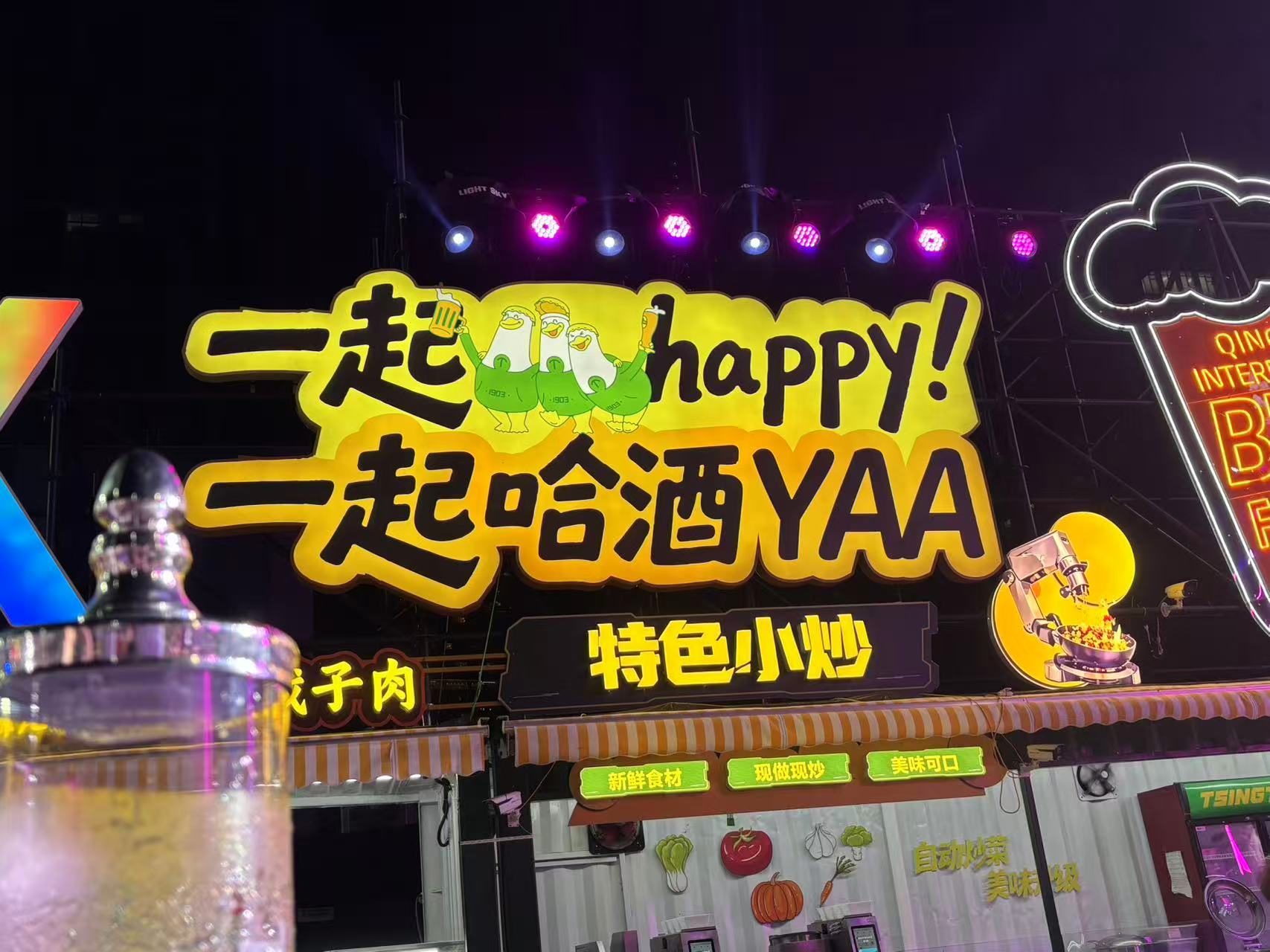
Scene of Qingdao Beer Festival
During the operation of the festival, the local area simultaneously connects multiple cultural and tourism formats such as hotels, catering, retail and coastal leisure, effectively extending the local stay period of tourists. Industry data shows that the average stay of tourists who include factory visits in a single city exceeds 3 days, which alleviates the pain point of unbalanced customer flow between peak and off seasons of the urban cultural tourism industry to a certain extent.
03 AI Industrial Cities Usher in Breakthrough Point for Cultural Tourism
From the perspective of long-term operation of cultural tourism business, many domestic cities have scattered and fragmented resources and lack unified and deeply rooted urban memory symbols when developing industrial tourism. Qingdao takes beer as the core cultural carrier, which penetrates into all scenario links such as transportation reception, scenic spot tour, urban festival and global promotion, reducing tourists' cognitive cost of local industrial cultural tourism resources.
The complete product layout also enables the project to cover customer groups of all ages, stably receiving study tour groups and inbound sightseeing tourists on weekdays, releasing phased traffic peaks in summer relying on the Beer Festival, and filling the gap of night consumption with formats such as night tours and characteristic catering. The annual passenger flow distribution is relatively gentle, effectively hedging the revenue fluctuations caused by peak and off seasons.
At the same time, the Tsingtao Beer IP has opened up multiple mature monetization channels. In addition to basic venue tours, cultural and creative retail, themed catering, immersive performances and large-scale urban festivals can all generate revenue. There are also extended development directions such as offline chain taverns and all-category cross-border co-branding in the follow-up, with sufficient space for incremental exploration.
From a broader perspective, the current urban cultural tourism attraction of Qingdao relies more on the single IP of beer. In fact, other types of industrial tourism resources such as local AI, aerospace and light industry still have development potential. For example, the 53-kilometer-long science and innovation corridor connecting three major industrial cities gathers complete AI industrial chain resources. The "Computing & Power Island" of TGood in the corridor creates a scientific and technological sightseeing scene with modular prefabricated cabins and large-screen computing-power collaborative intelligent scheduling system, which fits the current travel boom of AI popular science study tours.
This also provides a new cultural tourism development idea for many domestic cities that have laid out the artificial intelligence industry, breaking out of the inherent framework of traditional light industry and manufacturing industrial tours, and building knowledge-based study tour cultural tourism products relying on cutting-edge scientific and technological innovation resources to find a breakthrough for differentiated upgrading of urban cultural tourism.
On the whole, in this summer vacation when "factory tours" are booming, opening production lines is only the foundation. How to rely on local characteristic industrial IP to connect the whole process of tourists' arrival, in-depth sightseeing and global consumption is the core issue that urban cultural tourism operation needs to consider. With the continuous iteration of immersive experiences and cross-border products, this model of integrating industry and urban cultural tourism may become a development path widely referenced by the industry.
Follow us for more information