AI is taking away the jobs of tour guides.
01
A while ago, I met my old friend Director Han in Madrid, Spain.
Director Han has been working as a Chinese-speaking tour guide locally for many years. In the past peak seasons of spring and summer, his schedule was fully packed with airport pickups, leading tour groups and giving scenic spot explanations. But when talking about this year's business, he sighed and said the number of guests had dropped significantly.
According to Director Han, since March, the situation in the Middle East has been tense, flights transferring via Dubai, Doha and other locations have been affected, and some guests have canceled their trips to Europe.
If the flight problem can be resolved over time, what makes him more uneasy is that Chinese tourists who have already arrived in Spain seem to be increasingly reluctant to hire tour guides.
What confuses Director Han is that many young people now prefer to listen to AI's random, inaccurate explanations rather than pay for the services of licensed tour guides.
He also told me that except for business and official receptions which have not been greatly affected for the time being, the most obvious change this year lies in independent travelers and small family groups of three to five people, whose reception volume has decreased by half compared with last year.
I asked Director Han, without hiring a tour guide, how these young people could learn about the palaces and museums they visited.
He shook his phone at me and said that everyone now has a personal tour guide at their fingertips, with ChatGPT and Gemini available for choice. When they see buildings, sculptures and exhibition labels, they just take a photo with their phone, and the AI will start explaining. If they don't understand, they can keep asking follow-up questions.
Later, at the Royal Palace of Madrid, I indeed saw several young Chinese people pointing their phones at the furnishings inside the palace. After the AI finished explaining the background information, they continued to ask about the relationships between the figures depicted and the uses of different rooms.
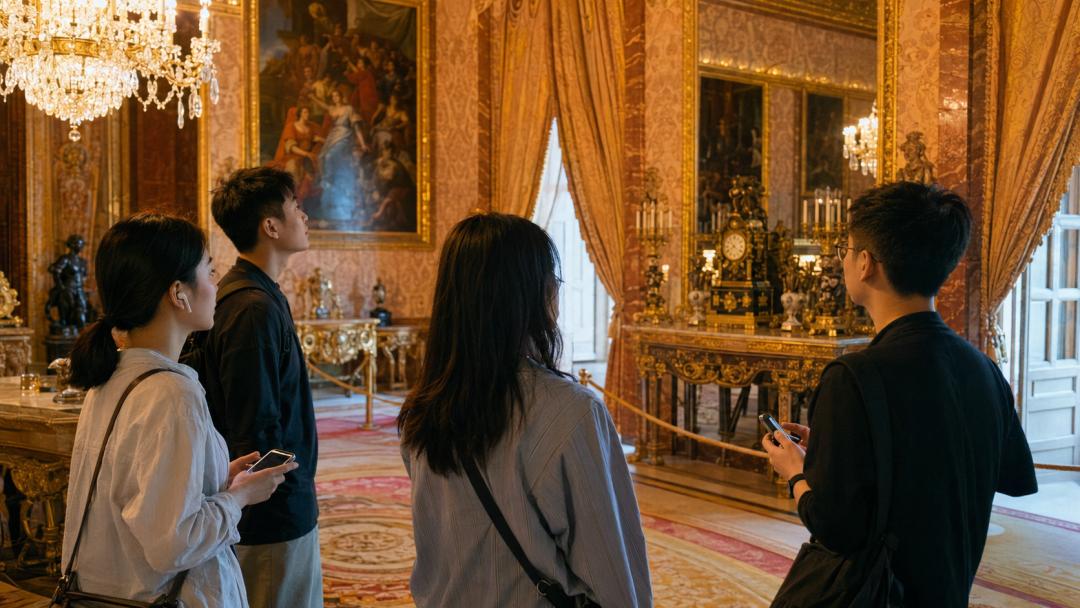
Photography is banned in the exhibition halls of the Prado Museum, so tourists type the names of artworks into their phones or ask questions about the exhibition labels. Content that used to require renting an audio guide to access is now available with just a tap on the phone.
Director Han said the situation in Madrid is not an isolated case. He also talked to several Chinese-speaking tour guides in Paris and Lisbon, and all of them have felt similar changes.
Overseas tour guides are worried that AI will take away their clients, while the troubles faced by their domestic counterparts are somewhat different.
Not long ago, Xiao Tan, a newly employed interpreter at a museum in Shanxi, complained to me privately that he was frequently questioned by tourists about content generated by Doubao and DeepSeek.
AI mistakes the later restoration dates of cultural relics for their original construction dates, and tourists will ask him on the spot which side is giving the wrong statement. Some unsubstantiated folk legends amplified by AI will also require him to give a reasonable explanation.
What troubles Xiao Tan most is that for issues with no conclusive conclusions in academic circles, AI models often give overly confident answers, forcing him to stop his introduction and clarify the difference between the official museum interpretation caliber and the online claims.
"If all its statements were correct, I would accept it. But now it is responsible for making random claims, and I am responsible for refuting the rumors, and the guests may not even believe me."
Just as tour guides are troubled by AI, scenic spots and museums have begun to actively introduce AI into their services.
This summer vacation, the Great Art Exhibition of Mawangdui National Treasures at the Shanghai Art Museum adopted AI glasses that weigh less than 50 grams. The organizer input more than 50 years of archaeological research data into the system, so that tourists can listen to targeted introductions when they look at the exhibits, and ask follow-up questions as needed.
As early as January this year, the Shanghai Pudong Art Museum announced that Doubao would serve as the official AI interpreter for two major international exhibitions. Tourists can inquire about exhibits by taking photos or making video calls, and the museum also provides special materials to help AI improve the accuracy of identification and interpretation.
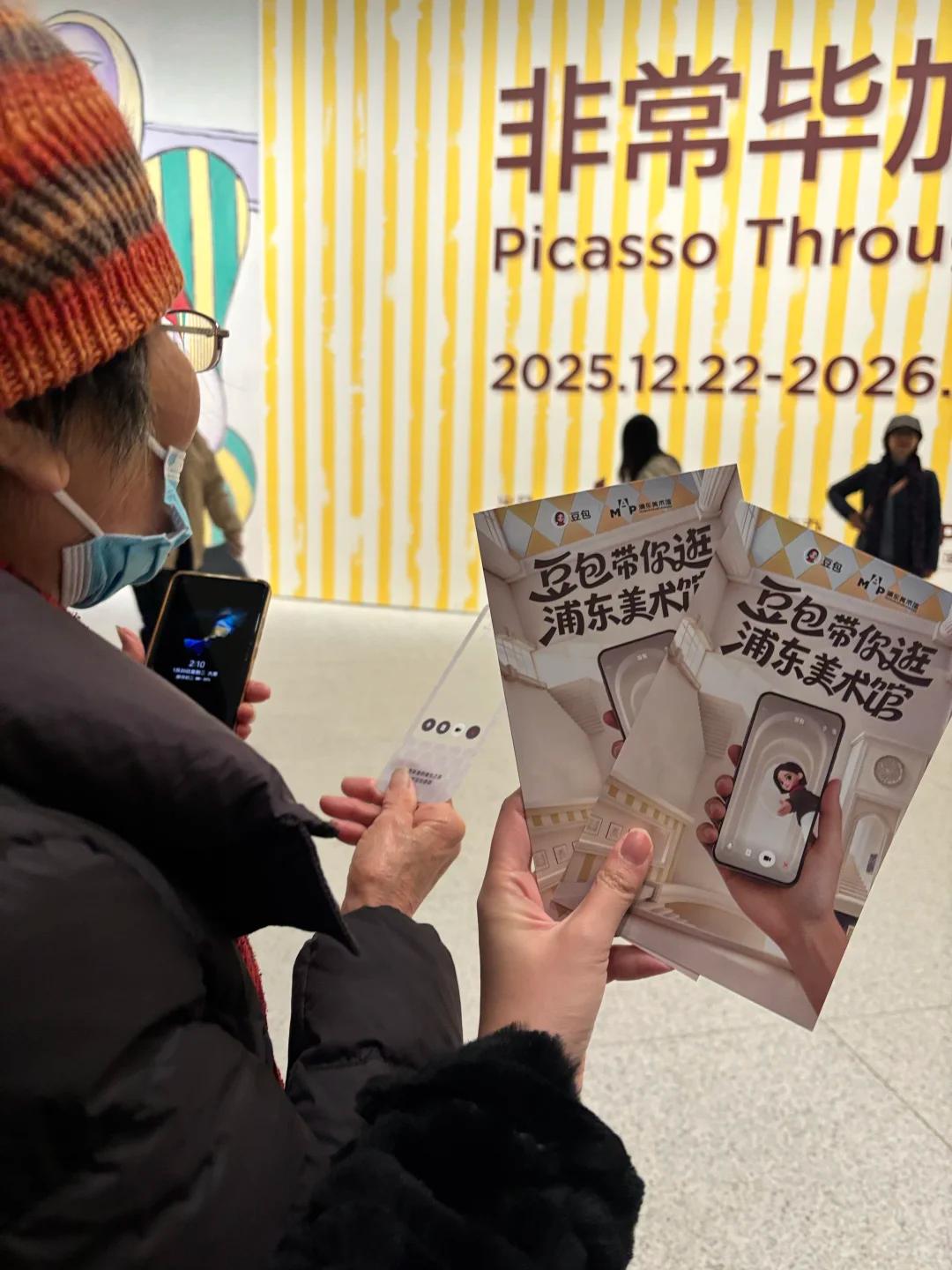
Many cultural and museum venues in Jiangsu have successively issued "work permits" for AI services. For example, Xijin Ferry launched a digital human interpretation service, and the Taiping Heavenly Kingdom History Museum, Suzhou Silk Museum and Yangzhong Museum have successively accessed intelligent interpretation services.
When more and more scenic spots and museums personally teach AI how to give accurate explanations, tour guides begin to worry that their jobs are at risk.
02
If we put aside the troubles of Director Han and Xiao Tan for the moment, before the emergence of AI, I myself often encountered similar troubles when visiting museums abroad over the years.
Some venues do not provide Chinese interpretation, and the audio guides available for rent can only play recordings according to serial numbers. When you walk in front of an artwork you are interested in and want to hear more details, the guide has already started introducing the next exhibit.
When encountering content that does not interest you, you have to drag the progress bar for a long time to find the key information.
Hiring a real tour guide is certainly convenient, but the price of Chinese-speaking interpretation overseas is not low, and reservations need to be made in advance.
Tour guides usually charge by half a day or a full day, and it is not convenient to change the route temporarily. For young tourists who only plan to visit for two or three hours, this expense is easily cut from the travel budget. After all, the main demand of many people is to take good photos for social media, and understanding the exhibits is only a secondary need.
AI just fills this gap in the market.
Tourists do not need to make reservations in advance or follow a fixed route. When they see an interesting building, they can take a photo and ask AI which period it was built in and why it adopts such a structure.
Facing a painting, they can also ask AI to explain the complex religious background in more simple terms.
I have a deep personal experience of this, because when I travel, I also use AI to learn about local history and the background of exhibits.
What I find most interesting is that when traveling with children, parents can even ask AI to explain things in language that a 6-year-old child can understand. If the child does not get it, AI can repeat the explanation. If the child gets bored, the explanation can end immediately, and no one needs to worry about hurting the tour guide's feelings.

A child listening to AI interpretation with great interest at the Royal Palace of Madrid / Photo by Travel Industry
The interactive experience that could only be completed by real interpreters in the past is now being integrated into mobile phones.
The first group of people affected are naturally those tour guides who mainly make a living by reciting pre-written interpretation scripts.
Because the construction dates of buildings, biographies of historical figures and uses of cultural relics are originally scattered on the official websites of scenic spots, exhibition labels, academic papers and travel guides. Tour guides collect materials in advance and organize them into manuscripts according to the visiting order. A large part of the service tourists pay for is actually having someone else do the work of searching and rephrasing information for them.
After the emergence of large language models, functions such as search, translation, summarization and speech synthesis are integrated into one single entry. The interpretation scripts that tour guides spend months memorizing can be reorganized by AI in just a few seconds, and the content can be adjusted at any time according to tourists' questions.
At the same time, real tour guides charge by the hour, while asking AI a few more questions hardly adds any extra cost.
Hiring a Chinese-speaking tour guide for a half-day tour in Europe for a family of three may cost hundreds of euros. If you turn to AI on your mobile phone, even if you pay for a membership, the cost spread over the whole trip is very low.
When tourists are only interested in a small number of exhibits, the price gap between the two options becomes even more obvious.
AI's tendency to give false information used to be the last line of defense for tour guides.
But when museums hand over archaeological materials, curatorial texts and collection information to platforms, general-purpose models are being transformed into exclusive vertical interpreters for the venues themselves, and their errors will gradually decrease. At least for common questions, their answers are already sufficient for ordinary tourists.
In fact, tourists have different levels of tolerance for different types of errors. If a flight or hotel is booked incorrectly, the loss will immediately fall on them, so they usually return to traditional platforms to verify information. If they mishear the restoration date of a certain palace, it rarely affects the itinerary of the day, and many people will not even realize that AI has made a mistake.
This makes basic interpretation the service in the tourism industry that is most easily taken over by AI: the risk is low, and the content is highly standardized. For tourists, saving money is the top priority.
AI cannot replace knowledgeable tour guides for the time being, but it has already made it increasingly difficult for tour guides who only read from pre-written scripts to charge high prices.
03
Will tour guides disappear from tourists' itineraries in the future?
Judging from the anxiety of industry practitioners and the choices of young tourists, there is no unified answer to this question.
Director Han shared with me a group of old clients he received a few days ago. Several elderly people traveled around Spain with him many years ago, when they could walk for a long time without feeling tired. But this time when they met again, their pace had slowed down significantly.
One of the elderly people kept saying he was fine along the way, but in the second half of the trip, he started to stop frequently. Director Han noticed that he could no longer walk, so he temporarily shortened the route, canceled the planned uphill section, and called a car to send the elderly back to the hotel in advance.
Later, the old man told him privately that his leg had been hurting for a long time, but he was afraid of holding back the others in the group, so he did not have the nerve to mention it.
Director Han told me that leading a tour group cannot wait for the guests to speak out their problems. By the time the elderly say they cannot walk anymore, they have usually endured it for a very long time.
Current AI is good at answering the questions that tourists have already raised. People with real tour group leading experience, however, need to discover the unspoken troubles that tourists do not mention.
In fact, the current Regulations on the Administration of Tour Guides defines the responsibilities of tour guides not only limited to interpretation, but also includes providing itinerary services, giving safety warnings, and taking necessary disposal measures after tourism emergencies occur.
Therefore, real-person interpretation services will not only be retained for high-end tour groups in the future.
Expert tour guides may certainly become more and more expensive, and in-depth cultural tours, research study groups and business and official receptions are still willing to pay for their professional capabilities. But ordinary families also cannot do without the services of real people.
When traveling with the elderly and children, whether the route is comfortable, whether lunch can be served on time, and who will look for people who get lost are often more important than memorizing a few more historical dynasties.
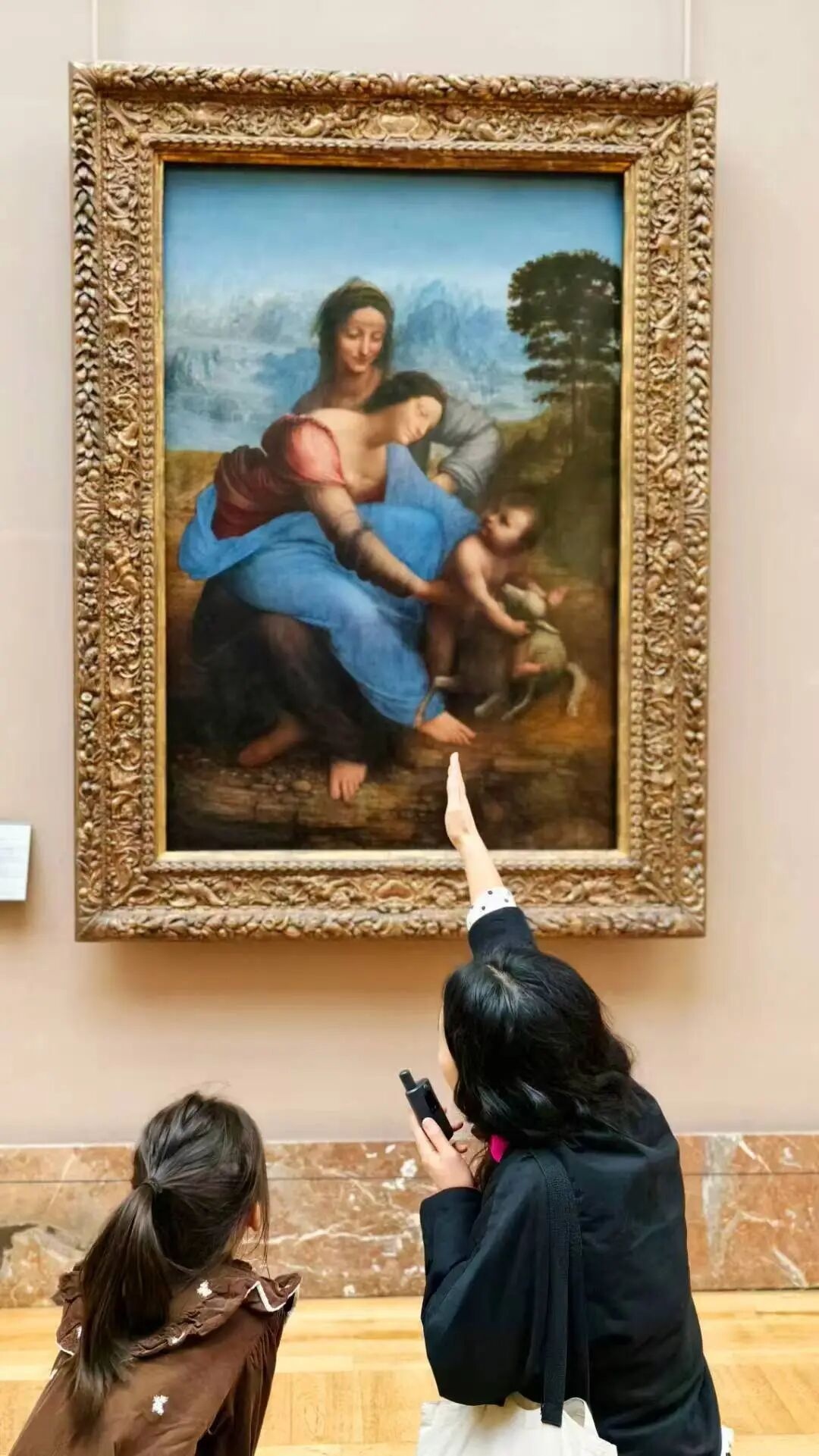
A tour guide explaining exhibits to a child at the Louvre in Paris / Photo by Travel Industry
Travel groups for elderly people have even more obvious demand for such services. Many elderly people cannot use AI skillfully, and may not be able to handle transportation and ticket booking independently in a strange city. As long as tour guides can help them avoid unnecessary detours and stay calm when problems arise, they can rely on their service capabilities beyond interpretation to make a living for at least another decade.
For some super and senior tour guides, working behind the scenes for AI may be a more sustainable career path.
Because if a venue wants AI to give accurate explanations, it cannot just upload all the online materials into the system. It needs people who are familiar with the local culture to organize the content. When there are exhibition adjustments, road construction or temporary closure of venues, the knowledge base also needs to be updated in a timely manner by relevant personnel.
Experienced tour guides can participate in content review. Their working hours may be shortened, and their charging methods will also change.
It is worth mentioning that the Measures for the Identification of Artificial Intelligence Generated Synthetic Content, which came into effect on September 1, 2025, has put forward identification requirements for AI-generated synthetic content such as text, audio, images and videos. However, there are still no detailed handling rules for how to correct historical misstatements made by AI in tourism scenarios and who is responsible for the review work.
The more scenic spots want to make AI interpretation reliable, the more they need people who know the local content well to stand behind the system.
AI will make knowledge cheaper and cheaper, while the human touch possessed by tour guides may become the most valuable part of the service.
This article is from the WeChat official account "Travel Industry", author: Theodore Xishao, and is republished with authorization from 36Kr.