There is barely any position left for BBAP in the high-end automotive market.
In the first half of this year, the performance of luxury carmakers can be summed up in one sentence: excluding the Chinese market, things are barely calm, but including the Chinese market, the situation is far from stable and full of hardships.
BMW and Mercedes-Benz saw a tacit coordinated sales rise in the European and American markets, but in the Chinese market, one posted a 20% decline and the other a 28% drop, directly dragging down their global sales performance. Porsche, their peer, has an even tougher time: its sales in China shrank by nearly one third, falling back to the level 15 years ago in one go.
The setback of a single carmaker may be attributed to poor transformation and insufficient internal efforts, but when an entire segment of brands collectively underperforms, the problem is always structural.
The divergence in the development of technical routes is only a superficial factor here, and the core reason lies in the rise of new energy vehicles in China.
In the Chinese market, the offensive launched by domestic high-end brands has gradually escalated from marginal probing to head-on confrontation. The battlefield has continuously shifted upward from the 300,000-yuan price bracket to the 500,000-yuan bracket, severely shaking the brand premium of traditional luxury vehicles and driving consumer demand to lean toward domestic vehicles.
Taking July as an example, among the top 10 best-selling SUV models priced above 400,000 yuan in China, 6 are domestic new energy vehicles. By brand, the NIO ES9 and ES8 took the top spot with combined sales of 16,000 units, followed by AITO and Zeekr, while Range Rover Evoque ranked at the bottom [1].
While traditional established luxury brands are shrinking their business lines and struggling to move forward, the domestic new energy vehicle sector is expanding its territory at a rapid pace, and the division in the high-end automobile market has never been so drastic.
The Collapse of Traditional Luxury Order
2026 is a highly challenging year for new energy vehicles. With the national purchase subsidy fully phased out, sales have declined for several consecutive months, and the entire market is shrouded in haze. Only two niche market segments stand out as exceptions: one is the pure electric vehicle segment, and the other is the high-end market with vehicles priced above 400,000 yuan.
Compared with plug-in hybrid and extended-range electric vehicles that were not spared from the downturn, pure electric vehicles not only avoided a sales decline but also achieved counter-trend growth, with their market share surging to 68%.
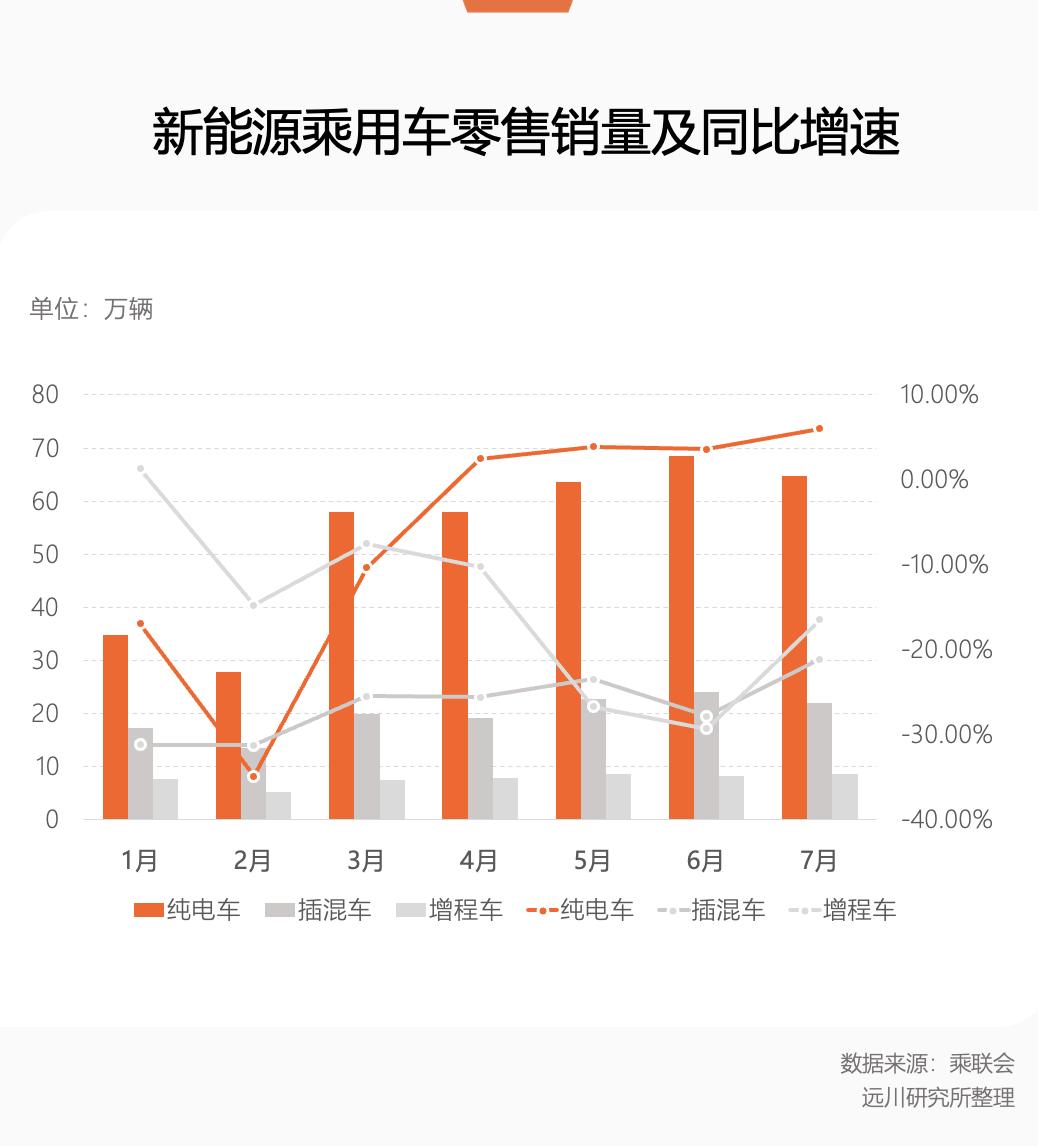
Pure electric vehicles are selling better and better, not relying on low-price and people-friendly strategies. On the contrary, the more expensive the vehicle, the more obvious its growth momentum is.
In the first half of the year, sales of new energy vehicles priced below 100,000 yuan decreased by 26% year on year, a larger decline than that of fuel vehicles. The 100,000-200,000-yuan price bracket also registered negative growth, while the sales growth rate of new energy vehicles priced above 400,000 yuan reached nearly 46%, leaving all other segments far behind [2].
In the early stage, the penetration rate of pure electric vehicles was limited to the two ends of the dumbbell: one end was low-cost small vehicles for daily commuting, and the other end was the 300,000-yuan entry-level high-end market. Now, with both the endurance and energy replenishment shortcomings addressed, large-capacity batteries have become the standard configuration for vehicles in the 400,000-yuan price range, and pure electric vehicles have naturally upgraded from an alternative choice to a core option.
In the past, the high-end market above 400,000 yuan was long dominated by models such as the BMW X5, Mercedes-Benz E-Class, and Porsche Cayenne. It was not until the intensive entry of domestic 9-series new energy vehicles that the foundation of traditional established luxury brands began to truly loosen. This year, pure electric vehicles represented by the NIO ES9 further proved that "pure electric vehicles priced above 500,000 yuan" can also dominate the high-end market.
Compared with the mid- and low-end market that focuses on rigid travel demand and cost performance, buyers in the market above 400,000 yuan are less sensitive to prices. This means that the transfer of the right to define luxury essentially reflects the fundamental change in consumer demands.
In the past, the value of high-end vehicles was determined by brand logos and mechanical quality, but now this standard is rapidly shifting to intelligent experience and more high-end, comprehensive services. When consumers are no longer satisfied with the roar of V8 engines and the symbolic value of car logos, whoever can provide superior experience and services will gain the right to define luxury.
The emergence of models such as the ES8 and ES9 allows high-end users to avoid the difficult choice between "traditional luxury brands" and "new energy technology products", after all, mature consumers want both.
Domestic brands that were in a defensive position have taken the initiative, while traditional luxury brands that used to be attackers have to passively respond to challenges, transforming from rule-makers in the fuel vehicle era to followers in the electrification era.
How to Define High-end Positioning
An open secret weapon for domestic new energy vehicles to enter the high-end market is "piling up premium configurations", which in plain language means full sincerity to consumers.
The first manifestation lies in power performance. In the fuel vehicle era, power was the most important criterion for dividing vehicle classes: the number of cylinders defined the hierarchy, and the horsepower of family cars could not exceed that of performance cars. But for electric vehicles, thanks to the motor structure, power performance has become far more accessible. The 100km/h acceleration performance that used to cost a fortune has now become a standard factory setting.
The second manifestation is various comfort configurations. Luxury brands are well versed in the pricing art of dividing classes through optional configurations: users who buy base models and those who buy fully-equipped models will never belong to the same social circle. Domestic brands take the opposite approach, putting all the configurations that used to be exclusive to million-yuan luxury cars, including high-quality screens, refrigerators, premium seats and even air suspensions, into the standard configuration list.
A 300,000-yuan domestic electric vehicle can not only accelerate faster than a million-yuan Porsche Panamera, but also be equipped with all possible premium configurations, which is no less than overturning the established rules of traditional luxury giants.
This also reflects a consensus: in the early stage of new energy vehicle popularization, piling up configurations does not necessarily make a brand stand out, but it can greatly lower the threshold of luxury, which is completely beneficial for domestic high-end vehicles to achieve breakthroughs and boost sales.
However, when the penetration rate of new energy vehicles exceeds 60%, all the previously exclusive configurations have been popularized, and the dividend from a mature supply chain has turned into product homogenization. Relying solely on piling up configurations is doomed to lead to endless internal competition and price wars, making it increasingly difficult to support the brand premium of high-end brands.
In this regard, NIO provides a reference sample: it does not cut corners on hidden parts of the vehicle, nor does it stuff excessive unnecessary configurations on visible parts.
The ES8 has retained the top spot in sales in the 400,000-yuan market for six consecutive months, and the ES9 with a higher price delivered more than 20,000 units within 73 days after launch. The core behind this is that the experience it provides is valued and frequently perceived by consumers. Creating forward-looking desire is of course innovative, but meeting existing demands is equally important.
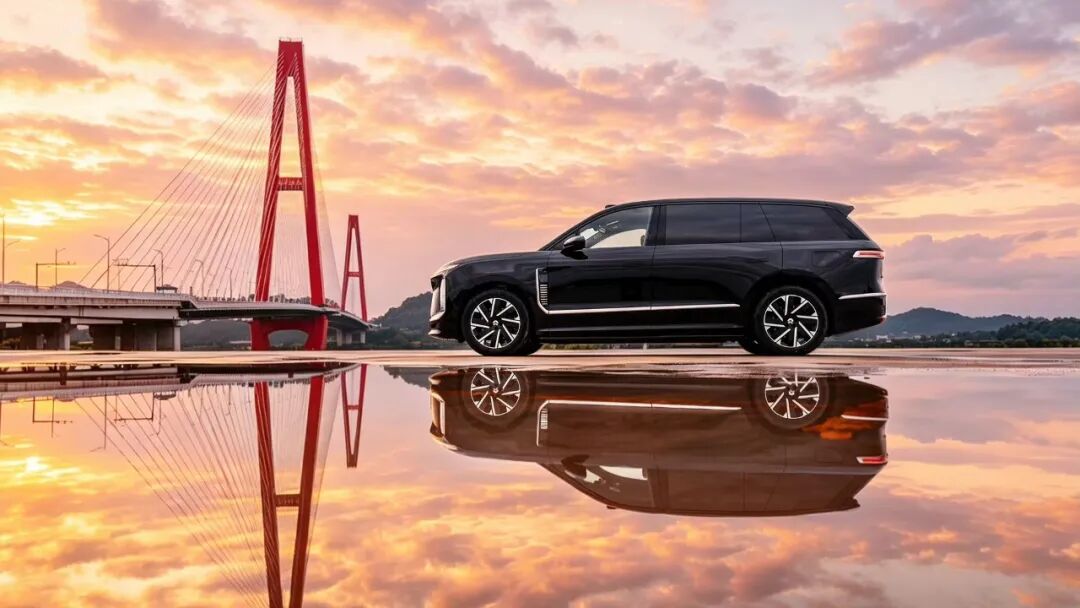
NIO ES9
Take the front trunk as an example: NIO's second-generation models generally have a very small frunk capacity or no frunk at all, while the new ES8 is equipped with a 230L frunk. The ES9 not only has spacious space in all three rows of seats, but also has a total storage space of 816L in the front and rear trunks, comparable to large MPVs.
With a 100kWh large battery, dual motors, air suspension and other hardware placed in the chassis, the vehicle can still reserve such a large storage space. Apart from the redesigned layout, the more important reason is the self-developed three-electricity heating management module, which greatly improves the integration level and frees up more space without sacrificing heat dissipation and power performance.
NVH performance is another key indicator. Luxury brands pursue NVH performance to an almost obsessive degree: if the NVH performance is so poor that passengers have to raise their voices to talk, the vehicle is by no means a luxury one.
The excellent quietness of the ES9 first comes from the forward development of chassis NVH, which suppresses road noise transmission at the source by optimizing the body and chassis structure. The 48V integrated active suspension integrates the hydraulic pump and shock absorber at the wheel end to further filter road noise, and with the ARNC active noise cancellation system, the quietness is improved to a higher level.
The experience that surpasses traditional luxury vehicles is an important reason why the ES9 has been selling well since its launch. But what is really worth noting about this model is not the sales figure itself, but how a 500,000-yuan pure electric vehicle can fully realize the whole process from technical definition, mass production manufacturing to large-scale delivery in a short period of time.
Good sales of a single model may prove excellent product strength, but the rapid sales growth of a 500,000-yuan flagship vehicle tests the systematic capabilities composed of R&D, manufacturing, supply chain, energy replenishment, and services.
Facts have proved that high-end new energy vehicles cannot succeed without core technologies, but technologies alone are far from enough.
Win Once and Keep Winning
If technology can be equated with high-end positioning, what carmakers need to do is very simple: invest as much as possible in R&D projects, and wait for technology to be transformed into sales results.
In reality, today's leading technology may be popularized by competitors tomorrow. If high-end positioning relies solely on technology, it is no different from building a castle on the sand.
The competitiveness of a vehicle is not a simple sum of technologies. It can only be fully reflected when placed in a complete brand or system. The Porsche Cayenne and Volkswagen Touareg share the same chassis, but this does not prevent the former from being more luxurious than the latter.
When consumers choose NIO and the ES9, they definitely do not make a blind bet on technology. What they value is likely NIO's long-term courage to invest in R&D, original exterior design, worry-free user services, and even the rechargeable, swappable and upgradable energy replenishment system, all of which form the foundation of NIO's brand value.
The ES9 has a distinct user base, including leaders in technological innovation such as Zhao Yan from Bloomage and Zeng Yuqun from CATL, time-conscious senior executives, and even the superstar Yao Ming, who is 2.26 meters tall and has long failed to find a vehicle that fits his needs.
The ES9, with an average transaction price of over 550,000 yuan, has been recognized by high-end users, which is not the result of rational calculation, but a substantive change in consumer decision-making patterns.
In the past, the biggest obstacle for pure electric vehicles to move upmarket was that "no one will buy a pure electric vehicle at a high price". But now, high-end users are willing to pay a higher brand premium for pure electric technology, luxury experience, and systematic capabilities that traditional carmakers cannot match.
The combined retail sales of the ES8 and ES9 exceeded 16,000 units in July, which is by no means a result of accidental market dividends.
Behind these figures, NIO has gone beyond the stage of catering to the market to create hit products, and begun to define product categories with its systematic capabilities. In other words, NIO's old strategy of betting on high-end market share with a single model is a thing of the past, replaced by a mature team-based operation model.
The ES8 and ES9 have also systematically proved that pure electric vehicles in the high-end market are no longer a second-best choice, but have begun to have the foundation to become the mainstream route, and NIO's systematic capabilities make this trend even clearer.
High-end new energy vehicles have a different business model from traditional vehicles. The latter is more like a one-off deal, where the connection between carmakers and consumers ends when the car keys are handed over. But in the new energy era, handing over the keys is the beginning of the relationship between the two parties.
The characteristics of pre-embedded hardware, continuous software upgrades and unrestricted experience mean that the automobile business must consider the full life cycle value of services. Especially in the high-end market above 400,000 yuan, systematic capabilities determine the depth of the brand's moat.
NIO is undoubtedly an unavoidable industry sample. In the early stage, NIO built high-end user reputation and social circles through services, so the public commented that NIO's moat lies in services. Later, as battery swapping technology was widely accepted and recognized, the moat shifted to the battery swapping system.
Li Bin once said, "Don't ignore our technical strength just because NIO provides good services." But in fact, none of these elements can independently support the competitiveness of a brand. What really makes NIO stand firm in the high-end vehicle market is the complete closed loop around self-developed technologies, energy replenishment network construction and lifelong user services.
Similarly, what determines the success or failure of a high-end vehicle is not how long its strongest advantage is, but whether consumers can tolerate its shortcomings in front of the highly attractive advantages. The intelligent function shortcomings of Porsche have never disappeared, but they did not matter when the brand's track performance was outstanding. Once the performance gap is narrowed, the original small shortcomings will be amplified into fatal flaws.
Entering the second half of the electrification era, it is difficult to improve the winning rate by relying solely on a single advantage such as acceleration performance or exterior design. NIO's systematic capabilities are exactly the important support to make up for shortcomings, which makes NIO difficult to be copied at the pixel level, and allows the ES9 to continue the success of the ES8, with the two flagship SUVs leading China's high-end pure electric market together.
The leading position of the ES9 in the 9-series flagship SUV competition does not come from a single configuration or short-term marketing, but from the combined effect of the pure electric technical route, excellent product strength and NIO's systematic capabilities. The influence of pure electric vehicles in the high-end market is still rising rapidly, and the value of the ES9 will continue to increase.
A successful product determines whether a carmaker can survive the next two years, while a successful brand determines whether it can survive the next ten years. Many carmakers may have won once, but only those that have established clear positioning in technology, services and ecosystem can stay in the game after the market reshuffles and keep winning.
References
[1] Data from Yiche
[2] China Passenger Car Association
This article is from the WeChat official account "Yuanchuan Research Institute" (ID: YuanChuanInstitution), written by Xu Shanshan, and published by 36Kr with authorization.