Once achieving an annual sales revenue of 300 million yuan, another top-tier internet-famous brand collapsed this summer.
In a summer full of soda drinks, Hankow No.2 Factory, once the top viral soda brand among internet-famous products, has quietly faded out of the mainstream retail shelves.
Shortly after the May Day holiday more than two years ago, the orange store on Lihuangpi Road in Wuhan that once had long queues every day was locked behind its rolling shutter door, which already signaled a certain fate. It has drawn public attention again recently, as its operating entity Wuhan Hengrunshi has been added multiple records of enforced execution one after another.
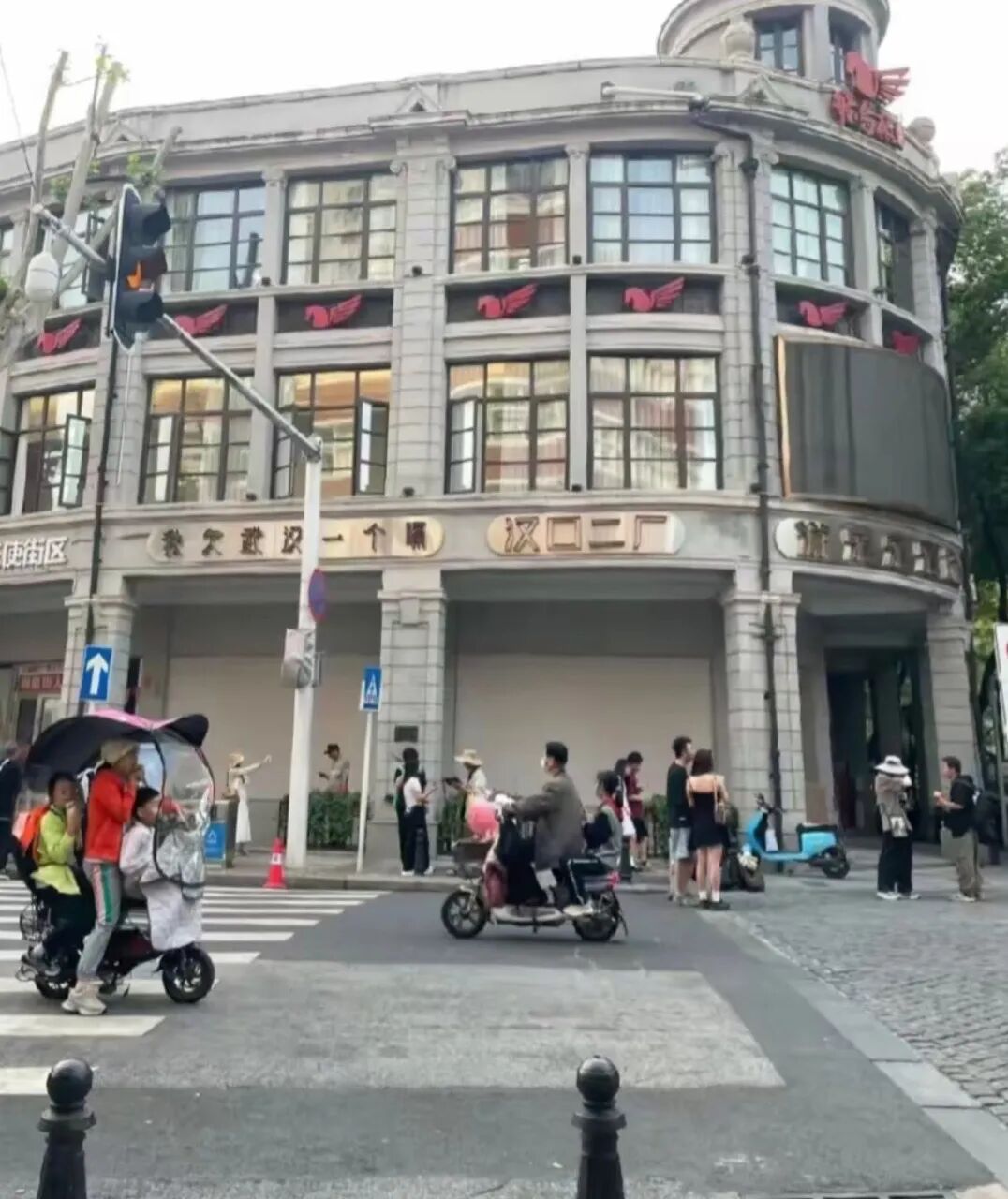
Image source: Xiaohongshu @Veteran New Legend
A domestic trend brand that once received joint bets from Capital Today, GL Ventures, Shunwei Capital, and Country Garden Venture Capital at its peak, with annual sales exceeding 300 million yuan at one point, has undergone a long decline. According to *Food Internal Reference*, there were once rumors about Hankow No.2 Factory that "the headquarters was completely vacated, more than 4 million yuan of salaries were in arrears, and the actual controller lost contact". In the WeChat Moments of local Wuhan residents, the last bit of sentiment for the brand has now been gradually worn away by the conflicts over salary claims and debt collection.
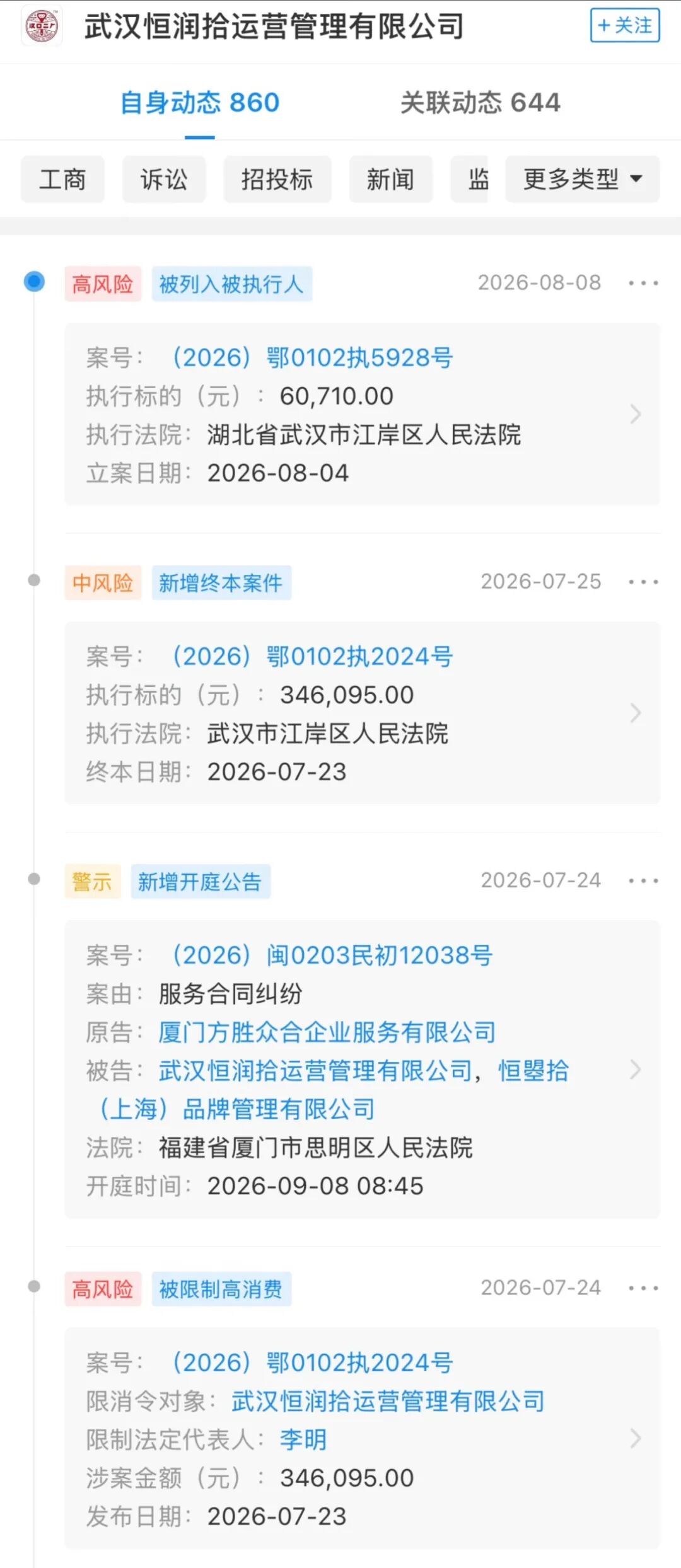
New risk information of Wuhan Hengrunshi Image source: Qichacha
It is quite lamentable that it has not even had a decent ending so far. Legally, it has not completed the bankruptcy liquidation process. There is no money in the account and no executable assets. After calculating the accounts, the creditors found that they could hardly get any money back even after completing the process, and no one is willing to push forward the liquidation.
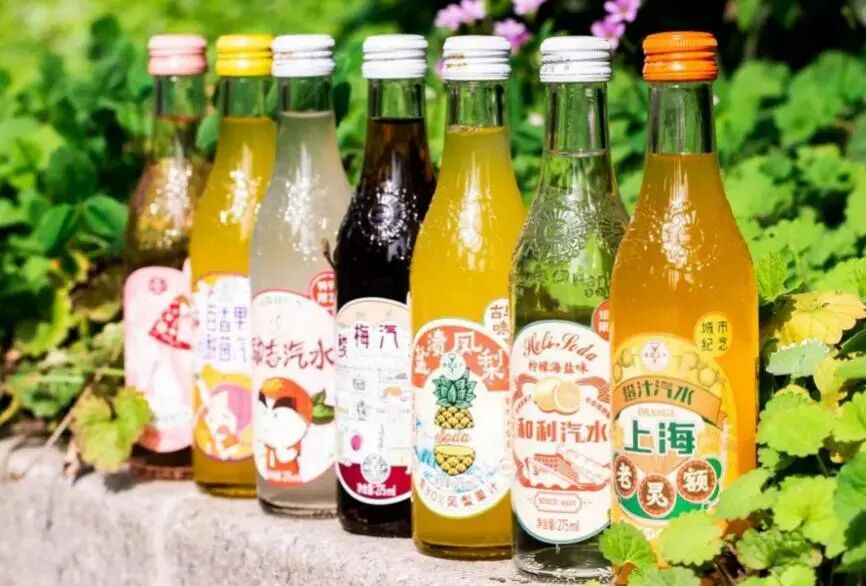
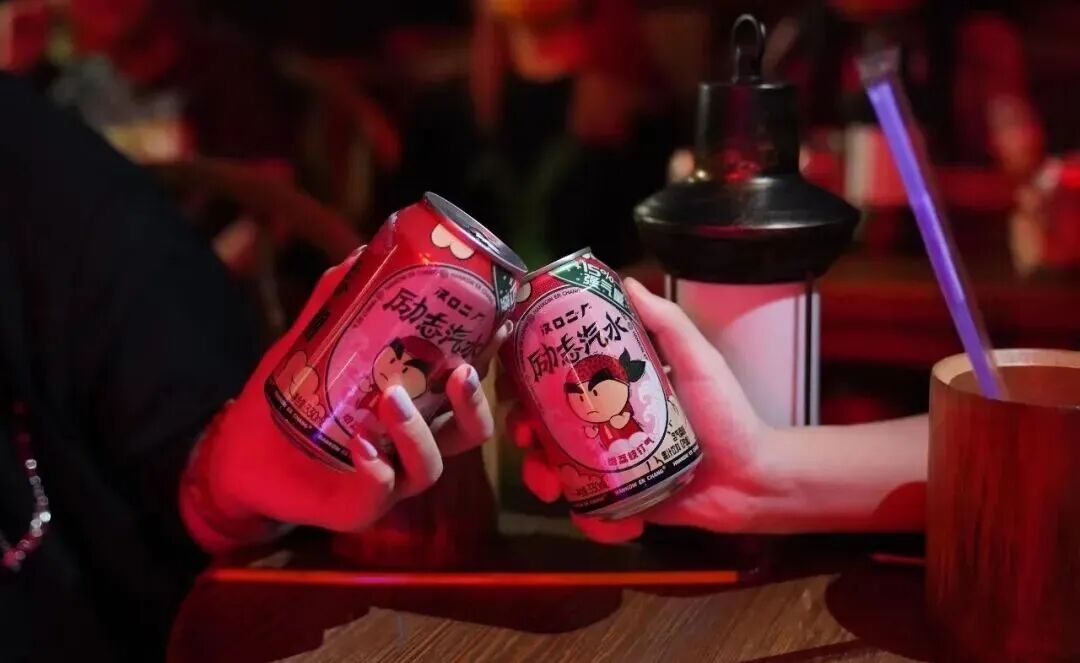
*Tianxia Wangshang* found that a new "Hankow No.2 Factory Flagship Store" has appeared on Taobao currently, with only 137 followers and more than a dozen SKUs on shelves. The sales of "Vintage Pickled Pineapple" juice and "Inspiration (Lychee) Soda" have reached hundreds of orders. However, some consumers left comments in the buyer's show saying "it took a full 10 days to arrive".
The widely spread statement of "cashing out by capital and running away by the founder" seems to conform to the common narrative path after the collapse of an internet-famous brand. But what dragged down Hankow No.2 Factory is something more plain: it has never built solid underlying capabilities.
Hankow No.2 Factory, in fact, has never had its own "factory" from the very beginning.
The whole story of the fall of a viral soda brand
In 1921, a British businessman established Heli Soda Factory in Hankou. After the founding of the People's Republic of China, Heli Soda Factory was nationalized and became "State-owned Wuhan No.2 Beverage Factory", which mainly produced "Binjiang" brand orange soda. In the 1970s and 1980s, it was listed as one of the "eight major domestic soda factories" together with Tianjin Shanhaiguan, Beijing Arctic, Shenyang Bawangs, Qingdao Laoshan, Chongqing Tianfu Cola, Shanghai Zheng Guang He, and Guangzhou Asia, and was deeply imprinted in the summer memory of Wuhan people with its affordable pricing.
This emotional foundation is the biggest capital that allows the name "Hankow No.2 Factory Soda" to be revived later.
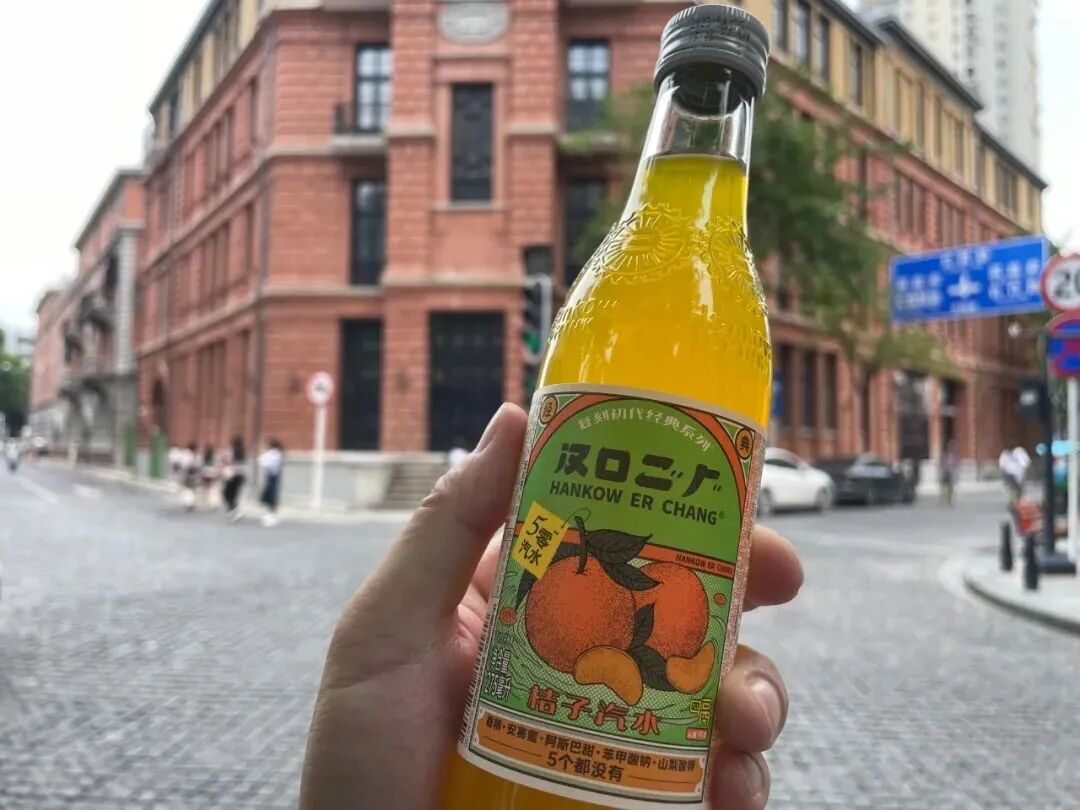
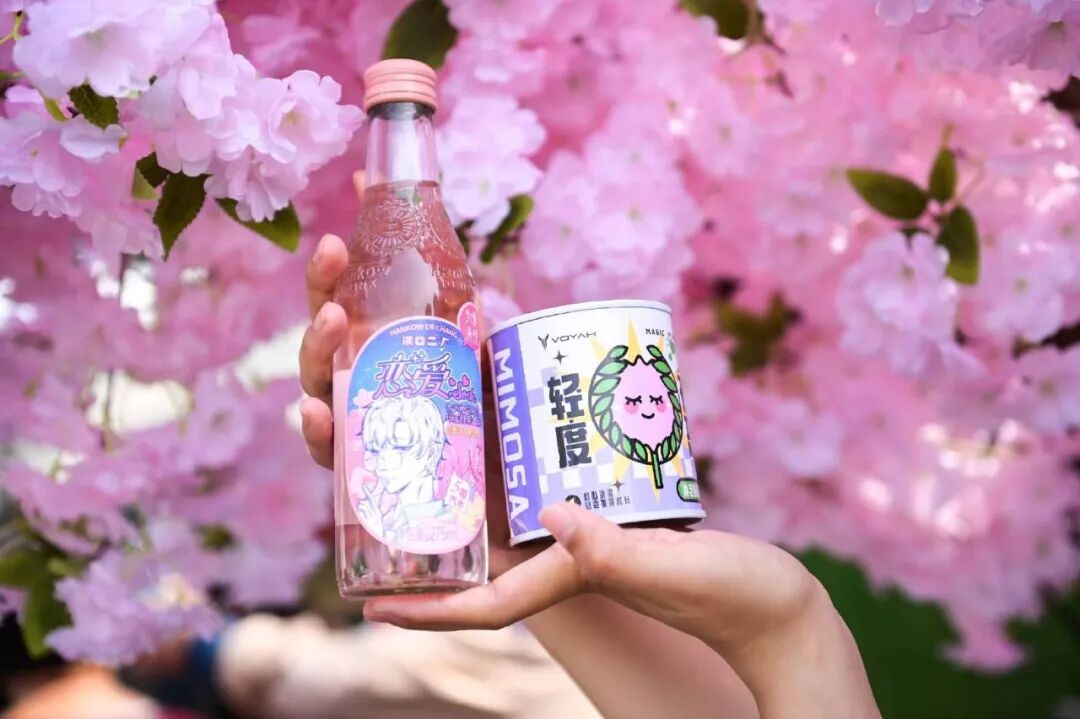
In 2017, a pop-up event brought the "No.2 Factory Soda" that had disappeared for nearly 20 years back to public view. The founding team keenly seized the dual dividends of "national trend" and "aesthetic economy". The glass bottle they designed, together with highly social-oriented names such as "Love Soda" and "Inspiration Soda", spread rapidly on WeChat Moments.
Within only two years, the sales of Hankow No.2 Factory jumped to 300 million yuan in 2019, and its products entered supermarkets and lifestyle retail channels such as FamilyMart, Lawson, Freshippo, Ole, and Miniso. According to The Beijing News, Hankow No.2 Factory claimed to have "covered more than 100,000 stores" by the end of 2022. Capital flocked in immediately, first-tier institutions made successive investments, and the scale of a single round of financing exceeded 100 million yuan.
But the premium of "sentiment" also has an expiration date.
Hankow No.2 Factory once set the price of a single bottle at around 8-10 yuan, which was said to be the "price vacuum zone" concluded by the team after market research. However, this price doomed that it could hardly enter the daily dining tables of local Wuhan residents. Many local Wuhan residents commented that "the taste is different from the 15-cent soda in childhood", and some consumers believed that "a 10-yuan bottle of sugar water is just for memories, and it can only appear in tourist check-in scenarios and as gifts".
The national trend rose from consumers' trust in domestic products and nostalgia. In the current market, beyond the impulsive consumption driven by emotional trends, quality and cost performance are being examined more deeply.
But Hankow No.2 Factory seemed to fail to respond to the changes of the market and consumers. When Hankow No.2 Factory became a "sweet pastry" in the eyes of capital, cracks began to appear at the channel end: the high pricing prevented it from entering the street stores that can drive large sales volume, and product sales have been struggling all the way. In 2022, the company had to shrink its business lines.
The game between the founding team, capital parties and brand parties kicked off.
At the same time, it had to distract itself to cope with another trademark war: "Wuhan No.2 Factory Soda" controlled by Lan Shili, the former richest man in Hubei, was restarted in a high-profile manner, and the two sides fought repeatedly around the name "No.2 Factory", which trapped Hankow No.2 Factory in a quagmire when it most needed product iteration.
The "fate divergence" of viral soda brands
At its peak, Hankow No.2 Factory was known as one of the "new rivals of Genki Forest".
Looking back to 2018 to 2020, Hankow No.2 Factory and Genki Forest were the hottest new consumer brands in summer in those years. The two brands rose almost at the same time, both adopted the OEM model at first, became popular in the first wave with Internet genes, and won the favor of well-known venture capital firms.
At the same fork in the road, with almost the same number of chips in hand, the two brands made completely opposite choices, which also determined their different fates today.
After getting the financing, the first thing Hankow No.2 Factory did was to open stores and create sub-brands. The first national offline experience store "Hankow No.2 Factory Amusement Park" once achieved a monthly revenue of 300,000 to 400,000 yuan. Then it incubated two independent sub-brands, low-alcohol pre-mixed drink "Parallel Universe" and scented sparkling water "Wind Forest Volcano".
Genki Forest, which also started with OEM mode, faced the supply cut-off crisis of OEM factories in the early stage and made another choice: build its own factories. In 2018, the company's annual revenue was only 200 million yuan, but in 2019 it invested 1 billion yuan to build its first self-owned factory. It did not stop the pace after that. According to reports by Ebrun, Genki Forest has now invested 8 billion yuan to build 7 factories in Chuzhou (Anhui), Zhaoqing (Guangdong), Xiqing (Tianjin), Xuchang (Henan) and other places, which shortens the time from product production to delivery from an average of 7 days to less than 2 days.
The same sum of money invested in stores and word-of-mouth can bring temporary prosperity, but investment in factories and production lines brings the qualification to survive.
Looking back at the most critical decision made by Genki Forest, it is still the self-built factory plan in 2019. The company's previous OEM mode once made it face the challenge of "no goods to sell", which prompted it to gradually take quality control and delivery into its own hands.
New consumer brands that survive are often the fastest runners.
According to public reports, Genki Forest's revenue exceeded 14 billion yuan in 2025, maintaining double-digit growth for three consecutive years. In the beverage ranking list, Genki Forest has successfully ranked among the top ten camps and has become a force that cannot be underestimated by giants.
For capital, Hankow No.2 Factory is just an asset that can be cashed out. But for a beverage company, it has not built the core moat of the brand - the supply chain. Hankow No.2 Factory has no lack of creativity and traffic, what it lacks is the most unsexy, most time-consuming thing that only "traditional enterprises" will do.
The soda market has not ebbed, it just has new winners
If you only look at the accounts of Hankow No.2 Factory alone, it is easy to attribute its dilemma to individual cases: poor management, unheld trademarks, and insufficient solid supply chain. But when placed in the coordinate system of the entire beverage industry, it is more like a structural elimination.
From the overall perspective of the soda category, the market has entered the stock era, with fierce internal division. The carbonated beverage market represented by Coke and Sprite has been shrinking. According to Nielsen IQ data, the market share of ready-to-drink tea (tea beverage) reached about 21% in 2023, officially surpassing carbonated beverages and becoming the largest beverage category by sales in China after packaged drinking water. Sugar-free soda represented by Genki Forest and domestic retro soda are the few bright spots in this stock market.
The market vacated by Hankow No.2 Factory has been seized by more domestic soda brands. According to industry media and market analysis, Da Yao's revenue will hit 5 billion yuan in 2025, ranking first among domestic soda brands; Arctic has entered the 1-billion-yuan annual sales tier. Regional brands such as Bingfeng and Asia Soda are accelerating their national expansion. These domestic soda brands that are doing well all have a common feature: they are closely bound to the catering channels, and offline catering channels can account for 70% to 80% of their total sales.
The cruelest part of the stock era is that you will fall behind if you do not grow, and enterprises need to grasp the ever-changing consumption trends and hot spots.
Healthy replacement has become a new certain main line instead of sentiment. In 2025, the market size of electrolyte drinks increased by 32.7% year-on-year to 18 billion yuan; Genki Forest's market share in the sugar-free carbonated beverage field rushed to 39.2%.
Whether the "second growth curve" can be established determines the fate of established beverage giants. Uni-President achieved growth with new sugar-free tea products, and Dongpeng Beverage achieved a steep growth curve with its product "Hydration", driving the company's revenue to increase by 34% year-on-year in 2025. On the other hand, Master Kong's beverage revenue in the first half of 2025 fell by 2.6% year-on-year, of which the revenue of ready-to-drink tea fell by 6.8%.
The heat of the beverage industry shifts so fast that even giants can't keep up, let alone an internet-famous company without its own production lines.
Genki Forest can quickly increase sales in new outlets such as electrolyte drinks and vitamin water, relying on the flexibility of production lines accumulated over the years. Since the factories are self-owned, it does not need to depend on OEM factories when switching formulas and production capacity. This is precisely the ceiling of the asset-light model: it is fast to chase hot spots, but without the support of the supply chain, the story cannot go on once the hot spots fade.
Coincidentally, IF Coconut Water, which was once the standard configuration of internet-famous products, has also fallen into huge trouble recently. In the first half of 2026, its parent company IFBH issued a profit warning, with a pre-estimated net profit decline of 65%-75%.
The market value of this company once rushed to 12.68 billion Hong Kong dollars on the first day of listing, with the selling point of the extreme asset-light model that "46 people support a market value of 100 billion". A year later, the market value was only 1.6 billion Hong Kong dollars, evaporating more than 11 billion Hong Kong dollars.
What crushed it, besides the rising cost of the supply chain, is a trust crisis. Consumers found that those products labeled "100% no additives" may be suspected of sugar blending. Current consumers have become extremely shrewd, and all internet-famous brands that try to use information gaps to carry out "health packaging" are facing the risk of credibility collapse.
In 2026, Tang Binsen, founder of Genki Forest, wrote 9 words in the company's anniversary internal letter: "No unnecessary operations, practice internal skills, pursue practical results". He said: "Consumer goods is a track with clear demand. The greatest wisdom is to resist temptation and focus on the main track."
In the tedious and rigidly demanded beverage business, the shelves never believe in slogans, packaging and filters, it only believes in one thing: whether this bottle of product can get continuous patronage from consumers.