Millions of retail investors are frantically snapping up Unitree, while Wang Xingxing poured cold water on the frenzy.
On August 10, Unitree Technology launched its subscription on the Sci-Tech Innovation Board, marking a phased payoff for an eight-year-long bet on long-termism, and creating this year's most certain wealth-creation boom.
The offering price of Unitree was set at 150.8 yuan. Calculated based on the total share capital of 404.5 million shares, its market value is about 61 billion yuan. According to statistics, a total of 9.7846 million accounts participated in Unitree's online new share subscription. Media calculations show that based on the average first-day increase of the Sci-Tech Innovation Board since 2026 and the market expectation that Unitree is expected to hit a market value of 200 billion yuan later, investors who win one lot of Unitree shares may make a profit of 200,000 to 350,000 yuan.
On the evening of August 10, Unitree Technology issued an announcement that after the clawback mechanism was activated, the final number of shares issued offline was 22.65 million, with a final winning rate of about 0.018%, much lower than 0.47% of CXMT Technology.
From 2016, when Unitree was founded with a minimum cash flow of only 100,000 yuan on its books and engineers had to polish the joints of quadruped robots by hand, to becoming a highly regarded benchmark enterprise in the embodied intelligence track, Unitree has taken a path different from most hard-tech enterprises: it never relies on burning cash to scale up, and set the rule early that "all products must be profitable through marketization".
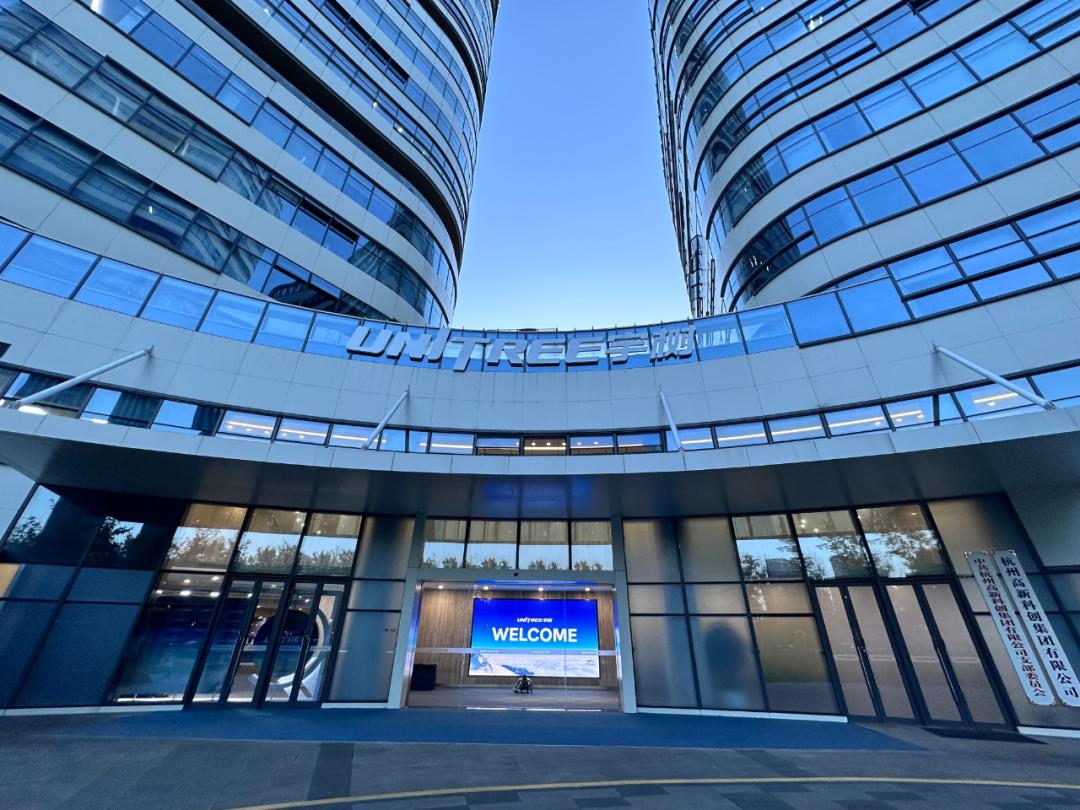
Photo by: Lin Qiuyi
Unitree is also deeply exploring industrial application scenarios. At the end of July this year, when China Entrepreneur visited Unitree, we saw in the video played in the exhibition hall that humanoid robots were already assembling the core joint modules of robots on the assembly line.
Li Chen, Co-founder and COO of Unitree Technology, told China Entrepreneur that this is only a trial operation, "the main production capacity of the factory is still semi-automated plus manual work". In his view, the large-scale application of humanoid robots ultimately depends on breakthroughs in the "brain" of robots.
This time, Unitree raised a total of about 6.1 billion yuan. The prospectus discloses that the funds will be mainly invested in R&D of intelligent robot models, R&D of robot ontologies, new product development and manufacturing base construction. According to relevant sources, Unitree has been laying out in the directions of multimodal and world models for a period of time, but has not publicized it much because the technical route has not yet been finalized.
Behind the fanatical market pursuit of Unitree, there is also the hidden worry that the company's future expectations have been overdrawn. At present, the 219-times P/E ratio at issuance is far higher than the industry average. After listing, Unitree will face great pressure to continuously deliver performance, and this pressure is hanging over Xingxing Wang, the founder.
The "profit-making" gene in its DNA
This time, DeepSeek appearing in Unitree's strategic placement list caught many people by surprise. This is the first time that DeepSeek has appeared in the placement list of an IPO company, and it has given an extra-long lock-up period: it was allocated 933,400 shares, costing 141 million yuan, with a restricted sale period of 36 months.
Although 933,400 shares only account for 0.23% of Unitree's total share capital, the 36-month restricted sale period is rare in the industry. It is not so much an investment as a clear stance. According to Unitree's announcement, the two sides have signed a strategic cooperation memorandum to carry out in-depth cooperation in three directions: general artificial intelligence, high-performance general robots and AI large models.
Employees are the direct beneficiaries of Unitree's listing. Based on the prospectus calculation by China Entrepreneur, Shanghai Yiyi, Unitree's employee stock ownership platform, holds 10.94% of the shares before issuance, which is diluted to about 9.85% after issuance. Calculated based on a market value of 61 billion yuan, the value of this part of equity is about 6 billion yuan. After listing, a group of multimillionaires are bound to emerge in Binjiang District, Hangzhou, where Unitree is located.
Among institutional investors, Meituan is the biggest winner. Before listing, it held a total of 9.65% of the shares through entities such as Hanhai Information, and the shareholding dropped to about 8.7% after issuance. Calculated based on a market value of 61 billion yuan, the value of this part of equity has reached about 5.3 billion yuan, while Meituan's total investment is only about 400 million yuan.
Tencent and Alibaba only entered the market in June 2025 when Unitree completed its Series C financing. At that time, Unitree's post-investment valuation was 12.7 billion yuan, and the shareholders' book return in one year was at least nearly 4 times.
Looking back, the long-termism in the eyes of investors is not a romantic narrative for Unitree, but a near-instinctive way of survival. On August 26, 2016, Unitree was registered and established, the founding team set a rule: every product must be sold externally, and no product that customers do not pay for or no one is willing to pay for will be developed.
In the early days, there were no suppliers, so all Unitree's parts had to be made by hand. Engineers wound copper wires and pasted magnetic steels in the joints, working with tweezers facing a magnifying glass circle by circle. They could only make two joints a day, and it took a month to assemble a complete quadruped robot.
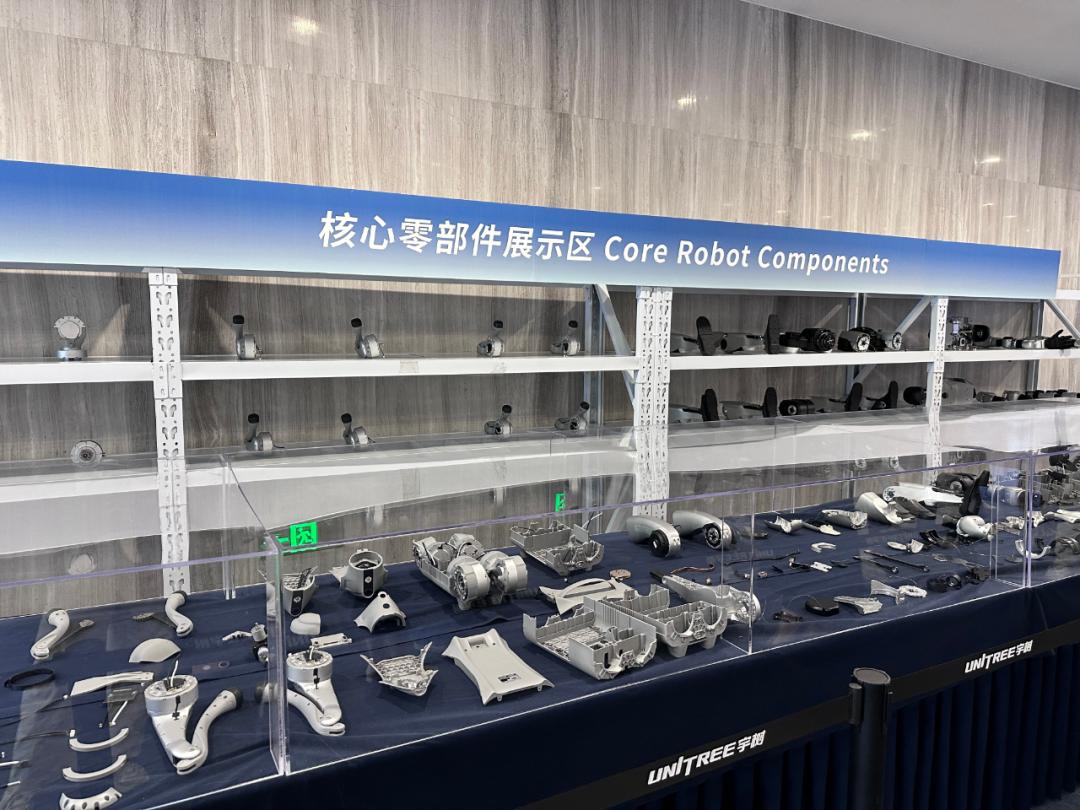
Photo by: Lin Qiuyi
In those days, Boston Dynamics' quadruped robots were already relatively mature, and could remain standing even when kicked. At that time, although Unitree's quadruped robots could already stand and were exhibited at global exhibitions, their technology was far from perfect.
Xinyu Hu, Sales Director of Unitree Technology, recalled to China Entrepreneur that many customers at the exhibition wanted to kick the quadruped robot when they saw it, but Unitree's team knew clearly that the robot might fall if it was really kicked. "So at that time, we hardly dared to leave our booth even to go to the toilet during exhibitions."
The most difficult time was 2018, "there was only 100,000 yuan left in the company's account". The company survived with subsequent financing and commercial sales. Looking back, Li Chen believes that this is the most important reason why Unitree can stand out from the industry.
However, the traces of Unitree's grassroots origin have not been erased to this day.
Unitree's old park is located in Binjiang Fengda Creative Park, in a four-story small building. The first floor originally had a car wash shop and a car repair shop. Unitree started from a 100-square-meter office on the third floor, and gradually took over the whole building: the fourth floor is for global sales, the third floor for R&D, the second floor for production, and the first floor is used as an exhibition hall as well as a parcel receiving and sending point.
It was not until March this year that the company moved into its new headquarters building. The company now has more than 2,000 employees, with an average age of 27 to 28 years old. Two-thirds of the staff are engaged in R&D, and Xinyu Hu calls them the "backbone" of Unitree.
Companies that have gone through hard times have an innate instinct for profitability. Before the humanoid robot track became hot, the company made a firm decision not to enter this field at all, on the grounds that there was no market, the cost was too high, and the technology could not make breakthroughs. The turning point came in 2023, when ChatGPT made AI programming capabilities advance by leaps and bounds, and the motion function development that originally took 3 months could be completed in 3 hours. Customers came to place orders voluntarily, paid deposits in advance, and did not urge for delivery.
Unitree is not without accumulation in humanoid robots. Xingxing Wang made humanoid robots more than ten years ago. After re-launching the project in 2023, Unitree only took half a year from forming the team to releasing its first humanoid robot H1.
Unitree's talent for making money is also reflected in its pricing strategy. The price of its quadruped robots was cut from more than 500,000 yuan in the early days to 16,000 yuan. The humanoid robot G1 released in May 2024 is priced at 99,000 yuan, which is the first 10,000-yuan level product in the industry, with cumulative sales of about 15,000 units. Unitree's engineers said that looking back at this robot now, they can't find any room for further modification, "it is like a work of art".
The lightweight humanoid robot R1 released in July this year has its price further reduced to 29,900 yuan, and Unitree expects its shipment volume to reach 100,000 units this year. Xinyu Hu said that after seeing the price of R1, former Google CEO Eric Schmidt expressed confusion, wondering why a humanoid robot could be manufactured at this price, and then he placed an order for one himself. "96% of the companies doing humanoid robot large models around the world use Unitree's hardware platforms."
When doing global sales, Unitree has an iron rule, "we require customers to pay the full amount in advance. Even for countries that usually have payment arrears, we must receive the full payment before we deliver the goods." Xinyu Hu said.
It is this iron rule that has created Unitree's impressive financial statements. From 2022 to 2025, Unitree's gross profit margin increased from 44.18% to 60.13%, among which the gross profit margin of humanoid robots reached 63.18% — this level is rare among hardware companies.
Both trendsetter and bellwether
Nowadays, Unitree's quadruped robot business has basically formed a closed loop. The market price of a single inspection quadruped robot ontology is tens of thousands of yuan. The starting price of quadruped robots sold on Unitree's official website can be less than 10,000 yuan, and the packaged solution can be controlled within 100,000 yuan, which is roughly equivalent to the annual salary of two security guards. The design life of the quadruped robot is 10 years, and there is no risk of missed inspection.
This company also has a calm side. A prompt is displayed below all the demonstration videos released by Unitree: global embodied intelligence is still in the early exploration stage, individual users must first understand the limitations of humanoid robots before purchasing. "We are both trendsetter and bellwether." Xinyu Hu said.
The description of bellwether is no humble remark. Institutional forecasts show that China's humanoid robot shipments in the first half of 2026 are about 19,100 units, accounting for more than 97% of the global total. Unitree's prospectus discloses that the funds raised from listing will be mainly invested in R&D of intelligent robot models, R&D of robot ontologies, new product development and manufacturing base construction.
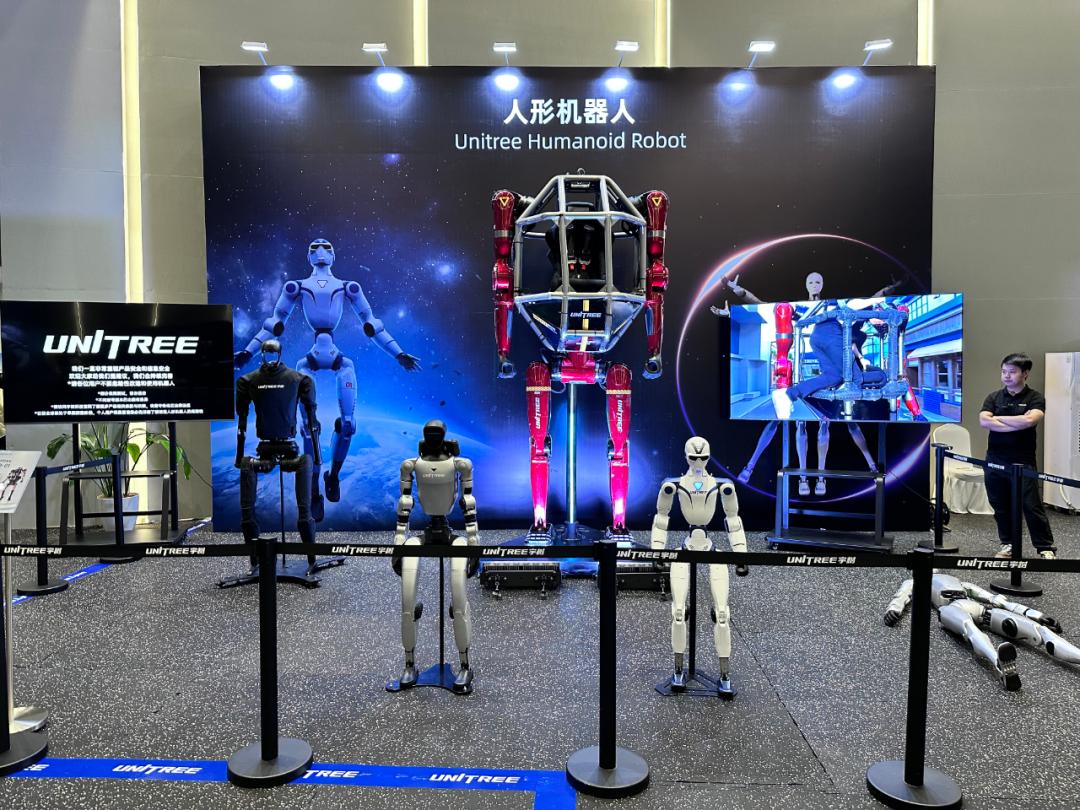
Photo by: Lin Qiuyi
At Unitree's IPO roadshow on August 7, Xingxing Wang answered more than 300 questions in total. He pointed out the current situation of the industry: the whole industry is still in the stage of one to three years before the birth of ChatGPT. The biggest bottleneck of robots is not hardware, but the embodied intelligence large model has not yet achieved real breakthroughs, "the current hardware is completely sufficient in a sense".
This is consistent with his attitude of publicly criticizing the VLA (Vision-Language-Action) model a year ago, which was refuted by many peers at that time. Now, Unitree has laid out both WMA (World Model-Action) and VLA routes, and its self-developed industrial-grade embodied large model has been piloted and deployed in its own factory at the beginning of this year.
Li Chen said that the "killer scenario" of humanoid robots in factories is to switch between different stations and types of work at low cost. To achieve this, breakthroughs in the robot's "brain" are ultimately required.
An industry insider told China Entrepreneur that at present, the bottleneck of China's embodied intelligence industry is still the data of real scenarios. "Labor costs are high in Europe and the United States, so the input-output ratio of robots entering factories is cost-effective, and their landing is faster. China has cheap labor, and factory owners are more pragmatic. They directly calculate the ROI (return on investment). As long as the efficiency and yield rate of robots are slightly lower, they will choose to use manual work without hesitation."
Unitree's solution is to bypass the expensive real world data collection.
According to Li Chen, Unitree's current training scheme for the robot "brain" is "90% non-ontology data plus 10% real machine data". Workers or employees wear head-mounted and hand-held collection devices to work, accumulating non-ontology data. Robots work through teleoperation at stations to accumulate real machine data. The fusion training of the two makes the cost and effect relatively controllable.
Another route is more clever, which uses video generation models to generate a large number of simulation environments, and generates tens of thousands of videos a day to feed to robots, reducing the dependence on real environments.
Challenges after listing
Unitree does not plan to go down the embodied intelligence large model track alone. NVIDIA bought back all types of robots on the market for testing, and finally chose Unitree's full-size humanoid robot. In Xinyu Hu's words: "NVIDIA has given its 'brain' to Unitree."
In October 2025, Unitree's G1 humanoid robot was put on sale at Walmart in the United States. The basic model is priced at 21,600 US dollars, more than double the price of 99,000 yuan in China, and a maximum of 6 units can be ordered at a time. Xinyu Hu said: "It was sold out as soon as it was put on the shelves." Behind this is the overseas service network that Unitree laid out in its early years: if you place an order today, after-sales engineers can come to your door the next day.
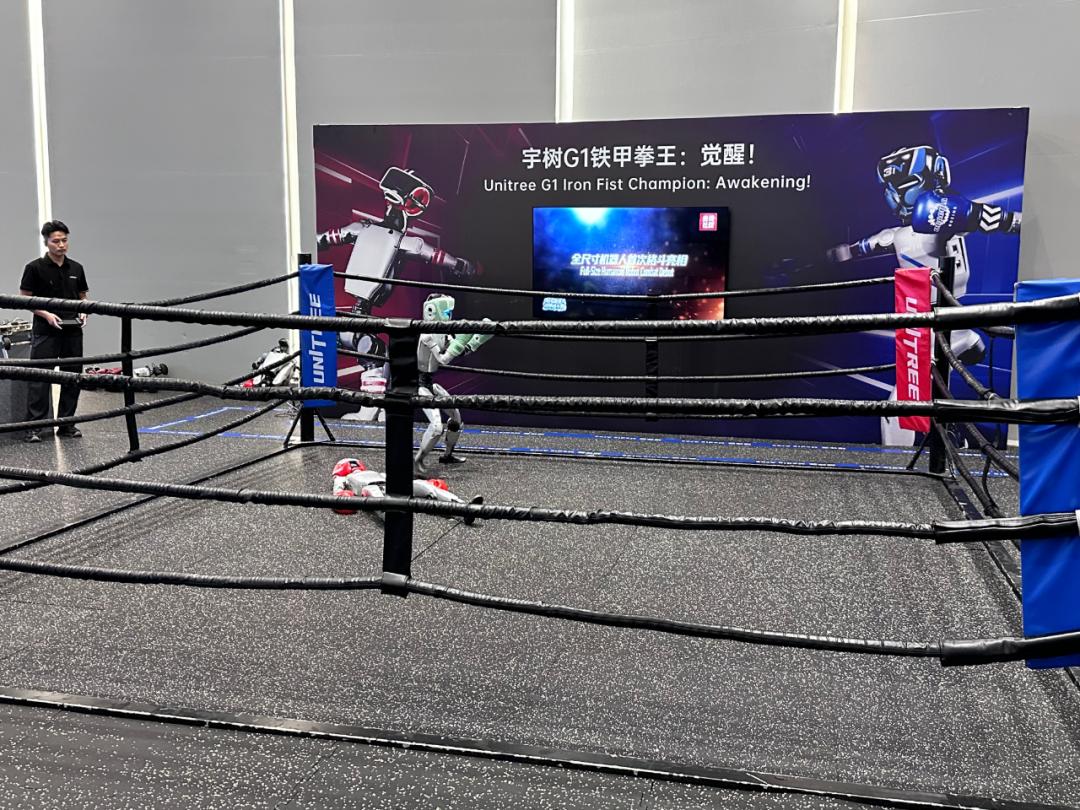
Photo by: Lin Qiuyi
However, the risks in overseas markets suddenly became severe two days before the roadshow. On July 28, the U.S. Federal Communications Commission (FCC) updated its regulated list, listing humanoid robots and quadruped robots produced outside the United States as advanced robotic equipment, and