2026 Reshuffle of Chinese Enterprises' Expansion into Southeast Asia: Compliance and Dilemmas Amid the Boom
In 2026, Chinese enterprises are venturing into the Southeast Asian market, entering a stage of in-depth reshuffling.
The five core markets of Singapore, Vietnam, Indonesia, Thailand and Malaysia remain consistently popular:
Huawei, ByteDance, Alibaba and Tencent have all settled in Singapore one after another to build regional headquarters, investment carriers and cross-border management systems. Luxshare Precision, Goertek, LONGi Green Energy Technology, SHEIN and Temu have clustered in Vietnam to invest in and build production factories. A number of domestic enterprises including Tsingshan Holding, CATL, J&T and TikTokShop have completed in-depth local layout in Indonesia. Thailand is a key position for domestic auto enterprises to deploy new energy vehicles overseas, and BYD, Changan, SAIC, CATL, LONGi and Sany Heavy Industry have all landed projects there. Malaysia has gathered a large number of Chinese enterprises deeply engaged in semiconductor packaging and testing, data centers, photovoltaic and rubber processing sectors, and Huawei, ZTE, Luxshare, Alibaba Cloud and Tencent Cloud have all settled and operated locally.
Among them, new energy, complete vehicle manufacturing, cross-border e-commerce and intelligent manufacturing have become popular tracks for domestic enterprises to focus on layout. At the same time, a large number of small and medium-sized cross-border brands in 3C and home furnishing categories in China are gradually abandoning the traditional direct mail distribution mode, and adopting the localized operation mode of stocking in local warehouses and operating local stores instead.
However, behind the upsurge of multiple industries going to Southeast Asia and taking root in local physical operations, compliance risks are also breaking out intensively.
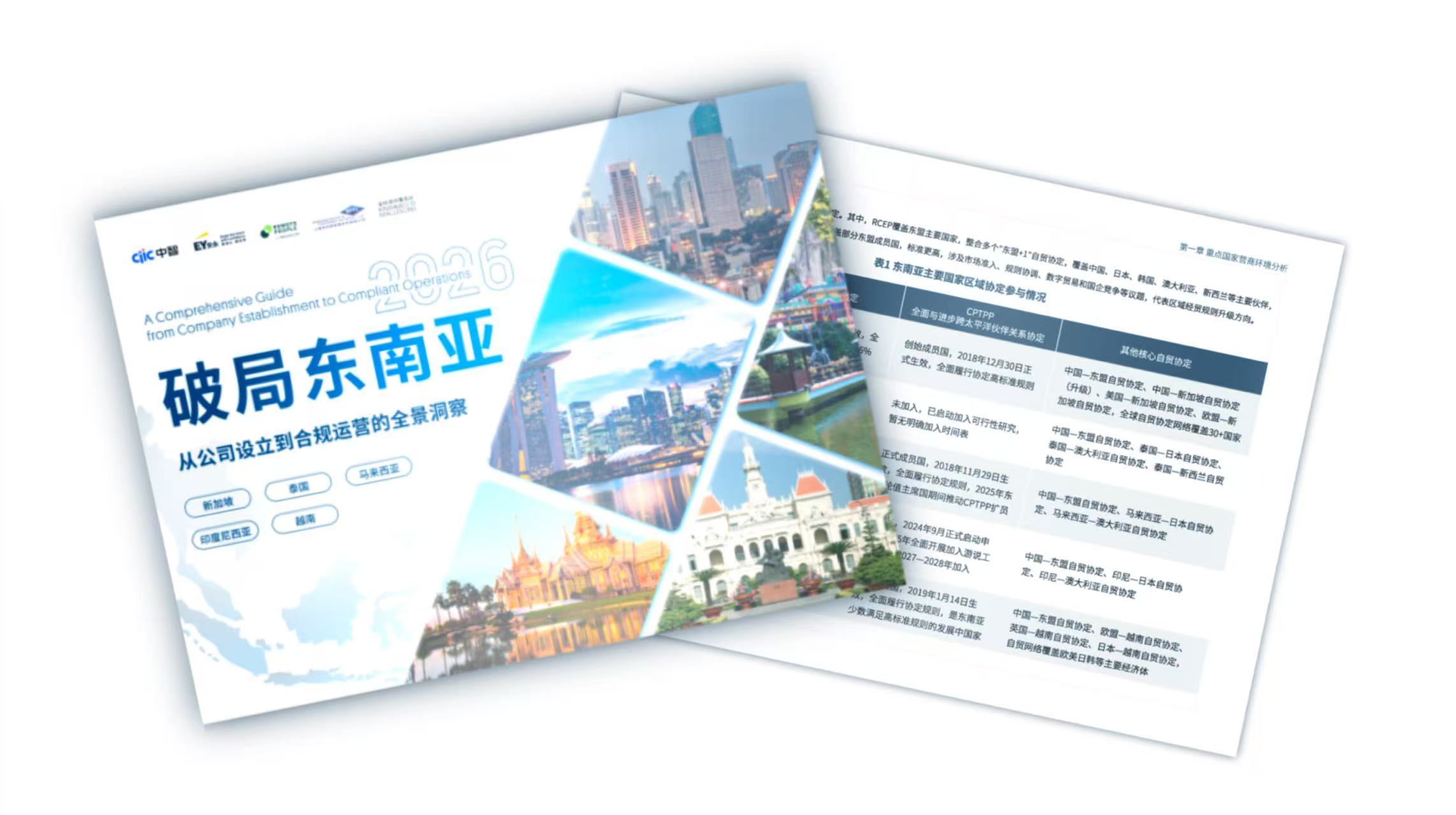
The white paper Breaking Through Southeast Asia: Panoramic Insights from Company Establishment to Compliance shows that many Chinese enterprises directly apply the domestic management system to overseas layout, and frequently encounter compliance problems related to labor, taxation and business qualification in the first year of landing, among which non-compliance in employment is the most common risk for enterprises going to Southeast Asia.
At this stage, all Southeast Asian countries are accelerating the upgrading of local industries, and continuously tightening the protection of labor rights and interests, the threshold for foreign investment access and the intensity of digital tax verification.
In terms of employment, behaviors of overseas enterprises such as arranging employees to work with business visas, chaotic expatriate personnel management, non-compliance of probation period system, arbitrary layoffs, and default on statutory subsidies, can easily induce worker strikes and labor arbitration disputes.
At the tax level, it is very common to split salary to falsely report revenue and fail to withhold and pay taxes as required. In terms of qualification management, problems such as mistakenly using representative offices to carry out profit-making business, exceeding the foreign shareholding ratio, failing to fully pay registered capital, and lacking necessary industry access certification, will directly cause the forced suspension of business.
In addition, problems such as malicious trademark squatting, non-compliant cross-border data flow, non-compliant equity holding on behalf of others, and ignoring local religious customs are also widespread.
It can be seen that in 2026, when enterprises compete in the Southeast Asian market, what they compete for is no longer the advantages of production capacity and pricing, but the competition of core capabilities of compliance management level and local operation strength — employment management, financial and tax planning, main structure construction, and intellectual property layout all need to be focused on control. Enterprises that ignore compliance requirements and stick to the original domestic operation mode will eventually be gradually eliminated by the local market.
01 Chinese enterprises cluster in Southeast Asia to seize dividends, and the overseas operation mode is iteratively upgraded
According to the data from the white paper Breaking Through Southeast Asia: Panoramic Insights from Company Establishment to Compliance, China and ASEAN have been each other's largest trading partners since 2020.
In 2025, the bilateral trade volume between the two sides reached 7.55 trillion RMB, up 8.0% year on year, accounting for 16.6% of China's total foreign trade volume. The Regional Comprehensive Economic Partnership (RCEP) has been in effect for three full years, and the proportion of intra-regional trade in intermediate goods has now risen to 67%.
At this stage, domestic enterprises going overseas have bid farewell to the traditional way of working alone. Leading enterprises in the industrial chain take the lead, and the whole industrial chain clusters to settle in overseas markets, which has become the mainstream standard mode for large manufacturing enterprises to go overseas, essentially promoting the in-depth reshaping of the "China + N" global grid supply chain system.
The current situation of the automotive industry going overseas can most intuitively confirm this trend.
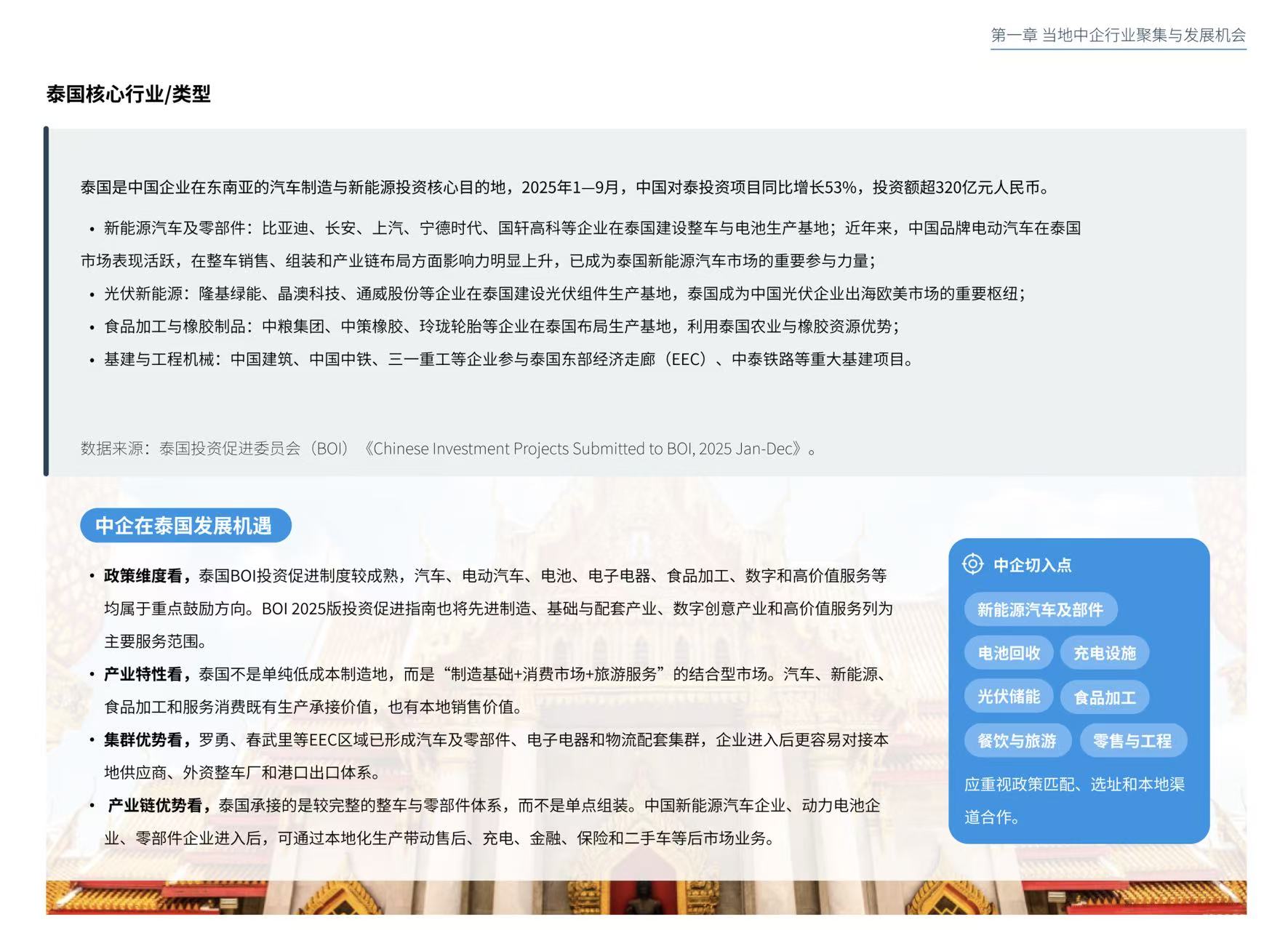
BYD and Wuling, the two leading auto enterprises, are continuously expanding their production bases in Southeast Asia, changing the old operation mode of "building factories overseas and transporting core parts from China". When SAIC-GM-Wuling settled in the Indonesian industrial park, it simultaneously invited 16 domestic suppliers of three-electric systems, wiring harnesses and interior trim to settle together, completing the local supporting of the industrial chain. In the process of building a complete vehicle factory in Rayong, Thailand, BYD simultaneously introduced domestic supporting enterprises of die-casting and precision parts to build factories, effectively reducing logistics costs, avoiding delivery risks, and greatly improving the stability of the supply chain.
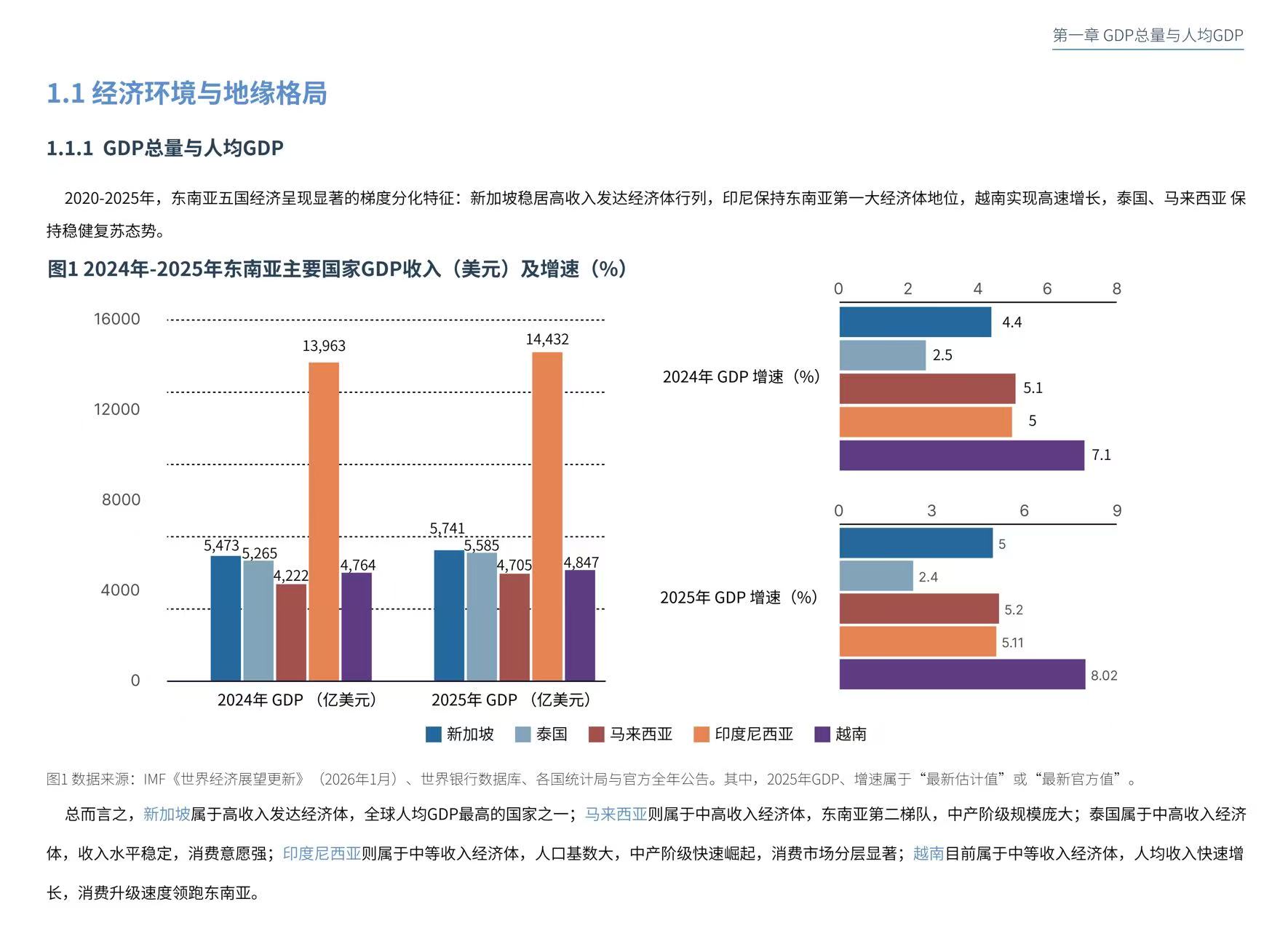
Generally speaking, after years of industrial precipitation, the industrial positioning, advantageous tracks and suitable enterprise types of the five core markets of Singapore, Vietnam, Indonesia, Thailand and Malaysia have been highly clear. Data for the first half of 2026 shows that China's direct investment in Indonesia reached 3.9 billion US dollars, and the registered volume of new Chinese-funded enterprises in Vietnam, Thailand and Indonesia increased by more than 60% year on year.
At present, there are two core paths for Chinese enterprises to go to Southeast Asia: first, aim at the continuously growing local domestic demand in Southeast Asia to tap the terminal consumption dividend. Second, through the system of "R&D in China, manufacturing in Southeast Asia, and global distribution", to hedge the risk of geopolitical trade barriers.
In terms of deeply cultivating local domestic demand, Southeast Asia has a young population of more than 650 million, and there is a large gap in high-quality local supply, providing broad space for Chinese consumer-oriented enterprises to go overseas.
In terms of building a collaborative industrial chain between China and foreign countries, facing overseas tariff barriers and geopolitical risks, Chinese enterprises have formed an efficient mode of "R&D in China, manufacturing in Southeast Asia, global distribution", relying on the division of labor advantages of Southeast Asian countries to build a complete industrial system to hedge geopolitical trade barriers.
The five major Southeast Asian markets have clear division of labor and different positioning, jointly building a differentiated regional industrial pattern, and the differentiated industrial pattern of each country accurately supports this layout:
On the side of collaborative industrial chain, Singapore undertakes headquarters economy, high-end R&D and high-end services to consolidate overseas technology and management empowerment. Vietnam is adjacent to China's supply chain, relying on low-cost labor force and a number of free trade agreements, taking the industrial clusters of Bac Ninh and Binh Duong as the core, to undertake export-oriented manufacturing capacity of electronics, photovoltaics and other industries. Malaysia focuses on high-precision links such as semiconductors and data centers to complete the supporting of high-end industrial chain; Thailand undertakes the function of global distribution and export of new energy and mechanical and electrical products.
On the domestic demand side of Southeast Asia, Indonesia is rich in new energy mineral resources and huge domestic demand, superimposed with the policy of local processing of raw ore, which is the core carrier of new energy deep processing and local consumer industry. Thailand has stable policies and perfect industrial supporting, relying on the EEC economic corridor, and has become the preferred area for new energy vehicles and mechanical and electrical products to adapt to local consumption. However, Vietnam has a small domestic demand market and is only suitable for industrial OEM, which also proves that Chinese enterprises' domestic demand layout has clear regional pertinence.
At the same time, the overseas industries of Chinese enterprises have achieved comprehensive upgrading, shifting from the low-end labor-intensive processing industries such as textile and clothing in the early years to technology-intensive tracks such as new energy, high-end manufacturing and digital technology.
On the whole, relying on the complementary industrial pattern of the five Southeast Asian countries, Chinese enterprises' overseas expansion has evolved from a single production capacity transfer to a high-end global layout of technology, brand and industrial chain collaboration.
02 Long-term deep cultivation in Southeast Asia: Avoid the risks of lightweight overseas expansion
Under the rapid growth, the hidden risks of the lightweight overseas mode commonly used by domestic enterprises are also being intensively exposed.
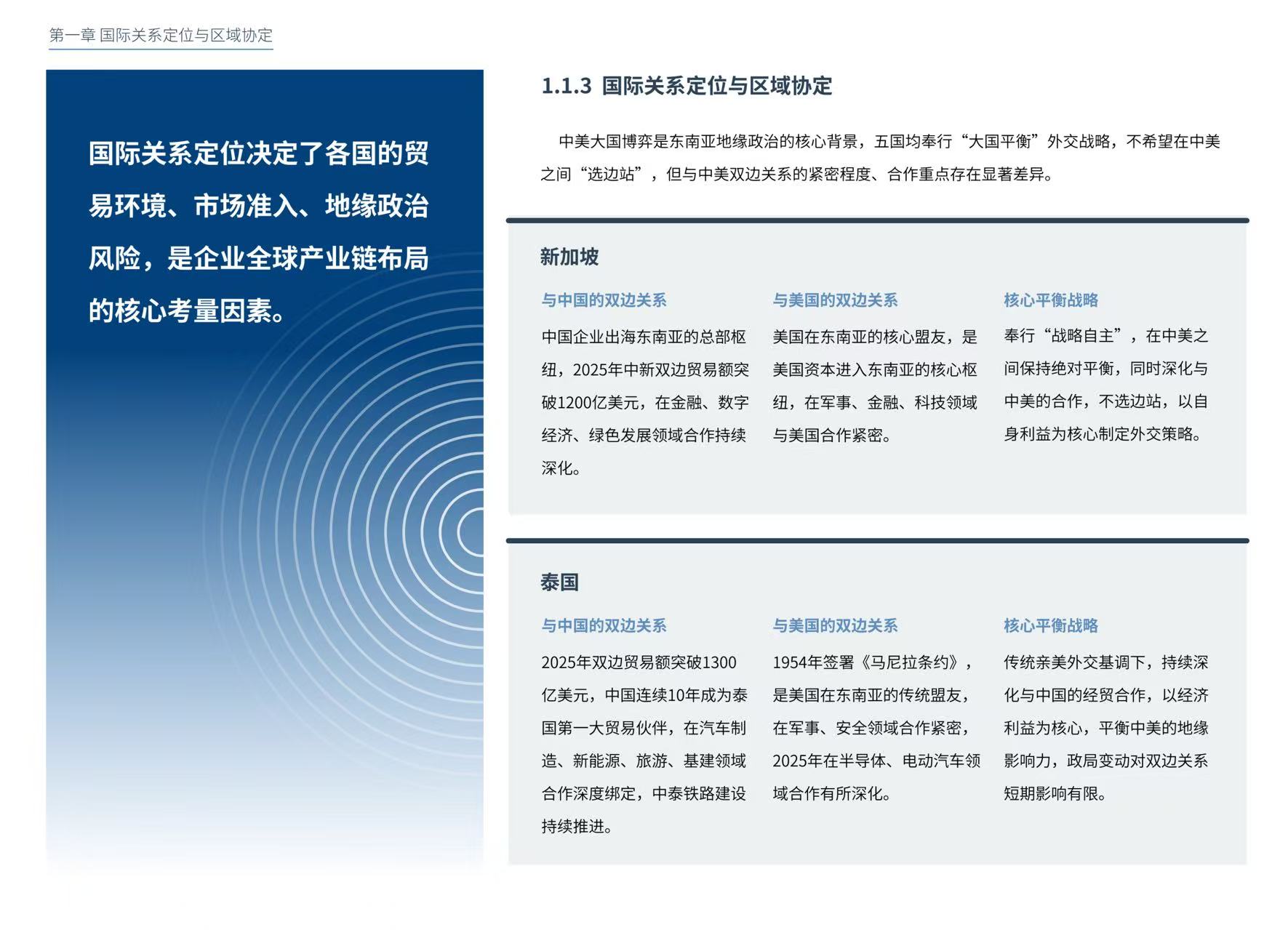
The five core Southeast Asian markets of Singapore, Vietnam, Indonesia, Thailand and Malaysia have their own differentiated industrial advantages, and their regulatory regulations and compliance standards are even more different. There is no fully universal overseas operation scheme.
The root cause of losses suffered by many Chinese enterprises when deploying in Southeast Asia lies in their subjective judgment of the local market environment: in the past, a large number of enterprises did not register the main company locally in order to reduce costs, and relied entirely on local agents to carry out business. They either directly replicate the domestic business model, or fail to distinguish the regulatory requirements of various countries, and generally attach little importance to compliance management.
Entering 2026, the tax, labor and immigration departments of many Southeast Asian countries have launched regular joint inspections. The industry has reached a unified consensus: using agents is only suitable for short-term market exploration. If you want to deeply cultivate the regional market for a long time, you must set up a local legal person entity.
Specifically, as the only high-income economy in Southeast Asia, the most prominent compliance risk in Singapore comes from tax penalties caused by shell companies.
Many enterprises have cognitive misunderstandings, thinking that the extremely low registered capital standard of SGD 1 in Singapore means that the registration cost is low. But in fact, links such as bank account opening, EP employment pass review, and equity income tax calculation will strictly verify the actual operation vouchers of enterprises in the local area.
A real penalty case of a leading domestic new energy enterprise is of great warning significance: in 2024, an enterprise registered a shell holding company with a registered capital of SGD 1 in Singapore, whose sole purpose was to hold the equity of a nickel ore factory in Indonesia. The entity had no local office space or local on-the-job personnel in Singapore, and all business decisions were not executed in Singapore, belonging to a shell enterprise without substantial operation.
In 2026, after the enterprise sold the equity of the Indonesian factory to earn profits, the Inland Revenue Authority of Singapore (IRAS) determined that this holding company did not have a real commercial purpose, could not enjoy the corresponding tax preferences, and legally recovered a high 24% capital gains tax and added late payment surcharge from the enterprise. The total loss of the enterprise exceeded SGD 2 million, equivalent to more than 10 million RMB.
In fact, Singapore is indeed suitable for Chinese enterprises to build regional headquarters and capital management centers, but while enjoying the benefits of local policies, enterprises must attach importance to the strict local regulatory requirements on commercial substance and personnel employment.
Southeast Asian countries have regional differences in religious culture, employment system, laws and regulations. When deploying local markets, enterprises should not directly apply domestic operation ideas and cost management methods.
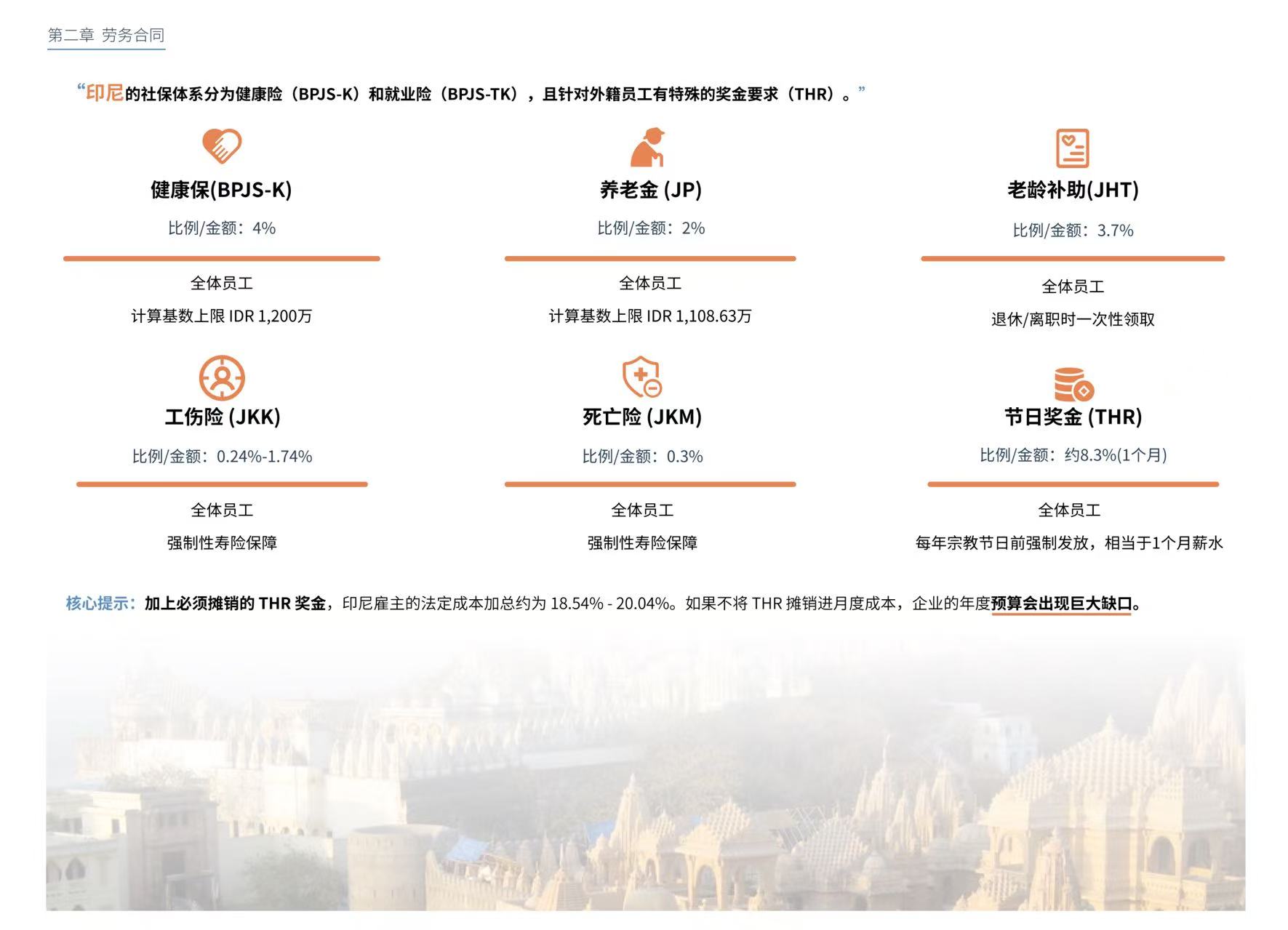
Taking Indonesia, the most populous country in Southeast Asia as an example, the local religious management regulations and labor laws and regulations are often compliance hidden dangers that overseas enterprises easily step on.
After a domestic short video operation enterprise entered the Indonesian market, in order to reduce expenditure, it used rice, cooking oil and other materials to convert and pay employees' Eid al-Fitr THR subsidies, instead of paying cash remuneration. This incident eventually triggered employees to launch a strike and rights protection jointly with the trade union.
Such short-term behaviors that seem to reduce costs are likely to be punished by the two regulatory authorities of labor and immigration at the same time. In addition to direct capital losses, they will also damage the enterprise's local business license qualification, resulting in business stagnation.
In addition to employment management, Indonesia's commodity market access certification standards are also relatively strict. The country has built an independent commodity access mechanism combining local religious characteristics. If food and beauty products want to enter the Indonesian market for sale, they need to complete MUI halal certification in advance. Goods that have not obtained the corresponding certification may be detained in batches, and in severe cases, the goods will be destroyed.
All links of enterprises going to Southeast Asia are inseparable from localized compliance control.
Overseas operation is not equal to directly transferring domestic business to overseas, but it is more necessary to complete the overall localized adaptation and upgrading of operation mode, compliance system and management concept. If you ignore the local exclusive certification requirements and ship goods rashly, all the costs invested in goods, logistics and stock preparation may be lost.
Enterprises should be more familiar with the specific requirements of target countries in employment, trade, taxation, supervision and other aspects in advance, get rid of the inherent domestic operation habits, so as to reduce all kinds of compliance risks from the source.
03 Breakthrough through compliance: Pre-top-level planning, dynamically adjust specific plans
Rather than waiting for an accident to remedy, overseas compliance should do a good job in top-level planning in advance.
The white paper Breaking Through Southeast Asia: Panoramic Insights from Company Establishment to Compliance sorts out a set of implementable four-step compliance execution method: pre-top-level architecture design, phased light asset trial, localization rule adaptation, and full-process data archiving.
Before implementing overseas investment, enterprises should clarify the division of business functions in various countries and regions. Examples of common layout modes: set up a regional headquarters in Singapore, build production factories in Vietnam and Thailand, and develop local consumer markets in Indonesia and Malaysia; at the same time, match and build corresponding business entities, financial and tax systems and personnel employment structures.
Then follow the progressive layout, initially verify the market in a light asset mode relying on EOR and setting up a representative office, and then build a legal person entity independently after the business operation is stable, so as to avoid sunk losses caused by one-time large capital investment.
Take a communication equipment enterprise going to Indonesia as an example, which encountered obstacles in local employment and company establishment to achieve "breakthrough".
In the initial stage, this enterprise relied on the EOR mode to hire 4 local Indonesian employees to carry out business. However, with the rapid growth of orders, due to the absence of a local company entity, it was unable to sign local contracts and issue compliant invoices, and the collection of large amount of business payment was blocked.
It can be seen that if overseas enterprises continue to grow their overseas orders and have large-scale signing and settlement needs, they must arrange local entities in advance. Prepare all the materials for registration, account opening and employment in advance, and improve the legal documents of local directors and rights and responsibility isolation.
To this end, the enterprise plans to set up a wholly foreign-owned PT PMA company in Indonesia, but faces