When it comes to the next Apple Watch, Apple doesn't even want to include a screen.
The Apple Watch is a highly usable device, but it has gradually become somewhat tedious.
If you are a diehard fan of this product, having used it from Series 7 all the way to Series 11, you will probably have this experience: every year Apple can find several reasons for upgrades at its launch event, but once you put it back on your wrist, it still feels like the exact same watch you had last year.
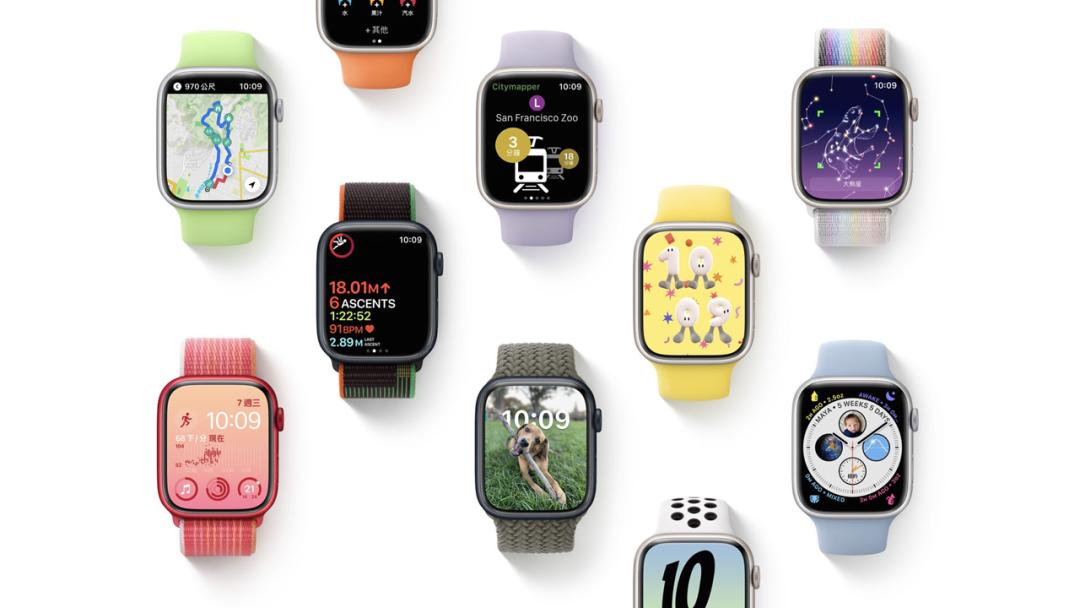
Photo | Apple
The screen is slightly brighter, the bezels are a few millimeters narrower, the chip has a new name, and two more health metrics are added that you may only use once every six months. Each generation on its own is a well-polished product, but looking at several generations together, it feels like the boring practice of "pouring new wine into an old bottle".
Mark Gurman, a reporter at Bloomberg, has a vivid summary of the current Apple Watch: it is a "mini iPhone worn on the wrist".
Over the past decade and more, Apple has been constantly adding features and patching to this "mini iPhone". After the design language we use today was finalized in Series 4, Apple rarely touched on the most fundamental question: what else should the Apple Watch actually be?
Now, signals of change have finally emerged.
According to Gurman, over the past year, Apple's industrial design team has been reassessing the entire Apple Watch product line. Screen-free bands, smart rings, screens of different sizes and forms, more affordable entry-level models, and even high-end models above the Ultra are all under discussion. Even a circular watch face was once put on the table for evaluation.
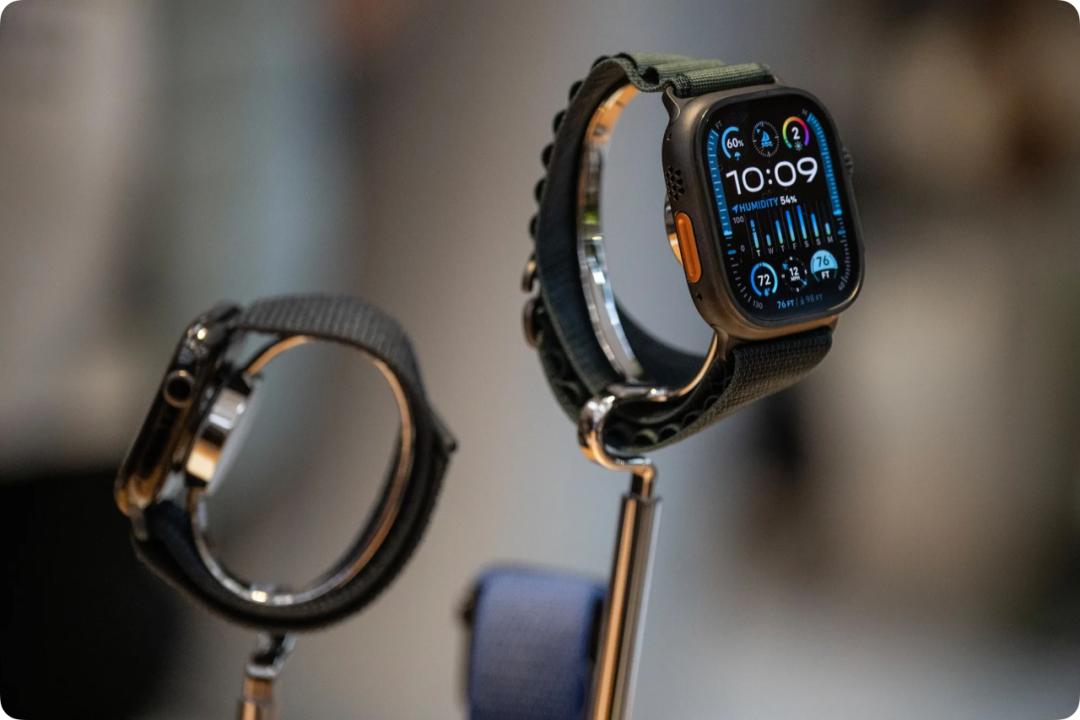
Photo | Bloomberg
Although the Series 12 and Ultra 4 to be released this year are most likely still routine updates — it is said that they will bring the first decent performance improvement in several years and the return of the ceramic case — Apple has clearly realized that continuing to "make incremental tweaks" on the existing watch face can hardly attract new groups of users.
People Who Don't Want to Wear a Watch Also Need Health Management
With its extremely high premium in the high-end market and ecosystem binding, Apple Watch still accounts for nearly 60% of global smartwatch sales, making it an absolute profit leader. But if we look at the absolute growth rate of shipment volume, the fastest-growing era of this wrist-worn device is over.
Data from IDC and Counterpoint shows that the annual shipment growth rate of the global smartwatch market has slowed to single digits. In contrast, the annual shipment growth rates of smart rings that remove the screen and focus on wearing comfort and data collection, as well as AI glasses that emphasize daily perception, have reached 49% and 110% respectively.
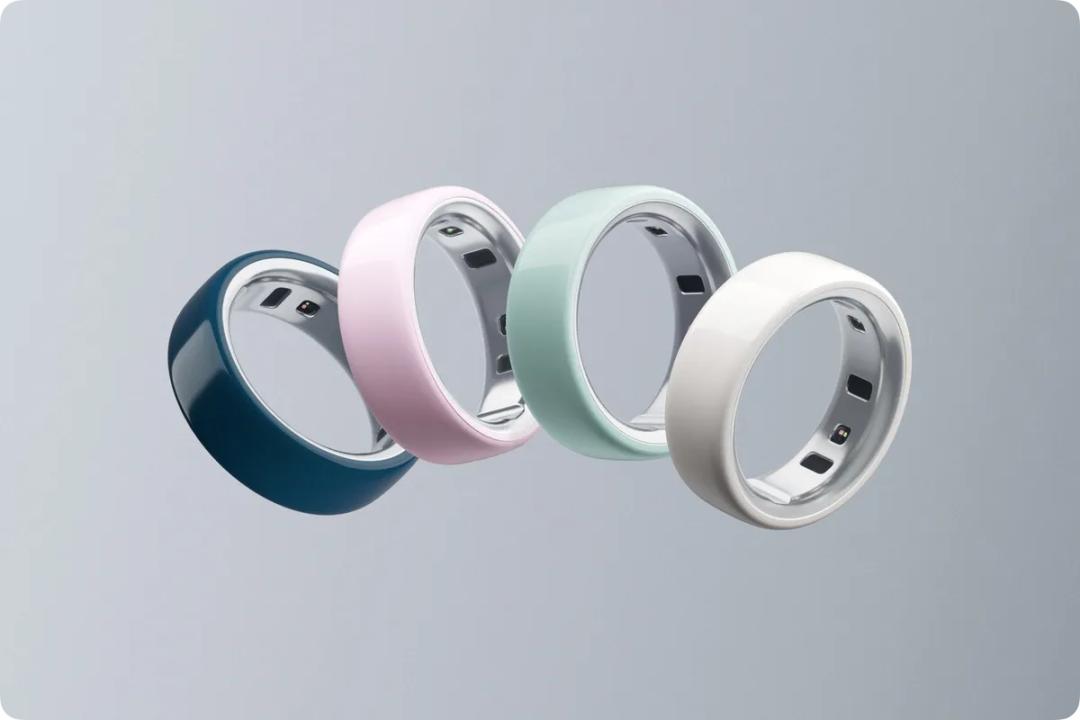
Photo | Oura
The market size of these new categories is of course far behind that of smartwatches, and it is impossible for them to replace the Apple Watch. But their rapid growth at least proves one thing: there are quite a number of people who are not so interested in the current product that "wears an extra screen on the wrist".
In other words, the Apple Watch still sells well, but this form factor that has been used for more than ten years seems to be hitting the ceiling of user scale.
Yet the "screen" has been the most fundamental design premise of the Apple Watch from the very beginning.
In 2015, when The New Yorker documented the early design process of the Apple Watch, it mentioned that what Apple originally wanted to make was a device that could view notifications and information on the wrist. The square watch face is suitable for displaying lists such as contacts and schedules, and the emergence of the Digital Crown is also because pinching to zoom on such a small screen is really awkward.
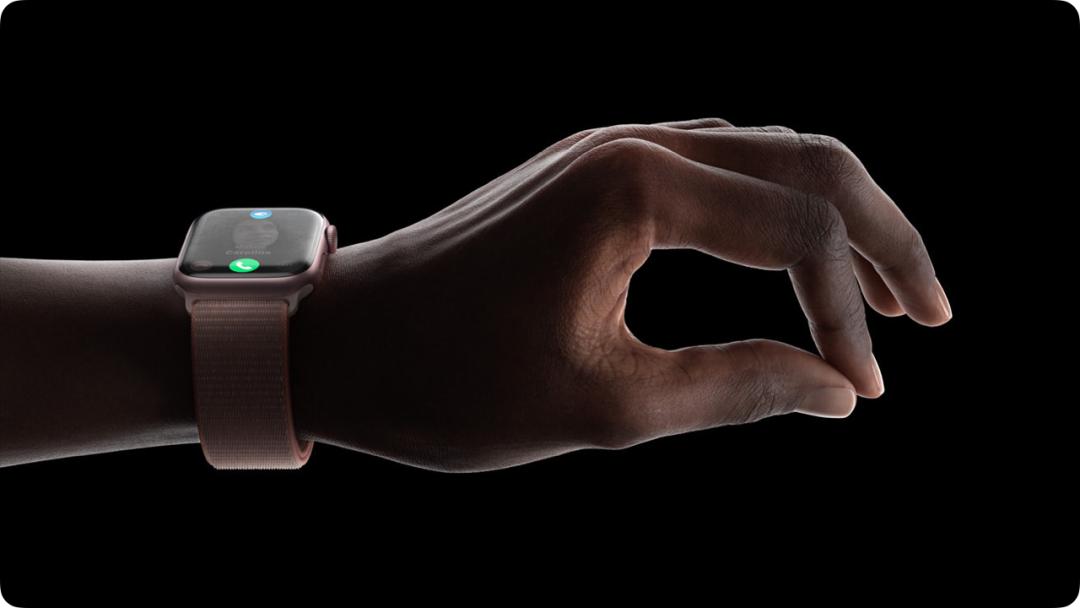
Photo | Apple
Many of the most iconic designs of today's Apple Watch are actually developed around this small screen. Over the past 12 years, Apple has been trying to make it bigger, brighter and more usable; now, for the first time, it is seriously considering that some people may not need this screen from the very beginning.
The reason is not complicated. The functions of the Apple Watch are already extremely rich: making calls, replying to messages, navigation, transit card payment, heart rate monitoring, atrial fibrillation alerts, it can do almost everything. But the flip side of being all-powerful is that you have to get used to the entire usage habits of smart devices: the screen that lights up at any time, notifications that vibrate frequently, and the battery level that you have to remember to charge every day.
In real usage scenarios, this will evolve into an extremely awkward contradiction.
Apple is increasingly emphasizing "all-day health monitoring", hoping that users will wear it even when sleeping to get continuous sleep and wrist temperature data. But the reality is that sleeping is exactly the time when most people are used to charging their electronic devices. To record sleep data, you have to plan your charging schedule carefully: charge it for a while while taking a shower, charge it for a while while brushing your teeth, and top it up a little before going to bed.
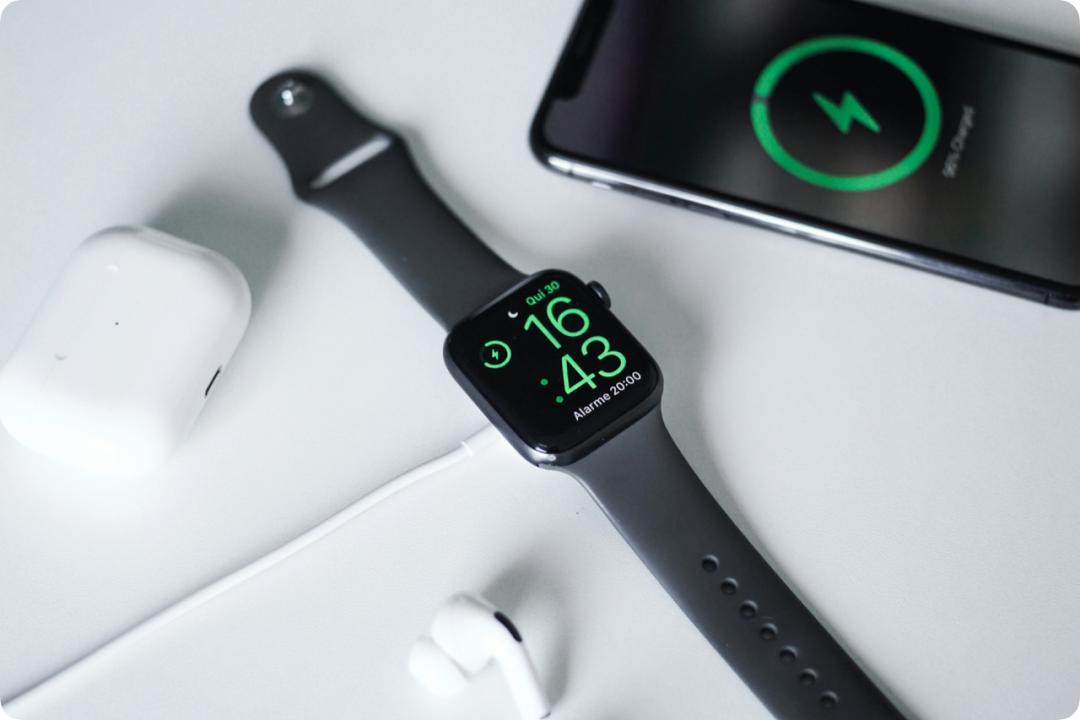
Photo | Victor Carvalho @ Unsplash
A device that was originally designed to reduce health anxiety has ended up becoming an object that requires careful care. In the Chinese market, lightweight smart devices from Huawei, Xiaomi and other brands that boast a two-week battery life make users who are used to low-interruption experiences find it hard to accept the hassle of "charging once a day".
Not to mention those who are used to wearing traditional mechanical watches, or simply hate being disturbed by notifications on their wrists.
For the vast majority of people who have not bought an Apple Watch, they may not need an electronic watch at all.
Health monitoring is the top priority real demand, and "wearing a smart device on the wrist" has instead become an unnecessary trouble. They just want to know their physical state, and there is no need for an extra information entry on the wrist that constantly demands their attention.
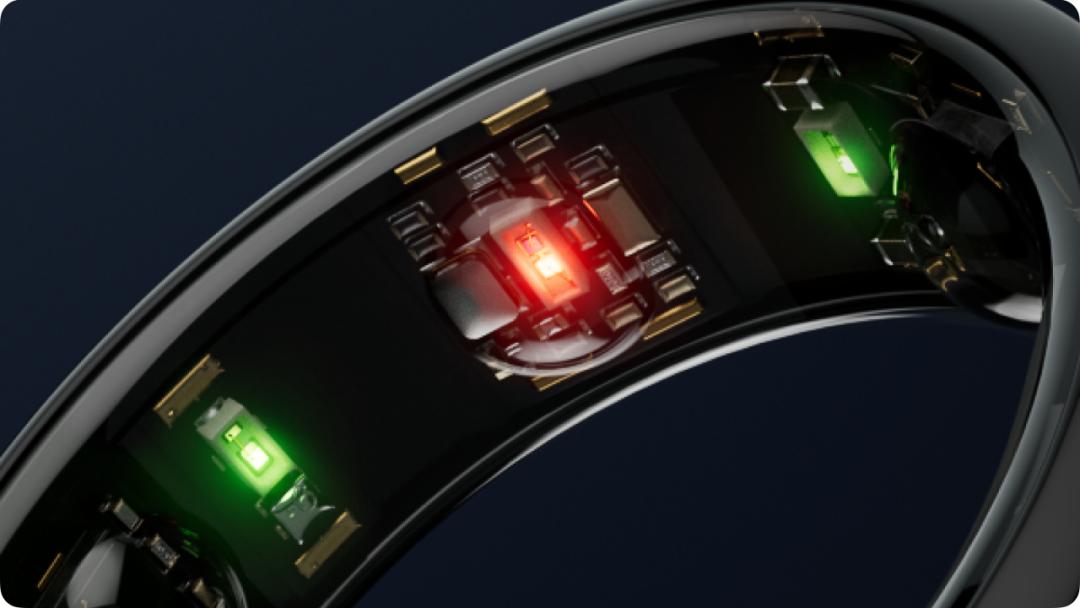
Photo | Oura
This is exactly why the Oura ring and Whoop band have quickly grabbed market share in the past few years. They simply removed the screen, abandoned complex interactions, and maximized wearing comfort and battery life, allowing the hardware to return to the property of a non-intrusive accessory.
They verified a harsh fact: in the face of pure health demand, the screen that was once regarded as a core selling point has instead become the biggest obstacle.
If Apple still wants to sell its health ecosystem to the remaining majority of people, the hardware must step back from the visual center of the wrist and become a non-intrusive daily item that does not disturb life.
After 12 Years of Recording Physical Data, Apple Still Has Not Learned to "Speak in Plain Language"
In 2022, when ifanr interviewed Apple COO Jeff Williams, he expounded Apple's core understanding of health products: people cannot actively pay attention to their health all the time, so technology must integrate monitoring into daily life imperceptibly.
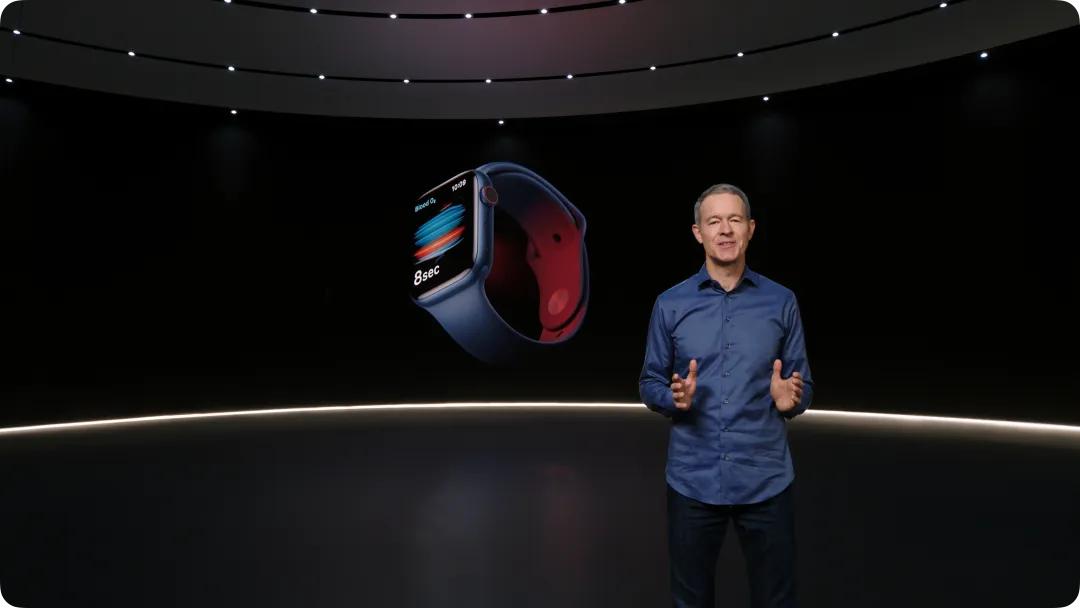
Photo | Apple
At that time, the most natural carrier was the Apple Watch. But if the goal is just "imperceptible integration", the carrier obviously does not have to be limited to the wrist.
However, removing the screen to make a screen-free health sensor with a battery life of several days is not difficult in terms of hardware. The real challenge lies in the next step: when the device no longer provides any intuitive visual feedback, how should these complex health data be presented to users?
If you use Apple Watch for a long time, opening the "Health" App on your iPhone will make you understand. The data inside is as detailed as a thick physical examination report, which can identify trends and abnormalities of individual indicators, but it lacks one crucial part — it will not give you a straightforward interpretation.
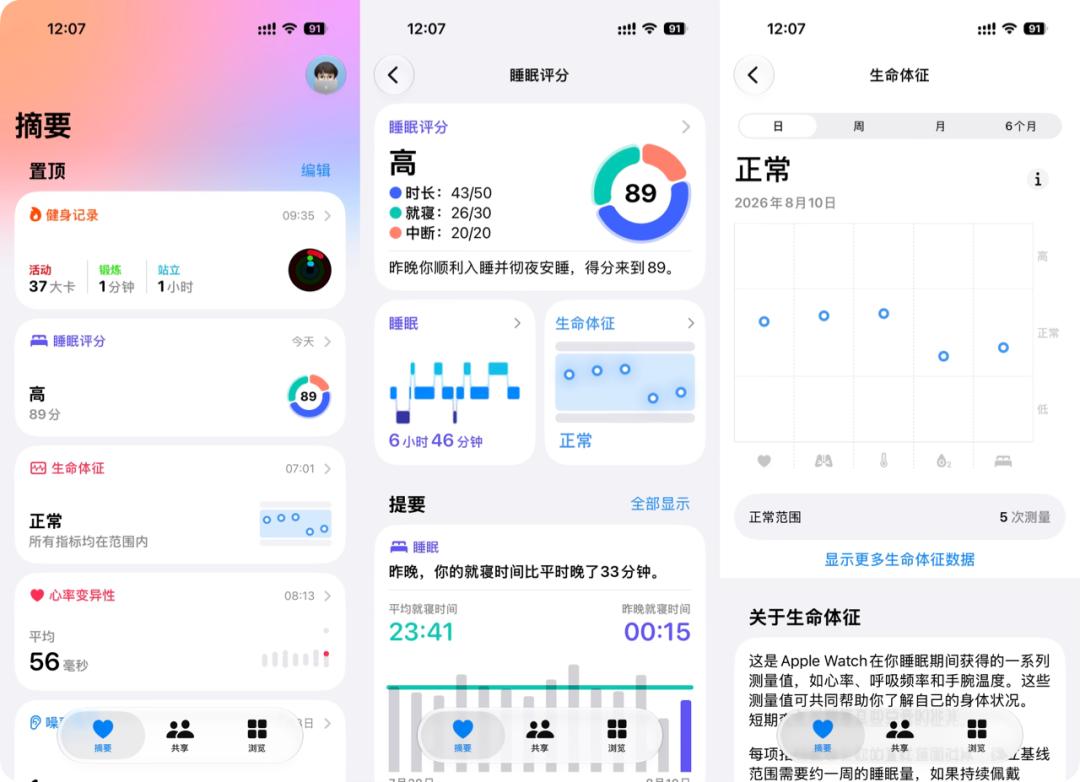
Photo | Apple Health
Heart rate variability (HRV) has decreased, resting heart rate is high, sleep was frequently interrupted last night... Apple Health has all these data, but what exactly do they mean? Should you rest today, or can you continue to go running? Apple chooses to remain cautious and silent. It displays the data completely, but the interpretation is always far from satisfactory.
In contrast, Whoop will package complex indicators into a daily "Recovery Score", and Oura will use scores from three dimensions to tell you your physical "Readiness" for the day.
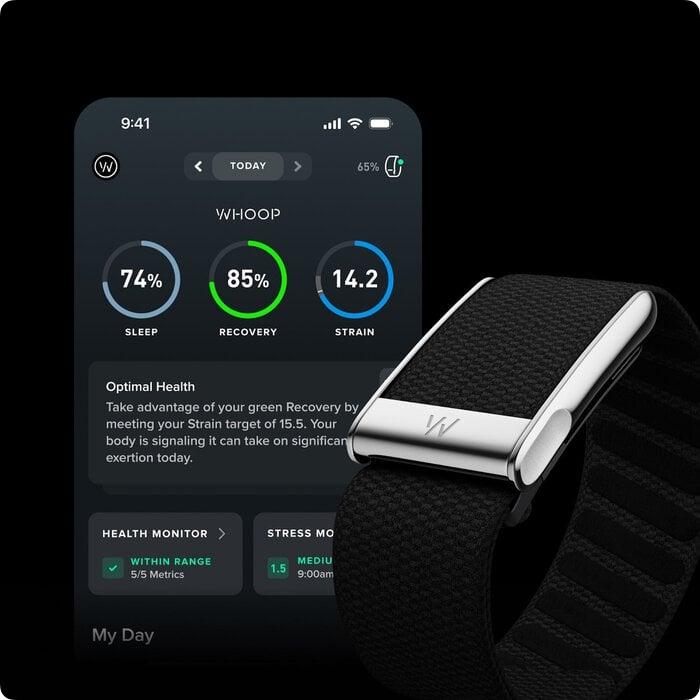
Photo | Whoop
Even third-party AI tools such as ChatGPT Health and Ant Group's Afu have started to read Apple Health data, and directly help users analyze the relationship between sleep and training through conversations.
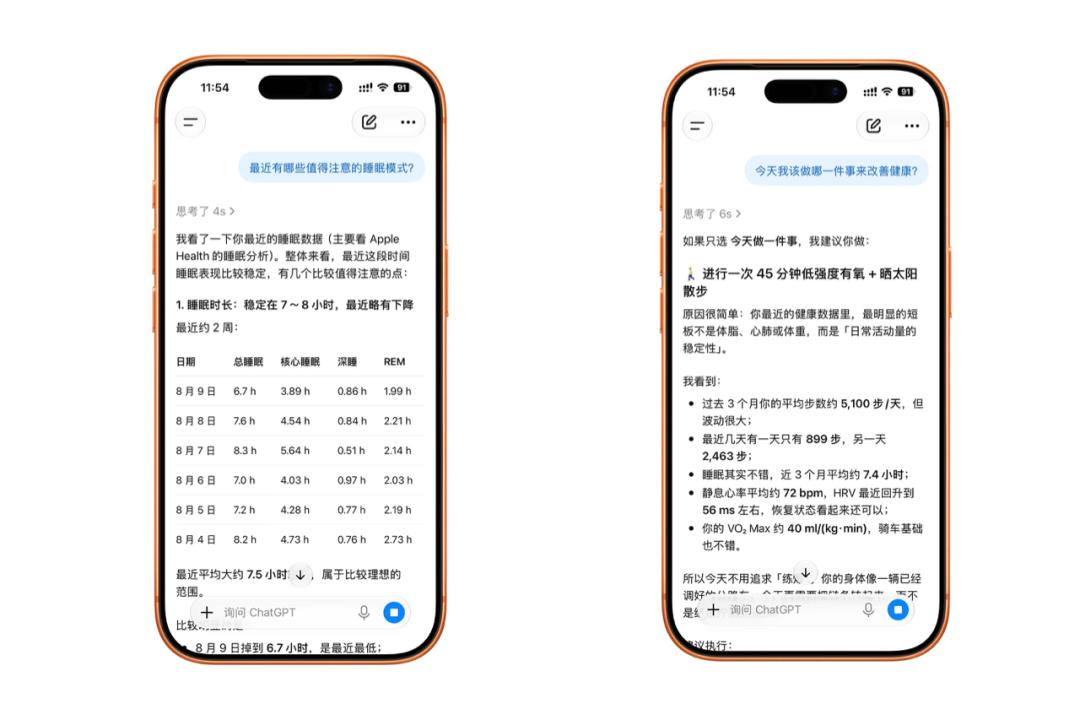
Photo | ChatGPT Health
They translate cold data into actionable guidelines that are easy to understand.
This is the "last mile" that Apple currently lacks most in the health field. If this shortcoming is not fixed, screen-free wearable devices will become a "silent guy" that only keeps recording data but never communicates.
The more "non-intrusive" the hardware is, the more clearly the software needs to interpret the data.
When the Screen Disappears, AI Becomes the New UI
Removing the screen from the hardware seems to be just a subtraction in design, but in terms of interaction logic, it is an inversion.
When there is no longer a watch face that lights up at any time on the wrist, users will not actively tap apps, refresh cards or flip through charts. The initiative of data interaction must change from "users actively check" to "the system actively informs".
On screen-free wearable devices, voice, environmental perception and background AI become the only user interfaces.
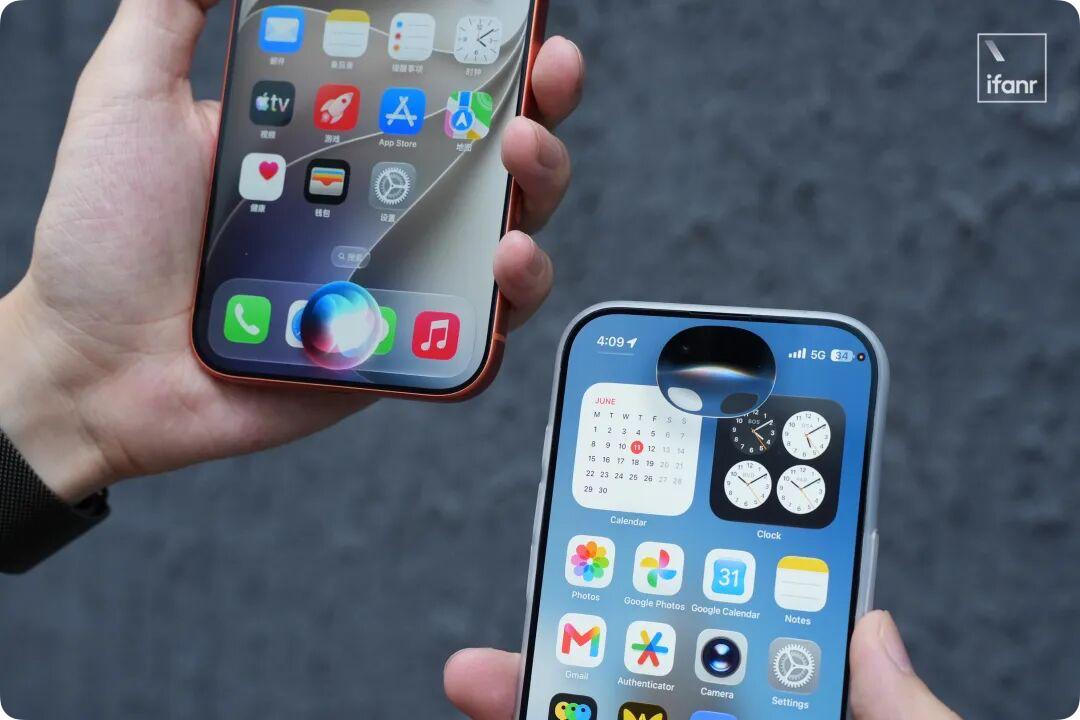
This change in interaction logic also provides a valuable perspective for observing multiple recent leaks about Apple's health business.
According to a Bloomberg report earlier this year, after Eddy Cue took charge of the health business, Apple is reconsidering its approach to health services and plans to gradually integrate some functions from the original AI health coach into the Health App.
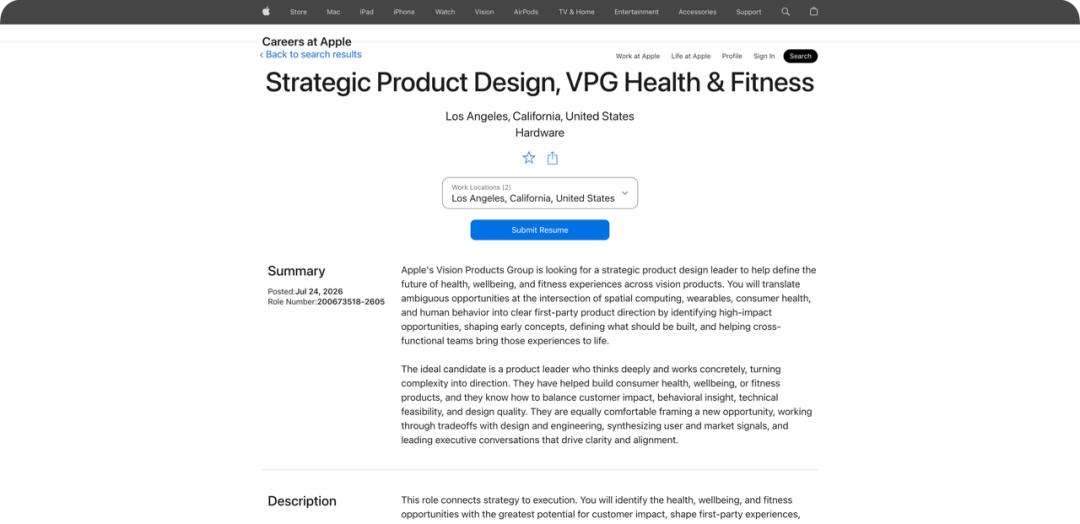
At the same time, Apple has recently released multiple recruitment notices related to health AI. The Vision Products Group is looking for a design lead responsible for spatial computing, wearable devices and consumer health products, and is also recruiting engineers to integrate generative AI and LLM functions into health and fitness experience prototypes. Another Health Technology recruitment notice even explicitly states that the role will study how to integrate LLM Agents into the Apple ecosystem.
Connecting these seemingly scattered signals, Apple's blueprint is actually very clear: what it wants to build is never a single "killer hardware" that works alone, but a seamless health perception network embedded in daily life.
In this network, devices of different forms perform their respective duties —
Screen-free band or ring, responsible for imperceptible, all-day close-range collection of physiological indicators;
AirPods, responsible for supplementing body temperature