DJI Missed Out on Unitree: A 10 million investment that was never disbursed is now worth 3.7 billion.
DJI Missed Unitree: An Unpaid RMB 10 Million Investment Is Now Worth RMB 3.7 Billion
On the day Unitree Technology opened its share subscription, the market revisited a past event that dates back eight years.
In 2018, a fund under DJI planned to invest RMB 10.1286 million in Unitree Technology. According to the agreement at that time, this fund would obtain about 17% of the equity. DJI once completed the industrial and commercial registration and became the largest external shareholder of Unitree.
However, this sum of money was never actually transferred.
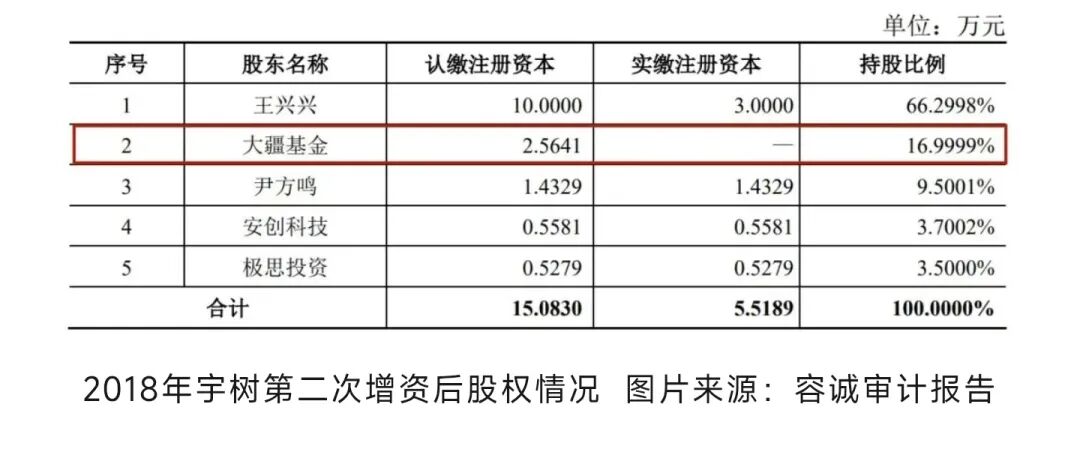
In 2019, the two parties reduced all the subscribed capital, and the DJI fund disappeared from Unitree's shareholder list. According to the static calculation based on Unitree's issue price of RMB 150.80, if this investment had been completed and the shares had been held ever since, the market value of DJI's equity would be about RMB 3.7 billion today.
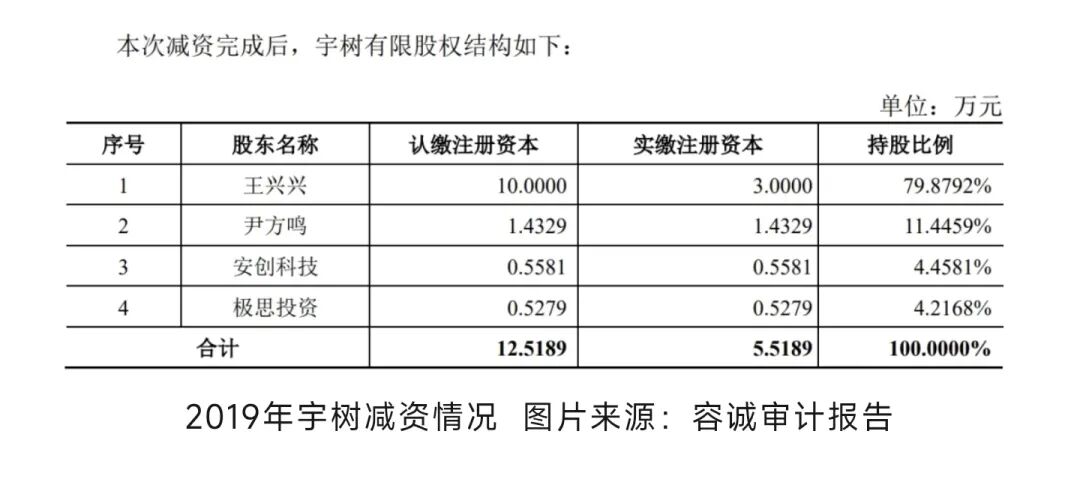
This is not a transaction of "selling at a low price and missing the subsequent surge". DJI did not sell its stake in Unitree at a low level, it did not even actually buy in. But precisely because of this, this story is more dramatic: a company that best understands China's smart hardware and is most capable of judging the robot industry was once only a never-completed multimillion-yuan investment away from Unitree.
1. Wang Xingxing worked at DJI for two months, and DJI almost became the largest external shareholder of Unitree
Wang Xingxing briefly worked at DJI after graduation. At that time, his XDog electric-driven quadruped robot, which he developed during his postgraduate study at Shanghai University, had already attracted attention in the robotics circle. In 2016, Wang Xingxing left DJI and founded Unitree Technology in Hangzhou.
DJI did not notice this company until later.
In April 2018, DJI's affiliated DJI New China PE Fund-1 L.P. signed a capital increase agreement with Unitree and its original shareholders, planning to subscribe for Unitree's new registered capital with USD 1.53 million, equivalent to RMB 10.1286 million. After the industrial and commercial change was completed, the DJI fund was registered to hold 16.9999% of the shares, making it an important shareholder second only to Wang Xingxing at that time.
However, this subscribed capital contribution was not actually paid. In April 2019, Unitree's board of directors approved the reduction of all subscribed registered capital of the DJI fund; in July of the same year, the industrial and commercial change was completed.
In other words, DJI did not lose a return that was already in its pocket, it lost an admission ticket that it got early but never redeemed.
2. Unitree in 2018 was not the Unitree of today
Looking back today, Unitree is one of the most popular names in the quadruped robot and humanoid robot tracks. But back in 2018, it was more like a hardware startup that had just started shipping products.
In that year, humanoid robots had not yet become the main line of the capital market, and embodied intelligence had not been repeatedly written into financing PPTs. For many investors, quadruped robots were still "large toys" with high prices, narrow use cases and great difficulty in large-scale promotion. Boston Dynamics' robot dogs were impressive enough, but it had not yet proved that this could become a huge business.
Wang Xingxing later recalled that after Unitree obtained RMB 2 million in angel investment in 2016, the funds only lasted for about a year and a half, and the company was once even on the verge of being unable to pay salaries. It was not until 2018 that the products were officially shipped, and the financing gradually went smoothly.
This is also the most noteworthy part of DJI's bet on Unitree at that time.
DJI has no shortage of understanding of hardware. Motors, control systems, sensors, structural design, supply chain, mass production yield, cost control — these capabilities are precisely the thresholds that legged robots find most difficult to cross when moving from the laboratory to commercial products. The fact that DJI was willing to push Unitree to the stage of signing the agreement and completing industrial and commercial registration at least shows that it saw the technical value of this company.
But at that time, no one could be sure whether a robot dog could evolve from a geek toy to the starting point of a general-purpose robot platform.
3. "Anti-corruption led to divestment" cannot be taken as a confirmed fact
This past event has been repeatedly mentioned recently, and there is also a highly topical explanation: DJI's internal anti-corruption and organizational rectification around 2019 affected its external investment projects, and Unitree was therefore abandoned.
This statement is not completely unfounded. DJI publicly disclosed its internal anti-corruption situation in those years, involving multiple links such as supply chain and procurement, which indeed happened in the similar period when Unitree reduced its capital.
However, up to now, Unitree's public prospectus only records the signing of the agreement, the unpaid capital contribution and the subsequent capital reduction, and does not disclose the specific reason for DJI's exit; DJI has not publicly explained why this investment was not completed.
This matter can be written as a clue worth following up, not a definite conclusion.
What is really worth reviewing for the industry is not just whether a certain investment was affected by a certain organizational adjustment. When large companies make early-stage investments, the most difficult part to handle is often not whether they can understand the technology, but whether they can go through internal processes, risk preferences and organizational changes to translate their judgments into actual assets on the balance sheet when the technology has not reached a consensus and the commercial value has no financial statements to support.
4. Unitree's subsequent success did not only rely on its appearance at the Spring Festival Gala
Many people remember that Unitree rose to fame with the robot dogs on the stage of the 2021 Spring Festival Gala; but the process for this company to build its real barriers took place off the stage.
It was one of the first to make quadruped robots deliverable, purchasable and continuously iterable products, and entered universities, developers, scientific research institutions and overseas markets at a relatively low price. Quadruped robots not only brought sales volume, but also a complete set of engineering capabilities: joint modules, motion control, structural design, mass manufacturing, after-sales service and product iteration.
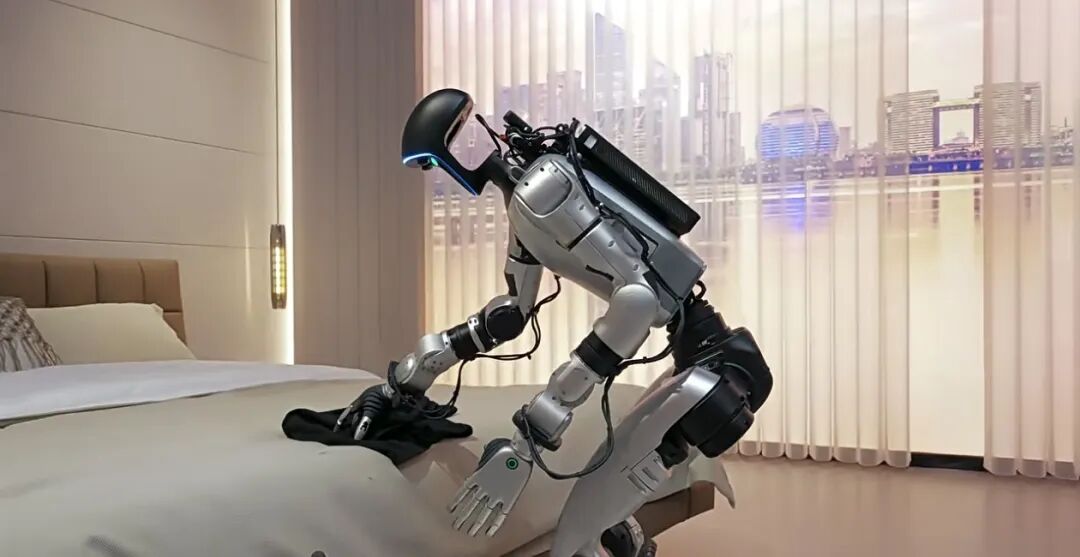
This set of capabilities was later extended to humanoid robots.
Before the boom of embodied intelligence arrived, Unitree had already completed all the tough work of "whether robots can be stably produced, stably delivered and stably reduce costs". When large models, visual perception and humanoid robots exploded intensively after 2024, it already had the hardware platform, supply chain capabilities and productization experience in hand.
Unitree's growth in recent years has therefore been very steep: according to the company's disclosed offering documents, its revenue increased from RMB 159 million to RMB 1.699 billion from 2023 to 2025, and its non-recurring profit and loss attributable to shareholders turned from a loss to RMB 591 million.
The RMB 3.7 billion figure is only calculated based on the issue price. The real value of Unitree lies in the fact that it has proved that Chinese companies can turn high-performance legged robots from expensive prototypes into products that can be continuously iterated and mass-produced.
5. What DJI missed is far more than RMB 3.7 billion
Of course, any post-event calculation has limitations.
Even if DJI had completed the investment back then, it would not necessarily hold the shares all the way to the listing; subsequent financing, equity dilution, exit arrangements and corporate strategy would all change the final result. It is even more impossible to deduce that "DJI missed Unitree and thus missed the robot era". DJI is still one of the world's strongest smart hardware companies, and an uncompleted investment cannot define the future of a company.
But it does leave a very specific reminder.
When a new industry is just starting, the scarcest opportunities usually do not look like opportunities. Unitree in 2018 did not have today's valuation, no Spring Festival Gala aura, and no label of "the first humanoid robot stock". It was just a young team trying to make quadruped robots into commercial products, with a valuation of RMB 60 million and a financing amount of just over RMB 10 million.
DJI was very close to this company back then, close enough that the agreement was signed, the industrial and commercial registration was completed, and the equity was already written into the shareholder list.
Eight years later, everyone knows what Unitree is.
RMB 3.7 billion is just an easy-to-spread number. What is really worth looking back on is the moment in 2018 that had not yet been named "embodied intelligence": one of China's strongest hardware companies was once separated from the next-generation robot platform by only an unpaid RMB 10 million.
This article is from the WeChat Official Account "Xin Smart Headlines", author: Time, published with authorization from 36Kr.