With a Nürburgring Nordschleife lap time of 7 minutes and 04 seconds, has Xiaomi once again stood on the shoulders of Geely?
Xiaomi SU7 Ultra's Nürburgring lap record has gained a new footnote.
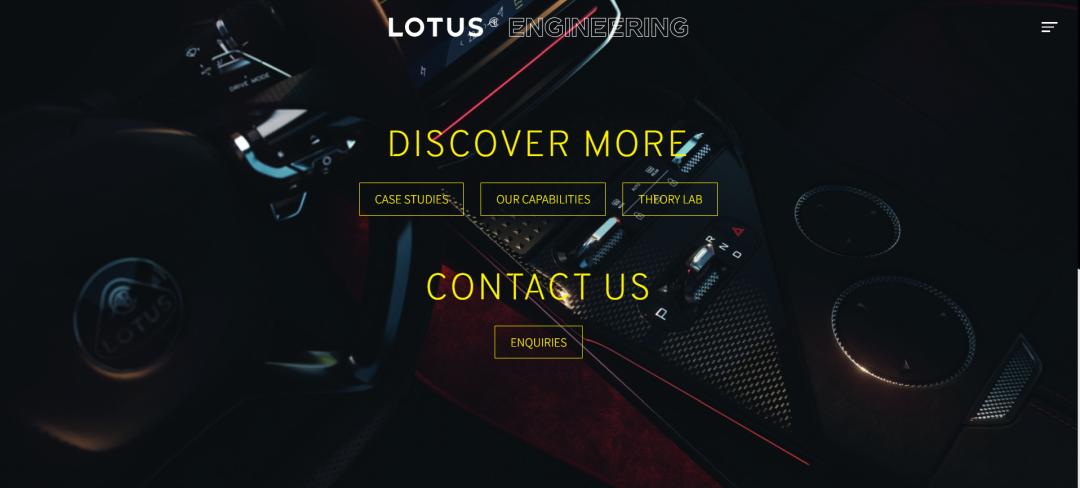
Recently, Lotus Engineering updated a case on its official website, detailing how it helped a "challenger automaker" complete lap testing at the Nürburgring, and ultimately transferred the track performance capabilities to a mass-produced vehicle that can be legally sold on public roads. Although the case did not directly name the client, a series of details mentioned including the Track Package, suspension development and tuning, mass production certification, and Nürburgring record, are highly consistent with the Xiaomi SU7 Ultra.
Overseas netizens on Reddit who found this page also directly pointed out that the SU7 Ultra Nürburgring test cars with UK license plates AU25 ZFZ and AU25 ZFX are exactly the vehicles tuned with the participation of Lotus.
More subtly, this case was later removed from the official website.
As a result, a dispute soon emerged.
Some people think that Xiaomi has repeatedly emphasized the independent development and tuning of the SU7 Ultra at the Nürburgring before, and the sudden appearance of Lotus behind the scenes is more or less unexpected; others believe that this is a perfectly normal cooperation mode in the automotive industry — from racing engineering, chassis tuning to tire development, there are rarely only one company's name behind a high-performance car.
In fact, if you review the whole process of the SU7 Ultra's pursuit of the Nürburgring lap record, you will find that Lotus may not be the only "giant" standing behind Xiaomi.
From Prodrive in the prototype era, to Lotus Engineering behind the mass-produced track version, to the group of veteran professionals recruited from the traditional automotive industry by Xiaomi at the beginning of its car-making journey, one thing Xiaomi has done in the past five years of building cars is probably never to reinvent the wheel, but to first find those who have accumulated decades of experience in track racing and the automotive industry.
And the 7-minute-04-second Nürburgring lap time of the SU7 Ultra was achieved step by step in this way.
01
Achieving a 7:04 Nürburgring Lap Time, Xiaomi Brought in the Most Expert Team for Lap Record Chasing
To go fast at the Nürburgring, horsepower alone is not enough. Xiaomi is well aware of this, and has brought in the world's most experienced team specializing in setting lap records.
The SU7 Ultra first brought the Nürburgring into the global spotlight with its Prototype, a vehicle almost built for the racetrack.
In October 2024, it ran a lap of 6 minutes 46.874 seconds at the Nürburgring for the first time; by April 2025, it pushed the lap time directly to 6 minutes 22.091 seconds, ranking third on the official Nürburgring lap leaderboard. Xiaomi later specifically mentioned this achievement in its financial report.
But behind this car, there is a name Prodrive that has rarely been noticed by domestic consumers. This British racing engineering company has long participated in events such as the WRC and 24 Hours of Le Mans. Prodrive later publicly disclosed that the SU7 Ultra Prototype was developed with its engineering support; Prodrive was already involved as early as the first 6-minute-46.874-second lap was completed.
In other words, when Xiaomi first challenged the Nürburgring, it never intended to fumble its way through the process alone.
For the mass-produced SU7 Ultra, the idea is largely the same, except that this time another professional team joined Xiaomi: in 2025, the mass-produced SU7 Ultra equipped with the Track Package ran a lap of 7 minutes 04.957 seconds. Xiaomi called it one of the fastest mass-produced 4-door pure electric sedans at the Nürburgring, and made this set of track performance capabilities available to ordinary consumers. However, during the promotion, it only mentioned the tuning work by the Nürburgring team, and omitted the specific names of the external teams.
And now, the case disclosed by Lotus Engineering itself has completed another piece of the engineering puzzle behind this Track Package.
According to the case previously published on Lotus' official website, it set Nürburgring performance targets for a "challenger automaker", conducted benchmarking against competing vehicles and vehicle dynamics development, and also participated in the design, simulation and layout of new components, and introduced tire and suspension partners for the client. The most direct statement is: develop and tune the new suspension and Track Pack for the final mass production certification.
In addition, Lotus also mentioned that it represented the client to participate in the Nürburgring lap record project and the vehicle homologation certification.
Although this case did not directly write the words "Xiaomi", the Track Pack, mass production certification, Nürburgring record, and the entire project that finally landed on a road-legal vehicle available for sale, all these details are highly consistent with the experience of the SU7 Ultra.
This also means that from the 6-minute-22-second Prototype to the 7-minute-04-second mass-produced SU7 Ultra, Xiaomi has actually taken a very typical automotive industry route:
Define the product independently, but there is no need to accumulate all experience from scratch.
The Prototype requires extreme racing engineering capabilities, so Xiaomi turned to Prodrive; the mass-produced vehicle needs to be fast at the Nürburgring, and also integrate the suspension, tires and track settings into a car that can be legally registered and sold, so Lotus Engineering joined the project.
Because for a latecomer that has only been making cars for a few years, what is truly hard to obtain at the Nürburgring is never horsepower, but experience.
What state a set of suspension works fastest at the Nürburgring, how to match tires, how to balance track performance and road comfort, and more importantly, how to turn a lap-record-focused car into a vehicle that can be mass-produced, certified and sold to consumers — the European automotive industry has spent decades of trial and error to accumulate these experiences.
Xiaomi does not need to pay these tuition fees all over again from the very beginning. Standing on the shoulders of giants is probably the fastest way for latecomers to catch up, but the controversy arises precisely here.
Because in the past when Xiaomi told the public the Nürburgring story of the SU7 Ultra, it emphasized more on its own independent R&D and tuning work at the Nürburgring. Up to now, Xiaomi's official website still describes this part as "professional tuning derived from the Nürburgring track", stating that starting from June 2024, the SU7 Ultra has been undergoing real-vehicle verification tests and chassis system tuning at the Nürburgring.
When facing public questions about the Prototype's development experience earlier, Xiaomi also made it clear that the prototype was "designed and developed under the leadership of Xiaomi Auto", and mentioned that in order to challenge the Nürburgring, it invited "the world's top technical consultant teams" to provide suggestions and support.
However, at least from the publicly available official information of Xiaomi, it has not further disclosed who these external teams are and to what extent they participated in the project.
Lotus's sudden appearance this time has sparked discussions precisely for this reason.
Because according to the project content disclosed by Lotus Engineering itself, what it did seems to be more than just providing some track test suggestions. Lotus mentioned that it introduced tire and suspension partners for the client, and directly "developed and tuned the new suspension and Track Pack" for the final mass production certification.
If this case is finally confirmed to correspond to the SU7 Ultra, then judging from these statements, Lotus's level of involvement seems to go beyond a simple "technical consultant". How much did it actually participate? Which work was led by Xiaomi and which was completed by Lotus Engineering, and where is the final engineering boundary drawn? Neither party has given sufficiently detailed answers so far.
But this is exactly the most interesting part of this controversy. On the one hand, Xiaomi has always emphasized its own R&D, verification and tuning work at the Nürburgring; on the other hand, Lotus has for the first time let the public see that behind this 7-minute-04-second lap record, there may be a set of external engineering system that was previously unknown to most people.
However, if you keep looking along these "shoulders of giants", you will find that the experience Xiaomi borrowed for its car-making journey is not limited to Nürburgring track expertise.
02
Five Years of Car Making, There Are Always Geely Veterans Around Xiaomi?
Coincidentally, for Xiaomi, Lotus may not be a completely unfamiliar name, because if you look one layer behind it, you will find Geely.
In 2017, Geely Holding Group acquired a 51% controlling stake in Lotus. To this day, Lotus Engineering still clearly states on its official website that its engineering capabilities not only serve Lotus, but also serve the Geely Group, and are open to other automotive clients.
On the other side of Xiaomi Auto, there is also a veteran Hu Zhennan who came out of Geely. According to Xiaomi's official website, Hu Zhennan worked at Geely Automobile Group from 2012 to 2021, successively serving as Senior Vice President, Dean of the Research Institute and other positions.
These nine years are exactly the most critical period for Geely's transformation from "being able to make cars" to "making high-quality cars". During his time at Geely, he not only participated in the development of core models such as the Boyue, but also led the team to participate in the R&D of CMA, BMA and later the SEA vast architecture. These architectures later supported a number of core products of Geely, Lynk & Co and even Zeekr.
After leaving Geely in 2021, he joined Shunwei Capital founded by Lei Jun, and the timing of this is also very coincidental.
In March of that year, Xiaomi officially announced its entry into the automotive industry; in the same year, Hu Zhennan left Geely. Later public information shows that while serving as an investment partner at Shunwei Capital, he participated in the early work of Xiaomi Auto as a consultant. It was not until April this year that he officially joined Xiaomi, becoming Vice President of Xiaomi Group and CTO of the Auto Department.
In other words, from the very beginning of Xiaomi Auto's startup to the successive launches of the SU7 and SU7 Ultra, this veteran with many years of traditional complete vehicle R&D experience has actually never been far away from the company.
Not only Hu Zhennan, many key backbones of Geely also left Geely with him. According to a report from Auto Future Daily, with Hu Zhennan joining Xiaomi's system, Xiaomi Auto "poached almost an entire team from Geely Automobile".
So now looking back at Lotus's recent "claim" of the Nürburgring project behind the SU7 Ultra, there is a very interesting coincidence: When Xiaomi first started learning to make cars, it had a veteran who came out of Geely's Research Institute by its side; when the SU7 Ultra was ready to drive a mass-produced car to the Nürburgring, Lotus Engineering from the Geely system appeared again.
Although the whole story is full of "Geely" elements, more importantly, Xiaomi knows clearly what it lacks and where to make up for it.
When it first started making cars in 2021, what Xiaomi lacked the most was complete vehicle R&D experience, so it recruited veterans from traditional car companies like Hu Zhennan; when the SU7 Ultra needed to challenge the Nürburgring, what was required was more extreme racing engineering capabilities, so Prodrive appeared behind the Prototype; when a track machine needed to be truly turned into a high-performance car that can be mass-produced, certified and sold, Lotus Engineering appeared again.
These people and companies solve different problems, but Xiaomi's idea has never changed:
There is no need for Xiaomi's team to learn all the experience accumulated by the automotive industry over decades from scratch. Find people who know how to do what you don't know, make up for whatever you lack, and finally turn these capabilities into your own products.
From Hu Zhennan to Prodrive, and then to Lotus Engineering that surfaced this time, they exactly form three interlocking puzzles on Xiaomi's car-making journey: talent, extreme engineering, and mass production implementation. The smart part of Xiaomi is that it first takes the world-class puzzle pieces in hand, and then gradually pieces together its own complete territory.
This article is from WeChat Official Account "Focus foci", author: Sean, published with authorization from 36Kr.