Shifting from price wars to value wars, the competitive logic of cloud computing has changed.
In the AI era, the competitive logic of cloud computing has been completely transformed.
In the past, the cloud computing market was dominated by vendors who helped customers optimize business processes and improve efficiency by providing databases, virtual machines, software and other services.
With the widespread application of AI agents, cloud computing is no longer limited to selling single resources, but shifts to selling full-stack system capabilities that can help customers complete their work.
As a result, we can see that at the start of the second half of 2026, the Feishu product team was merged into Doubao; Alibaba integrated three Agent products including QoderWork, Wukong and MuleRun into "QwenWork"; Tencent adjusted the QClaw related business and part of its team to the 6th Cloud Product Department where WorkBuddy belongs.
The mainstream players in the cloud computing market are changing their competition strategies, restructuring internal organizational structures, shifting from "selling resources" to "selling intelligence", making cloud computing the AI computing power hub, helping customers "get work done", to realize their own business growth and generate better revenue.
In this context, the logic of industry competition has completely shifted from "low-price expansion" to "capability-based pricing". In simple terms, the one that can help customers make more money will take the lead in this competition.
01
Price-for-volume strategy is a thing of the past
In late July, Alphabet, Google's parent company, released its second-quarter financial report, with revenue and profit performance exceeding expectations. In particular, Google Cloud achieved its "strongest growth ever".
However, this outstanding performance failed to win the favor of market investors. After the release of the financial report, Alphabet's share price fell by about 3% in after-hours trading.
Behind this is the market's concern about the huge capital expenditure generated by Alphabet's increased investment in AI computing power infrastructure. This move brought Alphabet's free cash flow to negative 5.9 billion US dollars for the first time in decades, and the figure will rise significantly in the future.
Google's dilemma is not unique. With the continuous growth of AI computing power demand, global cloud vendors are collectively facing the cost pressure brought by AI computing power investment.
Since the beginning of 2026, Amazon AWS fired the first shot of AI computing power price increase in January, and then Google Cloud announced a comprehensive price increase for global data transmission services.
This wave of price increases soon spread to China. Since March this year, mainstream players in the cloud computing market such as Tencent Cloud, Alibaba Cloud, and Baidu Intelligent Cloud have successively announced price increases for AI computing power and some storage products. This move broke the industry's nearly 20-year pricing convention of "only cutting but no raising".
Over the past 20 years, relying on technological progress and scale effects, cloud computing costs have shown a cyclical downward trend, and price competition has become the main means for cloud vendors to compete for customers.
Especially in 2024, the market ushered in a window period for the explosion of large model applications. Cloud vendors regarded computing power as an important entry point for hosting large models and launched a new round of price wars.
However, with the continuous iteration of large models, Token consumption has grown exponentially. In addition, the rising prices of upstream storage chips and other components have raised deployment costs, making the price war unsustainable. The cloud computing market has entered a new stage of value revaluation and re-pricing.
Industry insiders pointed out that this round of cloud computing price increase is a structural adjustment driven by the rapid development of AI technology, which is mainly reflected in the price increase of computing power, storage, model invocation and other products and services related to intelligent computing, while the price of general-purpose computing power cloud services remains relatively stable.
When leading cloud vendors begin to raise prices simultaneously, it means that the era of cloud computing market competing for customers by low prices has passed, and an era of re-pricing centered on core competitiveness such as computing power efficiency, model capability and solution is coming at an accelerated pace.
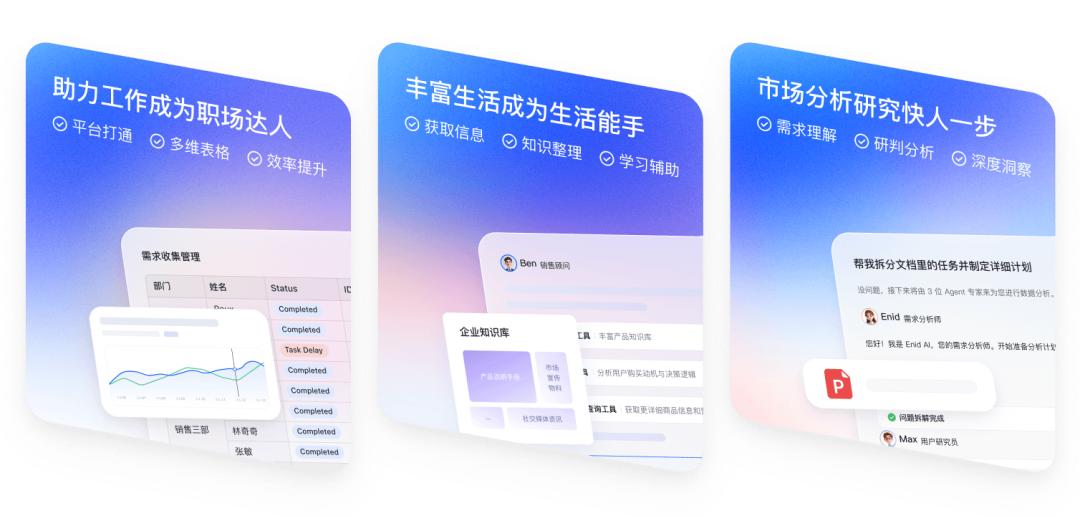
Figure / Volcano Engine official website
02
Not only "selling resources", but also "selling intelligence"
How to reflect the capabilities of cloud vendors in terms of computing power efficiency, model capability and solutions? The key to answering this question lies in AI and intelligence.
In the past, cloud vendors relied on "selling resources", that is, helping customers with digital transformation and providing infrastructure services such as computing, storage and network.
At that time, every vendor competed for larger computer rooms and cheaper storage, which resulted in serious product homogenization.
With the continuous iteration of large AI models, cloud computing has gradually evolved from a "computing power pool" to a "neural hub for AI operation and collaboration". Selling computing power resources is only a basic operation, and cloud vendors need to have intelligent capabilities that can help customers achieve business growth and generate better revenue.
IDC predicted in a related research report that by 2027, more than 85% of domestic organizations will transform their traditional cloud environments into new platforms adapted to AI workloads.
This means that cloud computing is no longer just the infrastructure supporting IT, but also the core that determines whether AI can be implemented.
It can be seen that mainstream domestic cloud vendors are making intensive layouts around this trend.
On July 30, ByteDance launched a major organizational adjustment for its AI business. Among them, the Feishu product team was integrated with the Doubao product team, and the GTM (marketing, sales, customer service) team was integrated with Volcano Engine.
After the adjustment is completed, Doubao provides large model and AI Agent capabilities, and Volcano Engine provides cloud infrastructure and commercial delivery channels. The three parties no longer operate independently, but form a closed loop of "model + scenario + cloud", directly turning AI capabilities into "native capabilities" in enterprise workflows.
On August 3, Alibaba's enterprise-level Agent product "QwenWork" officially opened public beta. The new QwenWork is fully integrated from three products: QoderWork, MuleRun and Wukong. It is the first product in the industry that supports desktop Agent, cloud Agent and enterprise collaboration Agent at the same time, committed to helping individuals and enterprises improve office productivity.
Another internet giant Tencent has also adopted a similar integration path. It adjusted the relevant business and part of the team of the QClaw product center to the 6th Cloud Product Department, and merged into the same management system as WorkBuddy, which has more than 20 million monthly visits, to further strengthen the collaboration with WeCom and Tencent Docs.
On the surface, these moves of large internet companies are not directly related to cloud computing, but in essence they are an extension of cloud computing market competition.
Relying on cloud computing as the underlying infrastructure, they strengthen the intelligent capabilities of AI office products, build business collaboration entrances, and at the same time turn the technical potential of cloud computing and Agent into commercial value that customers can easily perceive.
In this process, cloud vendors have further deepened their ties with customers. The stronger the capabilities of large AI models, the more dependent customers will be. The more dependent customers are, the more advantages and initiative cloud computing vendors will have in product iteration, product pricing and other aspects, thus forming a virtuous circle, raising the moat of market competition, and further helping the parent company seize the super entrance in the AI era.
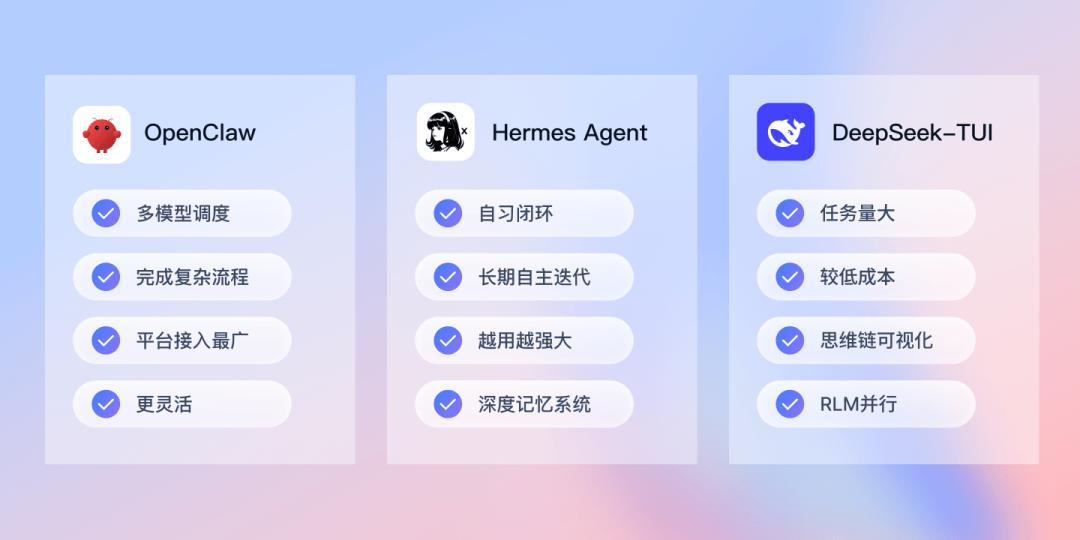
Figure / Tencent Cloud official website
It is worth noting that in this process, cloud computing players deeply cultivating vertical fields may have more advantages. The reason is that they have long been engaged in a certain field, have professional advantages, and have a high degree of compatibility with users' daily work scenarios, so they can seize customer minds first.
Take Kingsoft Cloud as an example. It did not choose to compete head-on with giants in the "large and comprehensive" general cloud market, but concentrated its superior resources on high-barrier vertical tracks such as game cloud and video cloud. In the first quarter of 2026, Kingsoft Cloud's intelligent computing revenue accounted for more than 50% of the public cloud revenue, and the company is transforming from a traditional cloud vendor to a full-stack AI service provider.
However, the shortcomings of such vertical field players are also obvious. Their focus on a certain field means that the upper limits of revenue, market share and other indicators are not high, and they cannot compete with comprehensive cloud computing vendors such as Alibaba Cloud, Tencent Cloud and Volcano Engine in a broader market.
03
The implementation capability of business collaboration becomes the core of competition
When the core narrative of the cloud computing market shifts from "cost reduction" to "efficiency improvement", and from "selling resources" to "selling intelligence", a real major test centered on implementation capability has begun.
The core of this major test is no longer who has the lower general computing power pricing, but who can go deeper into the real business scenarios of enterprises and turn AI technology into tangible business results that customers can see and feel.
This not only tests the algorithms and hardware of cloud vendors, but also tests their insight into the industry, the ability of solution integration and the resilience of personalized services.
At present, leading players in the cloud computing market have already made clear strategic layouts in this regard.
Wu Yongming, CEO of Alibaba Group, takes "user first, AI-driven" as the core strategy. Alibaba Cloud builds exclusive solutions covering dozens of industries such as finance, manufacturing and healthcare around the Tongyi Large Model, and gathers ecological forces through the ModelScope community, so that enterprises can not only call APIs, but also find industry-validated fine-tuned models and application tools.
Tencent Cloud vigorously promotes the mode of "Tencent Hunyuan Large Model + Industry Large Model Store", opens Model-as-a-Service, and seamlessly connects with WeCom and Tencent Meeting, delivering AI capabilities to the front lines of transactions, customer service and marketing, emphasizing that employees can use AI on their own work interfaces.
Relying on ByteDance's huge product ecosystem, Volcano Engine combines the Doubao Large Model with the data insights accumulated in scenarios such as Douyin and Feishu, providing enterprises with closed-loop solutions from intelligent recommendation, content generation to user operation.
Baidu Intelligent Cloud takes the Ernie Large Model as the core, provides a full tool chain from data labeling, model training, fine-tuning to deployment and operation through the Qianfan Large Model Platform, and focuses on building benchmark cases in government and industrial fields such as transportation and energy.
It is not difficult to find that these measures of mainstream players are no longer just focusing on the unit price of computing power, but striving to show their comprehensive value through a set of practical combined strategies.
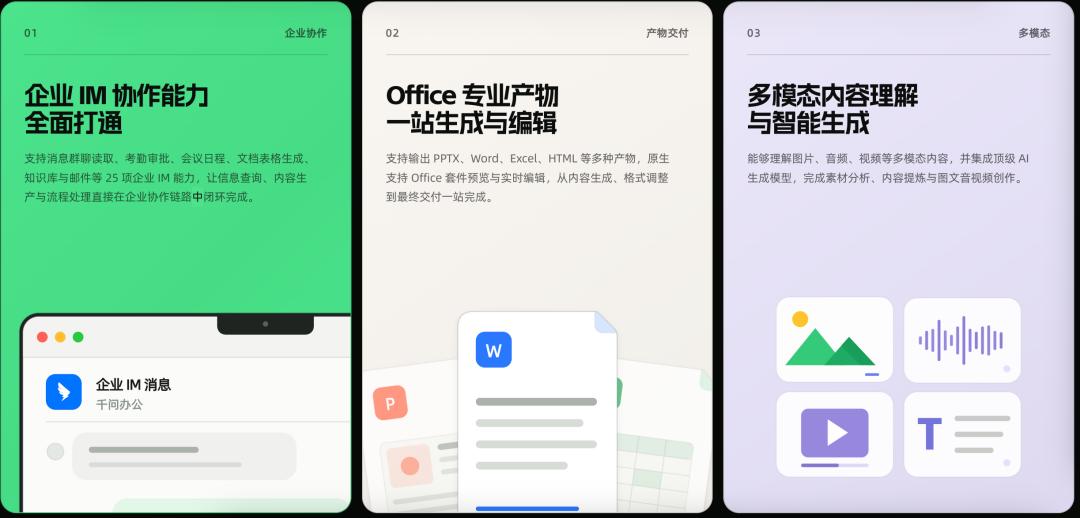
Figure / QwenWork official website
In terms of computing power adaptation, build excellent AI computing power adaptation capabilities to ensure that large models can run efficiently and stably on different chip architectures.
In terms of operation services, mature cloud-native transformation experience helps customers microservice-ize and containerize traditional applications, releasing the flexible value of cloud and AI.
In terms of data security, a strict security compliance system ensures the safe circulation of data and model assets under the regulatory framework; deeply customized industry solutions turn general AI capabilities into tools to solve specific business pain points.
In terms of product application, we provide customers with one-stop services throughout the whole process of planning, construction and operation, so that enterprises can manage complex technology stacks without forming a large technical team.
Obviously, in the critical stage when AI Agent moves from pilot to large-scale commercial use, the value of AI agents built on cloud computing infrastructure does not lie in technical concepts, but in whether they are practical, can be deeply embedded in business processes, and continuously help enterprises reduce costs and increase efficiency.
Some industry insiders pointed out that in the AI Agent era, when enterprise customers choose AI cloud service providers, the top priority is no longer the simple resource price, but comprehensive capability indicators such as AI computing power adaptability, model fine-tuning support, security compliance level and the depth of industry solutions.
It can be seen that the future cloud computing competition will no longer be limited to the sale of single resources, but will shift to the competition of full-stack system implementation capabilities -- the one that implements faster and better, and "can help customers make more money", will take the initiative in the competition of the next decade.
04
Conclusion
When the deep integration of "cloud + AI" becomes an irreversible trend, the competitive logic of the cloud computing market has undergone fundamental changes.
Driven by the large-scale commercial application of AI agents, the main theme of the cloud computing market has shifted from the stock game of low-price expansion to value creation based on capability pricing.
At this time, cloud vendors are no longer just "landlords" renting out computing power and storage, but personally participate in the business, deeply embedding large model capabilities into specific scenarios such as office and collaboration through organizational structure integration, and transforming into "partners" who directly help customers get work done.
The core of competition lies in implementation capability. The one that can turn sophisticated AI algorithms into tools to solve enterprise pain points, and can provide one-stop full-stack services in data security, computing power adaptation and industry insight, will grasp the pricing power in this competition.
Shifting from "selling resources" to "selling intelligence" is not only an upgrade of business model, but also a major test of the comprehensive strength of vendors.
In the future, cloud computing will truly become the "AI neural hub" of social operation, and the final outcome of market competition will belong to the players who can continuously create incremental revenue for customers.
This article is from the WeChat official account "TMT Planet", written by HUANG Yanhua, and authorized by 36Kr for release.