Beer giants, wildly venturing across different sectors.
All leading beer giants are stepping into cross-sector operations. Deploying businesses in the beverage sector is only a basic move, and some of them have even produced natto, a product most Chinese consumers have never heard of.
This is an unavoidable choice that beer giants have to make in the stock era of the beer market. In this aspect, the beer industry is already performing far better than the baijiu, red wine and rice wine sectors.
However, the involution in the beverage market is even more severe, and there is hardly any blue ocean market left. This collective cross-sector move of the whole industry is more like a group of people groping their way through a maze out of helplessness.
All are frantically pursuing cross-sector expansion
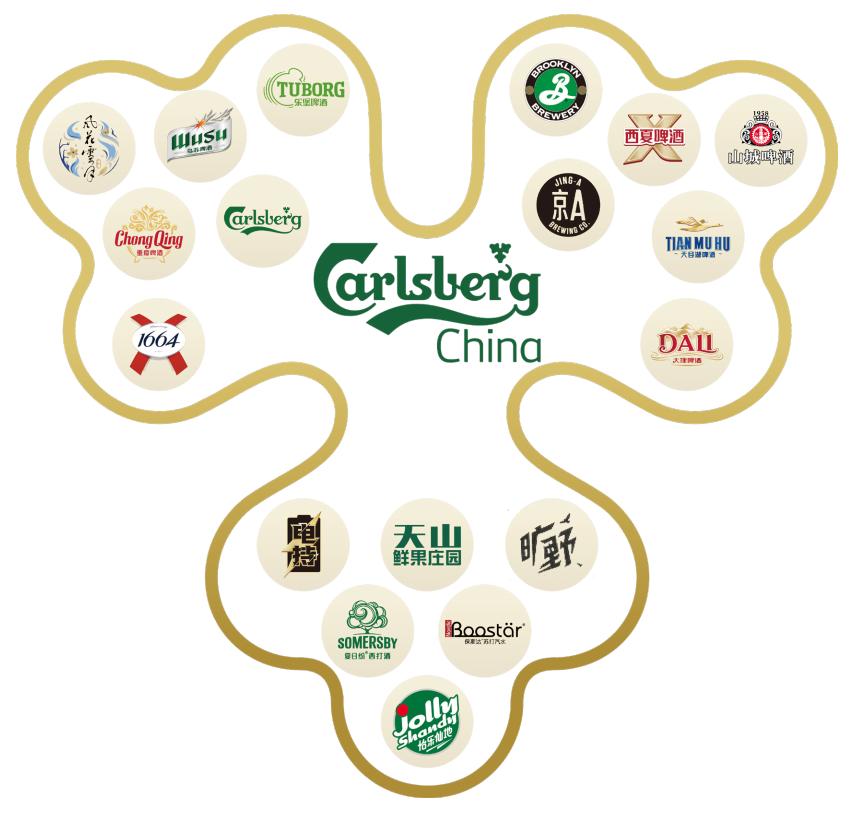
In the summer of 2025, Chongqing Brewery under Carlsberg, in cooperation with its subsidiary Wusu Beer, launched a soda brand named "Tianshan Fresh Fruit Manor".
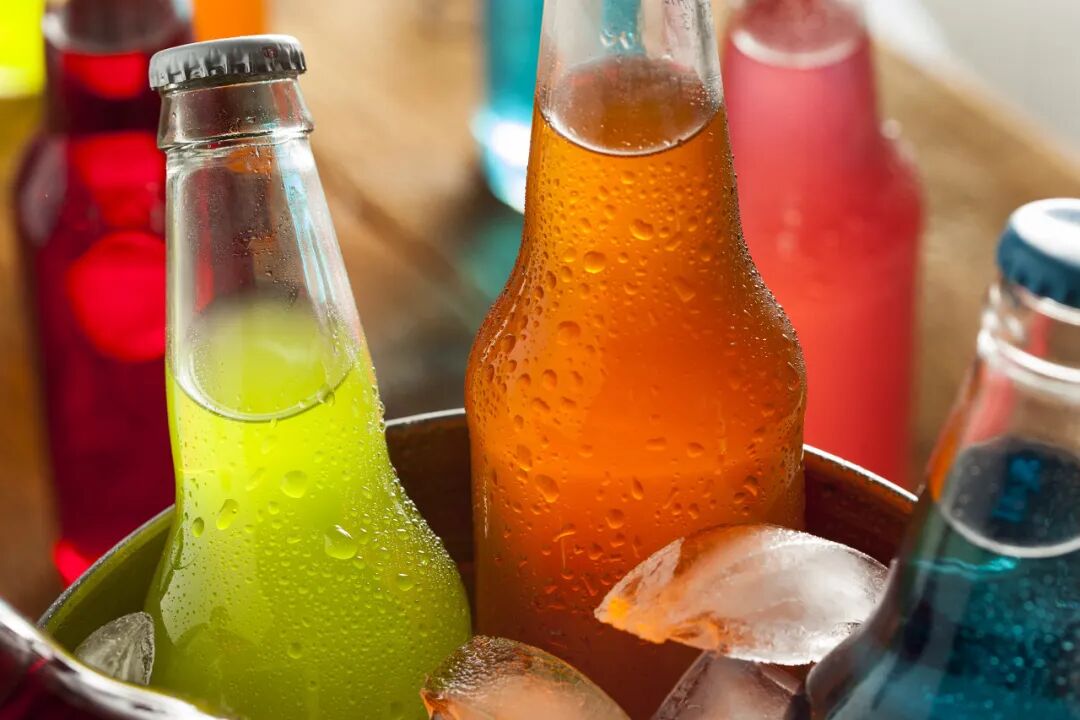
With glass bottle packaging, three flavors of orange, apple and white peach, and a focus on catering channels, the product makes people can't help wondering: is this trying to replicate the success of Daiao?
Daiao, a brand from Inner Mongolia, relies on an ordinary fruit soda, and by deeply cultivating catering channels, it has torn a gap in the soda market where Coca-Cola, Pepsi and Genki Forest are locked in fierce competition.
Hot pot and barbecue pair perfectly with Daiao. The scenario-based competitive advantage has made Daiao a rising star in the beverage market in recent years. As a result, Daiao also accepted the olive branch extended by KKR, the international capital giant.
We put forward a judgment a few years ago: The biggest competitor of beer is not other beer products, but the substitutes in beer consumption scenarios, such as Daiao. The core of competition in the alcoholic beverage market has evolved from competition over categories and brands to competition for consumption scenarios.
Perhaps feeling this pressure, Carlsberg joined forces with its two sub-brands to test the market in Chongqing and Xinjiang. They are using the rival's own methods to fight against the rival.
Of course, Carlsberg's attempts in the beverage sector are not limited to Tianshan Fresh Fruit Manor. It also has products such as energy drink Dite, Kuangye hard seltzer, Summer Fizz cider, and Baosida soda water. Its benchmarks are not only Daiao, but also Red Bull, RIO, and Watsons.
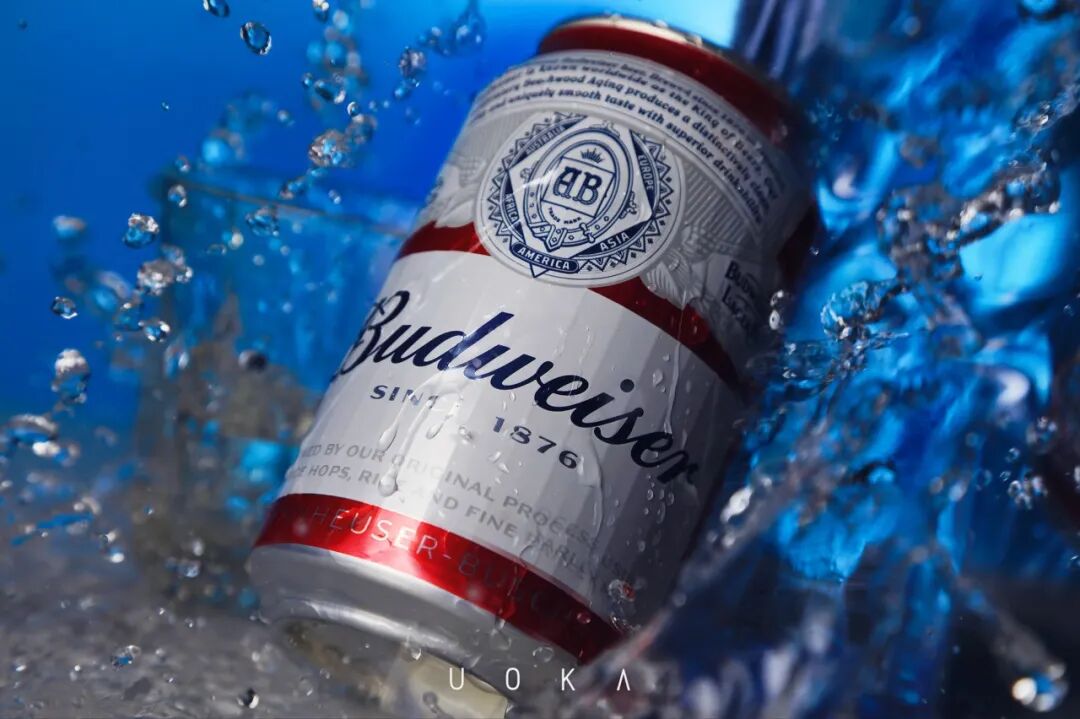
Budweiser's strategy is roughly similar to that of Carlsberg. In 2021, it launched ZhiYu sparkling water, BlackKrypton energy drink, Little Pineapple carbonated soda, and Beibo grape sparkling wine in the Chinese market; in 2022, it launched Fuqi sparkling tea cocktail, invested in the fruit wine brand MissBerry, and put these products into its own sales channels.
Lanzhou Huanghe even regards the beverage business as one of its strategic transformation directions, and has launched a number of juice and soda products in recent years. Last year, its beverage business grew by more than 50%, accounting for over 10% of the company's total revenue. In addition, it also holds shares in the local drinking water company Huangheyuan.
China Resources Beer has its sister company China Resources Beverage (02460.HK), so it does not need to enter the beverage sector in person. However, it spent tens of billions of yuan to acquire Jinsha Liquor, which is the largest cross-sector action among all beer giants.
Of course, Yanjing has the most complex cross-sector layout among beer giants. Its product portfolio not only includes Beisite soda and Yanjing drinking water, but also Jiulongzhai sour plum drink and Yanjing natto.
Yanjing laid out its water business quite early; Jiulongzhai sour plum drink is a time-honored brand in Beijing; Yanjing launched its natto business in 2001, using a fermentation process similar to beer to process soybeans, and launched the first box of industrially produced natto in China in 2003. All these businesses can be regarded as supplements to its core beer business.
Beisite soda was launched in 2025, and its entire product design, packaging style and key sales channels are exactly the same as those of Daiao, which is a story identical to that of Tianshan Fresh Fruit Manor. Yanjing Brewery disclosed in its 2025 financial report that its revenue from water and beverage business was about 150 million yuan.
Almost all beer giants are pursuing cross-sector operations, which is more widespread and radical than that in the baijiu, red wine and rice wine sectors. What on earth is the reason for this?
Go with the trend in the face of pressure
The fundamental reason why beer giants are frantically expanding across sectors is that they all realize that it is very difficult for beer sales in the Chinese market to achieve large-scale growth again. In the stock era, the premiumization of the beer industry has entered a more rigorous second half stage. Apart from enhancing industrial value through product innovation, diversified transformation is almost the only remaining option.
China's beer output reached its peak at 50.62 million kiloliters in 2013; it has stabilized at around 35 million kiloliters in the past five years, and the figure stood at 35.36 million kiloliters in 2025, a shrinkage of 30%. Fortunately, although sales volume has declined, the industry's revenue has remained at around 180 billion yuan, and its total profit has more than doubled to over 30 billion yuan.
Against the backdrop of low growth in the industry, the main reason why local beer brands can generally maintain growth is that they have squeezed the living space of foreign beer giants.
From a macro and long-term perspective, the cross-sector integration of the alcoholic beverage market centered on consumption scenarios conforms to the industry trend and international practice.
All leading overseas alcohol groups, including AB InBev, Diageo and Suntory, are operating with multi-category, multi-brand and multi-level strategies.
Take Suntory as an example: its Japanese local alcohol brands include Yamazaki, Hakushu, Hibiki and Chita (the four leading Japanese whiskies), multiple beer series brands, and multiple brands of pre-mixed cocktails and other alcoholic products; it has also acquired a number of spirits and wine brands through global expansion, including whisky brand Maker's Mark and Courvoisier Cognac; in the beverage sector, it owns Suntory Oolong Tea, natural water and other products; in addition, it has extensive layouts in the beauty, health care, catering and retail industries.
The core reason why there are a large number of single-category giants such as Kweichow Moutai and Tsingtao Brewery (600600.SH) in China is that the marketization process has lasted for a very short time.
We previously made a bold prediction that the number of 40 listed companies in the alcohol sector of China's capital market will be reduced by half in 10 to 20 years through merger, reorganization and delisting of underperforming enterprises.
By then, the main battlefield of the alcohol industry will no longer be competition over categories and brands, but competition over scenarios. Mass consumption, high-end business scenarios, health care, and young people's social scenarios will become the main division dimensions.
In the cross-sector practices of beer companies, most of them choose the water and beverage category, which is exactly to meet the need of scenario extension. Beer and beverages share the same or similar consumption scenarios and similar consumer groups, and their FMCG attributes lead to similar operation modes.
Then here comes the question: In China's alcohol market, beer has been the most stable track in the past five years and the most certain track in the next five years. Are the baijiu, red wine and rice wine sectors not aware of their own crises at all?
Being able to hear the sound of gunfire and daring to fire the first shot are totally different things. Compared with baijiu, red wine and rice wine companies, most beer companies are more market-oriented, and can adjust their strategies faster in the face of industry pressure and market trends.
Opportunities favor those who are prepared
Is beer's cross-sector expansion worth looking forward to?
The beer industry's stable sales volume and value improvement in the past few years, ongoing product innovation and channel revolution, as well as its response to future scenario restructuring and consumer group changes, have made it stand out in the entire alcohol market.
The current key point is that the involution in the beverage market is even more severe than that in the beer market. Especially the bottled water and soda segments, which are the most fiercely competitive, have very limited growth space, and are dominated by established giants with strong strength. The "hundred-water war", "hundred-tea war" and "hundred-soda war" in the beverage market almost break out every summer, and these beer brands that enter the market across sectors are not even taken seriously by the established players.
The current consumer market is a red sea everywhere, which casts a shadow over the cross-sector transformation of beer giants.
Tianshan Fresh Fruit Manor, the product jointly developed by Chongqing Brewery and Carlsberg, was launched with much fanfare last year, but there is barely any relevant news about it this year.
Budweiser and Carlsberg have launched so many beverage brands, but almost none of them have become popular in their respective niche markets. In the financial reports of AB InBev Asia Pacific and Carlsberg, the revenue contribution of these beverage businesses is so small that it is almost negligible.
Fortunately, Yanjing Brewery (000729.SZ) is in the stage of increasing sales volume of its U8 product and realizing value release, so it does not need other businesses to contribute performance for the time being, and it has not invested too much in diversified businesses such as beverages.
Lanzhou Huanghe is actively cultivating its second growth curve, but the revenue scale of its beverage business is still very limited, and it has even dragged down its overall performance to a certain extent due to excessive market investment.
Actually, Zhujiang Brewery (002461.SZ), the innovation pioneer in the beer market, laid out its beverage business even earlier. Its Zhujiang Little Beer Soda became popular as early as ten years ago, and it launched multiple brands in the following years. However, up to now, Zhujiang Brewery has hardly mentioned its beverage business any more, and has refocused on its core beer business.
The most noteworthy combination of beer and beverages may come from Tsingtao Brewery.
Tsingtao, an important city for light industry in northern China, is home to not only Tsingtao Brewery, but also Tsingtao Beverage Group. The latter owns two century-old time-honored brands: Laoshan Mineral Water and Tsingtao Wine, and its product portfolio also includes Laoshan Cola, Laoshan Baihua Shecao Water, Huadong Wine, and Tsingtao Whisky.
In 2025, the local government implemented strategic restructuring and integration, and Tsingtao Beverage Group was transferred under the Tsingtao Brewery Group, becoming a sister company of Tsingtao Brewery, just like the relationship between China Resources Beer (00291.HK) and China Resources Beverage.
The market is expecting to see what different sparks will be generated between Tsingtao Brewery and Tsingtao Beverage Group in the future.
This article is from the WeChat official account "Zebra Consumption", author: Yang Wei. Published with authorization from 36Kr.