In-depth Analysis of the CEO's Controversial View: Enterprises Are Recklessly Burning Tokens Without Creating Any Value, and Model Vendors Are Stealing the Core Assets of Enterprises.
1. The Furious CEO
Just a few days ago, Alex Karp, CEO of Palantir, lashed out directly during a CNBC live broadcast:
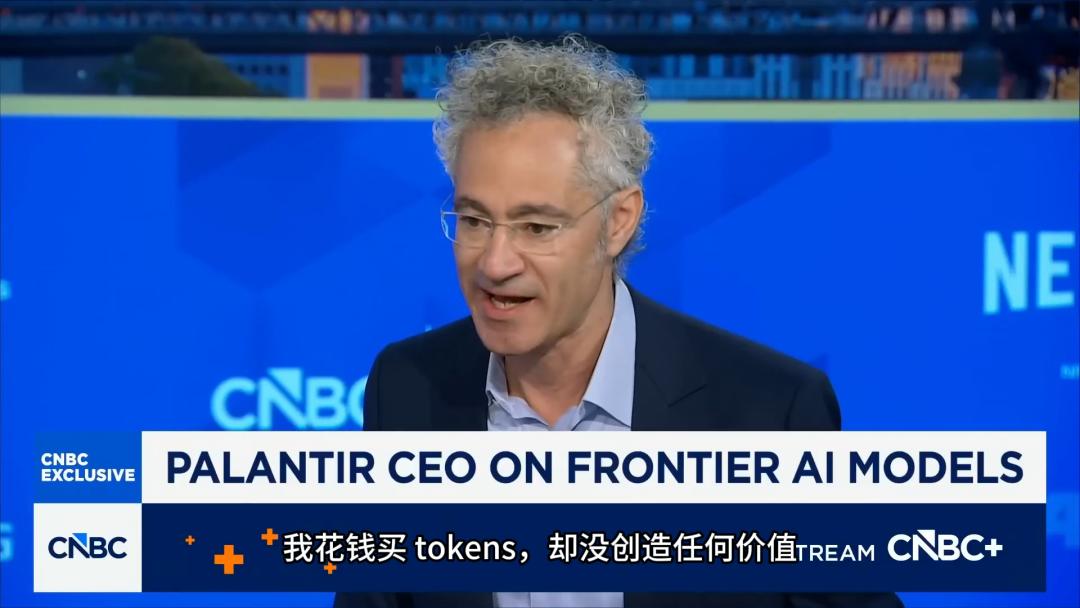
"these people are livid."
"I am paying for tokens that create no value."
"these people are stealing the weights and the alpha of my business."
Translated into plain language —
The tokens enterprises purchase deliver no value. What model vendors steal is the core assets of the enterprises.
There is an even harsher statement later: these models are "over irresponsibly oversold". The sellers' narrative is that this is dangerous for everyone.
You can say Karp's remarks are biased. Large model vendors are competing with SaaS enterprises like Palantir. There are real pain points in Karp's anger, as well as conflicts of interest.

But Uber provided more solid evidence from the buyer side. It does not sell models, nor does it take commissions from model vendors. In just four months, it burned through its full-year AI budget. The question is, how much product output did this money actually deliver? Uber itself also said that line has not yet been drawn.
And this is not a problem unique to Uber. Microsoft canceled some internal Claude Code licenses. Amazon changed from encouraging AI usage to curbing token consumption. Meta also began to restrict employees' AI token usage. When all these large enterprises find that unrestrained token burning is unsustainable, this is no longer a minor procurement issue.
The story goes back to the beginning of this year.
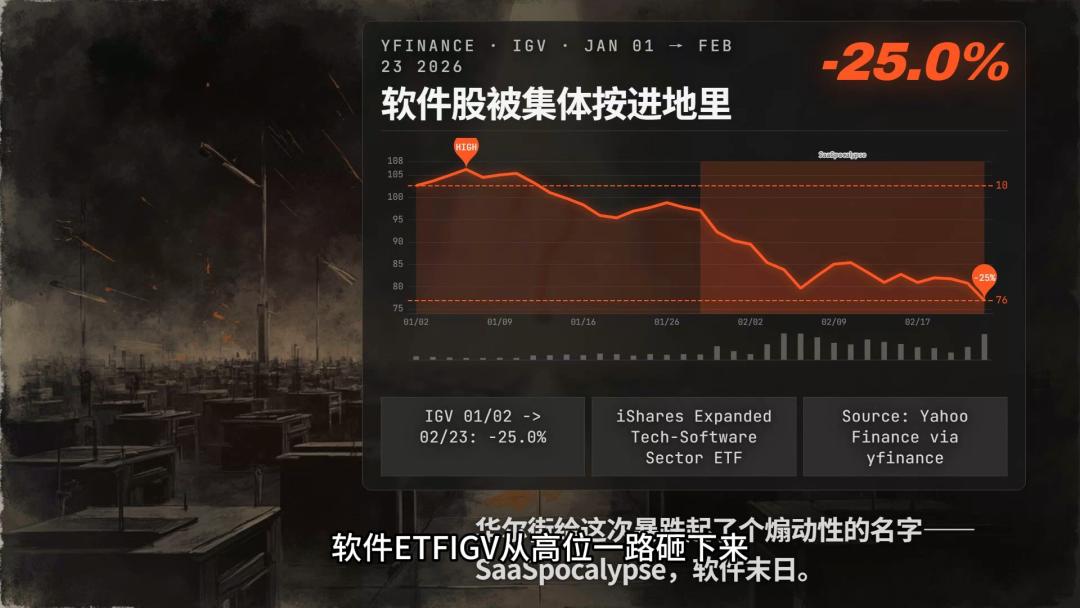
From January to February 2026, the software ETF IGV plunged all the way from its high point. By February 23, the decline in the range was about a quarter. Wall Street gave the software sector a very provocative name — SaaSpocalypse, the end of software.
What the market fears is not that AI is better at chatting. It is that Anthropic released Claude from the chat box — letting it view screens, click software, and enter workflows. Once Agent can directly use computers to get things done, the account seat model starts to loosen.

So that sharp plunge in February was not abstract AI anxiety. What the market was truly recalculating was three things: How much is the UI still worth? How much are seat fees still worth? Will control of workflows shift from front-end software to Agent orchestration and governance infrastructure?
On June 9, 2026, the software sector rebounded from its trough. Orlando Bravo of Thoma Bravo, one of the world's largest software investment institutions, said: The SaaSpocalypse that killed software stocks is over. But he was only half right.
This does not mean software is safe. It is more like the indiscriminate sell-off has begun to turn into tiered pricing. Old SaaS will not die together, but nor will all of it be safe. The real question is: Who will be taxed by Agent? Who can make Agent pay tax to itself? This is the core of software tiered pricing.

2. Where does the panic of the software apocalypse come from?
Don't rush to laugh at that February panic. Its logic is not stupid.
The core formula of traditional SaaS is very simple: Headcount × Seats × Subscription Fees. One salesperson, one CRM account. One customer service representative, one work order account. One engineer, one development tool account. This formula has worked for 20 years.
But after the emergence of Agent, the problem changed. A sales manager may lead five Agents — one to read emails, one to check CRM, one to calculate quotations, one to write follow-ups, and one to push approvals. The company did not hire five more people, but the work unit suddenly changed from one to six.
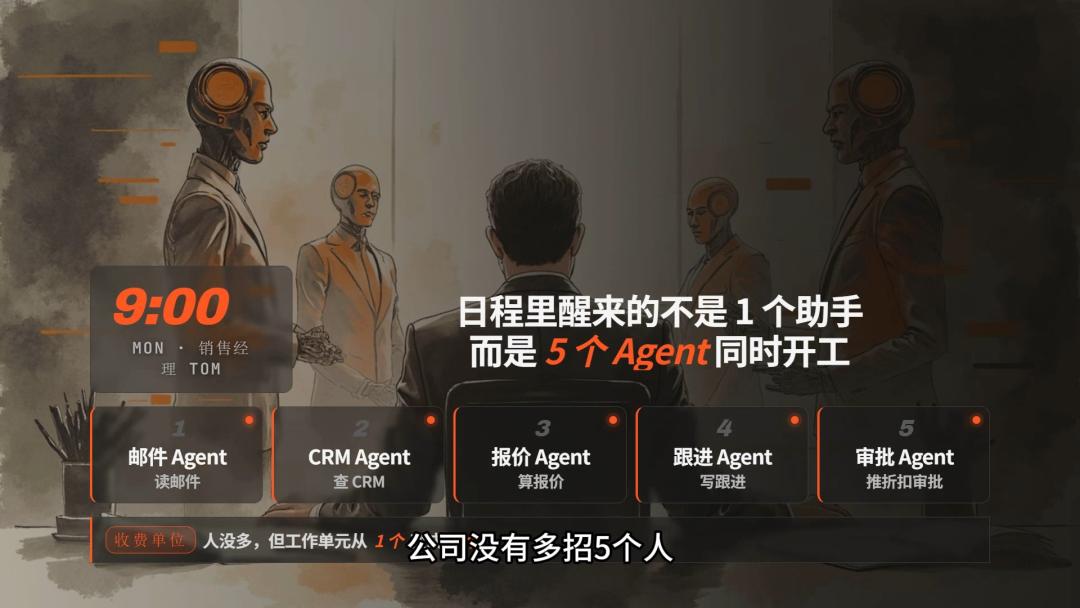
So how should software companies charge fees? Charge by one salesperson? Charge by five Agents? Charge by call volume? Or charge by final results? Renewal contracts are still three years, but the billing model has changed. This is not a sci-fi problem, it is a problem that enterprises will immediately discuss in the next round of renewal.
Gartner gave this matter a more precise name: agentic arbitrage. It means that when Agent can complete tasks across multiple systems, the seat fees originally tied to headcount will be repriced.

How big is this recalculation? By 2030, approximately 234 billion US dollars of enterprise application software spending will be exposed to agentic arbitrage, accounting for about 20% of enterprise SaaS spending.
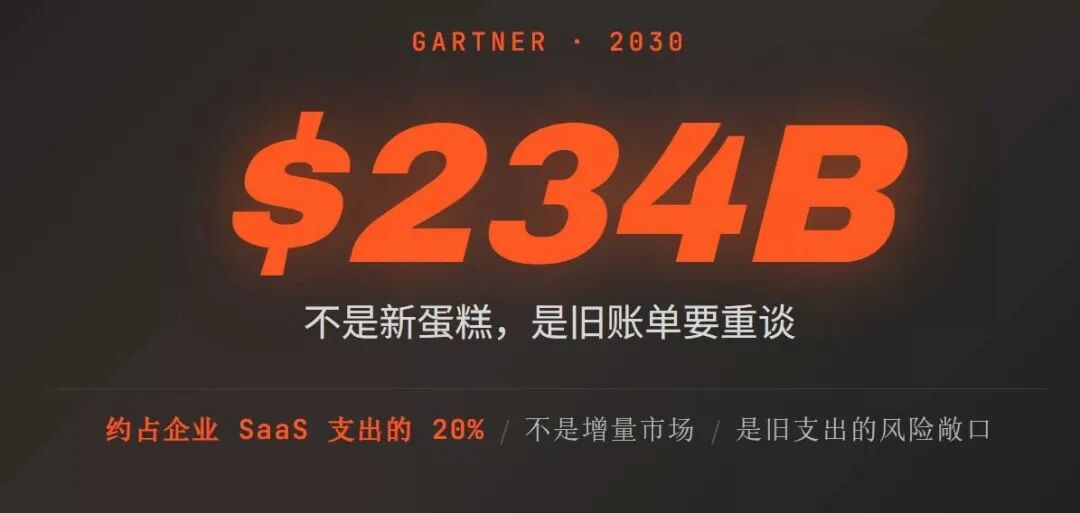
Note that this is not a new cake, nor is it a definite loss. It is more like a batch of old bills that need to be renegotiated — who can still collect fees, who has to cut prices, who will be bypassed, all need to be re-evaluated.
So not all software will die, and not all software is safe. What really matters are two types of companies: One type will be bypassed by Agent, and the other will become more important as Agent is put into production. The judging standard is not who added another AI button, but who can become a new productivity system.
3. The real new species is not AI that can chat

This is the answer: Agentic Solutions, enterprise-level agent solutions. It is not an AI feature, nor is it a technical architecture diagram.
It is a new productivity unit — a combination of Human and Agent. The only goal is to run a truly valuable productivity closed loop.
Jensen Huang has a key judgment: Agent is not here to replace humans, it is more like a super user — awake 24 hours a day, able to call more software, run more processes, but also consume more system resources.

So the problem with Agentic Solutions is not that there is one more AI assistant, but that enterprises suddenly have a group of digital work units that will continuously use software.
Token itself is not output, token is cost. What really matters is whether there is a closed loop between token and business results — does it save time? Does it reduce errors? Does it improve conversion? Does it get customers to pay faster?
In the future, enterprises will not manage people, nor Agent, but the productivity of the Human + Agent combination. What managers really need to optimize is to let the right people, with the right Agents, deliver truly valuable results within the correct data and permission boundaries.

It differs from old SaaS in three ways:
Users: Not just humans, but humans + Agent
Interfaces: Not just UI, but machine channels such as API, MCP, tool, and CLI
Value: Not just process digitization, but automatic execution, plus governance, auditability, and measurable ROI
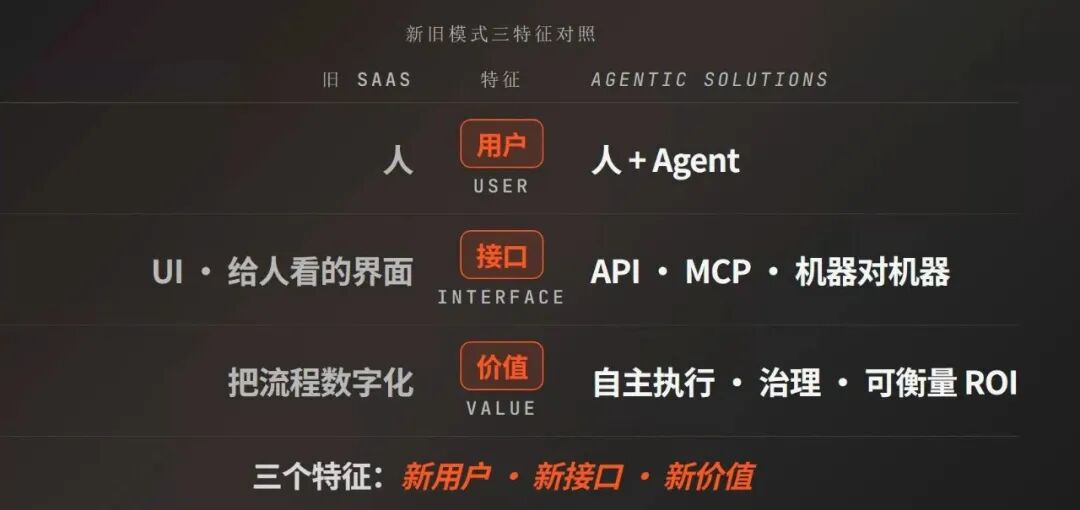
Agentic Solutions is not one layer, but three layers.
Application Execution Layer Agent, Workflow, Skill are responsible for actually running business tasks
Operation Reliability Layer Multi-model routing, tool calling, evaluation, data context and permissions enable Agent to deliver stably
Production Governance Layer Trace, audit, identity, approval, cost and result ledger determine whether Agent can truly enter production
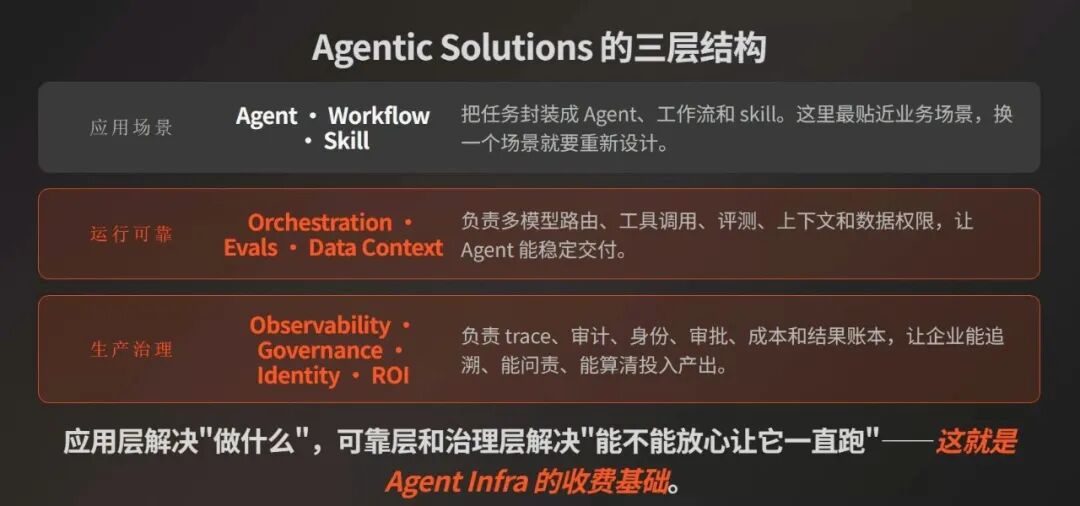
These three layers are not a list of features, but the base that determines whether Agent can truly enter production. This is the Agent Infra — agent infrastructure, the place where you can truly charge fees.
4. The CFO wakes up first
What CFOs care about is not how cool Agent is, but financial issues and risks. How to measure this Agent cost? How to set the budget? How to write contract terms? How to assess ROI? Whether to renew the contract? Once AI enters production, the problem changes from technical demonstration to money.

Enterprises do not want to stop using AI, they do not want to continue paying for tokens that "look smart but have no business results". If tokens are spent but business results do not come back — that is not innovation, that is cost out of control. It may also bring data, IP and vendor lock-in risks.
AI does not save your money, AI re-prices everything. Companies that cut the most staff are instead the most dangerous, because fewer people do not mean lower software bills. The remaining people may be burning money with more Agents.
CFOs also need to consider the Agent multiplier. How many Agents will one employee bring in the future? One salesperson brings five, one engineer brings ten, one operation staff brings a set of automated processes. Then software usage can no longer be estimated only by headcount.
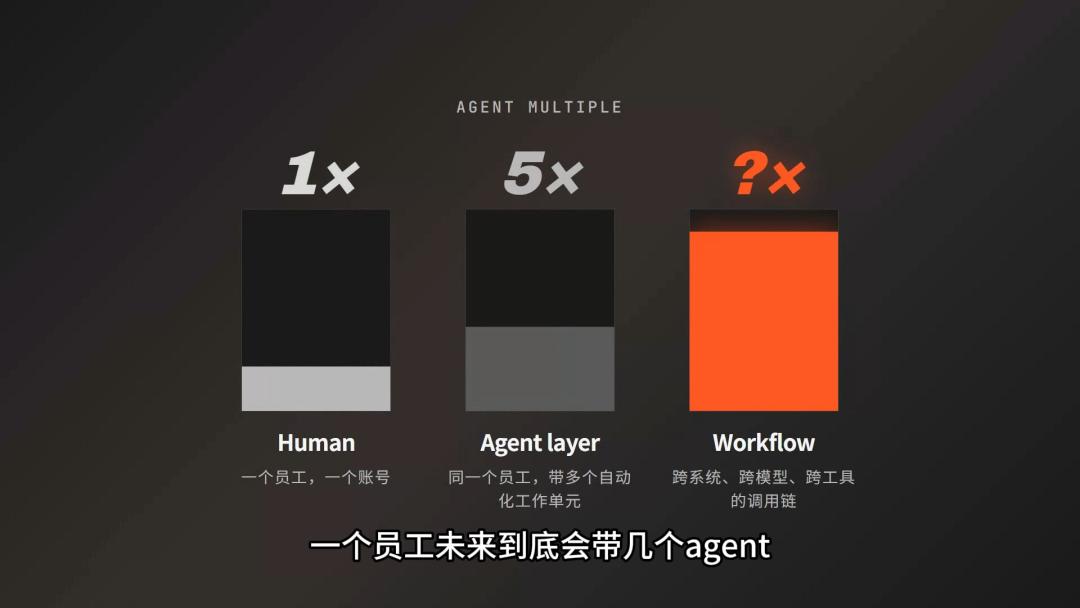
In the future, when companies assess employees, they may not only look at salary, working hours and KPI, but also one more thing: how many tokens this employee has used. But this step is very dangerous, because