Is it true that Horizon Robotics turns out to be the veritable Huangpu Military Academy of embodied intelligence?
The core executives of Horizon Robotics are leaving the company in a collective exodus.
That's the case.
According to statistics, at least 14 core technical and management talents of Horizon Robotics have left to start their own businesses in the past two years.
Scattered, they shine as stars across the sky.
These startups include Vito Dynamics, Boundless Dynamics, Octopus Dynamics, Dingdong Dynamics, Perfect Vision... The names sound like the Avengers assembling. It is worth noting that almost all of these people have moved towards the same direction after leaving: embodied intelligence.
The Horizon Robotics camp boasts remarkable appeal in the capital market. Statistics show that their total accumulated financing has exceeded 9 billion yuan. More interestingly, a considerable part of the investment comes from Horizon Robotics itself or Yu Kai personally.
This scenario where the former employer does not turn against the departing employees but instead participates in their follow-up investment is rare in the hard technology circle. With the investment from Kai, and using the chips developed by Horizon Robotics, these people have each occupied a key position in the new continent of embodied intelligence.
Top Talents from Horizon Robotics Have "Graduated" to Start Their Own Businesses

These "graduates" from Horizon Robotics are no unknown figures. We have selected several representative ones.
Yu Yinan, Employee No. 005 of Horizon Robotics, former Vice President and President of Software Platform Product Line, who has followed Yu Kai for 11 years, founded Vito Dynamics at the end of 2024;
Zhang Yufeng, former Vice President and President of the Intelligent Vehicle Business Unit, who once led a team of over 1,000 people, founded Boundless Dynamics in 2025;
Du Dalong, Employee No. 006, former CTO of Jizhi Robotics, founded Octopus Dynamics in January 2026;
Niu Jianwei, former General Manager of the Intelligent Cockpit Product Line, founded Dingdong Dynamics;
Huang Guan, former Head of Visual Perception Technology, founded Perfect Vision in 2023.
These new companies founded by former top business leaders are not scattered randomly, but are exactly located in the key links of the embodied intelligence ecosystem.
First, let's look at the complete machine segment.
Vito Dynamics takes the consumer-grade embodied intelligence route, and its robotic dog Dada BoBo has entered the delivery stage. Dingdong Dynamics focuses on spatial intelligence large models and robot intelligent central nervous systems.
Then, let's look at the current bottleneck of embodied intelligence: the brain layer.
Boundless Dynamics develops general robot brains and operation intelligence, while Octopus Dynamics focuses on physical world models and hardware-software integration.
Introducing the basic situation is not the focus of this article. You may wonder that almost all large tech companies have groups of executives leaving to start their own businesses, and embodied intelligence is also one of the most popular tracks for entrepreneurs today. Why do we specifically talk about Horizon Robotics?
The talents in the embodied intelligence track mainly come from university laboratories, large internet companies and autonomous driving companies, each with different engineering genes. However, no company has concentratedly output a whole entrepreneurial army like Horizon Robotics.
Digging deeper, Horizon Robotics is exactly at the intersection of capabilities most needed by embodied intelligence.
Autonomous driving itself is embodied intelligence in narrow scenarios. You can understand a car as a wheeled robot with high speed and strong safety constraints. Horizon Robotics has accumulated 10 years of closed-loop feedback experience covering perception, prediction, planning and execution, and these capabilities can be directly reused in embodied intelligence.
Horizon Robotics is also good at hardware-software co-design, which is the most emphasized in current embodied intelligence development.
In addition to the software layer, Horizon Robotics also develops chips, compilers, end-side deployment and computing power optimization. This set of capabilities is more aligned with the technical needs of the robotics industry than simply developing the brain or the robot body.
The last advantage is the implementation capability.
There are many teams that can make demos, but turning demos into stably shipped products is the moat of the embodied intelligence track. The Horizon Robotics team has gone through a complete engineering and commercial closed loop, which is a necessary capability for the scenario-based implementation of embodied intelligence today.
For example, the shipment volume of Horizon Robotics' Journey series chips has exceeded 10 million units, which means these talents know how to cooperate with the automotive-grade supply chain, understand what yield rate means, and are able to control the delivery rhythm.
An investor put it bluntly: people who used to work on autonomous driving can get financing more easily when switching to embodied intelligence than continuing to develop automotive technologies. Because what the robotics industry lacks most is people who have real experience in mass production of complex systems.
Facts speak louder than words. The implementation capability of the Horizon Robotics camp entrepreneurs is also obvious to all.
Zhang Yufeng's team made Horizon Robotics' intelligent driving business rank first in domestic market share. Now his Boundless Dynamics has raised more than 200 million US dollars in total through angel rounds, with global orders close to 100 million US dollars. With 10 years of engineering experience, Yu Yinan's Vito Dynamics has raised more than 700 million yuan 1.5 years after its establishment, and its robotic dogs have entered Sam's Club and JD Mall. Du Dalong's Octopus Dynamics is even more impressive: 3 rounds of financing totaling nearly 1 billion yuan in 4 months after its establishment. The capital votes with its feet, betting on these people's capability to transfer technologies from laboratories to factories.
Will Horizon Robotics Be Emptied of Talents?
All enterprises are worried about the departure of core talents. Even deepseek, which never lacks capital, opened financing this year, partly to retain its core developers. The outside world must also be curious: with so many people leaving, will Horizon Robotics be emptied?
Yu Kai's attitude is worth pondering.
Many large tech companies take a hostile attitude towards employees who leave to start competing businesses. Yu Kai does the opposite: he does not block or suppress them, but instead invests in their startups. For Vito Dynamics' seed round, Horizon Robotics and GL Ventures jointly led the investment. For Octopus Dynamics' nearly 50 million US dollars first round, Horizon Robotics is one of the investors. Horizon Robotics is also on the investor list of Boundless Dynamics' 300 million yuan angel round.
In Yu Kai's words: make more friends and fewer enemies. This sounds like a rivers-and-lakes philosophy, but in Horizon Robotics' business context, it is a very practical industrial strategy.
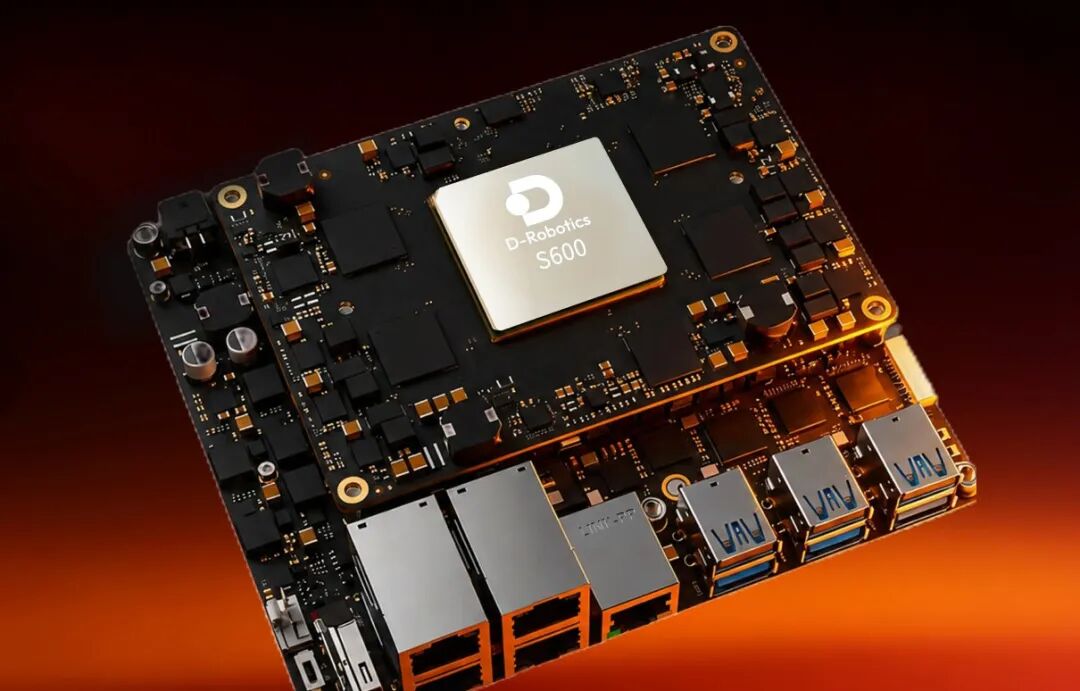
As we mentioned above, the entrepreneurs from the Horizon Robotics camp mainly focus on the robot body and the brain. Notably, DigiTwin Robotics, the chip-layer startup incubated internally by Horizon Robotics, forms an upstream and downstream relationship with the former two groups of companies.
An interesting phenomenon has emerged: products developed by entrepreneurs from the Horizon Robotics camp run on the chips incubated by Horizon Robotics.
The most typical example is that the robotic dog of Vito Dynamics is equipped with DigiTwin Robotics' S100P chip, with 128TOPS of computing power, which is the highest computing power configuration for consumer-grade mass-produced robots. In May this year, Dada BoBo started delivery, with reservations exceeding 8,000 units. All pre-ordered units will be delivered before the end of June.
Looking back, Yu Kai invests in the startups of his former colleagues, who in turn purchase DigiTwin chips, which expands the DigiTwin ecosystem and attracts more developers to use the DigiTwin platform.
In the view of Node AI, once this chain is fully operational, it is not so much a loss of talents as an ecological expansion in another sense.
The data is very intuitive. DigiTwin Robotics' 2025 shipment volume increased by 180% year on year, the number of customers doubled, and the number of global developers exceeded 100,000. DigiTwin Robotics' own financing is also accelerating. It raised 100 million US dollars in Series A in 2025, 120 million US dollars in B1 round in March 2026, and 150 million US dollars in B2 round in April 2026, with a total of 270 million US dollars in Series B. The list of investors includes Prosperity7 fund under Saudi Aramco, Meituan, Didi, and Envision Technology.
If you simply regard the investment in former employees' startups as the boss's personal affection for his former colleagues, you will underestimate Yu Kai's strategy.
As early as 2019, Yu Kai cut off most non-automotive businesses and deliberately retained the robotics team, which later became DigiTwin. At that time, it looked like an insurance strategy, but now it seems to be a well-planned move. In fact, in addition to the departing employees, Yu Kai's invested embodied intelligence army also includes other participants in the embodied intelligence ecosystem.
For example, Zhijian Dynamics, co-founded by Wang Kai, former CTO of Li Auto, and Jia Peng, former head of autonomous driving R&D; and the popular Fourier Intelligence. Nanjing Horizon Information Technology Co., Ltd., whose legal representative is exactly Yu Kai, appears in the list of fund partners behind both companies.
In other words, the ecosystem formed by the investment in the founding teams is not a last resort measure for Yu Kai, but a natural and well-considered move.
Overall, you will find that all of Yu Kai's actions in recent years are centered on one goal: to build the public base for all robotics companies.
What chip companies fear most is not that competitors develop better chips, but that no one develops applications on their chips. Here, Yu Kai's positioning for DigiTwin is more like the Wintel alliance in the robotics era.
Ecosystem is the real moat of an enterprise: Intel occupied more than 70% of the PC and server CPU market share through the Wintel alliance, and NVIDIA turned GPU into the infrastructure of AI through CUDA. However, it is easier said than done, and it took more than ten years to build these ecosystems.
Horizon Robotics' stock price has been under pressure since its listing. Its 2025 revenue reached 3.758 billion yuan, up 57.7% year on year, but its net profit turned from positive to negative. The market does not deny its technology and products, but is uncertain whether it can build real ecological barriers.
Yu Kai invests in his former colleagues, promotes DigiTwin, and develops open-source models. Essentially, all these actions are aimed at answering the same question: who will develop on your platform?
However, it took Intel 10 years to build the Wintel alliance, Qualcomm nearly 15 years to firmly embed Android in the mobile terminal, and NVIDIA more than 10 years to turn CUDA into the industry standard. Now 14 core executives have left Horizon Robotics to start their own businesses. If most of their products finally run on DigiTwin's computing platform, this is an ecological expansion that Horizon Robotics achieves through the talent exodus.
It is difficult for chips to grow large without the support of application ecosystems. Yu Kai's generosity is essentially exchanging short-term profit concessions for long-term ecological dominance. Only by building a complete ecosystem of chips, developers and complete machine manufacturers can the value of Horizon Robotics be re-evaluated.
This article is from the WeChat public account "Node AI View", author: Liang Tian, published with authorization from 36Kr.