The screen-less Apple Watch is here. Will the AI-fueled "screen-free smart band" become the mainstream?
Is Apple also getting tired of too many screens?
According to the latest disclosure from Bloomberg journalist Mark Gurman, Apple is reassessing the Apple Watch product line. The internal discussions not only cover circular dials, different sizes and new high-end and entry-level models, but also an Apple Watch with no screen at all.
Apple even hopes that this round of changes can bring a product that has not broken through its basic form for more than a decade to the next stage, just like what foldable screens did for the iPhone.
Of course, it is still too early to call it a "screenless Apple Watch" now. Gurman specifically emphasized that Apple has not selected the final route yet. The circular screen and screenless Apple Watch solutions are only possibilities at present, and are nowhere near mass production.
But the fact that Apple has begun to rethink the form of the Apple Watch is already very interesting in itself.
Over the past decade, the evolution of smart watches and smart bands has almost revolved around the screen: the screen is larger and brighter, can display more information, and support more mobile phone functions. The Apple Watch is the most typical product among them. A large part of its value is built on this screen on the wrist, ranging from notifications, payments, navigation to making and receiving calls.
Whether it is the Polar Loop or the Google Fitbit Air, these extremely popular health devices all adopt the product form of screenless bands, even though they cannot even display the time.
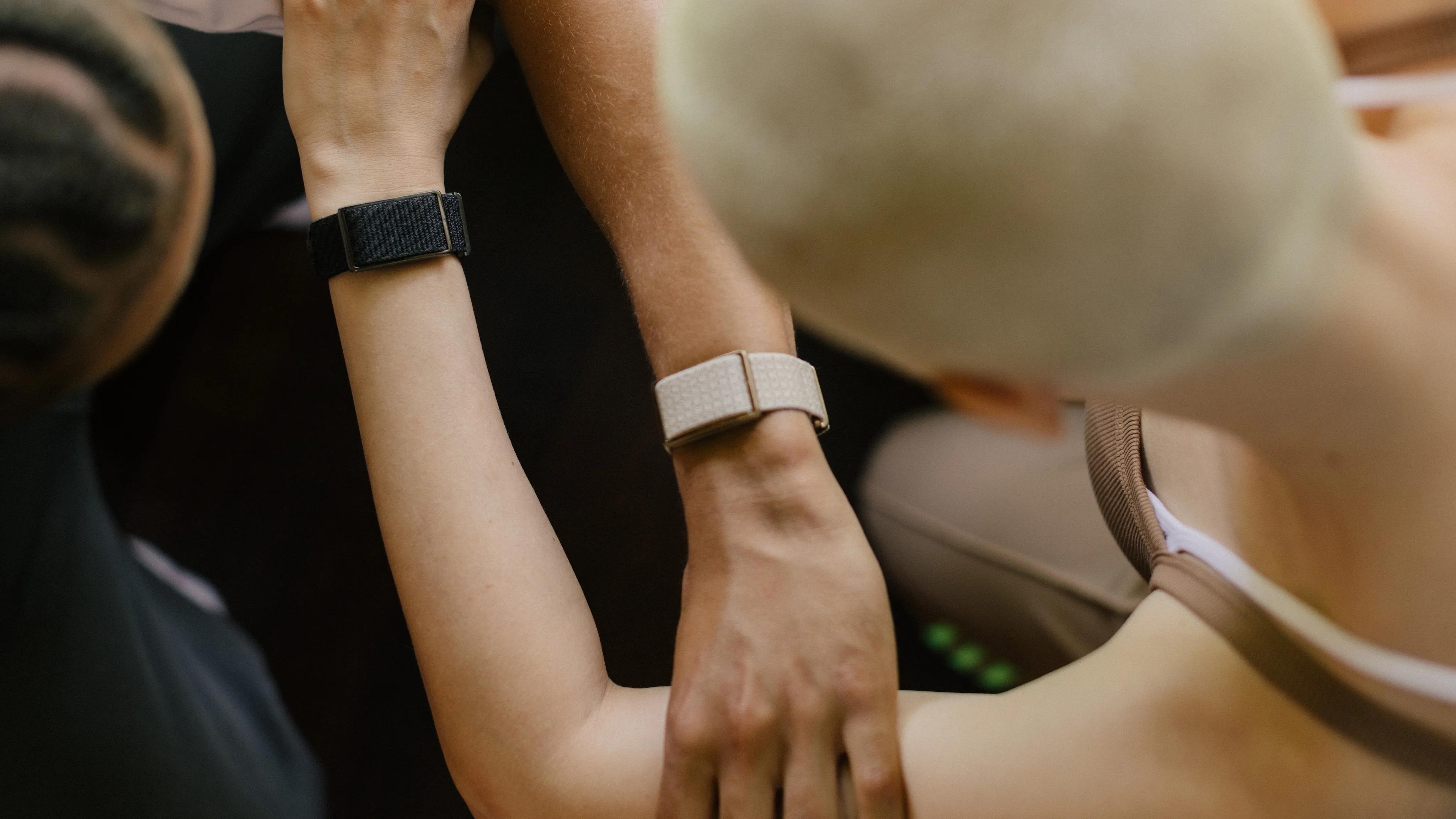
Polar Loop, Image source: Polar
Screenless Bands Are Quietly Gaining Traction
Screenless bands are by no means a new invention. Early products like Fitbit Flex, Jawbone UP, and later Whoop, which focuses on sports recovery, all followed similar paths. However, after the rise of smart watches, the vast majority of mass-market bands were equipped with screens, and the screenless design gradually retreated to the niche market of sports enthusiasts and specialized health segments.
Changes have basically taken place over the past year or more.
In May 2025, Whoop launched the Whoop 5.0 and the Whoop MG with electrocardiogram capabilities; a month later, Amazfit also launched the Helio Strap overseas; in September, Polar, a veteran sports technology company, launched the Polar Loop, a screenless band with no mandatory subscription. In May this year, Google released the Fitbit Air under the Fitbit brand, and in July, professional player Garmin also entered the market with the CIRQA screenless health management band.
Counting various new brands focusing on health data, a once somewhat deserted track has suddenly been crowded with players. The most attention-grabbing Google Fitbit Air is priced at $99.99, weighs only 12 grams in total including the band, and can be used continuously for a week.
After its official release on May 26, the Google Fitbit Air quickly sold out. Multiple colors were out of stock and shipping was delayed in Google Stores and mainstream retailers across many countries. Even more than two months after its launch, people had to pay a premium to buy it on second-hand platforms.
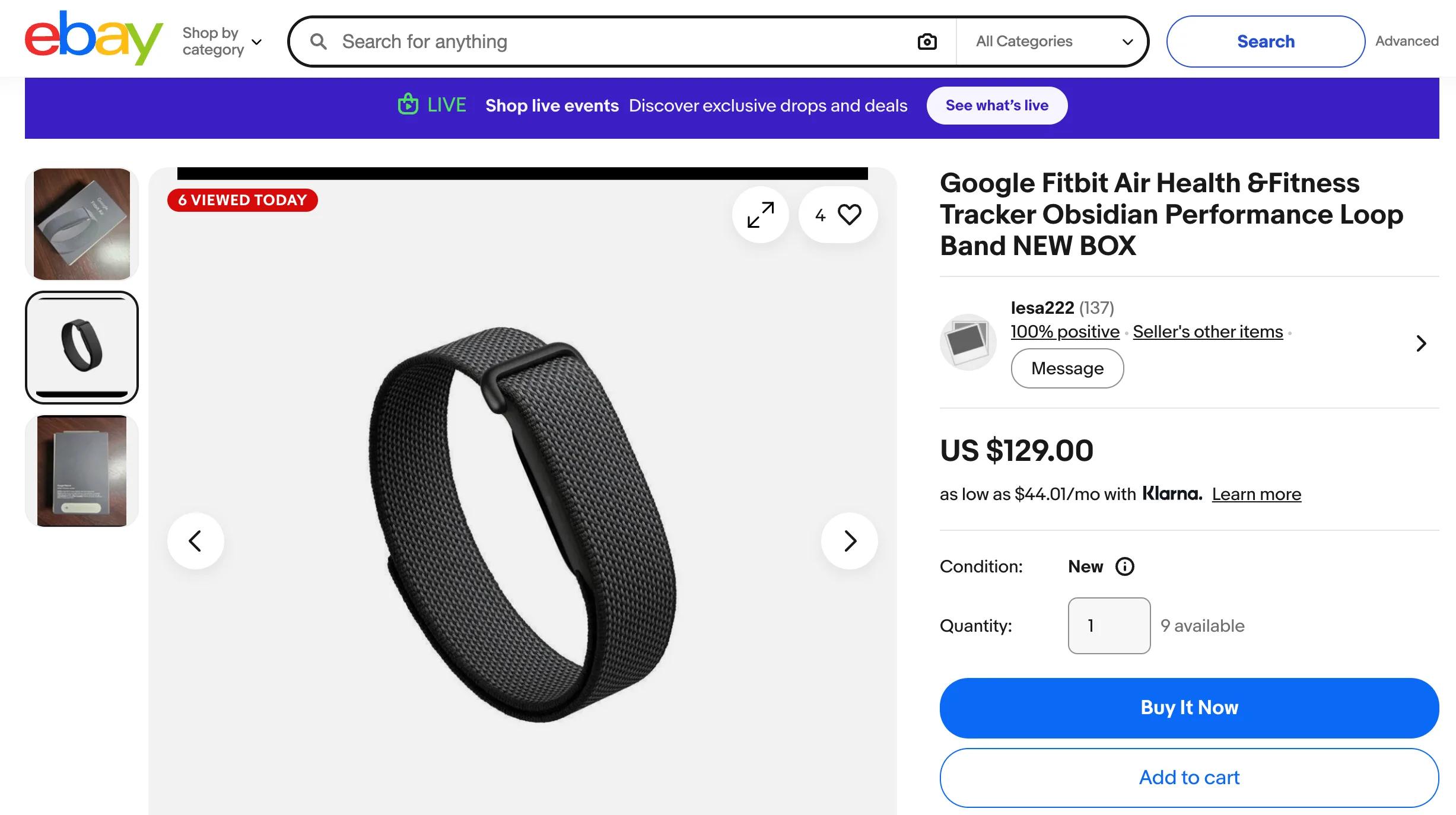
Brand-new second-hand price on eBay, Image source: eBay
It can be said that the Google Fitbit Air is almost the most popular AI wearable hardware in the first half of this year, which also initially shows that mass consumers recognize, or at least do not reject, the product form of screenless bands.
But we still have to ask: Why?
In fact, this boom of screenless bands is predictable to a certain extent, especially considering the success and validation of smart rings in the global market.
According to estimates from market research firm Omdia, global shipments of smart rings increased from 850,000 units in 2023 to 1.8 million units in 2024, and further exceeded 4 million units in 2025. Leading brand Oura had sold a total of 5.5 million rings as of September 2025, more than half of which were sold in the previous year, and its revenue in 2025 reached about $1 billion.
The scale of smart rings is still far from comparable to that of smart watches, but it proves that many people want to continuously record their sleep, heart rate and physical status, but do not necessarily want to wear a screen on their body. Moreover, rings are more unobtrusive, with little sense of presence whether you are exercising during the day or sleeping at night.
However, the space of smart rings is still too small, which imposes restrictions on sensors, antennas and batteries, and size matching is far more troublesome than that of bands.
At this point, I believe you can probably understand the basic logic behind the viability of the screenless band product form. In short, the screenless band on the one hand retains the mature sensors and larger batteries worn on the wrist, while removing the volume, power consumption and distraction brought by the screen, so the wearing experience during sleep can be completely unobtrusive, the battery life can be longer, and the price is also easier to control at a lower level.
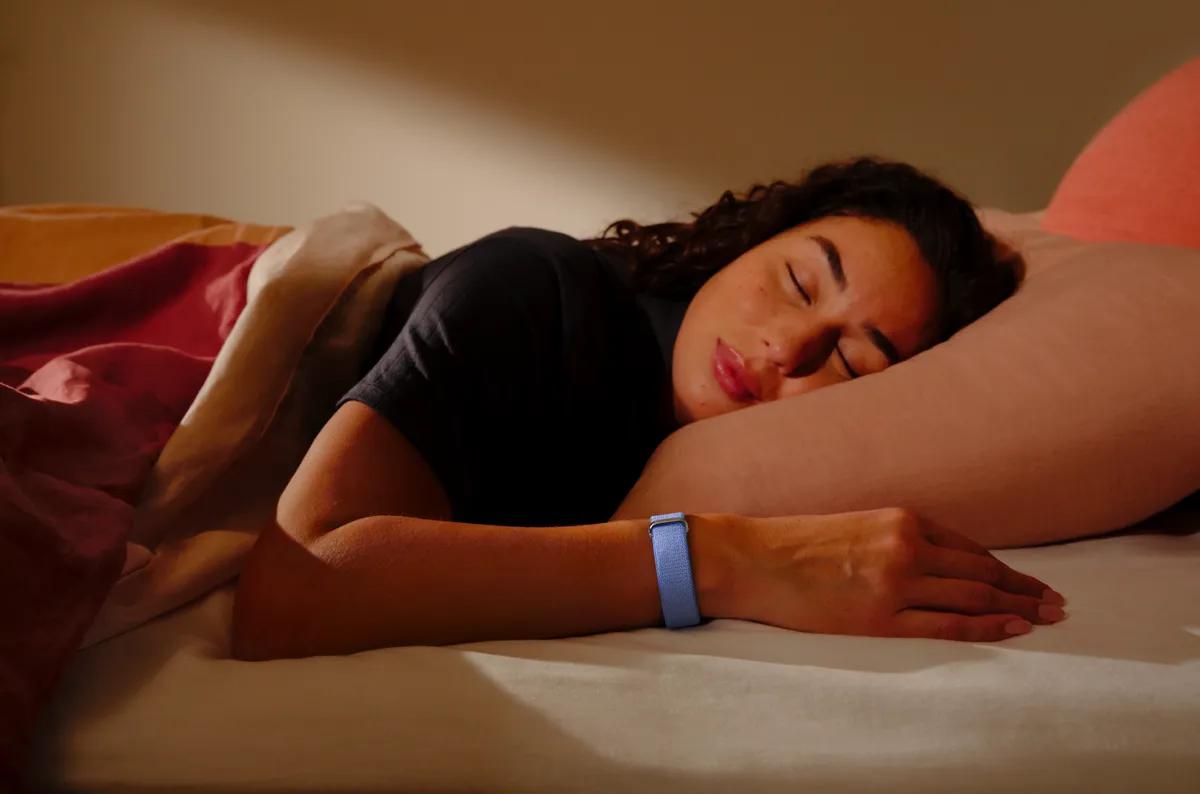
Google Fitbit Air, Image source: Google
Compared with smart watches, screenless bands not only have absolute advantages in wearing experience, but also almost eliminate all interactions. Users do not need to pay attention to the screen of the screenless band as they do with a smart watch. In this era when all smart devices are competing for users' attention, this is a unique feature.
However, the form advantage can explain why screenless bands have reappeared, but cannot explain why they have exploded in the past year. The other key to making this old form viable again is AI.
What Has AI Made Up For Screenless Bands?
Smart watches are much like a miniaturized dashboard: they record steps, heart rate, calories, and then display the numbers. The screen is of course very important, because users need to know how many steps they have taken, how far they have run, or what their heart rate is at any time.
Screenless bands adopt a new division of labor. The band is only responsible for continuously collecting data close to the body, while understanding and feedback are left to the app on the mobile phone. The problem is that when dozens of health indicators, exercise records and trend charts are all crowded into the app, ordinary users are often faced with a pile of incomprehensible numbers that they do not know how to deal with, let alone gain any insights. Without a screen, there is an extra step to view the data, which makes the product even less user-friendly.
The key value of AI is to simplify this step.
Take the Google Fitbit Air as an example. The band itself is responsible for recording data such as heart rate, blood oxygen, skin temperature, sleep stages and exercise, while the real product entry is the Gemini-based Google Health Coach.
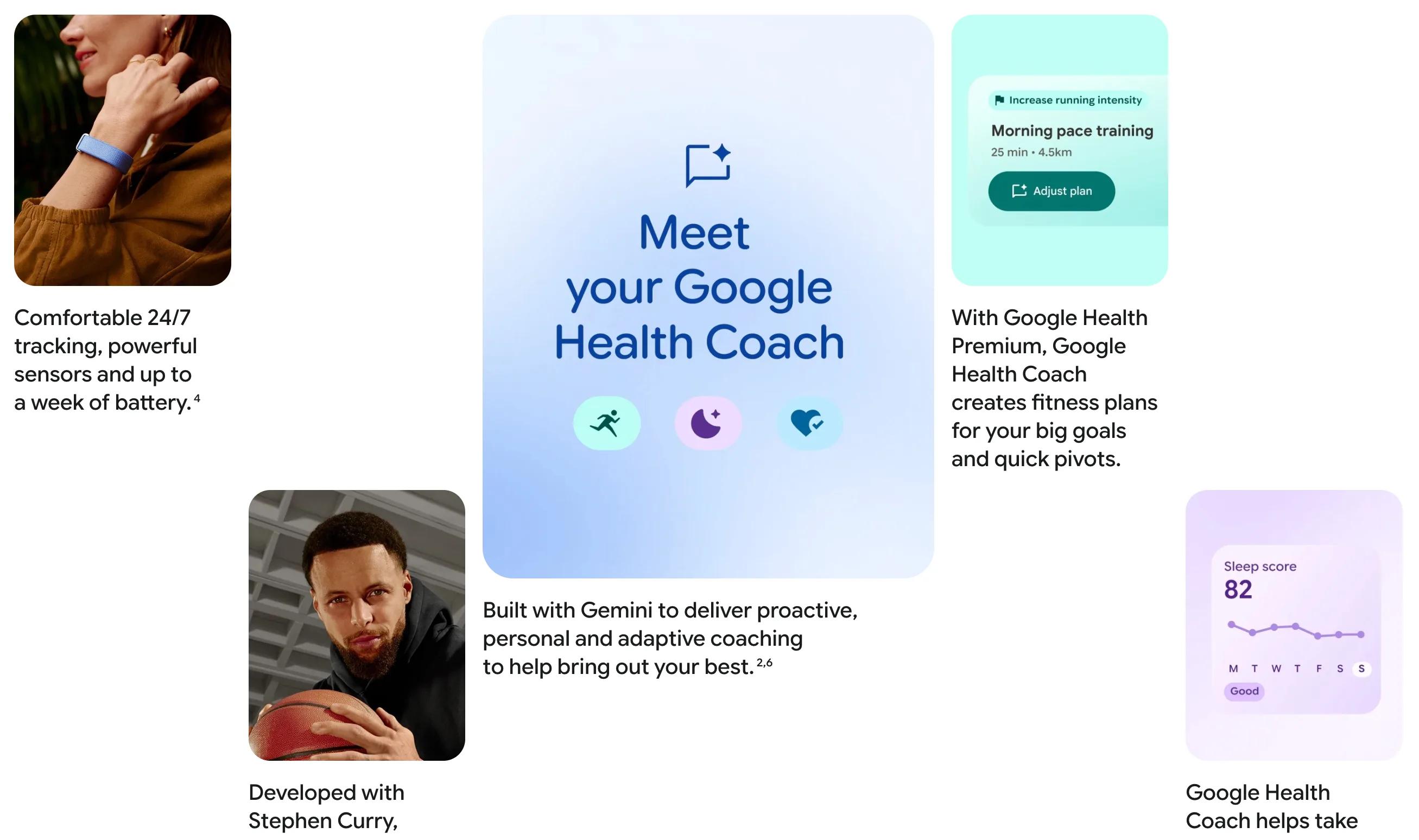
Image source: Google
Users do not need to study data and charts one by one, and can directly ask it: Why did I sleep eight hours last night and still feel tired today? Should I continue to increase my training this week or take a day off? AI will combine sleep, resting heart rate, heart rate variability, recent exercise load and personal goals to provide a more understandable explanation.
This is different from embedding a chatbot in a health app. The value of a single heart rate reading is limited. The biggest accumulation of wearable devices is the personal baseline over consecutive months or even years. AI can combine these time series with the user's actively added injury, work and rest schedules and training goals, and further add diet, menstrual cycle, local weather, and even the user's authorized medical records.
According to the introduction, Google Health Coach can already adjust weekly training suggestions based on the recovery level of the day and the weather, and can also create training plans and summarize medical records in natural language. Whoop Coach will also combine biometric data, behavior patterns and environmental information to explain changes in recovery and training.
In short, for users, the screenless band does not rush to tell you how far you ran today or how many calories you burned, but tries to answer "what do these data have to do with me and what should I do next". As a result, the value of the screen to display numbers has decreased, and long-term and stable data collection has become more important.
This is a closed loop in interaction.
The lighter and quieter the device is, the more willing users are to wear it all day long, especially not taking it off at night. The more complete the collected data is, the easier it is for AI to establish an accurate personal baseline. The more targeted the suggestions are, the more willing users are to continue wearing it. Fitbit Air even allows users to wear the Pixel Watch during the day and switch to the lighter Air at night, and the data of the two devices remains continuous. For smart watches that need to be charged every day or every other day, sleep is exactly the period of data that is most likely to be missing.
AI is also changing the business of screenless bands. Removing the screen can reduce hardware costs, but more important revenue is hidden in software: Whoop includes the hardware directly in the annual membership fee starting at $199, Google Health Coach is provided with the $9.99 per month Google Health Premium, and Oura also charges subscription fees on a long-term basis.
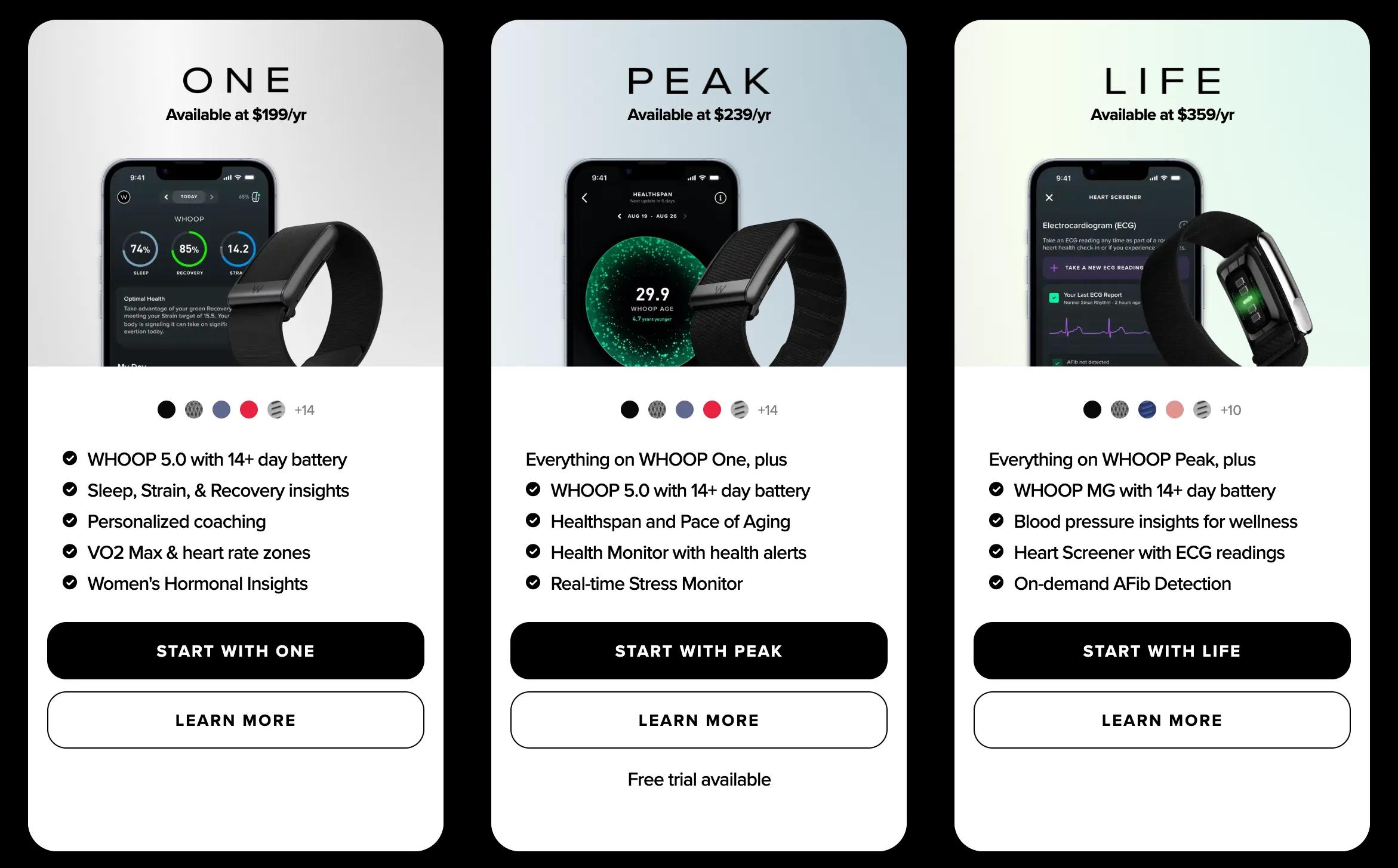
Image source: Whoop
In addition to hardware, manufacturers have begun to sell health services that continuously interpret data and provide suggestions.
To sum up, AI does not endow screenless bands with new sensing capabilities out of thin air, but improves the efficiency of data understanding and utilization. Removing the screen is a subtractive design in the AI era. Manufacturers hope to use AI to achieve less distraction from the device and more active understanding.
This is the most fundamental difference of screenless bands.
Apple Watch Has Got Another Piece of the Puzzle
We still don't know whether screenless bands can become the final form of AI wearable hardware. But we can almost be sure that Apple's consideration of screenless devices does not mean denying the current screen-equipped form of Apple Watch. A more realistic possibility is to complete the puzzle for the Apple Watch product line.
On the one hand, screenless bands can cover several clear groups of people. The first group is people who think the Apple Watch is too heavy to wear at night and has insufficient battery life. The second group is people who only want to record health data and have no interest in notifications and apps. The third group is people who think the Apple Watch is too expensive and want to enter Apple's health ecosystem at a lower threshold. A screenless band that is light enough and has long enough battery life can also be worn alternately with the Apple Watch to fill the data gaps during charging and sleep.
Apple has all the foundation to do this. The Apple Watch has already accumulated mature algorithms for heart rate, electrocardiogram, blood oxygen, body temperature and exercise. The Health app integrates data from iPhone and Apple Watch, support from third-party devices and medical institutions, as well as a full set of Apple Fitness+ services. The screenless band could well become the cheapest and most unobtrusive entry point in Apple's health ecosystem.
But the premise is still to make good use of AI.
This article is from "Lei Technology", authorized for release by 36Kr.