100-Billion-Yuan IPO: Unitree at the Peak | DeepKr
Author | Qiu Xiaofen, Yuan Silai
Editor | Yuan Silai, Yang Xuan
Graphics | Qiu Xiaofen, Fan Xinya
In 2026, Unitree's headquarters has become a top-tier popular attraction even in Hangzhou, a renowned tourist city.
Tour groups visit all year round, gathering at the entrance to take group photos with banners. The official exhibition hall sometimes opens limited visiting channels for individual tourists, but it is said that visitors have to queue for more than a month during peak seasons. As a large number of third-party agencies charge for guided tours under the guise of "official cooperation", Unitree has to put up a prominent notice — "Unitree does NOT provide any paid visiting service!!!"
New real estate projects near Unitree's headquarters take "Unitree, the rising star of Hangzhou, drives property value" as their core selling point. There is a widespread saying that after Unitree goes public, its early employees can each afford a property in Binjiang District.
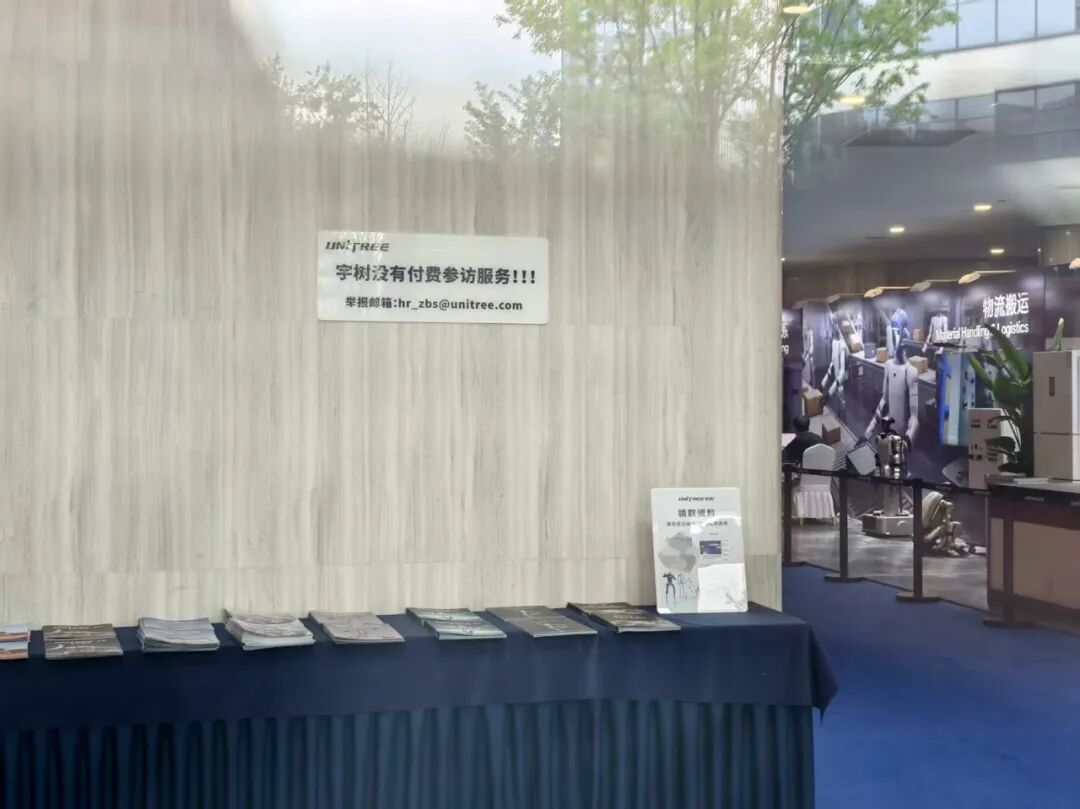
Unitree Exhibition Hall, photographed by Qiu Xiaofen
Every move of Wang Xingxing stirs widespread discussion. People noticed Wang Xingxing wears black suit trousers without a belt; after exclusive interviews, he puts his palms together, a signature gesture of Tim Cook; his signature is bold and forceful, showing "unique personal charm"; netizens even debate whether Wang Xingxing's MBTI type is INTP or INTJ.
This fanatical vibe spreads from the public circle to the capital market, and reaches its peak in this midsummer.
In June 2026, Unitree Robotics' IPO application on the Sci-Tech Innovation Board was officially approved by the Listing Committee of the Shanghai Stock Exchange. It only took 73 days from acceptance to the listing review meeting, known as a "lightning-fast approval". One widely held view is that in the global AI competition, China's core advantage lies in manufacturing capacity, and the robotics industry represented by Unitree carries this expectation.
Unitree's IPO valuation is 61 billion yuan. However, "It is very reasonable for its market cap to exceed 200 billion yuan after listing, and I think it may even exceed 400 billion yuan in the short term. This is not exaggerated compared with the valuation of similar overseas companies," Yu Wenchao, early investor of Unitree and partner of Dunhong Asset, told 36Kr. More than one person believes Unitree is the Apple of the robotics industry, and Wang Xingxing is the Elon Musk of the robotics world, "everything is possible after listing".
Some investors who did not participate in Unitree's financing find it hard to understand: "Are people crazy? Has the circle become this irrational? Hundreds of billions of valuation is way too exaggerated! Its 2025 revenue was only 1.7 billion yuan!"
No hardware company has ever obtained such excited public attention and valuation with an annual revenue of only over 1 billion yuan. On August 10, Unitree's Sci-Tech Innovation Board IPO opened for new share subscription, with a winning rate of only 0.02% — corresponding to a static P/E ratio of about 219 times. While the static P/E ratio of its "general equipment manufacturing" industry is only 38.56 times.
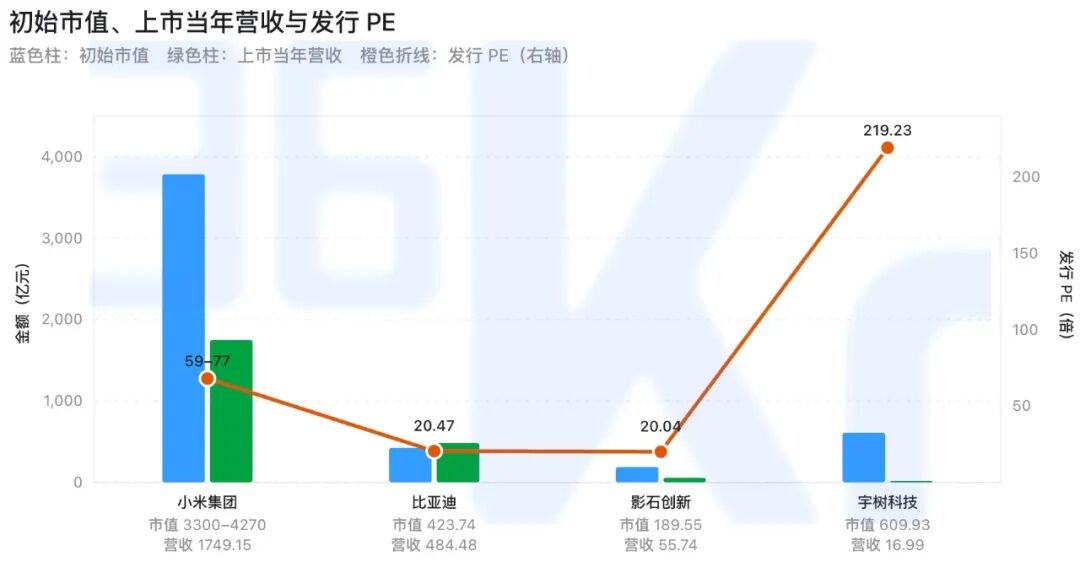
Comparison of IPO market cap and revenue of 4 hardware companies. Note: Initial P/E ratio is calculated based on the lower value of the attributable net profit before and after non-recurring items, and Xiaomi uses adjusted net profit for calculation
Part of Unitree's current market value comes from its own efforts, as it has grown into the tallest tree in the forest; the other part is undoubtedly the combined result of national strategy, industry betting and public sentiment, which form the high mountain standing under its feet.
Robotics has been written into the 15th Five-Year Plan, state-owned capital institutions have poured into the field for investment, and the listing access has been opened... All these factors have contributed to the leapfrog surge of financing amount in the embodied intelligence track in the past three years, with companies valued at tens of billions emerging one after another, and a large number of industry practitioners starting businesses or changing jobs to join this track.
The general public who have watched the Spring Festival Gala and expect to use robot nannies one day are casting their eyes on it, investors and individual investors who hope to get a share of the pie are focusing on it, and peers in the robotics industry are also paying close attention to it — as the benchmark and anchor of the whole industry, if Unitree can maintain a market cap of hundreds of billions, investors who have invested in embodied intelligence companies at valuations of billions, tens of billions or even hundreds of billions will feel reassured; if its share price breaks below the issue price unexpectedly, the whole industry will be shocked. As the listing drum beats closer, everyone is waiting restlessly for Unitree to give a market pricing answer.
Under the gaze of all parties, Unitree has become the tree standing on the top of the mountain.
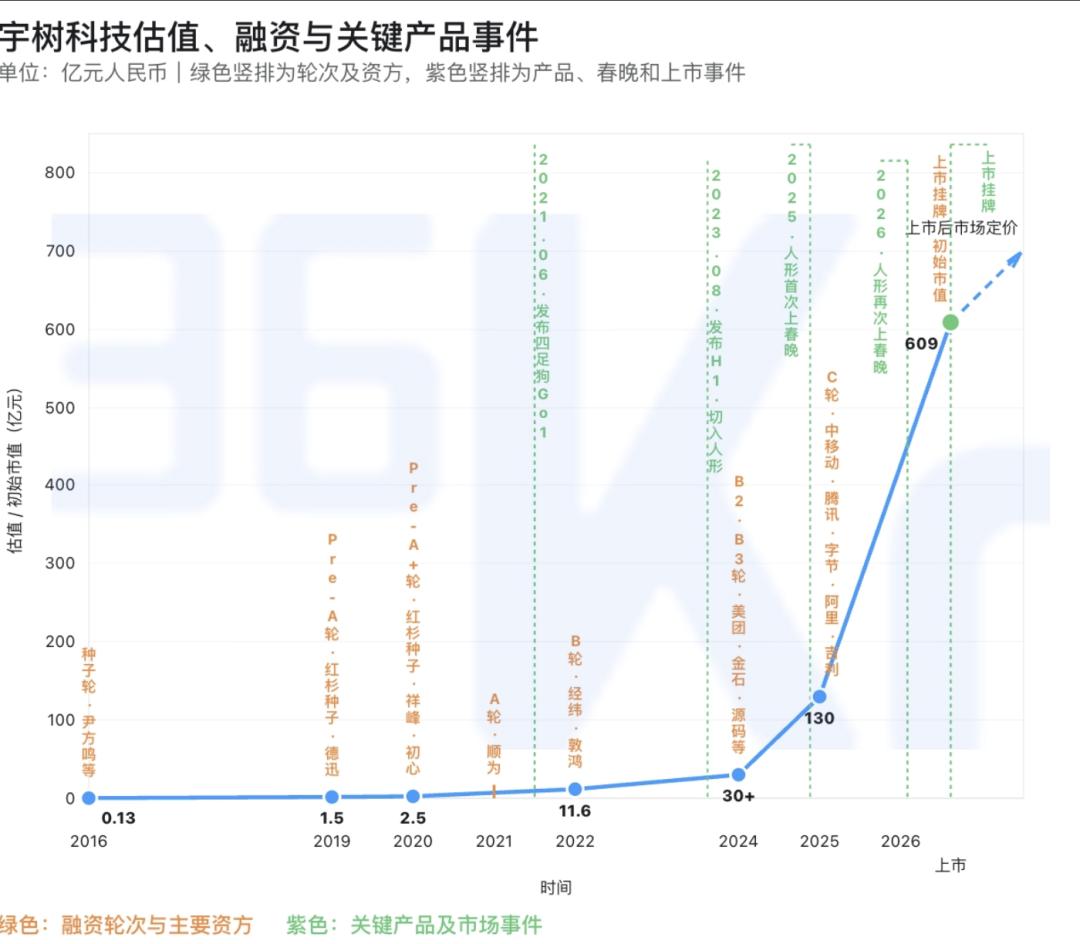
Unitree's major events and corresponding valuation changes, sourced from public information and interviews
Valuation at 100 Million Level: The Year Everyone Missed Unitree
In March 2019, when Zhou Hualin, Investment Director of Tencent Investment, Deng Yiheng, Investment Manager, and Fu Hao, Head of Post-investment, met Wang Xingxing, Unitree only had several hundred thousand yuan left in its account — but Wang Xingxing did not look anxious at all.
Zhou Hualin was a little surprised, because Unitree obviously did not have much cash reserve. Its office was only two small rooms of 20 to 30 square meters in a shabby office building, looking more like a lab. Electronic components were hung all over the wall, and parts of quadruped robots were scattered on the floor and desks, leaving barely any space to walk.
The team could only find an empty space in the lobby on the first floor to chat. Pedestrians came and went, and the automatic door kept opening and closing, blowing cold wind in from time to time. The temperature in Hangzhou in January was only a few degrees Celsius, they shrank their necks, and their bodies froze after a few words. "I was freezing to death!" Zhou Hualin still has a deep impression of that scene.
Wang Xingxing was not active in raising funds. He only needed 4 million yuan, but Zeng Liqing, founder of Tencent Investment, made a decision to invest tens of millions yuan in him.
Venture capital firms were also not active in investing in Wang Xingxing. At that time, Wang Xingxing had been starting a business for 2 years, Unitree's valuation was less than 100 million yuan, and he had run into many rejections in the investor circle.
At that time, investing in Unitree was not a mainstream choice.
There was another robotics company named Deep Robotics in Hangzhou, known as "China's Boston Dynamics". Its founder Zhu Qiuguo was a professor at the College of Control Science and Engineering of Zhejiang University, already well-known in the industry, who had presided over major national projects, and never lacked capital since the start of his business. In 2019, most investors would choose Deep Robotics.
In 2019, Deep Robotics' valuation had reached 200 to 300 million yuan, more than twice that of Unitree. "Zhejiang University's control college is very famous, everyone would definitely choose the founder with better background," an investor recalled.
Compared with Deep Robotics, Wang Xingxing and Unitree looked very inconspicuous. Tian Jiangchuan, Managing Partner of In Capital, remembered that her comment on Wang Xingxing in internal meeting notes was "grassroots background" — he was just a student entrepreneur graduated from an ordinary 211 university, and only worked at DJI for three months. When getting along with strangers, Wang Xingxing always looked stern and tense.
When investors asked him how he planned to make money from quadruped robots, Wang Xingxing answered very honestly: using them to deliver parcels by climbing stairs in residential communities without elevators. This was also an answer that made investors shake their heads.
Later, the investment circle collectively reflected on why they missed Unitree. But back in 2019, facing such an entrepreneur and company, most investors just "could not bring themselves to invest".
Tian Jiangchuan later analyzed her own mistake: "The problem mainly lies in my arrogance of elitism. I thought the robotics industry requires top university background, and Wang Xingxing graduated from Shanghai University, so I judged that such background could not match the industry demand and fund preference — this is undoubtedly a huge misjudgment."
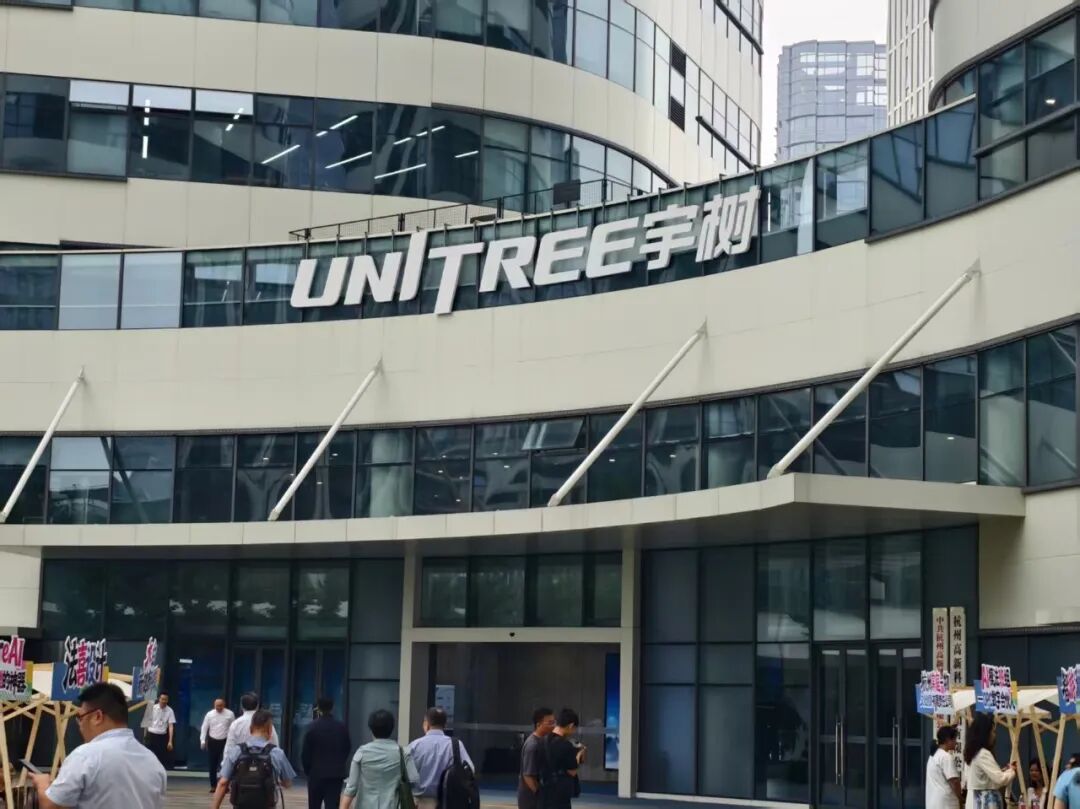
Unitree's new headquarters, photographed by Qiu Xiaofen
Besides, Unitree took a different technical route from the mainstream.
Around 2016 when Unitree was founded, most domestic robotics companies followed Boston Dynamics and adopted the hydraulic route. "At that time, everyone just copied from the United States," an early Unitree investor told 36Kr.
The principle of hydraulic technology is to rely on high-pressure oil to push the piston in the joint to stretch and generate force, converting pressure into mechanical force. The whole process is similar to the contraction of human muscles.
Zhou Hualin clearly remembered that he asked Wang Xingxing why he did not take the hydraulic route, and Wang Xingxing even got a little angry.
He answered directly: Hydraulic technology will definitely not succeed. First, the hydraulic rod is a high-precision mechanical part, Americans can make it small and delicate, but Chinese manufacturers cannot make it that fine; second, the cost of hydraulic technology cannot be reduced; third, the accuracy of hydraulic control is not enough, making it very difficult to complete some fine movements.
Compared with hydraulic technology, the motor solution chosen by Wang Xingxing cannot achieve high power output, but it is easy to operate, low in cost and higher in precision.
Facts have proved Wang Xingxing's technical judgment is far ahead. In April 2024, Boston Dynamics officially retired the hydraulic version of Atlas, and turned to embrace the electric drive solution that Unitree had insisted on since 2016.
Wang Xingxing's idea is not academic-oriented, but pointed to cost control and large-scale production very early. He once told Zheng Juncong, founder of Shunwei Capital, that the starting point of Unitree's R&D is low cost, high reliability and practicality, to "truly bring quadruped robots to the public life".
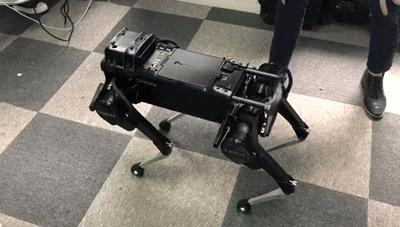
Unitree robot dog photographed by an investor
To achieve this goal, Wang Xingxing built his own system from scratch.
Shortly after Unitree launched the direct-drive solution, domestic robotics startups began to follow similar ideas. But these companies all used the same template: high-speed motors from Swiss Maxon, paired with harmonic reducers from Green Harmonic.
The principle of this solution is that high-speed motors are small in size and fast in rotation, but low in power. Adding a harmonic reducer is like adding an amplifier, which reduces the motor speed and amplifies the torque by dozens to hundreds of times, helping the robot complete load tasks.
But Unitree took the opposite path, namely quasi-direct drive (QDD), using low-speed motors paired with planetary reducers. The advantage is that although low-speed motors have low rotation speed and large size, they have high power, which reduces the requirement for planetary reducers, and only slightly amplifying the torque can reach the standard.
More importantly, the gear ring of the harmonic reducer is as thin as an eggshell, which breaks easily when dropped, and the unit price often reaches thousands of yuan — in contrast, the planetary reducer is a common industrial standard part, costing only tens of yuan, and very durable.
In addition to the power system, Wang Xingxing even redesigned the structural solution that the industry had used for many years.
Take motor distribution as an example, most peers follow the solution from Swiss ANYbotics — installing two motors on the thigh and one motor on the knee, with three motors responsible for three movements respectively. The problem of this design is that the lower limb is too heavy, leading to high power consumption.
Unitree concentrates all motors on the hip joint, leaving only a light connecting rod on the lower leg, which allows the robot to run a long distance and reduces maintenance difficulty. This architectural innovation makes up for the short board of slightly low explosive force and torque of the electric drive route.
"After I saw its structure, I thought it was a genius design. It must have gone through many iterations, and finally found that this structure is the best," Zhou Hualin told 36Kr.
History has proved that Unitree played the role of a technology leader. Later, most domestic robotics companies' leg solutions default to following Unitree's underlying design of "electric drive + low-speed high-torque motor and planetary reducer + three motors all placed at the proximal end".
The consequence of being too advanced and too different from others is that Wang Xingxing could not find any core component suppliers at all.
According to a practitioner's recollection, the supply chain of quadruped robots at that time could be described as "almost non-existent". Only small workshops could make joints, and there was no concept of "integrated joint" at all. Motors, reducers and controllers were scattered in the hands of different suppliers. "If you put them together, the module would be too big and too heavy, the robot dog could barely walk a few steps, with no practical value."
Most motors on the market pursue high rotation speed, with low torque (the magnitude of rotational force). But the motor Wang Xingxing needed was low-speed and high-torque, which could drive joint movement, contrary to the mainstream technical route. Besides, the motor Wang Xingxing's robot used was inner-rotor motor, meaning the rotor rotates inside the motor, while most motors on the market are outer-rotor motors used in drones and high-speed hair dryers. In addition, the weight of the motor designed by Wang Xingxing was half lighter than the industry benchmark product, and there was no mature standard product on the market.
The motors available on the market were not easy to use. If they needed customized products, Unitree only placed dozens of orders in the early stage. "When we knocked on the doors of listed companies like Wolong and Mingstar, they didn't even bother to talk to us," a former employee recalled to 36Kr.
After running into walls everywhere, Wang Xingxing realized: "A complete machine manufacturer must be like Apple, mastering core technologies by itself, so as to reshape the supply chain according to its own ideas, instead of being constrained by suppliers." Since he could not purchase the parts externally, he bought silicon steel sheets and copper wires, and wound the required motors by hand.