Even when offering its drinks at 4 yuan per cup, Starbucks still failed to steal the market base from Luckin Coffee and Cotti Coffee.
On the first day of Start of Autumn, a flood of posts showing Starbucks takeaway receipts suddenly popped up on social media platforms, with prices at 4 yuan, 6 yuan, 8 yuan, and the highest no more than 12.9 yuan.
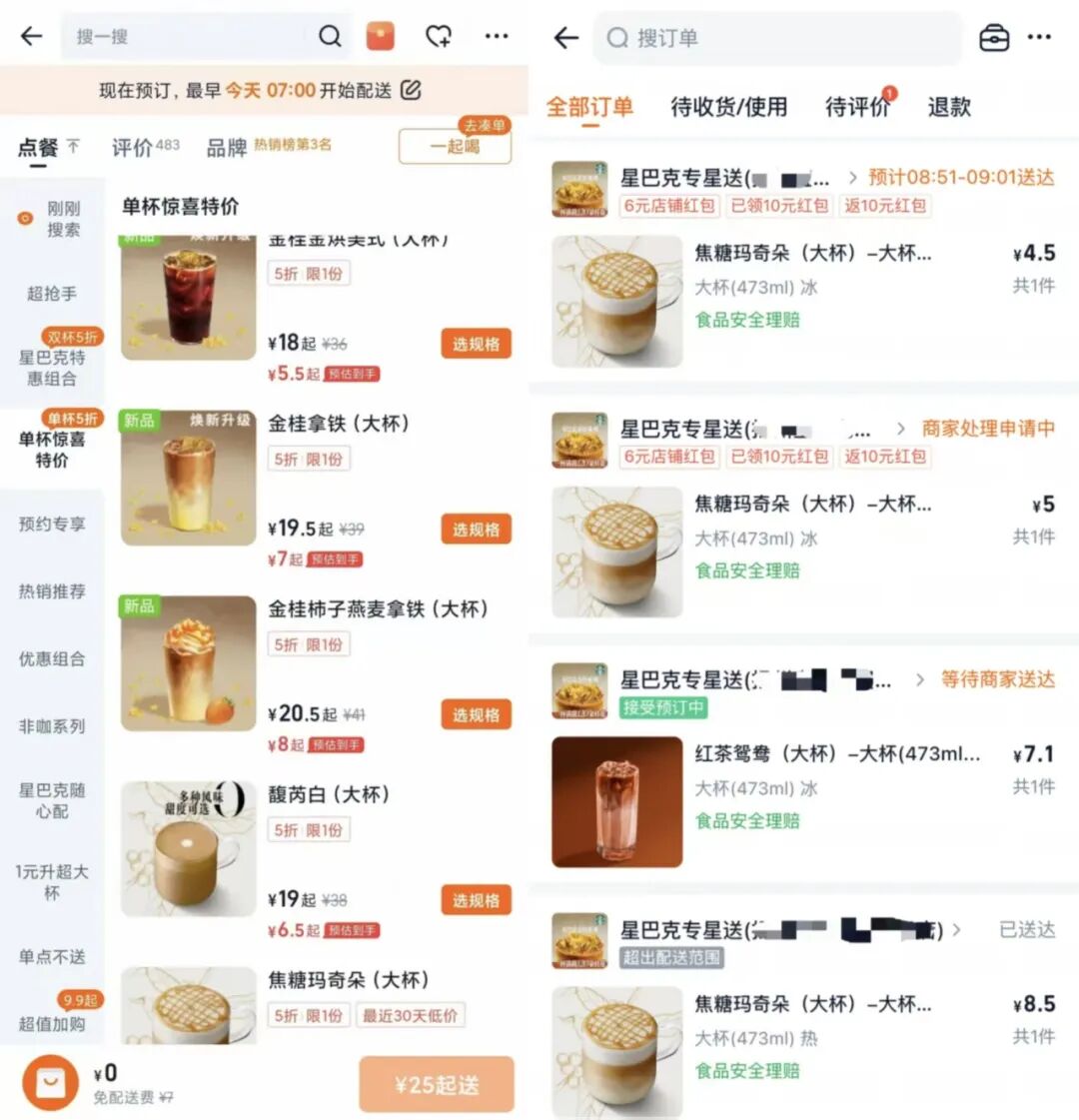
No one expected that one day, the taste of Starbucks would be just like that of Mixue Bingcheng.
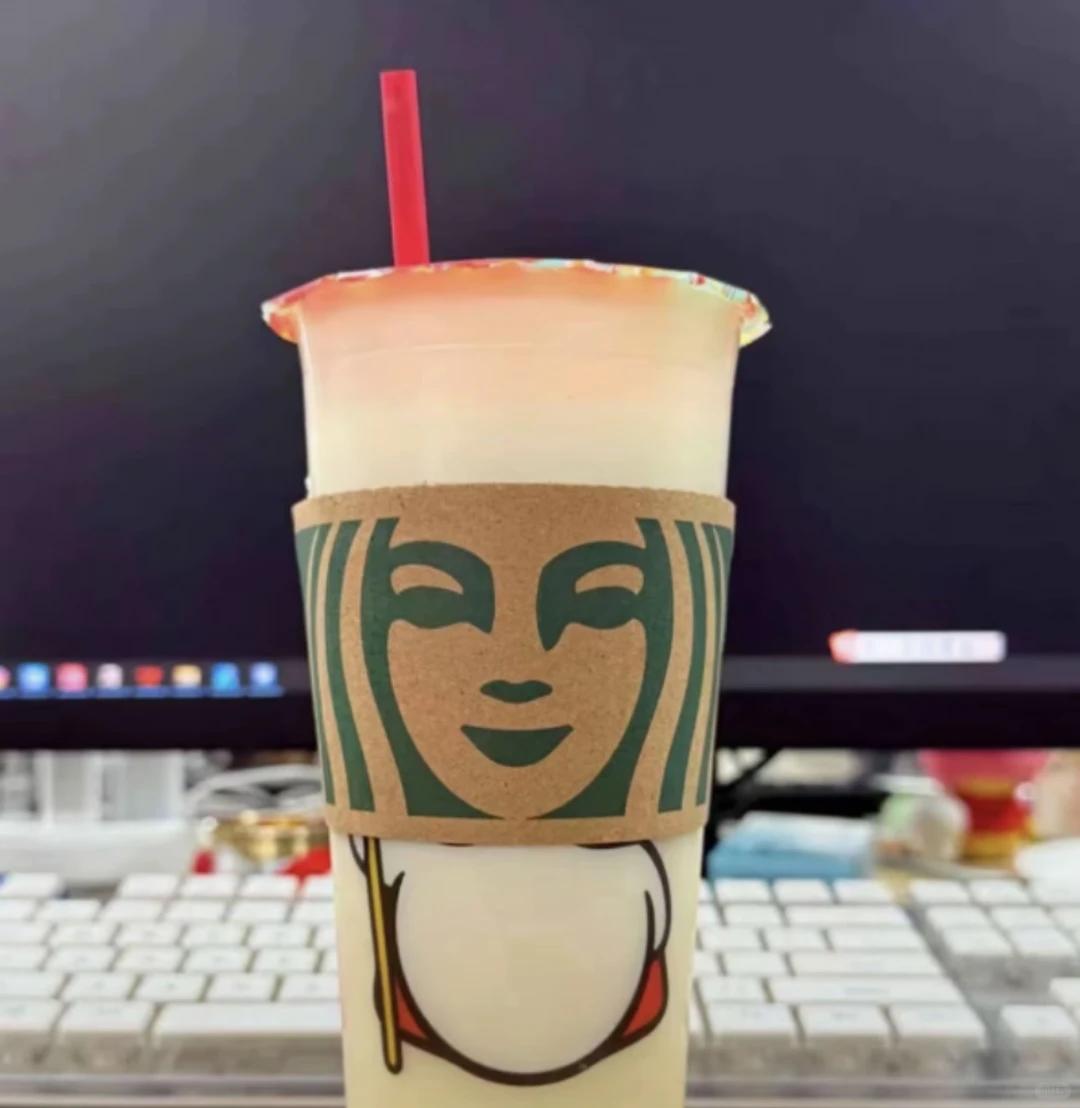
On the basis of 50% off and 25% off discounts for single Starbucks drinks, Taobao Flash Sale added platform coupons, so users can generally buy promotional Starbucks products at prices lower than 50% of the original. Meituan took a more straightforward step, launching the "First Starbucks Voucher of Autumn" priced at 12.9 yuan, which is the same price as vouchers for some Luckin Coffee products.
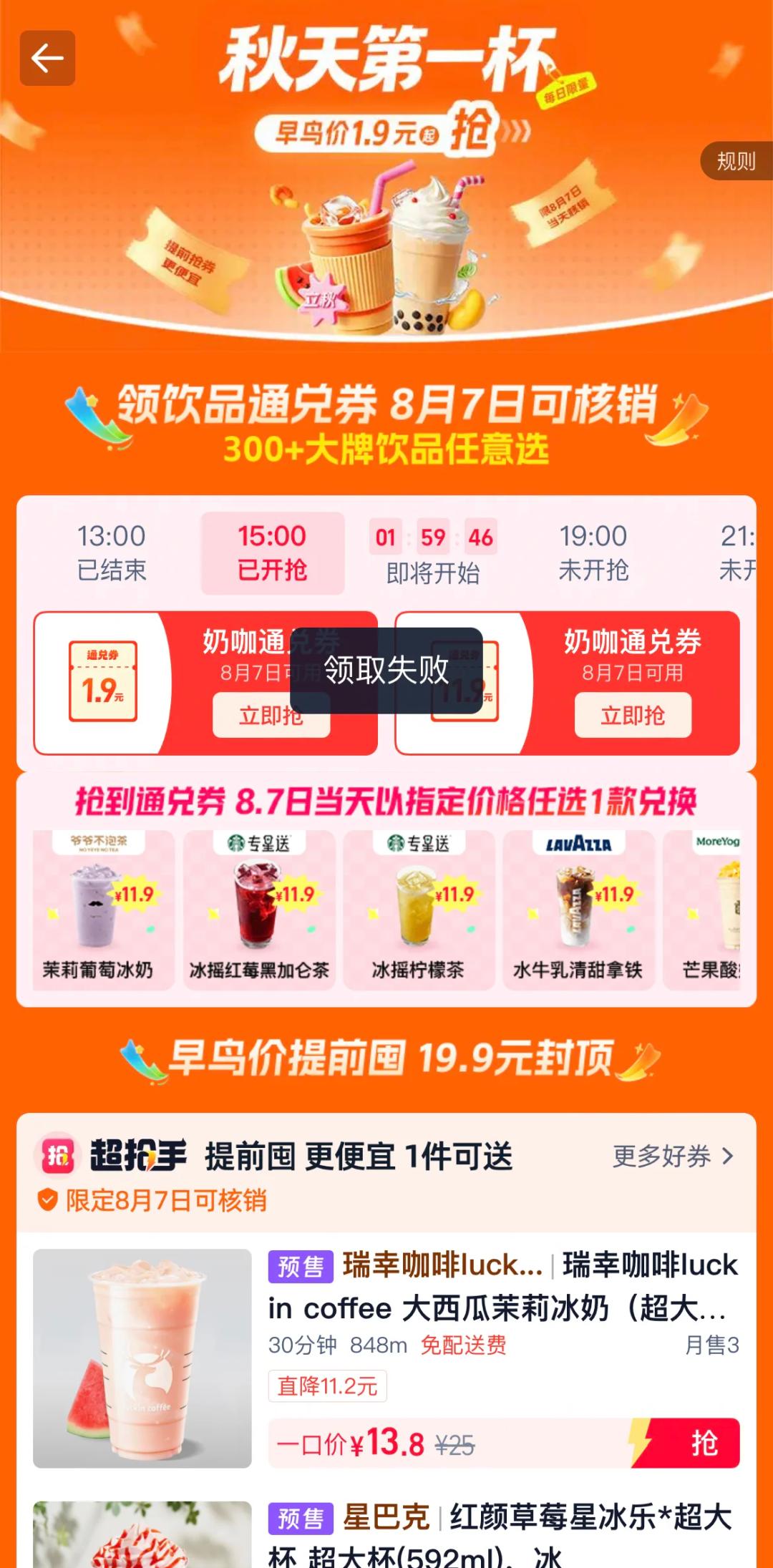
People originally thought Starbucks had finally come to its senses and was about to launch a price war against Luckin and Cotti Coffee, but it turned out that Taobao Flash Sale and Meituan were the ones fighting each other.
The "zero-yuan purchase" for milk tea is less common now, and the competition among takeaway platforms has shifted to the high average order value market. In the past, subsidies were offered for Mixue Bingcheng and Luckin, with each cup only a few yuan cheaper, leading to limited drainage effects.
But Starbucks is different. The original price of one cup is more than 30 yuan. After a 50% discount plus coupons, users feel that they "saved more than 20 yuan". With the same subsidy budget, the psychological account of users that the platform can leverage is not at the same level at all.
To put it bluntly, Starbucks is regarded by the platforms as the "core drainage product".
Then the question arises: with 4-yuan Starbucks available, are Luckin and Cotti Coffee panicking?
I. The 9.9-yuan price war is over, 4-yuan Starbucks is coming
An Americano sold at 4 yuan is most likely not what Starbucks wants. 2026 is a watershed for Starbucks China. At the beginning of the year, the long-awaited strategic stake sale of Starbucks China to Chinese capital was finally completed, and the strategic cooperation with Boyu Capital was officially launched.
Subsequently, Starbucks launched the "Thousand Stores, Thousand Faces" strategy, aiming to open 20,000 stores covering 1,500 county-level markets. The core of the whole strategy is "decentralize power to make profits", and the store format has expanded from the unified large-store model to a diverse spectrum ranging from 10-square-meter small stores to theme large stores.
Starbucks' market share in China has dropped from the peak of 42% in 2017 to 14% in 2024. During the same period, Luckin took the top spot with a 35% share, and Cotti Coffee also took 12%. In five years, it lost 28 percentage points of its market territory.
The gap in store scale is even more obvious. Starbucks has about 8,105 stores, Luckin has nearly 30,000, and Cotti Coffee has exceeded 15,000. The number of new stores Starbucks opens in a whole year is only equal to the number Luckin opens in one quarter.
This set of strategies does not look like a plan to compete head-on with Luckin and Cotti Coffee at the 9.9-yuan price range at all.
In the second quarter of 2026, Luckin released a seemingly beautiful report card, with total net revenue of 15.886 billion yuan, a year-on-year increase of 28.5%; net profit of 1.486 billion yuan; total number of global stores of 36,310; and an average of 112.7 million monthly active paying customers.
But behind the impressive data, there is a not-so-good signal: same-store sales of self-operated stores decreased by 5.3% year-on-year. This is the third consecutive quarter of negative growth, from +14.3% in the third quarter of 2025, to +1.3% in the fourth quarter, to -0.1% in the first quarter of 2026, and -5.3% in the second quarter.
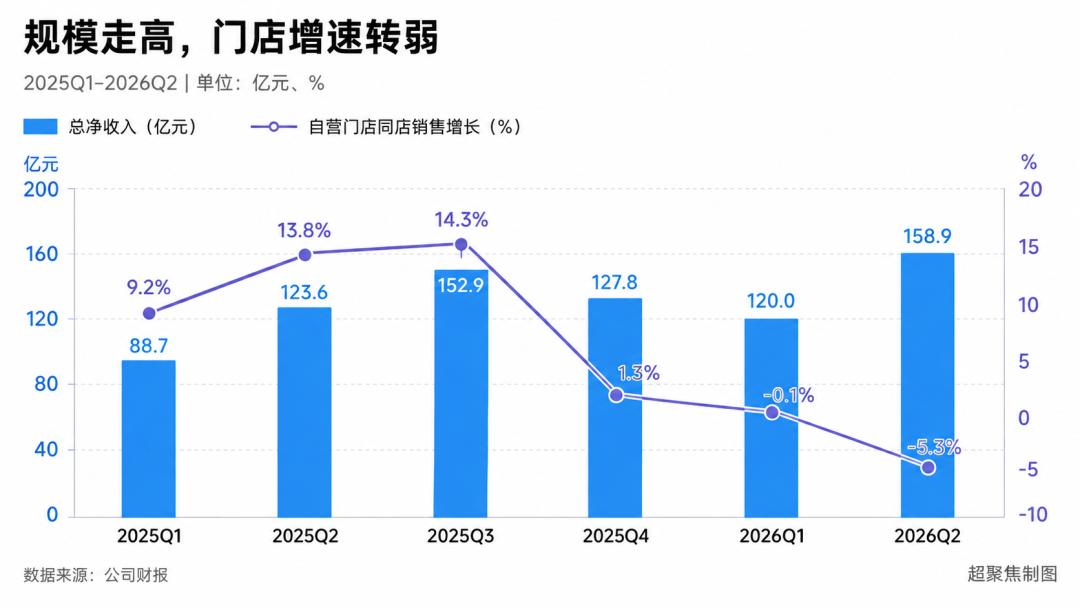
The more stores open, the more users there are, but the less each store sells. Guo Jinyi, CEO of Luckin, explained that it was "the high base pressure caused by takeaway subsidies". But the deeper reason is: the stores are too densely distributed, and new stores are eating into the customer flow of old stores.
At the same time, Luckin is also tightening its 9.9-yuan promotions. In the second quarter, the coverage of 9.9-yuan vouchers has been reduced to less than 10%, and the overall price range has moved up to 13-15 yuan. After three years of price war, Luckin found that relying only on low prices cannot support 36,000 stores.
Cotti Coffee next door has a tougher time than Luckin. In March 2026, the total number of Cotti Coffee stores was about 18,000, with the joint operation accounting for more than 90%, but the problem lies in the store closing speed.
Data from Juhai Brand Monitoring shows that as of the beginning of July 2026, Cotti Coffee closed 617 stores within 90 days, while only 544 new stores were opened, and the number of closed stores exceeded the number of newly opened stores for the first time. Hongcan Big Data shows that 762 new stores were opened and more than 700 stores were closed from March to May.
The "guaranteed buyback" policy launched by Cotti Coffee in 2025, which allows franchisees to apply for exit if the operation fails to meet expectations after 6 to 9 months and the headquarters buys back the store at a discounted price, was canceled on June 30, 2026. Without the guarantee, more franchisees transferred or closed their stores before the policy expired. In March 2026, Cotti Coffee suspended the application for joint operation in cities above the provincial capital level, and planned a number of directly operated model image stores.
JIEMIAN News once broke down the cost of a single Cotti Coffee cup to 11.1 yuan — 5.7 yuan for raw materials, 1.5 yuan for packaging materials, 1.9 yuan for labor, 0.2 yuan for utilities, and 1.8 yuan for rent. Selling at 9.9 yuan is purely a loss. But raising prices means losing customers, while not raising prices means losing money. Cotti Coffee is stuck at a dilemma crossroad.
Besides, this round of price reduction of Starbucks is driven by the platforms. Once the platform subsidies are withdrawn, the price will go back immediately. This kind of "pulsatile" low price cannot form continuous pressure on Luckin and Cotti Coffee.
II. No one can win the "Pinduoduo" war in the coffee industry
On February 1, 2026, Cotti Coffee officially ended its nearly two-year "9.9 yuan for all products without limit" activity. Most products returned to the regular price of 11.9 to 16.9 yuan, and the price of some core products increased by 30% to 60%. Luckin's 9.9-yuan discounts have also been greatly narrowed, and the three-year-long price war has entered a stage of temporary conclusion.
After the price war cools down, all players are looking for new ways to survive. Luckin opened 2,714 new stores in one quarter, and the total number of stores exceeded 36,000, but the same-store sales of self-operated stores decreased by 5.3% year-on-year. The more stores are opened, the less each store sells, and the marginal effect of scale expansion is decreasing.
Cotti Coffee has suspended franchise and joint operation expansion, and Lucky Coffee has tightened the quota of new stores. The whole industry has entered the stage of "intensive cultivation" from "rapid territory expansion".
At this very moment, the platforms pulled Starbucks out to launch a round of "4-yuan promotion". The effect is really explosive: it has topped the hot search list, the orders have skyrocketed, and users are overjoyed.
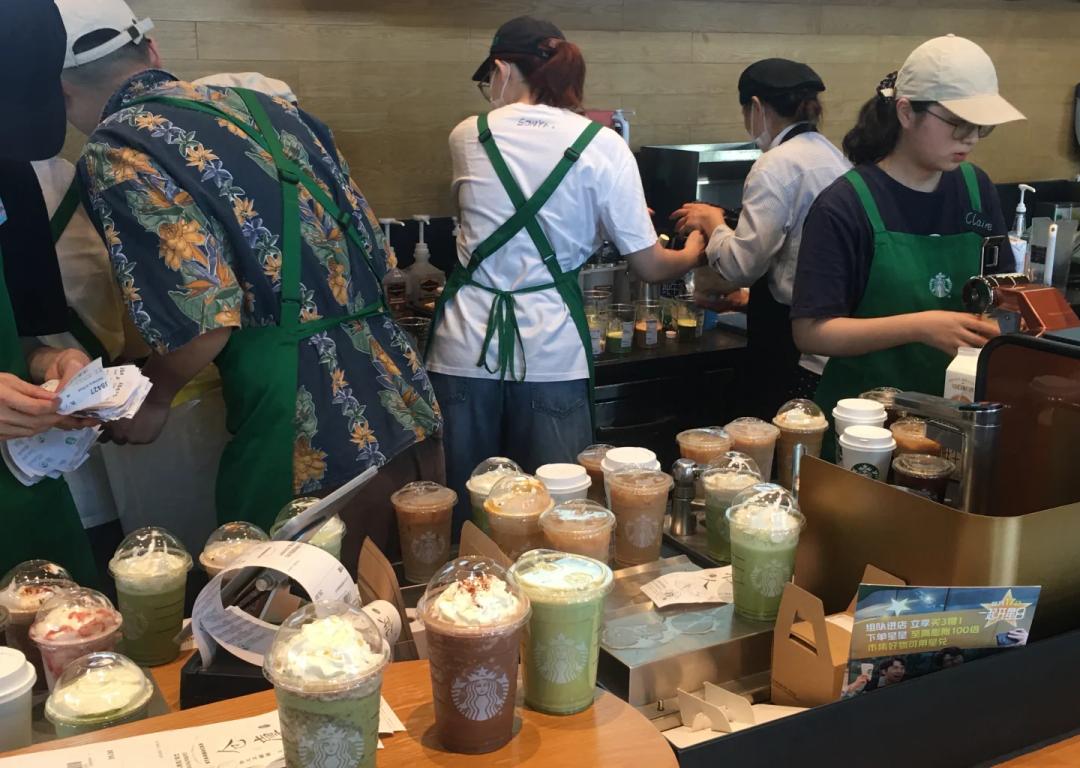
But after drinking the 4-yuan Starbucks, users will most likely think that "Starbucks can be so cheap too". For a chain coffee brand that relies on brand premium and the "third space" to make profits, this is not necessarily a good thing.
Zhu Danpeng, Vice President of Guangdong Food Safety Promotion Association, once pointed out that the price war has changed consumers' psychological expectations. There is a vacuum in the price range of 16 yuan to 25 yuan. Consumers either choose cheaper Luckin and Cotti Coffee, or occasionally buy more expensive specialty coffee.
After all, all three brands have their own troubles.
Starbucks' problem is that its brand premium is disappearing, and the "third space" story is not as easy to tell as before. In the past, consumers were willing to pay 20 yuan more for Starbucks' environment and brand. Now, when ordering a cup of coffee on the takeaway platform, who still cares about the green logo? After Boyu Capital took over, Starbucks plans to open 20,000 stores, but it remains unknown whether the franchise model can maintain product quality control and make profits for franchisees.
Luckin's trouble is that it has opened too many stores, and the efficiency of each single store is declining. 36,000 stores mean an average net increase of about 30 stores per day, but the market is only so big. The denser the stores are, the thinner the sales volume per cup will be. Same-store sales have declined for three consecutive quarters, and the "scale narrative" cannot last for long.
Cotti Coffee's trouble is more straightforward: franchisees are leaving, the number of closed stores exceeds the number of new stores, and more people are transferring their stores after the guaranteed policy is canceled. A franchisee told Super Focus that since July, some merchants in the group have quit the franchise one after another, saying that the daily sales on workdays have dropped to less than 100 cups. Considering the rent, utilities and labor costs, the payback period is unpredictable.
The 4-yuan Starbucks is lively as it is, but no one has stolen the market share from others. Instead, the platforms used Starbucks' brand to harvest a new wave of traffic.
This article is from the WeChat official account "Super Focus foci", written by Fang Wensan, authorized for release by 36Kr.