Sam Altman's only response to his rift with Elon Musk: "He has changed, and I feel very sorry about that."
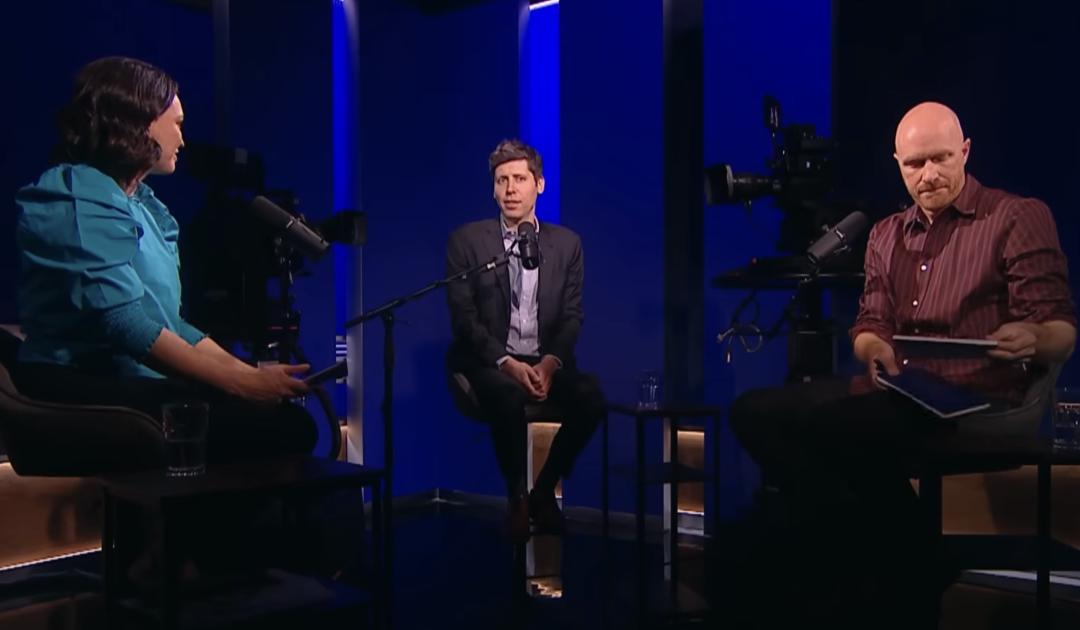
ChatGPT was born just over two years ago, and the world has been completely transformed. Sam Altman, co-founder and CEO of OpenAI, accepted an exclusive interview on The Times' tech podcast. On the eve of the Paris AI Action Summit in February 2025, he gave direct and candid answers to topics including the future of AGI, geopolitical competition, and his relationships with Trump and Musk.
I. The AGI Era: Everyone Will Possess Genius-Level Intelligence
The night before the interview, Altman published a blog post, in which one sentence stood out particularly: "Within ten years, everyone on Earth will be able to accomplish more things than the most influential people today."
When asked about the meaning of this sentence, Altman said that although ChatGPT has been launched for just over two years, it has profoundly changed people's way of working. He mentioned the "Deep Research" feature that OpenAI launched just a week ago — many users have reported that AI can complete work that used to take days or even weeks in 20 minutes.
"If you project the same rate of change forward for another two, four, ten years," he said, "I think we will truly be limited by what questions we can ask, not by what AI can answer."
Regarding the overused term "AGI" (Artificial General Intelligence), Altman admitted that he once tried to ban it: "Its definition is too vague. Some people say we already have AGI now, while others say AGI will not exist until self-replicating space probes leave the Earth. We have a five-level AI classification internally to discuss progress, but there are indeed definitional difficulties when it comes to the question of whether something counts as AGI."
He predicted that the arrival of AGI will not have a "single defining moment like ChatGPT" — for some people, the release of Deep Research was their "personal AGI moment", but the whole world will not reach a consensus that "AGI has arrived" in a single year.
II. The Impact of DeepSeek: "Not Unexpected, But Surprised It Happened That Day"
Earlier this year, Chinese AI company DeepSeek released a model with strong performance and extremely low cost, which shocked the market. What does Altman think of this?
"These things never surprise me at an abstract level — we know that sooner or later more powerful competitors will emerge. But you never know which morning you will wake up and find that it has happened."
He admitted that DeepSeek has indeed done some good work — demonstrating chain-of-thought reasoning and wide availability of the free tier, all of which are what users want. "But at the research level, this is not a major update for us."
Altman pointed out a more macro trend: After a certain level of intelligence is achieved in the AI field, the price drops by about 10 times every year — it has dropped by more than 100 times in total over the past few years. "The slope of change when Moore's Law transformed the world was much gentler. So we really should expect more things similar to DeepSeek to happen."
But he does not think this weakens the value of large-scale investment — OpenAI is advancing Project Stargate, a $500 billion large-scale training and inference system led by SoftBank. "It sounds crazily huge now, but I bet in a few years it will not seem that big. If we do it all over again, you will say 'You are raising 5 trillion dollars for a single cluster?' I will say, 'You know, you have to keep moving forward.'"
III. The China-US AI Race: Hoping to Find Common Rules Like Those for Nuclear Weapons
The rise of DeepSeek is not only about cost, but also about geopolitics. How does Altman view the AI race between China and the United States?
"I would be very happy if the West and China could reach some consensus on AI standards. For example, common safety standards, common benefit frameworks — I feel much better about that kind of cooperation framework than the so-called 'arms race' framework."
But he also admitted that there are some areas where differences are difficult to bridge. The biggest question is: Are we moving toward a more authoritarian AI, or a more democratic AI? "We have never empowered individuals with such great capabilities as we are about to do. I think this is the only way forward, but it will bring some negative social impacts."
He revealed that he will meet with the DeepSeek team during the summit. When asked what he would say, he replied: "I don't know yet."
Regarding the integration of AI and the military, Altman confirmed that OpenAI has reached a cooperation with defense technology company Anduril. "It would be very bad if the US government did not understand AI and its impacts. We want to help."
IV. Cooperation with Trump: "He Loves Infrastructure"
Altman previously attended the event where President Trump announced the Project Stargate, and donated to his inauguration fund. This has sparked a lot of discussion in Silicon Valley — after all, the overall atmosphere in Silicon Valley has clearly shifted from the "unfriendly to technology" era of the Biden administration.
"We have been trying to find ways to build this huge infrastructure project in the United States, but it felt like it was impossible to do before," Altman said. "President Trump has completely different views on construction, permitting, power supply, and American manufacturing — with him, we can make this happen."
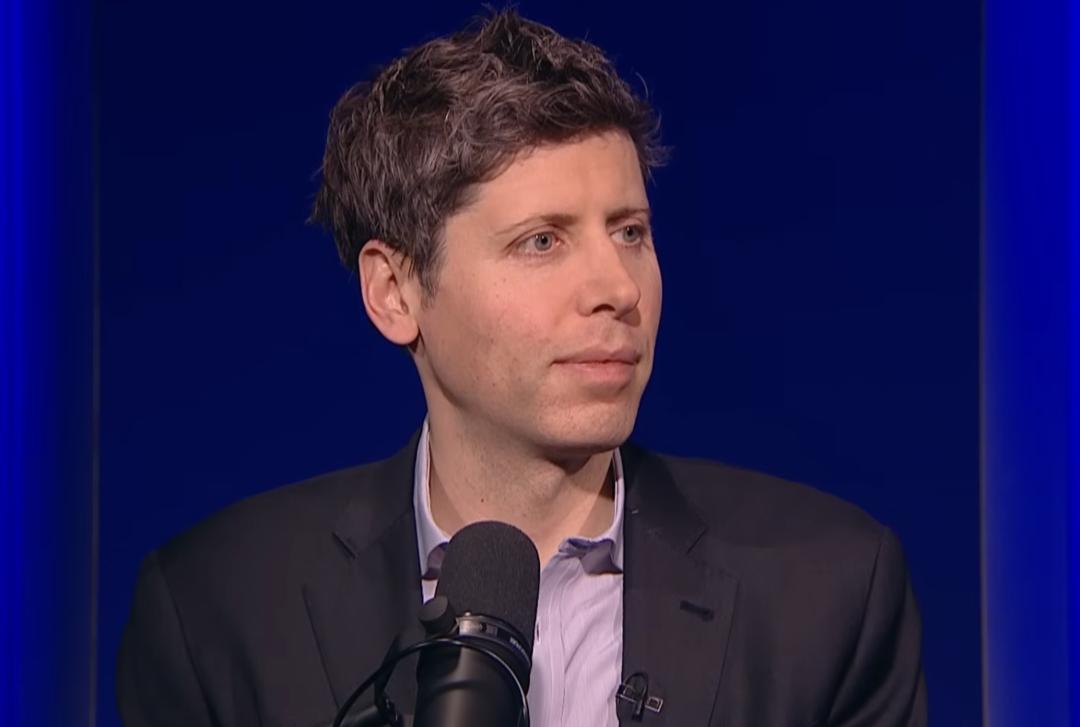
He admitted that the Biden administration "had a hard time" with infrastructure, but did not criticize its overall policies. "I don't agree with everything a politician says — that doesn't make sense. Every past US president has things I really like and things I really don't like."
He denied that Silicon Valley companies are currying favor with Trump out of political speculation. "People will say, 'Hey, maybe we can build a lot of things in the US now.' Not just software, maybe we can get semiconductor manufacturing, robot factories, and new energy back on track. This is indeed an atmosphere shift."
V. Relationship with Musk: "He Has Changed, and I Regret It"
Elon Musk is suing OpenAI — Altman says he "has lost count" of how many versions of the lawsuit there are. The two used to be close friends, but now they are strangers.
"We don't stay in touch much anymore," Altman said. When asked if he misses this friend, his answer was straightforward and restrained: "No. I think he has really changed. I regret it."
But he still retains his respect: "I still see him as a person who has accomplished incredible feats, a great motivator."
When asked if he considers leaving the X platform (owned by Musk) for Bluesky, Altman admitted that he "should try it" — he thinks Bluesky's product is better, "the feed has more people and things I am interested in, less random content". But he most likely will not leave X, because it is still the place where people track his updates.
VI. European Regulation: You Are Making Choices, But Choices Have Costs
Europe's AI regulation is known for its strictness. Altman has a clear attitude towards it, while remaining respectful.
"We will abide by the rules, it is up to the European people and leaders to decide what they want. But whatever decision is made, there will be consequences."
He used a specific example to illustrate the problem: "If Europe stipulates that a new model needs to be tested for 3 months (or 5 months), and our improvement cycle is to launch a new model every 3 months — we will never catch up, never be able to deploy, and always have outdated products."
He emphasized that this is not a judgment of right or wrong, but "if you think this technology will be so influential... not being able to obtain that kind of economic benefit, not being able to obtain the global influence brought by mastering these tools and integrating them into the economy — that comes at a cost."
His view on the UK is relatively optimistic: "Our relationship in the UK is very constructive, we can launch products here, maybe not as fast as in the US, but quite fast."
VII. About Power: "I Don't Think That Way"
At the end of the interview, the host quoted a sentence from Y Combinator founder Paul Graham many years ago — "Sam is extremely good at becoming powerful."
Altman smiled after hearing that: "That's not what I think about when I wake up in the morning. I really don't think 'how can I become more powerful today'."
But he admitted that he is indeed in a position of influence. "I don't know how to reconcile these two things."
When asked if he ever has a "pinch myself" moment — for example, meeting a president today and a prime minister tomorrow — Altman said: "Never. For better or worse, I think one of my amazing skills is being able to adapt extremely quickly to anything — good or bad. Anything can become so normal."
"By some objective standards, the past few years have been very strange for me, but being in the middle of it, the perception is very ordinary — isn't this just life now?"
Conclusion
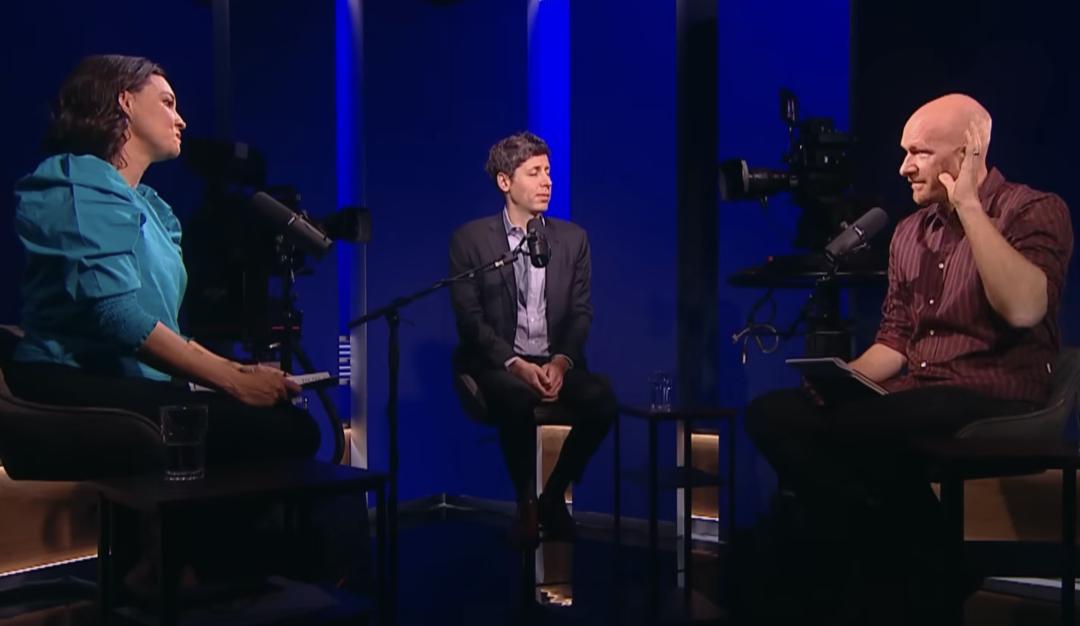
In a conversation of less than 30 minutes, Altman showed his usual pragmatism and candor. He not only believes that AGI will endow everyone with unprecedented capabilities, but also admits that the transformation will be accompanied by pains; he embraces cooperation with the Trump administration to accelerate infrastructure construction, but does not hide his regret for Musk's changes.
Silicon Valley is undergoing an identity transformation from "rebels" to "builders", and Altman is at the very center of this transformation. No matter what people think of him, what he is doing — making AGI a reality — will irreversibly change the world.
This article is from the WeChat official account "Postwave Evolution Planet", author: Mark, published with authorization from 36Kr.