Top U.S. fast food sensations are lining up to enter the Chinese market.
01
Average queuing time starts at 2 hours
"American fast food brands" are sweeping across the market!
A couple of days ago, FIVE GUYS, known as "the most popular burger brand across the US", officially entered the Beijing market by opening two stores at Chaoyang Joy City and Xidan Joy City at the same time, sparking a new wave of queuing frenzy:
Before the stores even opened, the queuing crowd stretched from the entrance all the way to the mall aisle. At the lunch peak, the waiting time exceeded 2 hours, and the price paid to scalpers for queuing on behalf of customers even hit 100 yuan.
In terms of products, the brand focuses on "freshly made" offerings, with prices that are fairly high: a cheeseburger costs 70 yuan, a bacon burger 75 yuan, a BLT sandwich 55 yuan, and even a small portion of fries sells for 32 yuan. Meanwhile, the free DIY combinations of 16 kinds of ingredients bring a fresh experience, and the unique experiential value also improves the perceived cost-effectiveness.
Back in 2021, FIVE GUYS entered China and opened its first store in Shanghai. At that time, some consumers queued for 4 hours just to get their meals. Now as it enters Beijing, the same scene is repeating itself.
The skyrocketing popularity of FIVE GUYS is a microcosm of American catering brands collectively "breaking into" the Chinese mainland market this year.
In April this year, Popeyes, hailed as "America's most popular fried chicken brand", made its third "foray" into the Chinese market and opened its first national store in Wangfujing, Beijing. 40 minutes before opening, the number of queuing orders exceeded 80, and the waiting time for dine-in customers once surpassed 1 hour.
After that, the brand accelerated its layout in Shanghai, Nanjing, Hangzhou and other cities. In July, the brand announced it would deepen strategic cooperation with Taobao Flash Purchase, planning to expand to at least 20 satellite brand stores. Up to now, the number of Popeyes stores across the country has exceeded 90.
Popeyes is not the only American fried chicken brand that has its eyes on the Chinese market.
Also in April, Church's Texas Chicken (branded as Texas Chicken overseas), a 74-year-old American brand that focuses on large-portion Texas-style southern fried chicken, also officially announced its entry into China.
At that time, Church's Texas Chicken publicly announced that it had signed an exclusive franchise agreement with Deke Shengtang, a subsidiary of Chinese local operator Langxing Dingsheng. It plans to open its first China store in Shanghai this summer, and will open more than 600 stores across China in the future.
Shortly after that in May, Wendy's, which is known as one of the "three major American burger giants" alongside McDonald's and Burger King in the US, announced that it had signed a franchise agreement, planning to open up to 1000 stores in China in the next 10 years.
Not limited to traditional burgers and fried chicken, in June this year, the first Chinese mainland store of Cinnabon, an American bakery brand hailed as "the palace-level cinnamon roll brand", also opened in Shanghai, and the queuing time reached 1 hour on the opening day.
02
The first generation of iconic American catering brands
are changing their "nationality"
At the same time, the first generation of American brands are collectively shifting local ownership.
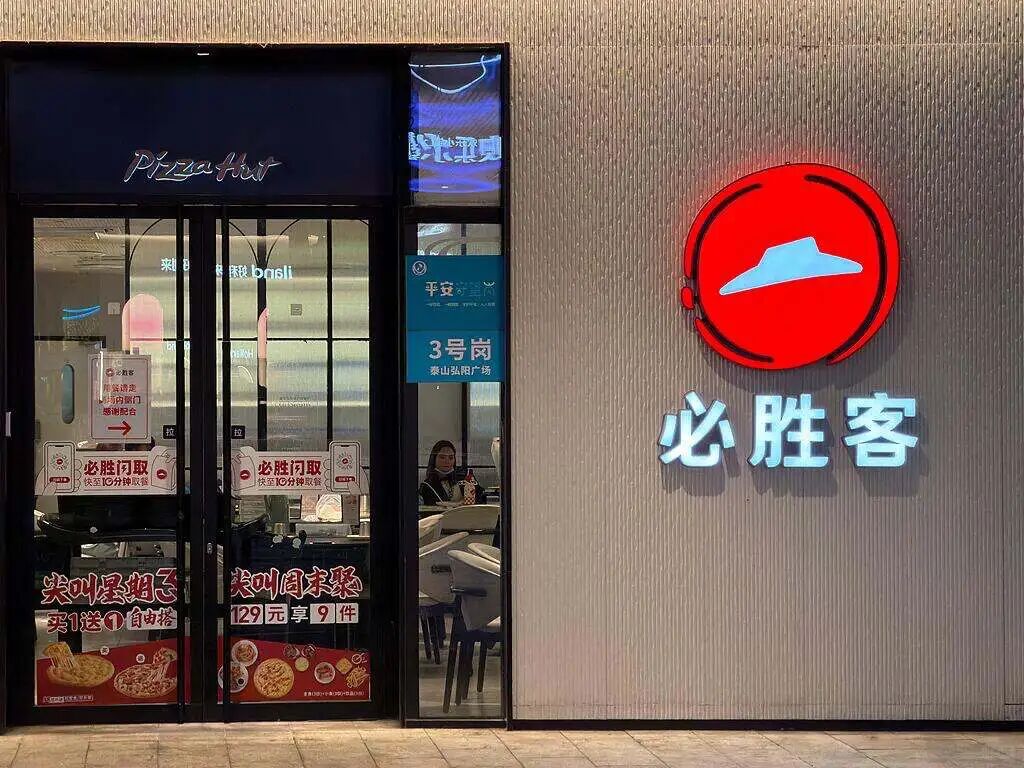
In June this year, Yum China spent 1.2 billion US dollars to acquire the ownership of Pizza Hut in the Chinese mainland. After the completion of this transaction, Yum China has transformed from a "franchisee" to a "brand owner".
In its latest financial report, Yum China revealed that the company is proceeding with the acquisition of Pizza Hut's ownership in the Chinese mainland as planned, expecting to complete the delivery in August, and plans to arrange an overseas bridge loan equivalent to about 1.2 billion US dollars to finance the transaction.
It is not only Pizza Hut that has "changed its owner".
In the early years, most foreign brands adopted the model of "direct management by headquarters + regional authorization", with the "decision-making center" still at the overseas headquarters, and local teams mostly acting as executors.
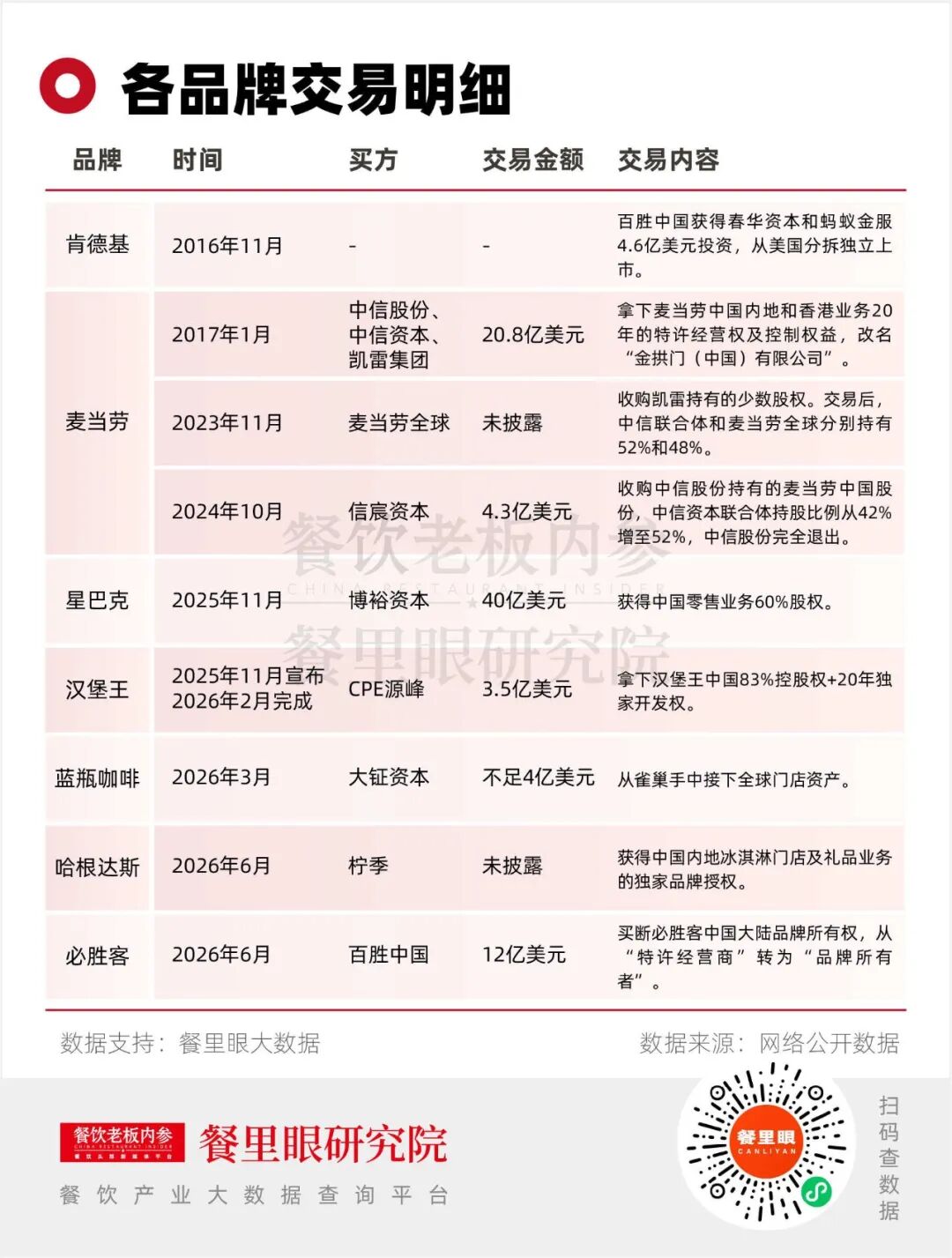
The key transformation took place in 2016. In that year, Yum China received 460 million US dollars of investment from Hillhouse Capital and Ant Financial, spun off and listed independently on the New York Stock Exchange, and obtained the exclusive operating rights of KFC, Pizza Hut and Taco Bell in China.
Although Yum China still needs to pay franchise fees to its US headquarters, it can independently decide the pace of store expansion, menu innovation and brand strategies in China.
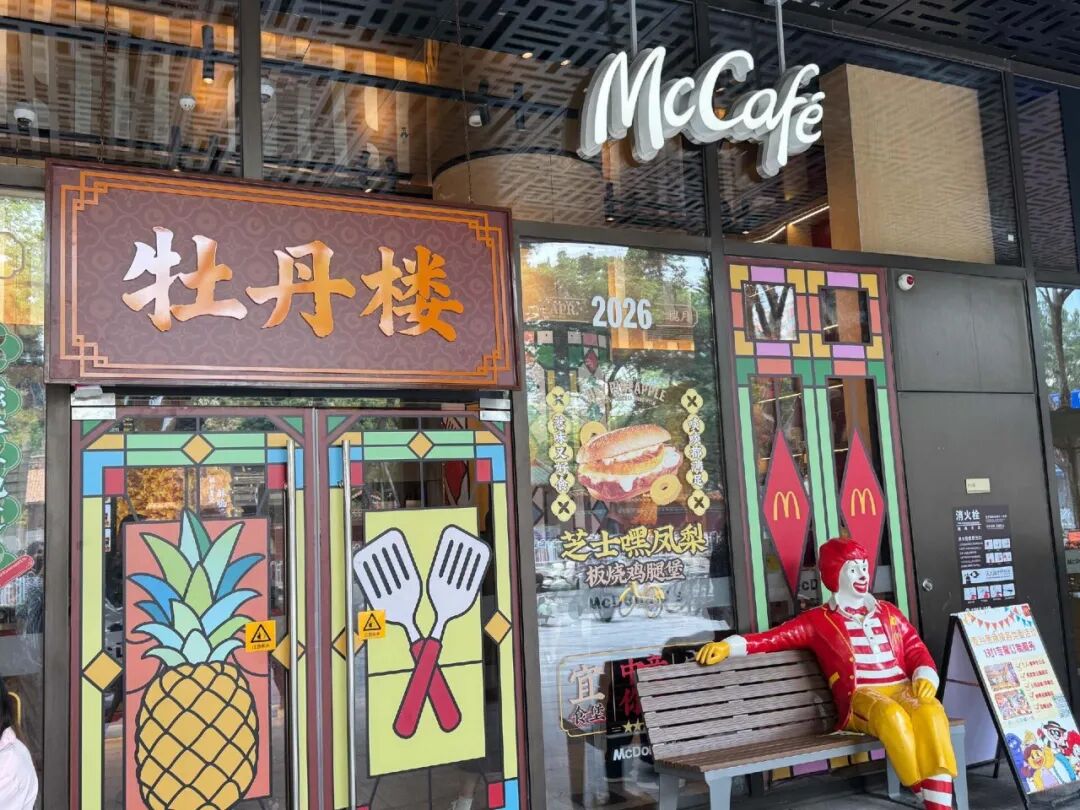
Almost in the same period, another landmark equity transaction was also advancing. In January 2017, CITIC Limited, CITIC Capital and The Carlyle Group acquired 80% of the equity of McDonald's mainland China and Hong Kong businesses for 2.08 billion US dollars. In October of the same year, McDonald's China was renamed "Golden Arches". After several adjustments to the equity structure, the shareholding ratio of the CITIC Capital consortium increased to 52% by October 2024.
Eight years later, the restructuring of foreign catering enterprises' ownership in China has suddenly accelerated.
In November 2025, Starbucks announced that it had established a joint venture with Boyu Capital to jointly operate Starbucks' retail business in the Chinese market. Boyu Capital holds up to 60% of the equity of the joint venture, and Starbucks retains 40% of the equity.
In the same month, CPE took over about 83% of the controlling stake of Burger King China with an initial capital of 350 million US dollars, obtaining the 20-year exclusive development right, while RBI, the parent company of Burger King, retained about 17% of the equity.
Entering 2026, this wave of control transfer has spread from fast food and coffee to more tracks.
In March, Dazheng Capital took over the global offline store assets of Blue Bottle Coffee from Nestle for less than 400 million US dollars; in June, Ningji obtained the exclusive brand authorization of Haagen-Dazs's mainland China stores and gift card business; also in June, Yum China bought out the brand ownership of Pizza Hut in the Chinese mainland.
Up to now, the steering wheels of the China businesses of KFC, McDonald's, Starbucks, Burger King, Pizza Hut and other brands that once served as "textbook-level" examples for China's catering industry have all been handed over to Chinese capital.
03
Why are major American catering brands
starting to collectively "look east"?
A group of American catering brands are queuing to enter the Chinese mainland market, while another group of "old-timers" that have taken root here for more than 20 years are collectively passing on the operating control...
Between the new entries and the ownership transfers, at a time when many foreign brands are facing business contraction, why do these leading American fast food brands choose to increase their investment against the trend and accelerate their "localization in China"?
From the market perspective, on the one hand, the local business of American brands is saturated, and China has become the best choice for overseas expansion to gain incremental growth; on the other hand, China's catering industry has developed rapidly in the past decade, and its huge market prospect is too large to be ignored.
In the past few years, Chinese catering brands have faced the problem of limited local business growth, and have collectively explored "going global". Similarly, American brands are also facing huge growth pressure in their home markets.
In May this year, Wendy's, one of the "three major American burger giants" that plans to open 1000 stores in the Chinese market, released its Q1 financial report.
The financial report shows that Wendy's global sales fell 5.5% year on year, its same-store sales in the US local market dropped sharply by 7.8%, while its international market sales achieved a 6.0% year-on-year growth. By the beginning of 2026, the total number of Wendy's stores around the world reached more than 7251, of which 5805 are located in the US, accounting for about 80% of the total.
Judging from Wendy's situation, the growth space in the US local market has narrowed significantly. When it is hard to gain more share in the saturated home market, going global is undoubtedly a good choice. What's more, according to data released by iiMedia Research, the scale of China's Western-style fast food market reached 499.65 billion yuan in 2025, and is expected to hit 587.09 billion yuan in 2027, with the overall market continuing to expand.
Ken Cook, interim CEO and CFO of Wendy's, also said frankly at the investor conference that the Chinese market is "one of the most important markets in the world", and defined the action of "returning to the Chinese market" as a game-changing strategic layout.
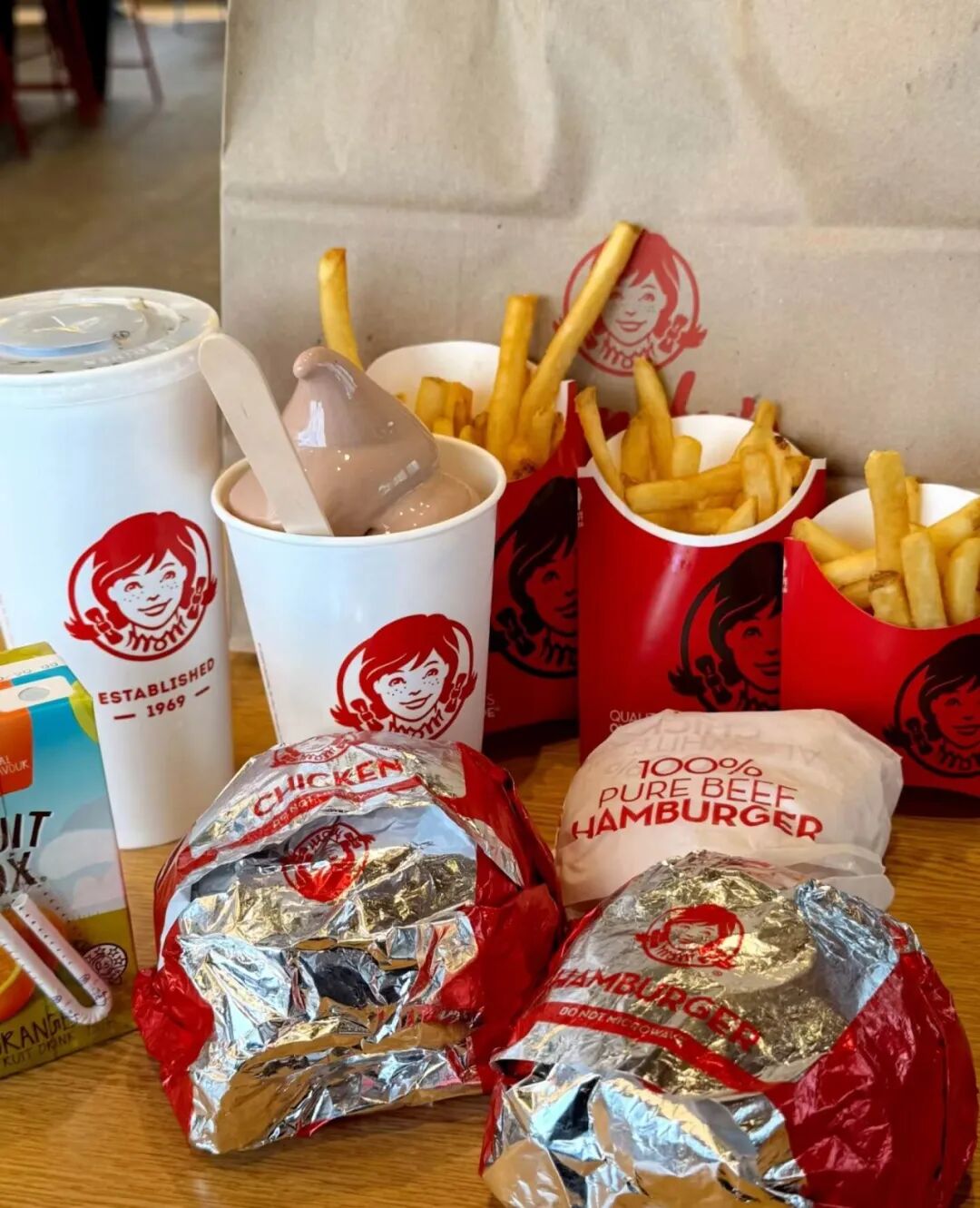
As the "third largest American burger giant" besides McDonald's and Burger King, Wendy's situation largely reflects the collective choice of American catering brands under the pressure of growth anxiety.
Sandy Lim, a fundamental research analyst at S&P Global Ratings, one of the three major global credit rating agencies, previously analyzed the growth anxiety faced by American chain brands, saying that some American chain brands are seeking new opportunities in China to offset the saturation of their home markets.
From the perspective of the shift in consumer demand in China's consumer market in recent years, brands including McDonald's, Burger King, as well as FIVE GUYS and Wendy's that are "seizing" China's fast food market, are all facing the same key issue: "localization".
In the past, when foreign brands entered the Chinese market, most of them were used to directly copying foreign menus and product forms, and only made minor adaptive adjustments to the taste.
But today, China's local fast food market is rising rapidly, and the intensity of market competition has far exceeded the past. Local Western-style fast food brands such as Wallace and Tastien have expanded rapidly with differentiated strategies including high cost-effectiveness, sinking channels, and highly localized flavors, gradually breaking down and reshaping the market that was once dominated by foreign brands.
Behind this new market situation, the essence is that Chinese consumers have increasingly higher requirements and stronger demand for the "localization of Western-style fast food".
So in recent years, we have seen more and more Western-style fast food brands engage in "Chinese-style integration". For example, KFC's soymilk, fried dough sticks and steamed buns, McDonald's Chinese hamburger, Subway's light food energy bowls...
At present, China's Western-style fast food market is no longer a blue ocean. Whether it is American chain fast food brands that have taken root here for more than 20 years, or new entrants, all of them are striving to transform from "foreign fast food" brands to all-day fast food brands that "look east and understand Chinese consumers' tastes".
04
Summary
In the early days when Western-style fast food first entered China, having a meal at McDonald's or KFC was a very "fashionable" thing.
Later, eating a meal of burgers, fries and fried chicken became a very ordinary thing in daily life.
Today, KFC, McDonald's, Burger King, Pizza Hut, Starbucks, Haagen-Dazs, these iconic American catering brands that once dominated China's catering market, have all completed the ownership shift and are now Chinese-controlled.
"The old-timers have set a precedent". For this new batch of entrants, Lin Yue, chief consultant of Lingyan Management Consulting, also analyzed: "At present, Western-style fast food still has growth space in China. The new generation of consumers are still interested in Western-style fast food, and there is still a certain stock market in low-tier cities."
China's catering market has broad prospects, but the fierce competition in this huge market also requires brands to attach great importance to local adaptation. Next, these Western-style fast food brands may collectively use the "China-localized" approach to re-tell their brand stories rooted in the US.
This article is from the WeChat official account "Catering Enterprise Boss Internal Reference", author: Neicanjun, authorized for release by 36Kr.