Nissan Takes Lessons From Chinese Automakers: New Vehicle R&D Cycle Cut In Half, The Century-Old Auto Giant Bows.
Japanese automakers are willing to take Chinese automakers as their mentors.
According to reports from well-known overseas automotive media Carscoops, Nissan recently stated at an event held at its Yokohama headquarters that by learning the R&D model of Chinese automakers, it has successfully shortened the R&D cycle of all-new models from 50 months to 37 months, and the R&D cycle of facelift models from 50 months to 30 months.
The upcoming all-new Nissan Skyline model took only 26 months from project initiation to design completion, less than half of the 55-month R&D cycle of the current model on sale.
Can the R&D cycle be drastically shortened simply by learning the R&D model of Chinese automakers? Is the R&D model of Chinese automakers really that miraculous?
The Chinese model is a proven effective remedy
In the era of fuel vehicles, the iteration speed of automotive software and hardware was slow, and automakers could spend more time polishing details and optimizing product design. In the era of new energy vehicles, battery technology, intelligent driving technology, and infotainment systems are all iterating rapidly, forcing automakers to speed up the frequency of model updates to avoid products becoming obsolete due to the lack of latest technologies.
However, automakers cannot blindly pursue speed, otherwise problems will easily arise in vehicle details and quality. The "quickly churned-out vehicles" that have been widely discussed online recently refer to the products of some automakers that failed to be carefully polished, leading to design and quality defects.
To improve the R&D speed of new vehicles while ensuring quality, domestic automakers usually adopt methods such as platform and component reuse, parallel R&D, and independent R&D of core components, which are exactly the key contents that Nissan has learned from Chinese automakers.
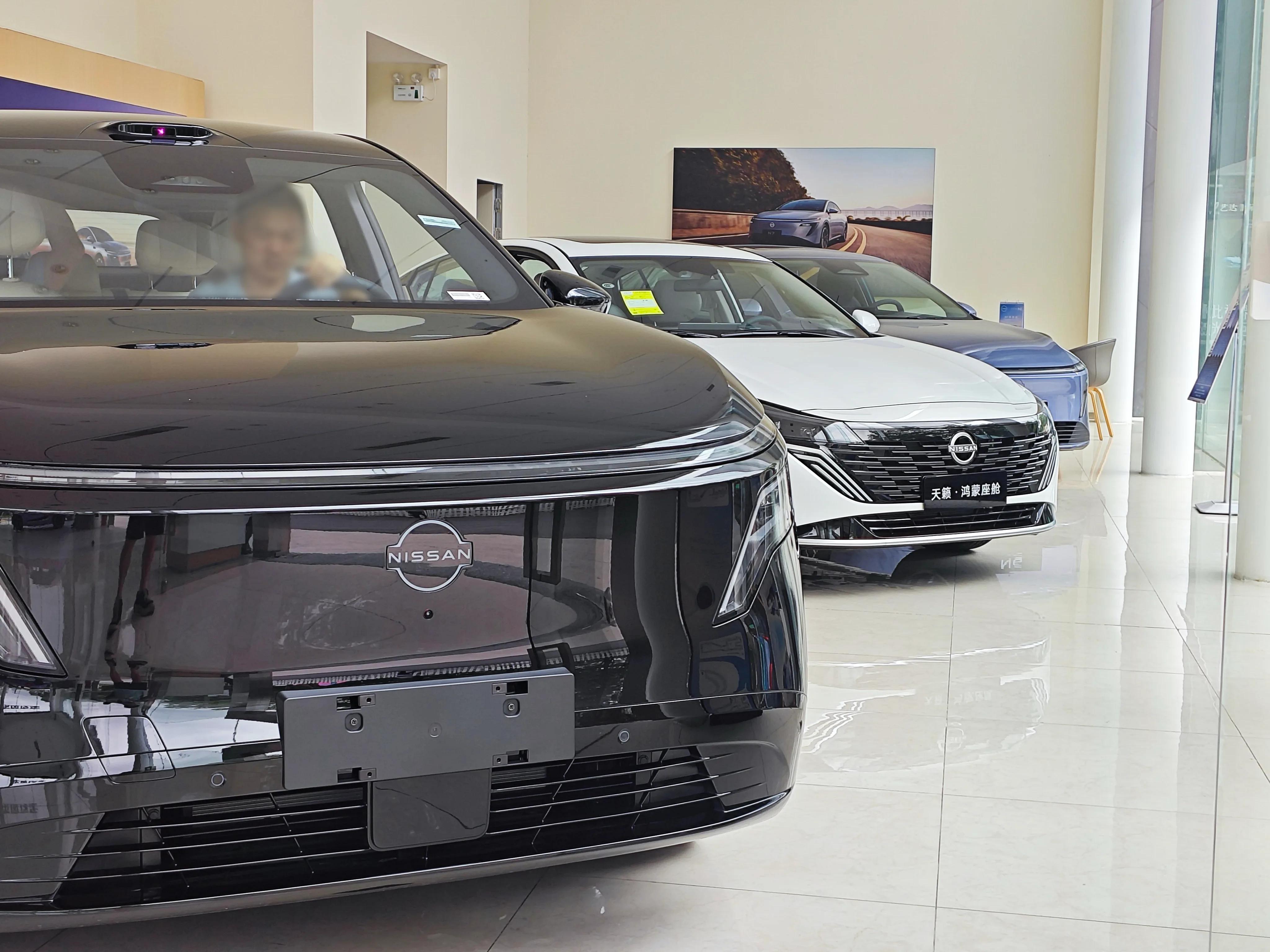
Kazuyuki Yamaguchi, a senior executive of Nissan, said that in the past, Nissan aimed to be all-inclusive when developing new vehicles, which led to continuously extended R&D cycles and planning. Now Nissan no longer creates multiple design schemes for each new model for repeated screening, but classifies models into family-style platforms with shared hard points, greatly shortening the design cycle.
(Photo source: Shot by EV Insight)
Taking platform and component reuse as an example, this solution means that automakers can develop once and use multiple times, which not only reduces the R&D time of new vehicles, but also cuts R&D costs. For example, BYD's pure electric architecture e-Platform 3.0, DM hybrid platform, e-Platform 4.0 / e-Platform 3.0 etc., correspond to models of different power types and positioning, covering Class A0 to Class D vehicles.
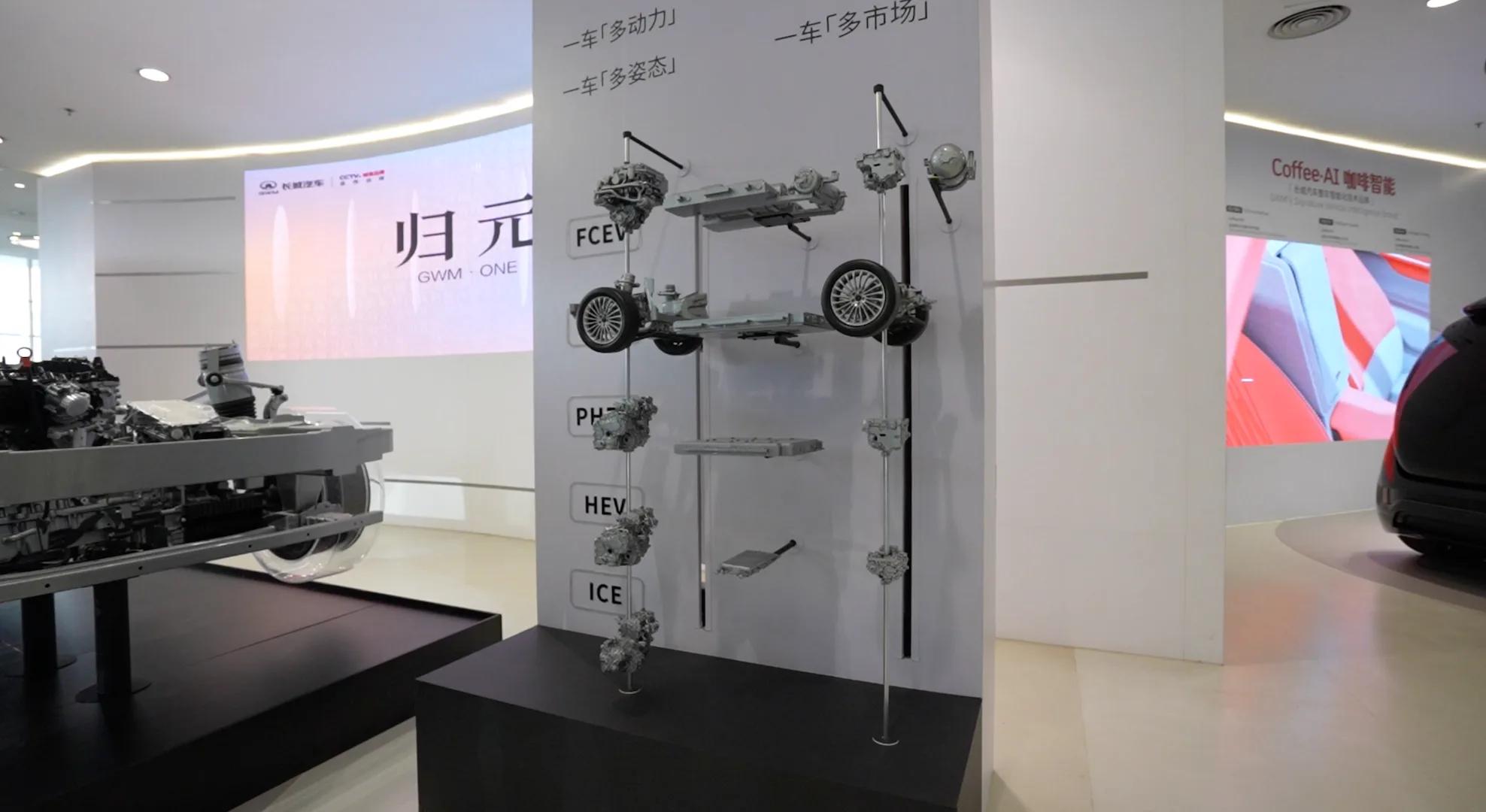
The Guiyuan S platform developed by Great Wall Motors covers five power types: gasoline, pure electric, plug-in hybrid, full hybrid, and hydrogen energy, and the same suspension module can adapt to bodies with different wheelbases. Most of Great Wall's future models can be upgraded to the Guiyuan S platform, saving the time and resources for developing new automotive platforms.
(Photo source: Great Wall Motors)
In addition, Nissan is also streamlining its organizational structure, eliminating the setup of independent project directors, product planning managers, and chief engineers for each model, to avoid delays in construction periods caused by internal disagreements. At the technical level, Nissan has introduced technologies such as AI modeling, digital twins, and virtual reality to conduct test and verification in a virtual environment, reducing the demand for physical prototype vehicles.
These operations that are commonplace for Chinese automakers are almost revolutionary changes for Nissan, a company with a history of nearly a hundred years.
Overseas traditional automakers have a long history and profound heritage, but they have also accumulated a large number of malpractices due to long-term development, just like people in their sixties or seventies who have rich experience but lack the spirit of hard work and enterprising. Chinese automakers are like young people in their twenties or thirties, striving for their careers.
Nissan learns from Chinese automakers to rejuvenate with the help of this effective Chinese model. Nissan is far from the only overseas automaker that has taken Chinese automakers as its mentors.
The right to define the industry is shifting toward Chinese automakers
In 2023, Nikkei BP, Japan's largest financial technology media, disassembled BYD Seal for reverse research. This is the first time Japan has systematically disassembled a pure electric model of a Chinese brand, with the core purpose of figuring out four core capabilities of China's new energy vehicles: CTB, eight-in-one electric drive, vertical integration, and cost control. The final conclusion is that the Chinese solution has formed a crushing advantage in integration, cost and speed, which is difficult for Japan to replicate in the short term.
Such cases of learning the working mode and product design of Chinese automakers are everywhere. Even Toyota and Volkswagen, the top two automakers in global sales, simply cooperate with Chinese enterprises to improve the product competitiveness in the Chinese market and even the global market with the help of Chinese enterprises' technologies.
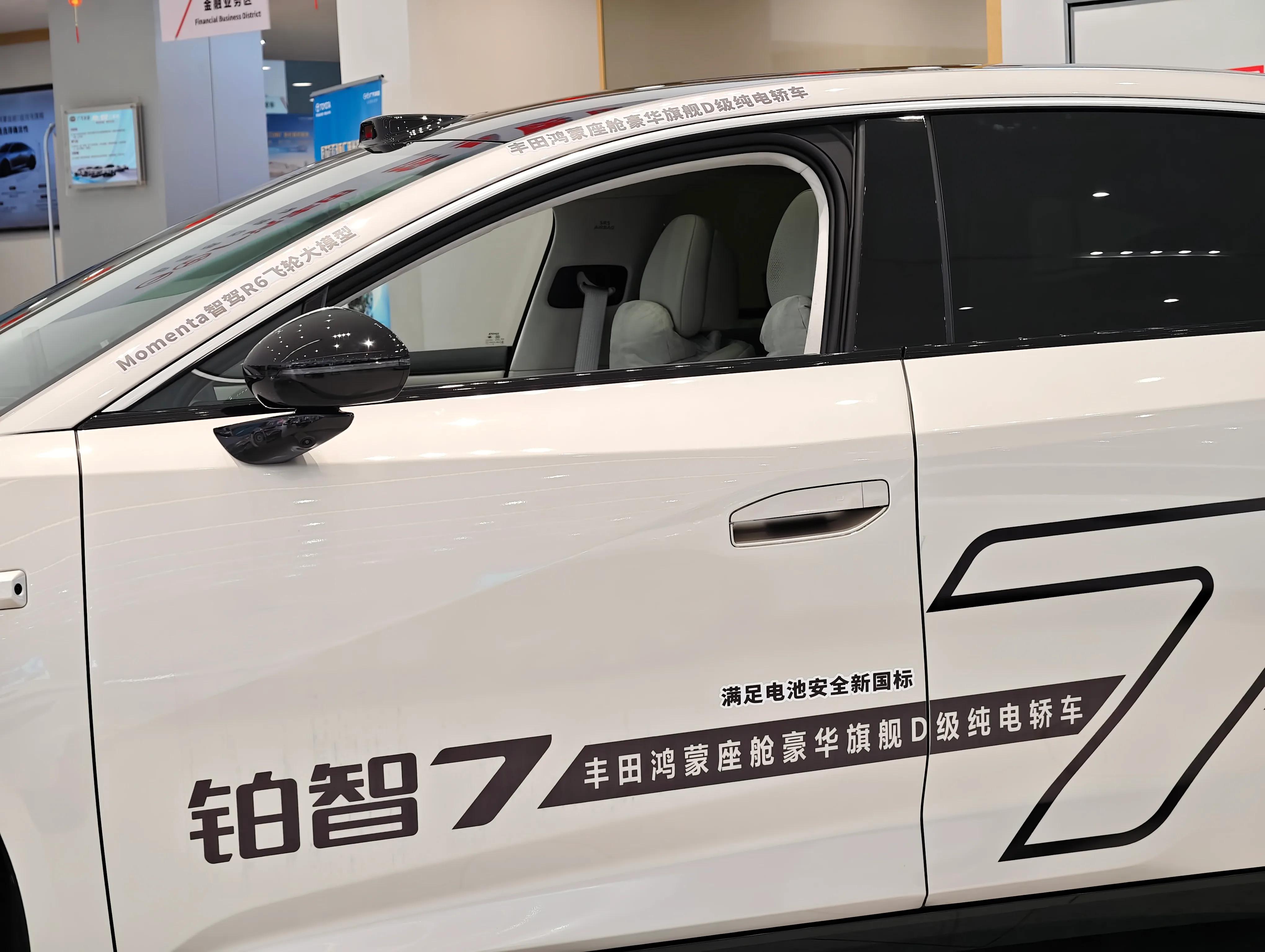
Toyota first cooperated with BYD to build the bZ3 model based on BYD's three-electric system, and later cooperated with Huawei, Momenta and other enterprises to develop the bZ7 model with the help of Huawei's intelligent cockpit technology and Momenta's intelligent driving technology.
(Photo source: Shot by EV Insight)
Volkswagen has in-depth cooperation with XPeng Motors, and has developed the high-end SUV JooYue 08 based on XPeng's VLA intelligent driving system, CEA electronic and electrical architecture, intelligent cockpit, and Turing chip. The second cooperative model JooYue 09 is also about to be launched on the market.
Many cases such as the traditional luxury automaker BBA's joint cooperation with Huawei and Momenta, Stellantis's joint establishment of Leapmotor International with Leapmotor, and Mazda's in-depth cooperation with Changan, all indicate that overseas automakers are becoming more and more dependent on Chinese automakers.
In the era of fuel vehicles, China's automobile industry was backward, so it had to exchange market access for technology and adopt a joint venture model to introduce overseas automakers. At that time, overseas automakers held the dominant right to speak: joint venture brands not only needed to follow the opinions of overseas automakers in vehicle design and sales, but even the definition of what models Chinese consumers prefer was decided by overseas automakers.
The situation has now completely reversed. The learning and dependence of overseas giants behind it represents the historic leap of China's automobile industry from "scale breakthrough" to "rule making". At present, Chinese automakers are no longer satisfied with the growth of sales volume and market share, but are striving for the right to define the global automobile industry through the export of technical standards, industrial rules and value systems.
In February this year, at the meeting of the United Nations Working Party on Automated/Autonomous and Connected Vehicles, a number of technical proposals put forward by China on dynamic driving tasks and human-machine interaction were approved by the meeting.
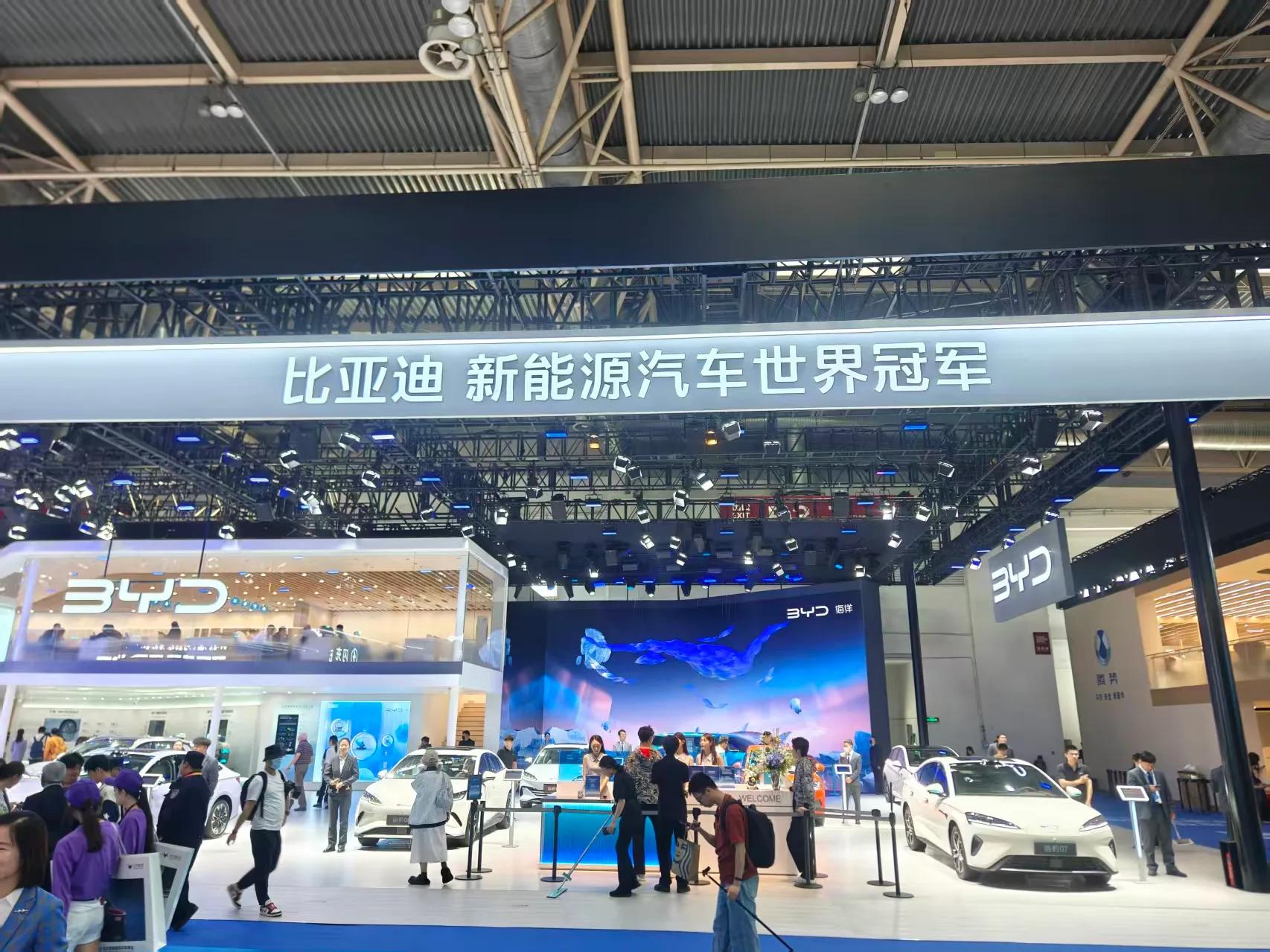
In March, BYD announced that it joined the International Automotive Task Force (IATF), and obtained the voting right for the global automotive quality management system standard in May. This is the first time that a Chinese automaker has entered the core decision-making circle of global automotive rules, breaking the century-long monopoly of European, American and Japanese automakers on the "automotive legislative power".
(Photo source: Shot by EV Insight)
The confidence of Chinese automakers in competing with long-established global giants for the right to speak and define the industry comes from their leading position in three-electric systems and intelligent technologies, as well as the growth of sales scale. Taking batteries in the three-electric system as an example, domestic lithium iron phosphate and ternary lithium batteries have been recognized by consumers all over the world, and CATL and BYD even rank top two in the global power battery installation volume.
In terms of sales, among the global auto group sales rankings in the first half of this year, three Chinese automakers including BYD, Geely and Chery entered the top ten. Moreover, they not only have high domestic sales, but also hit new highs in overseas market sales repeatedly. In 2025, China overtook Japan to rank first in global automobile export volume. In 2026, the overseas sales of BYD, Chery and Geely still maintain a leapfrog growth.
From the adoption of Chinese solutions for autonomous driving rules by the United Nations to the initiation of a number of international standards for new energy vehicles led by domestic automakers, China is transforming from a rule follower to a global industry standard setter.
The current industry status that overseas automakers take the initiative to learn from and deeply bind Chinese technologies is by no means accidental, but the inevitable result of the systematic crushing advantages formed by China's complete vehicle technology, supply chain system and iteration mode, which has fully confirmed China's leading position in the global automobile industry, and means that China has mastered the three core voices of global new energy vehicles: product definition, technical standards and R&D rules.
The era belonging to Chinese automakers has arrived
Nissan has put aside its century-old pride to take the initiative to learn from China's R&D system, and international giants such as Toyota, Volkswagen and Stellantis have joined hands with Chinese automakers to obtain core technologies, marking the complete shift of the right to speak in the global automobile industry.
For a long time in the past, China's automobile industry was in a weak position of following technologies and passively accepting rules, and struggled to catch up with overseas automakers by "exchanging market for technology". The model definition, technical standards and R&D rhythm were all dominated by European, American and Japanese enterprises. After entering the new energy era, with the help of complete industrial chain layout, extreme R&D iteration mode and continuously breakthrough core technologies, Chinese automakers have completed the historic counterattack from apprentices to mentors, from followers to leaders.
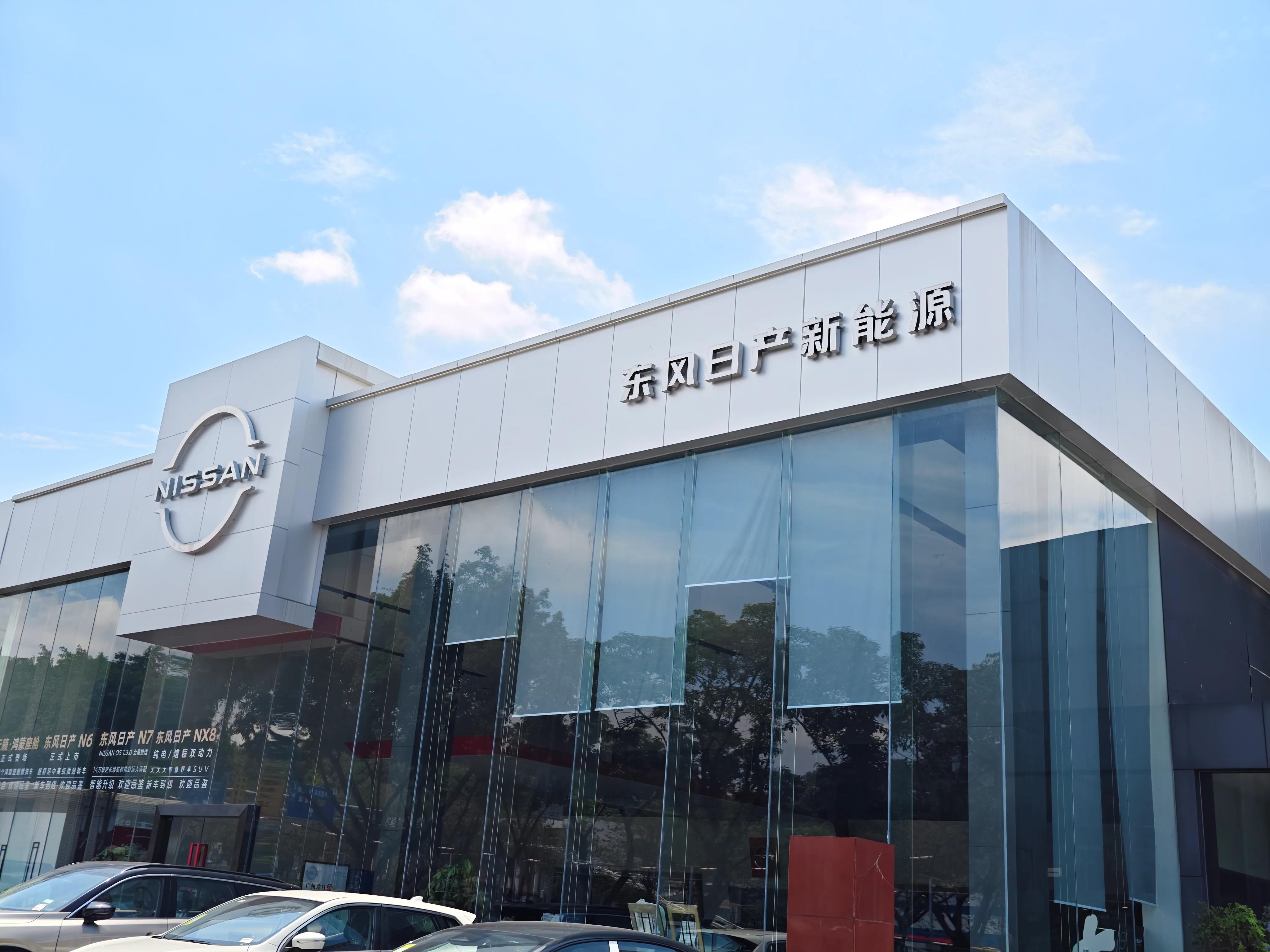
(Photo source: Shot by EV Insight)
Today's China's automobile industry has long been more than a leader in sales scale, and has realized the all-round export of technical systems, R&D modes and industry rules.
Localized R&D modes such as platform architecture reuse, full-stack independent R&D, AI virtual testing and parallel development have become the general criteria for global automakers to reduce costs and improve efficiency; core technologies such as three-electric technology, intelligent driving and electronic and electrical architecture have broken the long-term overseas monopoly and become the core support for the transformation of international automakers.
From Japan's reverse research on disassembling domestic models to the adoption of Chinese technical standards by international authoritative organizations and the granting of rule voting rights to Chinese automakers, it is enough to prove that China has firmly grasped the product definition right, technical standard right and industry discourse right of global new energy vehicles.
The current industry status that overseas automakers are vying to learn from China marks that the power center of the century-old automobile industry has officially shifted to the east, and the era when Chinese automakers lead the development of the automobile industry has arrived.
This article is from "EV Insight", authorized for release by 36Kr.