Every time I return to the county seat, the storefront signs of the franchisees have changed again.
The consumer ecosystem in county towns is changing drastically every year.
This summer vacation, I went back to my hometown in a small county town, and as usual, visited the most bustling commercial street there.
After a year of absence, the streetscape has changed again. The signboard of the "Guochao Burger" that had long queues last summer vacation was replaced by "Chain Bulk Snack Store" at some unknown time; the "Near-expiry Goods Supermarket" that opened the year before last is now pasted with a "Whole Store Transfer" notice, and dust-covered shelves are stacked in the glass windows.
I am not curious about this situation, and even take it for granted. It is very likely that when I come back next year, the storefront signs of many franchisees will have changed again.
This is not just my subjective feeling. In 2025, the total retail sales of consumer goods in county-level administrative regions has risen to 38.7% of the national total, and the growth rate of retail sales in rural markets has been faster than that in urban areas for three consecutive years.
McKinsey predicts that by 2030, more than 66% of China's incremental personal consumption will come from tier-3 and lower-tier cities as well as county and township markets. The huge market cake attracts chain brands from all over the country, especially categories with high standardization and fast replication speed such as catering, snacks and tea drinks, which pour into county towns year after year like migratory birds.
But unfortunately, while many brands pour into these markets, very few can survive.
People living in county towns frankly said, "Even though those franchise brands are very famous nationwide, they just don't sell well locally, and it is basically difficult for them to last more than one or two contract cycles."
In fact, the stores that have stood firm in county towns for many years are still those small street stores that have been widely praised by word of mouth among local residents. There are also a few franchise brands that barely managed to stay, and they eventually got rid of the "aura from the headquarters" and became local presences that are known as "the store in our county".
01
The commercial streets in small towns change completely every year
In the pedestrian streets of the core business districts of small towns, it has become normal for stores to frequently change their storefront signs. If you live in an ordinary county town for three years, you will be very familiar with this rhythm.
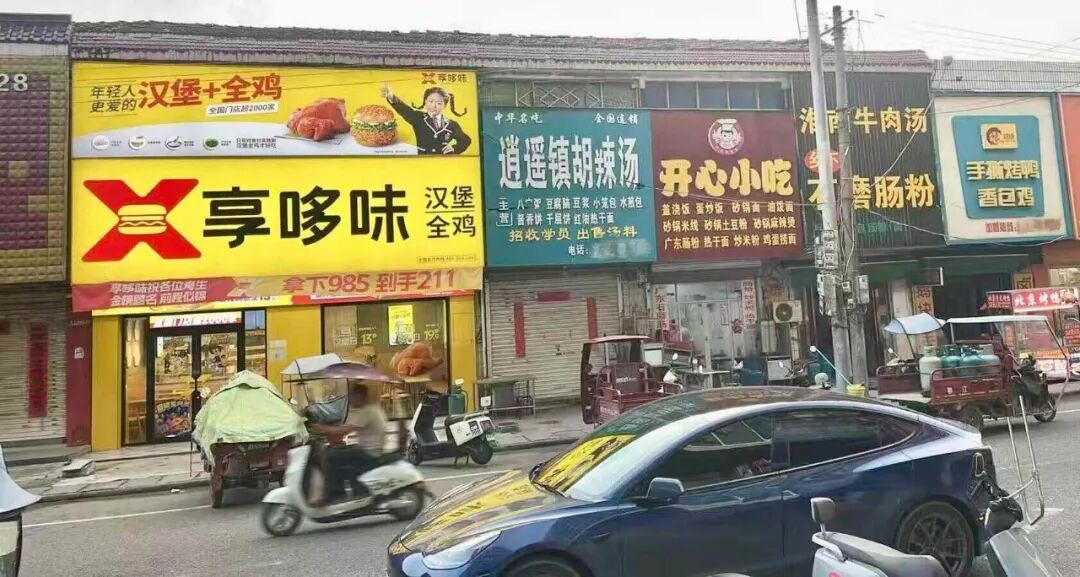
A few years ago, when walking on the streets of my hometown, I saw two "Chinese-style burger" stores with unified decoration and eye-catching signboards, focusing on hand-rolled freshly baked products and national trend packaging. Neighbors said, "When it opened, they invited a drum and gong team, launched a buy-one-get-one-free activity, and the queue was extremely long."
But before long, the storefront signs of these stores faded. Both Chinese-style burger stores changed their signboards, one became a "fried chicken burger store", and the other became a "snack collection store".
Later, the original site of the above-mentioned "fried chicken burger store" was turned into a local best-selling breakfast snack store; while the adjacent "snack collection store" was also transformed into a community bakery workshop, which started a new round of opening promotions.
Xiaofeng, a young man from the small town, explained, "Who doesn't want to make money by doing whatever is popular in the market?"
Xiaofeng has run stores in the county town for many years. At first, the maternal and child industry was booming in county towns, so he opened a store selling children's clothing and supplies. Later, when consumer brands such as tea drinks and snacks became popular, Xiaofeng also tried to open franchise stores.
Up to now, Xiaofeng has been operating a local tea store, "I have been running this store for a relatively long time, and the business is acceptable."
Xiaofeng admitted that the maternal and child stores did not make money because, "I opened the first one, and the business was quite good at the beginning. But in less than two months, two almost identical stores popped up on the street. There are not many people in the town in total, and everyone is sharing the market. Soon, the products in my store could not be sold at all."
As for those new consumer categories that are popular in the market, Xiaofeng said frankly, "they are even bigger traps."
Although brands such as tea drinks and fried chicken are selling very hot in some places, according to Xiaofeng's understanding, the market capacity of his small town is really very limited. "A portion of fried chicken priced at 15 yuan only weighs a few taels. Except for the Chinese New Year and holidays when young people return from cities to consume, local residents in the town will not buy it at ordinary times."
Lao Wu, who is engaged in store leasing, said that now the longest contract he signs with tenants is only two years.
"It's not that I don't want to sign a longer contract, but these franchise stores can't even last for two years. Last year, a young man took out a loan to open an internet-famous fried chicken store, but transferred it in less than half a year, not even recouping the decoration cost."
"Before, there was a person who wanted to open a new Chinese-style tea drink store. I advised him to be cautious, but he said the headquarters promised to recoup the cost in eight months. What was the result? His store was soon listed for rent again."
According to Lao Wu's memory, on this commercial street that is only hundreds of meters long, at least 3 stores changed tenants in the first half of this year, most of which are different types of food franchise stores.
What makes Lao Wu particularly memorable is a chain brand milk tea store targeting sinking markets, with a single cup priced at around 8 yuan. At the beginning, some curious people went to buy it for a try, but the overly sweet and greasy taste only appealed to students or young people, rather than middle-aged men and women who have real purchasing power locally.
In less than half a year, the milk tea store's business went downhill. The owner tried many promotions to save the store, and even started live streams showing the milk tea making process and the town's streetscape, but nothing worked. Now this milk tea store has been transformed into a local snack store.
This is probably not a phenomenon unique to one small town.
According to data from a third-party commercial monitoring agency, the annual store closure rate of catering stores in the sinking market between 2024 and 2025 is close to 25%, among which the closure rate of franchise brand stores is even higher, and some categories even exceed 35%.
NCBD data also shows that among the 81 subdivided catering categories counted, the top four categories with the highest store closure rates all exceed 31%. Jihai Brand Monitoring also shows that in July 2026, as high as 25% of newly opened stores closed within half a year.
02
What is the content that can stay in county towns?
Of course, there are also brands that have survived in small towns.
But careful observation will find that many of these surviving brands are no longer what they were when they first opened.
The most common survival form of these brands in county towns is to "selectively implement" the standards.
Take a western fast food restaurant on the street as an example. It has survived in the small town for many years, and its store has a large social space. Many young parents like to bring their children to eat western food here, and after eating, some children will stay in the store to continue doing their homework, and usually no clerk will drive them away.
It is similar to an improved version of "small town Pizza Hut", but its unit price is much lower than Pizza Hut. In addition to pizza, fried chicken and fries, its product categories also include chicken leg burgers with sweet chili sauce that local residents like.
In fact, this western fast food restaurant is also a chain store. After entering the local market, its service process is not so standardized, and clerks chat with customers in local dialects.
According to the clerk, the supervisor from the headquarters comes once in a while, but will not strictly require full standardization. This store has actually become a local chain brand.
Another more common survival method is to be completely "copycat".
This phenomenon is more interesting. National brands cannot operate well in county towns, but their "imitators" can live very comfortably.
Mr. Zou, who runs a catering business, once told me that he observed those closed franchise stores and found that their equipment, decoration and formulas have no technical content at all.
"For example, that hand-rolled burger, I can make it after researching it for two days, and the taste is almost the same." Therefore, after a certain national brand collapses in the county town, local bosses often take over the storefront, slightly modify the original equipment, hang up a name that sounds similar, such as "XX Burger", "XX Joy", "XX Taste", and continue to operate.
Mr. Zou said that he imitated a certain internet-famous fried chicken brand and opened a store called "Alley Fried Chicken", which reaped good benefits. "The cost is lower, and the pricing is more flexible. Instead, I can survive relying on the acquaintance economy and low-price strategy. During the Spring Festival, some people who returned to the town asked me if my store was a chain brand from the city."
These "wild small town brands" have no commission from the headquarters, no mandatory supply requirements, and the boss himself is the chef or purchaser, so their cost structure is completely different.
In county towns, consumers' loyalty to brands is far lower than their emphasis on price and convenience. As long as the taste is not bad and the price is affordable, no one will care whether you are an official authorized brand or not.
Of course, small towns also have their own unique time-honored brands, which are deeply rooted in the local area and can be said to be an indispensable part of local residents' daily life.
On the commercial street of the small town, many people can accurately find that long-established snack store even with their eyes closed, just by smelling the smell.
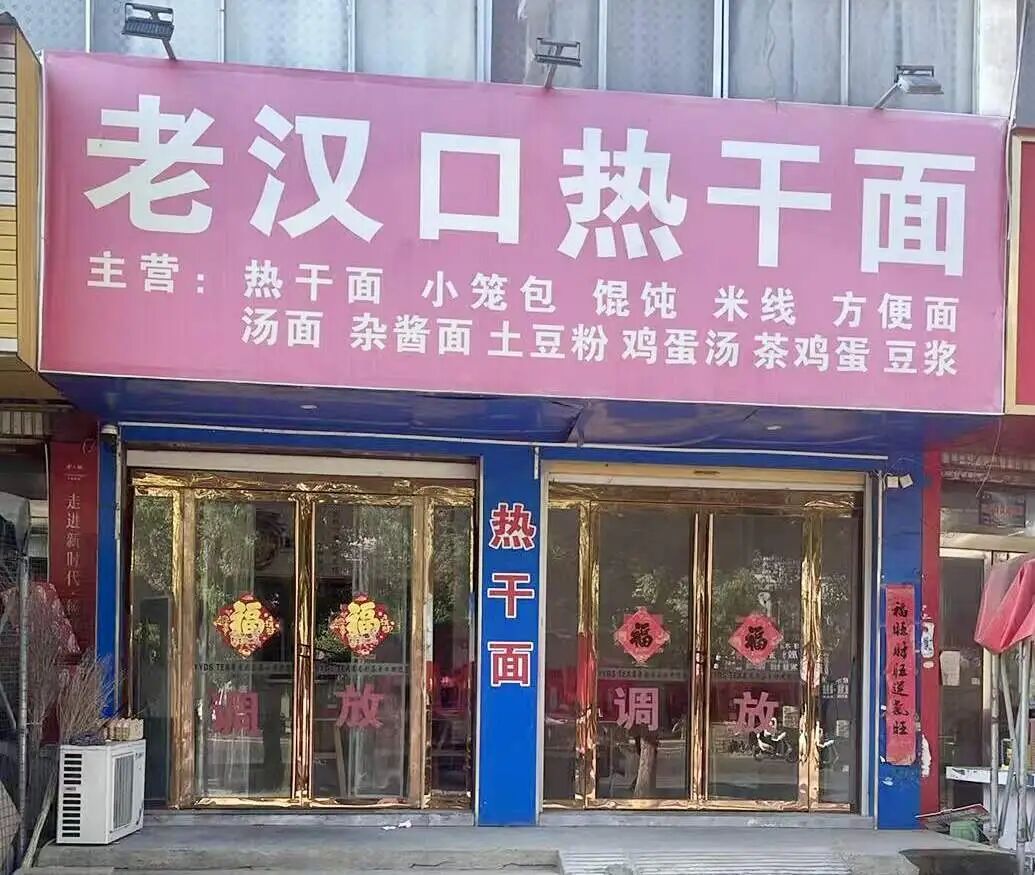
For example, local residents in my hometown are keen on hot dry noodles for breakfast. All kinds of versions of hot dry noodles, with different tastes, dry or wet, with or without sesame paste, are very popular among local people. At the corner of the street, there is a store with the signboard "XX Hot Dry Noodles". The store is not big, only about 20 square meters. Every morning and evening, there are more than ten people queuing at the door.
Local residents also like to raise geese, and love all kinds of spicy and numbing cooking methods for this kind of poultry. Xiao Chen who ran the "Xiao Chen Goose Block" store at the street entrance has now become "Lao Chen", and his business is still booming. All kinds of meat products are sold out before noon.
In fact, there are other small stores on the street that sell the same food as Lao Chen's store, but their business and customer loyalty are not as good as Lao Chen's. The main reason is that his formula is passed down from his ancestors, the meat is processed to be neither dry nor fishy, and the spiciness and saltiness are the most authentic.
In Lao Chen's words, he has been doing this business all his life, not only supporting his daughter to get a master's degree, but also becoming "Millionaire Chen" himself.
In fact, local small stores like Lao Chen's are the mainstay of the small town market. Their categories not only include characteristic catering, but also pastries, snacks and so on.
03
The two sides of consumption sinking
Of course, it still needs to be specially mentioned that there are some new consumer brands that are still very popular now. With their supply chain and cost control capabilities, as well as localized operations, they have indeed strongly entered county towns.
However, the reason why most franchise brands cannot stay in county towns is precisely that they have never been able to cross this threshold.
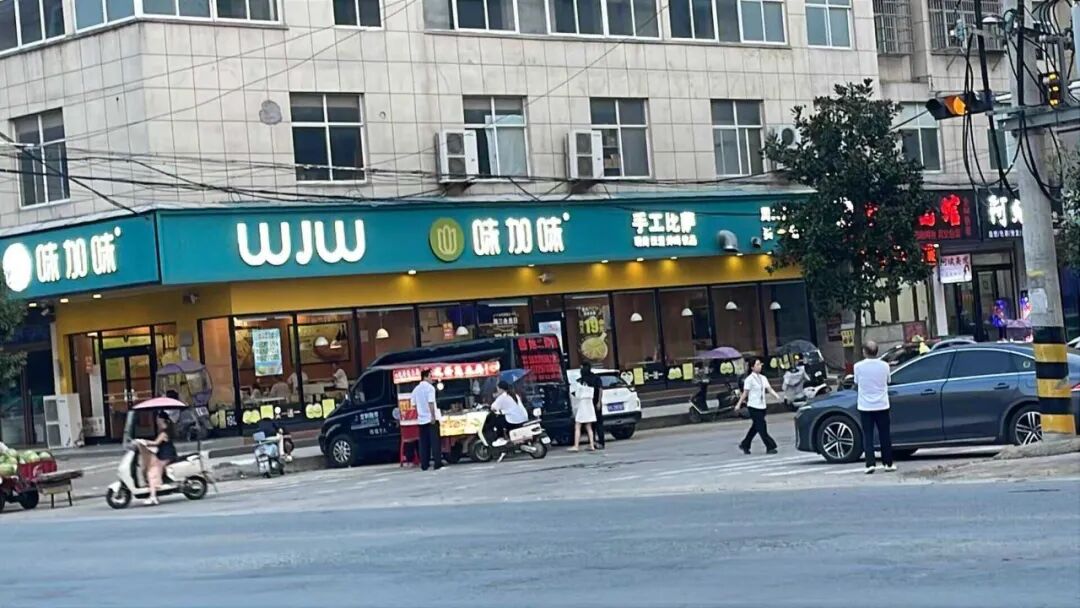
For example, a cup of milk tea is sold for 15 yuan, while the adjacent local snack store sells a bowl of ice jelly for only 5 yuan, which looks more refreshing and more cost-effective. Small town consumers will not hesitate to choose the latter.
In addition to cost performance, the inversion between cost and revenue for many brands in county towns is also an insurmountable barrier.
According to Xiaofeng's disclosure, the initial investment to join a standardized food brand is at least 200,000 to 300,000 yuan, and as high as 500,000 to 600,000 yuan or even more.
Franchise fee, deposit, decoration fee, equipment fee, initial material fee, plus the unified cash register system, monitoring equipment and brand VI materials forcibly required by the headquarters, every item is a real expenditure.
However, the customer unit price and table turnover rate in county towns are far lower than those in first-tier and second-tier cities. Industry surveys show that the average payback period of franchise catering stores in county towns has extended from 12-18 months in 2022 to 24-30 months now, and some categories even exceed three years.
"Franchise contracts are usually only signed for three to five years, which means many franchisees have not recouped their costs before they have to face the choice of renewing the contract or relocating." Xiaofeng admitted that this is also the main reason why his previous franchise stores closed down.
More importantly, there is a benefit misalignment between the headquarters of many brands and their franchisees.
Previously, many merchants have admitted that the core profit model of the vast majority of rapidly expanding chain brands is not the operating profit of the stores, but franchise fees, deposits, supply chain price differences and decoration rebates.
The goal of the headquarters is to open as many stores as possible, use the number of stores to raise valuation, attract capital, and even seek listing. As for whether a single store can make a profit, it is usually placed very low on the priority list in the headquarters' financial statements.
This also means that when the county town market is saturated and the revenue of single stores declines, the headquarters will not stop expanding stores. On the contrary, in order to complete the annual store opening target, they may continue to grant franchise rights at even worse locations.
In this way, franchisees become the link in the whole chain that bears the greatest risk but shares the least revenue.
Under various reasons, profound changes have taken place in the county town consumer market.
A report from the Chinese Academy of Commerce pointed out that the consumer demand in the sinking market has shifted from "just having it is enough" to "pursuing good quality", and from "following the trend of cities" to "valuing local characteristics". But it is not necessarily those high-profile national chain brands that can meet this demand.
On the contrary, it is the high elimination rate in county towns that forces out the real local business wisdom.
Almost none of the stores that finally gained a firm foothold survived by relying on the standardized operation manual. Instead, they survived by their understanding of local tastes, the use of acquaintance social relations, and the extreme control of cost structure and supply chain.
Although the commercial street is only hundreds of meters long, it reflects the changes of consumption in the sinking market. Therefore, every time I go back to the county town, I will deliberately walk through that commercial street.
The storefront signs are changing, the owners are changing, the business formats are