How many ordinary workers have fallen prey to their bosses' long-termism?
"We should be willing to sacrifice part of short-term gains for long-term goals." At a recent internal meeting, Zhang Yiming, founder of ByteDance, delivered his latest speech.
He stated that developing models requires adherence to long-termism and delayed gratification, rather than distilling others' outputs to chase temporary rankings on leaderboards.
Zhang Yiming's speech aligns with the long-term development direction of the AI industry. This industry has only just started, with unlimited development opportunities ahead, so there is no need to seek quick success.
But on the other hand, whether they are ByteDance employees or not, ordinary workers will feel a certain sense of dissonance when hearing the term "long-termism". Under the general environment where KPIs and OKRs are increasingly layered and raised across the entire industry, isn't it the bosses themselves who are advocating long-termism on one hand while pushing for "sacrificing short-term gains" on the other?
Many workers have already "fallen by the wayside" before the day long-termism is supposed to deliver returns arrives. In contrast, Jeff Bezos, the founder of Amazon who was the first in the world to advocate "long-termism", recently carried out organizational downsizing while selling $350 million worth of Amazon shares at a relatively high stock price, truly locking in his gains.
More people are leaving than staying
Overnight, Xie Xin, the head of Feishu, began to report to Zhao Qi, the new head of the Doubao product.
Previously, Feishu, Douyin, and Volcano Engine were parallel independent business units (BUs), but now Feishu has been downgraded to a functional module under the AI product system.
Xie Xin is a veteran of ByteDance, serving as the company's earliest HR head and the founder of Feishu. After joining ByteDance, Zhao Qi also worked in the HR system.
According to public information, Xie Xin joined the company three years earlier than Zhao Qi. But now, with the change of business priority, everyone must obey the overall situation of industry and company changes, and Xie Xin also has to accept the adjustment of his reporting line.
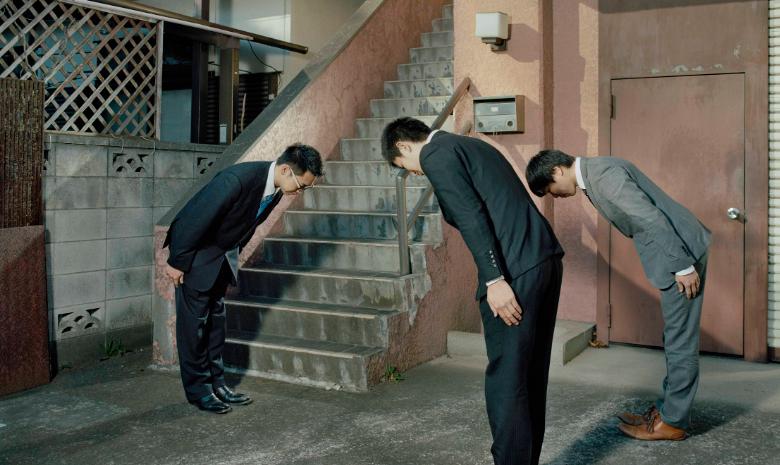
Fortunately, Chinese companies do not have the "senior-junior" culture common in Japanese companies. If this happened in a Japanese company, employees would only feel "kimazui" (awkward and uncomfortable). The logic of Chinese companies is that the most competent person takes the position, which is the only way to maintain the flexibility and combat effectiveness of the organization.
Coincidentally, Yu Donglai of Pang Donglai also told his executives internally these days, "If you can't run the business well, let it go. You must achieve complete freedom in management."
The ideas of Chinese business owners are largely the same.
ByteDance's adjustment is nothing new. It follows its internal logic and conforms to the changing laws of the AI industry. Strategic shifts, business divestments, and organizational restructuring are terms that people have seen a lot in the years of AI development. It is not just ByteDance that does this - everyone follows the same logic: when a business underperforms, not only the person in charge has to be replaced, but ordinary employees will also be affected.
Established in 2023, Baichuan Intelligence was once one of the "Six Rising Stars of Large Models" in China. But starting from 2024, its founding team began to leave one after another, from the head of commercialization, the head of model R&D, to the co-founder of technology. Until July this year, the last co-founder and president officially left the company. At this point, only Wang Chuan, the founder and CEO, is left at the helm of the company.
The direct reason is that since the beginning of 2025, Baichuan Intelligence has begun to shift its strategy, from the previous multi-line development covering finance, education, and to-C products to now focusing exclusively on the medical field.
Wang Chuan admitted that he previously "stretched the battle line too long and was not focused enough", but this decision of his was reportedly not unanimously understood and supported by the founding team, so everyone had to abandon the goal of "fighting side by side for the long term" and leave the company halfway.
If Baichuan's "failure of long-termism" happened mostly at the founder level, then Meta, led by Mark Zuckerberg, has almost been "sacrificing a large number of ordinary employees".
In May this year, Meta launched a new round of global layoffs, planning to cut 8,000 positions, accounting for about 10% of the total number of employees, mainly in the engineering and product teams. At the same time, about 7,000 employees were transferred to four newly established AI organizations.
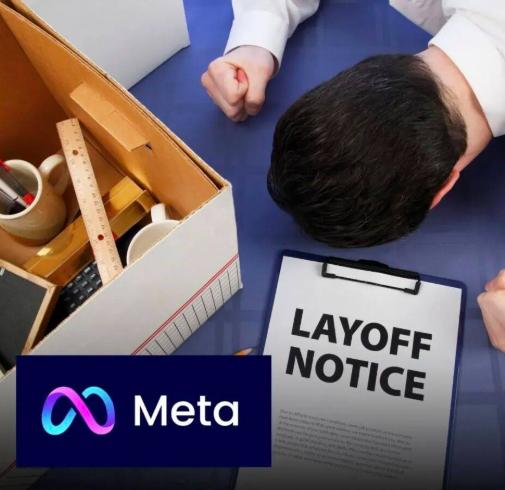
Changing positions is okay as long as you can keep your job. But for Meta's employees who are used to organizational adjustments and frequent layoffs, no one can feel the sense of security that they can work here for a lifetime.
If Meta's layoffs are understandable because the company's AI development is relatively weak and it has to do so to survive, then it is unreasonable for Amazon, which is doing well, to cut staff again. In July this year, Amazon announced that it would lay off some employees in its General Artificial Intelligence (AGI) division. The original words of the spokesperson of Amazon Web Services are: "This field is changing very quickly, and we are focusing on advancing the projects that are most critical to our customers... This focus means that some difficult decisions need to be made."
In February this year, David Luan, the head of Amazon's AGI lab, left the company first. And since October last year, Amazon has laid off more than 30,000 employees.
Why is there such a big gap between the feelings of bosses and employees?
Apart from the top two leaders, no so-called middle managers or ordinary employees can now have a complete sense of security about the enterprise.
When the boss talks about long-termism, what surrounds the employees are KPIs and OKRs. The root of this paradox lies in "The organization uses a series of increasingly meticulous and strict short-term assessment criteria to measure the blueprint of long-termism."
Walk around the major tech companies in Xierqi, Beijing, and you will find that everyone is leading a largely similar life: endless meetings, endless reports, and cross-departmental coordination work.
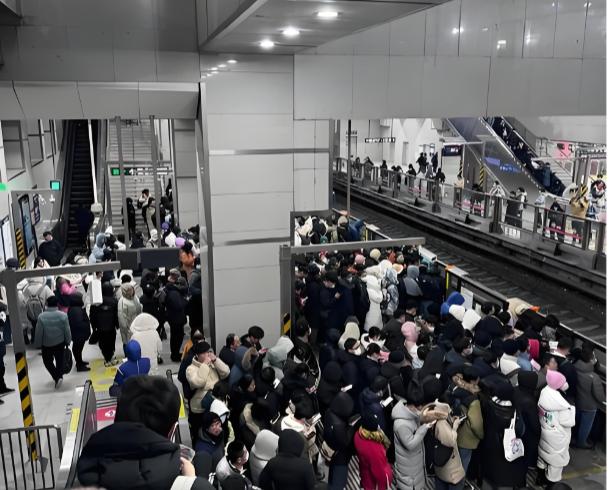
Figure | Daily scenery of Xierqi Subway Station in Beijing
Employees have to present their work every month, and make reports and go through screening every quarter. Everyone will be scored, and then the bottom employees will be screened out through ranking. The leaders of various teams often say, "I really don't want to give everyone a bad performance rating, but there is no other way."
So the employees cry together, and after a dinner party, those who have to leave still have to leave.
On the one hand, the OKRs state "pursue challenging high goals", on the other hand, low performance ratings will lead to salary cuts. This makes it very easy for employees to lose their footing between long-term goals and short-term assessments, and no one dares to really challenge goals that can only be achieved several years later.
What is more cruel than organizational competition is the change of the AI industry.
In the past year, how many rounds of hot trends have the AI industry gone through? Back in 2025, the industry was still talking about the "hundred-model battle". Now almost none of the excellent large models come from big tech companies. Instead, relatively pure startups like Zhipu, Kimi, and DeepSeek have taken the limelight and become the focus of the industry.

In 2025, the major model vendors were still talking about the "horse racing mechanism" and "raising more children to fight better", but now they have begun to "merge troops" and focus all their bets on the leading star products.
In the first half of this year, Doubao was still cheering for its daily active users ranking first among chatbots, but now the industry hot spot has shifted to B-end office Agents. In the past week, ByteDance integrated Feishu and Doubao, Alibaba integrated QoderWork, Wukong, and MuleRun into "Qianwen Office", Tencent merged QClaw into WorkBuddy, and Baidu integrated all R&D staff and resources related to its internal office agent dodo into the externally launched "Baidu Dazi" team.
Are these bosses being dishonest? That would be unfair to them. The industry waits for no one. This is the reality.
But when the industry changes its direction every six months, how can grassroots and middle-level employees wait for the day when "long-termism" pays off? The business line they are working on this year may be merged into another team tomorrow. The product they are developing now may be judged as "not focused" next month. Who can provide stability for their career and workplace life?
To put it bluntly, the long-termism of bosses and that of employees are not the same. The boss's long-termism is to keep the company alive, while the employee's long-termism is to keep themselves alive.
When the two parties move in different directions to survive, it is always the employees who get hurt easily.
How to build real long-termism
There is no doubt that long-termism should become the development direction of major companies. The key lies in how to implement it.
On June 29 this year, ByteDance released an internal letter to all employees, upgrading "Context over Control" from a cultural advocacy to a core mandatory standard for manager promotion and annual assessment for the first time. The management stated directly in the letter that formal work that "keeps all employees busy but produces no substantial results" will be listed as a negative management case.
This English management concept is actually an imported concept, which originally came from Netflix's organizational philosophy - "Context, not Control", aiming to enable employees to make independent decisions with full understanding of the background and goals through information transparency and full authorization, instead of being controlled by the boss's instructions and processes.
ByteDance has obviously realized the problem of big company diseases. Through the adjustment of organizational culture, it gives employees more autonomy, instead of letting everyone's fate depend entirely on the boss's random thoughts, so as to realize the unity of rights and responsibilities for employees. Many employees sincerely hope that the warmth brought by such organizational adjustments could have arrived earlier before the industry turning point comes.
In the future, the development of the AI industry will only change with each passing day, and competition will never stop.
Many employees expect that if all enterprises really believe in long-termism, they should not only optimize their organizational culture, but also reshape their concept of "people" - do not treat employees as replaceable parts that can be fired as soon as their quarterly performance is bad, or dismiss them as soon as the business line they are in is no longer profitable.
The underlying essence of long-termism is essentially the patience for people. It is not only patience for technological breakthroughs, but also patience for employees' growth and trial and error.
Back to the long-termism of the AI industry itself, after the discussions of people including Liang Wenfeng some time ago, the long-term vision of this industry has gradually become clear. The long-termism of the AI industry means getting rid of the inertia of chasing short-term traffic, and tackling the more difficult core proposition that can truly change the world: realizing Artificial General Intelligence (AGI).
Its core direction should shift from "parameter involution" to "value implementation", so that artificial intelligence can be truly embedded in the core processes of the real economy.
When it comes to the collaboration between AI and human beings, the long-termism formed by the two together should not require employees to bet on an uncertain future with the company, but allow the company to give employees a certain degree of certainty in the midst of uncertainty. The development of AI should not take away human jobs, but enable human beings to work better.
Finally, here is an episode. Jeff Bezos, the founder of Amazon, is one of the earliest figures in the world to discuss "long-termism".
In 1997, when Amazon went public, Bezos clearly stated in his first letter to shareholders: "It's All About the Long Term".
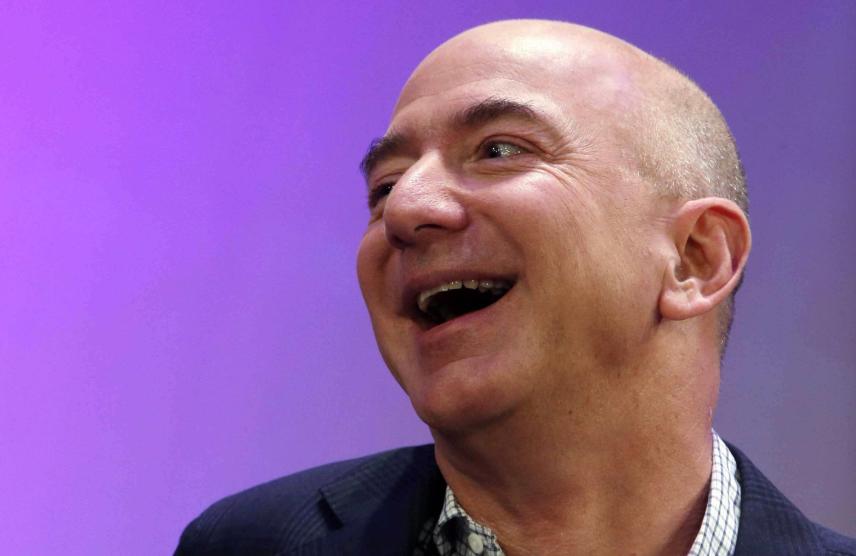
Figure | Jeff Bezos
He emphasized that Amazon will measure its success by taking the consolidation and expansion of market leadership as the fundamental criterion, and is willing to make many decisions that are completely different from those of companies pursuing short-term profits. He quoted Benjamin Graham's words to illustrate his philosophy: "In the short run, the market is a voting machine, but in the long run, it is a weighing machine."
Recently, on August 5, Bezos sold nearly $350 million worth of Amazon shares. This happened after Amazon's stock price hit a record high on August 3, and the company's market value exceeded the $3 trillion mark for the first time.
Public opinion comments that while Amazon is laying off employees, in the end, it is the long-termism of its boss Bezos that truly allows him to lock in all the gains for himself. It is really hard to say how to evaluate this.
This article is from the WeChat official account "Muhe Business and Finance", author: Gong Zheng, editor: Yang Jing, published with authorization from 36Kr.