The live-streaming sales sector in the United States has grown into a $20 billion "behemoth".
When live-streaming commerce has almost become a basic shopping operation for Chinese internet users, Silicon Valley giants that have long been accustomed to "Copy From China" have never been immune to its appeal.
In October 2022, Facebook shut down its live shopping feature. Five months later, Instagram followed suit. As for Amazon Live, its situation was even more embarrassing, with industry analysts describing it as "having embarrassingly low-quality content, and most users do not even know it exists".
A series of failures among Silicon Valley giants led to a conclusion — live-streaming e-commerce cannot succeed in the United States.
China has Li Jiaqi and a live-streaming e-commerce GMV of 4.5 trillion yuan, while American consumers simply refuse to buy in. This conclusion was reasonable when viewed at the end of 2022.
But today, four years later, Whatnot, a live-streaming e-commerce startup born in a rental house in Los Angeles, has just completed a $545 million Series G financing round with a valuation of $20 billion. In the European and American live-streaming e-commerce market, this little-known startup has already captured 60% of the market share, making it the absolute dominant player.
What is even more striking is that the average daily viewing time per user on Whatnot exceeds 80 minutes!
Those who claimed that live-streaming e-commerce could not work in the United States were obviously wrong. But a more thought-provoking question is: why is the final winner that emerged in the United States completely different from its Chinese counterpart?
01
The US Version of "DeWu" Got Its Start
The founding story of Whatnot hardly looks like the beginning that a $20 billion company should have.
At the end of 2019, Grant LaFontaine and Logan Head registered Whatnot in Los Angeles. LaFontaine previously worked as a product manager at Facebook and YouTube, while Head was a former senior product manager at GOAT, a sneaker trading platform. The two share one thing in common — they are both collectibles enthusiasts. LaFontaine started reselling Pokémon cards in middle school, and later moved on to selling sneakers.
What they did at the very beginning was extremely simple: they built an online trading platform dedicated exclusively to selling Funko Pop figures. Yes, those big-headed plastic figurines. To solve the biggest pain point in the collectibles market — the widespread presence of counterfeits — early Whatnot required all products to be first sent to the platform for physical verification before being shipped to buyers.
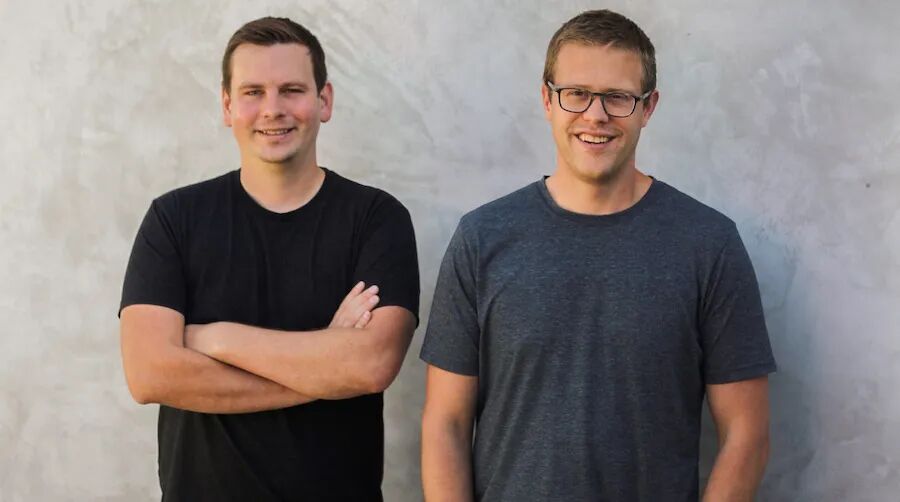
Whatnot's two co-founders Grant LaFontaine and Logan Head | Image source: Crunchbase
The team had only four people. LaFontaine later said in an interview, "It was hard to explain to your parents that you quit a good job and now you are selling plastic dolls."
In early 2020, they joined the Y Combinator Winter Batch. On the YC Demo Day, their entire pitch focused on Funko Pop. The investors' reaction was as lukewarm as one could imagine.
The real turning point came after Head spent six weeks building the live streaming feature. LaFontaine himself hosted the first live auction — in that rental house filled with figurines, he sold out all his Funko Pop inventory.
In two and a half hours, they made $5,000 in sales.
This figure was not huge, but LaFontaine knew exactly what it meant — "This is more than I could sell on eBay in a whole year."
The pandemic also lent a hand. Stay-at-home orders gave people plenty of time to spend on their phones, and the natural "sense of participation" and "scarcity" of live auctions quickly made collectibles enthusiasts hooked.
Whatnot's GMV achieved 20x year-on-year growth in 2021.
Then the categories began to expand — from Funko Pop to Pokémon cards, sports trading cards, sneakers, vintage clothing, then to designer handbags, electronics, jewelry, and even fresh food.
By 2025, Whatnot's GMV reached $8 billion, covering hundreds of categories, and accounting for about 60% of the live-streaming e-commerce market share in North America and Europe.
02
No Big Influencers, Just Ordinary People
Numbers are cold, but Whatnot's real moat lies in the stories of its sellers.
Clinton Benninghoff is a golf equipment seller. He did not even know how to use the live streaming feature at first, and the audience taught him how to operate during his first live broadcast. In less than a year, in February 2025, he sold more than $100,000 worth of golf equipment in a six-hour live stream, setting a new record for the golf category on Whatnot. "When that live stream ended, everyone was recording the screen with their phones, and I had completely lost my voice."
Dakota Peters is 25 years old and never attended college. In 2021, while waiting for Whatnot to open the sneaker category, she was attracted by the live unboxing streams of sports trading cards on the platform. She decided to give it a try. In her first year, her account generated more than $1 million in total transaction volume. Today, her company Achickrips has a weekly GMV of over $1 million.
In Boca Raton, Florida, a small traditional sports trading card store saw its monthly revenue surge from $40,000 to $1.5 million to $3 million after accessing Whatnot's live streaming feature, and its team expanded from 2 employees to 39. Cards HQ in Atlanta directly built a 1,300-square-meter exhibition hall with 5 dedicated studios for Whatnot live streams.
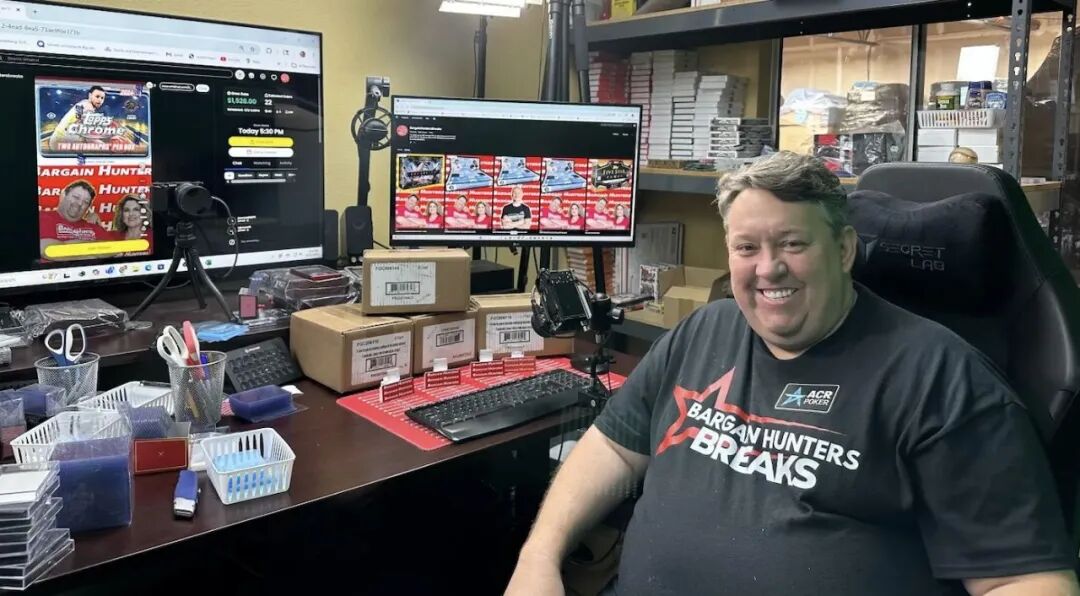
There are no super streamers on Whatnot, just regular folks next door | Image source: Fortune
These stories share one common feature — there is not a single "super streamer".
No one has tens of millions of fans, no one monopolizes traffic, and no single person can support the entire platform's GMV on their own. Top sellers on Whatnot are more like owners of small specialty stores, and their competitiveness comes from their expertise in vertical categories and long-term trust relationships with the community.
This is the most fundamental difference between Whatnot and TikTok Shop.
On TikTok Shop, the shopping chain is "algorithm recommends content → users get attracted by the content → place an order". Short videos contribute about 60% of the US TikTok Shop's GMV, while live streams only account for 10%. Essentially, TikTok Shop is a "discovery e-commerce" platform: you don't need to know what you want to buy, the algorithm will tell you.
On Whatnot, the logic is completely reversed. Users come in with clear interests, such as sports trading cards, sneakers, second-hand bags, and then complete transactions in live auctions. The total weekly live streaming duration exceeds 175,000 hours, which is 800 times the weekly broadcast duration of QVC.
The average daily viewing time per user is 80 minutes, exceeding that of YouTube and TikTok. 62% of sellers only sell their goods on Whatnot.
TikTok Shop is "I don't know what I want to buy, but the algorithm knows"; Whatnot is "I know exactly what I want to buy, and I come here because there are people who know this product better than anyone else".
One is driven by algorithms, the other is driven by communities. One features centralized traffic distribution, the other features decentralized aggregation of niche circles.
03
Three Diverging Paths for Live-Streaming Commerce
If we take a broader perspective, we are actually looking at three variants of the same business model that have grown in three different cultural contexts.
The Chinese version is "platform traffic + super streamers". The core logic of Taobao Live and Douyin E-commerce is that the platform holds the power of traffic distribution, and achieves high conversion rates through top streamers. This is a highly centralized model — the platform decides who can be seen, so top streamers gain extremely strong bargaining power. In 2024, China's live-streaming e-commerce GMV exceeded 4.5 trillion yuan, accounting for nearly one third of total online retail sales.
The US version of TikTok Shop is "algorithm-driven content e-commerce". It inherits ByteDance's gene of recommendation engine, but has made local adaptations for the US market. Short videos, rather than live streams, are the main transaction scenario. Its US GMV reached $15.8 billion in 2025, and is expected to exceed $23 billion in 2026. Its growth logic is more similar to advertising monetization — attracting attention with content, and matching products with algorithms.
The Whatnot version is "organically growing auction e-commerce built on communities". There is no central traffic pool, no recommendation algorithm dominating distribution. The core work of the platform is to review seller qualifications, provide live streaming tools, and process transaction fulfillment. Its growth comes from one vertical community after another developing organically — the Funko Pop community attracts the Pokémon community, the Pokémon community attracts the sports trading card community, and the sports trading card community attracts the sneaker community.
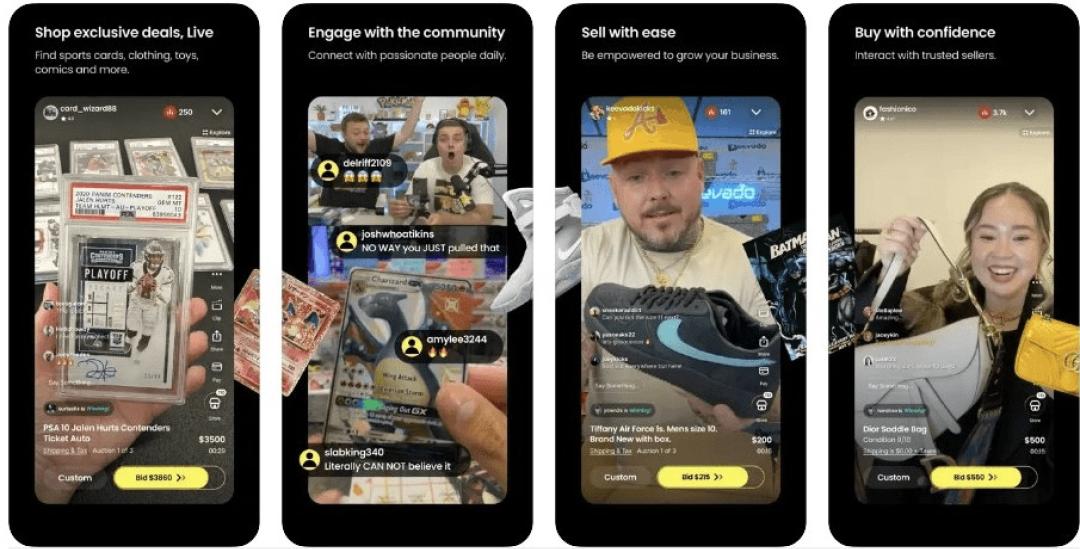
A typical live streaming scene on Whatnot | Image source: Whatnot
Yoonkee Sull, Partner at ICONIQ, said a word when talking about Whatnot's investment logic that can explain the underlying reason for this difference — "People always think that to build a consumer platform, you have to target the largest market from the very beginning. But the reality is, you must focus extremely on a small, highly active niche community, and let the network effect take off first."
There is no simple judgment of good or bad between these three paths. The Chinese model has the highest efficiency, but its reliance on top streamers is a structural risk. TikTok Shop has the fastest growth, but it is essentially still subject to algorithms and the platform's will.
Whatnot may have the lowest ceiling, but its foundation is also the most solid — because once a community is formed, the migration cost is extremely high.
Looking back at Whatnot's $20 billion valuation, what is really worth pondering for the Chinese industry may not be "Americans can also do live-streaming e-commerce now". It is another question — when the growth of an industry no longer relies on any single super individual, but on the spontaneous vitality of countless small communities, is this ecosystem inherently healthier?
When Whatnot's CEO LaFontaine was asked when the company would go public, he gave a very honest answer — "I would prefer to stay private for as long as possible. But objective conditions will change, and we will be well prepared for an IPO."
On another note, he said a more interesting sentence — when everyone is chasing AI, "some investors are relieved to finally see a consumer company with network effects, growth, and a great team, because we can see certain value here."
Perhaps, when everyone is chasing the uncertainty of AI, the biggest inspiration brought by this company that started out selling Funko Pop is that certainty itself is also a scarce resource.
This article is from the WeChat official account "GeekPark" (ID: geekpark), Author: Wildcard, republished with authorization from 36Kr.