Why can the "disappeared" Gong Cha still achieve sales of 4.3 billion yuan?
One month ago, Bain Capital just exited its investment in Kioxia, a Japanese flash memory chip enterprise, and this transaction is regarded as one of the most successful investments in the global private equity industry. One month later, Bain turned around and made a "cross-border" acquisition of a well-known milk tea brand.
On August 6, TA Associates (hereinafter referred to as "TA", the seller in this transaction), a private equity investment institution, announced on its official website that Bain Capital has signed an agreement to acquire Gong cha Global (hereinafter referred to as "Gong cha"), and the transaction is expected to be completed in the fourth quarter of this year. Neither party disclosed the transaction price, but according to media reports, the transaction amount is about 4.3 billion RMB (the same below).
Reporters from National Business Daily (hereinafter referred to as NBD Reporters) noticed that Gong cha was founded in Taiwan, China in 2006 and started its expansion journey in 2009.
Around 2010, Gong cha officially entered the Chinese mainland market. At that time, Gong cha was almost the starting point for mainland consumers to discover cheese foam tea, and was known in the industry as the "originator of cheese foam tea". Milk tea shops with Gong cha signs could be seen everywhere in shopping malls, pedestrian streets and near schools. However, as competition in the mainland tea drink market intensified, Gong cha gradually faded out of the sight of mainland consumers.
Why can an old brand that has lost its presence in the mainland market and fallen behind in the new tea drink track still be worth 4.3 billion RMB? What exactly is Bain Capital buying?
Spending huge sums to acquire Gong cha, what does Bain Capital value?
In May this year, there were market rumors that private equity firm TA wanted to sell Gong cha for up to 2 billion US dollars. Calculated based on Gong cha's annual EBITDA of more than 70 million US dollars, this valuation is nearly 30 times, and potential buyers already thought the price was too high at that time.
According to media reports, the transaction amount of Bain Capital's acquisition of Gong cha this time exceeds 635 million US dollars (about 4.3 billion RMB), which is only about 30% of the seller's highest valuation expectation.
A senior practitioner in the new tea drink industry with more than ten years of experience, Zhang Heng (pseudonym), told NBD reporters that what Bain values is Gong cha's global operation network that has been laid out for many years.
Gong cha began its global expansion from Hong Kong, China in 2009, and then successively entered markets including South Korea, Japan, Malaysia, the Philippines, Vietnam, the United States and Europe.
The first key fulcrum of this expanding store network is South Korea. At present, Gong cha has more than 800 stores in South Korea, which was once its largest single market. With the support of capital, the South Korean operation team also reverse-acquired 70% equity of Gong cha's Taiwan, China headquarters, and gradually integrated Gong cha's global brand rights and interests.
After being taken over by TA in 2019, Gong cha further expanded to the markets of the United States, Europe, the Middle East and Latin America, acquired the relevant rights and interests of the main franchisees on the east and west coasts of the United States, and promoted the "digital kitchen" store model to about 250 stores.
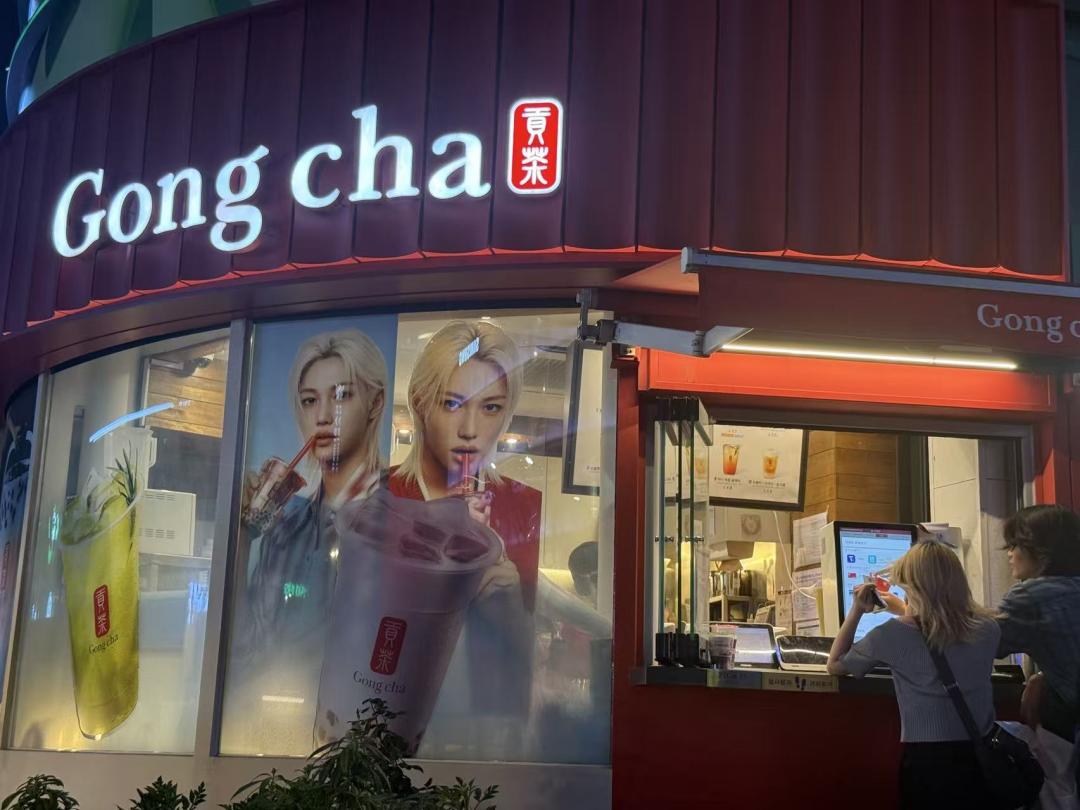
Gong cha store in Seoul, South Korea Photo source: NBD Reporter Wang Ziwei
The second growth fulcrum is Japan. Gong cha opened its first store in Japan in 2015. By the end of May 2025, it had nearly 200 stores. In 2024, Gong cha received about 30.12 million consumers in the Japanese market, an increase of about 70% compared with 2019. It is expected that in 2026, the Japanese market will surpass the South Korean market and become Gong cha's largest revenue market.
In the Southeast Asian market, around 2010, Gong cha entered the Malaysian and Philippine markets; in 2014, it entered the Vietnamese market.
However, a large number of stores is not enough to explain the 4.3 billion RMB selling price of Gong cha.
Previously, NBD reporters saw in a shopping mall in Osaka, Japan that a seasonal new product of Gong cha was priced at 620 yen (about 30 RMB). Some seasonal limited drinks are priced at 690 to 780 yen, which is equivalent to the price of many mid-to-high-end fresh fruit tea and fresh milk tea in mainland China. After conversion, the selling price of Gong cha in the South Korean market is also around 30 RMB.
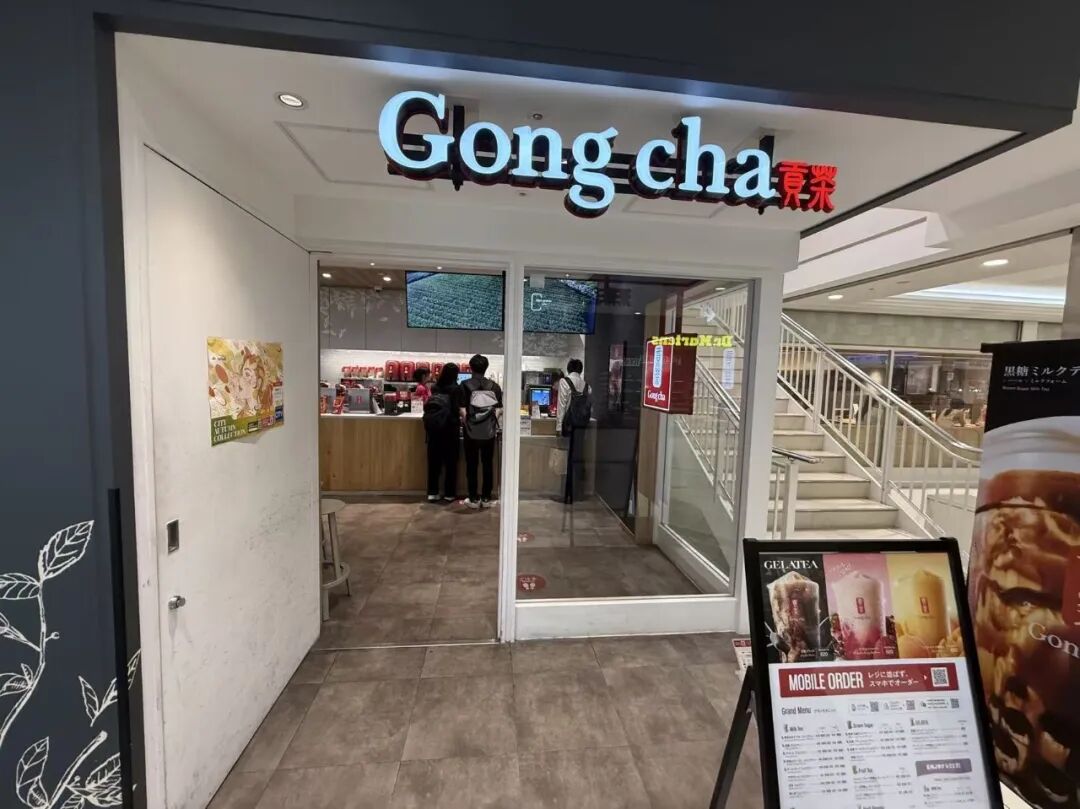
Gong cha store in a shopping mall in Osaka, Japan Photo source: NBD Reporter Wang Ziwei
Gong cha does not rely on low prices to gain scale in overseas markets. At least in core markets such as Japan, Gong cha has entered the daily drink price range acceptable to local consumers.
At the same time, Gong cha's stores are mainly small and medium-sized stores and shopping mall stalls, which do not require complex catering kitchens. Compared with mainland new tea drink stores that use a large amount of fresh milk, fresh fruit and freshly prepared ingredients, Gong cha's smaller stores can reduce store opening investment; some raw materials with higher standardization and longer storage cycles can also reduce the difficulty of cross-border transportation, cold chain storage and store training.
At present, Gong cha has nearly 2,200 stores in about 33 markets around the world, selling more than 150 million cups of drinks every year. In fiscal year 2025, Gong cha's total revenue was about 217 million US dollars, a year-on-year increase of 14%, and the growth mainly came from the Japanese and South Korean markets.
Why did Gong cha miss the upgrading window of the mainland market?
When Gong cha first entered the mainland, the mainland tea drink market was still in the pre-"new tea drink era".
At that time, brewed milk tea still had a strong presence, and the freshly made segment was mainly street-side small shops and tea drink chains from Taiwan, China. For example, CoCo Fresh Tea & Juice began to lay out the mainland market in 2007; Happy Lemon was founded in 2006 and entered the mainland market in the same year; Yidiandian opened its first store in Shanghai in 2012.
Tea, syrup, tapioca pearls, and standardized milk bases including non-dairy creamer can help stores control costs, extend the storage time of some raw materials, and make the franchise model easier to replicate.
With its salty-sweet cheese foam, freshly brewed tea base, and consumer experience that allows adjustment of sweetness and ice amount, Gong cha quickly stood out from the street-side milk tea shops. According to public reports, in 2017, the number of Gong cha stores in the mainland once exceeded 750.
But Gong cha soon fell into a situation where it was difficult to distinguish between true and false. Due to the chaos in trademark and regional authorization management, a large number of brands with the words "Gong cha" appeared on the market. The official operator successively used names such as "Yangyanghao Gong cha" and "Siyun Cheese Foam Gong cha", and repeatedly reminded consumers to recognize the four-cloud logo.
An employee of a leading tea drink brand recalled to NBD reporters: "There were too many Gong cha brands on the market at that time, and consumers couldn't tell which one was real. The brand was a little out of control."
However, trademark out of control is only one of the reasons why Gong cha fell behind. The bigger change is that new tea drink brands in the mainland market began to rise.
In 2012, the predecessor of Heytea started in a small shop of less than 10 square meters in Jiangmen; in 2015, Nayuki opened its first store in Shenzhen. Since then, fresh fruits, fresh milk, cheese tea, original leaf tea and larger store spaces have gradually constituted a new set of standards for "new tea drinks".
Zhang Heng said that non-dairy creamer has not disappeared from the mainland tea drink market because of this, but consumer perception has indeed changed since then: fresh milk, fresh fruit and original leaf tea are gradually regarded as signals of higher quality.
"When one brand develops a new product, other leading brands can quickly follow up." Zhang Heng said: "Consumers have too many choices. If you don't complete the upgrade, you will easily be left behind."
Gong cha thus missed the fastest-growing decade of the mainland tea drink market. According to Tianyancha, in November 2024, Gong cha (Shanghai) Catering Management Co., Ltd., founded in 2012, was deregistered. NBD reporters checked Gong cha's global official website and found that the list of operating markets displayed no longer includes the Chinese mainland.
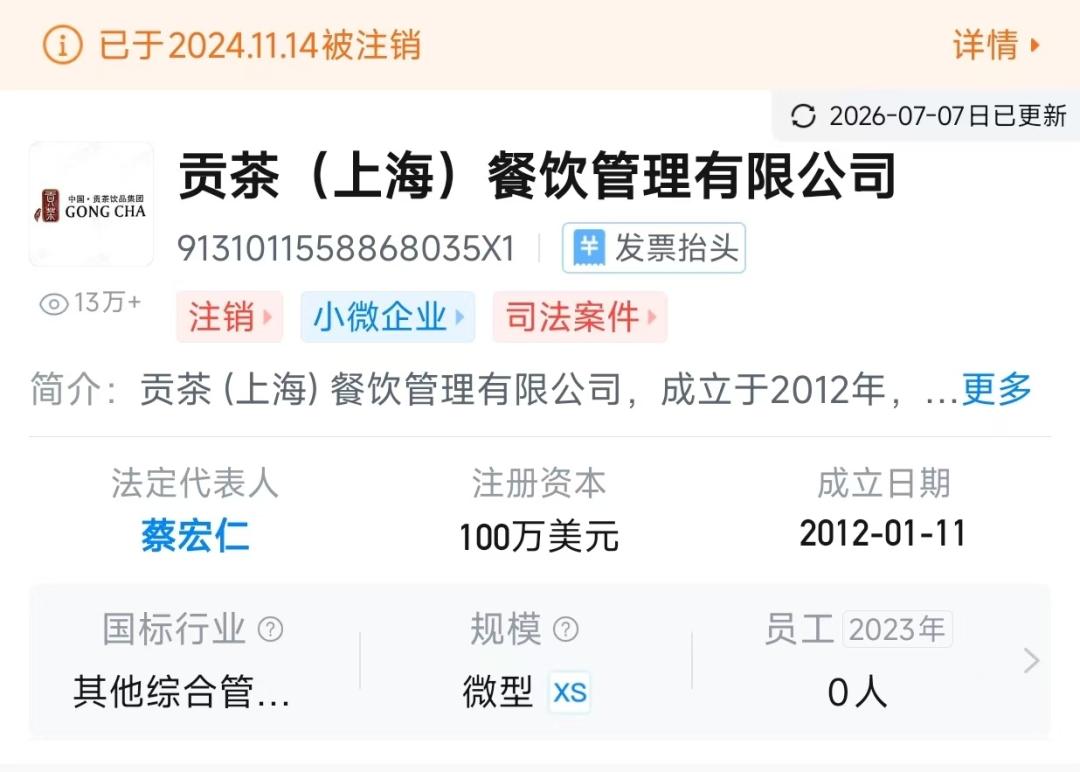
Photo source: Tianyancha
In 2024 alone, the mainland tea drink market has completely changed: as of September 2024, the number of tea drink stores once reached about 655,000, and Mixue has grown into a super chain brand with tens of thousands of stores. In the capital market, Nayuki and ChaPanda landed on the Hong Kong Stock Exchange in 2021 and 2024 respectively, and brands such as Mixue and Guming were already standing at the door of the capital market at that time.
There is still market dividend in overseas tea drinks, but competition is intensifying
"Too sweet" "There is milk tea made from taro powder?"... Gong cha's products in the South Korean and Japanese markets were once complained by Chinese consumers on social media.
Similar products in the mainland today may hardly become the signature of a leading brand. But Zhang Heng believes that this does not mean that overseas consumers are more receptive to non-dairy creamer. "The core is that the local market is not as competitive as the mainland market, there are not so many mature brands, and consumers do not have such a rich choice of tea drinks."
In the highly competitive Chinese mainland market, new tea drink brands compete on raw materials and prices to enhance product value. In some overseas markets, consumers have not been repeatedly educated by hundreds of brands. Stable good taste and easy availability may already be enough to form competitiveness.
Zhang Heng summarized this difference as: the competition intensity and market stage of some overseas tea drink markets are still around 2016 in the Chinese mainland tea drink market.
At that time, the mainland new tea drink market had just gained momentum, and fresh fruit tea, cheese tea and larger store spaces began to attract consumers, but mature chain brands were still limited. As long as brands took the lead in entering shopping malls and core business districts, they had the opportunity to become popular across the country with one product and be recognized by consumers across the country.
Zhang Heng said that at that time, tea drink franchisees who chose the right brand could "make money even lying down".
The current development of Gong cha in South Korea has similar characteristics. In Zhang Heng's view, Gong cha's early advantages in markets such as South Korea and Japan lie in that it took the lead in establishing a unified store image, a relatively stable menu, and a continuously replicable chain operation system.
This stage of dividend is also attracting more and more brands to go overseas. Bawangchaji, Mixue, Heytea, ChaPanda, Tianlala and other brands are bringing the supply chain and digital management capabilities trained in the Chinese market to Japan, South Korea, Southeast Asia, Europe and the United States.
However, the existence of category dividends overseas does not mean that the high-frequency demand similar to that in the Chinese market has been formed.
Listed company Bawangchaji is taken as an example. By the end of 2025, it had 345 overseas stores. In the fourth quarter of 2025, Bawangchaji's overseas GMV increased by 84.6% year-on-year, accounting for about 5% of the company's total GMV. However, store expansion can quickly scale up, while stable repurchase and mature store growth still need time to verify.
"Some overseas markets are a bit like the early stage of new tea drinks in the Chinese mainland, where demand is still being educated, and no one knows how big the market will eventually be." Zhang Heng said that once the supply chain, digitalization and franchise management are implemented, Chinese tea drink brands may form stronger long-term competitiveness.
"Capital recognizes the advantages that Gong cha has formed, such as the moat of the number of stores and locations. But less competition in the overseas market is only a 'stage dividend'. As Chinese new tea drink brands gradually expand overseas, this may not be a permanent moat for Gong cha." An industry insider explained to NBD reporters that this may be one of the reasons why Gong cha was sold at a "discount".
This article is from the WeChat official account "Consumer Story", author: Wang Ziwei, published with authorization from 36Kr.