China's gaming industry has entered the era of "gaming with AI"
The script of ChinaJoy has changed this year.
In previous years, ChinaJoy was the annual summer carnival for game players, featuring new game demos, coser gatherings, and all the imaginations belonging to games, which also formed the original aspiration and thriving landscape of China's game industry.
However, this year's ChinaJoy has less noise of playing games, but more restlessness of creating games.
The theme of 2026 ChinaJoy is "Play with AI". With nearly 900 exhibitors and an exhibition area of 140,000 square meters, the scale of the exhibition and its "AI content proportion" have both hit record highs at the same time.
What is more interesting is the change in the list of exhibitors. The technical exhibitors at this year's World Artificial Intelligence Conference did not take much rest, and immediately moved to the ChinaJoy site. Few of them have a pure game background, and they may not even know which game is fun, but they are deciding "how games can be created differently".
Summer brings vitality, and the sweltering heat also brings confusion. The trend of "everyone making games" seems to have become an unquestionable result, but no one has seriously answered a question:
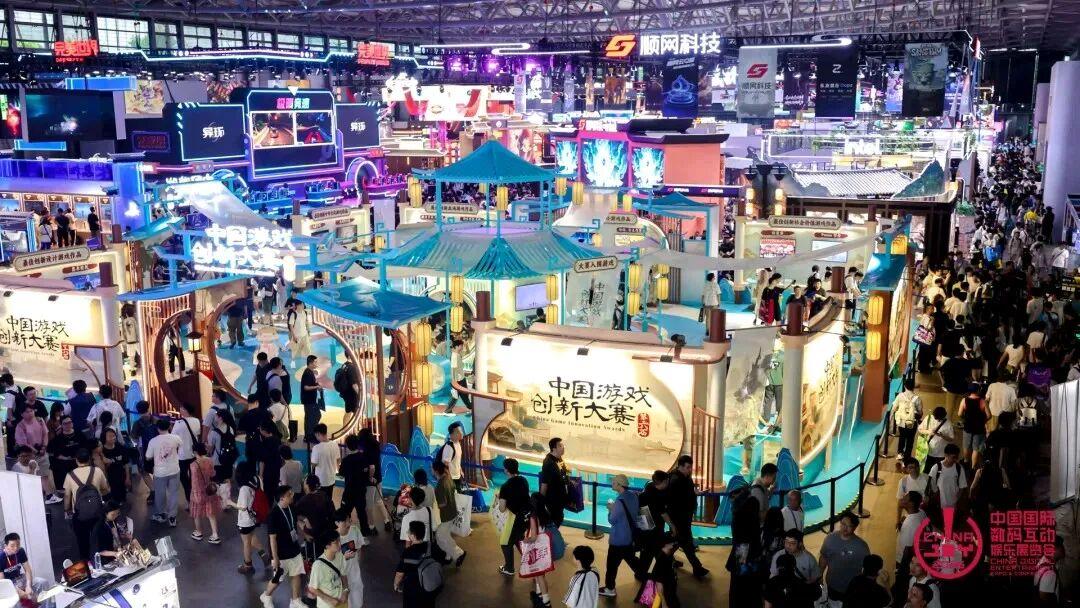
2026 ChinaJoy exhibition site, source: ChinaJoy official WeChat account
In the future, if AI really "takes over" the pipelines of art, development and operation, and making games no longer has screening value, where will the scarcity of the game industry shift to and what will it transform into?
After a structural transformation, where will the new Sword of Damocles appear?
01. After the threshold of "making games" disappears
Bao Yuansong from Alibaba Cloud has served hundreds of manufacturers in the game industry in the past year. His observation is that the industry has crossed the debate stage of whether to use AI, and entered the stage of how to use AI on a large scale.
"The game industry we saw two years ago is a completely different world from today," said Bao Yuansong. Two years ago, many game manufacturers were worried about whether players would accept games made with AI. Most people were still on the sidelines, not knowing the boundary of AI in games, and whether using AI would get out of control.
The inflection point appeared in the second half of 2025. According to observation data from the Steam platform, as of December 2025, the number of games on the platform that actively disclosed the use of generative AI has exceeded 10,000. The industry has voted with its cost choices, which is clearly visible at this year's ChinaJoy. AI has become an indispensable productivity in game production pipelines and many new game projects, and even part of the game gameplay.
The "2026 China Game Industry AI Development Report" released by Gamma Data shows that among the investment and financing in the game industry in the first half of 2026, AI-related projects accounted for more than 70%, and the AI penetration rate on the domestic game R&D side has reached 86.36%, making AI tools the standard configuration of the industry.
For the question "What is the boundary of AI in games", the first capability barriers to be reconstructed are art outsourcing and development programming.
The Gamma Data report shows that the proportion of AI materials used in game R&D has risen from 10% in 2024 to more than 41% in 2026. Data from the Game Working Committee of China Audio-Video and Digital Publishing Association further confirms that the cost of traditional material outsourcing has dropped by 50% to 70%, and labor costs have dropped by more than 60%.
The global wave of AI Coding will never avoid the fertile soil of the game industry. Unity's "2026 Game Development Report" shows that 62% of game developers are already using AI to assist coding, and the average development time has been shortened by 77%. According to reliable sources, among leading game manufacturers, there are representative enterprises where the per capita daily token cost of AI development tools reaches the order of thousands of yuan, and the value created by this investment is far higher than the cost.
In the chain that is more front-end and closer to people than images and codes, the changes are also more thorough than the public imagines. An operation staff of a game manufacturer told 36Kr that an operation plan that used to require a 5-person team to complete in 20 days now only needs 2 people and one week in terms of rhythm and cost.
In standardized processes such as data statistics, event copywriting and community maintenance, the AI replacement rate can reach 80%.
Similar labor replacement logic is also being fully rolled out in links that AI is best at, such as content review. Teyou Game, a leading domestic R&D enterprise, is currently building a content security review platform based on Alibaba Cloud's Qwen, which realizes the function of high-precision and high-accuracy review of player chat content in games, improving efficiency by 50%.
Links that occupy most of the budget of a game company, such as art, programming, operation, review and localization translation, have been systematically and greatly compressed. This surprises everyone, and also panics everyone.
As we all know, once the cost in the upstream of the industry drops with new technologies, traditional productivity will no longer be accepted by the market. If "making games" is no longer a capital privilege, and games themselves no longer have the screening value of luxury goods, it means that the old market order is failing.
The "dissipation" of the old scarcity is an inevitable trend. However, how game companies can have new scarcity, what judgments and strategic choices they need to make — this question is the Sword of Damocles that the entire game industry will face after this year's ChinaJoy.
02. AI is changing "playing games"
The new scarcity is a narrow door, and fewer people can get in, but it actually stands there.
What kind of games will be more valuable? The answer is simple: fun games.
The AI transformation of production pipelines lowers the threshold of "making games", but does not deprive the value of creation. The low threshold and popularization of creation will instead force game manufacturers to focus on making games, and invest more costs in the fun of gameplay, the convenience of interaction, and scenarios that combine education with entertainment.
At the other end of the lever, AI has also entered the gameplay itself: into NPCs, plots and world rules, deriving more rich and delicate gameplay, and even changing the definition of "playing games" itself.
The changes here are obviously much more drastic than the cost restructuring of the game industry.
A very convincing example is that last year, Giant Network launched a hit Chinese-style slight horror game *Supernatural Task Force*, which completely made this track popular. One year after its launch, its DAU exceeded 10 million, with a total of 200 million registered users and a revenue of over 5 billion yuan. QuestMobile data shows that after major manufacturers have followed up and bet heavily on related tracks, its monthly MAU compound growth rate can still exceed 20%, which is called an operation miracle among games of the same category.
A major highlight of this game is the built-in AI-driven "AI dummies". In the first week after its launch, the total number of matches between AI NPCs and real players exceeded 25 million.
AI NPCs will move flexibly, search for supplies and dance on the scene like real people. They have their own "personalities", will get close to players, build trust, and then perform a fatal backkill unexpectedly. Many players also find that the responses of these AI teammates are of much higher quality than expected, and provide more emotional value than randomly matched strangers.
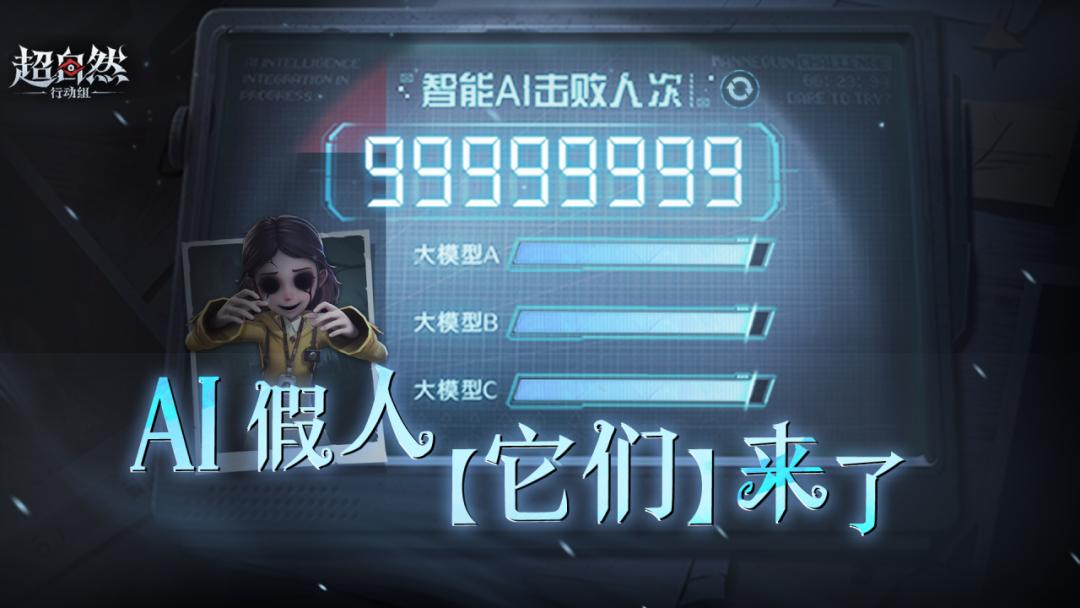
Why did the industry generally believe that AI battles had no soul two years ago? It is precisely because NPCs that can lie, coax people and turn against others like this rely heavily on the qualitative change of large model capabilities and the depth of technology implementation, which requires at least three layers of capabilities to be in place at the same time.
The first layer is the "sense of role" of the model itself.
For mainstream large models on the market, if they want to support entertainment dialogue scenarios, an unavoidable contradiction is how to make AI "both obedient and disobedient". Models with strong chat ability have weak instruction following; models with strong instruction following lack personality charm and sense of role.
It is understood that Giant Network has accessed the Qwen model, and now it has realized understanding player semantics, reproducing real human timbres, and simulating players' language styles and action logics, so it can make strategic and confusing camouflage actions, making players basically unable to tell whether the opposite side is a real person or an NPC.
Furthermore, the capability boundary of the model is far more than just "dialogue". Taking Alibaba's Qwen3.8-Max series as an example, this generation of models can be directly used in core creative links such as game logic generation and code writing — model capabilities are no longer demos in the laboratory, but stable services that can be embedded into the production chain of C-end products. TapTap Creation, an AI game creation agent, accessed this model immediately. "Qwen3.8-Max has made great progress in capabilities, and it has shown great competitiveness in our model pricing system, so we launched it in time. The proportion of our developers using it is growing every day," Zhao Tianyi, product head of TapTap Creation, said frankly at this year's ChinaJoy site.
The second layer is the engineering capability of the inference platform. 25 million matches in one week mean that hundreds of millions of tokens are generated and consumed in real time in the game every day. In these categories of adversarial interaction and real-time competition, if the response delay of any NPC exceeds hundreds of milliseconds, players will immediately notice something wrong, so the inference speed is also very critical.
This is why there are a large number of AI capability demonstrations at this year's ChinaJoy, but so far there are not many games that can really take AI gameplay as their trump card. On the one hand, it is the cost of computing power, on the other hand, the maturity of engineering is more demanding than imagined. These are all new scarcities that the game industry is looking for.
Behind the related gameplay of *Supernatural Task Force*, Alibaba Cloud Bailian Platform provides a processing rate of hundreds of millions of tokens per minute, ensuring low-latency inference that is imperceptible to players in high-concurrency scenarios.
The third layer of capability is the operating environment of Agents. Traditional game companies run services by purchasing ECS on their own servers for online games. The computing power is idle during low traffic periods, and peak expansion is very expensive, so traditional deployment and operating environments can hardly "afford" to run AI NPCs.
Up to now, the changes brought by AI cloud manufacturers such as Alibaba Cloud are that game manufacturers only need to publish Agents to Alibaba Cloud's Agentic Cloud platform, and the platform will automatically handle resource scheduling, session management, and millisecond-level elastic scaling, and ensure Agent operation through sandbox isolation and secure tool calls.
Running AI NPCs stably under tens of millions of concurrency has now become an "out-of-the-box" choice for game companies.
In fact, whether it is the in-depth exploration of AI NPC gameplay or the cooperation with Alibaba Cloud AI, what Giant Network is striving to explore is that the value scarcity of games should return to "how fun the game is" rather than "how difficult the game is to make".
This is also the meaning of AI for the entire game industry.
Back to the Sword of Damocles at the beginning. Even one day when AI "takes over" art, development and operation, game manufacturers can still find creative value from it. Because AI narrative will not stagnate at productivity itself. The cost saved from the pipeline and the liberated productivity will eventually be liberated to the design and thinking of gameplay, and the integration of multi-modal capabilities.
In the future, everyone's focus will return to who can make more fun games, with more diverse NPC personalities, more open world gameplay, and more stable and advanced AI capabilities and ecosystems. The so-called "quality assurance" that comes from a huge production team and sufficient budget will become a crown of the old world, and gradually fade away.
The attitude of "taking from AI and using for AI" allows games with mature gameplay such as *Supernatural Task Force* to cross the narrow door of the AI era.
The other path is more radical: to make a completely AI-driven game from scratch.
The AI-native historical strategy game *History Simulator: Chongzhen* takes this path.
Supported by the Qwen large model, players can change from choosing plots in traditional games to creating plots. By entering a natural language instruction in this game, players can implement "radical reforms", make diplomatic alliances among multiple forces, and "light up the modern technology tree" in the ancient world, triggering chain reactions. AI performs dynamic numerical deduction on thousands of dimensions such as national treasury, public sentiment, and military morale, and generates the trend of subsequent plots, deducing a "living world".
The reason why it is called "radical" is that the decision tree constructed by traditional game codes cannot cover such freedom at all.
The game producer Qinggan Studio tested multiple mainstream models, and finally the Qwen large model was favored by the studio for its comprehensive performance in inference accuracy, data processing speed and cost control. The historical status, dialogue accumulation and world evolution of players require a data center that can operate at the same speed as AI. Alibaba Cloud's PolarDB is suitable for this task. Through technical optimization such as data compression, it improves the processing efficiency of the model while reducing the storage cost by more than 50%.
On the pipeline side, Qinggan Studio has also cooperated in depth with Alibaba Cloud's technical service team since the POC stage. Processes such as Prompt optimization, long memory tuning, model call current limiting, and RT response timeout monitoring have been standardized into a 7×24-hour guarantee system.
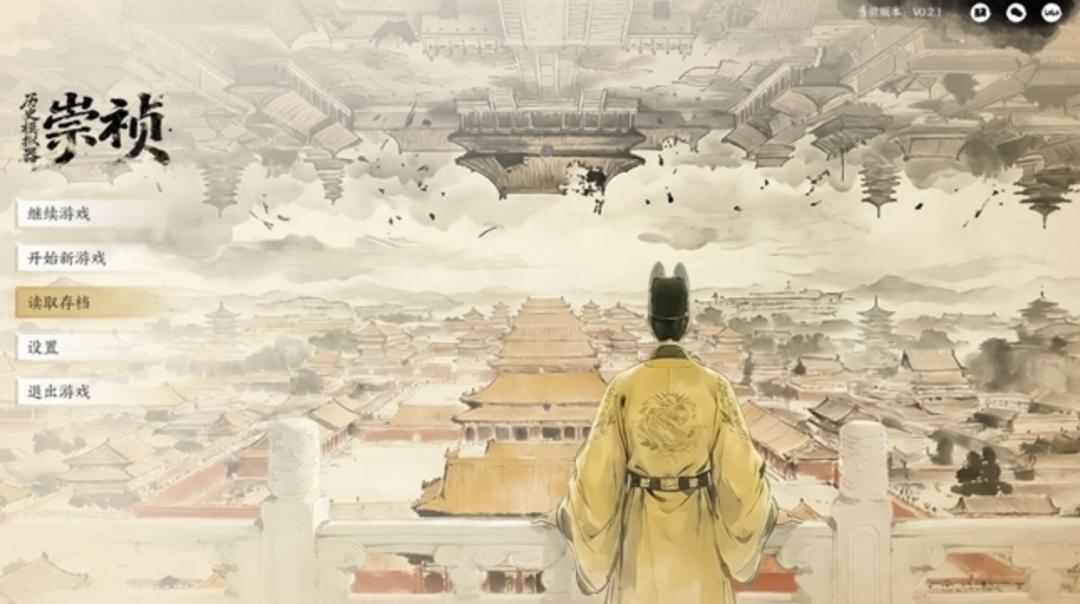
*History Simulator: Chongzhen* verifies the feasibility of AI-native games in high-concurrency, high-interaction environments, and also represents that a new technical service standard and engineering ecosystem are being established in the game industry.
According to the project team, Qwen outperforms others not only in evaluation scores, but also in the running-in depth of long memory tuning, Prompt engineering and instruction following. That is to say, in the game industry, the competition between AI large models is changing from "who has the strongest performance" to "who is more adapted to this project".
The "China AI Game Cloud Market Insight, 2025" report released by IDC shows that in the "AI game cloud model services and AI applications" market, Alibaba Cloud ranks first with a 37% market share. More and more game enterprises choose to build exclusive models suitable for game scenarios based on the Qwen model, focusing on game business innovation and player experience.
Back when the industry was still debating "whether AI games are worth investing in", this AI cloud manufacturer was already building its infrastructure on a large scale.
03. Beat a few milliseconds first before conquering the world
AI large models have different forms in different game categories, but they are essentially real-time online services. Every battle, every dialogue, and every Agent's decision calls for remote inference.
Therefore, as a new gameplay and new capability, AI has pushed the game industry back to an ancient bottleneck: network latency.
Especially in front of the "must-have option" of going global, the pain and loss caused by latency are even more unavoidable.
When it comes to game going global, the first question to answer is why the overseas performance of Chinese independent R&D games has been so strong in recent years?
In 2025, the actual sales revenue of Chinese self-developed games in overseas markets reached 20.455 billion US dollars, a year-on-year increase of 10.23%, and it has exceeded 100 billion yuan for six consecutive years. *Genshin Impact* refreshed the world's perception of Chinese R&D, and *