New Oriental-affiliated players have kicked off a chaotic free-for-all, how to break the impasse in the second half of the live streaming e-commerce sector?
On the morning of August 2, a brand-new account with zero paid traffic quickly topped the Douyin e-commerce live streaming ranking. In the frame, Sun Dongxu, former CEO of Eastbuy who once stepped down amid the "essay controversy", sat together with Mingming and Tianquan, two hosts who also left Eastbuy, and started a live-streaming sales session with a familiar vibe.
Only 8 minutes after the live stream titled "Beautiful Tomorrow" went online, the number of concurrent viewers exceeded 100,000. Within half an hour, it quickly climbed to the top of the overall Douyin e-commerce live streaming ranking, with real-time popularity even surpassing that of "Yuhui Travels" and "Eastbuy" which went live in the same time slot.

▲ Note: The picture is from the live stream of "Beautiful Tomorrow"
At present, Dong Yuhui, who left New Oriental two years ago, is facing public doubts amid public opinion turmoil, while Eastbuy seems to have found a brand new development path after its core hosts left one after another.
In the downward period of the live e-commerce industry where the overall growth rate is slowing down and traffic costs are rising day by day, this group of former trendsetters from the New Oriental system is heading to different forks in their respective destinies. Their turbulence and changes have precisely become the epitome of the live e-commerce industry.
The New Oriental Camp is Caught in a Full-Scale Scramble
The birth of "Beautiful Tomorrow" has completely turned the former Eastbuy executives and host camp into a tripartite confrontation situation. The three forces originating from the same background, namely Sun Dongxu, Dong Yuhui and Yu Minhong, are each evolving completely different business survival logics.
During the 10-hour debut live stream of "Beautiful Tomorrow", the three core figures had a clear division of labor and cooperated with great tacit understanding.
Sun Dongxu took the center position, controlling the overall sales pace and explaining the core product parameters. He even poured half a bottle of mineral water on his head to demonstrate the wind speed of the hair dryer; after Mingming closed the emotional distance with fans by singing the song "Lover's Dust" at the opening, he acted as the "consumer agent", using questions to help the audience inquire about product details; Tianquan was responsible for picking up topics, adjusting the pace and telling gags to liven up the atmosphere of the live room.
In terms of specific product portfolio and pricing strategy, "Beautiful Tomorrow" adopted the strategy of "driving sales volume in the morning and pursuing profit in the evening".
The morning session focused on daily necessities priced between 20 yuan and 30 yuan, including Qingfeng hanging facial tissue, baby pumpkin, thick-cut toast, waxy yellow corn and other products, which quickly boosted repurchase and basic revenue with low access threshold; the evening session targeted categories with high unit price and high gross profit, such as the Laifen hair dryer which sold more than 8,500 units, office chairs and digital small home appliances.
The total number of views of the entire debut live stream reached 14.549 million. Relying on the sentiment, tacit understanding of the old team and high-frequency daily necessities, "Beautiful Tomorrow" successfully revitalized the accumulated fan trust assets from the past.
Dong Yuhui, who went solo earlier than them, has already shown amazing commercial explosive power. Third-party data shows that in 2025, the total number of fans of the Yuhui Travels live stream exceeded 38 million, and its GMV exceeded 200 billion yuan, doubling the year-on-year growth compared with 2024.
Its core model can be summarized as "interviews with cultural celebrities + books, cultural tourism + high-unit-price customized products". From conversations with top literati such as Yu Hua and Mo Yan, to obtaining a travel agency license to greatly expand the boundary of cultural tourism business, Dong Yuhui has successfully built his live stream into a "cultural living room" for high-net-worth people.
His fans are willing to pay for his knowledge reserve and "cultural premium". This emotional stickiness allows "Yuhui Travels" to easily handle high-unit-price cultural tourism routes, customized books and high-end agricultural products. While many institutions are fighting for low prices, "Yuhui Travels" has embarked on a high-unit-price monetization path relying on the moat of its super IP.
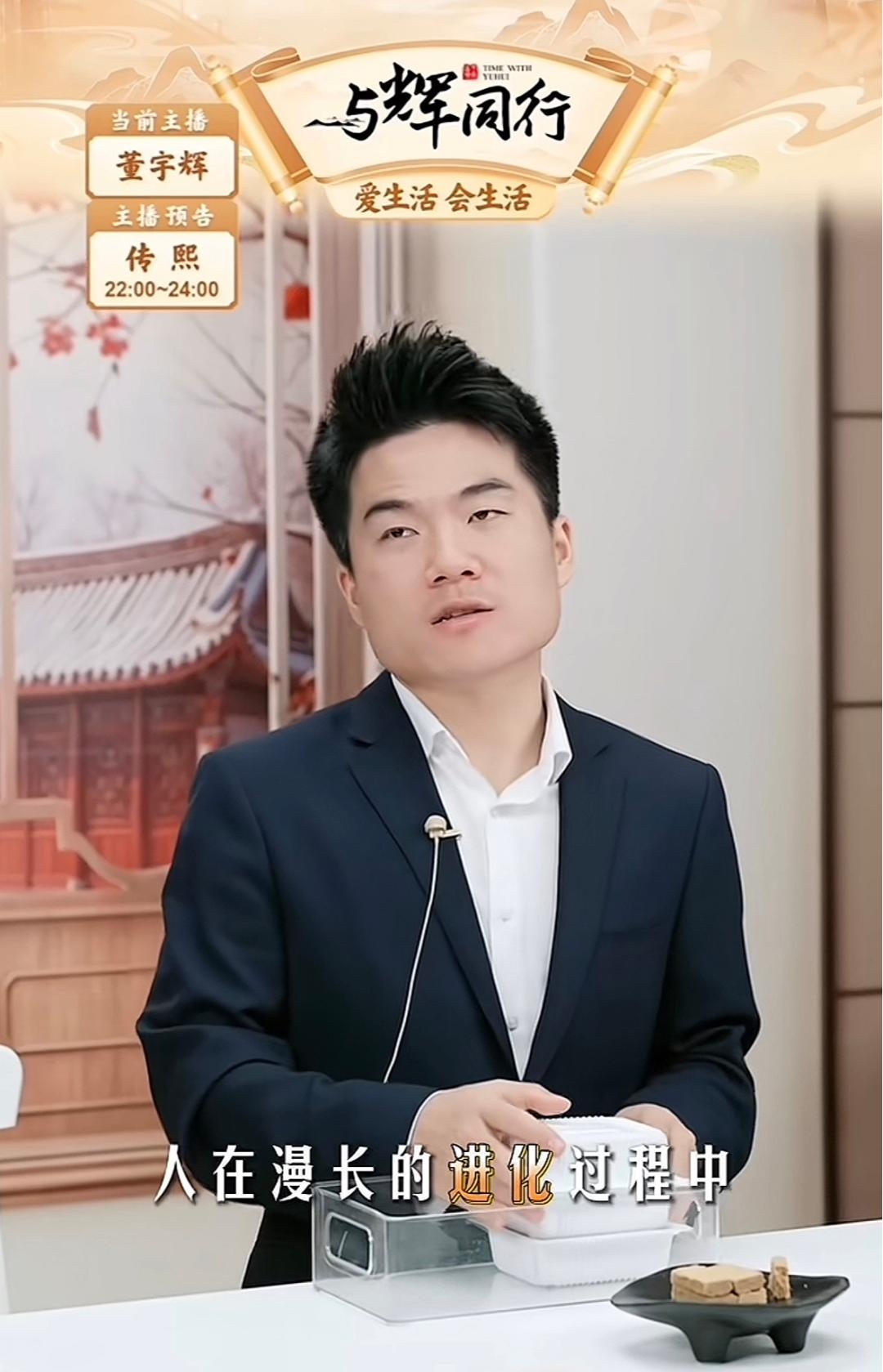
▲ Note: The picture is from the account "Yuhui Travels"
After experiencing Dong Yuhui going solo, core hosts such as Mingming and Tianquan leaving one after another, and all members of the first-generation "F4" departing, Eastbuy began to decouple from top IPs and move towards standardization and supply chain orientation.
In the current Eastbuy live stream, hosts are no longer irreplaceable internet celebrities, but well-trained "senior product commentators" with standardized expressions. The company has tilted huge traffic costs and resources to the construction of back-end supply chain and self-operated brands.
According to the performance forecast, its revenue for the 2026 fiscal year is expected to reach 5.6 billion to 5.8 billion yuan, with a net profit of 520 million to 550 million yuan. Compared with the net profit of about 6 million yuan in the previous fiscal year, the maximum increase is nearly 90 times. Among them, the number of self-operated product SKUs is close to 1,000, accounting for 52.8% of the total GMV.
Health care and health products have become the breakout point driving performance, with the cumulative GMV of self-operated probiotic single product exceeding 100 million yuan; the self-operated protein powder sold 100,000 units only two or three days after it was put on shelves. At the same time, Eastbuy has also fully expanded to self-operated cosmetics, daily chemical products, household cleaning paper products, etc., built an independent APP, and laid out offline physical experience stores, striving to create a local Chinese "online Sam's Club" relying on its self-operated product portfolio.
The full-scale scramble of the New Oriental camp seems on the surface to be the "fellow apprentices" involuting in the stock market, but in fact, it is more like a survival stress test carried out by the live e-commerce industry in the downward cycle.
The Top IP Effect Fades Out, How Much Potential Does Live E-commerce Still Have?
The career development of the New Oriental camp after they split up their operations also reflects the drastic changes in China's live e-commerce industry.
Official data shows that the retail sales of live e-commerce in China in the first half of 2026 exceeded 1 trillion yuan, but the year-on-year growth rate has slowed sharply to 6.5%, and the industry has officially entered the slow lane of stock game.
On the one hand, stimulated by algorithms that drive impulsive consumption, the return rate of live streams is getting increasingly staggering. Data released by 36Kr Research Institute in 2024 shows that the return rate of live e-commerce is much higher than that of traditional e-commerce, among which the average return rate of women's clothing is generally higher than 50%. By 2026, this figure has climbed to 70%-80%.
After a 100-yuan-level order is generated, after deducting refunds, reverse logistics, quality inspection depreciation, as well as high traffic promotion fees and commissions, the actual retention rate of merchants is less than 30%. In the GMV-oriented general environment, "scale expands but profit disappears" has become a common pain point in the industry, and many stores with millions of fans have closed down as a result.
On the other hand, the traffic dividend of top influencers is being continuously compressed.
During the 618 shopping festival in 2026, Li Jiaqi continuously broadcast live for 14 days, distributed 300 million yuan in cash red envelopes and superimposed 200 million yuan worth of 10% off coupons, with total subsidies exceeding 500 million yuan. In order to break through the growth bottleneck of the beauty and skincare category, he even put Mercedes-Benz cars into the shopping cart. Although 40 Mercedes-Benz cars were snapped up the moment the live stream started, the move of switching to a new track also exposed the growth anxiety of top live streamers.
Just as the industry was in a cold spell, the contrarian profitability of Eastbuy proved that super hosts can take away fans and attention, but they cannot take away the precipitated supply chain, warehousing system and product matrix. When Eastbuy cut off the high commission of top hosts and shifted its focus completely to self-operated products, although the overall GMV traffic decreased, the high gross profit from self-operated product control instead generated profits.
Therefore, the slowdown of the overall market does not mean the disappearance of opportunities, but means that the industry will move from the traffic dividend period to the structural dividend period.
"Supply chain-oriented players" have become highly sought after. The logic of such players is "products find people" instead of "people pay for products", which eliminates the drawbacks of impulsive consumption, and squeezes out the multi-layer premium of channels and traffic by mastering the core production cost.
Another representative is the live stream of JD's procurement team. Its hosts are professional procurement personnel who are deeply involved in front-line warehouses and factories. They win with the advantages of transparent procurement links and cost-effective direct delivery from the source. Many merchants reported to the media that the return rate dropped significantly after joining the procurement live stream. Through self-developed formulas and direct connection to source factories, Eastbuy has also firmly grasped the pricing power and profit margin of products in its own hands.
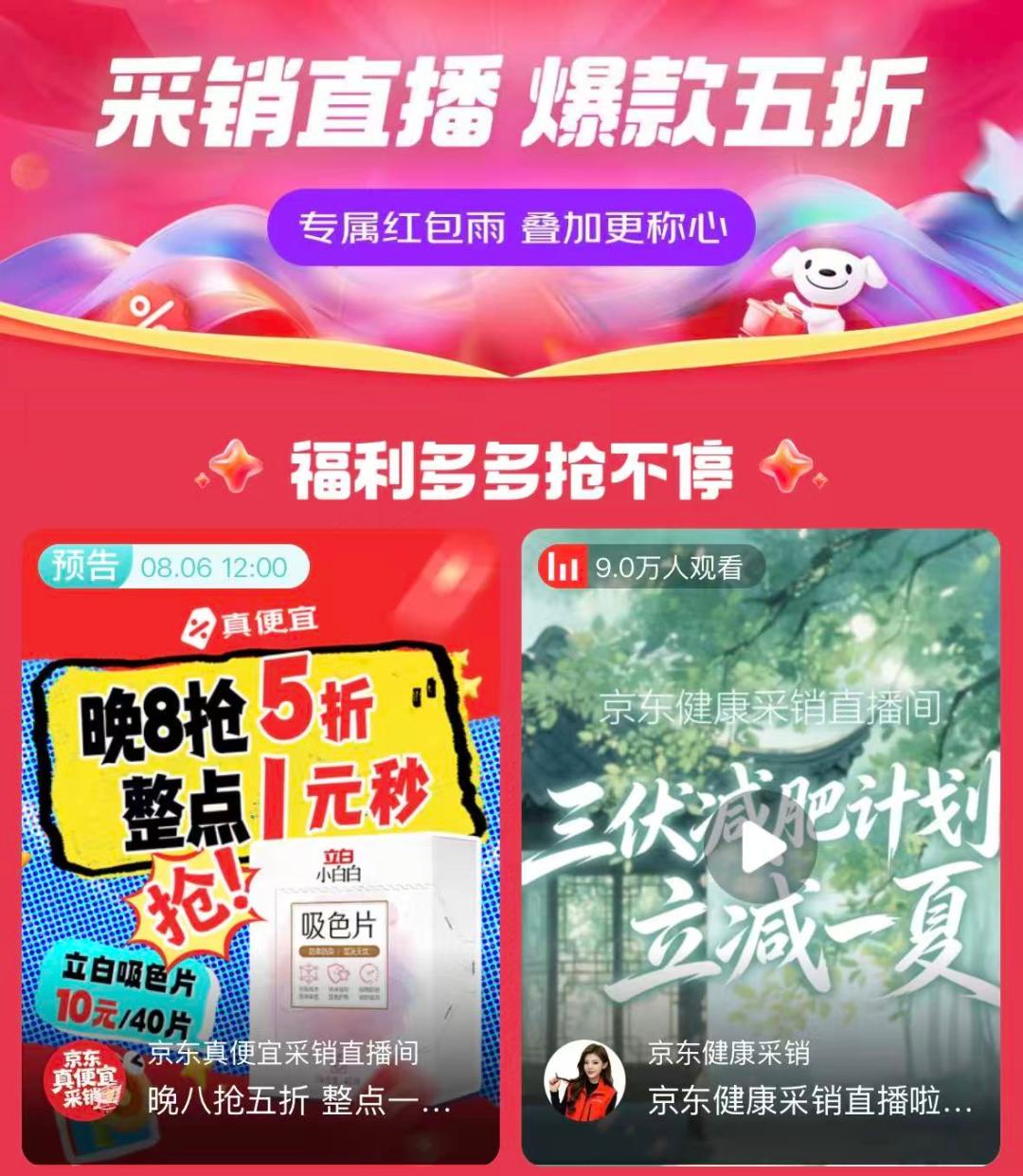
▲ Note: The picture is from JD.com
When the overall market cools down and traffic becomes more expensive, these supply chain-oriented players who can control product costs are more likely to laugh last.
Of course, "vertically reorganized teams" that can accurately aggregate the trust of specific groups of people also have the strength to break through the stock market.
The sales volume of over 15 million yuan in the debut live stream of "Beautiful Tomorrow" has proved the possibility of reconstructing "fan trust assets". In the future, traffic may no longer belong to large hosts who spread their resources widely, and small teams with deep trust in specific segmented tracks will instead embrace new opportunities.
Accurately targeting groups pursuing cost performance or specific emotional preferences and building a highly sticky repurchase relationship will help them gain a firm foothold in the new market game.
Where Will Live E-commerce Head in the Downward Cycle?
As the traffic dividend fades away, the heavy blow of supervision and the rational awakening of consumers come at the same time, and rule reconstruction has become the inevitable situation that the live e-commerce industry has to face.
On August 3, the Supreme People's Court announced the final judgment of the "Jiangxiaobai v. Eastbuy Commercial Defamation Case" two years ago. During the live stream of the Hi-Eat Festival in 2024, Tianquan, an Eastbuy host with a third-level wine taster title, commented on Jiangxiaobai when promoting Baijiu, saying that "after the implementation of the new national standard, products added with edible alcohol cannot be called Baijiu" and "the reason why the word Baijiu does not appear on Jiangxiaobai's package is that it is not allowed by regulations".
This statement caused damage to the brand reputation of Jiangxiaobai, which then filed a lawsuit. The court finally ruled that Eastbuy constituted commercial defamation, and ordered it to compensate a total of 300,000 yuan for economic losses and reasonable expenses.
After all, live-streaming sales are business activities. Hosts cannot use the excuses of "fast live streaming pace and impromptu performance" to lower the requirements for factual accuracy. Randomly belittling competing products and fragmented popular science both have legal risks. Even if part of the statement is true, as long as there is deliberate misleading or smearing of competing products, the enterprise should bear the legal responsibility for commercial defamation.
Under this premise, tying the fate of the enterprise to the personal morality and emotional state of the super host is a huge gamble. Even Dong Yuhui, who is regarded as a clear stream in the industry, has been frequently involved in multiple controversies such as public opinion turmoil and product quality issues after going solo and losing the strong support of the original institution's supply chain.
Whether it was being ridiculed for "posing" when he insisted that he had watched the movie *A Chinese Odyssey* 500 times during an interview with the director Stephen Chow, or a series of disputes such as the counterfeit Australian brand "Youth2Life", shrimps with excessive phosphate content, and the breeding cycle of hens, all have dealt a huge blow to "Yuhui Travels".

▲ Note: The picture is from the live stream of "Lanzhi Chunxu"
Therefore, if live e-commerce practitioners want to survive and achieve profitability, they must reshape their business links, establish a strict compliance review mechanism, transfer the budget for paid traffic promotion to source quality inspection and R&D, build a full-process traceable quality control system, and use consumers' return reasons for reverse feedback to force factories to improve their processes, so as to reduce the high return rate with solid product certainty.
At the same time, they should completely get rid of excessive dependence on super hosts and vigorously develop brand self-live streaming, which can reduce the price difference earned by middlemen, further obtain feedback from consumers, and use high-frequency repurchase in the private domain to fight against the rising customer acquisition cost in the public domain.
The carnival era when people could get rich overnight just by having a glib tongue and using a public product portfolio in the early stage has come to an end. Live e-commerce has begun to get rid of its fanatical aura and return to the most authentic appearance of the retail industry. In the second half of the competition, only those with more reliable products, more efficient supply chains and more sincere and compliant services can have the chance to laugh last.
The pictures are from the Internet, and copyright will be removed upon request.
This article is from the WeChat official account "Yidu Pro", author: Wen Bo, published with authorization from 36Kr.